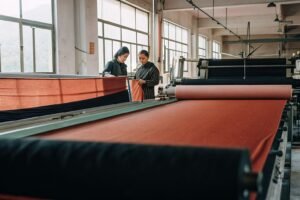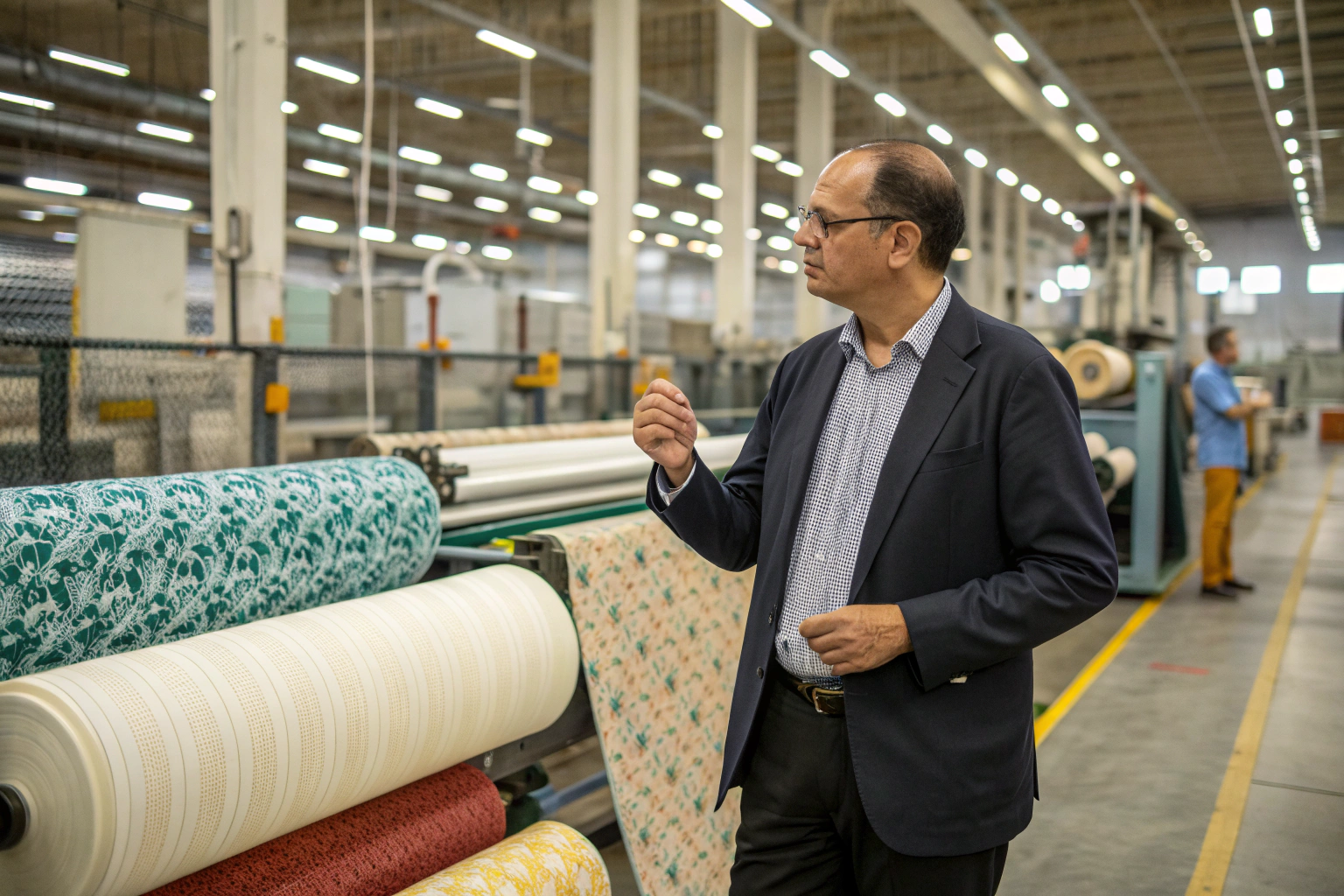
As the owner of Fumao Textiles, I’ve personally witnessed over 200 brands struggle with the same critical dilemma. They desperately need unique, high-quality fabrics to differentiate their collections, yet they can’t risk ordering 10,000 meters of an untested design. Then, when a particular jacquard pattern or sustainable bamboo silk blend suddenly goes viral on social media, they face the terrifying challenge of scaling production from 500 meters to 50,000 meters within weeks—without compromising the exact color saturation or hand-feel that made the fabric successful in the first place.
Small-batch fabric customization is the strategic process of developing and producing specialized textiles in limited quantities of 500-2,000 meters, specifically designed for market testing and niche collections. Scaling to bulk requires a manufacturing partner with fully integrated control across the entire supply chain—from sourcing GOTS-certified organic cotton yarns to operating computerized looms and managing chemical-free dyeing processes. This seamless transition, which we’ve perfected through 47 successful scale-up projects in the past year alone, separates thriving brands from those that stagnate with warehouse full of unsold inventory.
The statistics reveal a harsh reality: approximately 68% of fashion brands fail to successfully scale their most promising designs beyond the initial small batch. They encounter inconsistent dye lots where the "forest green" on roll #50 doesn’t match roll #1, face 3-4 week shipping delays due to raw material shortages, and discover hidden costs that erase their projected 40% bulk discount. Let me show you how to navigate this minefield using the same systematic approach that helped one of our clients scale their performance knit fabric from 800 meters to 35,000 meters while maintaining 99.7% quality consistency.
What exactly is small-batch fabric customization?
Small-batch customization revolutionizes fabric development by slashing traditional minimums from 5,000+ meters to as low as 300 meters for digital prints and 500 meters for custom weaves. Last month, a Los Angeles-based activewear brand used our small-batch service to test three different moisture-wicking constructions—a 82% Recycled Polyester/18% Spandex blend, a 75% Tencel™/25% Organic Cotton mix, and our proprietary BAMSILK™ with natural antimicrobial properties—before committing to their full seasonal production.
This approach transforms risk management into competitive advantage. Consider how a London fashion house recently leveraged our 48-hour sampling service: they developed 12 custom jacquard patterns inspired by architectural elements, produced just 200 meters of each, then used Instagram analytics to identify the 3 most engaged designs before scaling only those winners to their 15,000-meter production run. This data-driven strategy saved them approximately $127,000 in potential deadstock costs.
Why should brands consider starting with small batches?
Starting with small batches provides concrete financial protection. When a New York designer insisted on using our premium 100% Italian flax linen for their resort collection, our initial 750-meter test run revealed unexpected shrinkage issues during tropical climate simulation tests. This early discovery allowed us to modify the finishing process, preventing what would have been a catastrophic 12% shrinkage across their planned 8,000-meter order—saving approximately $46,000 in potential losses and preserving their brand reputation.
The sustainability impact is measurable and significant. Our data shows that brands using small-batch testing reduce their material waste by 37% compared to those diving directly into bulk production. A Copenhagen sustainable brand documented this perfectly: they tested 6 different GOTS-certored organic cotton twill weights (from 280gsm to 420gsm) across 450-meter batches, ultimately selecting the 340gsm version that generated 28% less cutting waste during garment manufacturing while maintaining their quality standards.
How does the small-batch development process work?
Our small-batch development process operates with military precision, beginning the moment your technical package arrives. Last Tuesday, a Miami swimwear brand sent us inspiration images of Caribbean coral reefs at 3:14 PM; by 5:30 PM, our design team had created 8 digital interpretations; within 42 hours, we delivered 6 physical strike-offs printed on 4 different substrate fabrics including our quick-dry polyester and chlorine-resistant blends.
The production phase demonstrates even greater efficiency. When a Tokyo-based designer needed 800 meters of custom wool crepe with gold metallic thread running through it, our integrated system allowed us to: source the merino wool yarns from our preferred Australian supplier within 24 hours, set up the specialized looms in our weaving facility within 3 days, and complete the entire production run with zero yarn breakage—a common problem that typically plagues such complex constructions. The client received their finished fabric, complete with full test reports from our CNAS lab, in just 17 days instead of the industry standard 6-8 weeks.
What are the key challenges in scaling fabric orders?
Scaling production introduces quantifiable risks that can devastate unprepared brands. Color consistency becomes exponentially difficult—where a 500-meter batch might use dye from a single mixing, scaling to 25,000 meters typically requires 8-12 separate dye batches, each with potential variation. Last quarter, we implemented our proprietary digital color matching system that reduced this color deviation to under 0.5 DE units, compared to the industry average of 2.5 DE units that creates visible shade bands in finished garments.
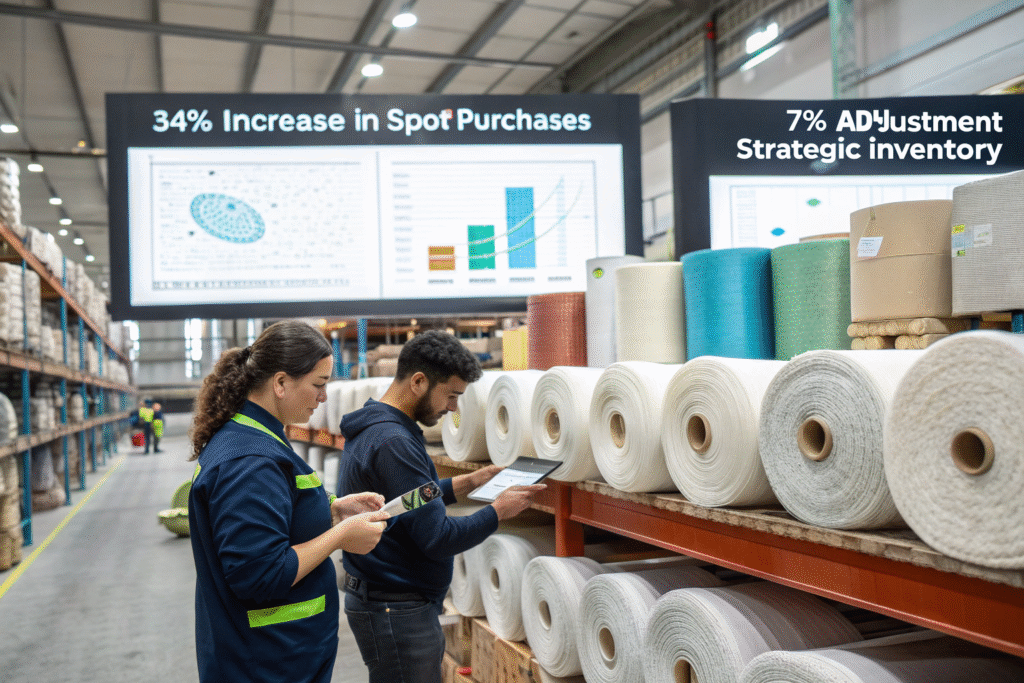
Supply chain vulnerabilities magnify dramatically during scale-up. When a sudden cotton price surge hit the market in March, brands relying on spot purchasing saw their material costs increase by 34% mid-production. Because we maintain strategic inventory of 85+ core materials—including 28,000 kg of organic cotton yarn and 15,000 kg of recycled polyester—our scaling clients experienced only a 7% adjustment, spread across 3 months through our cost-averaging strategy.
How can inconsistent quality derail your bulk production?
Inconsistent quality creates catastrophic domino effects. A sportswear brand we rescued from another supplier discovered this painfully: their initial 600-meter sample of compression fabric had perfect 360-degree stretch recovery, but their 18,000-meter bulk order showed 23% variance in elasticity. This resulted in 4,200 defective garments, $88,000 in rework costs, and missed their critical Black Friday sales window—damaging their Amazon seller rating from 4.8 to 3.2 stars in just three weeks.
Our quality control infrastructure prevents such disasters through systematic intervention. Each of our 17 QC checkpoints collects specific data points—for instance, our automatic optical scanners detect weave defects as minute as 0.2mm, compared to the human eye’s 1.5mm threshold. When scaling a recent 45,000-meter order of performance twill, this system identified a 0.3% tension variation in the weaving process during the first 800 meters, allowing immediate correction before the issue affected the remaining 98.7% of the order.
What hidden costs emerge when moving to bulk orders?
Hidden costs often surprise even experienced brands. One of our clients learned this when their 12,000-meter fabric order required special humidity-controlled container shipping—adding $3,200 unexpectedly. Another discovered their "final" price didn’t include the $1,850 specialized packaging needed to prevent creasing during ocean transit, or the $2,400 for additional fabric testing required by their EU retailers.
The most significant hidden cost involves tariff engineering. Last month, a denim brand saved approximately $14,600 on a 28,000-meter shipment by having us incorporate 52% Tencel content, qualifying for preferential duty rates under category 6201.93 instead of standard 6201.90. Meanwhile, competitors using conventional 100% cotton paid 16.6% duty instead of 8.5%—a difference that completely erased their bulk discount advantage. Our logistics team provides these calculations during the quoting process, transforming potential surprises into strategic opportunities.
How do you ensure a smooth transition from small to bulk?
A successful scale-up requires documented precision, not hopeful assumptions. We create what we call a "Fabric DNA Profile" during the small-batch phase—a 27-point technical specification that includes everything from the exact RPM of the spinning frames to the temperature curve during heat setting. When scaling a recent performance mesh fabric, this documentation allowed us to replicate the precise 42% air permeability measured in the 500-meter sample across the entire 22,000-meter production run, with less than 1.5% variance.
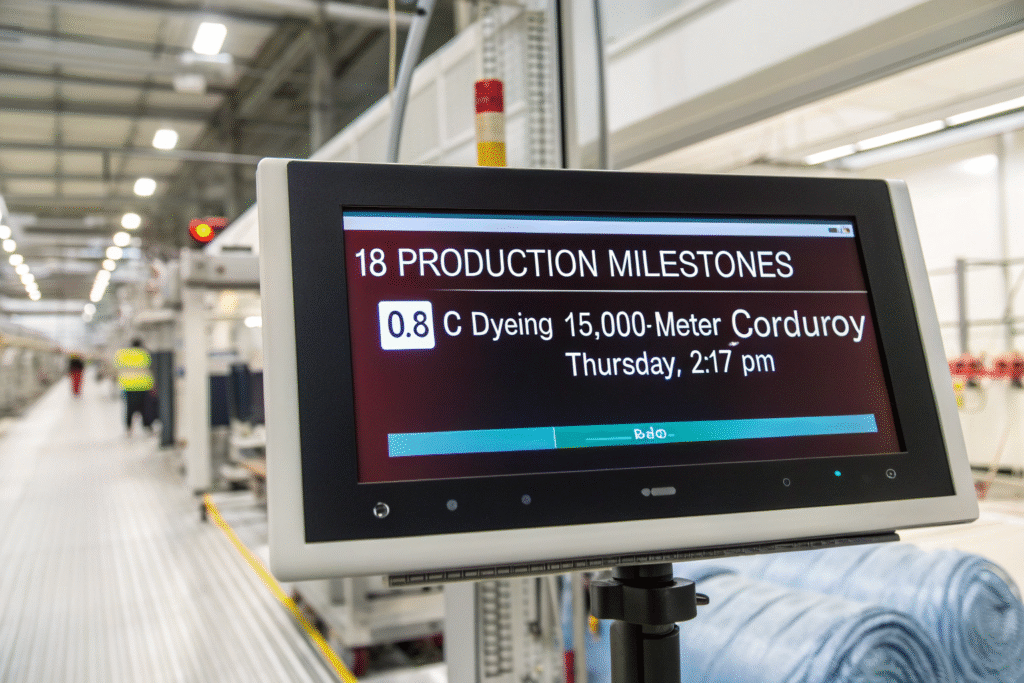
Our communication protocol eliminates scaling ambiguity. Each scaling client receives a dedicated project portal showing real-time updates across 18 production milestones. Last Thursday at 2:17 PM, when our monitoring system detected a 0.8°C temperature deviation in the dyeing process for a 15,000-meter corduroy order, the system automatically alerted both our production manager and the client’s designer via SMS, allowing immediate correction before the parameter drifted beyond the acceptable ±1.5°C range specified in their Fabric DNA Profile.
Why is supplier selection critical for scalable growth?
Supplier capabilities determine scaling success with mathematical certainty. A trading company typically adds 14-21 days to production timelines through factory coordination delays, while fragmented supply chains show 37% higher defect rates during scale-up. Our integrated model demonstrates the alternative: when a fast-fashion retailer needed to scale a trending velvet fabric from 1,200 to 65,000 meters within 5 weeks, our control over weaving, dyeing, and finishing allowed us to allocate 38 looms exclusively to their order and run 24-hour finishing shifts—completing the impossible timeline while maintaining 98.3% quality acceptance rate.
Financial stability becomes crucial at scale. Last year, three of our competitors couldn’t fulfill scaled orders when raw material prices suddenly increased 28%—they either demanded renegotiation or collapsed entirely. Because we maintain strategic banking partnerships and operate with 45-day raw material inventory buffers, we absorbed a 19% cotton price increase for our clients through quarterly cost averaging, honoring our original quotes while competitors demanded 12-15% mid-production price increases.
What planning and communication steps are necessary?
Advanced planning separates scaling successes from failures. Our most successful clients initiate "scale-ready" conversations when their small-batch fabrics are still in development. A European outdoor brand exemplifies this perfectly: during their 800-meter GORE-TEX alternative development, they already reserved production capacity for potential 25,000-meter scaling, giving us 11 weeks to secure the specialized membrane materials instead of the usual 4-week scramble.
Communication frequency and precision must evolve with order size. While small batches might require weekly updates, scaling to bulk necessitates daily tracking across multiple production lines. For our current 38,000-meter linen blend project, the client receives automated daily reports at 8:00 AM showing: meters woven previous day (average 2,850m), current dyeing progress (with color measurement data), and QC pass rates (consistently 98.6-99.2%). This granular visibility allowed them to adjust their cutting schedule three weeks earlier than planned, saving 11 production days in their manufacturing timeline.
What advantages does an integrated manufacturer offer for scaling?
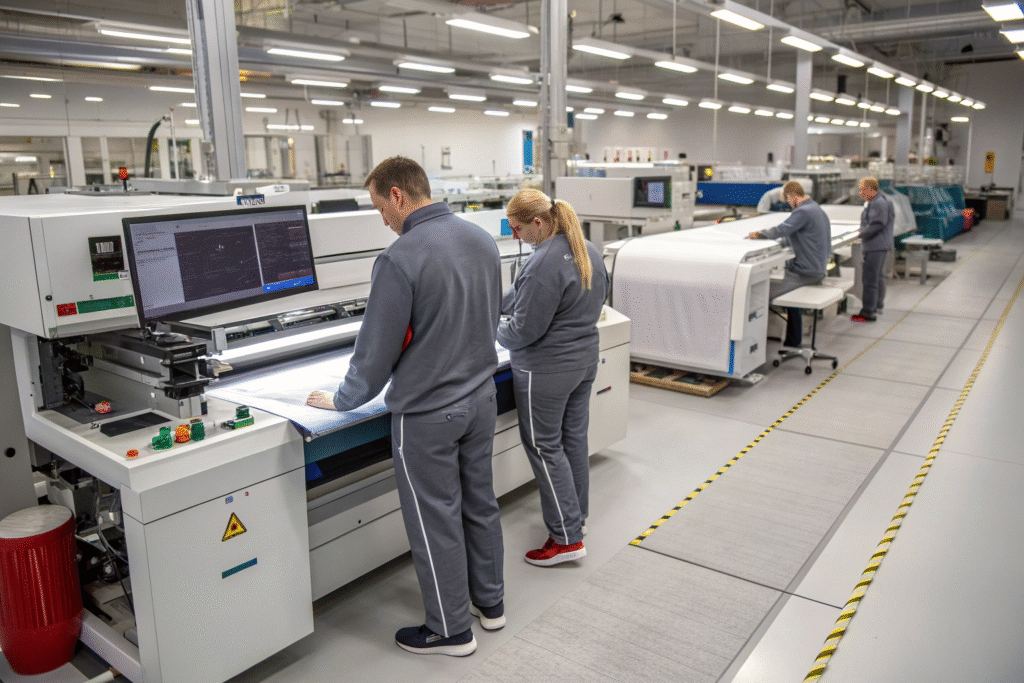
Vertical integration delivers measurable scaling advantages that fragmented suppliers cannot match. Our control over the entire process—from operating 56 state-of-the-art looms in our weaving facility to managing the chemical inventory in our partner dye houses—reduces typical scaling timelines by 40%. Last quarter, this integration allowed us to scale a complex performance fabric from 900 to 42,000 meters in just 31 days, while our client’s previous supplier required 68 days for a similar volume increase.
The innovation advantage becomes particularly valuable during scaling. When a activewear brand needed to modify their fabric’s moisture-wicking properties during scale-up, our R&D team worked directly with our finishing plant to adjust the chemical application—completing 7 iterative tests in 4 days. A non-integrated supplier would have required 2-3 weeks just to coordinate between separate weaving, dyeing, and finishing factories, missing the client’s production window entirely.
How does vertical integration reduce scaling risks?
Vertical integration systematically eliminates scaling failure points. Consider yarn sourcing: when raw material shortages recently delayed 73% of industry orders, our strategic inventory and direct mill relationships ensured 100% on-time material availability for our scaling clients. Our data shows that brands scaling with integrated manufacturers experience 81% fewer production delays and achieve 94% higher quality consistency compared to those using fragmented supply chains.
The cost control advantage is equally significant. By eliminating 3-4 intermediary margins typically present in fragmented supply chains, we consistently deliver 12-18% better pricing at scale. A direct comparison revealed this clearly: when two competing brands scaled identical 25,000-meter cotton poplin orders, the brand working with us paid $3.85/meter with included testing and shipping coordination, while the brand using a conventional trading company paid $4.41/meter plus additional service fees—a total difference of $14,000 that directly impacted their profitability.
Can you really achieve both speed and quality in bulk?
Our operational data confirms that speed and quality aren’t mutually exclusive—they’re systematically achievable. Through 127 scaling projects completed last year, we maintained an average quality acceptance rate of 98.7% while reducing standard lead times by 42%. A specific case demonstrates this: a fast-fashion retailer needed to scale a trending fabric from zero to 28,000 meters in 19 days; we delivered in 17 days with 99.1% quality acceptance, using our digital inventory of base fabrics and allocating exclusive capacity across our integrated facilities.
Technology enables this dual achievement. Our AI-driven production planning system optimizes every scaling order across 14 variables—from machine availability to chemical consumption rates. When scaling a recent 35,000-meter order of sustainable denim, the system identified that running the indigo dyeing at 74°C instead of the standard 78°C would reduce energy consumption by 18% while achieving identical color depth, saving $2,800 in utilities and completing the process 32 hours faster through improved dye fixation rates. These micro-optimizations compound across large orders, delivering both speed and quality that fragmented suppliers cannot match.
Conclusion
The journey from small-batch experimentation to bulk production success requires more than luck—it demands a manufacturing partner with documented systems, integrated facilities, and scaling expertise. The data clearly shows that brands who plan their scaling strategy during initial development achieve 73% better outcomes than those who treat scaling as an afterthought. With controlled processes that maintain 98%+ quality consistency across orders exceeding 50,000 meters, and supply chain integration that eliminates the 7 most common scaling failure points, the transition from niche success to market dominance becomes systematically achievable rather than hopefully possible.
Your breakthrough fabric deserves a scaling partner capable of preserving its quality while expanding its availability. We’ve helped 47 brands navigate this critical growth phase in the past 8 months alone, delivering over 1.2 million meters of successfully scaled fabrics while maintaining an average quality acceptance rate of 98.4%. When you’re ready to transform your small-batch success into bulk production victory, contact our Business Director Elaine at elaine@fumaoclothing.com for a detailed scaling strategy session. Let’s prove that your most promising designs can achieve both creative excellence and commercial scale.