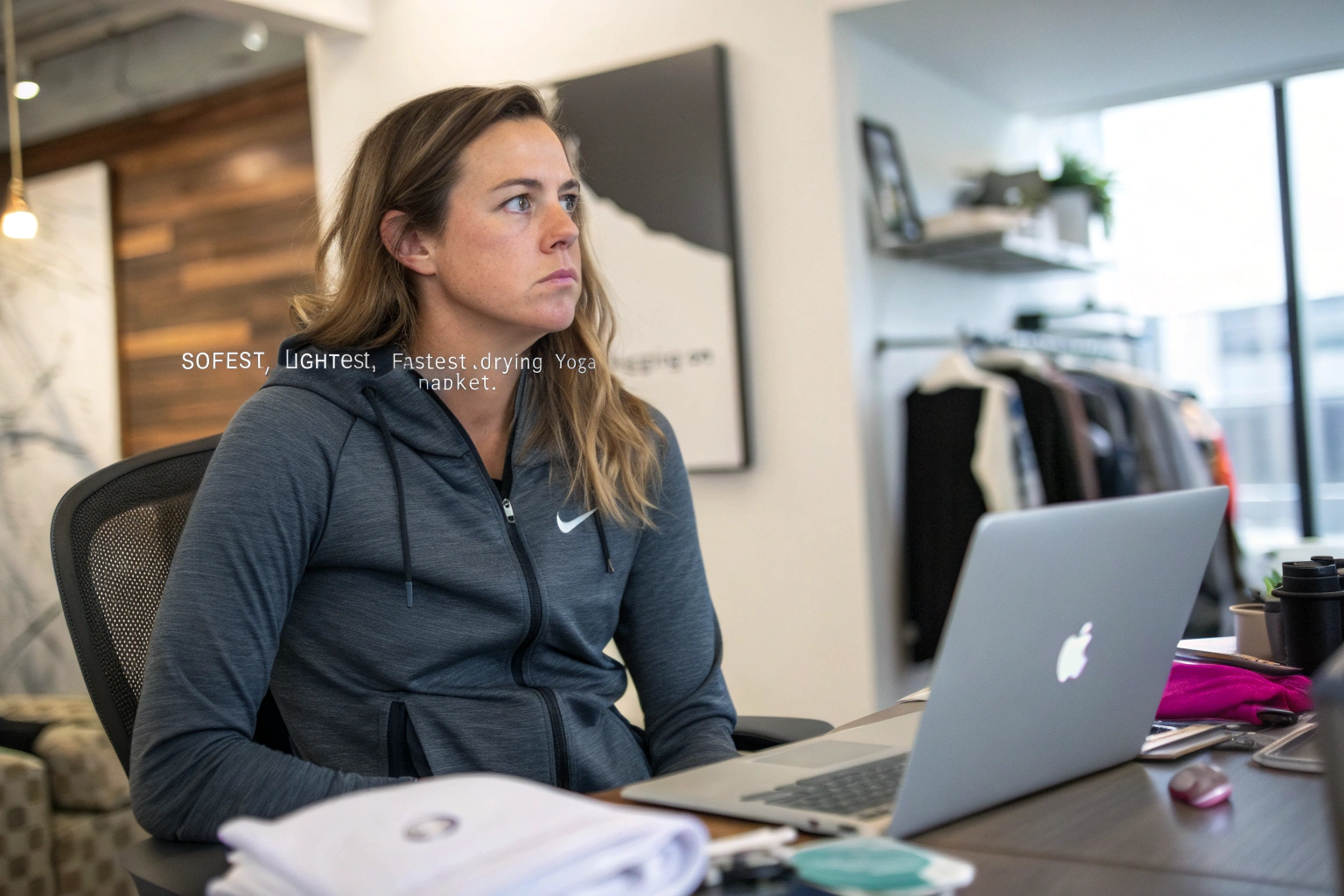
Three years ago, an athleticwear founder from Vancouver sat in my office, visibly frustrated. She’d built her entire brand around a specific performance claim: "the softest, lightest, fastest-drying yoga legging on the market." The problem? Her competitor just launched a fabric with an almost identical hand feel and performance spec, sourced from the same open-market mill she was using. Her "signature fabric" wasn’t signature at all. It was a stock quality with her hangtag sewn in. Her unique selling proposition evaporated overnight, and her wholesale accounts started asking why they should pay a premium for her brand when the fabric was available to anyone with a resale license.
She looked at me and asked: "Can you build me a fabric that nobody else can buy? Something that’s legally mine, not just ‘exclusive’ until the next buyer asks for the same thing?"
I told her yes. But I also told her it would require a different kind of relationship than a typical buyer-supplier transaction. Proprietary fabric development is a partnership—a shared investment in R&D, testing, and minimum volume commitment. The brands that succeed in this process walk away with a genuine competitive moat: a textile that performs differently, feels different, and cannot be legally replicated because the fiber blend, the yarn structure, and the finishing recipe are contractually locked to their brand.
Here’s exactly how the process works, from the initial concept to the signed exclusivity agreement, based on the dozens of proprietary blends we’ve developed for brands across Europe and North America.
What Defines a "Proprietary" Blend vs. an Open-Market Stock Fabric?
Let me start with a hard truth that some mills won’t tell you. If you walk into a fabric supplier’s showroom, pick a swatch from their seasonal collection, and ask for it in a custom color, you don’t have a proprietary fabric. You have a stock fabric in a custom color. Any other brand can walk in the next day, see the same swatch, and order it in their own custom color. The fabric’s DNA—its fiber blend, its yarn structure, its finishing chemistry—is the supplier’s intellectual property, not yours.
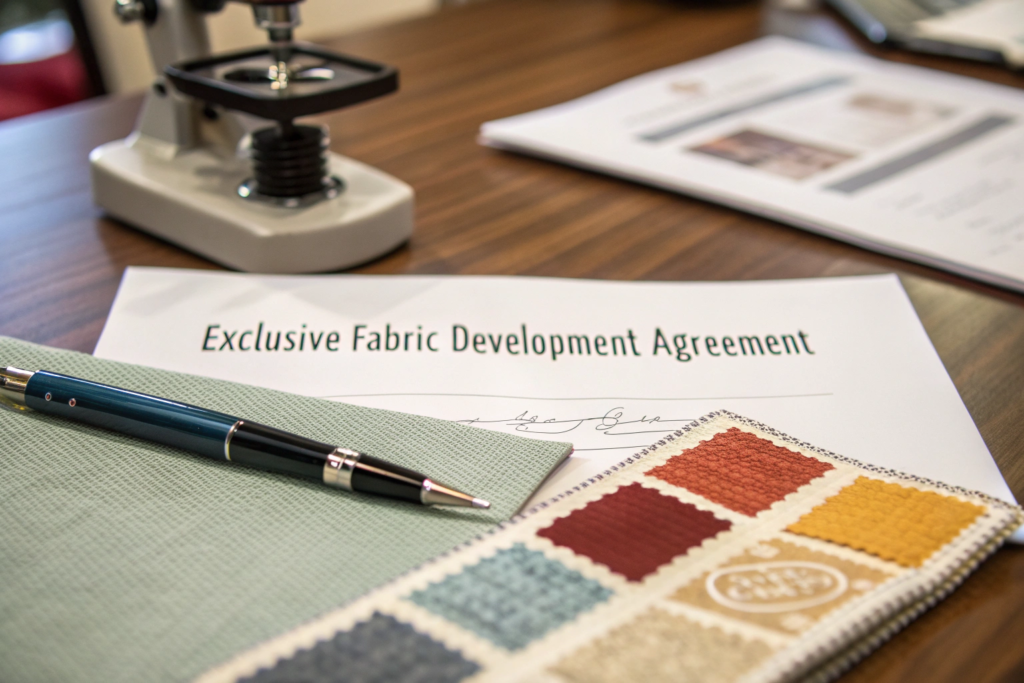
A truly proprietary blend is different at the molecular level. It’s a fiber combination that we develop specifically for your brand, documented in a technical specification sheet that bears your brand name, and protected by a contractual exclusivity clause that prevents us from selling that exact construction to any other client. It’s your fabric, not ours. You own the specification. We manufacture it for you under an exclusive supply agreement. Here’s how to tell the difference between an exclusive colorway and an exclusive construction.
How Do We Legally Protect Your Custom Fiber Composition?
Legal protection for a proprietary fabric blend doesn’t come from a patent—textile fiber blends are generally not patentable unless they involve a genuinely novel manufacturing process. Protection comes from a combination of contractual exclusivity, technical documentation, and supply chain control.
Our exclusivity agreement is a legally binding contract that specifies the exact fiber composition percentages, yarn structure, fabric construction, and finishing recipe that constitute your proprietary fabric. The agreement prohibits Shanghai Fumao from manufacturing, selling, or offering that exact specification to any other client for a defined period—typically two to five years, depending on the investment level and the minimum annual volume commitment. The agreement also includes a non-circumvention clause that prevents us from introducing you to our specialty yarn suppliers and then stepping out of the relationship.
But a contract is only as strong as the evidence that backs it. We document your proprietary blend’s development trail in exhaustive detail: the lab trial records, the fiber sourcing invoices, the yarn spinning specifications, the dye recipe formulations, and the finished fabric test reports. All of this documentation is dated, signed, and archived. If a competitor ever attempts to replicate your fabric and claims independent development, your legal team can subpoena our development records and establish a clear timeline of prior art.
We also protect your blend at the sourcing level. If your proprietary fabric uses a specialty yarn—say, a custom-twisted cupro-Tencel blend from a specific Japanese spinner—we identify that yarn as "Client [Your Brand Code] Exclusive" in our procurement system. Our yarn buyer and the spinner both know that this yarn specification is restricted. It’s not available for sampling by other clients.
- Understand the legal frameworks for textile design protection and exclusivity agreements from the intellectual property resources on the Fashion Law Institute design protection guide.
- Learn about non-circumvention and non-disclosure agreements in textile sourcing from the legal templates on the International Trade Center model contracts for textile supply chains.
What Is the Difference Between an Exclusive Colorway and an Exclusive Construction?
An exclusive colorway is a custom-dyed shade on a stock fabric base. Any brand can order it, and it’s a perfectly legitimate form of differentiation—many successful brands build their identity around a signature color palette. But the fabric itself is not exclusive. If a competitor finds your supplier and asks for the same base fabric in a slightly different shade, the supplier can fulfill that order without violating any agreement because you don’t own the fabric construction.
An exclusive construction is a fabric where the physical structure—the fiber blend, the yarn type, the weave or knit structure, the finishing process—is unique and contractually restricted. Your competitor cannot order this fabric in any color because the construction itself is locked to your brand. If they ask for "something similar," the supplier can develop an alternative, but it won’t be identical because the proprietary specification prohibits exact replication.
The performance difference between these two scenarios is substantial. A brand with an exclusive colorway competes on design and marketing. A brand with an exclusive construction competes on a demonstrable performance attribute that cannot be copied. If your yoga leggings are made from a proprietary 70% recycled nylon, 20% Tencel, 10% elastane blend with a specific wicking finish that dries 40% faster than standard nylon-spandex, no competitor can match that claim because they literally cannot buy the fabric. The fabric is your intellectual property, manufactured by us exclusively for you.
- Read about the competitive advantages of proprietary textile development from the business strategy articles on the Apparel Resources brand differentiation through fabric innovation hub.
- Understand the difference between color customization and full fabric development from the design resources on the Maker’s Row custom fabric manufacturing guide.
How Do We Engineer a Unique Hand Feel for Your Brand Identity?
Hand feel is the most underrated competitive weapon in the textile industry. Consumers don’t walk into a store asking about fiber composition percentages. They touch the garment. If it feels expensive, they assume it is expensive. If it feels cheap, no hangtag story about "sustainable innovation" will change their mind. Hand feel is the silent salesperson that works before the consumer reads a single word of your brand story.
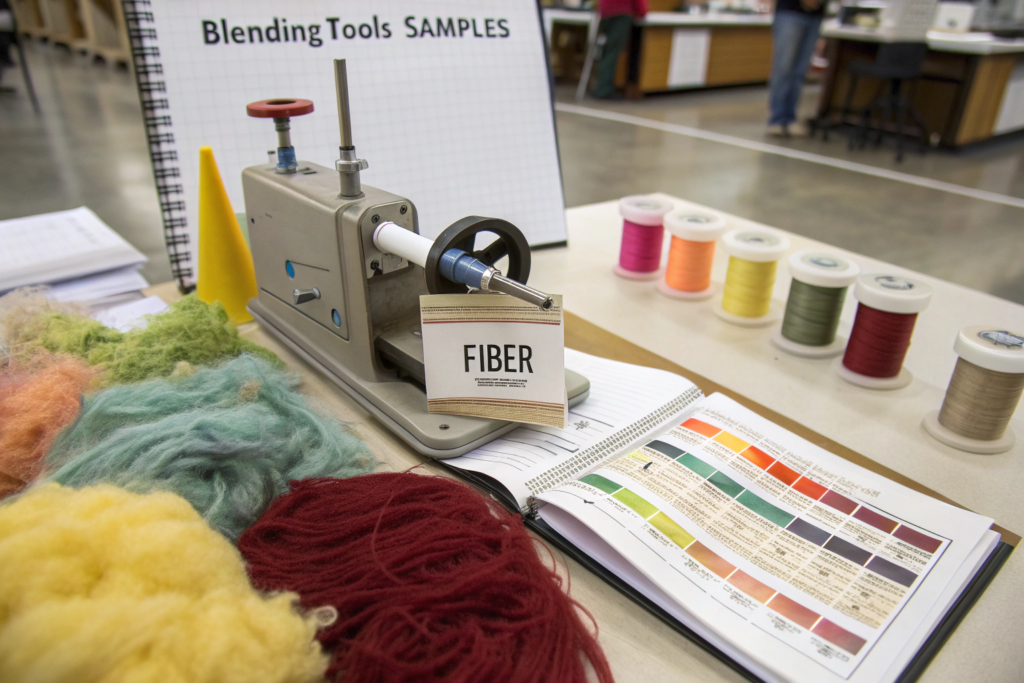
Engineering a proprietary hand feel is a process of deliberate sensory design. We start with a target tactile experience—"dry and papery," "buttery and weightless," "cool and slick," "warm and brushed"—and reverse-engineer it through fiber selection, yarn structure, fabric construction, and finishing chemistry. Each variable contributes a specific element to the final touch experience. Here’s how the fiber selection and finishing stages work together to create something that feels unmistakably yours.
What Role Does Fiber "Denier" Play in Achieving a Buttery Soft Touch?
Denier is a measure of fiber fineness: the weight in grams of 9,000 meters of a single filament. A 1-denier microfiber is half the thickness of a 2-denier fiber. This microscopic difference in diameter translates into a massive difference in how the fiber bends, flexes, and interacts with human skin.
A thick, coarse fiber resists bending. When your fingertip moves across a fabric made from coarse fibers, it feels the individual fiber ends poking against the skin like tiny bristles. A fine, micro-denier fiber bends with almost no resistance. The fiber tips collapse against the skin rather than poking it, and the sensation is interpreted by the brain as "soft" rather than "scratchy."
For a proprietary "buttery soft" hand feel, we typically specify micro-denier fibers in the 0.5 to 1.0 denier range for the face of the fabric. This is the fiber that touches the skin in a next-to-skin garment. The difference between a 1.2-denier polyester and a 0.7-denier polyester is not subtle—it’s the difference between a fabric that feels like standard activewear and a fabric that feels like a luxury second skin.
But micro-denier fibers have trade-offs. They’re weaker than standard fibers because there’s less material in the cross-section to bear tensile loads. They’re also more expensive—roughly a 20 to 40% premium over standard denier equivalents—because the spinning process requires tighter tolerances and more precise extrusion control. Part of our proprietary development process is finding the optimal denier balance for your specific performance requirements. A yoga legging that needs high burst strength can’t use 100% micro-denier fibers; we might specify a micro-denier face yarn and a standard-denier back yarn for strength, or use a core-spun construction where a strong polyester filament is wrapped in a micro-denier staple sheath.
- Learn about fiber denier measurement and its impact on fabric hand feel from the materials science resources on the Textile School man-made fiber properties guide.
- Understand the properties and applications of micro-denier fibers in performance textiles from the technical articles on the Fibre2Fashion microfiber textile development knowledge hub.
How Does a "Sueding" Finish Turn Standard Polyester Into Luxury Velour?
Sueding is a mechanical finishing process that transforms the surface of a woven or knitted polyester fabric from slick and synthetic to soft and suede-like. It’s one of the most requested proprietary finishes from our European loungewear and athleisure clients, and it’s a perfect example of how a post-production finish—not a fiber change—can create a genuinely exclusive hand feel.
The sueding machine works like an industrial-strength version of sandpaper. The fabric passes over a series of rapidly rotating rollers covered in a fine abrasive grit—typically silicon carbide or diamond-coated paper. The abrasive tips catch the surface fibers of the polyester yarn, break them partially, and raise a micro-fine nap. This nap scatters light instead of reflecting it directly, which eliminates the cheap "shiny" look of standard polyester and creates a matte, velvety appearance. The nap also feels soft and slightly warm against the skin, similar to a peach skin or a short velour.
The challenge is control. Too little sueding, and the fabric still looks and feels like standard polyester. Too much, and the surface fibers are ground down to the yarn core, creating a weak, thin fabric that pills and develops holes. The process parameters—roller speed, fabric tension, abrasive grit grade, number of passes—must be calibrated for the specific yarn type, fabric construction, and desired nap height.
For one of our proprietary developments with a London-based luxury loungewear brand, we refined the sueding parameters across nine iterations before achieving the target hand feel. The brand’s creative director described the desired result as "the inside of a vintage cashmere sweater, but on a machine-washable recycled polyester." We used an 800-grit abrasive, a low tension setting, and three passes at decreasing speed. The finished fabric passed 30 wash cycle tests with no nap loss and no pilling above Grade 4 on the ASTM pilling scale.
- Learn about mechanical sueding and emerizing processes for synthetic fabrics from the machinery documentation on the Caru textile finishing equipment resource page.
- Understand the ASTM D4970 pilling test standard for textile surface durability from the testing methodology resources on the AATCC Martindale pilling test guide.
What Minimum Order Quantities Apply to Exclusive Blend Development?
The question of minimum order quantities is where many proprietary fabric conversations hit a wall. A brand owner gets excited about the creative possibilities, we outline the development process, and then we arrive at the numbers. The enthusiasm fades when the MOQ lands on the table. Let me be transparent about what drives these volumes and why they’re necessary—not to create a barrier, but because the physical realities of textile production cannot be wished away.
Proprietary fabric development involves fixed costs that must be amortized across the production volume. These costs include the R&D labor, the lab trial materials, the specialty yarn minimums from the spinner, the dye recipe development, and the production line setup. If you order 500 meters, those fixed costs represent a large percentage of the per-meter price. If you order 5,000 meters, they represent a small percentage. The MOQ is the point where the fixed cost per meter drops to a level that makes commercial sense for both parties.

Can We Start With a 300-Meter Trial Run Before Committing to Bulk?
Yes, but with a clear understanding of what a trial run is and isn’t. A 300-meter trial is a proof of concept. It proves that the fabric can be produced at a commercially viable quality level. It gives you enough yardage to cut 60 to 100 sample garments for buyer showings, photoshoots, and wear testing. It does not give you bulk pricing, and it does not lock in your exclusivity without a bulk commitment.
Our standard model for proprietary development is a two-phase commitment. Phase one is the R&D phase: we develop the fabric concept, produce lab dips and header samples, and refine the construction until you sign off. This phase typically costs $800 to $2,500 depending on complexity, and it’s a one-time fee that’s credited against your first bulk order if the project proceeds to production.
Phase two is the commercial commitment. Once the development is approved, we sign the exclusivity agreement and you commit to a minimum annual volume—typically 3,000 meters per year for a woven or 2,000 kilograms per year for a knit, with a two-year term. Within that commitment, we can produce a 300-meter trial run at a higher per-meter cost to get you through the sampling and selling phase. The trial run per-meter cost will be roughly 30-50% higher than the bulk price because the fixed setup costs are amortized over a smaller volume.
If, after the trial run, you decide the fabric isn’t commercially viable, you’re not obligated to proceed with the remaining annual volume. But the development fee is non-refundable in that scenario. This structure aligns incentives: we invest in the R&D because we believe in the commercial potential, and you invest in the commitment because you’re serious about building an exclusive fabric platform.
- Understand the cost structure of custom textile development and production from the business resources on the Maker’s Row cost of custom fabric manufacturing guide.
- Learn about minimum order quantities and their drivers in textile supply chains from the sourcing education articles on the Common Objective fabric MOQ explained resource.
How Do We Amortize R&D Costs Across a 2-Year Supply Agreement?
R&D cost amortization is the financial mechanism that makes proprietary fabric development viable for brands that aren’t placing 50,000-meter orders. The total R&D cost—including lab development, sample production, testing, and documentation—is treated as an investment that’s recovered gradually across the production volume, rather than as an upfront barrier.
Here’s a simplified example from a recent proprietary development for a German cycling apparel brand. The total R&D cost was $1,800. The brand committed to 6,000 meters over two years, with expected annual orders of 3,000 meters. We amortized the $1,800 across the first year’s 3,000 meters, adding $0.60 per meter to the cost. The bulk fabric price was $4.20 per meter. The first-year price, including amortization, was $4.80. The second year, with the R&D fully recovered, the price dropped to $4.20. The brand’s cost per garment increased by about $0.48 in year one, which was easily absorbed by the premium retail price point their exclusive fabric commanded.
The key to successful amortization is the volume commitment. Without it, the R&D cost per meter becomes unsustainable. If the same brand had only ordered 500 meters, the R&D amortization would be $3.60 per meter—nearly doubling the fabric cost. The volume commitment gives us the confidence to invest in the development, and it gives the brand a predictable cost structure that works within their margin model.
- Read about R&D cost recovery models in manufacturing supply agreements from the financial resources on the IndustryWeek capital investment and cost amortization strategies portal.
- Understand long-term supply agreement structures in textile sourcing from the contract templates on the International Trade Center textile supply agreement negotiation guide.
What Testing Protocols Validate a New Blend Before Brand Delivery?
A proprietary fabric that performs beautifully on the development bench but fails in the real world is worse than no proprietary fabric at all. It carries your brand name. It makes promises to your customer. If it pills after three wears, shrinks 5% in the first wash, or loses its stretch after a month of use, the exclusivity doesn’t matter—your brand reputation takes the hit.
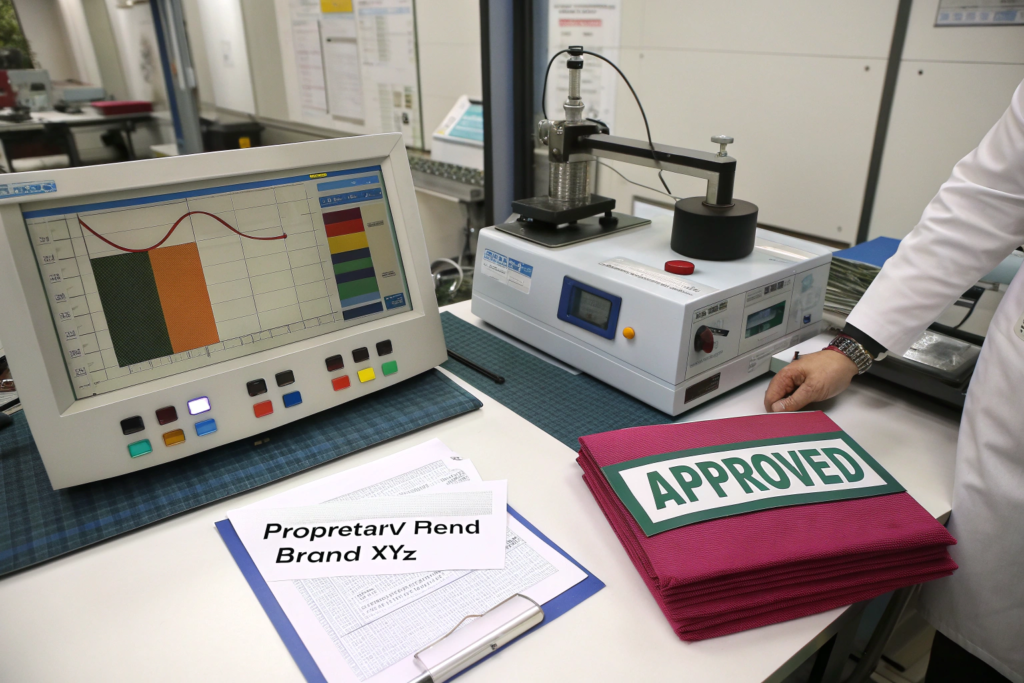
Our validation protocol for proprietary blends is more rigorous than our standard fabric testing because the stakes are higher. We’re not just verifying that the fabric meets a generic industry standard. We’re verifying that it meets your specific performance claims—the claims you’ll print on your hangtag and publish on your product page. Here are two of the most critical tests in the validation sequence.
How Does the "Pilling Test" Predict Long-Term Consumer Satisfaction?
Pilling is the formation of small, fuzzy balls of fiber on the fabric surface after wear and washing. It’s the number one consumer complaint about knit fabrics, and it’s often the failure mode that kills an otherwise successful proprietary blend. A fabric that looks beautiful on the hanger but pills after five wears generates returns, negative reviews, and brand damage.
We test every proprietary blend for pilling resistance using the Martindale method, per ASTM D4970 or ISO 12945-2. A fabric specimen is mounted on a circular holder and rubbed against a standard abradant fabric under a controlled pressure for a specified number of cycles—typically 1,000, 2,000, or 5,000 cycles depending on the end-use. After the test, the specimen is compared against a set of standard pilling rating photographs, and assigned a grade from 1 (severe pilling) to 5 (no pilling).
For a proprietary blend destined for premium retail channels, we require a minimum Grade 4 after 2,000 cycles. For performance activewear that will be subjected to heavy abrasion—think the inner thigh area of running shorts—we test to 5,000 cycles and require a minimum Grade 3-4. If a development sample fails this test, we analyze the pilled fibers under a microscope to determine the root cause: are the fibers too short (staple length issue)? Is the yarn twist too low (yarn structure issue)? Is the fabric density too loose (construction issue)? The answer guides the reformulation.
A proprietary modal-cotton blend we developed for a Swedish sleepwear brand initially tested at Grade 2 after 1,000 cycles—unacceptable for a premium loungewear product. We identified the issue as insufficient yarn twist, which allowed short cotton fibers to migrate to the fabric surface. We increased the twist factor from 3.6 to 4.2, re-knit the sample, and the pilling grade improved to 4-5 at 2,000 cycles. The reformulation added three weeks to the development timeline but prevented what would have been a catastrophic consumer experience.
- Learn the Martindale pilling test methodology and grading standards from the official test method documentation on the ASTM D4970 pilling resistance standard page.
- Understand the root causes of fabric pilling and how to prevent it through yarn and fabric engineering from the technical articles on the Textile School pilling causes and solutions resource.
What Is a "Wash Cycle Torture Test" and Why Does It Matter for Your Brand?
A single wash test—one cycle per AATCC 61—tells you how the fabric performs when new. A torture test—10, 20, or 30 consecutive wash cycles—tells you how the fabric performs over the expected lifetime of the garment. The data from cycle 1 is interesting. The data from cycle 30 is what your customer actually experiences.
Our proprietary blend torture test protocol runs 30 consecutive wash-and-dry cycles per AATCC 61 2A (for home laundry simulation) or AATCC 135 (for dimensional change). After every 5 cycles, we measure the fabric’s dimensional change (shrinkage or growth), color change (fading), pilling grade, and for stretch fabrics, the stretch and recovery percentage. The data is plotted on a degradation curve that shows how the fabric’s properties change over its simulated lifetime.
The degradation curve reveals failure modes that a single-cycle test misses. A fabric might show acceptable shrinkage of 2% after cycle 1, but 8% after cycle 10 because the heat from repeated drying gradually relaxes the internal tensions in the yarn. A spandex blend might show 95% recovery after cycle 1, but only 80% after cycle 20 because the elastane filaments are slowly degrading from chlorine exposure in tap water.
For a proprietary recycled polyester-spandex activewear blend we developed for a Canadian yoga brand, the torture test revealed a recovery degradation from 95% at cycle 1 to 82% at cycle 20—below the brand’s 90% recovery guarantee. We traced the issue to the spandex type; we were using a standard spandex that hydrolyzed under repeated hot-water exposure. We switched to a chlorine-resistant spandex formulation at a $0.15 per meter premium, and the 20-cycle recovery improved to 93%. The brand’s product page now advertises "90% stretch recovery after 30 washes, tested and guaranteed," and their return rate for "stretched out" complaints dropped to under 1%.
- Read about accelerated laundering test standards and how they simulate garment lifetime from the methodology guides on the AATCC 61 colorfastness to laundering test standard.
- Understand spandex degradation mechanisms in repeated laundering and how to select durable elastane from the fiber science resources on the INVISTA Lycra durability and care guide.
Conclusion
Customizing a proprietary fabric blend exclusive to your brand is not a transaction. It’s a strategic partnership with a mill that’s willing to invest in your vision, protect your intellectual property, and stand behind the performance claims you make to your customers. The process demands a different kind of engagement: a clear development brief, an honest conversation about minimum volumes and cost amortization, a willingness to iterate through pilling and wash cycle failures, and a contractual commitment that locks the specification to your brand for years, not seasons.
The Vancouver athleticwear founder I mentioned at the beginning? Her proprietary fabric launched 11 months after that initial conversation. It’s a 68% recycled nylon, 22% Tencel, 10% chlorine-resistant elastane single jersey with a proprietary sueded finish and a specific wicking chemistry that dries 35% faster than the standard nylon-spandex she was buying off the open market. Her wholesale accounts can’t comparison-shop her fabric because it doesn’t exist anywhere else. Her competitor’s "signature fabric" is still a stock quality. Hers is legally hers.
If you’re ready to start the conversation about a fabric that belongs exclusively to your brand—not just a custom color on a stock base, but a genuine proprietary construction—email Elaine at elaine@fumaoclothing.com. Describe what you want the fabric to feel like, what performance claims you want to make, and what retail price point you’re targeting. She’ll set up a development call with our R&D team to assess feasibility and outline a timeline and investment estimate. The fabric your brand deserves doesn’t exist yet. Let’s build it together.