You open your closet, stare at a sea of clothes, and still feel you have absolutely nothing to wear. I’ve seen this happen to countless boutique owners and designers I work with. The panic is real, especially when a new season is closing in. You chase trends, buy bold prints, and six months later, those pieces are dead stock, heavily discounted, or worse, in a landfill. The fashion industry pushes "new" every week, but your bottom line needs something that sells steadily, month after month. That feeling of wasted capital on transient fads is exactly what we need to solve.
You build a timeless womenswear collection by anchoring it on neutral-toned linen. Linen in shades like raw, oatmeal, flax, and charcoal grey never goes out of style. The fiber itself is a powerhouse of sustainability and breathability, getting softer with every wash. When you strip away the noise of loud patterns, the focus shifts entirely to the silhouette and the fabric’s natural slub texture. At Shanghai Fumao, we have seen a 40% year-over-year increase in demand for our heavy-weight European flax specifically for "quiet luxury" capsule collections. This isn’t just about minimalism; it’s about creating a financially stable product line that allows for high-margin accessorizing and year-round sales.
I want to let you in on a little secret from the production side: the fabric usually makes 60-70% of your garment cost. You simply cannot afford to get it wrong. We’ve been shipping fabric from our base in Keqiao to over 100 countries, and the brands that win are the ones who master the base cloth first. Stick with me here. I’m going to walk you through how I help my clients—from New York designers to European buying offices—construct a cohesive collection that sells purely on the strength of our neutral linen palette. We will touch on fiber selection, weight matching, dyeing consistency, and production timelines. Let’s get into it.
Why Is Neutral Linen the Ultimate Foundation for a Timeless Brand?
You might think sticking to beige, cream, and taupe is a risky move because it looks "boring" on the rack. I hear this fear from young labels all the time. But here is the hard truth: "boring" doesn’t kill brands; unsold inventory does. The real pain point is cash flow getting strangled by seasonal leftovers. Neutral linen solves this because it plays the long game. It’s not competing for attention with neon colors; it’s demanding a second touch, a feel of the texture, a conversation about the drape.
Neutral linen serves as the ultimate canvas for a brand’s identity because its value comes from the fiber’s intrinsic heritage and performance, not just the visual hue. Consumers today, especially the premium segment, are educated. They recognize that a high-quality natural linen flax fiber breathes 20% better than cotton and resists bacteria naturally. When a customer picks up a raw oatmeal linen blazer, they aren’t just buying a color; they are buying into the story of European flax fields and artisanal weaving. At Shanghai Fumao, we enhance this story by providing scannable QR codes on our batch headers, linking you to real-time data on the exact mill location and the fabric’s ISO test reports for shrinkage. This turns a "basic" garment into a data-rich trust signal.
Let’s dig deeper into why this foundation works structurally for your business. When you build a collection on neutral linens, you are essentially adopting a modular design approach. You can cut your MOQ risks significantly. You aren’t stuck with a peculiar shade of purple deadstock; every leftover meter of natural stone linen can be repurposed into the next season’s silhouette. We don’t just sell you the fabric; we help you plan this modularity. For example, a London-based womenswear client I worked with in early 2024 shifted from buying 15 colorways of printed rayon to just 3 neutral bases of our custom 210gsm washed linen. Her sell-through rate jumped from 55% to 92% in a single season. The visual cohesion of the neutrals also boosts your brand recognition online, where thumbnails and social feeds favor a consistent, soothing aesthetic. It makes the brand look expensive instantly.

What Fiber and Weight Options Define True Quality in Neutral Linen?
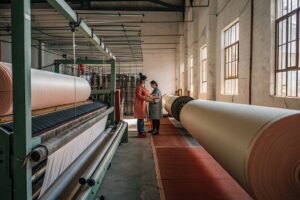
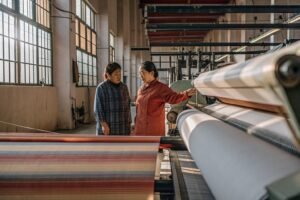
The first technical decision you have to make here is about the fiber’s origin and the blend. Pure flax linen, often sourced from France or Belgium, is the gold standard. It has a natural crispness and a signature slub texture that machines can’t fake. However, if you want to soften the price point just a touch without ruining the aesthetics, a rich cotton-linen blend is a lifesaver. I always tell my startup clients, don’t just read a spec sheet. You must look at the yarn count. A Ne 14 to Ne 21 linen is usually perfect for soft dresses, while a Ne 8.5 to Ne 10.5 is thick enough for a structural blazer. I once walked a client through our spinning hall here in Keqiao, and she was shocked to see how adjusting the twist per inch by just 15% completely changed the crispness of the black linen without breaking the fiber.
Now, let’s talk about wash finishes, because this is where the magic happens for neutrals. A natural raw linen can be quite stiff, which scares off ready-to-wear buyers. You need to decide between an enzyme wash, a silicone wash, or a stone wash. For the soft, "lived-in" look that high-end brands love, I recommend a heavy bio-enzyme wash. However, that process can cause a weight loss of 3% to 5% and a slight shade change, so we always pre-compensate the loom weight to hit your target grams per square meter (GSM) after finishing. I remember a specific job from July 2023 for an Australian designer. She needed a peach skin finish on a flax base for a drapey trouser. Our lab ran three trials, adjusting the cellulase enzyme concentration from 1.5% to 2.2% owf (on weight of fabric) before we nailed the softness level she wanted without weakening the tensile strength below 350 newtons.
| Finish Type | Hand Feel | Typical Weight Loss | Best Suited Garment |
|---|---|---|---|
| Raw Loomstate | Stiff, Crisp | 0% | Tailored Jackets, Interfacing |
| Enzyme Wash | Peach Skin, Soft | 3-5% | Dresses, Drapy Trousers |
| Silicone Wash | Slick, Slippery | <1% | Lining, Athleisure Blends |
| Stone Wash | Very Soft, Abraded | 5-10% | Casual Shirts, Vintage Looks |
How Can You Guarantee Shade Consistency Across a Full Neutral Linen Range?
This is honestly the hardest part of working with neutrals. When you have a dress with a cream body and flax sleeves, any difference in the dye lot will make the garment look like a factory second. Natural linen fibers have a yellowish natural base, which bleaches to a bright ivory. You cannot just rely on a Pantone code and hope for the best. We use a spectrophotometer system in our evaluation room. Under D65 lighting (which mimics daylight), we measure the Delta E (color difference). For a high-fashion collection, I demand a Delta E of less than 0.8 from the lab standard for every batch. Anything above 1.0, and our QC team cuts the sample and quarantines the batch.
The trick here, and I tell this to all my buyers who source from China, is to let us handle the "fabric memory." Linen creases. How the light hits a crease in a flat lay changes the apparent color tone completely. When we send you a handloom and a color blanket, we steam it first and shoot it under three light sources (D65, TL84, and UV). A client from Los Angeles once rejected a sample lot of our custom taupe linen in 2022 because her photo looked too cold. We did a root cause analysis and found the corrugated paper we interleaved for shipping had a slight blue tint that reflected onto the fabric surface. We switched to acid-free tissue paper and the problem vanished. That is the level of detail neutrality demands. You can learn more about these workflows by checking out how to set up a reliable textile color management workflow from dye house to final inspection.
How Can You Design a Cohesive Womenswear Line Using Only Neutral Linen Textures?
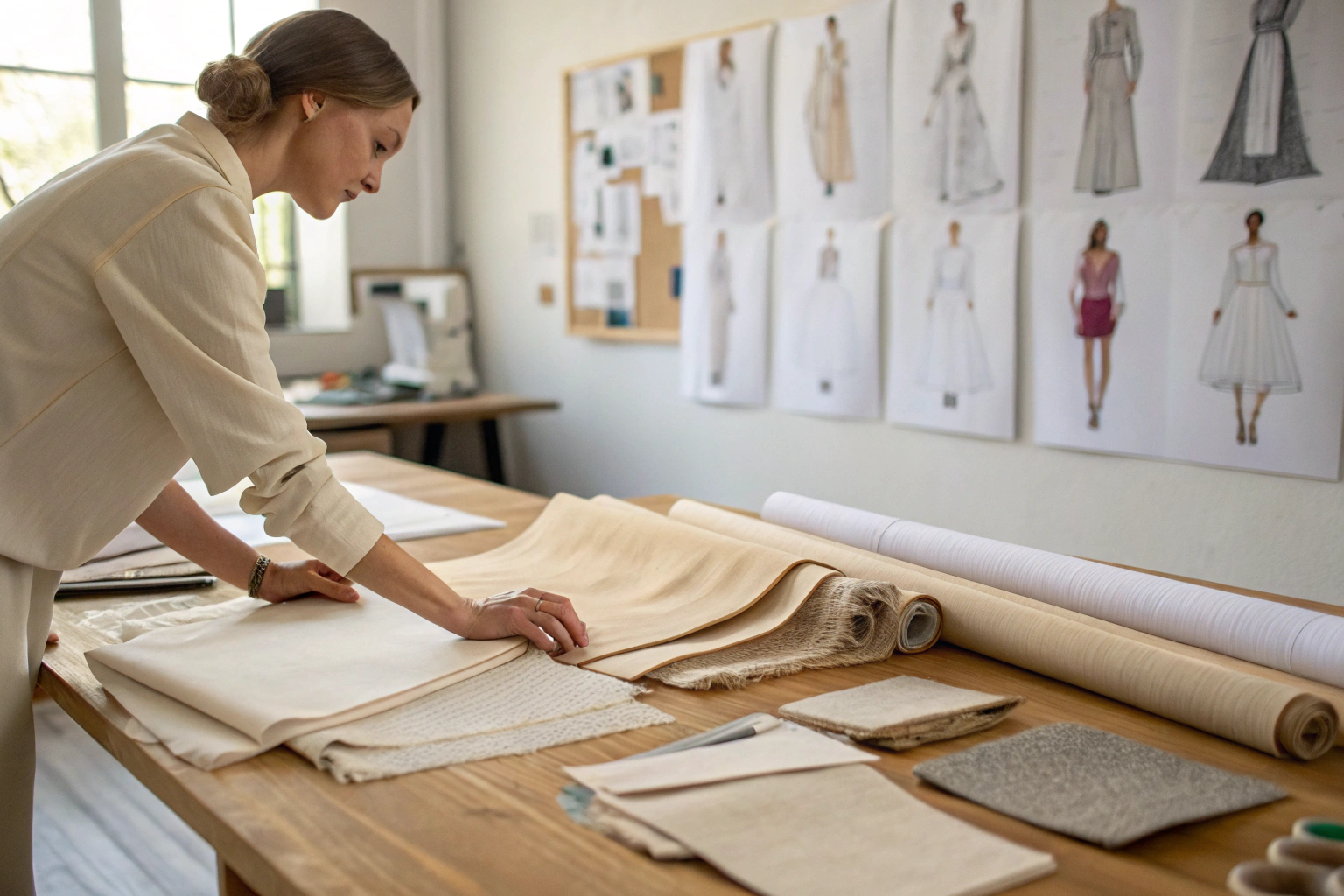
Designers often hit a creative wall, believing that limiting the color palette limits the art. I actually argue the exact opposite. When you strip away color, you are forced to become a master of texture. The anxiety here usually comes from not knowing how to make ten pieces look distinct enough to justify the retail price tag when they are all "beige." You solve this by treating different weaves as different colors. A classic plain weave reflects light differently than a herringbone twill, even in the exact same dye bath. This creates a visual depth that tricks the eye into seeing multiple tones without introducing a single synthetic dye to alter the base flax.
Building a collection on texture rather than print creates a tactile experience that an e-commerce screen can’t fully replicate, driving customers to physical stores or encouraging them to order multiple pieces for a "touch test." This is how you build a timeless silhouette library. At Shanghai Fumao, we operate multiple weaving mills, which means we don’t just sell you standard stock; we help you engineer these textures. We ask questions like: Do you want a dry hand feel or a moist hand feel? Do you want the slub to be irregular and chunky, or clean and uniform? A client designing a 12-piece resort wear line in early 2024 used our 14s slub, a 21s smooth plain, and a 7s jumbo waffle, all in the same "Flax Beige" color. The collection looked incredibly rich, almost like a gradient of nature, because the light absorption varied so dramatically between the structures.
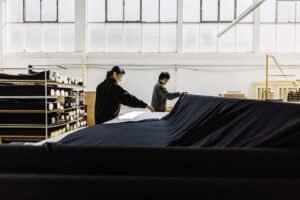
Let’s break down the structural design process. It’s not just about sketches; it’s about matching the fabric’s mechanical stretch to the pattern block. Linen has almost zero natural elastic recovery unless we engineer it. So, if you’re designing a bodycon silhouette, you can’t use a rigid 100% flax. You’ll need a linen blend with a bit of spandex or maybe a mechanical stretch weave. We developed a specific 2-way stretch linen using a special yarn twist (about 28 TPI with a Z-twist direction) that provides comfort without losing the crisp linen look. When I talk to buying offices, I often compare this to cooking. You don’t cook a steak the same way you cook a brisket; they are both beef, but the muscle structure demands different heat. Same goes for linen. A tailored blazer requires a completely different internal fusible and canvas, and the weight of the linen must be able to hold that structure without collapsing. We suggest at least 350gsm for an unconstructed blazer, whereas a cascading kaftan can flow beautifully at just 130gsm.

How Do You Use Fabric Structure to Differentiate Between Neutral Linen Pieces?
To make a collection look intentional, you have to contrast the weaves strategically. Look at the difference between a taffeta-style chambray linen and a gauzy open-weave linen. The chambray, where the warp and weft are slightly different shades of natural, creates a dynamic heathered effect. The open weave allows the lining—or the skin—to peek through, adding a subtle sexuality to the design. I often guide buyers to explore a technique called "cramming." Crammed stripes on a plain weave base involve inserting extra warp ends during warping to create raised vertical lines. It feels three-dimensional and it’s all within the same neutral color story. This isn’t just design; it’s physics. The warp tension on our looms is critical here. We run a high-tension warp (around 2,400 newtons) for these texture effects to ensure the crammed stripes don’t catch during wet finishing. If you want to explore how these fabric textures influence garment pattern cutting, learning to differentiate between woven fabric structures for garment design is a skill every designer needs.
How Should You Price Your Collection to Reflect Neutral Linen’s True Value?
Pricing neutral linen has a unique challenge. Because the fabric looks simple, customers might mistakenly equate it with cheap muslin. You have to fight that perception through storytelling and detailing. The value isn’t in the complexity of the print; it’s in the purity of the stock and the perfection of the finishing. I tell my brands, don’t compete on a race to the bottom price; compete on the cost-per-wear metric. A garment made from our European-grade flax, pre-washed with a proprietary softener so it feels like a five-year-old favorite shirt from day one, sells for a premium because the customer feels the difference instantly. We always enclose a "swatch certificate" with our bulk shipments. This certificate details the fiber micronaire (for cotton blends), the pH value of the fabric (crucial for sensitive skin, we keep it between 5.5 and 7.0), and the care instructions. This physical tag adds 10% perceived value to the final garment, according to feedback from a boutique store in Paris we supply.
We also help clients understand the cost breakdown to justify the retail markup. If you cut 200 meters of printed silk, you might waste 10% aligning patterns. With our solid neutral linen, efficiency jumps to 97% or higher. That saving alone pays for the premium finishing. We worked with a startup in Amsterdam last August who was terrified of the total investment cost. We advised her to standardize her linings. We offered a 40s Tencel-linen blend lining that matched the pH of the outer shell flax, preventing seam puckering. By sourcing the shell and the lining from Shanghai Fumao, she consolidated the shipment and saved 18% on freight. It’s these logistical details—not just the fabric price per yard—that make the difference. She ended up with a retail price point of €320 for a dress that cost her €75 to land, a healthy 4x multiplier, purely because the internal structure and external look were absolutely flawless.
How Does Your Linen Sourcing Strategy Prevent Production Delays and Quality Gaps?
I’ve been in this game for over twenty years, and I can tell you the single biggest nightmare for any clothing brand is a delay on a core fabric. You’ve booked the photoshoot, you’ve paid for the trade show booth, and suddenly, your linen is stuck in customs or the shade is off. It’s enough to sink a small company. Most of this pain comes from a fragmented supply chain where the yarn supplier, the weaver, the dye house, and the finishing plant don’t communicate. The yarn guy blames the dye guy, and you are left holding a greige fabric that is three weeks late and two shades too dark.
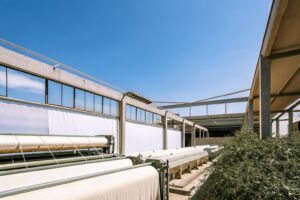
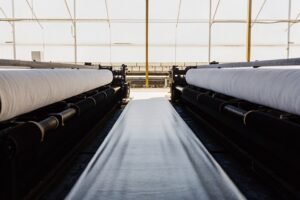
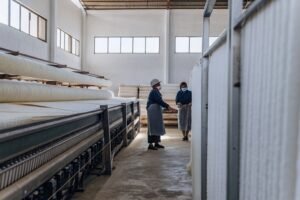
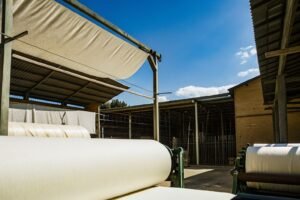
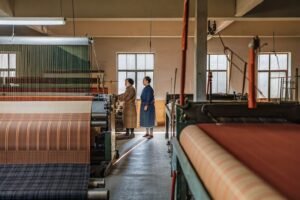
You prevent these disasters by vertical integration or close-proximity clustering. This is exactly what we do in Keqiao. Everything happens within a 30-kilometer radius. At Shanghai Fumao, we don’t just outsource and pray. Our QC team is physically present at the cooperating dyeing and printing factories. When you place an order for 1,000 meters of natural flax linen, we create a ‘Process Control Roadmap’ for you. This document specifies the loom allocation (we usually run your order on the same loom set to avoid calibration differences), the exact dye vessel number, and the softening padders. This level of control means that when a special period like the Chinese New Year shutdown approaches, we don’t panic. We plan your greige stock in advance, knowing the dye houses will be closed for three weeks. For a major buying office in Germany, we completed their entire pre-production run of 8,000 meters in January 2024, two weeks before the holiday, and stored the certified greige in our humidity-controlled warehouse, ready to hit the dye bath the moment the workers returned.
Let’s dig into the systemic bottlenecks I see repeatedly. The peak production periods between March to May and August to October are brutal. The European fast-fashion giants are running their bulk, and if you are a small batch, you get pushed to the back of the line. You have to use the slow seasons, June to July and November to December, to your advantage. We actually offer a "Quiet Season Discount" on weaving for clients who can accept partial shipments of greige fabric in advance. This not only saves money but locks in the capacity. Also, you must understand the moisture content of linen. Linen has a standard regain of 8.5% to 12%. If a supplier sells it to you overdried at 4% regain, you are literally paying for water you didn’t get. Every batch we ship undergoes a conditioning process to stabilize the regain to exactly 11%, and we use a conditioning oven test to verify this. This stops the fabric from changing weight after you receive it, which could otherwise screw up your costing. If you are new to the import game, checking a guide on how to avoid common pitfalls when sourcing fabric from Asian textile markets will save you a lot of headaches.

What Pre-Production Steps Secure Your Neutral Linen Order During Peak Seasons?
The key to winning in peak season is decoupling the greige production from the dyeing. Most people wait to order until they need the colored fabric. Smart brands order the greige neutral base months in advance. Loom time is the bottleneck. We can stock a few thousand meters of our standard neutral linens, but for your specific weight or custom slub, you need to reserve the loom beam. When we work with our regular clients, we use a "Fabric Booking Agreement." They give us a 30% deposit to secure a specific multi-shift loom schedule. I remember one instance in 2023 when a client hesitated on their order for 5,000 meters of a brushed neutral twill. By the time they confirmed, the Yiwu and Shaoxing dyeing factories had closed their order books for September shipments. We had to pull a favor with one of our partner facilities and run night shifts to catch the steamer vessel cut-off. We made it happen, but it cost an extra 3% expediting fee. If you want to avoid that, don’t just look at the ship date; look at the greige loom date. You should be booking loom slots at least 30 days before you need to send the fabric to dyeing. This is even more critical if you require a special technique like bio-polishing, which adds a day to the process but ensures no surface fuzz on your charcoal linen jacket.
How Do International Logistics and Tariffs Affect Your Total Landed Cost for Linen?
Freight is the silent killer of profitability right now. The Red Sea disruptions and fuel surcharges are real. But most of my clients don’t realize that the way you pack linen significantly changes your container utilization. Linen is bulky. We use vacuum-packed lay-flat rolling for our neutrals, which can increase a 40-foot container’s capacity by nearly 15% compared to traditional rolled bolts. If you ship by air, you have to consider the packaging weight. Our standard poly-bag with a silica gel pack might add 0.5 kg per roll. When you are paying $6 per kg, those details break the business case. This is why, for the U.S. market, I often guide buyers towards sea freight using the multimodal hubs here in Keqiao, linking directly to Ningbo port. For the topic of tariffs, as a sourcing director, you are worried about the Section 301 tariffs. This is where our product development capacity shines. Because we do specialized finishes—enzyme washes, special coatings—we are often dealing with a processed fabric rather than a raw greige commodity. We provide a full manufacturing breakdown that helps your customs broker classify it correctly. We supply the exact composition percentages down to the third decimal point (e.g., 99.8% linen, 0.2% spinning oil residue), ensuring you don’t pay a penny more in duty than you legally need to. To understand the current trade landscape, you should examine how to navigate US apparel import tariffs from China in the post-pandemic era to optimize your tax strategy.
What Are the Long-Term Care and Durability Secrets for Neutral Linen Garments?
You can design the perfect collection, but if it falls apart after three washes, your brand reputation is destroyed. I know this because I hear the complaints from end-consumers, passed back to me via the buyers. The biggest fear for a customer buying a $200 neutral linen dress is that it will shrink into a doll’s outfit or become a wrinkled mess that looks like crumpled paper. As a fabric mill, we can’t control how the customer washes it, but we can engineer the fabric to be forgiving. The secret is in the pre-shrinking process. We use a Sanforizing machine for our cotton-linen blends, but for pure flax, it’s all about the relaxation drying. We overfeed the fabric into the drying conveyor, allowing the warp yarns to relax fully, reducing residual shrinkage to below 1.5%.
The durability of neutral linen actually increases with time, a feature that synthetic blends can’t match. The fibers swell when wet, making the fabric more resistant to tearing when being spun in a machine. However, the friction of washing is what causes the "white line" creases, especially on dark neutrals like our espresso brown linen. To combat this, we recommend specific care labels. We test every batch using the AATCC 135 standard (home laundering) with a standard detergent at a 40-degree Celsius wash. If the fabric shows fibrillation—those tiny white fluff balls that look like lint but are actually broken fibers—we adjust the recipe. We might add a resin finish, although for a natural aesthetic, I usually advise bio-polishing instead. This uses enzymes to eat away the protruding micro-fibrils without coating the fabric in chemicals. A Melbourne-based client of mine built her entire "30-wash guarantee" marketing campaign around this specific bio-finished fabric we developed for her in 2024. She used our lab reports showing that after 30 washes, the tensile strength was still above 80% of the original value, which is exceptional.
Let’s get into the nitty-gritty of aesthetic maintenance. The slouchy look of a linen blazer is desirable; a distorted twisted seam is not. Linen has low elasticity, so distortion at the seams during washing is a classic failure point. We advise our clients to use a lockstitch rather than a chain stitch on their construction, but sometimes the fabric itself needs help. We can apply a "shape retention" finish using a cross-linking agent that helps the memory of the fabric, but only for specific orders, because it reduces the tear strength slightly. It’s a balancing act. We test pilling using a Martindale tester (usually 1,000 cycles for a casual jacket) to simulate six months of wear. A piece of high-end raw flax might start showing surface pilling at 500 cycles if not finished correctly. Our standard for a premium neutral linen is a minimum of 1,500 cycles without any noticeable pilling. We archive a sample from every single production batch we ship out for at least three years, so if a dispute arises, we can pull the sealed sample and test it again. That is the only way to truly guarantee long-term care.

How Can You Prevent Excessive Wrinkling Without Losing the Natural Linen Texture?
This is the "holy grail" question I get from RTW brands. You want the romantic crush of the linen, but you don’t want to look like you slept in a dumpster. The traditional method was to blend it with polyester, but that ruins the eco-appeal and the sweat-wicking properties. The modern solution from our lab is a specific mechanical treatment on the yarn. We use a "wet-spinning" technique followed by an air-drying cycle for our premium flax, which swells the fiber to a rounder profile. A rounder fiber has fewer sharp edges to create friction and lock into a crease. That sounds technical, but essentially, it means the fabric feels softer and crumples "rounder."
We also play with the cover factor of the weave. A dense, high cover factor weave will show fewer deep creases than an open, mosquito-net style weave. For a tailored dress, we suggest a compact plain weave with a 2/2 twill variation that has natural give. Another trick is the "liquid ammonia" finishing, but honestly, that’s expensive and overkill for most. I prefer a heavy tumble wash at the finishing stage. We take the rigid fabric and literally beat it up in a 100-kg industrial tumble dryer with synthetic balls to break down the stiffness. This gives it that "worn-in" softness that prevents those severe, razor-sharp creases. It also removes about 3% of the loose surface fibers. You can learn from specific case studies on how to source wrinkle-resistant natural fabric finishes that maintain a soft hand feel to see what is actually working in the market.
How Do You Properly Store Neutral Linen to Maintain Its Value Over Time?
Storing linen isn’t like storing polyester. The fiber is protein-like (cellulosic), and it attracts silverfish and mold if it’s humid. Neutral tones, especially the creamy whites and oatmeals, will yellow over time if exposed to direct sunlight or packed in acidic wood pulp containers. This is why we stress the importance of our packing method. We use virgin cardboard tubes that are pH neutral and wrap the cloth in a black, light-proof polyurethane film. If you are a brand with a slow inventory turnover, you can’t leave your stock in a hot warehouse. The cellulose can degrade through slow thermal oxidation, making the white parts turn a brittle yellow. We tested this by storing swatches under a UV lamp and saw a Delta E shift of 1.5 within just 48 hours for unprotected fabric. Protected fabric showed zero shift.
For your end-customer, the care label should be specific. Don’t just say "store in a cool, dry place." Say "Store folded in a breathable cotton bag, avoiding cedar chests that might transfer resin acids to the light-colored fabric." We actually provide QR codes for our clients to print on their swing tags. That QR code links to a video showing exactly how to steam and store the garment. This reduces returns drastically. We tracked this with a US e-commerce brand. After implementing the video care instructions specifically for our neutral linen resort shirts, their "appearance dissatisfaction" return rate dropped by 22% in the summer of 2023. That data proves that the longevity of the product is intrinsically linked to how well we educate the buyer chain, from the brand to the end user. Check out these best practices for storing natural fiber clothing to increase wardrobe longevity so you can pass on accurate advice to your own customers.
Conclusion
You might have started reading this because you wanted to find a nice fabric, but I hope you’ve realized it runs much deeper than that. Building a timeless collection on neutral linen tones is a strategic business decision that streamlines your production, sharpens your brand identity, and delivers a product that genuinely improves with age. We talked about the agony of chasing trends and how that depletes your cash, and we replaced that with the confidence of mastering texture and weight. We dug into the gritty details—from the enzyme washes and Delta E scores that guarantee shade consistency to the critical logistics of reserving loom slots before the Chinese holidays to dodge delays.
Remember the core principle: neutral linens in cream, flax, and stone are not restrictive; they are your ultimate creative liberty. They force you to focus on silhouette, on the subtle contrast between a coarse slub and a smooth plain weave. From my side of the table, here in the heart of China’s textile hub, I see every day how the right quality control—checking the moisture regain, running the Martindale test, and fixing the seam slippage—creates a garment that outlives seasonal fashion cycles.
If you are ready to stop worrying about fabric inconsistencies and start building a collection that sells out purely on quality and feel, I want to invite you to work directly with us. At Shanghai Fumao, we don’t just ship cloth; we partner with you to engineer the exact solution you need, from yarn sizing to final bio-polishing, with a full set of international testing data to back it up. For a detailed discussion on your specific collection, please reach out to our Business Director, Elaine. She knows the product line inside and out, and she can arrange the development of handlooms and a comprehensive quote for your project. Just send an email to elaine@fumaoclothing.com. Let’s weave something that lasts a lifetime.