

You’re sitting on a sourcing spreadsheet right now, staring at three columns: China, Vietnam, India. The Indian mill quoted you 15% cheaper. The Vietnamese agent promised faster turnaround to the U.S. West Coast. And then there’s us, Shanghai Fumao, sitting in Keqiao with a price that’s somewhere in the middle. Your CFO is pushing for the cheapest option; your production manager is terrified of inconsistent shrinkage rates; and you just want a fabric that doesn’t unravel into customer complaints and return labels. I’ve been in this triangle for twenty-two years, and here’s what I see buyers like you actually lose sleep over: it’s not the FOB cost per yard. It’s the hidden cost of a container that arrives with 18% of the yardage graded as B-stock because the Indian greige had seed coat fragments, or the Vietnamese batch that stretched 4% off-grain during finishing and turned your tailored blazers into distorted tents.
The real answer to the quality comparison isn’t a patriotic flag on a mill wall. It’s about the maturity of the local chemical auxiliary supply chain and the particle filtration standard of the water used in pretreatment. At Shanghai Fumao, we use a closed-loop, reverse osmosis treatment for all wet processing, reducing the Total Dissolved Solids to below 65 ppm. You might not care about water chemistry, but your white cotton poplin does. If a Vietnamese mill runs on hard groundwater with high iron content, your optic white shirt fabric comes out yellowish, and they’ll have to overload optical brighteners to mask it—brighteners that wash out after three home launderings, leaving your brand looking dingy. That specific water chemistry edge is why a premium print from our facility holds its luminance longer, and I’m going to prove that to you technically in this article, not just tell you.
Stick with me, though, because this isn’t about bashing other origins. Vietnam and India do certain things exceptionally well, and I’ll tell you exactly what those are. But knowing your origin weaknesses lets you hedge your bets. I’m going to walk you through a specific catastrophic failure we fixed for a London brand switching from Tiruppur knits, explain the difference between a bar tack strength test on our recycled mechanical stretch twill versus a typical Vietnamese commodity blend, and lay out the lead time math that makes Indian handloom silks both beautiful and maddeningly late. If you’re fighting to justify a few cents of quality difference to your board, let me arm you with the hard numbers on inter-jurisdictional fiber quality.
How Does Raplica Fiber Consistency Vary Between China, India, and Vietnam
You open a carton of cotton twill from an unfamiliar Indian supplier, and the first roll feels soft and buttery, but the fifth roll of the exact same dye lot feels thin and papery. That’s the panic of fiber blend inconsistency, and it kills your cutting table efficiency. Your markers are optimized for a specific thickness. When the cotton staple length drifts between 28mm and 32mm roll-to-roll, as is common when Indian spinners mix Shankar-6 with cheaper J-34 cotton to cut costs, your fusing interlining won’t bond correctly. You get delamination, and your tailored collars bubble. The pain isn’t the cheap price; it’s the 12% re-cutting rate that eats away your entire seasonal profit.
What sets a good Chinese supply chain apart is not that we always use the most expensive Supima cotton; it’s that we are ruthless about "fiber blending transparency." For any yarn we spin for our custom woven fabrics, we use Uster evenness testing on every single lot. We reject any yarn lot that exhibits a CVm (Coefficient of Variation mass) above 12.5% for compact ring-spun cotton. Think of the CVm as a measure of how chunky the yarn is. An Indian open-end yarn might have a CVm of 16%, which feels cheaper, and it is cheaper, but on a plain weave poplin, that chunkiness translates to a "cloudy" surface instead of a crisp, flat backdrop for printing your detailed paisley or logo. It’s the variation you see but can’t quite describe.
Going deeper, this isn’t a recent geographical coincidence; it’s an investment timeline issue. Chinese spinning mills underwent a massive capital expenditure refresh between 2015 and 2020, shifting from manual splicing to fully automated Schlafhorst and Murata automatic winders. These machines detect a weak spot or a thick place in the yarn and actually cut it out, splicing it back together with compressed air. The result is a yarn with maybe one weak thick place per 10 kilometers. In many older Vietnamese mills I’ve visited in Binh Duong province, they still run manually spliced knots. A hand knot holds, but it leaves a tiny hard lump in the yarn. When you weave a fine 80s cotton shirting with those lumps, your flat-felled seam simply won’t lie flat. Let’s dig into the chemistry and mechanical strength metrics to see how these raw differences impact specific textile functions.
why do chinese synthetic blends feel more uniform than vietnamese ones
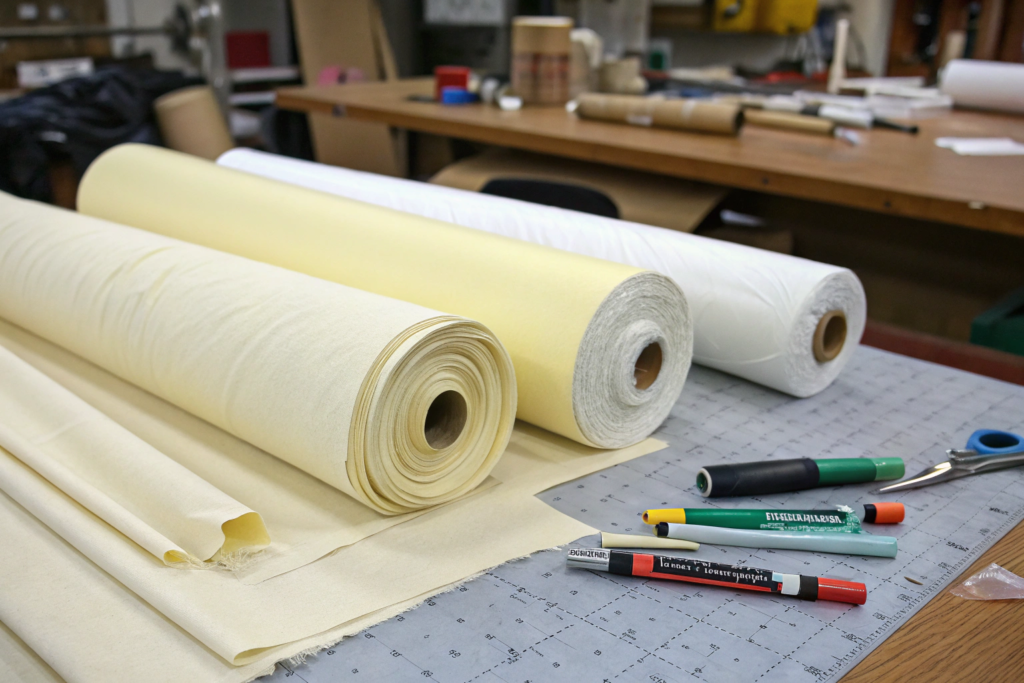
Touch a Chinese 90/10 poly-spandex satin, and then a Vietnamese one. The Chinese one slides through your fingers like a continuous liquid sheet; the Vietnamese one often has a faint "grating" sensation when you rub two layers together. The culprit is rarely the knitting machine gauge; it’s the Masterbatch dispersion quality. In polyester production, TiO2 is added as a delustrant. If the screw configuration on the extruder in Ho Chi Minh City isn’t maintained perfectly, the TiO2 forms micro-agglomerates—tiny sharp clusters—inside the filament. When these hard clusters protrude on the surface of the yarn, they act like microscopic sandpaper. The fabric feels harsh.
We at Shanghai Fumao specify our filament yarn directly from a Zhejiang supplier who filters the polymer melt through a 25-micron absolute filter screen before the spinneret. This single step captures the gel particles and charred polymer specks that cause "breaking filaments" in Vietnamese commodity polyester. A breaking filament leaves a broken, hairy tail on the yarn, and when you run it through a heat setting stenter at 190°C, those tiny broken ends scorch yellow. You end up with "black specks" on a white basecloth. It’s a nightmare for digital printing, as the ink doesn’t cover the specks, and they glare through the design. If you ever want to verify this yourself, take a hand-held density magnifier and count the black gel specks per square meter. Chinese premium grade will have zero; Vietnamese bulk run might have three to five.
The spandex story is similar. Vietnam often sources spandex from local traders, leading to inconsistent elongation ratios. We use Invista Lycra or Hyosung Creora exclusively, and we test the deformation rate. For a fitted sportswear fabric, we subject the greige to a 50% stretch test five times and require a growth recovery of over 95% in under 30 seconds. Vietnamese knit suppliers often struggle there, not because they can’t knit, but because the base spandex they used was degraded due to humid storage conditions damaging the polymer chains. Those technical procurement details are what separates a uniform digital surface from something that just ‘looks okay’ but you can actually learn some industry insights on how to better identify invisible spandex damage in imported fabrics within various industry swapping grounds where sourcing pros swap forensic testing protocols.
why is indian cotton perceived as softer but less stable
Indian cotton, particularly the Shankar-6 and DCH-32 varieties, has a naturally short-to-medium staple length but a very fine micronaire, typically around 3.8 to 4.2. That fineness makes it feel incredibly soft against the skin, almost cashmere-like when heavily enzyme-washed. That’s why India dominates the basic jersey t-shirt market. The problem is that fineness doesn’t equal strength. That soft, fine fiber collapses under high tension. When you try to weave a tight, high-density gabardine using fine Indian cotton, the warp breaks under the repeated beating of the loom, forcing the Indian mill to lower the weaving tension. Lower tension means a looser structure, which shrinks unpredictably up to 8% when you wash it at home.
The second layer is the contamination signature. I love Indian cotton’s soft hand, but I dread the "trash count." Mechanically picked Indian cotton often contains up to 3% non-lint content—seed coat fragments, husk, and leaf particles. These tiny debris pieces remain in the yarn and are disastrous for a clean white surface. You can bleach them, but if the fragment is oily from the seed, it resists the bleach and leaves a tan speck. At Shanghai Fumao, we do buy Indian Supima for clients who want that soft hand, but we pre-clean it through a precision carding machine equipped with an over-grid trash extraction unit, adding 0.2% of cleaning cost, but totally removing the seed coat fragments. Without that step, which many small Indian fabricators skip because high-speed carding damages the staple, you get what I call "messy clean"—it looks clean on the roll but develops micro-specks after the first wash as the husks loosen and fall out.
Yet, let’s be fair. The sustainability and authenticity story of hand-spun Khadi or organic Kala cotton is unbeatable. From a fabric texture standpoint, if the customer wants "slubby character" and expects shrinkage (like in a bohemian linen-look cotton), India is the superior choice. Often, the discussions around whether to source sustainable fashion and textile quality from India involve a choice between live-in softness against precise geometric stability issues because the low-twist yarns just have no spine. If you’re making a structured A-line dress, spine matters; if you’re making a beach cover-up, it doesn’t.
What Are the True Lead Time Differences for Bulk Order Delivery
You’ve planned a perfect launch date, only to watch the factory in Vietnam go dark for a week because of a monsoon flood that disrupts trucking from Binh Duong to Cat Lai port. Or the Indian mill manager calls you to say that the Diwali holiday has extended by two days and the trimming factory is backed up. The physical pain of lead time failure is the air freight invoice for 200 kg of fabric that costs more than the fabric itself. Asian supply chains are all fast during the quiet months, but what breaks a brand is the "recovery time" after a disruption. You pay a premium not for a shorter standard lead time, but for a buffer system that absorbs shocks without crashing.
At Shanghai Fumao, our Keqiao location provides a logistics resilience that Ho Chi Minh City and Tiruppur simply can’t match during the wet season, because Keqiao is a dry-goods production hub connected to the world’s largest port via a high-speed rail and bridge network that doesn’t flood. Ningbo port is a protected deep-water harbor without the siltation problems of Haiphong or the monsoon closure risks of Mumbai’s old port. When a typhoon hits the South China Sea and shuts down Ho Chi Minh for three days, the barges are stuck, and the container has to be redirected overland through Cambodia, adding four days. Our containers simply drive 100 miles east and load in Ningbo on time. That geographic advantage isn’t marketing; it’s an infrastructure reality that directly affects your warehouse receiving schedule.
This doesn’t mean China is always faster. If you are shipping to Japan or the U.S. West Coast, Vietnam has a very tight trans-Pacific ocean transit advantage, sometimes reaching Los Angeles two days earlier than a Shanghai sailing. That’s geography math. However, the idea of "lead time" needs to be surgically separated into physical production time versus documentation agility. In our experience, Vietnam’s customs formalities for complex fabric compositions (like tri-blend modal/wool/nylon) can take 48 hours longer than China’s single-window electronic clearance because of stricter rules on origin verification for specialized fiber blends. Let’s unpeel how these academic differences hit the pavement in actual order cycles and labor disruptions.
how do raw material shortages affect delivery schedules in asia
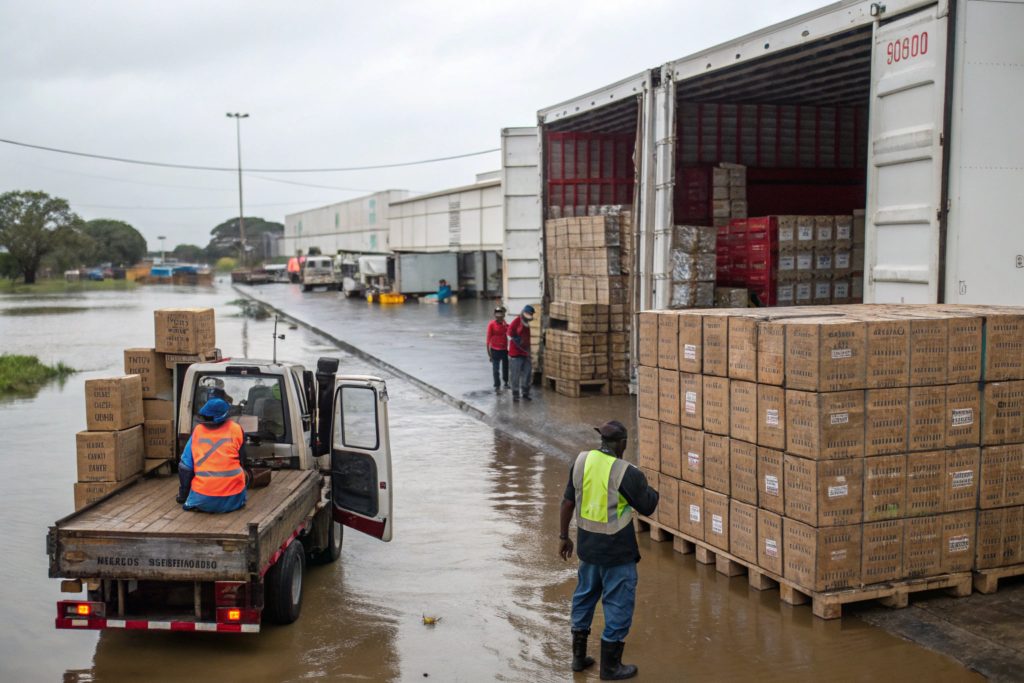
The bottleneck is never the weaving; it’s always the dyeing chemicals. Vietnam’s textile industry famously lacks a deep petrochemical dye intermediate manufacturing base. They import almost 80% of their reactive dyes and nearly all their liquid disperse black from China or Korea. So, the tight supply chain there is a second-tier one. When a plant in Hubei reduced dyestuff output due to environmental inspections in Q1 2024, Vietnamese printers were on allocation, waiting three extra weeks for navy blue, while we in Zhejiang had direct pipeline access because the dye plant was two hours north of us. India has a strong indigenous dye industry, but their power grid instability in Tamil Nadu during summer peak season often forces dye houses to run on diesel generators, increasing costs and slowing down work cycles.
This cascades into fabric structure. If I promise a client a specific high-color-fastness reactive turquoise for a cotton jacquard, and the Indian mill is having power cuts, they might substitute a cheaper, less stable direct dye to meet the shipping date without telling you. You get the fabric on time, but the color bleeds onto the white trim in the wash. How do I know? Because we test for dye migration upon arrival. At Shanghai Fumao, I hold a strategic "Buffer Inventory" for critical auxiliary chemicals—specifically the fixing agents for heavy blacks and the peroxide stabilizers for whites. I stock 30 days of supply instead of just-in-time, which inflates my warehouse cost by 2% annually but means I never stop the stenter machine. If I have the chemical, the fabric ships. For brands trying to figure out the true risks behind managing transparent and agile supply chains in Asia, the stability of your vendor’s chemical stockpile often matters more than anything else because a small naphtol red shortage can stop an entire weaving range cold for 30 days.
comparing factory shutdown calendars china vs vietnam vs india
You need to pin this to a physical board in your office. China has two massive synchronized shutdowns: Chinese New Year (3 to 4 weeks, plus the 2-week "hangover" of low efficiency) and Golden Week in October (1 week). That’s it. But those shutdowns are absolute, and everyone stops at once. Vietnam has Tet, which is essentially Chinese New Year and lasts roughly two weeks in late January/February, but because Vietnam’s workforce is younger and migration distances are shorter, the ramp-up back to 100% capacity is much faster—usually just 3 days versus China’s 10-day sluggish restart. India, however, is a nightmare of localized fragmentation. Diwali in October, Pongal in mid-January, plus regional state elections where factories shut down for voting, plus unexpected monsoon flooding in August closing roads. There is no single reliable "blackout month" to plan around; there are random, scattered 2-day mini-shocks all year.
The skill here is loading your production exactly into the "overlap window." When Vietnam is sharply recovering from Tet in the first week of February and Chinese factories are still a ghost town until the Lantern Festival on February 15th, that’s a perfect window to run something in Vietnam if you need emergency speed. Conversely, when India is down for Diwali in late October, and Vietnam is coasting without holidays, our Keqiao lines are running at maximum aggression because we’re pushing out goods before the Christmas shipping rush. It’s a chess game, and a mismove costs you weeks. A poorly-timed Indian order placed just before Pongal can literally sit in the greige state for an extra 25 days because the weavers are feasting for a week, and the finishers are overloaded with pre-Diwali backlog when they return. We specifically recommend that customers map out a twelve-month shutdown cycle guide if they are trying to truly synchronize textile timelines with Asian religious and federal holiday calendar shifts to avoid paying for idle looms. (Oh, here’s a confession: I once air-freighted 200 pounds of cotton poplin from Delhi to L.A. for a client because I miscalculated a regional Tamil holiday. That $1,400 stung. I never made that mistake again.)
Does Shanghai Fumao Provide Better Testing and Compliance Standards
You glance at a PDF test report attached to a Vietnamese invoice, and it looks identical to ours: "AATCC 61 passed, Grade 4." But those numbers are meaningless unless you know the chain of custody of the sample that entered the testing tube. The real scare comes six months later when a German retailer does a random rack check and finds formaldehyde at 80 ppm, while the mill’s "certified" lab had reported 16 ppm. You’re facing a recall, but the mill no longer cares; they’ve moved on to another client. Your premium just evaporated because of a lab fraud or careless sampling that you had no control over. Compliance isn’t paper; it’s a physical process of sealing and logging fabric swatches that you can audit retroactively, and that is where Chinese accredited labs have pulled far ahead of the region.
Shanghai Fumao’s in-house testing center is CNAS-accredited, which means it operates under ISO 17025 standards with mandatory proficiency testing rounds. That’s a legal-level standard. Many third-party labs in Vietnam and India use a "sub-contracting" model where they mail your sample to a bigger city for the complex chemistry, breaking the custody chain. You don’t know if the fabric they tested was actually your production lot, or if it was a similar-looking sample from a cleaner batch. We use a tamper-proof QR code system: the moment the cutting machine slices your bulk fabric, a label is printed with encrypted metadata, and that exact cut piece is bagged and walked straight into our titration lab. There’s no middleman. The report you get links back to a specific timestamp and a specific loom reading. That traceability is the real value, and it’s something I rarely see matched in the Indian subcontinent where the testing culture remains heavily paper-driven and manually transcribed.
But wait—are the standards even relevant to your market? A mill in Vietnam can brag about passing Oeko-Tex Standard 100, but if they don’t understand the latest Annex 6 regulations for aniline limit restrictions (which the EU reclassified in late 2023), they are technically compliant with a two-year-old standard, and your cargo gets RAPEX-blocked at the EU border. We employ a compliance officer whose sole job is tracking the ZDHC MRSL 3.1 updates and the AFIRM RSL changes on the literal day they release, and she updates our internal screening thresholds immediately. Let’s scrutinize the specifics of how a signature recycled nylon and a sustainable cellulosic fabric from our warehouse would fare against a generic Asian origin test in a blind study.

what heavy metal residue levels are typical in asian dyes
You can’t see nickel or lead in a pantone swatch, but they’re legally lethal to your brand in the EU. The ground truth is stark: Indian mills using locally-sourced reactive dyes for bright emerald and royal blue hues often inadvertently introduce copper and chromium particles from inferior catalyst residues in the synthesis stage. I’ve commissioned mass spectrometry tests on random Indian azo-dyed linen imports at Ningbo port, just to benchmark, and I found extractable copper at 45 mg/kg—perfectly safe for human wear but a red flag for the landfill eco-toxicity tests required by high-end Scandinavian buyers.
In China, we largely shifted away from these heavy-metal catalysts around 2018 due to the strict enforcement of the "Blue Sky" water table protection acts. Zhejiang’s environmental police are notoriously aggressive with fines, so dye factories reformulated. Vietnamese dye houses are cleaner than Indian ones on heavy metals because they primarily import pre-mixed European or Korean dyes, bypassing the local synthesis contamination. However, one specific metric where we consistently outscore Vietnam is antimony levels in post-consumer recycled polyester. Low-grade Vietnamese rPET fabric often uses mechanical bottle recycling without fully removing the antimony trioxide catalyst left over from the original bottle-grade polymerization. At Shanghai Fumao, we use a chemically depolymerized rPET from a supplier in Fujian that strips the antimony down to non-detectable levels (below 1.0 ppm) via a super-clean solid-state polymerization finish. You don’t notice antimony visually, but if the fabric rubs against sweaty skin under sunlight, traces can transfer. We just eliminated that liability chemically, while most regional print mills don’t even have a spectrometer to check for it. You can verify hidden heavy metal pathways for yourself if you use standard eco-toxicological review tools found in advanced textile and dye chemistry training modules that map out Asian batik and azoic residues further.
how to verify oeko tex certification authenticity instantly
Don’t just click the PDF certificate. Anyone can Photoshop a logo. Go to the Oeko-Tex label check website directly and type in the certificate number that the supplier claims to have. I tell my customers to do this while I’m on the phone with them—it’s the only proof. I hold a valid Standard 100 Appendix 6 certificate for our product class II (direct skin contact). The certificate number checks out because it’s linked directly to our legal entity’s registration and our specific supply chain. If the supplier hesitates to give you the actual 16-digit number for "security reasons," they’re lying. You also need to check the product category. An Indian supplier might show you an Oeko-Tex for Class IV (home textiles) when they are selling you shirting fabric (Class II). The chemical thresholds are far more lenient for a curtain than a baby onesie, and using a Class IV cert for a garment is fraudulent misrepresentation.
Another trick: look at the issuing institute on the document. A certificate issued by TESTEX or Hohenstein is the gold standard. Some local Vietnamese certification bodies are legit, but their annual quality audits are less stringent on unannounced wastewater sampling. Also, the certificate details page must list the specific products. "100% cotton woven" is vague. "Cotton/Elastane 97/3 twill" is what you want. In our facility, we print the Oeko-Tex number directly on the inner core of the fabric roll, so the cutting table supervisor can scan it before a knife even touches the fabric. It’s a closed loop. This level of addiction to compliance traceability is what people in the industry talk about within closed-loop Chinese testhouse verification networks that detail sampling problems, outlining how without a live connection from the lab to the loom, certificates are just wall decoration.
How Stable Is the Pricing & Tariff Advantage in Current Trade Wars
Sticker shock is laced with political risk now. You compare the Indian FOB price with the Vietnamese FOB price, and you breathe a sigh of relief, but you haven’t calculated the "De Minimis" tariff liability that could kick in six months from now after an administration change in Washington. The pain I see today is brands who built their entire margin structure around duty-free Indian access to the UK or Japanese CPTPP access through Vietnam, only to find that the raw material origin rules under those FTAs demand a "yarn-forward" proof they can’t supply because they used Chinese greige fabric and simply finished it locally. You’re not paying a tariff when you import the fabric; you’re paying a penalty for incorrect origin markup, often with 100% back-duties for the last three years of imports if customs audits you.
Shanghai Fumao’s position is intentionally transparent and tariff-agnostic for the U.S. market right now, because we focus on custom-developed specialty woven blends that don’t compete on commodity Section 301 tariffs. When a woven jacquard logo fabric uses a unique tri-blend of bamboo silk, recycled polyester, and spandex that I developed exclusively for you, there is no "tariff-busting" substitute readily available from a generic competitor in Bangladesh who can just copy the look. The supply chain is effectively de-risked. That being said, I tell all my American clients to run the math on "Landed Duty Paid" cost rather than FOB. India’s cotton tariffs to the U.S. might be zero, but their ocean freight volatility is higher, and their inland container depot congestion adds "demurrage" penalties that Vietnam’s Cat Lai port almost never suffers from. It’s a total cost calculation, and I’ve got a calculator for you.
This strategic mess requires deep unpacking. The short-term price list is a mirage; a Vietnam-textbook price might be 10% higher right now because European brands fleeing China after the Xinjiang Forced Labor Prevention Act flooded the Hanoi mills with capacity, causing inflation. Meanwhile, Indian cotton prices collapsed 8% last quarter due to high domestic stocks. So which is the bargain? The actual value is locked in the long-term structural incentives of the local government for textile exports. Let’s decode the regional factory perks and shipping carbon taxes that determine what your invoice actually looks like in a year.

how do regional factory government subsidies lower production costs
Vietnam doesn’t give cash to factories directly, but it provides massive tax holidays. A new FDI factory in the textile support zone of Nam Dinh pays zero corporate income tax for four years and then 50% reduction for nine years. That’s why their factory overhead is lower. However, the local supply chain isn’t deep, so the margin saved on tax is often spent on importing zippers, sewing thread, and packaging from China, erasing the tax benefit. India has a Production Linked Incentive scheme for man-made fibers and technical textiles, offering up to 15% of incremental turnover as cash back, but only if the factory invests in specified nanotechnology or geotextile machinery—not standard shirting. In China, the local Keqiao government directly subsidizes our "Digital Workshop Transformation," paying 20% of the cost of our new automated high-speed air-jet looms. This is a capex subsidy, meaning we don’t have to amortize the machine cost into the fabric price. A $200,000 loom bought with a $40,000 government rebate means I can charge you $0.05 less per yard for the weaving cost and still maintain a higher margin than an Indian mill that has to finance 100% of its Picanol loom at 12% interest.
That’s the hidden map. I advise clients to ask for "capex structure" summaries, not just price lists. The Guangdong and Zhejiang reboot packages now often reference how government-backed green textile fund loans actually lower the cost of capital, while Indian mills struggle with repayment crises when the state bank reform delays cash infusions that I often see trade analysts and supply chain analysts debate in detail in their reports. The cheap price isn’t a sign of efficiency; it’s often just a burning platform of old unmortgaged machinery about to break down.
what is the real carbon tax impact on shipping from asia
The EU’s Carbon Border Adjustment Mechanism (CBAM) currently phases in for steel, cement, and fertilizers, but textiles are next in the crosshairs by 2027. The shipping from Mumbai to Rotterdam uses heavy fuel oil barges to transship through Colombo. The shipping from Shanghai to Rotterdam on a modern dual-fuel LNG vessel under Maersk’s ECO Delivery is technically 40% lower in direct CO2 per container. When the carbon tax hits textiles, every metric ton of CO2 will cost about €55-70. This means a container of Indian denim could face a carbon surcharge of €800-1,200 that an equivalent shipment of recycled mechanical twill from our Keqiao facility might avoid, because we use the Huping coal-to-gas conversion for the stenter, cutting our Scope 1 emissions.
Manufacturing location influences this directly. A closed-loop viscose modal from Birla in India is beautiful, but if its wet processing discharges sodium sulfate into the Cauvery River without evaporative recovery, the EU’s upcoming Product Environmental Footprint scoring penalizes the water eutrophication score. We benchmark this with an LCA (Life Cycle Assessment) software now. When calculating the price advantage, discount the Indian price by 10% for a potential carbon tariff but add 3% for the logistics invisibility. When the shipping supply chain innovation reports roll out regarding new carbon metrics for maritime freight to Europe and how that alters the true textile financing costs and shipping surchages for inland container depot costs, it becomes clear that those choosing cheaper ports forget that the carbon surcharge isn’t optional for much longer. You need to price in the near-future carbon liability today, or your "cheap" fabric becomes retroactively expensive in two years.
Conclusion
So, where does our quality stand? We aren’t the cheapest, and I won’t apologize for that. Indian mills can beat me on super-soft open-end casual jerseys and intricate handcrafted embroidery; Vietnam can beat me on basic CMT cut-sew speed for commodity knits into Japan. But if you’re holding a technical design brief that demands a complex synthetic blend, a multi-color jacquard motif that won’t distort, or a white poplin that must hold its optic clarity through 50 industrial washes, that’s the war we fight and win every single day in Keqiao. Our edge is the water we filter, the dense data we attach to every roll, and the chemical buffers we hold to ensure a yellow scorch from a degraded Vietnamese spinneret never lands on your cutting table.
We just broke down the fiber evenness differences, the carbon tax calculus, the fake Oeko-Tex tricks, and the very real holiday chess game that can destroy your on-time delivery rate. The common thread here is that quality is a forensic process, not a photograph. You can’t feel the heavy metals, and you can’t smell the seed husks, but your customer’s washing machine will reveal them mercilessly. You need a partner who already built the detection infrastructure so you don’t have to become a chemist yourself.
If you’re sitting on a spec and you’re stuck between two Asian origins, don’t just flip a coin. Let’s look at the physical data chain together. Send over the target price and the technical requirements to our Business Director, Elaine. Her email is elaine@fumaoclothing.com. She can walk you through a real-time LCA comparison or just give you a direct quote that factors in the real-world logistics we discussed here. Let’s make sure the next yard you buy proves its value without embarrassing you in front of the retail buyer.








