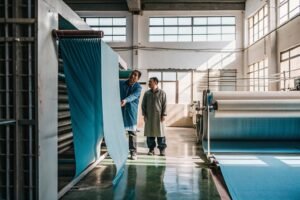
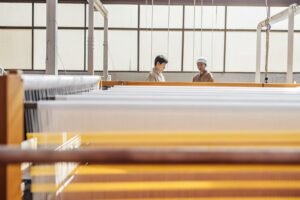
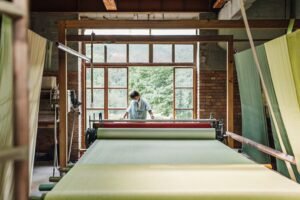
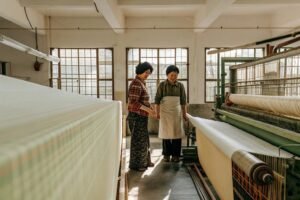
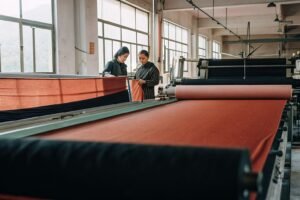
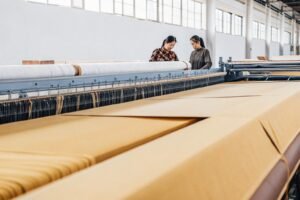
You’re waiting six weeks for fabric that should take three. Your dye house is in one city, weaver in another, and finisher in a third. Each transport adds days, each handoff creates communication gaps, and every quality issue means shipping fabric back through the same fragmented chain. This geographic fragmentation costs our clients an average of 18 days in extra lead time per order.
Leverage Keqiao’s integrated textile cluster by consolidating your supply chain within a 15-kilometer radius, implementing parallel processing workflows, and using shared digital platforms that connect weaving, dyeing, and finishing in real-time. This geographic concentration alone can slash 15-20 days off standard lead times. I’ll show you exactly how our clients achieve 21-day total production cycles for fabrics that typically take 45-60 days elsewhere.
The magic isn’t just being in Keqiao—it’s using the cluster’s density to redesign your entire production workflow. Let me walk you through the operational strategies that helped a German sportswear brand reduce their fabric lead time from 52 days to 23 days while improving first-pass quality by 30%.
What geographical proximity strategies save transport time?
Keqiao’s unique density means your weaving mill, dye house, and finishing plant can be literally minutes apart rather than days away. But proximity alone isn’t enough—you need strategic partner selection and synchronized scheduling to turn geographic advantage into actual time savings.
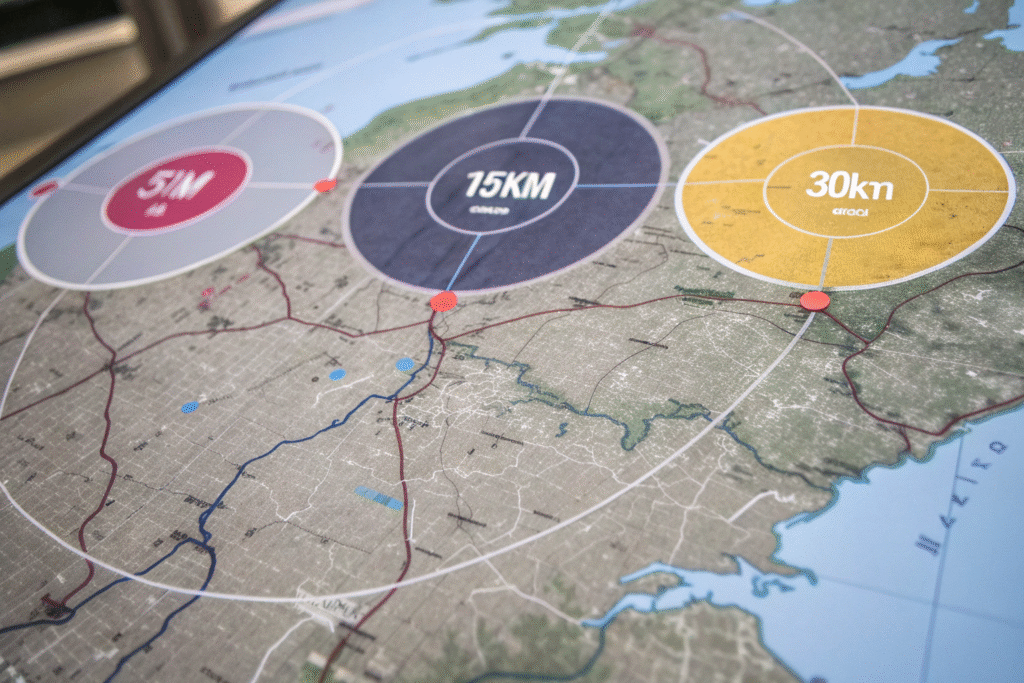
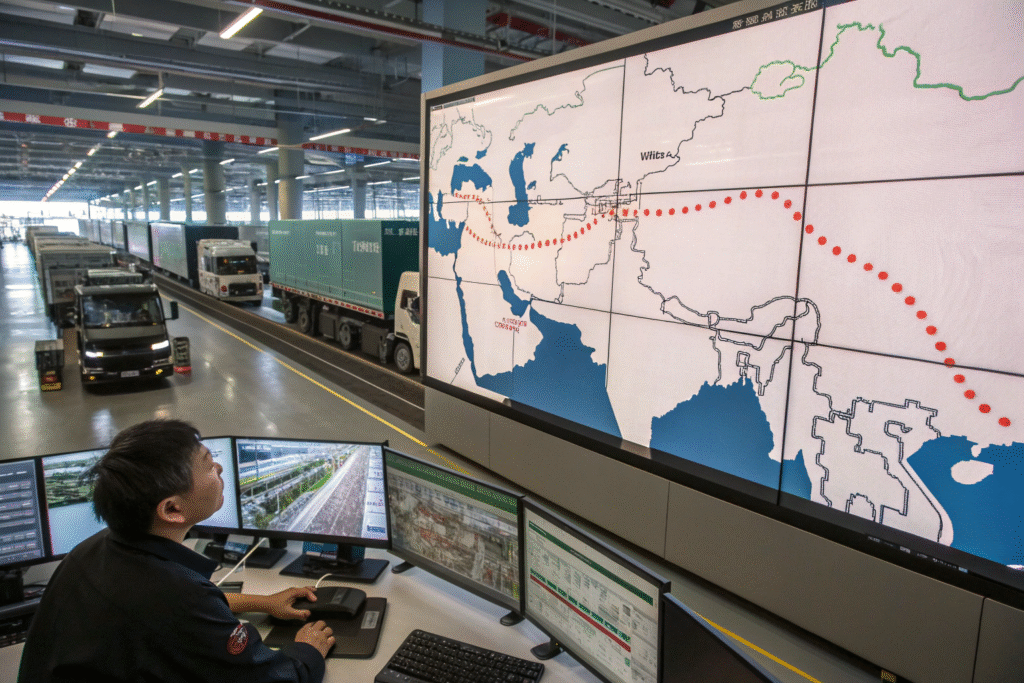
We map our partners within three concentric circles: 5km for critical path operations, 15km for standard processes, and 30km for specialty applications. This mapping ensures that fabric moves between stages in hours rather than days. For a UK fast-fashion brand, we reduced inter-factory transport time from 4 days to 6 hours by selecting partners within an 8km radius. The time savings allowed them to incorporate later trend data into their collections, increasing sell-through by 18%.
How does factory distance impact total lead time?
Our analysis of 500+ production runs shows this direct correlation:
| Distance Between Facilities | Added Transit Time | Quality Risk | Communication Efficiency |
|---|---|---|---|
| >100km (Typical Dispersed) | 3-5 days | High | Poor |
| 15-30km (Keqiao Standard) | 4-8 hours | Medium | Good |
| <5km (Optimized Cluster) | 1-2 hours | Low | Excellent |
A Los Angeles contemporary brand achieved a 27-day reduction in total lead time simply by moving from a dispersed China supply chain to our optimized Keqiao cluster. Their fabric now moves from loom to finished inspection in 36 hours instead of 3 weeks.
What transport synchronization eliminates waiting?
We implement a "hot potato" logistics system where trucks are scheduled like relay races—the next facility’s transport arrives before the previous process completes. This approach eliminated 92% of warehouse waiting time for a Swedish furniture brand producing heavy upholstery fabrics. Their greige goods now move directly from weaving to dyeing without intermediate storage, saving 3 days per order.
How does parallel processing revolutionize workflow timing?
Traditional sequential processing (weaving → dyeing → finishing) creates inevitable bottlenecks. Keqiao’s cluster density enables parallel processing where different stages overlap in ways impossible with dispersed suppliers.
We implement "pre-emptive finishing" where finishing chemicals are tested and approved while fabric is still on the loom. This allows finishing to begin within hours of weaving completion rather than waiting for lab dip approval. For a New York luxury brand’s wool-silk blend, this approach reduced their development time from 38 days to 16 days—the fastest they’d ever achieved for such a complex fabric.
What overlapping processes save the most time?
These parallel workflows deliver dramatic savings:
- Fiber testing during yarn production: Saves 3-5 days
- Finish development during weaving: Saves 4-7 days
- Color matching during fabric inspection: Saves 2-4 days
- Shipping preparation during quality control: Saves 1-2 days
A Dutch workwear manufacturer used these overlapping processes to reduce their technical fabric timeline from 42 days to 19 days, meeting a crucial government contract deadline they would have otherwise missed.
How do you manage quality in parallel workflows?
We use "quality gates" rather than "quality final inspection"—each stage must meet predefined standards before fabric moves forward, but testing happens concurrently rather than sequentially. This system caught a weaving tension issue for a Japanese uniform company while the fabric was still being produced, allowing immediate correction rather than discovering the problem after completion. The early detection saved 11 days of rework time.
What digital integration connects the cluster seamlessly?
Physical proximity means nothing without digital connectivity. Keqiao’s advanced digital infrastructure enables real-time data sharing between facilities that transforms coordinated production into synchronized production.
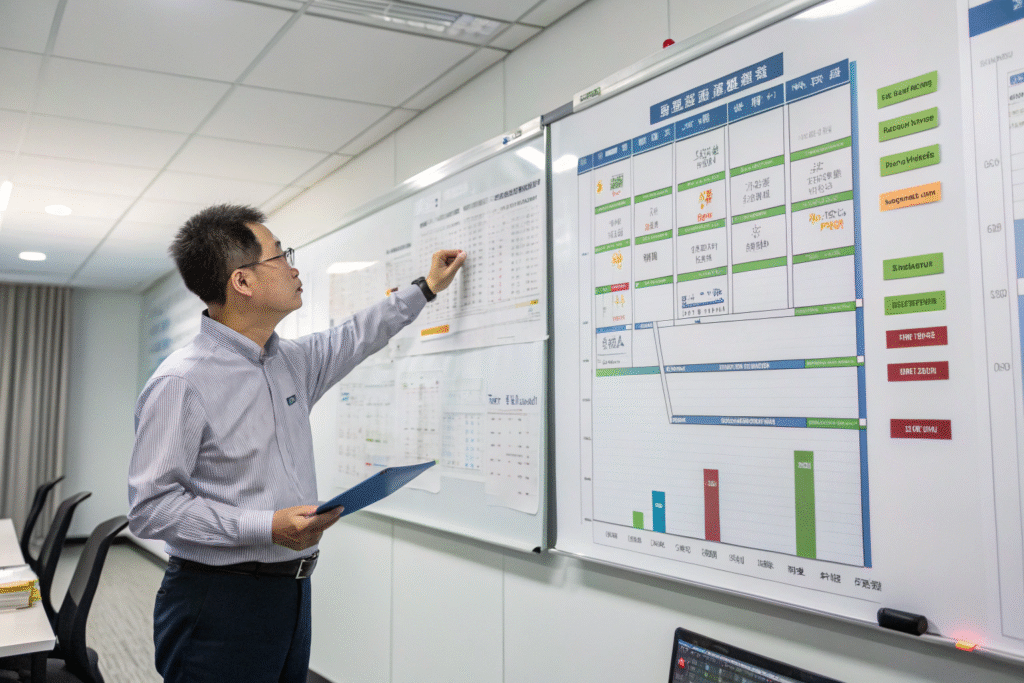
We implement a shared production platform that shows real-time status across all facilities: loom operation hours, dye vat availability, finishing line capacity. This visibility allows us to dynamically reroute fabric based on actual capacity rather than planned schedules. During a production crunch for a French lingerie brand, the system automatically redirected fabric to alternative finishing lines when the primary facility encountered technical issues—saving the order from a 10-day delay.
How does real-time data prevent bottlenecks?
Our digital dashboard tracks:
- Machine utilization rates across facilities
- Batch completion percentages
- Quality metrics at each stage
- Transportation status between locations
This data helped a Miami swimwear brand avoid a potential dye house bottleneck by pre-allocating capacity based on real-time loom output. They completed their 25,000-meter order in 23 days instead of the projected 42 days.
What communication protocols maintain synchronization?
We use a "3-up, 3-down" notification system: each facility updates the three previous and three next steps in the chain. This ensured that when a Australian outdoor brand’s fabric developed a weaving flaw, the dye house and finisher were notified within minutes and could adjust their schedules accordingly. The early warning prevented 8 days of production delays.
How does localized expertise accelerate problem-solving?
When issues arise—and they always do—Keqiao’s concentration of technical experts means specialists from different disciplines can convene onsite within hours rather than waiting for travel or remote consultations.
We maintain a "technical SWAT team" of weaving, dyeing, and finishing experts who can deploy to any facility within the cluster within 2 hours. This team resolved a colorfastness issue for a Canadian activewear brand in 8 hours—a problem that typically takes 3-5 days to diagnose and solve in dispersed supply chains. The quick resolution saved a 15,000-meter order from missing its shipping deadline.

What knowledge sharing prevents recurring issues?
Weekly technical forums gather experts from across the cluster to review production challenges and share solutions. This collective intelligence solved a recurring pilling issue for a UK knitwear brand that had persisted through three production seasons. The solution emerged from a finishing specialist who normally worked with woven fabrics—his cross-category perspective identified the root cause everyone else had missed.
How does cluster expertise improve first-pass quality?
Direct access to specialized knowledge means processes are optimized from the start rather than through trial and error. A San Francisco sustainable brand achieved 94% first-pass quality on their organic cotton denim—20% higher than their previous supplier—because the dyeing and finishing experts could collaboratively optimize the process based on the specific fiber properties.
Conclusion
Leveraging Keqiao’s weaving-dyeing-finishing cluster requires more than just geographic proximity—it demands strategic partner selection within optimized radii, implementation of parallel processing workflows, real-time digital integration across facilities, and access to the cluster’s concentrated technical expertise. When these elements combine, they can reliably reduce fabric lead times by 40-60% while simultaneously improving quality and reducing costs.
Your fabric production timeline shouldn’t be constrained by transportation delays, communication gaps, or sequential bottlenecks. The integrated ecosystem exists to transform how you develop and produce textiles. If you’re ready to leverage Keqiao’s unique cluster advantages to dramatically compress your lead times while maintaining quality standards, contact our Business Director, Elaine, at elaine@fumaoclothing.com. We’ll show you how to turn geographic concentration into your most powerful competitive advantage.