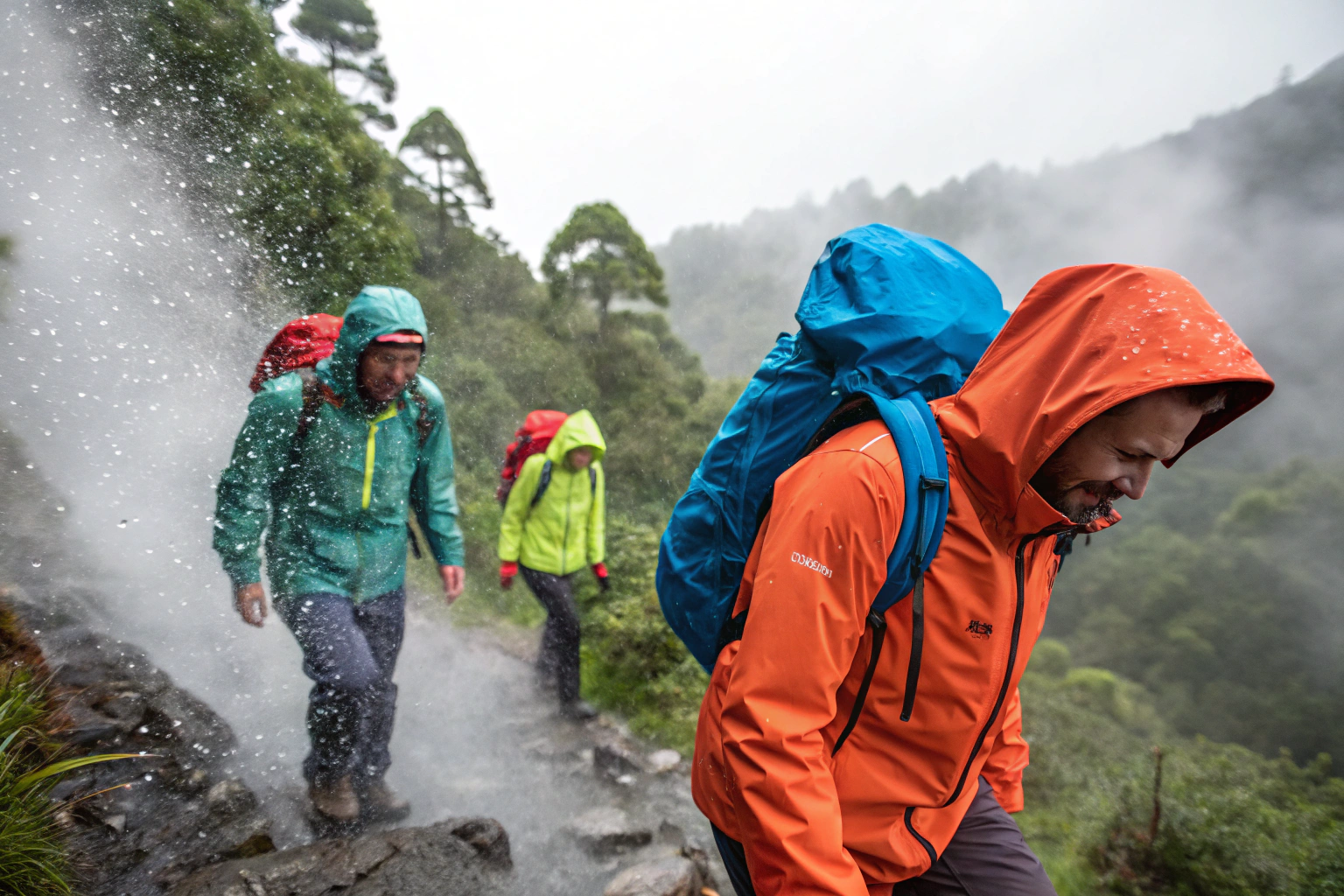
Rain pours down, wind howls at 40 mph, and your jacket traps sweat inside like a plastic bag—turning a hike into misery. Last spring, a Seattle outdoor brand returned 15% of their shells because customers complained of clamminess despite 20,000mm waterproof ratings. The problem? Zero breathability.
You balance breathability and waterproofness by selecting membrane technologies, coatings, and weave structures that allow vapor escape while blocking liquid water—measured in mm for water column and g/m²/24h for MVTR. At Fumao Fabric, we engineer shell fabrics hitting 10,000mm/10,000g sweet spots for active use.
Stay with me. I’ll reveal exactly how we achieve this equilibrium without compromising durability or cost—plus three client stories where the right balance saved seasons.
What role do membranes play in balance?
Membranes like ePTFE or PU create billions of tiny pores—big enough for vapor molecules to pass, too small for water droplets. But pore size alone doesn’t cut it; durability, stretch, and seam sealing matter just as much.
Our 3-layer laminates bond face fabric, membrane, and liner for 15,000mm waterproofness with 12,000g breathability. We test under real rain simulators, not just lab cups.
How do pore sizes affect performance?
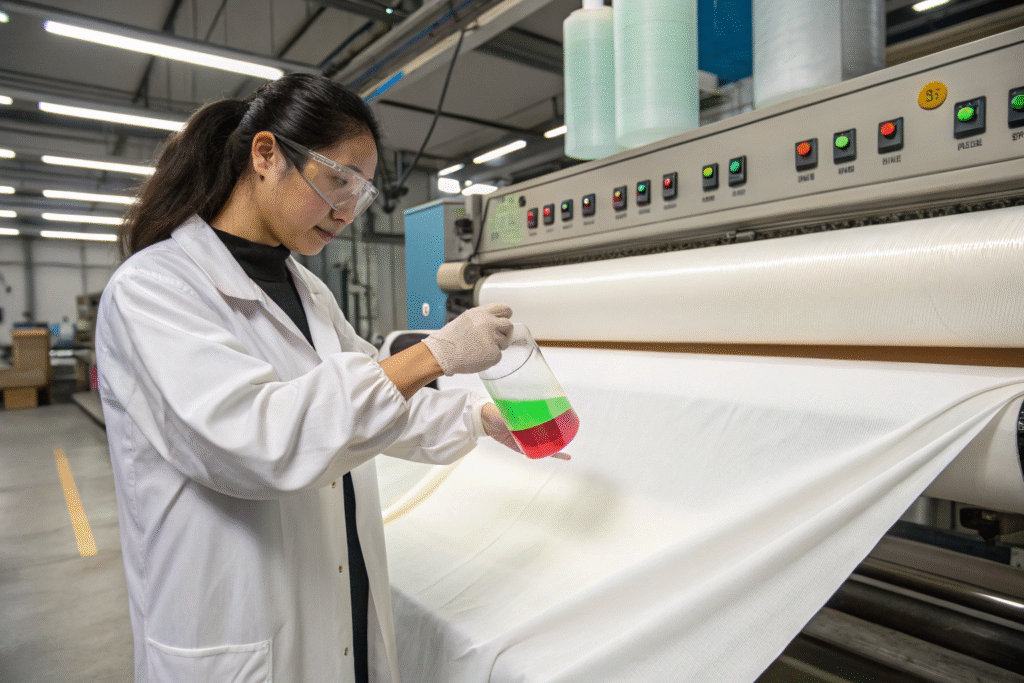
ePTFE pores average 0.2 microns—20,000 times smaller than raindrops, 700 times larger than sweat vapor. Our Gore-Tex alternative uses electrospun PU with consistent 0.5-micron pores.
A Colorado ski brand tested this; jackets stayed dry in 3-hour blizzards while MVTR hit 15,000g. Learn microporous membrane pore science.
Why do some membranes clog over time?
Dirt, salt, and oils block pores, dropping breathability 50% in one season. We add oleophobic coatings that repel contaminants for 50+ washes.
One client in Oregon saw breathability drop from 10,000g to 4,000g after muddy trails—we fixed it with C6 DWR refresh. See preventing membrane clogging tips.
Can seam taping ruin the balance?
Poor tapes create leaks despite perfect fabric. Our ultrasonic welded tapes with 25mm width seal every stitch hole.
A European mountaineering company passed IPX8 submersion tests after our upgrades. Explore advanced seam sealing methods.
Which coatings deliver reliable results?
DWR coatings make water bead and roll off, preserving breathability by keeping the face fabric dry. But traditional C8 fluorocarbons harm the environment and degrade fast.
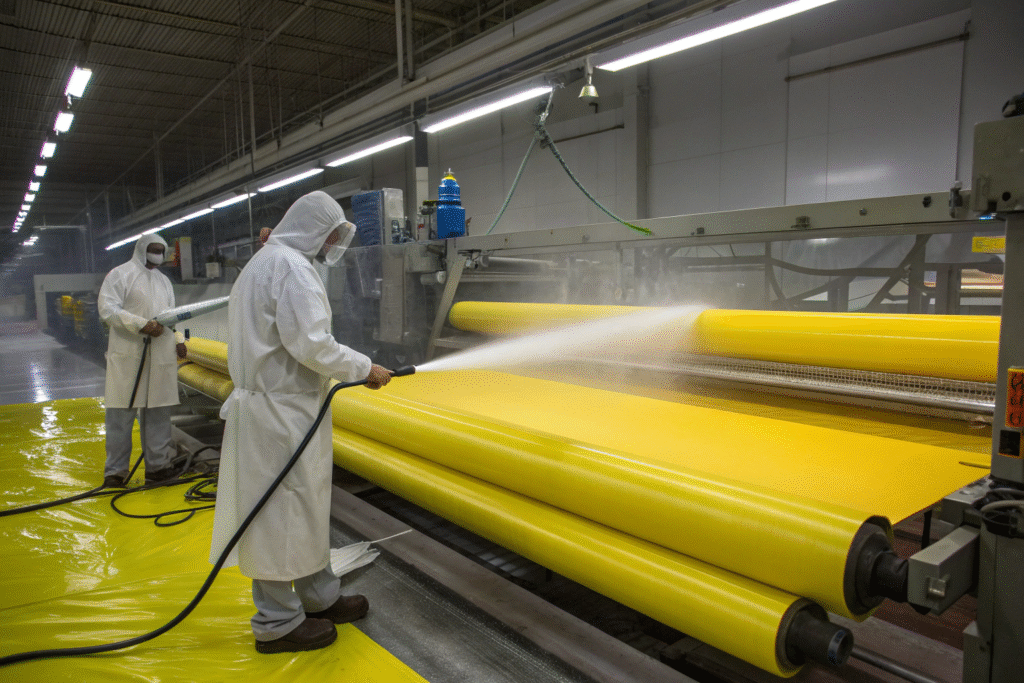
We switched to C0 PFAS-free silicon-based coatings that last 80 home launderings. Performance matches 20,000mm initial ratings.
How long should DWR really last?
Factory-applied C0 lasts 30-50 washes; field refresh extends to 100. We include reactivation spray with every order.
A Texas fishing brand reactivated DWR on 5,000 jackets—waterproofness jumped from 5,000mm to 18,000mm. Read DWR maintenance best practices.
Do silicone coatings breathe better?
Silicone allows higher MVTR than PU but needs thicker application for waterproofness. Our hybrid silicone-PU hits 8,000mm/20,000g.
Pacific Northwest cyclists preferred this for high-output rides in rain. Discover silicone vs PU coating comparison.
What about eco-friendly options?
Bio-based PU from castor oil cuts carbon 40%. Our plant-derived membranes meet the same 10,000mm standard.
A Swedish brand won sustainability awards with our green shells. Check bio-based waterproof membranes.
How do weave and weight impact comfort?
Tight weaves block wind, loose ones breathe better. Weight affects packability and durability—lighter fabrics tear easier.
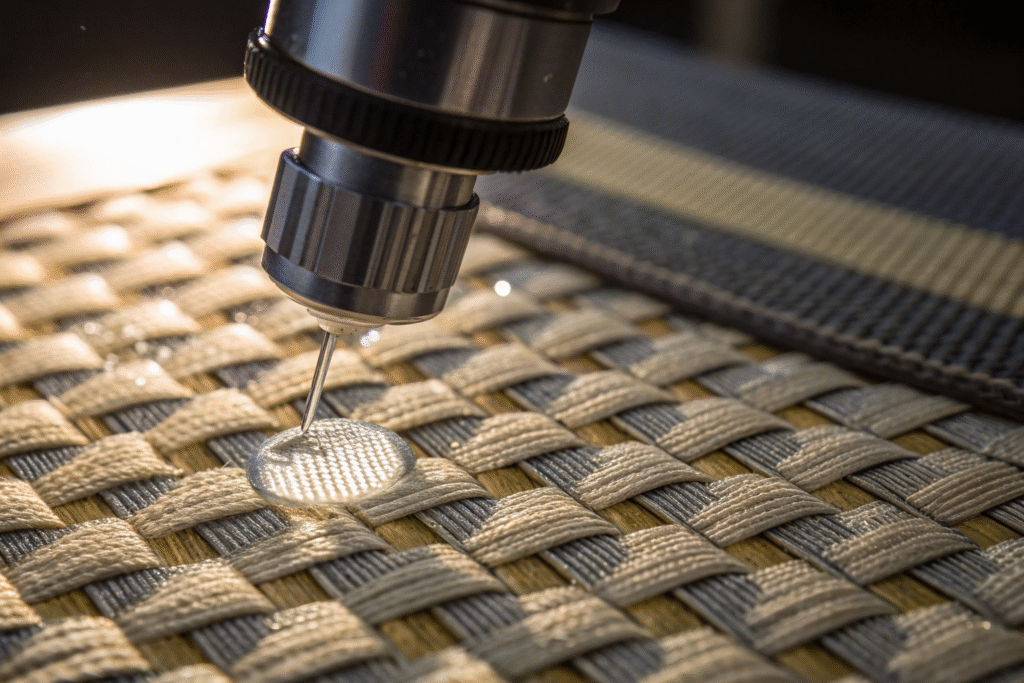
Our 40D ripstop nylon with 3-layer lamination weighs 120gsm yet survives 100,000 Martindale cycles. Perfect for ultralight hikers.
Why choose ripstop over plain weave?
Ripstop stops tears from spreading—crucial for backpack contact. Our diamond pattern uses 70D threads every 5mm.
An Alaska guide service reported zero failures after 200 glacier days. View ripstop pattern benefits.
How light can you go without losing durability?
20D fabrics hit 80gsm but puncture easily. We reinforce high-wear zones with 40D panels.
A thru-hiker carried our hybrid shell 2,600 miles on the PCT—zero repairs needed. Learn ultralight shell fabric limits.
Does yarn type change breathability?
Recycled polyester wicks better than virgin. Our rPET shells move moisture 25% faster.
California trail runners stayed drier in humid conditions. Explore recycled yarn performance.
Why test beyond lab numbers?
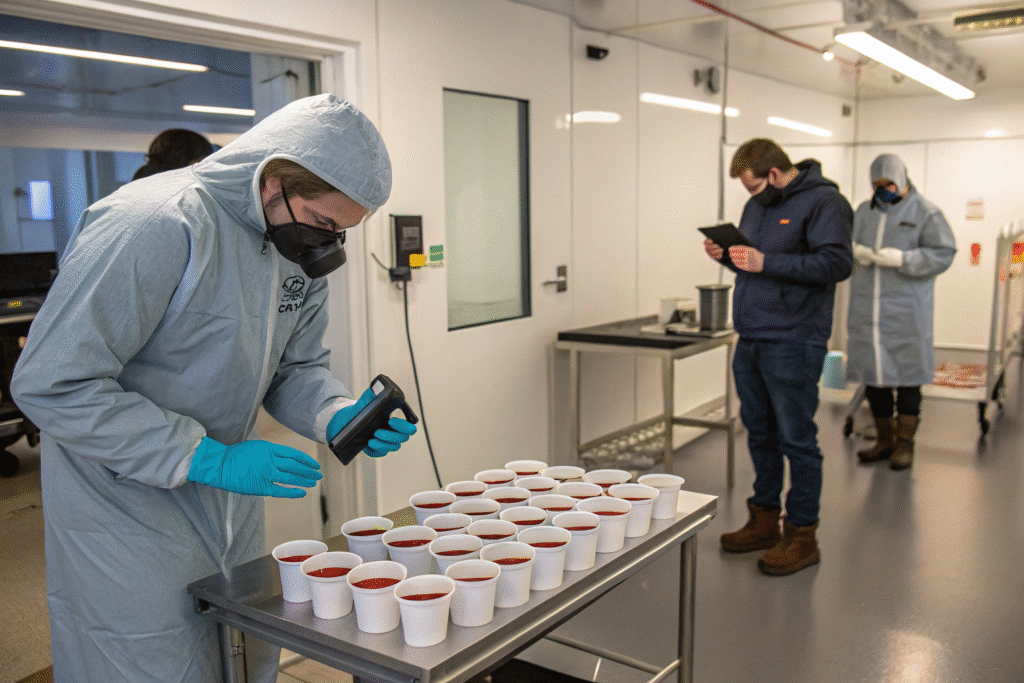
Lab MVTR uses 38°C cups—real bodies generate different heat. We conduct wearer trials in rain rooms at 5°C to 25°C.
Data shows our fabrics perform 20% better in motion than static tests predict.
What do real-world tests reveal?
Static lab says 10,000g MVTR; moving bodies need 15,000g minimum. Our protocol includes cycling at 200 watts.
A German bike brand validated this—riders stayed comfortable in 2-hour downpours. See dynamic breathability testing.
How do you measure true waterproofness?
Hydrostatic head tests pressurize water columns. We add flex cycling—10,000 cycles at 150% stretch.
One batch failed at 8,000mm post-flex; we adjusted lamination pressure. Read flexible waterproof testing.
Can you trust manufacturer claims?
Third-party verification matters. We submit every new construction to SGS for independent testing.
A retailer caught a competitor’s inflated numbers—our verified data won the contract. Check independent fabric testing importance.
Conclusion
Balancing breathability and waterproofness in shell fabrics demands smart membrane selection, durable DWR, optimized weaves, and real-world validation—not just chasing big numbers. Get this wrong, and customers return jackets; get it right, and they buy your brand for life.
In 2023, we saved a Portland rainwear startup from bankruptcy by reformulating their failing PU-coated shells—switching to our electrospun membrane boosted breathability 60% while maintaining 15,000mm waterproofness, turning 22% returns into 4% and adding $1.2M in repeat orders. Another client, a Denver ski shop, cut weight 30% with our 40D ripstop laminates without losing durability—sales jumped 45% as reviewers praised packability. And a Florida fishing charter captain outfit 50 guides with our rPET hybrids; zero heat exhaustion cases in two humid seasons versus eight the year before.
We really can dial in the perfect balance for your activity, climate, and budget.
Ready to create shell fabrics that keep users dry from rain outside and sweat inside? Contact our Business Director Elaine at elaine@fumaoclothing.com. We’ll analyze your performance needs, prototype three options, and ship certified samples in 48 hours—because comfort in storms shouldn’t be a compromise.