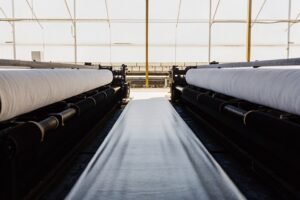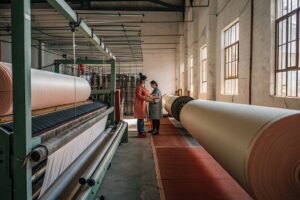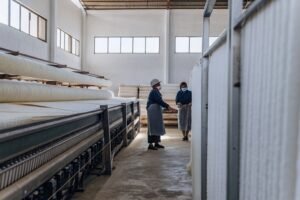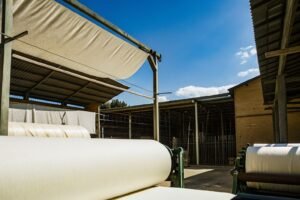
You have the design concept ready. A reversible bomber jacket. The face is a brushed wool blend in charcoal. The reverse is the exact same brushed wool blend in charcoal. No lining. No exposed seams that look messy. No "wrong side" that the customer accidentally flashes when they flip up the collar. You send the concept to your fabric supplier. They send back a sample of a standard coating wool. It is beautiful on the face. On the back, it is a flat, dull, obviously wrong side. The supplier says, "That is just how fabric is made. The face is the face." You know that is not true, because you have seen reversible garments on the market. You just do not know what the fabric construction is called or how to specify it.
Fabric that looks the same on both sides is not a single construction. It is a category of "double-face" or "reversible" fabric constructions, each engineered to present a finished surface on both the technical face and the technical back. The approach varies by whether the fabric is woven or knitted, and by whether the goal is a true self-reversible fabric or a bonded double-layer fabric. At Shanghai Fumao, I develop double-face fabrics for outerwear, accessories, and home textile brands, and I have learned the specific weave structures, knit constructions, and finishing techniques that eliminate the visual difference between the two sides. I am going to explain the difference between true double-weave, double-knit, and bonded double-face fabrics, show you how to specify a reversible fabric, and warn you about the seam-engineering implications that most buyers overlook.
What Is a Double-Weave and How Does It Create Two Identical Faces?
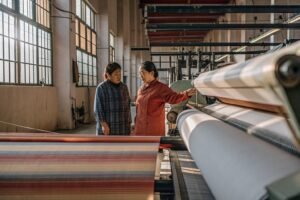
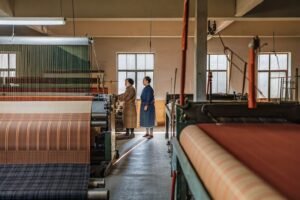
A double-weave is a woven construction in which two independent layers of fabric are woven simultaneously on the same loom, one above the other, and connected at intervals by occasional binder yarns or by the weft yarns themselves crossing between the layers. Each layer has its own warp and weft. Each layer can have a completely different weave structure, fiber composition, color, and finish. The two layers function as a single fabric, but they are structurally separate.
The double-weave is the most elegant solution for a true reversible fabric. Because each layer is woven independently, the mill can make both faces identical in appearance—same yarn, same color, same weave structure, same finish. The binder yarns that connect the layers are hidden in the interior, invisible from either face. The fabric has the same drape, the same hand feel, and the same visual appearance on both sides. A reversible wool coating, a double-face cotton jacquard, or a luxury scarf with two identical sides is typically a double-weave construction.

How Do Binder Yarns Connect the Layers Without Being Visible?
The binder yarns are the secret to a clean double-weave. They are finer than the face yarns and are threaded through a separate harness on the loom. During weaving, the binder occasionally rises from the bottom layer to catch a warp yarn in the top layer, then returns to the bottom. Or a dedicated binder warp runs between the two layers, catching a weft from each. The binder is completely enclosed between the two fabric layers.
The art is in the binding frequency. Too many binder points, and the fabric becomes stiff—the two layers cannot move independently, and the drape suffers. Too few binder points, and the layers separate, creating a "blister" effect where pockets of air form between the faces. The binding density must be engineered for the specific yarn counts and the intended end-use. A double-weave wool coating for a reversible jacket might have binder points every 3 to 5 millimeters in a grid pattern. The resulting fabric hangs like a single layer but is actually two complete fabrics locked together. At Shanghai Fumao, I develop double-weave fabrics with binding densities tuned to the final garment’s drape requirements.
What Is a "Self-Reversible" Weave for Lightweight Fabrics?
A true self-reversible woven fabric does not need a second layer. Certain weave structures naturally produce identical face and back surfaces because the warp and weft interlacings are perfectly symmetrical. The classic example is a plain weave with identical warp and weft yarns in the same color. The over-one-under-one interlacing is the same on both sides. A gingham check in a plain weave is inherently reversible. So is a hopsack weave, where two yarns are grouped together and woven in a plain weave, creating a basket effect that is identical on both sides.
These self-reversible weaves are not double-weaves. They are single-layer fabrics that happen to have a symmetrical structure. They work beautifully for shirting, lightweight scarves, and home textiles like napkins and tablecloths. The limitation is that the face and back are not independently designable. Both sides must be the same color and the same weave. You cannot have a striped face and a solid back with a single-layer self-reversible weave. For that level of design freedom, a double-weave or a bonded fabric is required.
How Do Double-Knit Fabrics Achieve a Reversible Appearance?
Double-knit fabrics are the knit equivalent of double-weaves. They are produced on knitting machines with two sets of needles—a cylinder and a dial on a circular machine, or a front and back bed on a flat V-bed machine. The machine knits two separate layers of jersey simultaneously, and the layers are connected by occasional stitches where the front-bed needles and back-bed needles interlock. The result is a fabric with a smooth, knitted face on both sides, with no visible purl side.
The double-knit construction is the standard for reversible knit garments—scarves, beanies, lightweight jackets, and athleisure pieces that flip inside out. A reversible fleece jacket might have a brushed, soft surface on both sides, with the two brushed layers connected by a hidden interlock structure.

What Is the Difference Between Interlock and Double-Knit Jersey?
Interlock is a specific type of double-knit where the two layers are tightly interlocked at every stitch. The front and back are identical smooth single jersey surfaces. Interlock is thicker and more stable than single jersey, and it has no curl at the edges. It is inherently reversible, provided the same yarn is used on both the cylinder and dial feeds.
A double-knit jersey is a broader category that includes interlock but also includes structures where the two layers are connected less frequently, or where the layers use different yarns. A double-knit fabric can have a striped face and a solid back, or a cotton face and a polyester back for moisture management. For a true reversible garment where both sides are identical, I recommend a standard interlock construction with the same yarn fed to both needle beds. Interlock is available in a wide range of weights, from lightweight 120 GSM for tee shirts to heavyweight 300 GSM for structured jackets.
How Does "Plating" Create a Different Color on Each Side of a Knit?
Plating is a knitting technique in which two yarns are fed simultaneously to the same needle, but the machine is set up so that one yarn always appears on the face of the fabric and the other always appears on the back. The face yarn is fed at a slightly different angle or tension, causing it to be presented on the technical face of the stitch. The back yarn is hidden on the technical back.
Plating is used to create a reversible knit with two different colors, one on each side. A navy-and-burgundy reversible beanie is plated: navy on the face, burgundy on the back, both colors clean and solid, with no bleed-through. Plating is not a true "two identical sides" construction—the two sides are deliberately different colors—but it creates a fully finished, intentional surface on both sides. For reversible garments where the designer wants the same color on both faces, standard interlock without plating is the simpler and more reliable choice.
What Are the Seam-Finishing Challenges Unique to Reversible Fabrics?
A reversible fabric solves the aesthetic problem of the wrong side. It does not automatically solve the construction problem. A garment that is worn inside out exposes every seam allowance, every hem edge, and every label attachment. If the seam finishing is not also reversible, the garment will look beautiful on the outside and messy on the inside, undermining the entire concept.

Why Does "Flatlock" Seaming Work Better Than Overlock for Reversibles?
A standard overlock stitch wraps the seam allowance in a thread casing. It is durable and fast, but it creates a visible, raised thread line on the inside of the garment. On a reversible garment, that overlock line is exposed when the garment is flipped. It looks like an unfinished inside seam.
A flatlock stitch, produced by a specialized flatlock sewing machine, butts the two fabric edges together and sews them flat, with the thread covering the raw edges on both sides simultaneously. The result is a seam that is nearly identical on both faces—flat, clean, and decorative. Flatlock seams are the standard for reversible activewear and athleisure. A four-thread or six-thread flatlock covers both raw edges and creates a seam that looks intentional from either side.
How to Handle Labels and Care Instructions on a Label-Free Garment?
A reversible garment with no "inside" has no natural place for a brand label or a care label. Sewing a standard label to the inside of the collar defeats the purpose. The label is now on the outside when the garment is flipped. Solutions include printing the care instructions and brand logo directly onto the fabric with a heat-transfer or screen print that matches the fabric color, bonding a thin, fabric-like label into a seam so it lies flat and is not scratchy, or placing the label in a hidden pocket that is only accessible when the garment is off.
At Shanghai Fumao, I work with my garment-manufacturing partners to develop label solutions for reversible garments. A heat-transfer care label applied to the interior of a side seam pocket is invisible when worn, accessible for reference, and does not compromise the reversibility of the garment. The label solution should be designed concurrently with the fabric, not as an afterthought, because the fabric construction influences where a pocket can be placed.
How to Specify a "Double-Face" Fabric That Matches Your Vision?
Specifying a reversible fabric requires more than specifying a weight and a fiber. You must specify the construction method, the relationship between the two faces, and the binder or interlock density. The mill needs to know whether you want two identical faces, two different but coordinated faces, or a face and back that are functionally finished but not necessarily identical.

What Terminology Should You Use to Communicate "Same Both Sides"?
Use the term "double-face" or "reversible" in your inquiry, and specify that both faces must be identical. Do not say "fabric with no wrong side," which is ambiguous and could be interpreted as a single-layer fabric with a symmetrical weave. Say "double-weave with identical face and back in charcoal wool, 350 GSM, binder yarns not visible on either surface." If the fabric is a knit, say "interlock construction, identical yarn on both feeds, no plating, both faces to appear identical."
Include a physical reference. A photo of a reversible garment with both sides showing does more communication work than a paragraph of text. Better yet, send a physical swatch of a reversible fabric that has the hand feel and appearance you want, with a note that says "match this construction."
How to Verify the Mill’s Double-Weave Sample Before Bulk?
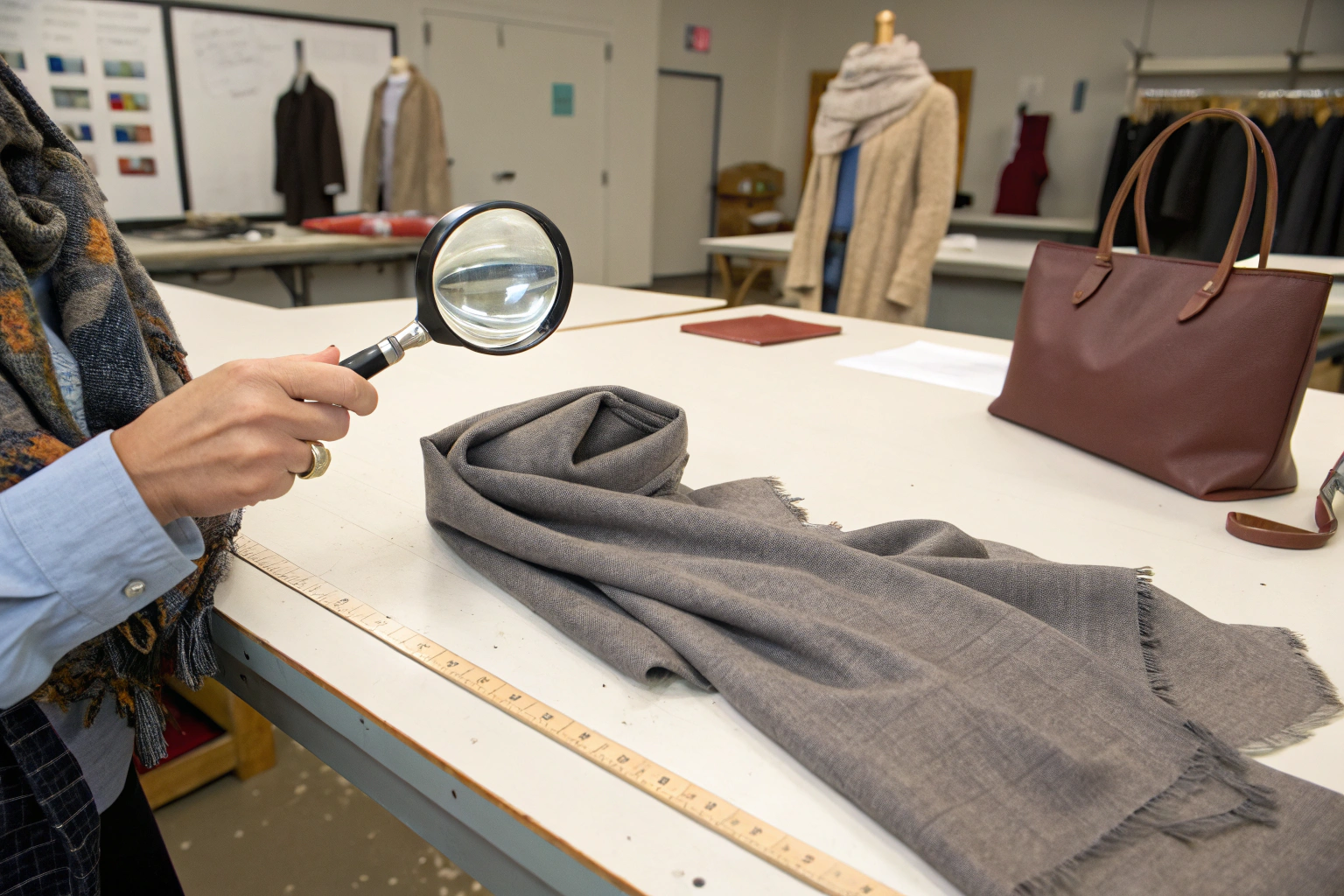
Request a strike-off or a sample yardage of the double-weave. The sample must be large enough to cut, bend, and examine in cross-section. Use a pick glass or a needle to gently separate the two layers. Confirm that the binder yarns are present and that the two layers are structurally independent but connected. Rub the fabric between your fingers. The two layers should not slide apart. Cut a small swatch and finish the edges. Flip it back and forth. Both sides should be visually identical.
Then wash the sample. A double-weave with inadequate binding can delaminate in the washing machine, creating a blistered, bubbled surface. A reversible fabric must survive laundering and remain flat. Test it before you commit to bulk. I provide pre-washed and post-washed double-weave samples to my clients at Shanghai Fumao so they can verify the construction stability.
Conclusion
Fabric that looks the same inside out is not a single magic material. It is a structural category achieved through double-weave, interlock double-knit, or self-reversible single-layer constructions. A double-weave weaves two independent fabric layers together with hidden binder yarns, allowing both faces to be identical in color, texture, and finish. An interlock knit uses two sets of needles to create two identical smooth jersey faces with no purl side. Both constructions require seam finishing—flatlock seams instead of overlock—and label solutions that do not break the reversible illusion. The specification must name the construction type, confirm that both faces are identical, and require a pre-washed sample to verify that the layers do not delaminate.
At Shanghai Fumao, I develop double-weave and interlock fabrics for brands producing reversible outerwear, accessories, and home textiles. If you have a reversible design concept and need a fabric that truly looks the same on both sides, please contact our Business Director, Elaine. She can send you a swatch pack of double-weave and interlock constructions with different weights and fiber blends, so you can flip them back and forth yourself. Email her at elaine@fumaoclothing.com. Let us build a fabric with no wrong side.