You ordered ripstop fabric for your new lightweight jacket line. The sample from Supplier A was perfect—crisp, rustling slightly, holding its shape with that technical, military-inspired structure. You placed the bulk order with Supplier B because their price was 15% lower, and the spec sheet said the same thing: "70D nylon ripstop, 120 GSM." The bulk fabric arrived. It drapes like a wet paper towel. The grid is barely visible. The jacket looks like a windbreaker, not the structured piece your customer expects from a ripstop product. You are confused. The specs matched. The photos matched. So why does the fabric feel completely different?
Ripstop stiffness is not determined by the grid alone. It is the result of five interacting variables: the base yarn denier, the ripstop reinforcement yarn denier, the weave density, the calendaring or finishing process, and the presence or absence of a coating. Two fabrics can both be "70D nylon ripstop" and feel like entirely different materials because the reinforcement yarn is thicker, the weave is tighter, or the calendaring was run hotter on one than the other. At Shanghai Fumao, I develop ripstop fabrics for outdoor, military, and fashion applications, and I adjust these five variables to hit specific stiffness targets. I am going to explain how each variable contributes to the hand feel, how to read a ripstop spec sheet to predict stiffness, and how to specify a ripstop fabric that matches the drape and structure your design requires.
What Structural Variables Determine Ripstop Hand Feel?
Ripstop is not a fiber or a weave in the traditional sense. It is a reinforcement technique. A base fabric—usually a plain weave nylon or polyester taffeta—is woven with a grid of thicker yarns inserted at regular intervals, typically every 5 to 8 millimeters in both warp and weft directions. These thicker yarns create the characteristic checkerboard pattern and give ripstop its tear-stopping property: a tear that starts in the thin base fabric hits the thick reinforcement yarn and stops. The stiffness of the fabric is determined primarily by the denier of the reinforcement yarn relative to the base yarn, the spacing of the grid, and the density of the base weave.

How Does the "Denier" of the Ripstop Grid Affect Stiffness?
Denier is the weight in grams of 9,000 meters of a single filament yarn. A higher denier means a thicker, heavier yarn. The ripstop grid yarn is always a higher denier than the base yarn. The difference between the two is the single biggest driver of stiffness.
A classic lightweight ripstop uses a 70-denier base yarn with a 210-denier reinforcement yarn—a ratio of 1:3. The 210D grid yarn is three times thicker than the base yarn. It creates a pronounced, tactile grid that adds significant stiffness. A softer, drapier ripstop might use a 70D base with a 140D reinforcement—a ratio of 1:2. The grid is less pronounced, the fabric is more pliable, and the tear strength is reduced but still adequate for many applications. A very stiff, military-spec ripstop might use a 210D base with a 420D or even 630D reinforcement—ratios of 1:2 to 1:3 on a much heavier base. This fabric will stand up on its own and is used for backpacks and tactical vests, not apparel.
When I develop ripstop for a fashion brand that wants the technical look without the technical stiffness, I specify a low-denier reinforcement yarn—typically 140D on a 70D base—and widen the grid spacing. The visual ripstop pattern is present, but the hand feel is soft enough for a lightweight parka or a pair of casual pants. If you want to explore the range, understanding how ripstop grid yarn denier affects stiffness and tear strength is a good starting point.
What Role Does the Base Weave Density Play in Flexibility?
The base weave density—the number of warp and weft yarns per inch in the base fabric between the grid lines—is the second major stiffness driver. A high-density base weave packs the yarns tightly together, leaving little space for the yarns to move. The fabric is rigid. A low-density base weave leaves space between the yarns, allowing them to shift and flex. The fabric is softer and more pliable.
Two 70D nylon ripstops can have the same base yarn, the same reinforcement yarn, and completely different stiffness because one is woven at 120 ends per inch and the other at 90 ends per inch. The tighter fabric will be stiffer, stronger, and more wind-resistant. The looser fabric will be softer, more breathable, and less structured. The base weave density is a number on the spec sheet that is often overlooked by buyers who focus only on the denier and the weight. It is just as important.
How Does Calendaring Change the Feel of the Same Base Fabric?
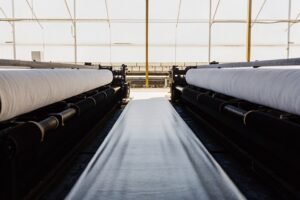
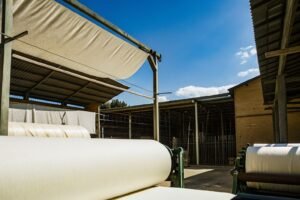
Calendaring is a mechanical finishing process in which the fabric is passed between large, heated steel rollers under high pressure. The heat softens the synthetic fibers—nylon or polyester—and the pressure flattens them into a denser, more compact structure. Calendaring transforms a soft, porous, matte nylon taffeta into a crisp, smooth, semi-shiny fabric. It is the primary finishing lever for controlling ripstop stiffness, and it can make a 70D ripstop feel like 100D or reduce the stiffness of a 210D ripstop to something wearable.

Why Does a "Hot Calendared" Ripstop Feel Crisper Than a "Soft Calendared" One?
The degree of calendaring is determined by three parameters: temperature, pressure, and speed. A hot calendared ripstop is run at high temperature—typically 160°C to 200°C for nylon—and high pressure, with a slow fabric speed to maximize the dwell time under the rollers. The fibers on the fabric surface melt slightly, fuse together, and form a continuous, flat surface. The fabric loses porosity, gains wind resistance, and becomes significantly stiffer.
A soft calendared ripstop is run at a lower temperature—120°C to 150°C—with lower pressure and higher speed. The fabric is smoothed and given a light sheen, but the individual yarns retain their round cross-section and the fabric retains its flexibility. The difference between hot and soft calendaring is the difference between a technical, military-style ripstop and a fashion-weight ripstop suitable for a casual jacket. I specify the calendaring type in my production orders at Shanghai Fumao based on the brand’s stiffness target. A buyer who does not specify calendaring may receive either, and the fabric will feel different.
What Is the "Hand Feel Spectrum" from Uncalendared to Fully Calendared?
Uncalendared ripstop has a soft, fabric-like hand feel. The yarns are round, the surface is slightly textured, and the fabric breathes freely. It is used for linings, lightweight bags, and garments where softness is prioritized over wind resistance. Soft calendared ripstop has a smooth hand with light sheen and moderate stiffness. It is the default for fashion outerwear—jackets, vests, and pants that need some structure but not a rigid, technical feel. Hot calendared ripstop is crisp, smooth, and semi-shiny, with high wind resistance and a distinct rustling sound when handled. It is the classic "ripstop" that consumers associate with military and outdoor gear. Over-calendared ripstop is stiff, plastic-like, and shiny, with virtually no breathability. It is a processing defect, not a deliberate product category, and I reject fabric that has been over-calendared because it will crack at the fold lines.
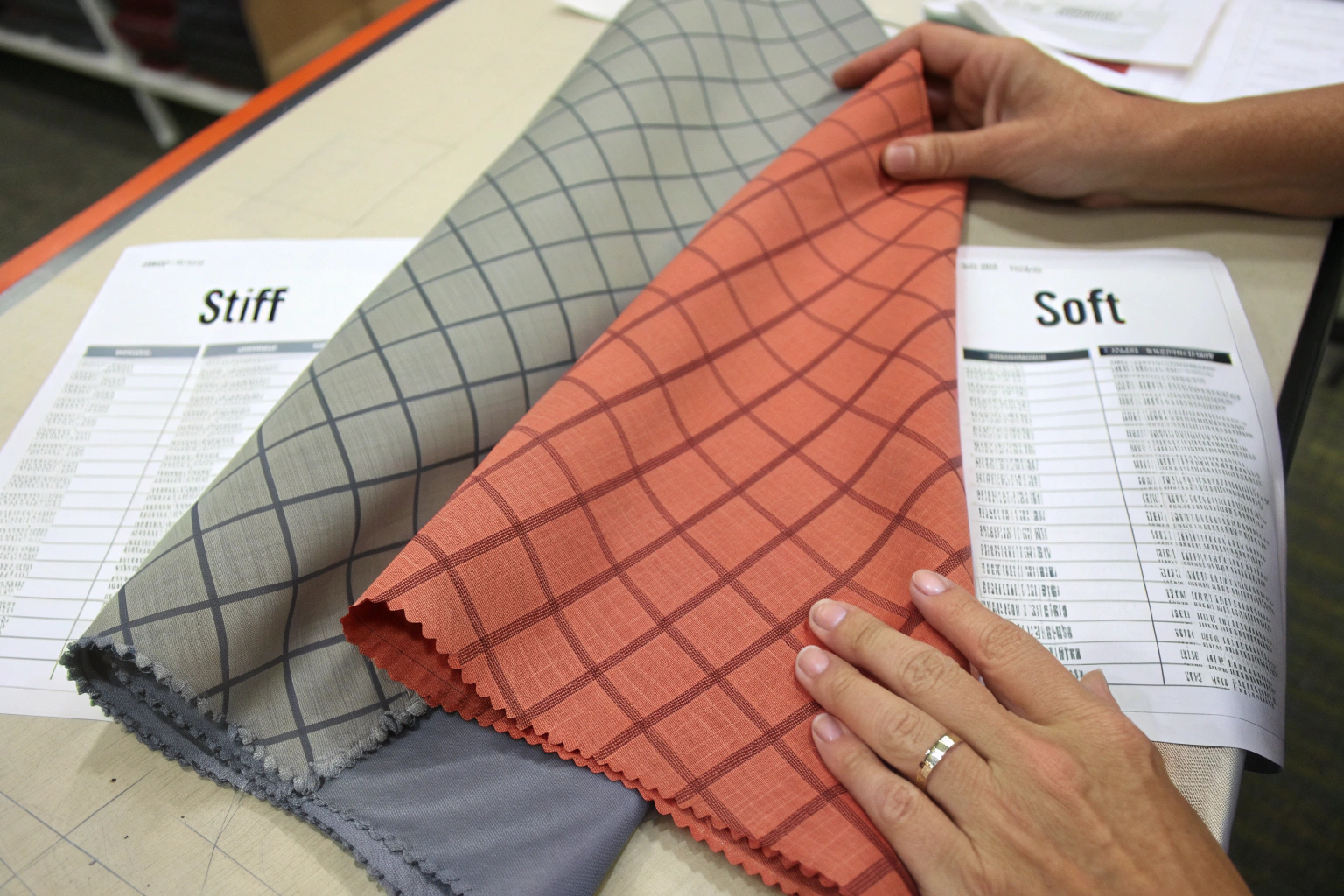
I keep a set of calendaring reference standards in my QC lab—swatches that define the acceptable hand feel range for each product category. When a bulk lot arrives, the QC team compares the hand feel against the standard before releasing the fabric. The standard is physical and tactile, not a written description. You can ask your supplier for a calendaring reference swatch before bulk production begins.
How Do Coatings and Laminates Amplify Ripstop Stiffness?
Coatings and laminates are applied to ripstop fabrics to add water resistance, wind resistance, or breathable waterproofing. Every coating and laminate adds stiffness because it restricts the movement of the base yarns. The stiffness added depends on the type of coating, the thickness of the application, and whether it is a surface coating or a bonded laminate. A ripstop fabric that feels soft and pliable in its uncoated state can become stiff and boardy after a heavy PU coating.

Why Does a PU Coating Add More Stiffness Than a DWR Finish?
A durable water repellent (DWR) finish is a chemical treatment applied to the fiber surface at a molecular level. It is not a physical layer. The individual yarns are coated, but the spaces between the yarns remain open. The fabric retains its flexibility, breathability, and hand feel. A DWR treatment adds negligible stiffness.
A polyurethane (PU) coating is a physical layer applied to one side of the fabric. The PU fills the gaps between the yarns, bonds the yarns together, and creates a continuous film. The fabric loses breathability and gains significant stiffness because the yarns can no longer move independently. The thicker the PU coating—measured in microns or in grams per square meter of coating weight—the stiffer the fabric. A light PU coating of 5 to 10 microns adds moderate stiffness. A heavy PU coating of 20 to 30 microns creates a stiff, board-like fabric suitable for bags and luggage, not apparel. When I specify a PU-coated ripstop for a jacket, I specify the coating weight and request a hand feel sample before bulk production.
How Does a Breathable Laminate Change the Drape?
A breathable laminate—a PTFE membrane like Gore-Tex or a PU-based hydrophilic membrane—is a separate film bonded to the back of the ripstop face fabric. The laminate is a full layer, thicker and more structurally independent than a PU coating. It adds more stiffness than a light PU coating because the membrane itself has mechanical resistance to bending.
A 3-layer laminate, where the membrane is bonded between the face fabric and a backing tricot liner, is the stiffest option. The three layers move as a single, relatively rigid assembly. This is the construction of a hard-shell mountaineering jacket. A 2.5-layer laminate, where the membrane is protected by a printed grid or a very thin partial liner, is more flexible. For a ripstop jacket that needs waterproof-breathable performance without board-like stiffness, I recommend a 2.5-layer laminate or a light PU coating with a DWR finish, depending on the required hydrostatic head.
How to Specify the Right Ripstop Stiffness for Your Product?
Ripstop stiffness is not a defect or a virtue. It is a design parameter. The right stiffness for a military combat uniform is wrong for a fashion windbreaker. The right stiffness for a mountaineering hardshell is wrong for a packable travel jacket. You must specify the stiffness you want in terms the mill can execute: base yarn denier, grid yarn denier, weave density, calendaring type, and coating specification.

What Is a "Stiffness Scale" and How Can You Use It to Communicate with Mills?
Words like "crisp," "soft," and "structured" mean different things to different people. I use a simple 5-point stiffness scale at Shanghai Fumao to align expectations between the buyer and the production team:
- Grade 1: Very soft, uncalendared, no coating. Suitable for linings and lightweight shirts.
- Grade 2: Soft, lightly calendared, DWR only. Suitable for fashion jackets and casual pants.
- Grade 3: Moderately stiff, soft calendared, light PU coating. Suitable for structured outerwear and technical pants.
- Grade 4: Stiff, hot calendared, medium PU coating or 2.5-layer laminate. Suitable for hardshell jackets and tactical gear.
- Grade 5: Very stiff, hot calendared, heavy PU coating or 3-layer laminate. Suitable for bags, backpacks, and luggage.
I ask my buyers to specify the target grade, and I provide a reference swatch at that grade before bulk production. The physical reference eliminates the ambiguity of language. Ask your supplier for a stiffness reference swatch and a corresponding grade. If they cannot provide one, they are not controlling stiffness as a specification parameter.
How to Write a Ripstop Specification That Prevents Stiffness Surprises?
A proper ripstop specification includes the base yarn denier and fiber type, the grid yarn denier and fiber type, the grid spacing in millimeters, the base weave density in ends per inch, the calendaring type, and the coating or finish specification. An example specification for a soft fashion ripstop: "70D x 70D nylon 6,6 plain weave ripstop, 140D grid yarn, 6mm grid spacing, 100 x 80 ends per inch, soft calendared, C6 DWR finish, target stiffness Grade 2." This specification gives the mill every parameter they need to produce the intended fabric. If any parameter is missing, the mill will use their default settings, and the resulting fabric may not match your expectations.
At Shanghai Fumao, I develop ripstop fabrics to all five stiffness grades for brands across the outdoor, military, and fashion sectors. If you are sourcing ripstop and want to ensure the stiffness matches your design intent, please contact our Business Director, Elaine. She can send you a ripstop stiffness reference card with swatches at each grade, so you can match the hand feel before placing the order. Email her at elaine@fumaoclothing.com. Let us build a ripstop that moves the way your design requires.
Conclusion
Ripstop stiffness is a multi-variable equation. The base yarn denier sets the foundation. The reinforcement grid yarn denier and the ratio between the two create the primary stiffness increment. The base weave density controls how tightly the yarns are packed and how much they can move. Calendaring—the temperature, pressure, and speed of the heated roller finishing—can make the same base fabric feel soft or crisp. Coatings and laminates add a layer of stiffness proportional to their thickness and construction. Two fabrics labeled "70D nylon ripstop" can feel completely different because any one of these variables was different. The only way to get the stiffness you want is to specify all the variables and approve a physical reference swatch before bulk production.