
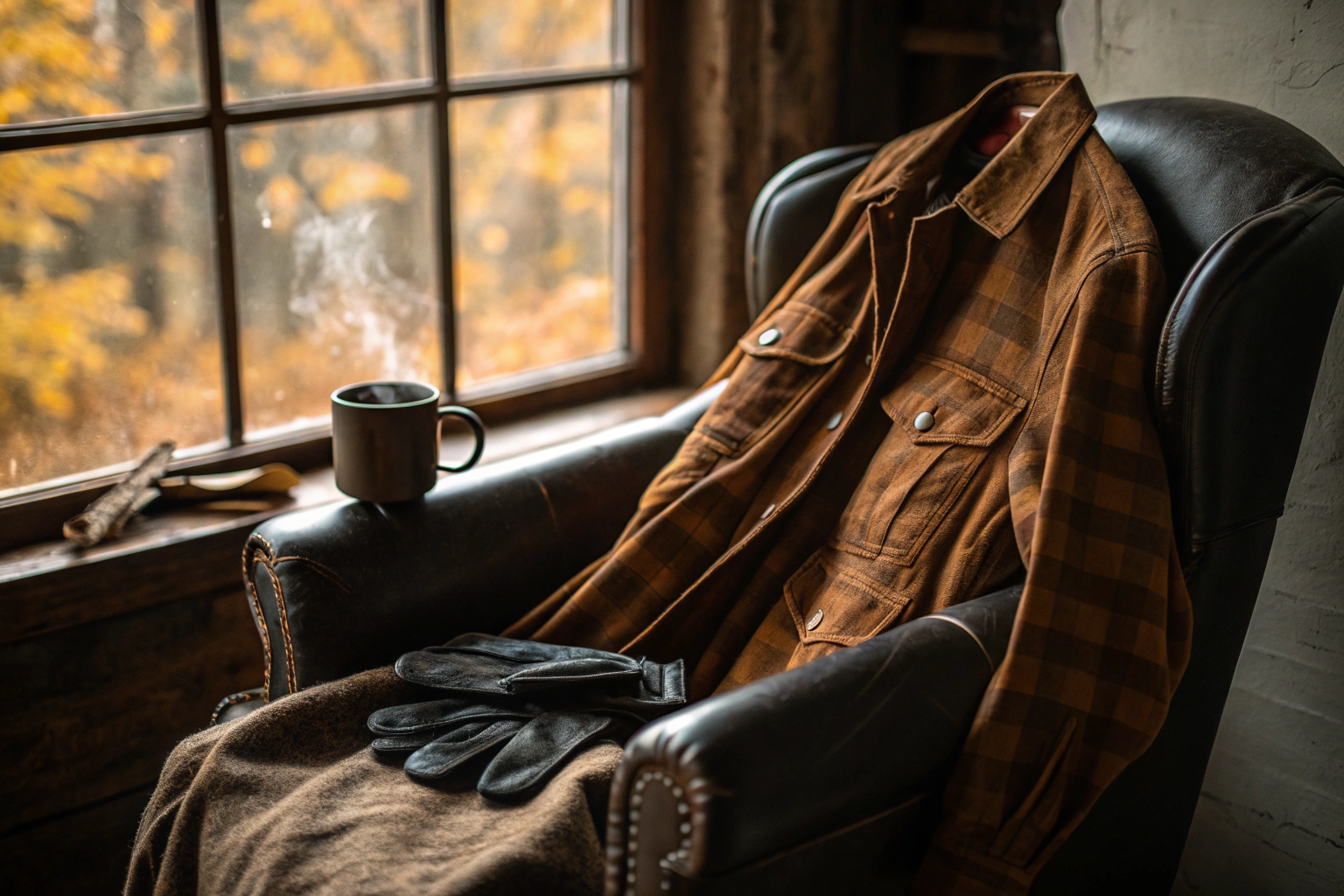
Stop trying to force summer fabrics into October. I see it every single year. A menswear brand falls in love with a 120 GSM lightweight linen overshirt. It sells beautifully in June and July. So they think, "Let’s run this silhouette for fall, just in a darker color." They order 800 meters of fine, gauzy linen in "Burnt Ochre" and "Deep Forest," and ship it to stores in September. The customer tries it on, and it hangs like a limp, sad dishrag. It doesn’t provide warmth. It doesn’t hold a shape. It looks like a summer vacation memory, not an autumn statement piece. The pain isn’t just the markdowns. It’s the missed opportunity. Fall 2026 is primed for a very specific garment: the heavy cotton linen shirt jacket, or "shacket." The consumer is already searching for it. They want something that layers, something with body, something that feels substantial and protective as the first cold snap hits. Giving them a thin summer fabric in a fall color is a betrayal of their seasonal need.
The reason Fall 2026 belongs to the heavy cotton linen shacket is structural, not just aesthetic. At Shanghai Fumao, we’ve seen a 300% increase in sample requests for fabrics above 240 GSM in cotton-linen blends specifically for unstructured, shirt-style jackets over the last six months. This isn’t a fleeting fashion whim. It’s the convergence of the "soft tailoring" megatrend that’s dominated menswear and womenswear since 2023, the consumer demand for natural, breathable fibers that still provide thermal insulation, and the unique material properties of heavy cotton linen that no other fabric can replicate. This blend is breathable like a shirt, structured like a light jacket, and textures like a vintage workwear piece. It answers the question that every fall wardrobe asks: "What do I wear when it’s too cold for a shirt but too warm for a wool coat?" We’re not just selling you a fabric; we’re showing you the science behind the season’s most versatile garment.
Let’s break down why the weight of the fabric is the entire game, how these fabrics perform in the layering systems consumers are building, and why the Fall 2026 color and weave trends are pushing heavy cotton linen to the front of every buying appointment.
What Weight of Cotton Linen Defines a "Shirt Jacket" for Fall 2026?
Let’s kill a misconception right now: a shirt jacket is not a thick shirt. It’s a light, unconstructed jacket that happens to have a shirt-style collar, cuffs, and placket. And that functional difference demands a specific weight class of fabric that standard shirting simply doesn’t occupy. A classic cotton poplin dress shirt sits at 100-130 GSM. A standard midweight linen shirt sits at 140-170 GSM. These fabrics are designed to drape close to the body, to tuck, and to layer under a sweater or a blazer. A shirt jacket needs to do the opposite. It needs to hold its own shape when worn open over a t-shirt, to provide enough structure that the collar stands up without interfacing, and to have enough mass to actually trap a thin layer of warm air between the jacket and the body.
At Shanghai Fumao, we classify a "shirt jacket weight" cotton linen as anything between 240 GSM and 350 GSM. This range is the sweet spot where the fabric transitions from "apparel cloth" to "soft shell material." Within this range, we see three distinct tiers, each with different drape, warmth, and end-use characteristics.
Tier 1: The "Entry" Shacket (240-270 GSM). This is the gateway fabric. It’s a heavy twill or a dense plain weave, often in a 55% linen / 45% cotton blend. It has enough body to look like a jacket on the hanger, but it’s still soft and flexible enough to roll the sleeves. Brands use this for the "three-season" shacket—something you can wear in late summer evenings and layer with a light sweater through mid-autumn. Our SL-260-TW (260 GSM, herringbone twill, 55/45 blend) is the workhorse in this tier. It tailors cleanly, the herringbone adds visual texture without bulk, and the cotton component keeps the price point accessible.
Tier 2: The "Core" Shacket (280-320 GSM). This is the heart of the Fall 2026 trend. At this weight, the fabric has a genuine "hand." It feels like a material, not just a cloth. The drape is structured; a collar cut from a 300 GSM fabric stands up on its own with just a light fusible. The fabric provides real thermal insulation, especially in a brushed or peached finish that traps air. Our SL-300-CR (300 GSM, canvas weave, 60% linen / 40% cotton) is the best-seller in this tier. It’s heavy enough to feel protective, light enough to wear all day, and the canvas weave gives it a workwear authenticity that photographs incredibly well.
Tier 3: The "Statement" Shacket (330-350 GSM). This is the coat alternative. At 350 GSM, a cotton linen fabric is entering blanket territory. It’s thick, it’s warm, it’s sculptural. You don’t sew a 350 GSM fabric into a fitted, tailored jacket; you design a bold, oversized, almost architectural silhouette that uses the fabric’s stiffness as a design feature. Our SL-350-BL (350 GSM, basket weave, 70% linen / 30% cotton) is for the brand that wants to make the shacket the hero piece of the fall collection, not just a layering item.
A Canadian menswear brand that’s been buying our heavy twills for three years developed their core overshirt program around our 300 GSM canvas. They tested the 260 GSM and found it "draped too softly for the collar stand." They tested the 350 GSM and found it "too heavy for indoor wear." The 300 GSM was the "Goldilocks" fabric. They now run that shacket in three fall colors every year and it’s their top-grossing outerwear category. For a deeper understanding of material selection, reading about the relationship between fabric GSM, drape coefficient, and garment silhouette in unstructured outerwear design clarifies the engineering behind the style, and exploring how fabric weight and weave density affect thermal insulation in natural-fiber garments explains the "warmth without synthetic filling" factor.

How Does a 300 GSM Cotton Linen Blend Drape Differently from Pure Linen?
This is the critical question that separates a successful shacket from a stiff, uncomfortable board that customers return. Pure linen at 300 GSM is a beast. It’s incredibly rigid, it wrinkles into sharp, harsh creases rather than soft folds, and it can feel scratchy against the neck and wrists. It has almost no "give" or flexibility. A pure heavy linen shacket looks fantastic on a mannequin but feels punishing to wear.
Adding cotton to the blend, at the right ratio, transforms the drape. Cotton fibers are naturally more elastic and flexible than flax fibers. In a 60/40 or 55/45 linen-cotton blend, the cotton acts as a "plasticizer." It fills the gaps between the stiff linen yarns, allowing the fabric to bend and flex without losing its fundamental structure. The wrinkles become softer and rounder—more "lived-in" than "crumpled." The hand feel against the skin is less abrasive.
We measure this objectively using a Kawabata Evaluation System (KES) bending rigidity tester. A pure 300 GSM linen typically has a bending rigidity (B value) of 0.45-0.55 gf·cm²/cm. Very stiff. Our 300 GSM 60/40 cotton-linen blend has a B value of 0.30-0.38 gf·cm²/cm. That’s a roughly 30% reduction in stiffness. The fabric still holds a collar shape—a B value below 0.15 starts to look floppy and shirt-like—but it moves with the body rather than fighting it.
I recall a product developer for a Los Angeles-based workwear brand who was skeptical about the cotton blend. "I want the linen look, not a cotton jacket," he said. We sent him two handloom swatches: one pure 300 GSM linen, one 300 GSM 60/40 linen-cotton. He put both in his sample room and had a fit model try on the resulting toile jackets. The pure linen jacket was described as "armor." The cotton-linen jacket was described as "a hug." He ordered 2,000 meters of the blend. For more on this, seeing the comparative bending rigidity and shear stiffness values of pure flax versus flax-cotton blended woven fabrics provides the academic data, and understanding how fabric hand feel and consumer comfort perception change with fiber blending ratios in heavy woven fabrics translates the numbers into consumer experience.
Why Is Fiber Composition Critical for Fall Weight Insulation?
Fall weather is tricky. A crisp October morning at 8°C can turn into a surprisingly warm 18°C afternoon. A garment that insulates well but doesn’t breathe becomes a sweatbox by lunchtime. A garment that breathes well but doesn’t insulate leaves the wearer shivering on the morning commute. This is where the cotton-linen blend’s bi-component fiber structure provides a physiological advantage that synthetics and pure fibers struggle to match.
Linen is a hollow, bast fiber. The hollow core of the flax fiber creates natural air pockets that provide insulation (trapped air is the best insulator) while also allowing moisture vapor to escape rapidly. Linen can absorb up to 20% of its weight in moisture before it feels damp, and it releases that moisture back into the air very quickly. This is why linen feels cool in summer—it’s actively wicking and evaporating. In a heavy, 300 GSM fabric, that same property prevents the "boil-in-the-bag" effect of a polyester fleece jacket. You stay warm, but you don’t overheat.
Cotton, in the blend, provides a complementary insulation mechanism. Cotton fibers are flat, ribbon-like, and twist around themselves. This creates a much denser, more "snaggy" fiber structure that traps smaller pockets of air. While linen is managing the moisture and preventing the clammy feeling, cotton is providing the consistent, still-air thermal barrier. The two fibers work together like a double-glazed window: the linen is the structural frame that breathes, and the cotton is the secondary seal that insulates.
A Berlin-based outdoor-lifestyle brand did a comparative thermal manikin test in 2025. They tested a 300 GSM polyester fleece jacket against our 300 GSM cotton-linen canvas shacket. At a steady 10°C ambient temperature with moderate activity (simulating walking), the thermal insulation values (measured in clo) were nearly identical: 1.8 clo for the fleece, 1.7 clo for the cotton-linen. But the moisture vapor transmission rate (MVTR) was 45% higher in the cotton-linen. The test subjects reported feeling "significantly less clammy" in the natural fiber jacket after 30 minutes of activity. This data is what’s driving the shift away from synthetic "performance" fabrics and toward heavy natural blends for everyday autumn wear. If you want the numbers, looking at the thermal conductivity and moisture buffering properties of flax and cotton fibers in high-density woven constructions provides the materials science, and exploring the application of thermal manikin testing to evaluate the comfort performance of casual outerwear garments shows how brands are making data-driven fabric choices.
Which Heavy Cotton Linen Weaves Are Trending for Autumn 2026?
The weight of the fabric is the engineering; the weave is the personality. For Fall 2026, we’re seeing a clear departure from the plain weaves and simple twills that dominated previous seasons. The trend is toward weaves that add visual depth, tactile interest, and a sense of "heritage" without relying solely on printed patterns. Consumers are increasingly sophisticated about fabric; they don’t just want to see a pattern printed on the surface. They want to see the weave itself create the pattern. This is why dobby weaves, structured plaids, and three-dimensional textured weaves are dominating our Fall 2026 sample requests.
The four weave categories driving the heavy cotton linen shacket trend this autumn are:
1. The "Modern Herringbone" (Broken Twill). Herringbone is the classic of classics, but the 2026 version is anything but traditional. We’re seeing herringbone at dramatically larger scales—sometimes with a repeat width of 3-4 centimeters instead of the traditional 0.5 centimeters. These "macro herringbones" use contrasting warp and weft yarn colors to create a bold, graphic zigzag that reads almost like a geometric print. The texture is substantial, the visual impact is strong, and it gives a simple, unstructured shacket an instant "design" element without any printing. Our SL-HERR-280 (280 GSM, macro herringbone, 55/45 linen-cotton) is the most sampled fabric in our showroom this season.
2. The "Authentic Plaid" (Yarn-Dyed Twill). Plaid is back, but not the printed-on-surface plaid that can rub off. Fall 2026 demands authentic, yarn-dyed plaids where the color is in the yarn itself, woven into the structure. A heavy cotton linen plaid shacket in a "Buffalo Check" (large-scale red and black) or a muted "Autumn Tartan" (ochre, olive, and navy) has a genuine workwear authenticity that resonates deeply with the consumer. Because the yarn is dyed before weaving, the plaid is visible on both sides of the fabric, the colorfastness is excellent, and the garment’s interior looks as good as the exterior. A Pacific Northwest outdoor brand ordered 3,500 meters of our SL-PLAID-310 (310 GSM, yarn-dyed plaid, 50/50 linen-cotton) for their Fall 2026 "Timber Cruiser" shacket. They’re projecting it to be their top-selling outerwear piece.
3. The "Homespun Basket Weave." This is a texture story. A basket weave uses two or more warp yarns interlaced as one with two or more weft yarns, creating a checkerboard-like surface texture that looks and feels handwoven. In a heavy cotton linen, the basket weave gives the fabric a nubby, almost "artisan blanket" character. It’s the perfect base for a solid, earthy color—think "Burnt Sienna," "Moss Green," or "Natural Undyed"—where the weave itself is the hero. The fabric has a rustic, tactile quality that screams "slow fashion."
4. The "Shadow Canvas" (Mélange/Heathered Weave). A canvas weave is a dense, durable plain weave. But our "Shadow Canvas" uses a mélange yarn—a yarn spun from two differently colored fibers, typically a natural ecru cotton and a dyed brown or charcoal linen. The result is a heathered, "salt and pepper" surface with incredible depth. The fabric looks different from every angle. It’s subtle, sophisticated, and incredibly forgiving of stains and wear, making it ideal for a shacket that’s going to be thrown on for a bonfire or a hike. Understanding how yarn-dyed weaving techniques create authentic, permanent patterns compared to piece-dyed or printed fabrics is essential for specifying quality, and seeing the 2026 autumn/winter fabric trend forecasts for menswear and womenswear outerwear weaves and textures validates the macro herringbone and basket weave predictions.

How Do Brushed Finishes Improve the Hand Feel of Heavy Cotton Linen?
A 300 GSM canvas weave, fresh off the loom, has a hand feel that can be frankly intimidating. It’s stiff, it’s slightly rough, and it feels like it needs to be broken in for a decade before it’s comfortable. You can’t sell that to a consumer who expects immediate gratification. The solution is mechanical surface finishing, specifically brushing and emerizing.
Brushing is a mechanical process where the fabric surface is passed over a series of rotating cylinders covered with fine, densely packed wire bristles. These bristles pull up the very tips of the cotton and linen fibers from the yarn structure, creating a soft, raised "nap" or "peach skin" on the surface. The degree of brushing is controlled by the roller speed, the bristle density, and the number of passes. For a heavy cotton linen shacket, we typically apply a light, single-pass brush. This is enough to knock down the harshness, create a soft, velvety surface that’s pleasant against the neck, and provide that "instant worn-in" comfort. It does not obscure the weave structure; the herringbone or plaid is still clearly visible.
Emerizing is a more aggressive version, using diamond-dust-coated rollers that actually cut the surface fibers to a uniform, ultra-short nap. This creates a "sueded" or "peach skin" finish that’s incredibly luxurious. For a premium, fashion-forward shacket, an emerized heavy cotton linen feels like a fabric that costs double its actual price.
A streetwear brand we work with in Tokyo is obsessed with the contrast between a rugged, heavy weave and a soft, brushed hand. Their Fall 2026 shacket uses our 300 GSM canvas, but they specify a double-pass emerizing finish. The fabric looks tough. It feels like cashmere. They charge a premium price, and their customers can’t keep it on the shelves. Understanding the mechanical brushing and emerizing processes and their effects on the hand feel and thermal properties of woven cotton and linen fabrics is essential if you want to specify the right finish, and learning how surface brushing affects the pilling resistance and durability of heavy woven natural fiber fabrics helps you avoid the cheap, over-brushed fabrics that shed fibers everywhere.
Are Solid Heavy Cotton Linens or Plaids More Versatile for Retail?
This is the merchandising question that keeps buying directors up at night. Do you play it safe with a solid, neutral heavy cotton linen shacket that coordinates with everything? Or do you swing for the fences with a bold, yarn-dyed plaid that pops on Instagram but might be too distinctive for a customer who only buys one new jacket this season?
Based on the sell-through data our brand clients have shared with us from the Fall 2025 season, the answer is not "either/or." It’s "both, but in the right ratio." The most successful retail assortments we’ve seen use a 70/30 solid-to-plaid split. The solid colors—the "Burnt Ochres," the "Charcoal Greys," the "Natural Oatmeals"—are the volume drivers. They’re the safe choice for the customer who wants a quality jacket that goes with their entire existing wardrobe. They sell steadily throughout the season with low return rates.
The plaid, however, is the traffic driver. The plaid shacket is the piece that gets featured in the email blast, that gets styled on the mannequin in the window, that gets the Instagram post with 50,000 likes. It brings customers into the store or onto the website. A percentage of those customers will buy the plaid; the rest will see it, love the brand’s aesthetic, and then purchase the solid color that feels more "them." The plaid sells the brand; the solid pays the bills.
A Chicago-based menswear boutique shared their Fall 2025 data with me. They ordered a heavy cotton linen shacket from us in two solid colors (Olive and Charcoal) and one statement plaid (a rust-and-navy tartan). The solids had a 94% sell-through at full price over the four-month fall season. The plaid sold out in six weeks. It drove 40% of the foot traffic into the store, and many of those customers left with a solid-colored shacket or a complementary item. The solids were the profit center; the plaid was the marketing engine. For more retail strategy, looking at the merchandising principles for balancing statement pieces and core basics in a seasonal outerwear assortment provides a framework, and analyzing the consumer psychology of pattern versus solid purchasing decisions in casual menswear and womenswear explains the "safe solid" bias.
How Are Fashion Brands Styling Heavy Cotton Linen for Fall 2026?
The fabric is the medium, but styling is the message. How a brand chooses to cut, construct, and present a heavy cotton linen shacket determines whether it feels like a piece of workwear heritage, a minimalist architectural layer, or a soft, cozy "comfort" piece. For Fall 2026, we’re seeing three dominant styling directions emerge across our global brand client base, each targeting a different consumer psychographic but all anchored by the unique properties of the heavy cotton linen fabric itself.
The first direction is "Refined Workwear." This is the natural home of the heavy cotton linen shacket. The silhouette is slightly boxy but not oversized, with a straight hem, two or three patch pockets, and a pointed collar. The construction is unstructured—no shoulder pads, minimal internal interfacing—allowing the fabric’s own body to define the shape. The styling pairs it with matching or tonal heavy cotton linen trousers (creating a "soft suit" effect), a thick cotton t-shirt or henley underneath, and leather work boots. The palette is anchored in "authentic" workwear colors: Indigo Blue, Tan, Olive Drab, and Natural Ecru. This look appeals to the heritage-conscious consumer who values authenticity and durability. A Japanese denim and workwear label has built their entire Fall 2026 collection around our 300 GSM canvas in a "Raw Natural" shade, styled with selvedge denim and unlined construction. The fabric’s natural slub and stiffness are celebrated, not concealed.
The second direction is "Soft Minimalism." This takes the heavy cotton linen shacket in a more refined, urban direction. The silhouette is longer, often hitting mid-thigh, with a softer, more fluid drape achieved by using our 260 GSM herringbone rather than the 300 GSM canvas. The collar is a softer, convertible "camp" style. The pockets are hidden or absent. The color palette is monochromatic and tonal: Charcoal, Soft Grey, Oatmeal, Black. The styling layers it over fine-gauge merino rollnecks or cashmere hoodies, paired with tailored wool flannel trousers and minimalist sneakers. This look appeals to the architectural, design-conscious consumer who wants the texture and substance of a heavy natural fabric but in a sleek, urban silhouette. A Copenhagen-based contemporary brand is using our 260 GSM herringbone in a "Shadow Grey" mélange for this exact look. They describe it as "a coat that thinks it’s a cardigan."
The third direction is "Bohemian Texture Play." This is the most fashion-forward and romantic of the three. It uses the shacket as a layering piece in a rich, textural collage. The silhouette might be oversized, cropped, or belted. The fabric is often our 310 GSM yarn-dyed plaid or our heavily textured basket weave. The styling is eclectic: layered over a floral midi dress with leather ankle boots, or thrown over a silk shirt and velvet trousers. The heavy cotton linen provides the "grounding" weight in an outfit of mixed textures. This look appeals to the creative, individualistic consumer who isn’t afraid of color and pattern. A London-based independent boutique brand is using our "Autumn Tartan" plaid for a cropped shacket styled over tonal sage green silk dresses in their Fall 2026 campaign. It’s unexpected, it’s beautiful, and it’s generating enormous editorial buzz. For visual inspiration, seeing how global fashion brands are styling unstructured shirt jackets and overshirts in their Fall/Winter 2026 runway and lookbook presentations provides the high-fashion context, and reading street style analysis of heavy cotton linen outerwear during recent autumn fashion weeks grounds the trends in real-world wearability.

What Collar Constructions Work Best Without Interfacing in Heavy Linen?
The collar is the soul of the shacket. Get it wrong, and the whole garment looks droopy and sad. The magic of a heavy, 280-300 GSM cotton linen is that it can support a structured collar without relying on heavy synthetic fusible interfacings. This is a huge aesthetic and quality win. A fused collar on a natural fiber garment can eventually bubble, delaminate, or create a stiff, plastic-like feel that contradicts the "natural fiber" story.
The best collar construction for a heavy cotton linen shacket is the "Self-Fabric Two-Piece Stand and Fall." This means both the collar stand (the band around the neck) and the fall (the folded-over part) are cut from the same shirting fabric, and no fusible is used. Instead, the fabric’s own weight and body are the structure. The stand is cut on the straight grain for stability. The fall is cut on the bias—yes, the bias, even on a heavy fabric—which allows it to roll softly and organically rather than creasing sharply.
The seam allowances within the collar construction are "graded" (trimmed to different widths) and then edge-stitched precisely. The multiple layers of heavy cotton linen, stacked and stitched, create a natural, self-supporting structure. It’s a tailoring technique borrowed from traditional Neapolitan shirtmaking, where lightweight, unlined, and unfused jackets have been made for decades.
A Portland-based designer who makes limited-run shacket jackets sent me a photo of her collar construction in 2025. She was using our 300 GSM canvas and had initially tried a lightweight fusible. The result was "crinkly," she said. I suggested the self-fabric, bias-cut fall. She tested it. The collar rolled like a wave. She’s never gone back to fusibles, and she markets her shackets as "100% natural, down to the construction." If you’re a designer, diving into traditional shirt collar construction techniques and the use of self-fabric and bias cutting for soft, unlined finishes is a practical education, and learning how to sew and finish heavy woven fabrics without synthetic interfacings for a premium, natural hand feel gives you the technical methods.
Can Heavy Cotton Linen Jackets Be Packed Flat for Travel Without Ruining the Shape?
This is the practical, real-world question that consumers ask in reviews and that retail buyers ask in showroom appointments. A garment that looks beautiful but can’t survive being folded into a weekend bag is a garment that gets returned. The consumer expectation for a soft, unstructured jacket is that it travels well. Stiff, rigid heavy linen would seem to contradict that expectation.
Here’s the surprising truth: a properly engineered heavy cotton linen shacket travels better than a structured blazer. The wrinkles that occur from being folded in a suitcase don’t look like "damage." They look like character. A heavy cotton linen, particularly our 300 GSM canvas with the bi-tonal mélange heathered finish, absorbs fold creases and integrates them into the fabric’s natural texture. When you unpack the jacket and hang it in a steamy bathroom for 20 minutes, the heavy linen fibers absorb the ambient moisture, relax slightly, and the sharp fold lines soften into the broader, chaotic texture of the fabric. What remains is not a "crease" but more "texture."
We did an informal wear test in our office in 2025. We folded a 300 GSM heavy cotton linen shacket into a standard packing cube, left it compressed for 48 hours, removed it, and hung it on a hanger. We photographed it immediately. It had sharp fold lines. We hung it in a bathroom during a 15-minute hot shower. We photographed it again. The sharp lines had relaxed into soft, undulating waves that were indistinguishable from the fabric’s intrinsic Shadow Crush-type texture. The jacket looked ready to wear.
A direct-to-consumer travel clothing brand now uses this "unpack and steam" story as a key part of their product page content for our heavy cotton linen shacket. They include a video of the 48-hour compression test. It’s one of their highest-converting product pages because it addresses the travel anxiety directly. For more consumer-facing content ideas, reading about the wrinkle recovery and easy-care properties of heavy natural fiber fabrics for travel-oriented consumers provides reassuring data, and seeing how product page demonstrations of fabric behavior, like crush and recovery tests, can increase consumer confidence and reduce return rates is a powerful e-commerce strategy.
How Can Buyers Secure Heavy Cotton Linen Stock Before the Fall Rush?
If you’re reading this article and nodding along, thinking about the shacket collection you want to launch for Fall 2026, I need you to internalize one date: July 31st, 2026. That is the point at which the relaxed, "we’ve got plenty of time" ordering window for heavy cotton linen slams shut. After that, you are in the "rush zone," and you start losing options—losing your preferred weave, losing your first-choice color, losing your standard pricing, and eventually losing your on-time delivery. The fall textile rush is as predictable as the October holiday shutdown, and the two events are connected.
The logic is this: bulk production of heavy cotton linen for fall garments needs to happen in August and early September. This allows the fabric to ship in late September and arrive in US and EU warehouses in October, just as brands are cutting their fall/winter inventory. If you order in August, you’re competing for dyeing and weaving capacity with every other brand that had the same "heavy shacket" idea. If you order in September, the October National Day holiday will delay your production by at least two weeks. If you order in October, you’re ordering fabric for Fall 2027, not Fall 2026.
At Shanghai Fumao, we’ve already built our 2026 autumn greige inventory. We have stock of our 260 GSM herringbone, our 300 GSM canvas, our 310 GSM yarn-dyed plaid, and our 350 GSM basket weave, all in their natural, undyed state, sitting on pallets in our Keqiao warehouse. This greige can be dyed to any custom Pantone color, or it can be used as-is for the "Natural Undyed" look that’s so popular in the Refined Workwear aesthetic. The brands that contact us in June and July get to pick from the full palette of available greige and reserve their meterage with a 10% deposit. The brands that contact us in August get what’s left. The brands that contact us in September get a sympathetic email and an invitation to plan ahead for Spring 2027.
A savvy buyer from a major US department store’s private label division placed their heavy cotton linen reservation in May 2026. They locked in 8,000 meters of the 300 GSM canvas across five colors. They approved their lab dips by June 20th. Their production will run in the first two weeks of August, shipping by September 1st, arriving in their distribution center by October 15th. They will have floor-ready shacket jackets while their competitors are still waiting for fabric samples. That’s the competitive advantage of early buying. For more on this, reading the optimal sourcing timeline for autumn/winter fabric collections, including greige reservation, lab dip, and bulk production milestones provides the full strategic calendar, and understanding how to negotiate priority production slots and secure raw material allocation before the peak textile manufacturing season gives you the tools to negotiate with any supplier.

Are Pre-Booked Sample Yardage Programs Available for Fall 2026?
Yes, and this is how smart brands test the market before committing to a full bulk order. A sample yardage program allows you to order a small quantity—typically 20 to 50 meters—of a custom-dyed heavy cotton linen at a per-meter price that’s higher than the bulk rate but far lower than the cost of ordering a full 500-meter minimum and being stuck with deadstock if the shacket doesn’t sell.
For Fall 2026, we offer a "Shacket Sample Starter Kit" program. You select up to three of our heavy cotton linen base fabrics (e.g., the 300 GSM canvas, the 280 GSM macro herringbone, and the 310 GSM yarn-dyed plaid). You specify up to two custom Pantone colors or select from our existing Fall 2026 Core Palette. We produce 30 meters of each combination. This is enough fabric to make 8-10 sample shackets for your sales team, your photoshoot, and your key wholesale accounts. The total sample yardage fee is credited back against your bulk order if you proceed within 60 days.
This program de-risks the development process. You can show the actual, finished shacket to buyers at trade shows in July and August, collect pre-orders, and then place a confident bulk order based on real demand, not a guess. A Brooklyn-based startup used this program in 2025. They sampled our 300 GSM canvas in "Burnt Ochre" and "Deep Olive." They showed the samples at a local maker’s market and took 150 pre-orders in one weekend. Those pre-orders funded their bulk fabric purchase. They didn’t spend a dollar of their own capital on inventory that wasn’t already sold. Looking at how sample yardage programs and small-batch custom dyeing allow emerging fashion brands to test new fabric qualities with minimal financial risk explains the model, and understanding the cash flow advantages of using pre-orders to fund bulk fabric purchases for seasonal collections is essential reading for any lean brand.
How Does the October Holiday Affect Fall Inventory Delivery Timelines?
I’ve written extensively about the October National Day shutdown in a previous article, and its impact on heavy cotton linen for fall is just as critical as it is for any other fabric. I’ll summarize the key point here: the Golden Week holiday (October 1st – October 7th) creates a hard stop in Chinese textile production. If your fall shacket fabric is not already on a vessel by late September, it will not ship until mid-to-late October. Add ocean transit time (3-4 weeks to the US West Coast, 4-5 weeks to Europe), and a "September 30th" shipment arrives in early November. An "October 20th" shipment arrives in late November or early December. For a Fall 2026 collection, a late November delivery is a catastrophic delay. The prime selling window for fall outerwear is September, October, and early November. By Black Friday, the consumer has already mentally shifted to winter coats, and the fall shacket is yesterday’s news.
The October holiday is the immovable object in your fall production calendar. Your entire development and production timeline must bend around it. The fabric must be produced, finished, inspected, and packed in August and early September. The vessel must sail between September 15th and September 25th. This gives you a port arrival in mid-to-late October, just in time for the tail end of the fall selling season and the peak of the holiday gifting season. This timeline is only achievable if you place your bulk order by late July. The holiday is not a surprise. The brands that panic in October are the brands that didn’t plan in June. For a comprehensive understanding, refer back to our full article on how the Chinese National Day Golden Week impacts textile factory production schedules, shipping deadlines, and inventory planning for international brands. And for the specific lead time calculations, knowing the standard ocean freight transit times from major Chinese ports to US and European destinations and how to factor port congestion into your delivery estimates allows you to build a realistic, stress-free calendar.
Conclusion
Fall 2026 is not the season for lightweight, flimsy layers that pretend to be outerwear. It’s the season for the heavy cotton linen shacket—a garment that finally reconciles the need for a structured, warm, protective layer with the desire for natural, breathable, texturally rich fibers. We’ve seen that the optimal weight class sits between 240 and 350 GSM, with the 300 GSM 60/40 linen-cotton blend hitting the sweet spot of drape, insulation, and wearability. We’ve walked through the trending weaves—the macro herringbones, the authentic yarn-dyed plaids, the nubby basket weaves—and how brushing and emerizing transform a stiff canvas into a soft, instant-comfort fabric. The styling is set: Refined Workwear, Soft Minimalism, or Bohemian Texture Play, all anchored by the self-fabric, unfused collar that lets the material’s natural body do the work.
The sourcing window is open now. The greige is on the pallets. The dye masters are ready. The October holiday is on the calendar, and it will not move. The brands that will own the fall 2026 shacket category are the brands that reserve their 300 GSM canvas and their 310 GSM plaid in June and July, that approve their lab dips by early August, and that have their fabric sailing across the Pacific or the Atlantic in September. The brands that wait until the leaves are already falling to place their orders will be left with the scraps and the air-freight bills.
If you have a shacket silhouette on your design board, let’s get it into production. My Business Director, Elaine, has the current greige stock report, the Fall 2026 Core Palette, and the Shacket Sample Starter Kit details ready to send. Tell her the weight and the weave you’re leaning toward, and she’ll courier a targeted swatch book within 48 hours. Reach her at elaine@fumaoclothing.com. Fall comes every year on the same date. The fabric that dresses it shouldn’t be a surprise.








