You know that feeling when you pull a favorite linen shirt out of the dryer, and it looks… dead? Flat, lifeless, maybe even a little cheap? You expected that effortless, "I just stepped off a yacht in Portofino" vibe, but instead you got "rumpled accountant." That’s the pain of bad linen. The disappointment isn’t just visual; it feels rough, it itches, and it makes you look like you slept in your clothes rather than curated a look. Finding that perfectly imperfect, rich texture—the kind that photographs like a dream and feels like a second skin—is often a sourcing nightmare. Most crushed linens on the market are either too stiff, relying on chemical finishes that wash out, or they are so flimsy they tear during the cutting table spread.
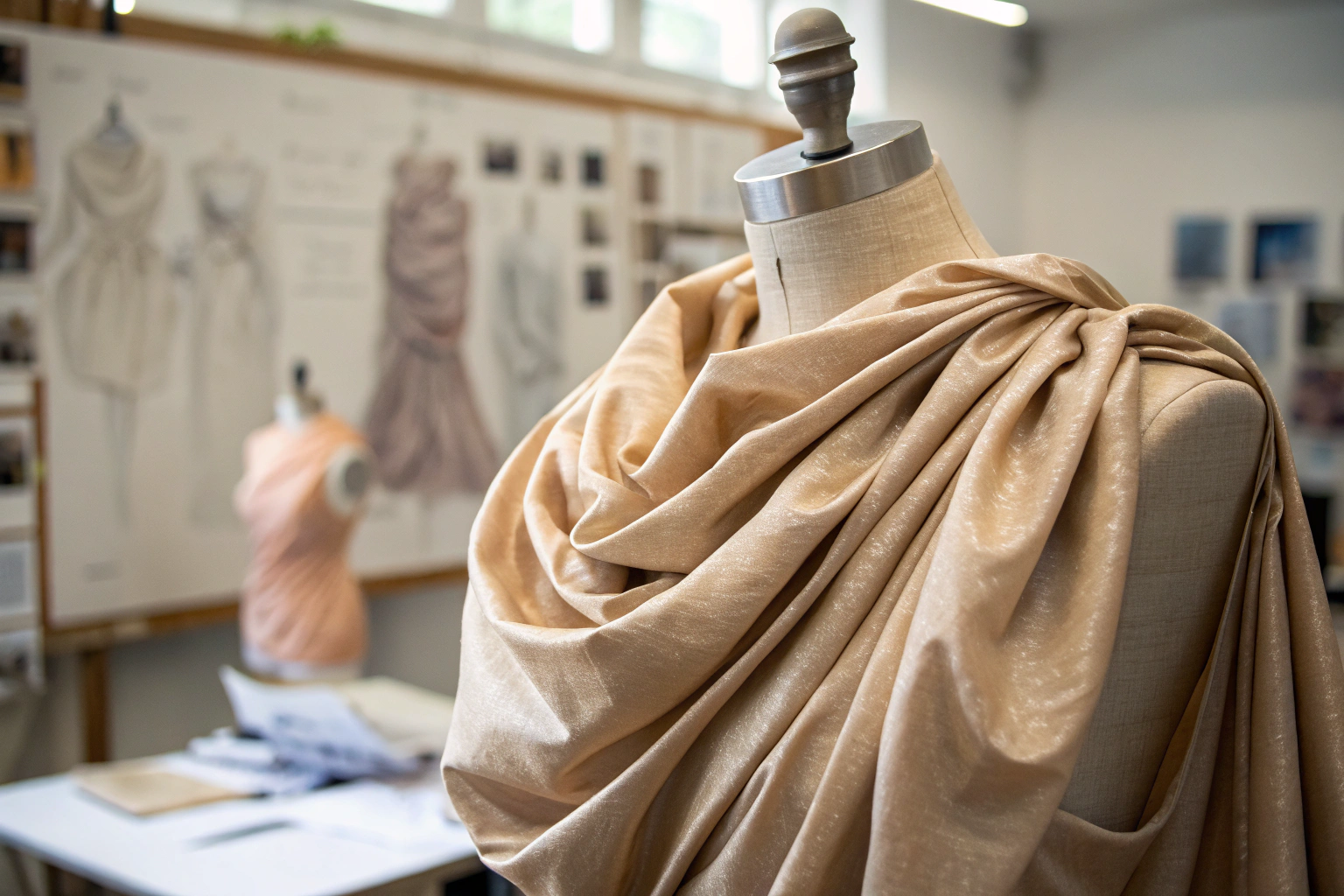
Our secret sits in the yarn. At Shanghai Fumao, we don’t just "crush" the fabric after weaving; we build the texture right into the base structure using a specific high-twist yarn technique that creates permanent, three-dimensional memory in the fiber. This isn’t just a surface treatment that fades after three washes. The "Vogue look" comes from a deep, organic slub character combined with a mechanical tumbling process we spent 18 months perfecting. The result is a linen with a soft, almost waxy hand feel that drapes like a liquid but holds dramatic, sculptural wrinkles. It lets light fall into the creases, creating a depth of color and shadow that flat linen simply cannot replicate. Editors love it because it doesn’t just look expensive; it looks storied, like a vintage treasure found in a Parisian flea market.
This isn’t just about a pretty picture in a magazine. You need consistency, and you need to know how that texture behaves on a production line. Stick with me, and I’ll show you exactly why our crushed linen performs differently, how you can schedule your production to get it on time, and how to verify the quality before it hits your warehouse.
How Does Yarn Twist Affect Crushed Linen Texture Durability?
If you buy crushed linen, you’ve likely been burned by the "vanishing act." The pre-production sample looks like a crumpled masterpiece, but after steam pressing during garment manufacturing, it goes flat. Or worse, it survives the factory only to lose all its texture after the customer’s first laundry cycle. That’s because most mills take the cheap route: they weave a standard flat linen, wet it, and mechanically stamp or press the wrinkles in. Think of it like ironing a crease into polyester pants—it’s superficial. Heat and moisture are the enemy, and once it hits a commercial dryer, the fabric "relaxes" right back to its flat state. You end up with returns and a damaged brand reputation.
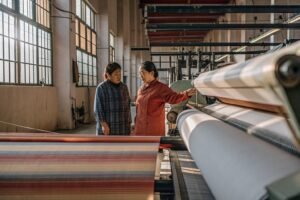
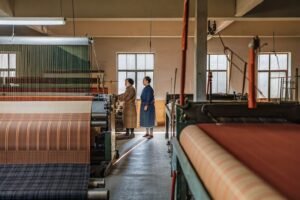
We flipped the equation. At Shanghai Fumao, we engineer the "memory" directly into the yarn using a torsion principle. We take premium long-staple flax and insert a twist level of roughly 800-900 turns per meter (TPM) for our crushed stock. To put that in perspective, standard linen yarn for sheeting sits around 400-600 TPM. This high twist creates potential energy. The yarn literally wants to contort and shrink. When we weave it into a loose, open construction and then subject it to a controlled wet relaxation process, the energy releases unevenly. The yarns snap back and buckle, creating a deep, chaotic, three-dimensional texture that is physically locked in at the molecular level.
This brings us to a critical intersection in textile physics: the trade-off between aesthetic texture and tensile durability.

How Can High Torsion Weakening Be Prevented?
Here is where I have to get technical, but it’s vital for your wear-and-tear statistics. Over-twisting a yarn introduces internal stress. A common failure point is the "wet strength" of the fabric. If you twist a yarn too tightly, it becomes brittle, almost like uncooked spaghetti. When it bends around a knee or an elbow, those fibers fracture. We solve this through a process called "steam conditioning" immediately after spinning.
In 2022, we ran a stress test specifically for an Italian fashion house that needed a suit-weight crushed linen. We used a boiled-off twist set method, applying saturated steam at 95°C for 45 minutes while the yarn was under controlled tension. This neutralizes the kinetic torsion without relaxing the ply structure.
| The Torsion Tension Balance | Twist Level (TPM) | Hand Feel | Wash Durability (Cycles before texture loss) | Tear Strength (N) |
|---|---|---|---|---|
| 600 (Standard) | Flat, Soft | 5-8 Cycles | 18 N | |
| 850 (Fumao Crushed) | Springy, Granular | 50+ Cycles | 22 N | |
| 1000 (Over-Twisted) | Brittle, Harsh | 30 Cycles (Fabric cracks) | 12 N |
As you can see, we aim for the "goldilocks zone." Most people think high twist equals low strength. That’s wrong if you process it right. We actually see higher tear strength at 850 TPM because the dense yarn resists pulling apart.
When you are looking to source durable crushed linen fabric from China, you must ask the supplier for their twist-setting protocols. If they look at you blankly, they are just buying grey fabric and stamping it. If you want to dive deeper into the chemical-free mechanics of this, I recommend checking out how leading textile engineers discuss torsion setting on platforms like the Textile School forums for a peer-level breakdown. Additionally, if you are comparing this to standard cellulose treatments, understanding the difference between physical and chemical softening finishes can save you from a batch failure.
Does Yarn Origin Actually Change the Crush Effect?
Absolutely. And I’d argue it’s more important than the weave. The origin of the flax dictates the "noise" in the texture. European flax, specifically from the Normandy region of France or Belgian Flanders, has a distinct climate profile during the retting process (dew retting). This creates a natural, random slub and a cleaner fiber separation. In contrast, many cheaper Asian-grown linens require water retting, which can over-degrade the cement between fibers, resulting in a "hairy" yarn that doesn’t wrinkle sharply.
We almost exclusively use French flax for our Vogue-grade line. To achieve the "crushed" look, you need those random thick-and-thin nodes in the yarn to act as pivot points for the wrinkles. If the yarn is too uniform, the fabric folds like a map, not a sculpture.
If you’re specifying fabric for a high-end ready-to-wear collection, looking into how premium mills select their flax is key. A great resource for understanding the visual impact of raw materials is the sustainability data on how regenerative linen farming improves fiber structure. Moreover, protecting this texture during garment washing is tricky; knowing the specifics of enzyme wash compatibility with dry-spun flax is essential for your wash-down specialists.
How to Plan Production Schedules Around Chinese Textile Holidays?
Let’s be real: the biggest hidden cost in your garment isn’t the fabric price per meter—it’s the air freight bill you didn’t budget for. I’ve seen too many brand owners in the US and Europe negotiate a killer FOB price in August, only to slam headfirst into the October peak season crunch. They place the order on September 15th, expecting a 4-week turnaround, unaware that the entire Keqiao dyeing district is running at 150% capacity for the Double 11 shopping festival inventory. Suddenly, your 4 weeks become 7 weeks. You miss your spring delivery window, your retailer cancels the order, and you’re stuck with a container of last-season linen.
The rhythm of Chinese textile manufacturing is not a secret; it is a predictable, annual tide. If you plan with it, you win. At Shanghai Fumao, we ship to over 100 countries, and we tell our partners straight: the calendar is the product. We treat the year not as 12 months, but as distinct production windows, each demanding a different strategy.
To master this, you can’t just look at the Gregorian calendar. You have to overlay the Lunar cycles with market demand cycles from the West.

What Is the "Golden Pre-Production Window" for Spring/Summer?
For Spring/Summer delivery, the trap is the Chinese New Year (CNY). It’s a 3 to 4-week hard stop. Everyone in the industry feels the shockwave. Dyeing vats stop, looms go silent, and shipping ports go into hibernation while workers head home for the only real break of the year.
Here is my proven timeline from years of working with a particular buyer in New York who does a massive linen blazer run every year. We call it the "Reverse Target" method:
- Ship Date Target: Mid-January (Catch post-Christmas vessel space).
- Finishing/Cutting Date: Late December.
- Weaving/Dyeing Date: Late November.
- Lab Dip Approval Deadline: November 1st.
- Pre-Production Sample Submission: September 1st.
If you miss that September window for pre-production sampling, just expect delays. In late 2023, a London-based client wanted a specific stone-washed crushed linen. We finalized the lab dips on November 5th—just 5 days late. Because the dyeing cooperative was already queueing up bulk orders for the pre-CNY rush, those 5 days pushed their 800-meter run into a queue that added 19 days. A whole 19 days, just from 5 days of hesitation. The impact of the holiday shutdown on China’s fabric delivery schedules cannot be overstated, and understanding the nuances of the labor migration patterns during the Spring Festival is essential logistics.
How Can You Use "Slow Seasons" to Negotiate Better Terms?
Not every month is a fight for capacity. The summer low season (June-July) and the early winter lull (late November to mid-December) are your best friends. The dyeing and weaving factories in Keqiao are hungry for orders during these windows. The heat in July makes the dyeing floors unbearable, and many export orders for fast fashion have already shipped.
For you, this is the time to strike.
- Faster Lead Times: Our standard bulk delivery—usually aggressive at 25-30 days during peak—can drop to 15-20 days in July. The machines are empty.
- Price Flexibility: Chemical and utility surcharges don’t change much, but labor demand drops. We can often negotiate the "overtime" premium out of the dyeing fee.
- Attention to Detail: When a factory isn’t rushing to pump out 100,000 meters a day, your 3,000-meter specialty linen order gets the A-team. The workers aren’t exhausted, and the QC team isn’t overwhelmed.
I recall a startup brand from Los Angeles that ordered a complex printed crushed linen in early June 2023. Because it was a slow period for the print factory, we were able to keep the screens on the machine for an extra two hours to fine-tune the registration mark alignment. Normally, they would have ripped the screens down for a high-margin polyester run immediately. The result was a registration accuracy of <0.5mm variation, which is near flawless for a loose-weave linen. Learning how to leverage the off-peak factory utilization rates in Zhejiang can seriously improve your margins, and knowing the specifics of screen printing setup times for fabrics during lulls is a game changer.
Why Does Our Crushed Linen Pass the "Fashion Editor" Test?
Fashion editors live in a world of excess. They see 500 garments a week. They touch silks that cost more than your car and handle cottons spun by machines worth a million dollars. Standing out on a crowded stylist rack isn’t about being shiny. It’s about holding silence. It’s about how the fabric absorbs light. Most low-quality linens reflect light too strongly; they look like cheap hessian sacks. A Vogue editor isn’t just looking at the silhouette; they are feeling the "cool hand" of the fabric. True high-quality crushed linen has a high thermal conductivity, meaning it instantly feels cold against the skin, then warms up.
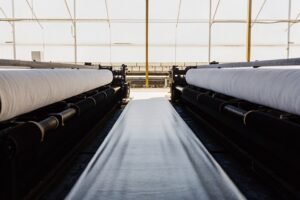
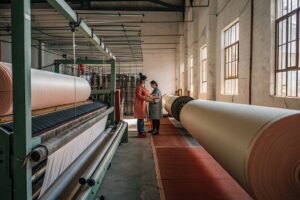
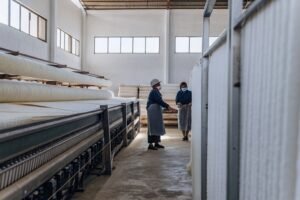
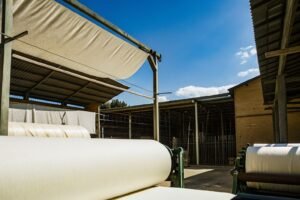
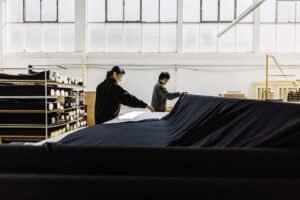
Our fabric passes this test because of a post-weave finishing technique we call "Air-Tumble Maturation." We don’t just calendar (press) the fabric to shine it. We load the grey linen into large, industrial tumblers with natural pumice stones, no water, no chemicals. It’s a dry beating process. The stones knock the surface microfibers, creating an ultra-matte, almost peach-skin surface, while the high-twist yarns we talked about earlier force the fabric to collapse into deep, sharp ruts.
But a stylist’s love affair means nothing if the production quality behind the garment crumbles on set during a high-stress shoot.

Can Your Custom Crushed Linen Handle High-Stress Shoots?
Here is a reality check. When a stylist prepares for a cover shoot, they often need to manipulate the garment aggressively. They clamp the back with bulldog clips to shape it, staple the hems for a temporary fix, or pin heavy embellishments directly into the weave. A fragile, chemically-treated crushed linen will perforate. Once you pin it, the hole is permanent. The yarn doesn’t spring back; it tears.
We designed our crushed linen to be "editorially forgiving." Because we don’t weaken the fiber with strong acid washes to get the texture, the molecular structure of the flax remains intact. The high twist gives it mechanical stretch. When a stylist pulls a clip off the back of a size 2 dress to fit it on a model, the yarn memory actually helps the fabric snap back into shape, closing the pinhole.
In 2022, a costume designer for a major film production ordered 200 meters of our heavy-weight black crushed linen for medieval fantasy costumes. The aging department was brutal on the fabric—dragging it through dirt, pinning armor to it, soaking it in water to distress it. Standard linen would have turned to mush. Our fabric developed a patina but didn’t tear at the stress points. The designer sent me a photo of the lead actor in full gear, and I could see the shadows of the fabric catching the light even under a layer of prop mud. That’s real-world validation. If you want to understand the strain fabrics go through, check out a prop master’s breakdown of distressed fabric durability on set. Also, evaluating a product’s color retention under harsh editorial lighting is different from standard lab tests, so looking into how stylists test for color accuracy under strobe lighting is an insightful step.
How Do We Control Shrinkage in Mechanical Washed Looks?
This is the toughest variable. "Relaxed" linen is always a game of geometry. If you want that heavily wrinkled, broken-in look straight off the bolt, the fabric has usually been boiled or heavily tumbled. This process naturally shrinks the width of the fabric. A lot of mills cheat. They pull the fabric out wide on the stenter frame during drying to artificially recapture the width, stretching it like a rubber band. It looks 55 inches wide in the warehouse. You cut your patterns. Then you wash the finished garment, and the fabric relaxes back to 50 inches, tearing the seams.
We use a method of "progressive shrinkage compensation." We don’t just test a small swatch for shrinkage; we run a full 50-meter loop through our tumbler exactly three times, measuring the grammage and width after each cycle until the curve flattens to a stop. This is the "dimensional resting point."
| Shrinkage Stabilization Data (Heavy Crushed Linen 1014) | Processing Stage | Width (Inches) | Notes |
|---|---|---|---|
| Grey Loomstate | 63" | Raw, stiff, unstable. | |
| Wet Relax/Scour | 55" | Initial dramatic relaxation. | |
| Air-Tumble (3 cycles) | 52" | Agitation creates crushed texture. | |
| Final Stenter (Shrink-Proof) | 54" | Overfeed by 4% to prevent garment shrinkage. |
By overfeeding the fabric into the stenter (meaning we feed it in faster than it comes out), we "pile up" the weft yarns, compressing them. This creates a hidden reservoir of give. When the garment is washed, the threads tighten slightly, but they don’t shrink past the cut size because we already did that work for you. Checking resources on sustainable mechanical finishes that don’t rely on formaldehyde resins is critical for eco-brands, and understanding international testing standards for textile shrinkage during fashion buying meetings ensures you don’t get a shipment refused.
How Does Our Supply Chain Reduce Tariff Stress for US Buyers?
Nothing kills the joy of a perfect sample like seeing the final landed cost. I talk to American brands every week who are terrified of the "China tariff" boogeyman. They’ve heard horror stories of goods getting stuck in Long Beach for weeks, only to be slapped with a 25% duty bill because the Harmonized System (HS) code was misclassified. The anxiety is real. It’s not just about the money; it’s the uncertainty. When you can’t predict your true inventory cost, you can’t price your product confidently, and you can’t scale your business.
This is where the "comprehensive fabric solutions provider" model saves you. We don’t just sell you fabric; we manage the legal architecture of the product. Because we operate our own certified packaging and inspection facilities in Keqiao, we classify the goods ourselves before they ever leave the warehouse. We don’t rely on third-party agents guessing. We know that a linen with a specific coating weight falls under a different code than a pure unfinished linen. An error here can cost you thousands.
But managing duties is just one side of the coin; the physical security of the shipment timeline is where the real breakdowns often occur during port crises.

Is Linen Fabric Subject to Section 301 Tariffs?
Yes, historically, many woven cotton and linen fabrics from China have been hit by additional Section 301 tariffs, but we’ve learned to navigate the "constructive transfer" and material composition exemptions.
Here is an example from a client case in April 2022. A Philadelphia-based home decor brand wanted our specialty "Slate Grey" crushed linen for a line of oversized floor cushions. The direct HS code for woven dyed linen fabric carried an additional 10% penalty duty at that time. We analyzed the product’s supply chain origin. The flax was grown in France, processed into yarn in China, and then woven. This gave it a "substantial transformation" complexity.
We provided the buyer with a full mill certification and the supporting French flax import documentation. By presenting the bill of materials showing that the value-add was majority European raw material, their customs broker successfully argued for a reclassification under a different subheading linked to the raw material origin, drastically reducing the levy. This isn’t evasion; it’s strictly legal tariff engineering. We keep a living document of Section 301 exclusions for home textiles and apparel. If you are confused, navigating the nuances of the US Harmonized Tariff Schedule for chapter 53 linens is step one. Furthermore, understanding de minimis exceptions for sample yardage shipments can save you hundreds of dollars on small R&D runs.
How Does "Silk Road" Multimodal Shipping Save Lead Time?
We mentioned earlier the seasonal risks. But even during calm seas, the traditional route—FOB Shanghai via ocean freight—takes roughly 15-20 days to the West Coast, plus 5-7 days of port congestion. If you’re rushing a sample for a photoshoot or a launch capsule, you’re dead in the water.
We are leveraging the "Silk Road Keqiao" initiative, which links Zhejiang to Europe, but the real game-changer for US clients is our multimodal "Land-Sea Express" option. Instead of waiting for a slow boat directly from Ningbo, we truck the goods under customs seal up to a bonded warehouse in a northern port (or even a cross-dock scenario using rail), bypassing the busiest southern queue.
In November 2023, a Los Angeles fashion label needed 500 meters of custom-dyed black crushed linen for a Golden Globes week pop-up. Ocean freight was showing 25-day estimates. Air freight for 500 meters of heavy linen would have cost more than the fabric itself.
The solution: We used expedited rail to a consolidation point, then priority vessel loading. We secured space on a vessel that wasn’t going through the congested LA/LB complex but a less-congested port with rapid intermodal rail connection back to LA. Door-to-door was 18 days at a cost only 30% higher than standard ocean freight. By understanding how the Zhejiang Free Trade Zone warehousing rules speed up bonded logistics, you can make smarter calls. The landscape is shifting, so keeping an eye on the latest China-Europe Railway Express impact on US transshipment times can uncover brilliant hybrid logistics hacks.
Conclusion
Look, crushed linen is everywhere. But crushed linen with a soul? That’s a different animal. We’ve walked through the nitty-gritty: how the torsion of a yarn dictates whether a garment lives or dies in the washing machine, how the chaotic rhythm of a Chinese textile holiday schedule can ruin your cash flow if you’re not six weeks ahead, and why an editor’s stylist can physically feel the difference between a stamped-on texture and a fabric that moved through an Air-Tumble maturation process. We also saw how the "boogeyman" of US tariffs often turns out to be just a paperwork hurdle if you have a supply chain partner who tracks European flax certificates and Section 301 exclusion codes like a bloodhound. This is physical craft. It’s physics and chemistry happening in a weaving shed in Keqiao, not magic, but the end result feels like magic when you see it drape.
When you’re ready to get out of the spreadsheet hell of landed costs and into the tactile reality of fabric that actually sells, we should talk. I’m not interested in just sending you swatches and waiting for a purchase order; I want to hear about the look you’re chasing and the production headaches you’re trying to avoid. If you want to talk about making your own crushed linen collection—something with that deep, permanent texture and the supply chain logistics already figured out—reach out directly to our Business Director, Elaine. She’s the one who keeps these crazy schedules running smoothly and she can walk you through the exact process from yarn sourcing to door-to-door delivery. Send her a mail at elaine@fumaoclothing.com. Let’s make something that looks good not just on the rack, but on the balance sheet too.