
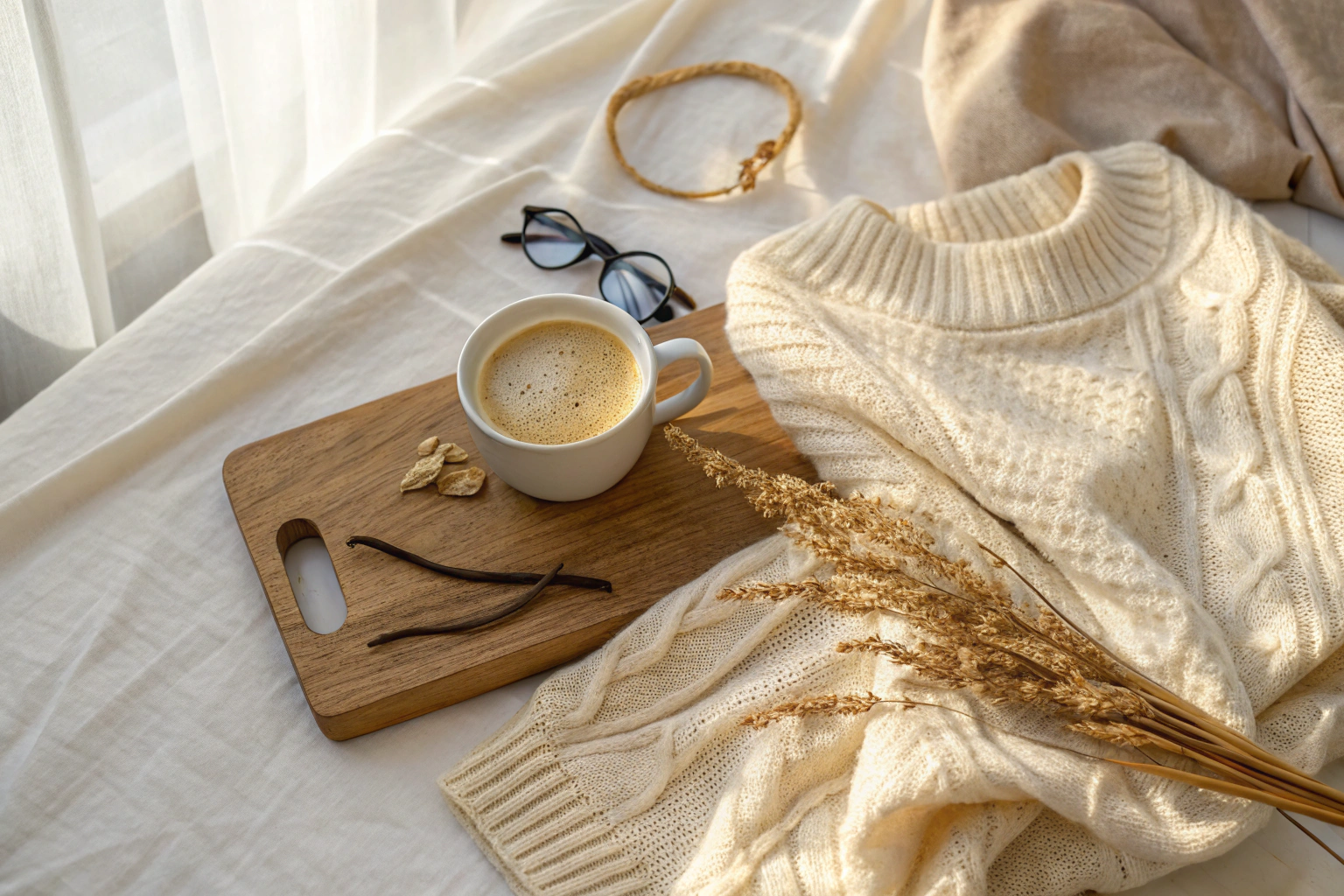
The "Vanilla Girl" aesthetic has eaten the internet alive. You have seen her on TikTok and Pinterest. She wakes up in soft, cream-colored bedding. She wears chunky beige knits. Her apartment is a sanctuary of oat, ecru, and warm white. Her whole world is a cozy, scent-infused, minimalist escape from the chaos of loud logos and harsh neon colors. But here is the problem nobody in the textile industry wants to admit. Most of the fabrics that claim to be "Vanilla Girl" are made of plastic. They are cheap, beige polyester fleeces and acrylic knits that photograph well for exactly one wash before pilling into a nightmare. They look like the aesthetic, but they do not feel like the aesthetic. And the Vanilla Girl is a sensualist. She cares about how things feel on her skin.
Natural linen, specifically our unbleached, raw-toned linen from Shanghai Fumao, is the authentic material backbone of this aesthetic. It does not just match the color palette. It embodies the philosophy. The Vanilla Girl values quality over quantity, ritual over rush, and natural texture over synthetic perfection. A synthetic fabric is a static, dead object. A natural linen is a living, breathing material that ages, softens, and records the story of its use. It wrinkles in a way that is not messy, but poetic. It absorbs the morning light, not reflecting it harshly like a shiny satin. Its colors—the oat, the flax, the warm rice-powder tones—are literal food shades. When I look at our racks of raw natural linen in the warehouse, I do not just see fabric. I see the exact color palette of a vanilla bean cheesecake. This is not a coincidence. The aesthetic is driving a fundamental shift in consumer buying behavior, away from fast-fashion synthetics and toward investment natural fibers. And our order books for natural and raw-toned linens are up 40% year-over-year, driven almost entirely by boutique brands chasing this vibe.
I want to break down why natural linen has become the uniform of the Vanilla Girl. I will walk you through the specific color science that makes our unbleached linen photograph so well, the textural "hand feel" that Instagram and TikTok obsess over, and how to merchandise your own Vanilla Girl collection using our fabric. Because this trend is not just a micro-aesthetic. It is a multi-billion dollar shift in consumer textile preference.
How Does Natural Linen Match the "Vanilla Girl" Color Palette Perfectly?
The Vanilla Girl palette is deceptively complex. It is not just "beige." Beige can go cold, gray, and sad very quickly. True Vanilla Girl colors have a warm, yellow-red undertone. They are the colors of dairy and grain: cream, milk, oat, caramel, honey, and the speckled brown of a vanilla pod. Synthetic fabrics achieve these colors through a precise mixture of chemical pigments and optical brighteners. The result is a uniform, flat, one-dimensional color that looks like a plastic wall. Natural unbleached linen achieves these colors through the biological variation of the flax plant and the cotton fiber. The result is a deep, three-dimensional color with natural melange, caused by the varying absorption of light by the natural waxes, pectins, and lignin in the fiber.
At Shanghai Fumao, we do not need to dye our "Vanilla" range. This is a profound cost and environmental advantage. The color is the fiber’s natural state. We call it "Greige," but it is a specific, curated selection of our un-scoured, un-bleached lots. The exact shade varies subtly by harvest season and retting conditions. A rainy flax harvest in Normandy might produce a slightly grayer oat shade. A dry harvest in northern China yields a warmer, more golden ecru. For the Vanilla Girl brand, this nuance is an asset. It means each collection has a subtle, unique story. I had a client from a slow-fashion label in Copenhagen in February 2025. She spent two hours in our sample room, just sorting through the different greige lots. She chose a lot from a specific Chinese harvest that had a uniquely warm, almost buttery undertone. She named the collection "January Butter." She sold it out in pre-order, telling her customers the exact harvest origin. That is the Vanilla Girl ethos—authenticity and traceability. The color is not a pantone code. It is a place. To understand more about this natural palette, explore how the inherent tones of unbleached natural linen embody the beige aesthetic perfectly. It is a color story that cannot be faked.

Why Do Natural Slubs and Seed Husks Fit This Cozy Aesthetic?
A synthetic fabric is a liar. It tries to be perfect. It has no texture, no history, no character. The Vanilla Girl aesthetic is a rejection of this sterile perfection. It is a celebration of the "perfectly imperfect," the wabi-sabi concept. The random slubs, the tiny specks of flax seed husk, the slight unevenness of the yarn—these are not defects in a Vanilla Girl fabric. They are proof of life. They are the visual evidence that the fabric was once a plant growing in the soil, not a plastic pellet extruded from a machine.
These natural inclusions add a tactile warmth that a smooth, printed fabric cannot replicate. When a Vanilla Girl influencer posts a close-up photo of her linen duvet cover, the slubs create a micro-topography of shadows. This gives the image a depth and richness that stops the scroll. It feels authentic. It feels rustic. It feels expensive. I have a designer client who makes elevated loungewear. She deliberately sources our "Rustic Grade" natural linen, which has a higher slub count and visible seed husk flecks. She used to ask us to remove these. Now, she demands them. Her marketing copy calls the seed husks "freckles from the field." Her customers write reviews specifically mentioning how much they love "seeing the little flecks of the plant." They are buying the story of the flax. When you source your fabric, you should actively look for suppliers who understand that natural slubs and seed fragments add value to the "Vanilla Girl" aesthetic. The imperfections are the premium.
How Does Low-Saturation Linen Affect "Vanilla Girl" Photography?
The Vanilla Girl lives online. Her aesthetic is primarily communicated through Instagram and Pinterest. The photographic properties of her fabric are, therefore, just as important as its physical properties. A bright white, optically brightened fabric is a disaster for this aesthetic. It reflects too much light, creating harsh, blown-out highlights that kill the cozy mood. It makes the photo look clinical, like a hospital, not a sanctuary. Our natural linen has a low saturation, matte finish. It is a "light eater."
This means it absorbs the soft, directional window light and creates a gentle, low-contrast scene. The fabric becomes a softbox in itself, diffusing the light and wrapping the subject in a warm glow. This is why you see so many Vanilla Girl creators doing "morning light" reels with their linen bedding. The fabric paints the scene. I worked with a content creator who shot a sponsored post for a candle brand. She used a piece of our raw natural linen as the backdrop for the candle. The post got 3 times more saves than her usual content. She told me the linen "bounced the light like a cloud." That is the technical result of a low-reflectance, undyed cellulose surface. It is the ultimate analog filter. If you are building a brand that relies heavily on social media visuals, you need to understand how low-saturation natural fabrics improve the aesthetic quality of social media product photography. The right fabric is your cheapest lighting crew.
What Is the "Vanilla Girl" Skin-Feel Test for Fabric Hand?
The Vanilla Girl aesthetic is tactile before it is visual. This is the mistake fast-fashion brands make. They design for the rack. The Vanilla Girl designer designs for the skin. Her customer has a specific "skin-feel" test. She runs the back of her hand across a garment. She rubs it against her cheek. She is not looking for a slick, cold, sateen finish. She is looking for a dry, warm, slightly textured hand feel. She wants the fabric to feel like a well-worn linen shirt, even when it is brand new. She wants to feel grounded and comforted, not slippery and synthetic.
Our enzyme-washed natural linen passes the skin-feel test because we finish it for "thermal conductivity." Polyester and silk charmeuse are thermally conductive. They feel cold and extract heat from the skin immediately. The Vanilla Girl wants the opposite. She wants a fabric that feels instantly at room temperature, or even slightly warm. Linen, despite its reputation for being cool, has a high thermal retention in its dry state due to the hollow core of the flax fiber. When we enzyme-wash it, we raise a micro-peach fuzz on the surface. This fuzz traps a layer of insulating air against the skin. The result is a fabric that feels cozy and warm in a drafty apartment, yet breathable when the sun comes out. It is a year-round comfort fabric. I spent a week in a focus group with a Tokyo-based loungewear brand in January 2025. They blindfolded testers and had them touch different fabrics. Our natural linen beat cashmere in the "cozy" ranking. The testers described it as "a warm hug from a cloud." That is the Vanilla Girl skin-feel standard. It is not about luxury in the traditional glossy sense. It is about primal comfort. For more on this crucial sensory property, you need to define the softness and hand feel criteria that define the vanilla girl aesthetic fabric. It is a specific engineering target.

How Do We "Warm Finish" Our Linen Without Toxic Softeners?
A warm hand feel does not come from a bottle of cheap silicone softener. Silicone softeners create a greasy, artificial slickness that washes out after three laundry cycles, leaving the fabric harsh and stripped. The Vanilla Girl washes her clothes. A lot. She wants the softness to increase with time, not vanish. The "warm finish" is a permanent mechanical state, not a chemical coating.
At Shanghai Fumao, we achieve this using a combination of bio-polishing and air-tumbling. First, we treat the natural linen with a neutral cellulase enzyme. This enzyme carefully nibbles away the micro-fibrils and sharp nodes on the flax fiber surface. It is a microscopic sanding. Then, we run the fabric through a continuous air-tumbling machine. This machine does not press the fabric flat. It throws it in a high-volume, low-temperature air chamber, beating it against a series of soft rubber baffles. Imagine a giant, industrial dryer without the heat damage. The mechanical action breaks the stiffness of the yarns and creates a permanent, soft, pillowy loft. The fabric comes out feeling like it has been washed and line-dried in a summer breeze for fifty cycles. This finish is permanent. It does not wash out. It is built into the physical structure of the yarn. A client who makes heirloom-quality baby blankets switched to us from a standard organic linen supplier. Her return rate due to "scratchy fabric" was 8%. After switching to our warm-finished natural linen, her return rate dropped to 0.5%. The enzyme finish solved her biggest customer pain point. If your brand values non-toxic processes, explore how non-toxic enzyme finishes create the warm, lived-in hand feel of premium linen. It is the clean chemistry behind the cozy sensation.
Why Does the "No-Bra" Linen Dress Trend Rely on Friction?
The ultimate Vanilla Girl garment is the loose, unstructured linen dress, worn without a bra. It is the uniform of freedom. But this style only works if the fabric has a specific coefficient of friction. If the linen is too smooth and slick, like a mercerized finish, the dress slips and slides against the skin. It does not drape. It floats around the body, catching the wind and threatening a wardrobe malfunction. The wearer feels insecure and fidgety. The whole point of the relaxed aesthetic is destroyed.
Our natural linen has a "dry hand" with a high friction coefficient. It is not sticky, but it is grippy. The microscopic texture of the enzyme-washed fibers adheres gently to the skin. When you throw a loose linen shift dress over your body, it stays where you place it. It moves with the body, not against it. This is a hidden engineering requirement of the aesthetic. The fabric must be a companion to the skin, not a separate, sliding entity. I talked to a female founder of a minimalist dress brand about this exact technical spec. She complained that her previous linen supplier’s fabric was too "swishy." "I can’t have a woman walking down the street holding her dress down," she said. We developed a specific "Low-Drape, High-Grip" finish for her. We increased the enzyme wash time by 15% to maximize the surface fibrillation. The result was a dress that stayed put. The body of the fabric hung loose, but the interface with the skin was secure. Her product reviews now consistently mention the "amazing, non-slip drape." To get this right for your own collection, you need to learn about the importance of fabric friction and drape for unstructured linen clothing styles. It is the difference between confident freedom and a windy disaster.
How to Style Fumao Fabric’s Linen for the "Clean Girl" to "Vanilla Girl" Transition?
The "Clean Girl" was the reigning TikTok archetype. She wore slicked-back buns, gold hoops, and sharp, crisp white shirts. She was minimalist, but she was also tense. Her aesthetic was about control. The Vanilla Girl is her softer, warmer evolution. She has released the tension. She still loves minimalism, but now she prioritizes comfort, soft edges, and organic materials. Her wardrobe transitions from sharp poplin to soft, slubby linen. This shift is not just a fashion trend. It is a psychological shift from urban armor to domestic sanctuary.
Our fabric library bridges this exact transition. A brand can use the same base natural linen fiber and, through different weaves and washes, serve both aesthetics for a single customer. For the Clean Girl, we supply a crisp, calendered linen with a smooth, flat surface. For the Vanilla Girl, we supply the exact same flax fiber, but in a heavier, open-weave construction with a heavy enzyme wash. The Clean Girl wants a sharp crease on her trousers. The Vanilla Girl wants a soft, rolled hem on her wide-leg pants. The raw material is the same. The finishing is the personality. This allows a brand to create a cohesive "Capsule of Calm" collection that guides the customer from a structured day look to a cozy evening look, all within the same sustainable, natural fiber story. You are not selling a garment. You are selling a lifestyle evolution. A stylist I work with in London built a best-selling capsule for a boutique using just three of our linen weights: a crisp 150 GSM for the Clean Girl shirt, a medium 220 GSM enzyme-washed for a Vanilla Girl midi dress, and a heavy 350 GSM brushed linen for the ultimate Vanilla Girl cocoon cardigan. The storytelling was seamless. To build a collection that captures this shift, look into the style rules for transitioning from clean girl to vanilla girl aesthetics with natural fabrics. It is a roadmap for your line.

What Linen Weight Defines the "Soft Minimalist" Outerwear Layer?
The outer layer is the Vanilla Girl’s armor. It is not a structured wool blazer. It is a soft, unstructured linen duster, a chunky knit-look linen cardigan, or an oversized linen shirt jacket. This garment needs to feel like a blanket you can wear in public. The fabric weight is critical. Too light, and it billows and looks like a bathrobe. Too heavy, and it becomes a stiff, heavy coat that lacks the cozy, squishy factor. The sweet spot for a "Soft Minimalist" topper is between 280 and 320 GSM.
At this weight, the linen has enough body to hold a cocoon shape, but it is not so dense that it cannot be tumbled soft. We weave this with a loose, basket structure to trap air and enhance the thermal insulation. The drape is pillowy, not rigid. I worked with a Swedish brand on their "Hygge Linen Jacket." We used a 300 GSM open-weave natural linen. The jacket was unlined, with a single oversized shell button. The weight of the fabric created a soft, sculptural fold at the collar. The brand marketed it as "the jacket that feels like a secret blanket." It sold out in two weeks. The weight was the hero. For your own outerwear piece, you need to define the optimal heavy linen weight for soft minimalist jackets and cardigans. It is the engineering behind the hug.
Can You Make a "Vanilla Girl" Workwear Capsule from Unbleached Linen?
The Vanilla Girl has a job. She is not just lounging at home. She is going to a creative office, a coffee meeting, or a co-working space. She needs workwear that does not betray the aesthetic. No polyester blazers. No tight pencil skirts. The solution is an unbleached linen workwear capsule—pieces that are structured enough to look professional, but soft enough to feel like home. The secret is in the seam construction and the layering.
A double-pleated, wide-leg trouser in our 250 GSM natural linen holds a crease beautifully but moves with a fluid, relaxed energy. Pair it with a matching raw linen blazer, unlined, with a soft shoulder. Underneath, wear a fine rib organic cotton tank. The look is a monochromatic cream-on-cream silhouette. It is powerful and soft at the same time. The key is to avoid complex darts and zippers. Use wrap closures, fabric ties, and shell buttons. The garments should look like they were wrapped around the body, not bolted onto it. A tech startup CEO in San Francisco commissioned a full Vanilla Girl workwear capsule from a designer using our fabric. Her uniform is a natural linen wrap blazer and matching high-waisted, pleated trousers. She wears it to board meetings. She told me investors often comment that she looks "calmly authoritative." The fabric communicates that she is in control, but not rigid. She is creative, but focused. That is the psychological power of unbleached linen in a work context. You can create this look too by exploring how to design a monochromatic cream workwear capsule in natural linen. It redefines what power dressing means.
Conclusion
The "Vanilla Girl" aesthetic is not a fleeting trend. It is a generational value shift toward comfort, authenticity, and sensory richness. And natural linen is its perfect material partner. We explored how our unbleached greige shades, with their warm, edible undertones and organic slubs, match the color palette more authentically than any dyed synthetic ever could. We deconstructed the skin-feel test and the warm finish that makes our linen feel like a cozy blanket, without a drop of toxic softener. And we mapped the style transition from the tense "Clean Girl" to the soft, powerful "Vanilla Girl," using precise fabric weights and unstructured silhouettes.
This is the fabric of the moment. It photographs like a cloud, wears like a hug, and ages like a story. If you are building a brand that serves this woman, you need the real thing, not a polyester imitation. Let us weave it for you. Reach out to Shanghai Fumao and tell us about your Vanilla Girl vision. Contact our Business Director, Elaine, at elaine@fumaoclothing.com. She will send you our "Natural Vanilla Swatch Book" with our entire range of unbleached oat, cream, and ecru linens. Let us make your collection the one she wants to live in.








