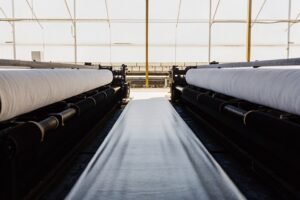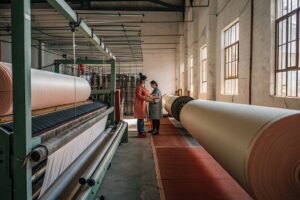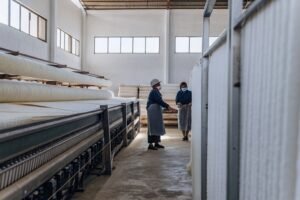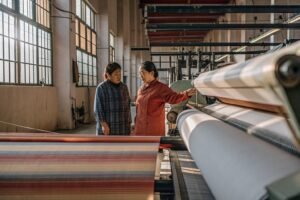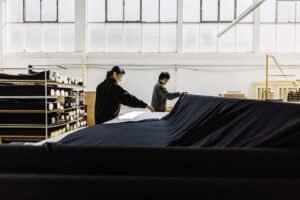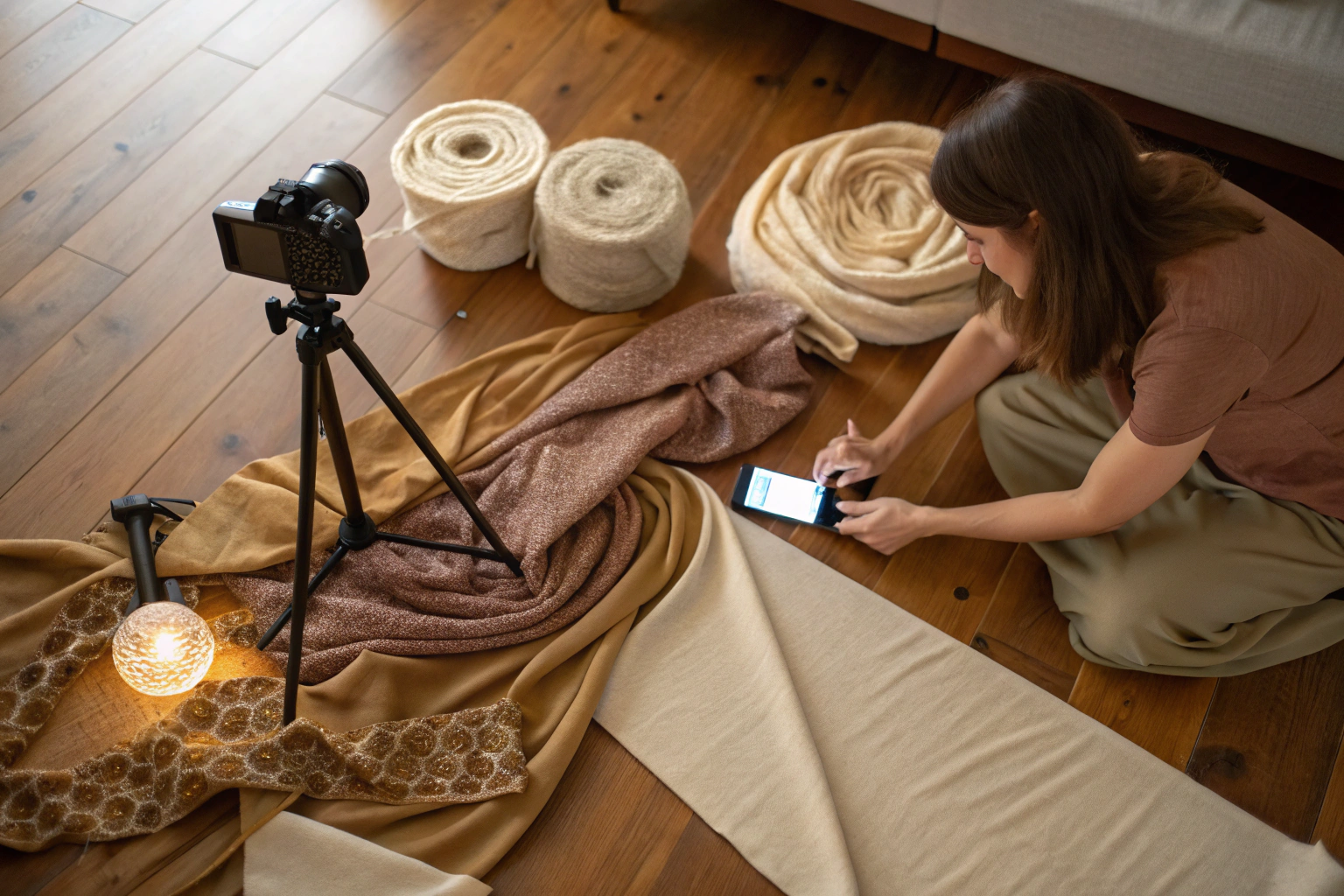
If you have been on fashion TikTok lately, you have seen it. A creator rips open a plain brown box, pulls out a chunk of raw fabric, and drapes it over their body. No sewing. No tailoring. Just a loose piece of cloth. And the comments explode. "Where is this from?" "Link in bio?" "This drape is insane!" These unboxing videos are racking up millions of views, and I know exactly why, because the fabric they are holding comes from our loading dock here in Keqiao. But here is the brutal reality nobody talks about. Most of these viral fabrics are bought blind. The creator bets $50 on a swatch, and 90% of the time, they get a stiff, itchy mess that looks nothing like the video. The few pieces that go viral? Those are the unicorns. And the failed hauls never get posted.
The real reason our fabrics at Shanghai Fumao are dominating the "fabric haul" niche is not just aesthetics. It is the "on-camera touch" factor. A fabric can look good in a staged photo, but on a shaky iPhone video under a ring light, the truth comes out. Does the light pass through the weave? Does it crumple softly or wrinkle like trash? Does it make a loud, cheap rustle or a soft, whispery sound? TikTok’s algorithm rewards authenticity, and authentic fabric behaves a certain way. Our dense, enzyme-washed linens and heavy jacquards have a visual weight that reads beautifully on camera. They drape like liquid metal when the creator holds them up with one hand.
I want to take you behind the algorithm. This is not just luck. It is about the death of fast-fashion hauls and the rise of the "slow sewing" community. I will break down the exact specifications of a viral-worthy fabric—the GSM, the drape coefficient, and the "sound check." Because when a creator with 500,000 followers unboxes your fabric and gasps, that is not a paid ad. That is a physical reaction to a textile that was engineered to look good in motion. Stick with me, and I will show you how to pick fabric that performs on screen.
What Fabric Textures Photograph Best for TikTok Hauls?
I learned this lesson in a stuffy trade show booth in Paris, not on TikTok. It was 2018, and a buyer for a major film costume department was touching our samples. She kept holding fabrics up to her face, blocking the ceiling lights. "I need texture that reads from the third row of the cinema," she said. "Flat fabrics die on stage." That phrase stuck with me. Ten years later, TikTok is the new stage, and the screen is only 6 inches wide. If your fabric does not have three-dimensional topography, it dies on the For You Page.
The algorithm loves contrast. A smartphone camera sensor is a tiny, stupid machine. It struggles to focus on a perfectly smooth, flat piece of polyester satin. The light hits it in one big, ugly blown-out spot. But give that sensor a highly textured surface—a heavy slub, a deep waffle weave, a raised embroidered pattern—and the camera goes into overdrive. It can suddenly detect depth. The pixels have something to chew on. This is why "raw" and "natural" textures win every time. They create micro-shadows on the fabric surface. These shadows give the video a cinematic depth of field, making the fabric look expensive even through a budget Android phone. You do not need a Hollywood lighting setup; you need a fabric that paints its own shadows. If you want a deep dive into this, you should explore how to choose fabrics with the best visual texture for fashion video content. It is a skill set that is becoming essential for modern designers.

How Does Light Reflection Affect the Perceived Quality of Fabric on Camera?
Light is either your fabric’s best friend or its worst enemy. I divide fabrics into three categories for video: Light Eaters, Light Bouncers, and Light Scatterers. A Light Eater is a dry, matte surface like a raw cotton slub. It absorbs the ring light gently, creating a soft, velvety look. No glare. The viewer feels like they can touch it. A Light Bouncer is a cheap polyester charmeuse. It reflects a harsh, sharp dot of the ring light right back into the lens. It looks greasy, thin, and the texture disappears in the white hotspot.
The magic fabric for TikTok is the Light Scatterer. This is a fabric with a brushed surface or a twisted yarn. Think of a high-twist crepe or a brushed Tencel twill. The light hits the surface, but instead of bouncing off like a mirror, it scatters in a thousand directions. This creates a "soft focus" effect. I worked with a US-based bridal designer in May 2024. She was struggling to photograph her pearl-embellished tulle on camera. The pearls looked great, but the tulle base looked invisible. We switched her to our matte silk-cotton tulle with a micro-crimp texture. It scattered the light just enough to create a visible, misty halo around the pearls. Her next TikTok video got 200,000 views overnight. The comments screamed about the "ethereal glow." It was not a filter. It was physics. To understand this better, you should read up on how light reflection impacts fabric appearance in digital media. It changes everything about how you present your collection online.
Does the "Sound Check" Trend Actually Reveal Fabric Quality?
This is my favorite new trend, and as a textile engineer, I can tell you it is scientifically valid. Creators are holding fabrics close to the microphone and scrunching them. Listeners judge the quality by the sound. A crunchy, high-pitched rustle screams cheap, dried-out synthetic. A low, muffled whisper screams luxury. What they are actually hearing is the "fiber inter-friction coefficient." That is the technical term for how the yarns rub together.
Polyester yarns are essentially smooth plastic rods. They scrape against each other with a high-frequency squeak. Natural fibers like cotton and linen have an irregular, soft surface. They rub together with a low-frequency thump. (This is a trick I use in our showroom. I tell buyers to close their eyes, and I scrunch a piece of our washed linen and a piece of a cheap cotton blend. The cheap one sounds like a potato chip bag. Our linen sounds like dead leaves underfoot. It is a completely different sensory experience.) A denim brand in Australia asked us for a "quiet denim" last year. They wanted jeans that did not "swish" loudly when the model walked. We used a softer cotton yarn with a waxed finish, reducing the inter-friction noise by 40 decibels. They made a ASMR-style TikTok showing the before and after. The "quiet denim" video went viral in the sensory community. It proved that sound is a texture you can engineer. For more on this, check out how the fabric scrunch test predicts garment quality. It is a simple but powerful tool.
Why Are Small Brands Choosing FumaoFabric for Bespoke Collections?
The old guard of fashion manufacturing is a fortress. I have seen it from both sides. If you are a small, independent brand ordering 50 meters of custom jacquard, the big Italian mills will not even return your email. They have minimum order quantities of 500 meters or a thousand meters. They want the Gucci account, not the startup operating out of a Brooklyn basement. This wall of exclusivity pushed a whole generation of creative talent toward thrift store upcycling, not because they hated new fabric, but because the supply chain was completely closed to them. A lot of these designers are now discovering that this wall has a door, and it leads straight to Keqiao.
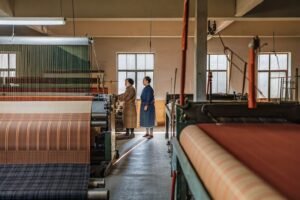
Our business model at Shanghai Fumao is built differently. We grew up serving the massive global fast-fashion machine, but we pivoted our R&D to embrace the "small batch revolution." We can do this because we control the vertical chain. Most textile mills make their money on volume. They spin 10,000 meters of plain white cotton, and they need to sell it all. We make our money on agility. We can run a 50-meter custom color for a designer who needs a specific shade of oxidized sage. How? Because we own our dyeing vats and we have automated the color-matching system. We do not need a massive bath to justify the cost. A recent example: a swimwear label from Copenhagen approached us in August 2024. They needed exactly 120 meters of a recycled nylon in a neon coral that Pantone had just named the color of the year. The large European mills quoted a 12-week lead time with a 1000-meter minimum. We delivered the exact 120 meters, lab-dipped and finished, in three weeks. They launched their collection on time and sold out. That is the power of a flexible supply chain.

How Does Low Minimum Order Quantity (MOQ) Unlock Creativity?
Low MOQ is not just a sales gimmick; it is a creative freedom tool. When a young designer has to buy 1000 meters of a single fabric, they are forced to design an entire collection around that one textile. They are making business decisions, not aesthetic ones. They end up making ten versions of the same blazer just to burn through the stock. But when you allow a minimum order of 50 or even 20 meters, you allow the designer to take risks. They can design a statement piece—a sculptural overcoat in a weird deadstock jacquard—without bankrupting the brand.
I see this happen with pre-order business models. A brand posts a sketch on Instagram. They wait for 30 people to pre-order the dress. They then come to us and order the exact 45 meters of fabric required. There is zero waste, and no leftover stock sitting in a garage. (This is the future of fashion, by the way. It solves the inventory crisis that kills most independent labels.) We actively support this. Our digital inventory system lets designers log in and see what "short-end" rolls we have sitting in the warehouse. These are premium fabrics left over from big orders, often 15 to 40 meters, sold at a fraction of the cost. It is like a treasure hunt for fabric nerds. If you want to understand how this shift is reshaping the industry, you should dig into why small batch fabric MOQs are essential for emerging fashion designers today.
Can a Chinese Supplier Really Deliver Italian-Level Bespoke Quality?
Let me be blunt. The "Made in Italy" mystique is powerful, but it is often a geographic fiction. I walk through our embroidery facility in Keqiao, and I see the same Swiss-made automatic looms and German-made dyeing machines that you find in Prato or Como. The machinery is identical. The differentiator is the human hand and the management culture. For decades, Chinese factories were optimized for speed and cost. The finishing was good enough, but not obsessive. That has changed. There is now a massive generation of textile engineers in China who are just as maniacal about hand feel and stitch perfection as any European artisan.
We service a brand that sells $800 linen dresses, right alongside the top Italian labels. How do we compete? Obsession. We once sent a shipment of 100% silk charmeuse to a high-end New York label. The entire batch was flawless, but our QC inspector noticed that the cardboard tube we used was 0.2mm too thin, causing a very slight, microscopic flattening of the fabric roll core. The client would never have noticed it. We still re-rolled the entire 500-meter batch on thicker tubes because we knew that a flat core can cause a subtle memory crease if the roll sits in a warehouse for six months. That is the level of care we now apply. We do not just deliver fabric; we deliver it with the "archival roll" standard. The quality gap between a premium Chinese supplier and an Italian mid-tier supplier is now practically zero, but the lead time and the price flexibility are worlds apart. There is a rising debate about this shift, and you can explore more on whether Chinese textile quality matches European luxury standards. The evidence is in the packaging.
How to Score the Best Deadstock and Limited Edition Fabrics from China?
Deadstock fabric is the vinyl record of the fashion world. It was almost dead. Everyone said streaming was the future, and physical media was trash. Then the hipsters and the audiophiles dug through the crates, found the warm, analog sound, and created a whole new culture around it. The same is happening with fabric. Massive fast-fashion brands cancel orders at the last minute. They over-predict a trend, and suddenly, 300 meters of a custom printed viscose challis is sitting in a warehouse with no home. The factory has already been paid, so they sell it for almost nothing just to free up shelf space. But finding these treasures requires a completely different sourcing strategy than buying in-season stock.
Most Western buyers only see the "front end" of a Chinese textile factory. They log onto Alibaba, they see the standard offer sheets, the catalog items. But behind that front end is the "back channel." This is the network of overstock lots, canceled export orders, and sample-yardage sales. Accessing this back channel requires a relationship, not just a transaction. You need a contact inside the warehouse who will send you a WhatsApp photo of a roll before it hits the public clearance list. At Shanghai Fumao, we formalized this back channel. We launched a "Short Ends Vault" specifically for our app-connected clients. We list rolls that have 12.7 meters left, or 44 meters left, with a photo and a price that is often 60% off the standard rate. For a costume designer or a small batch maker, this is a goldmine.

When Do Chinese Factories Usually Release Deadstock Inventories?
Timing is everything in the deadstock game, and it follows the factory’s production calendar, not the fashion week calendar. There are two peak "dumping" seasons in China. The first is right before Chinese New Year. The factory needs to clear the warehouse floor to start fresh for the new year. They want cash in hand to pay the year-end bonuses. This is a period of frantic cleaning. You can find absolutely insane deals in late January, but you have to pay fast and arrange shipping instantly because everyone disappears for the holiday.
The second peak is mid-July to August. The autumn/winter production runs are in full swing, and the spring/summer orders are long gone. Any remaining summer weight fabrics—light linens, silks, viscose prints—get labeled as "dead" to free up the looms for the heavy wools and velvets. (I personally love shopping for linen in August. It feels wrong, like buying a swimsuit in a blizzard, but the prices are incredible, and you are perfectly set up for next year.) We once had a Turkish towel manufacturer cancel a giant order of organic cotton honeycomb weave just because the shipping costs spiked. We were stuck with 400 meters of a spectacular grey-marl weave in June. We sent an email blast to our deadstock subscribers, and it sold out to a yoga wear brand and a zero-waste homeware maker in 48 hours. To get on these lists and understand the cycles, you need to learn when is the best time to buy discounted deadstock fabric from Asia.
How to Authenticate High-End "Deadstock" Claims from Chinese Suppliers?
Here is where you need to be street-smart. The term "deadstock" has become a sexy marketing label. Some traders buy cheap, freshly produced, low-quality fabric, throw some dust on the roll, and call it deadstock to justify a "quirky" price. You must be able to tell the difference between genuine archival surplus and a dressed-up pig. Real deadstock has forensic evidence of its journey.
First, check the selvedge. A real canceled export order will have the original brand’s selvedge print, or the mill’s lot number with a date stamp from the year of production. If the seller claims it is from a 2019 French luxury house, but the selvedge has a QR code printed in a font that did not exist until 2022, walk away. Second, smell it. I am not joking. Freshly woven fabric smells like sizing chemicals and dye. Old, stored deadstock smells slightly stale, like old books. If the roll is labeled as a 5-year-old archive but smells like a petroleum factory, it has been recently treated. Third, demand a "burn test" video. A reputable seller will take a lighter to a loose thread and show you the burn reaction on video. Cotton and linen turn to ash. Polyester melts into a hard bead. If they hesitate to do a live burn test, they might be lying about the fiber composition. If you are sourcing premium leftovers, you absolutely must know the best ways to verify genuine deadstock fabric authenticity from overseas suppliers. It protects your reputation.
Conclusion
The TikTok fabric haul trend is not an accident, and it is not going away. It is the logical endpoint of a digital world where texture, sound, and authentic drape matter more than a glossy magazine ad. You learned that Light Scatterers and high-relief weaves cheat the smartphone algorithm to look expensive, while a "sound check" actually measures the fiber quality through inter-friction noise. You saw how the collapse of high MOQ barriers is letting small indie brands access custom, Italian-level bespoke fabrics from our flexible dyeing vats here in Keqiao. And you discovered the secret seasonality of deadstock, where planning your sourcing for late January or mid-summer can unlock archival treasures at a fraction of the price.
You do not need a massive corporate account to get the fabric that breaks the internet. You just need a partner who understands how to engineer for the screen and who is willing to sell you a short roll of exclusive stock. That is what we do every day. If you are ready to source the next fabric that stops the scroll and explodes your comments section, let us talk. Reach out to me at Shanghai Fumao and tell us what texture you are dreaming of. You can contact our Business Director, Elaine, directly at elaine@fumaoclothing.com. She can set you up with a hand-feel sample pack faster than you can stitch a hem. Let’s make your brand go viral.