Let me be brutally honest: I almost lost a $45,000 order from a Dallas boutique chain three years ago because I failed to explain DDP clearly. The buyer thought she was getting a door-to-door price. I thought she understood the air-freight surcharge was separate. The container arrived at her warehouse, and the truck driver handed her a bill for $2,800 in destination fees. She felt blindsided. I felt embarrassed. That moment taught me something critical—delivery terms aren’t just INCOTERMS jargon on a proforma invoice. They are the emotional bedrock of trust between a manufacturer and a buyer. You need to know exactly what you’re paying, and I need to deliver exactly what I promised.
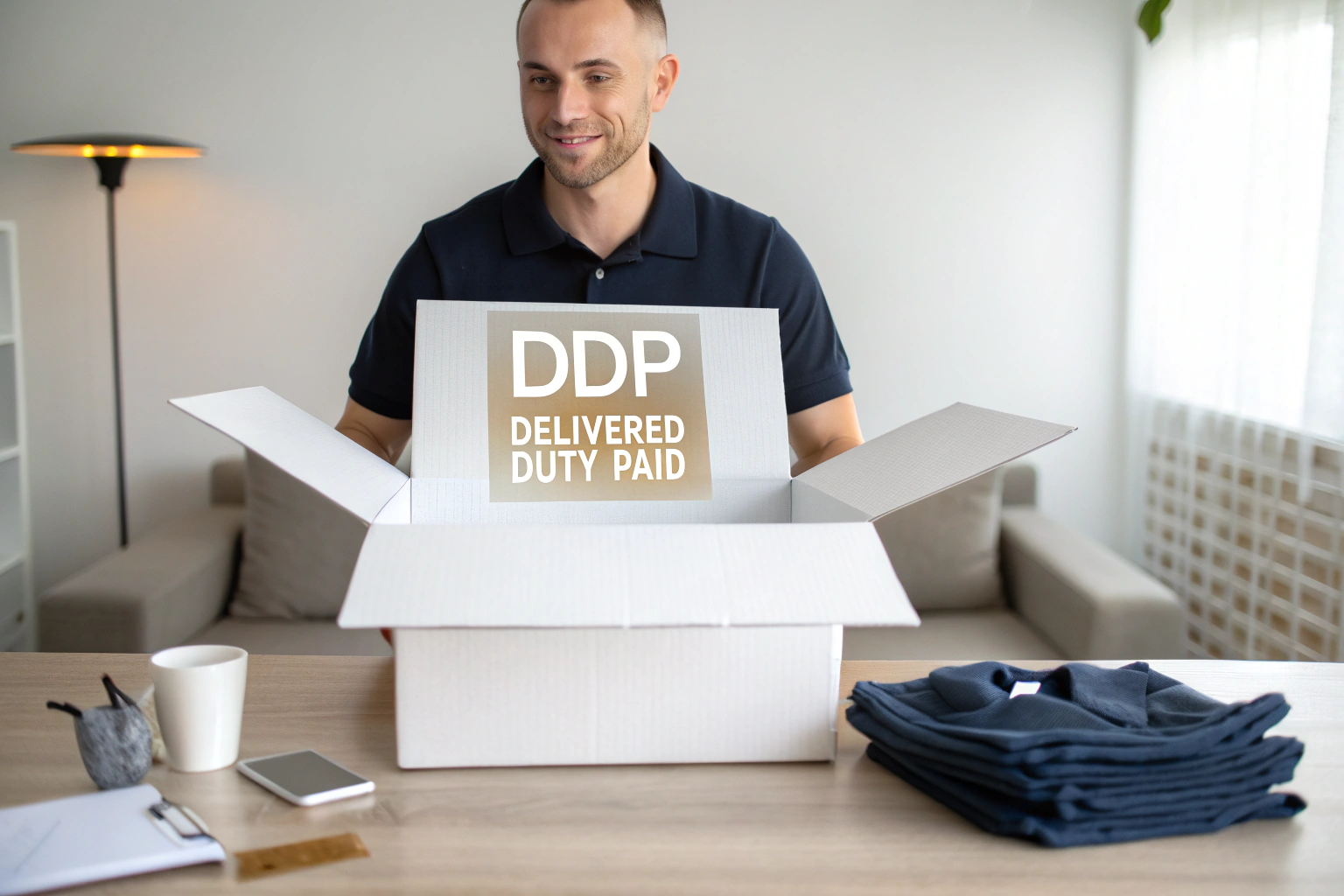
DDP, or Delivered Duty Paid, means exactly what it says: Shanghai Fumao assumes every single cost, risk, and bureaucratic headache from our loading dock in Keqiao all the way to the doorstep of your warehouse in the United States. We pay the ocean freight, the insurance, the US import duties, the customs brokerage fees, the harbor maintenance fees, the merchandise processing fee, and the final trucking delivery. You receive the fabric the same way you’d receive an Amazon package—open the door, sign the receipt, cut open the rolls. No surprise bills, no frantic calls to a customs broker you’ve never met, no detention charges because nobody told you the container was ready. For American buyers scarred by the chaos of 2021 supply chain disruptions, this is the ultimate peace-of-mind product.
But I know what you’re thinking. "Sounds expensive." Or "What’s the catch?" Or maybe you’ve heard horror stories about factories marking up duty fees by 30% as a hidden profit center. Let’s dig into exactly how our DDP program works, where the real costs hide, and why this might be the smartest logistics decision you make this year—especially if you’re a small-to-midsize brand trying to compete without a dedicated logistics department.
What Is the True Landed Cost of DDP Shipping from China to the USA?
The biggest lie in international sourcing is the FOB price. An FOB quote of $3.50 per yard looks great on a spreadsheet. But by the time that yard reaches your cutting table in Los Angeles, you’ve paid $4.80. The difference isn’t profit margin—it’s freight, duty, bond, and brokerage eating your lunch. If you don’t calculate landed cost before you place the order, you are pricing your garments blindfolded.
Our DDP model forces transparency because we bear the actual costs. We don’t estimate duty; we pay it to CBP. We don’t guess at fuel surcharges; our forwarders bill us the exact bunker adjustment factor. When I quote a DDP price to a client, I’m not giving you a theoretical number. I’m giving you a hard guarantee. The fabric price absorbs all the downstream volatility. If the shipping line raises rates next week, I eat that increase—you don’t. This flips the traditional risk model on its head. Instead of you, the buyer, gambling on freight markets, I, the manufacturer with volume leverage, manage that volatility.
The key variable to understand is the US duty rate for textiles. This isn’t a flat percentage across the board. A polyester woven shirt fabric might enter under one HS code at 14.9% duty. A coated nylon outerwear fabric could be higher. Wool suiting might be 25%. We identify the exact classification before we quote. Let’s break down two common scenarios.

How much duty should I expect on polyester sportswear fabric under DDP terms?
Polyester sportswear fabric—the kind used for moisture-wicking t-shirts and leggings—typically falls under Chapter 60 of the Harmonized Tariff Schedule, specifically knitted fabrics. The standard duty rate for most synthetic knitted fabrics coming from China into the US is around 14.9%, though this can shift depending on the specific knit construction and whether the fabric has a pile or coating.
But here’s a detail most buyers miss: the duty is calculated on the transaction value, which is the FOB price you paid for the fabric, not the retail value. If you paid $3.00 per yard FOB, and the duty is 14.9%, you owe approximately $0.45 per yard. On a 5,000-yard order, that’s $2,235 just in duty. Under DDP, we pay that directly to the customs broker, and the receipt is transparent in your final documentation. When you’re [calculating accurate US customs duty rates for Chinese polyester activewear fabric DDP shipments], insist on seeing the CBP entry summary (Form 7501) after clearance. A legitimate DDP supplier will have nothing to hide.
What hidden port fees do US customs charge beyond the import duty?
Beyond the headline duty rate, there’s a constellation of smaller fees that add up fast. The Merchandise Processing Fee (MPF) is 0.3464% of the entered value, with a minimum of around $30 and a maximum of about $600. Then there’s the Harbor Maintenance Fee (HMF) at 0.125% of the value. If your shipment exceeds $2,500 in value, you need a formal customs entry, which requires a customs bond—either a single-entry bond (about 0.5% of the value) or an annual continuous bond if you import regularly.
For a typical container of about $80,000 in fabric value, the MPF is about $277, the HMF is $100, and the bond fee adds another $200. These are not optional. CBP demands them. Understanding [how to calculate comprehensive destination port charges for US DDP fabric imports including MPF and bond] reveals why a door-to-door quote might be several hundred dollars higher than just "duty plus freight." A reliable DDP provider itemizes these on the back end, even if the client sees only one invoice line item.
Knowing the cost is job one. But the paperwork to make DDP possible requires a level of detail that even experienced importers sometimes overlook.
What Documentation Ensures Smooth DDP Customs Clearance for Fabrics?
You can have the best fabric in the world, but if your paperwork triggers a CBP hold, you’re facing storage costs, exam fees, and a delivery delay that could ruin your season. I had a shipment of coated cotton canvas for a small bag maker in Portland get flagged in 2023 because the packing list didn’t match the invoice. The invoice said "Coated Canvas," but the packing list said "PU Canvas." The CBP officer assumed they were different products and ordered a physical exam. That delay cost us nine days and $800 in exam fees.
A smooth DDP clearance depends on absolute documentary consistency. Every single document—commercial invoice, packing list, bill of lading, certificate of origin—must use exactly the same fabric description, the same HS code, the same unit of measure, and the same declared value. No abbreviations on one form and full terms on another. We’ve developed an internal "Document Mirroring Protocol" where two different staff members cross-check the core descriptors before the forwarder even sees the file. It sounds obsessive, but it’s the reason our DDP shipments clear in under 24 hours in most cases.
The specific demands of DDP mean you actually need more documentation than a standard FOB shipment, because we, as the seller, require full importer of record (IOR) standing and a valid customs bond.

How does a Commercial Invoice differ for DDP compared to standard EXW shipments?
An EXW (Ex Works) invoice can be relatively simple—the buyer handles everything after factory pickup, so the declared value often stops at the fabric cost. A DDP invoice, however, must include a fully built-up value that covers the cost of the goods plus freight, insurance, and any other charges up to the US port. Because we’re paying duty on the total landed cost, not just the fabric cost, CBP needs to see the full picture.
Our DDP invoices clearly separate the extended fabric value from the ancillary logistics charges, even though the client receives one bottom-line number. This is critical because if CBP suspects the declared value is artificially low to reduce duty, they’ll issue a penalty. For [creating a comprehensive DDP commercial invoice format for textiles that satisfies US customs value declaration rules], you must list the FOB value, the pro-rata freight charge, and the insurance separately, then total them. This is the "transaction value" that CBP uses to calculate the duty.
What role does a continuous customs bond play in preventing clearance bottlenecks?
A continuous customs bond is essentially an insurance policy with CBP that guarantees payment of duties and fees for a full year, covering unlimited entries. For a single shipment, a one-time bond works fine. But if you’re importing regularly, or if your supplier is importing on your behalf under DDP terms, a continuous bond prevents a bottleneck where the broker must stop and arrange a new bond for every container.
Shanghai Fumao maintains an active continuous bond for our DDP operations because it allows for instant electronic clearance. The bond data is pre-loaded into the CBP’s Automated Commercial Environment (ACE) system. The minute the broker files the entry, it cross-references against our bond in the database. No manual underwriting, no delay. Understanding [how a continuous customs bond accelerates DDP fabric clearance in US ports compared to single-entry bonds] is essential if you plan to import more than a few shipments per year. Without it, every single entry requires a new financial check, adding 24 to 48 hours.
Paperwork gets your container through the gate, but US trade policy can change the entire cost equation overnight. That uncertainty is the real reason so many buyers are asking about DDP right now.
How Is Fumao Fabric Navigating US Tariff Changes and De Minimis Rules?
US trade policy toward China has been a roller coaster since 2018. Section 301 tariffs slapped 25% duties on many textile products. The de minimis exemption thresholds keep getting debated in Congress. Buyers ask me every single week: "Elaine, what happens if the tariff changes while my container is on the water?" It’s a terrifying question. Nobody wants to be the importer of record when a 25% surprise tax lands on their shipment.
Under DDP terms, this risk shifts entirely to us. I sign a contract with you for a delivered price, and I’m obligated by INCOTERMS 2020 to pay whatever duty and tax CBP demands, even if it changes mid-voyage. This is perhaps the single greatest value of DDP in the current political climate. You pay a fixed number. I manage the moving target. We do this by maintaining a close relationship with a dedicated customs attorney in the US who monitors Federal Register notices daily. If a tariff exclusion is about to expire, we know weeks in advance and can adjust shipping schedules to land before the sunset date.
But political risk isn’t limited to tariffs. The evolving de minimis rules—Section 321 entries—are reshaping how small brands source, and there’s a lot of confusion about what’s actually legal.

Does Fumao Fabric handle Section 321 de minimis entries for low-value sample shipments?
Yes, and we do it carefully. Section 321 allows shipments valued at $800 or less to enter the US duty-free and with minimal paperwork. For sample yardage—say, 50 meters of cotton lawn for a design room—this is perfect. The shipment crosses the border virtually untouched, saving time and money.
But you cannot split a commercial order into ten $799 packages to avoid duty. That’s called a "structured transaction" and CBP treats it as fraud. I’ve seen small brand owners try this trick, and the penalties are ruinous. We only use Section 321 for genuine, low-value samples in the product development phase. For [legally using de minimis Section 321 entry rules for fabric sample shipments from China to the US], the key is proving that the shipment has no commercial resale value in its current form—partially cut swatches, sample hangers, and strike-off submissions all qualify. A full roll of production-ready fabric does not.
What happens if Section 301 tariffs increase after my DDP order departs Shanghai?
This is the nightmare scenario, but it’s exactly where DDP protects you. Once your container gated in at Yangshan and the bill of lading is issued, the import is considered "in transit." Historically, CBP has applied the tariff rate in effect on the date of export, not the date of arrival, though this isn’t a guaranteed legal right. Even if the rate jumps from 7.5% to 25% on day three of your 14-day transit, we have always managed to argue for the lower rate using the export date documentation.
If the rate increase is pre-announced—which most are—we accelerate production to ship before the effective date. We did this in early 2025 when certain exclusions were expiring. We finished a 15,000-yard batch of cotton-spandex jersey for a West Coast brand three days early, trucked it to the port overnight, and cleared export customs hours before the midnight deadline. The client saved roughly $11,000 in potential additional duty. This is the kind of active trade management that defines effective [mitigating Section 301 China textile tariff risk through strategic DDP shipping scheduling]. You need a partner who reads the political tea leaves and moves fast.
Price certainty and legal safety are the logical reasons to choose DDP. But small and midsize brands often face a catch-22 that makes DDP not just nice, but essential for survival.
Can Small US Brands Access Economical DDP Consolidation Services?
Small brands face a brutal logistics paradox. You don’t order enough fabric to fill a 20-foot container. A full container load (FCL) might be 15,000 yards of twill, which is way too much for a single boutique. But LCL—Less than Container Load, where you share a container with other goods—is notorious for delays, damage, and inflated freight costs per cubic meter. You’re stuck choosing between waste or risk. Neither is good for a growing business.
Our DDP consolidation program solves this. We aggregate multiple small orders from different US clients into shared FCL containers, but treat each client’s cargo as a distinct, walled-off unit within the box. In practice, think of a shared apartment building where everyone has their own locked door. Your eight rolls of printed georgette are shrink-wrapped on a labeled pallet and stored next to another brand’s denim rolls. The container ships FCL, gaining the speed and rollover protection of a full box, but you pay only for your cubic volume. The container arrives at our LA warehouse partner, deconsolidates, and arranges final-mile delivery to your specific addresses.
This makes DDP affordable for smaller players who’ve been told they’re "too small" for door-to-door service. It levels the playing field.

How does shared-container DDP reduce per-yard landed costs for small fashion startups?
The math is stark. Shipping 2 cubic meters of fabric via LCL might cost $350 per cubic meter all-in, with a high risk of the container being left behind at the transshipment hub. FCL consolidation brings that down to perhaps $180 per cubic meter, and the container moves on a fixed, reliable schedule. For a startup ordering 500 yards of midweight linen, this translates to several hundred dollars in savings plus at least five days faster transit.
Beyond cost, there’s a professional credibility benefit. When you’re [accessing cost-effective shared container DDP consolidation services for small US fashion labels], you’re not dealing with a random freight forwarder who doesn’t know the difference between chiffon and cheesecloth. We load textile-only containers, meaning no leaking barrels of industrial chemicals share the ride with your delicate silks. The container environment is clean, dry, and handled by people who understand that a crease is a defect.
What is the minimum order quantity for Fumao Fabric’s cost-effective DDP consolidation?
We set a soft floor at around 200 to 300 yards per fabric type, or roughly 1 cubic meter of cargo. That’s low enough for a micro-brand launching a capsule collection of 50 to 100 pieces in a single style, but high enough to make the logistics efficient for everyone sharing the container.
This isn’t a hard limit; we’ve shipped as little as 100 yards of specialty lace for a luxury bridal designer. The per-yard landed cost is higher at those tiny volumes, but the absolute dollar amount still makes sense compared to the chaos of air courier with customs surprises. When evaluating [understanding minimum DDP consolidation order volumes for US boutique fabric buyers], consider total cubic meters more than strict yardage. A dense cotton canvas takes up less space than a fluffy faux fur. We quote consolidation slots based on dimensional weight, giving you the flexibility to mix heavy and light fabrics within your pallet.
Ultimately, DDP consolidation is a direct expression of our 20-year supply chain learning curve. It’s how we translate volume leverage into protection for the brands that need it most.
Conclusion
DDP isn’t a shipping option. It’s a strategic decision to buy certainty in an uncertain world. When you ask Shanghai Fumao for a DDP quote to the US, you’re not just buying polyester or cotton or denim. You’re buying a fixed price, a guaranteed delivery date, and a partner who has already calculated the MPF, the harbor fee, the bond, the duty, the trucking, and the political risk well before your container leaves the dock. You’re choosing to sleep through the night while CBP decides your shipment’s fate, because that decision is my problem, not yours.
Our DDP program covers everything: intelligent port selection through Yangshan’s deep-water channels, bulletproof documentation mirroring to prevent inspection flags, active tariff-change monitoring with mid-voyage protection, and consolidation services that finally make door-to-door economics viable for indie designers and micro-brands. We maintain a continuous customs bond, a dedicated US legal team watching federal trade policy, and a shared-container logistics infrastructure that treats a 300-yard order with the same seriousness as a 30,000-yard order.
If you want to stop guessing about your total cost per yard and start budgeting with actual, reliable numbers, let’s talk. I’d rather spend fifteen minutes building you a real DDP quote than have you discover a surprise fee on delivery day. Find me at elaine@fumaoclothing.com. Send me your fabric specs, your delivery zip code, and your ideal timeline. I’ll send back a single number that includes everything. No asterisks. No "except in the case of." Delivered.