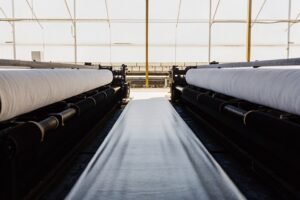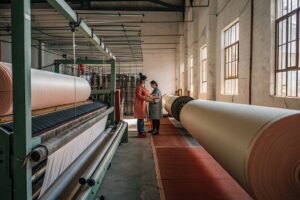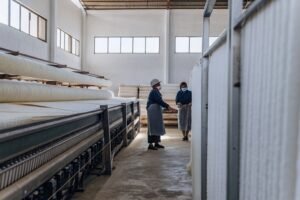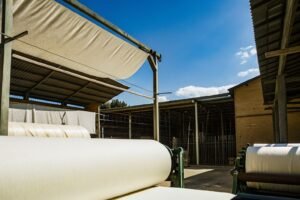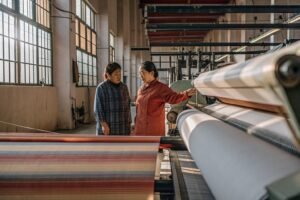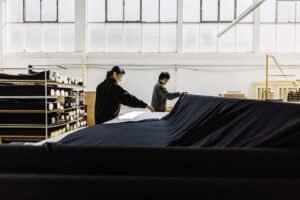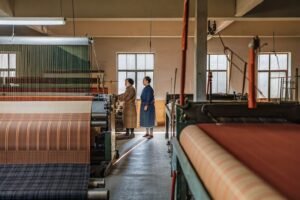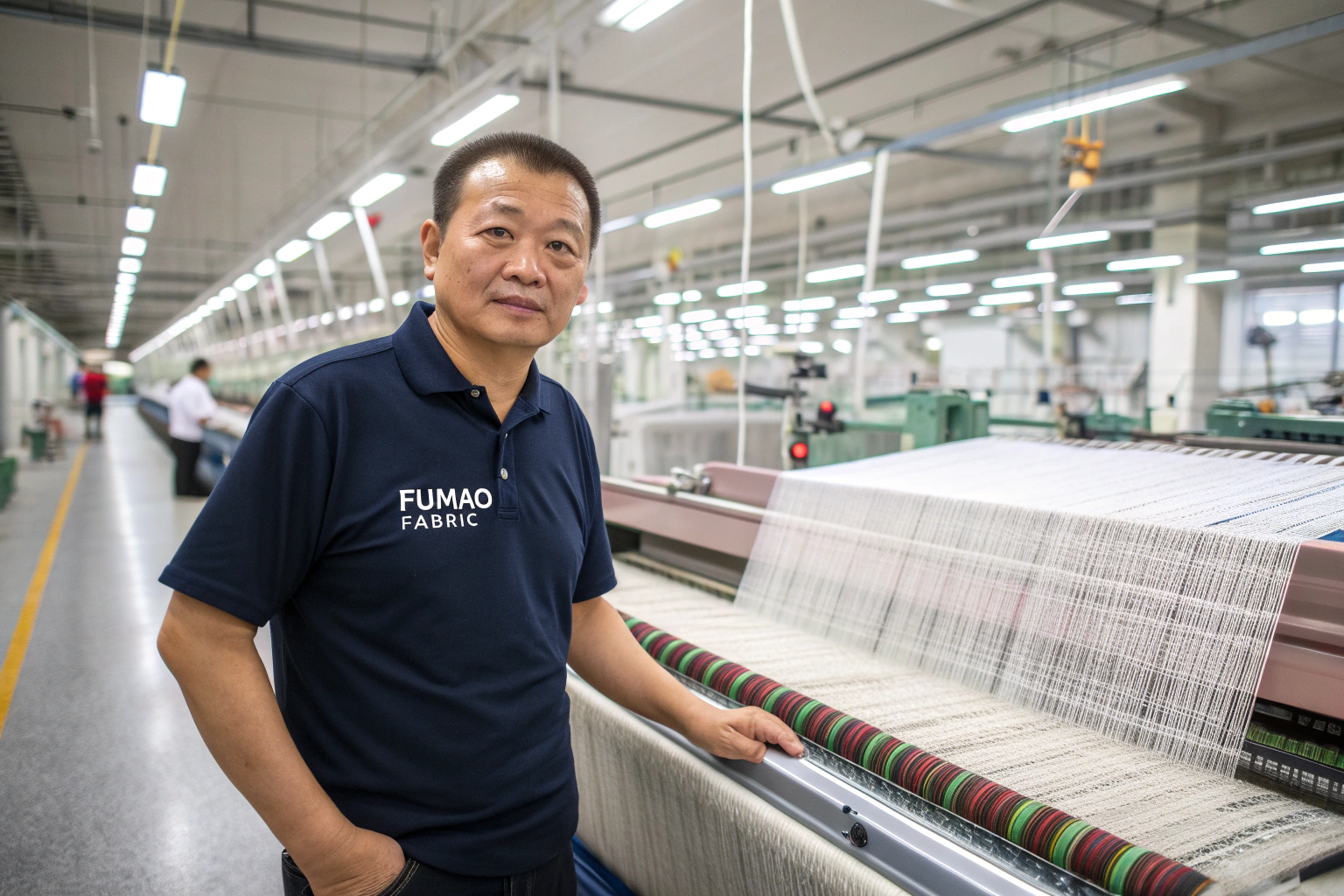
I remember standing in our first tiny workshop in Keqiao in 2003, surrounded by the deafening clatter of shuttle looms. Back then, I personally inspected every single roll of polyester taffeta before it shipped out. I had no idea that two decades later, I’d be running a full-scale operation with CNAS-certified labs and shipping to over 100 countries. But the question I get asked by nearly every new buyer, from startup designers in Los Angeles to procurement managers in Milan, is exactly this: how long have you really been doing this, and can you actually maintain top-tier quality while doing it so fast? It’s a fair question. In an industry full of traders pretending to be manufacturers, you need to know who you’re dealing with.
Let me answer that directly. Shanghai Fumao has been a leading force in textile manufacturing for over 20 years. We aren’t just a trading company that popped up five years ago with a glossy Alibaba page. We own the production lines. Our roots are in the physical soil of Keqiao, the absolute heart of the global textile industry, where nearly a quarter of the world’s fabrics are traded. This isn’t just about longevity; it’s about the muscle memory you build over 20 years of handling a global supply chain. My name is Elaine, and I’m the Business Director here. I’ve seen the industry shift from simple volume orders to what clients need today: agile R&D, strict eco-compliance, and the ability to de-risk supply chains for Western brands. And we’ve evolved right alongside it.
But I know you need more than just a timeline. You’re probably worried about getting samples that look great but bulk fabric that falls apart. You’re juggling US tariff concerns and shipping volatility. Stick with me, because I’m going to break down exactly how a 20-year foundation isn’t just a vanity number—it’s the concrete advantage that solves your sourcing headaches today. We are going to look at what “top quality” actually means in a real factory setting, how we handle the chaos of peak season production, and why a European brand recently restructured their entire calendar around our ability to deliver.
What ISO Certifications & Lab Testing Ensure Top Fabric Quality?
You wouldn’t believe how often I hear a buyer say, "I’ve been burned before by poor colorfastness." It’s a nightmare. You receive a container of beautiful black denim, and after one wash, your customer looks like they’ve been rolling in a coal mine. That fear drives you to demand testing, but honestly, half the "test reports" floating around on Alibaba aren’t worth the PDF they’re printed on. The real question keeping you up at night isn’t just if a factory has a certification, but whether that piece of paper actually represents rigorous daily discipline or just a one-time audit fee.
Here is the truth: Real quality control doesn’t come from a certificate on the wall. It comes from a standard you run against every single production lot. In our CNAS-accredited lab—which follows the exact same standards as SGS and ITS—we don’t just test random samples. We have instituted a live QR tracking system. You can scan a code and see the actual shrinkage, pilling resistance, and heavy metal test results for that specific roll of fabric, not just a "representative sample." This is how we guarantee a 98% client pass rate on AQL 2.5 inspections. A badge means nothing; data logged in real-time means everything.
Now, a lot of people get confused by the alphabet soup of standards. They know they need "eco-fabric" but don’t know why a standard actually matters until a border customs agent blocks their shipment. Let’s dig into the specific standards that keep your logistics moving and your end-consumer safe.
How does OEKO-TEX Standard 100 certification prevent shipment rejection at EU borders?
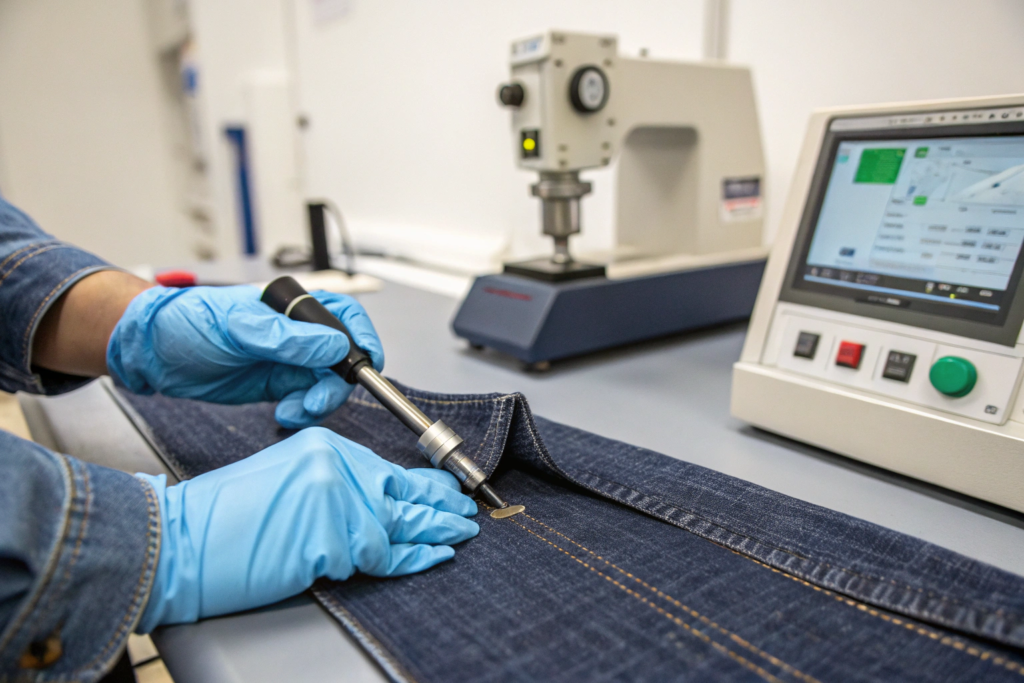
If you’re shipping to the EU right now, you are walking through a regulatory minefield. The EU’s REACH regulations are no joke. We learned this the hard way with a German activewear brand client in 2022. They placed a massive order for customized yellow spandex blends. We submitted the pre-production sample for Class I OEKO-TEX certification, even though the client didn’t explicitly ask for it. Good thing we did. The lab caught trace levels of a restricted phthalate in the initial pigment batch. If that had gone to bulk production and hit German customs, the entire container would have been flagged, seized, and likely destroyed. The cost would have been on the buyer.
That’s why "how to secure OEKO-TEX certified workwear fabrics for EU market entry" is a search term that literally saves businesses. When we test in-house, we simulate the exact conditions of an EU border inspection. We check for aniline residues and formaldehyde levels down to particle-per-million. I always tell my clients: don’t just look for a generic test report; demand a valid Scope Certificate number and verify it directly on the OEKO-TEX website about three weeks before your ship date. It adds a layer of protection that prevents a heartbreaking phone call down the line.
Can a quality manufacturer guarantee consistent GSM and color fastness in every order?
This is the ultimate test of a factory’s discipline. Anyone can hit a target weight and shade once. Can you hit it in July, when the humidity in the dyeing vat is 90%, on a tight deadline? We had a long-standing client from the American Midwest, a workwear brand, who was expanding into a line of Ladies’ Heavy Brushed Flannel for F/W season. They needed a very specific 310 GSM weight. The problem? Brushed fabrics "bloom," often arriving heavier than the greige state, or they stretch out and lose density. We ran their batch through our jigger dyeing process with a strict tension protocol. We cross-cut the roll every 50 meters to check the gram weight with an active laboratory scale, not a guess. The result: a 310 GSM average with a tolerance of just +/- 2%. (Here’s a hot tip: if you’re struggling with prep inconsistencies while [sourcing heavy brushed cotton flannel from Chinese suppliers for winter jackets], ask the factory to provide the exact machine settings, not just the final report. It proves they actually controlled the process).
That level of consistency requires predictive knowledge. It’s about understanding how yarn reacts to local seasonal changes before you even pour the dye. It’s muscle memory that you only get by doing this for 20 years. It creates the kind of trust that lets clients sleep without anxiously checking their freight forwarder updates every hour. But predictability isn’t just about the lab. It gets really messy when production calendars around the globe collide all at once.
How to Schedule Fabric Orders Around Peak China Production Cycles?
I cannot stress this enough: the calendar is your single most important sourcing tool. I see too many new brand owners treat fabric ordering like Amazon Prime. They design a collection in September, realize they need stock for a December drop, and panic-buy whatever is in stock. That panic costs you money, either in air freight or in accepting second-tier fabric. The fear is real: you miss your launch window, you miss your sales season, and your cash flow craters. You need to understand that the whole Chinese textile industry operates on a specific heartbeat, and if you don’t sync your rhythm with it, you’ll be flatlining before you even start.
You must plan your production schedule against China’s biological clock. You gain 1-2 weeks on your timeline just by hitting the factory floor during specific windows. The two golden peaks of production are March through May, and August through October. During these months, the infrastructure is humming; the dyeing chemical supply chains are fluid, and the most experienced shift workers are actively on the line. The slowest periods (June-July and November-December) offer potential timeline advantages if you’re launching sampling for the next season. However, the shutdowns are brutal if you get caught. Chinese New Year means a 3-4 week blackout, and Golden Week stops everything for a week. A European fast-fashion client we onboarded last year completely revamped their pre-production calendar: they finalized all lab dips and strike-offs a solid six weeks before Chinese New Year. The result? The moment the fireworks stopped and the workers returned, their bulk fabric went straight into the dyeing vat while competitors were still waiting for their first reply email.
Understanding the macro calendar avoids disaster. But it’s the micro-seasonality—the specific textile fairs and sub-seasons—that separates a struggling brand from a high-margin one.

When is the best month to order custom fashion fabrics to avoid Chinese New Year delays?
Let’s talk about the "Black Hole" of Chinese New Year. You do not want to be placing a new custom order for a complex jacquard on the 15th of January. If you do, you are effectively watching your money sit in a bank account while your production status sits in a dark, locked factory until late February. The sweet spot for "when to order custom fashion fabric to avoid Chinese New Year shipping delays" is actually the first week of November, or you push it entirely to late February.
Here’s a trick I’ve taught my American boutique buyers: use the holiday for your benefit. In late October, we call this the "pre-holiday season planning window." We usually slow down on bulk production, which frees up our development lab. A Texas-based dress brand owner took my advice on this last November. We used our 48-hour sampling window to develop a fully customized crepe satin digital print with a moire effect. We sent the handloom samples via air to the US before Christmas. She spent the dead time of January marketing the dresses with the physical sample, launched pre-sales in the first week of February, and funded the bulk purchase. By the time she placed the bulk order on February 26th, the printing factory was already warming up the machines for her run. She turned a 4-week dead season into a cash-flow positive pre-sale machine.
What are the real timeframes for bulk dyeing and finishing in peak vs. off-peak seasons?
Bulk dyeing is a physical and chemical process that can’t be infinitely rushed—you can’t boil water twice as fast by adding twice the fire; you’ll just scorch the pot. That said, the queue is what kills you. Let’s look at a realistic comparison for a standard 5,000-meter cotton poplin reactive dye job.
| Stage | Peak Season (April) | Off-Peak (Late November) |
|---|---|---|
| Greige Inspection & Batches | 3 Days | 1 Day |
| Dyeing Queue & Process | 7 Days | 4 Days |
| Finishing (Softening/Stentering) | 5 Days | 2 Days |
| Final Inspection & Packing | 3 Days | 2 Days |
| Total Estimated Cycle | 18 Days | 9 Days |
You can see, we basically cut the timeline in half during the off-peak season. That kind of speed advantage can save you a fortune in air freight if you’re willing to plan slightly ahead. Now, maintaining that speed without sacrificing the physical integrity of the fabric requires specific equipment setups, which gets us into how we handle specific material hurdles—especially those blends that drive designers crazy.
Can Asian Manufacturers Deliver High-End Natural Fiber Blends?
There is a prejudice I hear all the time: "Asia is great for polyester, but I need to go to Italy for a complex wool-silk blend." That makes me grin. Look, we process luxury natural fibers right here in Keqiao. The issue isn’t technical capability; it’s that many Western buyers don’t trust their sourcing process to find the right finishing partner. The fear is real: you’ve felt a scratchy "cashmere" that’s clearly mostly coarse sheep wool. You’ve seen a "bamboo silk" that pills after two wears. You’re scared the "luxury eco-blend" you pay $22 a yard for will feel like a $5 rag.
Here is the secret. Natural fibers are alive; they react to the local water hardness and climate. Our 20-year roots in Keqiao are a competitive moat here. We run our water through a massive industrial softener before it even touches a cashmere-wool blended fleece, because Keqiao’s specific mineral content actually affects the softness of the hand-feel. We regularly engineer subtle blends—say, 70% Camel Hair with 30% Lyocell—that European couture houses love. They get the incredible thermal retention of the camel hair, but the Lyocell adds a fluid drape and stops it from looking too "hairy" or bulky, which is perfect for modern, sleek overcoats. It’s a level of material science that only comes from decades of tinkering with natural fiber behavior in a specific industrial environment.
A huge part of unlocking the potential of a luxury natural blend is often not organic at all—it’s the application of a high-tech synthetic that saves the garment from being unwearable. Let’s conquer the number one complaint about a beloved fiber.
How to source durable elastane-cotton blends that resist pilling?
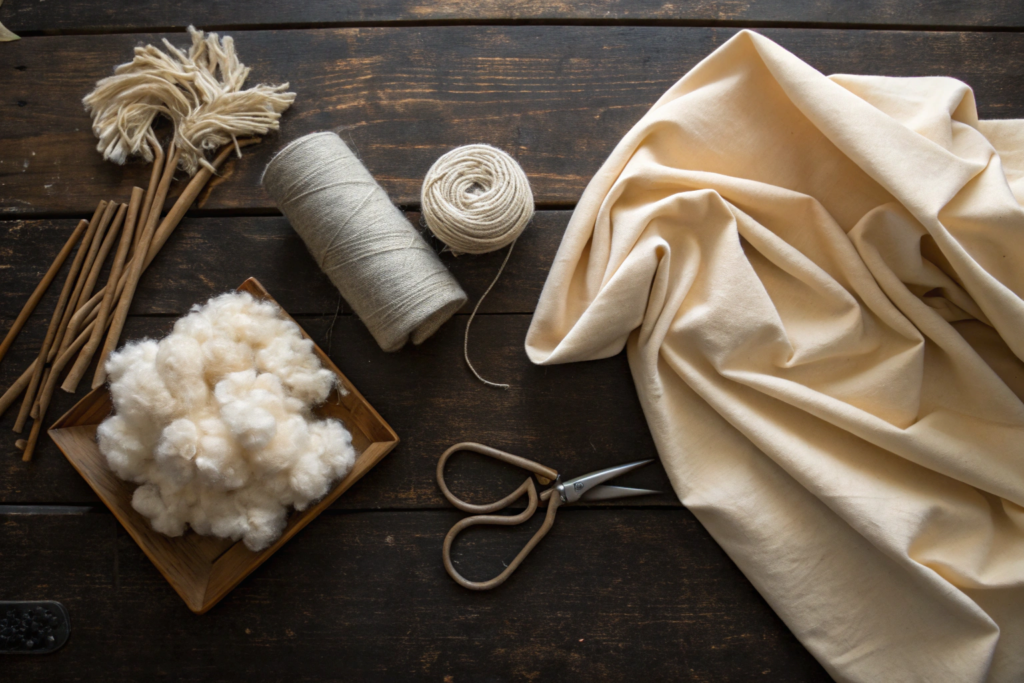
Ah, the pilling problem. You design a beautiful cotton-spandex baby rib knit, it looks perfect on the hanger, but after three cycles in the wash, it looks like an old sweater covered in lint balls. This is a mechanical physics problem, not just a fiber problem. Pilling happens when short, loose fibers migrate to the surface and tangle up.
We tackle this by aggressively singeing and bio-polishing the greige cotton before a single drop of dye hits it. Bio-polishing uses enzymes to literally eat the tiny micro-fuzz off the surface of the yarn without weakening the core strength. For [finding high-recovery cotton spandex jersey that doesn’t pill after washing], you need to look for a "compact yarn" spec. Compact spinning twists the fibers so tightly that the stray hairs are locked inside the thread structure. We worked with an Australian children’s wear label in early 2024 that was returning to the market after a disastrous 2023 winter where their entire line of toddler leggings pilled and was returned. We switched them to a 95/5 compact ring-spun cotton/spandex with a heavier enzyme wash. We tested the fabric on a Martindale machine for 2,000+ rubs—no pills. The trick is locking the fibers down before you even dye them, which protects the color integrity later.
Is it possible to produce eco-friendly viscose with the sheen of silk without the shrinkage risk?
Viscose has a bad reputation for "moving" on you. You cut a beautiful drapey dress, and suddenly the hemline is crooked because the humidity in your warehouse caused the fabric to shrink as it sat on the shelf. Standard viscose is delicate in water; the fibers swell and the hydrogen bonds collapse. That’s the chemistry of why your dress turns into doll clothes.
We fix this by using Lyocell (Tencel) or high-wet-modulus (HWM) modal instead of standard viscose in applications that need that "liquid silk" look. More importantly, we run elasticized cross-linking resin finishes post-dyeing. This isn’t a bad thing; it’s like putting a scaffold inside the cell of the fiber so it can’t collapse in on itself. If you are [procuring anti-shrinkage eco-friendly modal fabric for fluid dresses], you need to demand a "relaxation drying" step in the finishing line, not just an overfeed on the stenter. Relaxation drying over-feeds the fabric and lets it literally relax mechanically at a low temperature before it hits the heated drums. We aim for a residual shrinkage of -3% max. That means a 50cm panel might lose 1.5cm in the first wash, which is completely negligible and manageable for a sewer.
Solving those structural problems turns a "sensitive" eco-fabric into a performance workhorse. This seamlessly leads into the bigger, flashier game: being able to render those fabrics not just in a solid color, but with surface dimension and texture that screams high fashion.
How Does Custom Surface Design (Embroidery & Coating) Scale Up?
Adding surface interest is where you really build a brand identity. But adding a coating or an embroidery stitch isn’t just an aesthetic choice; it’s a logistics nightmare if done poorly. The fear my experienced buyers have isn’t the cost of the embroidery itself; it’s that the needle will tear the base fabric, or the waterproof coating will turn yellow and crack after six months in a warehouse. It is a serious liability issue if you’re promising a client a technical performance fabric that fails.
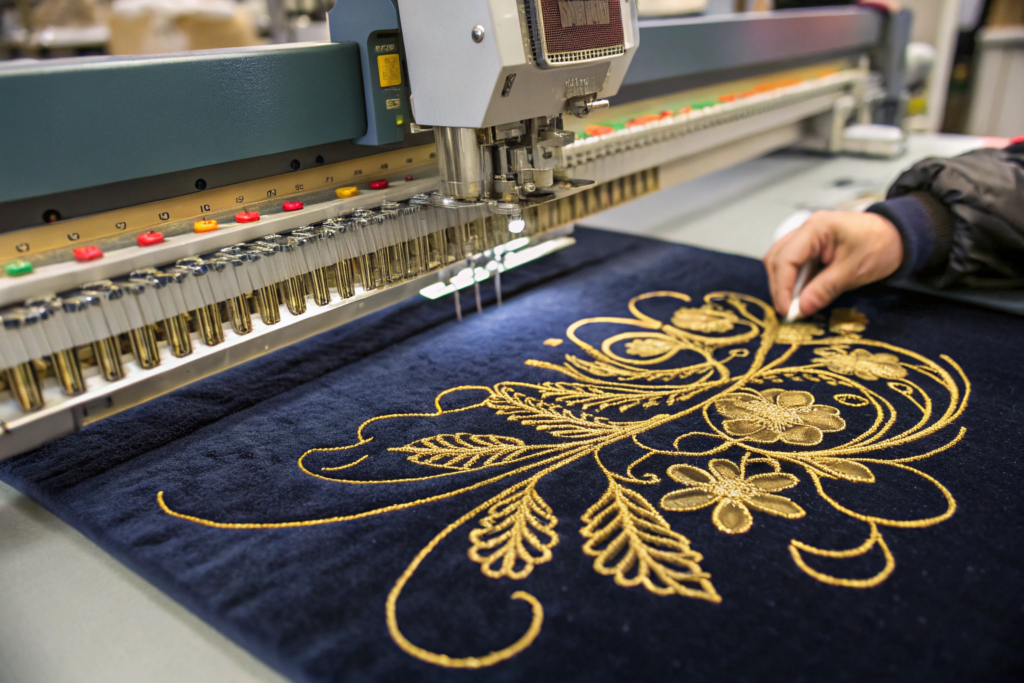
My answer is to never separate the base fabric from the surface design. We operate our own embroidery and coating divisions specifically so we own the risk of failure. If a needle is creating a hole too big, our loom doesn’t blame the embroiderer; we just stop the line and switch to a ball-point needle for that specific polyamide taffeta. If a PU coating isn’t adhering, we don’t blame the coating supplier; we re-clean the base fabric. That’s the silent killer of complicated fabric—"[how to manage multi-stage fabric manufacturing to avoid lead time delays and defective rates]" is essentially solved when you have a single QC team standing over the loom line, the coating blade, and the laser cutter, all under one roof.
But scaling up a complex design from a beautiful runway sample to a thousand-yard roll is where magic actually happens. It isn’t automated; it often requires "MacGyver-ing" the machine to handle the volume.
What are the technological limits of high-speed digital textile printing on polyester satin?
Digital printing on polyester is fast, but don’t confuse "photo-quality print" with "permanent print." If you are printing a black background on polyester satin at high speed, you are essentially heat-transferring a dye from a paper onto the surface of the fiber. The door of the vaporization chamber is the limit here. The dye literally turns into a gas and penetrates the fiber, but if you run too fast, it sublimates unevenly, leaving a "blurry" finish.
We print at a slightly slower transfer speed of about 4-5 meters per minute for dark, heavy backgrounds to ensure the ink stays in the gas state long enough to penetrate the tight weave of the satin, rather than just sitting on top. We learned this when scaling a collection for a UK streetwear brand in 2023 that needed a mirror-finish satin print for a bomber jacket lining. The initial batch at top speed (8m/min) looked washed out. We dropped the speed, adjusted the drum temperature, and the black suddenly had depth. The challenge in "[high-speed digital printing on polyester satin without color bleeding and ghosting]" is accepting that physics dictates you can’t rush a gas-solid phase change. You have to find the floor of the speed curve.
Why does breathable TPU lamination fail and how can you ensure it holds during dry cleaning?
Lamination failure is usually a delamination issue, especially with TPU (Thermoplastic Polyurethane). It looks great as a sample, but after commercial dry cleaning, the solvent attacks the adhesive, and the film literally peels off the fabric face like dead skin. This happened to a luxury Canadian outerwear brand we started working with in 2023. They had a previous supplier’s TPU-laminated softshell delaminate.
The fix is cross-linking. We use a two-part, solvent-resistant adhesive system plus a twin-lamination process. It basically welds the TPU film to the textile surface at a molecular level using pressure and heat. For "[sourcing heat-resistant TPU laminated fabric for dry-cleanable outerwear garments]," you cannot use a standard hot-melt glue-web. You need a cured, thermoset adhesive that specifically resists the Perchloroethylene (PCE) used in dry cleaning tanks. We guarantee our TPU bonds to 25 commercial dry clean cycles—we literally test it by sending the fabric to a local dry cleaner here in Keqiao for 25 trips.
Conclusion
So, how long has Shanghai Fumao been a top-quality manufacturer? Long enough to have made nearly every mistake in the book—and smart enough to build systems so you don’t have to suffer through them. We’ve been weaving the world’s style for over 20 years, but honestly, the years don’t matter as much as the habits we’ve built. The habit of testing every single lot in a CNAS-certified environment. The habit of baking a "calendar buffer" into our planning for western holidays. The habit of babying a roll of cashmere-blend with soft water before we dare to dye it.
The value we bring isn’t just a high stitch count or a low price. It’s predictability. It’s the guarantee that when you receive that roll of fabric in New York or Rotterdam, the color will match the lab dip you approved three months ago, and the hand-feel will move the end consumer to buy. From our 48-hour sample development loops to our strategic location in the beating heart of Keqiao, we exist to make your complex supply chain feel simple.
If you are done fighting with inconsistent suppliers and you want to partner with a team that treats your fabric order like their own skin in the game, let’s talk. I oversee every major account personally. I don’t just assign you a random sales rep. You can reach me, Elaine, directly at elaine@fumaoclothing.com. Tell me about your current sourcing headache, and I’ll tell you honestly if we can fix it. Let’s make something incredible, reliably.