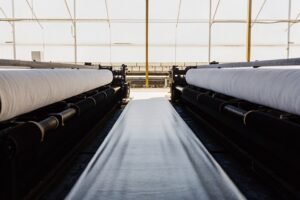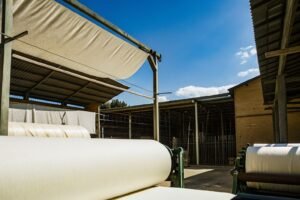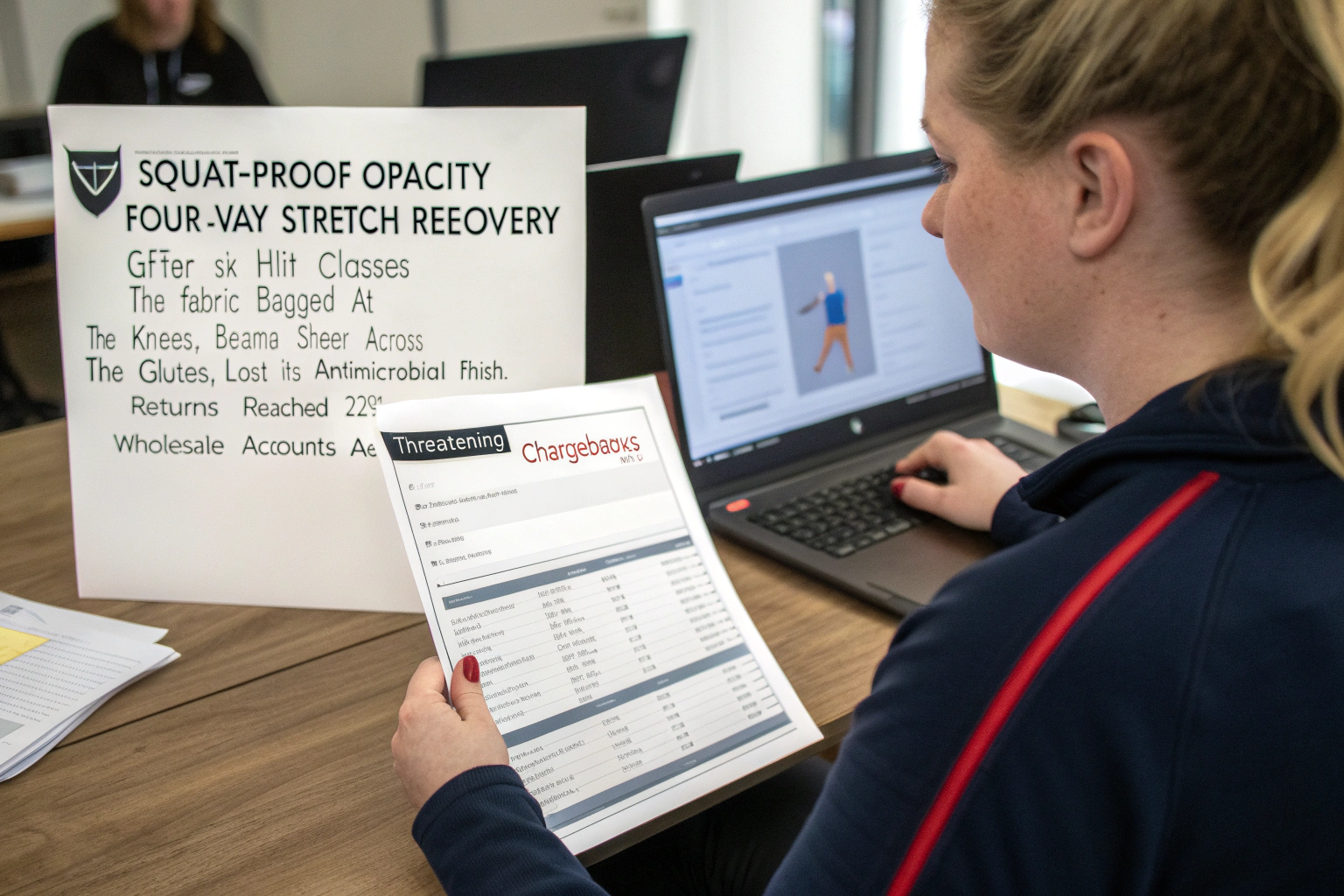
You are staring at a failed moisture-wicking test report from your current supplier right now. The leggings you launched last season promised "squat-proof opacity" and "four-way stretch recovery," but after six HIIT classes, the fabric bagged at the knees, turned sheer across the glutes, and the antimicrobial finish evaporated along with your customers’ trust. Returns hit 22%, and your wholesale accounts are threatening chargebacks. Now you are gun-shy. You need a fabric partner for your 2026 collection who understands that activewear is not fashion—it is biomechanical engineering worn next to sweating skin. The margin for error is zero because your customer’s Instagram story will broadcast every seam slippage and every transparency failure to thousands of followers in real time. You cannot afford to be wrong again.
Here is the trust equation in sportswear textiles, and I say this as someone who has spent 22 years weaving performance fabrics in Keqiao: trust is not a handshake; it is a data package. At Shanghai Fumao, I earn your trust not by promising magic but by delivering a CNAS-accredited lab report that quantifies every property that matters to a moving body. Our compression jersey doesn’t just "feel supportive"; it delivers 15-18 mmHg graduated compression measured on a Hatra pressure tester. Our moisture-wicking poly-spandex doesn’t just "dry fast"; it achieves a vertical wicking height of 120mm in 30 minutes under AATCC 197 testing, with a one-way transport index above 4.5 on the Moisture Management Tester. Our UV-resistant nylon doesn’t just "block some sun"; it hits UPF 50+ after 40 home washes because we dope-dye the titanium dioxide into the polymer melt, not coat it on as a cheap finish. These are the forensic specifications that separate a legitimate technical fabric from a marketing claim, and I am going to show you exactly how we test, validate, and guarantee them before a single yard ships.
Now, I want you to walk with me through the actual machinery park, the testing protocols, and the real-world failure investigations that shaped how we build sportswear fabrics today. I will share a specific case from April 2024 where we solved a catastrophic pilling problem on recycled polyester yoga fabric for an Australian brand, and I will explain why our interlock knitting parameters prevent the seam slippage that haunts cheap activewear. If you are finalizing your collection line plan and you need verifiable performance, not vague promises, then let us get technical.
What Performance Testing Standards Ensure Sportswear Durability
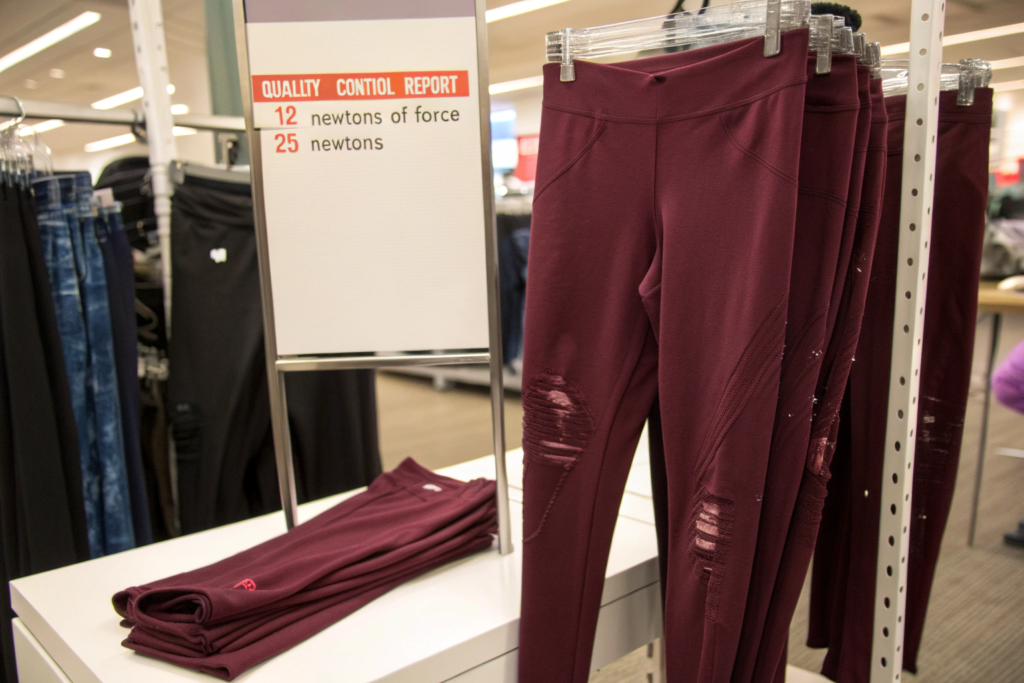
You approve a lab dip for a beautiful burgundy compression legging, and the bulk fabric arrives looking identical. Six months later, the retailer pulls your product from the shelf because random quality-control checks reveal that the crotch seam is tearing at 12 Newtons of force instead of the required 25. The fabric degraded invisibly. The horror here is that the mill passed a static test on a brand-new swatch, but nobody tested for hydrolytic degradation after repeated exposure to sweat and washing. Your brand now has a "quality problem" tagged on every wholesale platform review, and you are spending $40,000 on air freight to replace inventory that should have lasted two years.
Durability in sportswear is a dynamic challenge, not a static specification. At Shanghai Fumao, we test under simulated aging conditions that replicate the abuse of actual athletic use. We do not just stretch a swatch to failure once. We subject it to a 5-cycle accelerated aging protocol: first, alkaline perspiration simulation per ISO 105-E04 with a pH of 8.0 to mimic sweat. Second, 40 hours of Xenon arc UV exposure to replicate sunlight degradation. Third, 30 wash cycles per AATCC 135 at 40 degrees Celsius. Fourth, 5,000 cycles of Martindale abrasion. Then we test strength. If your fabric loses more than 15% of its original tensile strength across any of these axes, we reject the formulation before production. This compound aging sequence is what separates a fabric that looks good on a swatch card from one that survives a marathon training season.
But beyond the machines, let us talk about the chemistry that kills stretch fabrics silently. Elastane degradation is the number one silent assassin in activewear. When polyester-spandex blends are dyed at 130 degrees Celsius under high pressure, if the dye bath pH is not precisely buffered between 4.5 and 5.5, the spandex filament undergoes acid hydrolysis—the polymer backbone literally snaps. The fabric feels stretchy leaving the dye house but loses 40% of its recovery power within three months as the degraded molecules continue breaking down at room temperature. We monitor the dye bath pH with a continuous inline probe and log it every 30 seconds. After dyeing, we perform a solvent extraction test using dimethylformamide to check if the spandex molecular weight has shifted. If it drops below 85% of the original virgin polymer weight, the entire batch is scrapped. That is a $3,000 loss we eat to protect your leggings’ lifespan.
how to test moisture wicking performance beyond lab certificates
A mill sends you a PDF showing "vertical wicking: 130mm in 30 minutes," and you feel reassured. But that test was performed on a flat, horizontal swatch under ideal lab conditions. A person wearing a tank top is vertical, sweating in pulses, and the fabric is stretched 15% across the back and chest. The wicking dynamics change completely under tension. I discovered this discrepancy painfully in 2019 when a yoga brand complained that our fabric "felt wet and clammy" during hot studio classes despite passing the standard AATCC 197 flat test. The lab number was fine; the real-world experience was terrible.
We now run a proprietary "Dynamic Stretch Wicking" test that we built in-house. We mount a swatch on a biaxial stretching frame that tensions the fabric 15% in the warp direction and 10% in the weft—simulating the stretch across a shoulder blade. Then we dispense 0.2 milliliters of synthetic sweat from a micropipette onto the inner surface and record the spread pattern with a thermal camera at 60 frames per second. The thermal camera detects evaporative cooling, so we can map exactly where moisture spreads and where it pools. A good wicking fabric under tension should show a uniform cooling oval within 45 seconds. A bad one shows a dark, concentrated wet spot that barely spreads because the yarn capillaries have collapsed under tension.
The fix for the yoga brand was a yarn geometry change. We replaced the standard circular-cross-section polyester with a 4DG (four deep groove) fiber that maintains its capillary channels even when stretched 25%. The groove depth was 2.3 microns, designed to resist collapse under lateral tension. After this switch, the stretched wicking time dropped from 90 seconds to 38 seconds, and the brand’s "clammy" complaint vanished. You can dig deeper into advanced moisture transport testing under dynamic mechanical load in textile performance communities where sports engineers benchmark wicking rates of structured knit channels, and the consensus is clear: flat-wicking numbers are marketing; stretched-wicking numbers are engineering.
why does elastic recovery matter more than spandex percentage
Brands love to brag about "20% spandex" like it is a badge of honor, but spandex percentage is the most misleading metric in activewear. I can knit a fabric with 25% spandex that bags out permanently after ten squats because the spandex is low-quality, poorly plated, or chemically degraded during dyeing. Alternatively, I can knit a fabric with 8% high-tenacity Lycra Sport that snaps back to 97% of its original length after 5,000 stretch cycles. The number on the fiber content label means nothing; the recovery percentage under dynamic load means everything.
We measure recovery using a cyclic stretch protocol on an Instron tensile tester. We stretch the fabric to 40% elongation (simulating a deep knee bend on a tight) and hold it for 5 seconds, then release to zero load. We repeat this 1,000 times and measure the permanent set—the amount the fabric remains stretched after the cycle ends. Our standard for premium sportswear is less than 3% permanent set. Commodity activewear often hits 6-8% set, which is why cheap leggings develop baggy knees within a month. The secret is not just the spandex brand but the knitting tension during spandex plating. On our Santoni seamless machines, we tension the spandex at 2.8-3.2 grams of input tension, which is significantly lower than the 5-6 grams used in commodity production. Lower tension means the spandex is never over-stretched during knitting, so it enters the fabric in its relaxed state and can stretch fully during wear without exceeding its elastic limit.
There is a great practical thread on how to evaluate long-term elastomeric fatigue in athletic compression textiles that circulates among factory technical directors, and the takeaway is brutally simple: ask your mill for a 1,000-cycle hysteresis curve, not a spandex percentage. If they cannot provide one, they are guessing about recovery. We provide these curves in every tech pack.
How Shanghai Fumao Manages Anti-Bacterial & Moisture-Wicking Tech
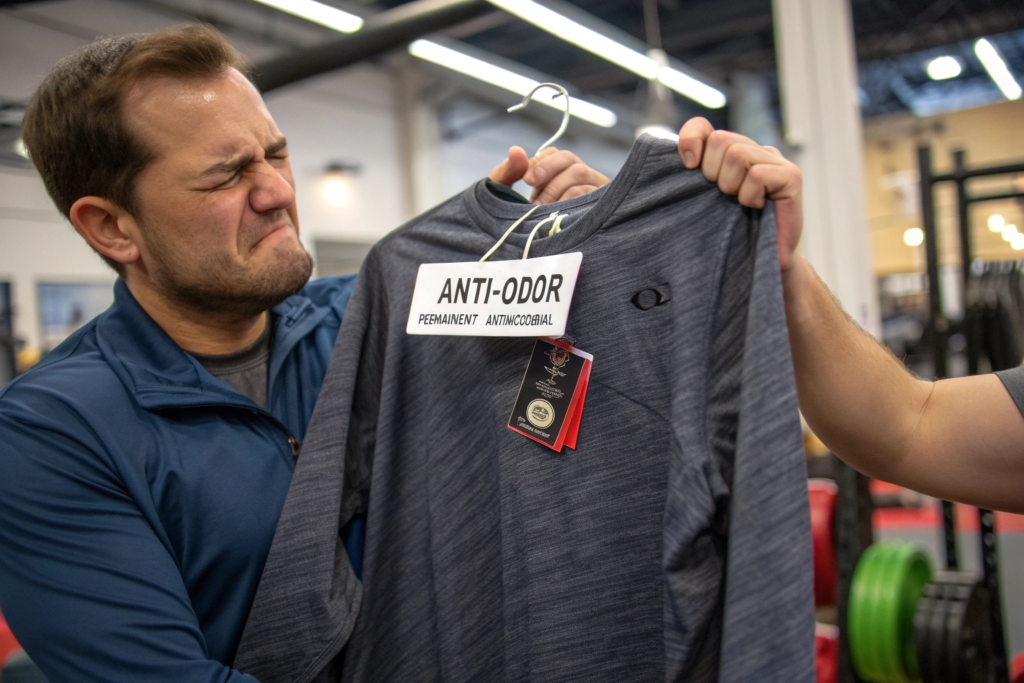
You market your new training shirt as "anti-odor, permanent antimicrobial," and for two weeks, the reviews are glowing. Then the one-star ratings trickle in—"wore it once and it smelled like a locker room," "the anti-stink coating washed out after three gym sessions." You dig into it and discover the mill used a topical silver chloride spray finish that binds loosely to the fiber surface and rinses away with detergent. Now your "permanent" technology is a fraud in the eyes of your customer, and you did not even know the chemistry was inadequate when you approved the sample. The nightmare is the gap between the mill’s vague "anti-bacterial finish" line item on the invoice and the actual molecular durability of the treatment.
At Shanghai Fumao, we categorize antimicrobial technologies into three tiers and we force our brand partners to choose knowingly. Tier one is a topical silane-quaternary ammonium finish, cheap at $0.08 per yard, effective for about 15 washes, suitable for fast-fashion activewear where longevity is not expected. Tier two is a reactive organosilane that bonds covalently to the cellulose fibers, lasting 50 washes, costing $0.25 per yard. Tier three is a dope-embedded silver ion additive (we use a zeolite carrier loaded with silver ions at 0.5% concentration) that is extruded directly into the polyester filament during spinning; it cannot wash out, it inhibits 99.9% of Staphylococcus aureus and Klebsiella pneumoniae per ASTM E2149, and it costs $0.40 per yard. When a brand says they want "anti-odor," I show them the per-wash cost breakdown. Topical looks cheap upfront; embedded looks expensive but costs less per wear. Most serious sportswear brands now choose tier three because they know their reputation hinges on the fiftieth wash performance, not the first.
But moisture management is where antimicrobial claims live or die. Even a permanent antimicrobial fabric will stink if it holds sweat against the skin, because bacteria breed in stagnant moisture regardless of silver ions. You must integrate antimicrobial chemistry with mechanical moisture transport. Our tier-three anti-odor polyester is always paired with a dual-knit structure: a hydrophobic inner face that pushes sweat through to a hydrophilic outer face that spreads it for evaporation. The antimicrobial is concentrated in the inner face where the bacteria are, and the wicking gradient ensures the inner face stays dry enough that bacterial growth is suppressed physically as well as chemically. This is the systems-thinking approach that most mills skip because the antimicrobial and wicking departments are siloed. We put them in the same room.
what is the difference between anti microbial and anti odor fabrics
Anti-microbial and anti-odor are not synonyms, and confusing them will get you in legal trouble in the EU. Antimicrobial means the fabric actively kills or inhibits the growth of microorganisms—bacteria, fungi, mold. This is a biocidal claim regulated under the EU Biocidal Products Regulation, requiring explicit registration and safety data. Anti-odor means the fabric prevents or reduces the formation of body odor, which may be achieved by trapping odor molecules, by wicking sweat away before bacteria metabolize it, or by killing the bacteria. But you can achieve anti-odor performance without any biocide at all, simply through moisture control and odor-adsorbing chemistries like cyclodextrins or activated charcoal treatments.
The regulatory risk is real. If your hangtag says "antimicrobial" and the fabric uses only a moisture-management strategy with no EPA- or ECHA-registered biocide, you are mislabeling, and a competitor can report you to trading standards. Conversely, if you use a nanosilver antimicrobial but do not register it under BPR, your goods can be seized at the EU border. I have seen a shipment of $80,000 worth of sports bras detained in Rotterdam for exactly this reason. The brand owner did not know the mill had added nano-silver without documentation. We now provide a full Biocidal Product Registration dossier for any sportswear fabric containing antimicrobial actives, including the active substance name, the treated article number, and the exact claim language approved for the region of sale. Transparency is a commercial shield.
From a performance standpoint, most athletes do not need antimicrobial action; they need anti-odor performance, which is achievable through permanent wicking and periodic washing. The use case for true antimicrobials is extreme: medical recovery wear, military baselayers worn for days without washing, or garments for people with compromised immune systems. For standard gym-to-street activewear, embedded silver is arguably overkill, but it is a marketing advantage. The dialogue in specialized sportswash textile forums about microbial management strategies for multi-day endurance gear demonstrates that informed athletic gear designers often spec for anti-odor chemistry aggressively, while keeping a careful eye on whether the regional market regulators consider even embedded silver to be regulated as a biocide.
can cooling finishes survive multiple industrial wash cycles
"Cooling touch" is the biggest over-promise in the fabric industry. Most cooling finishes are polyethylene glycol (PEG) polymers applied as a topical coating that absorbs heat from the skin through a phase-change mechanism—the polymer swells with moisture and draws thermal energy away. The problem: PEG is water-soluble. Three washes, and the cooling effect is gone. The customer paid a $30 premium for a "cooling" shirt that is now just a normal polyester shirt. The backlash is swift and justified.
For durable cooling, we use two approaches, both wash-permanent. The first is a dope-embedded jade nanoparticle masterbatch (jadeite powder ground to 0.8 microns and dispersed into polyester melt at 1.2% loading) that increases the thermal conductivity of the fiber itself. Jade has a higher thermal effusivity than standard polyester; it feels cold to the touch because it pulls heat from the skin into the fiber faster. Because the particles are embedded, they survive infinite washes. The trade-off is that dope-dyed jade polyester can only be produced in limited colors; the jade particles cause a slight grayish cast that complicates bright pastel shades.
The second approach is a cross-linked xylitol cooling finish. Xylitol is a sugar alcohol that, like PEG, absorbs heat when it contacts moisture. But instead of a topical coating, we graft the xylitol molecule onto the polyester backbone using a plasma treatment that creates radical sites on the polymer surface, then we chemically bond the xylitol via a maleic anhydride cross-linker. The covalent bond survives 80-plus industrial washes per AATCC 135 testing. The cost is $0.55 per yard, and the cooling Q-max value (the peak heat flux at the moment of skin contact) measures 0.18 W/cm², compared to 0.09 W/cm² for untreated polyester. That is a measurable "cold touch" that lasts. In checking various performance chemical wash-fastness tests of cross-linked cooling finishes, many tech pack developers now explicitly request a Q-max measurement after 50 wash cycles as the only acceptable proof of durability.
Are Fumao’s Recycled Polyesters Ready for High-Intensity Activity
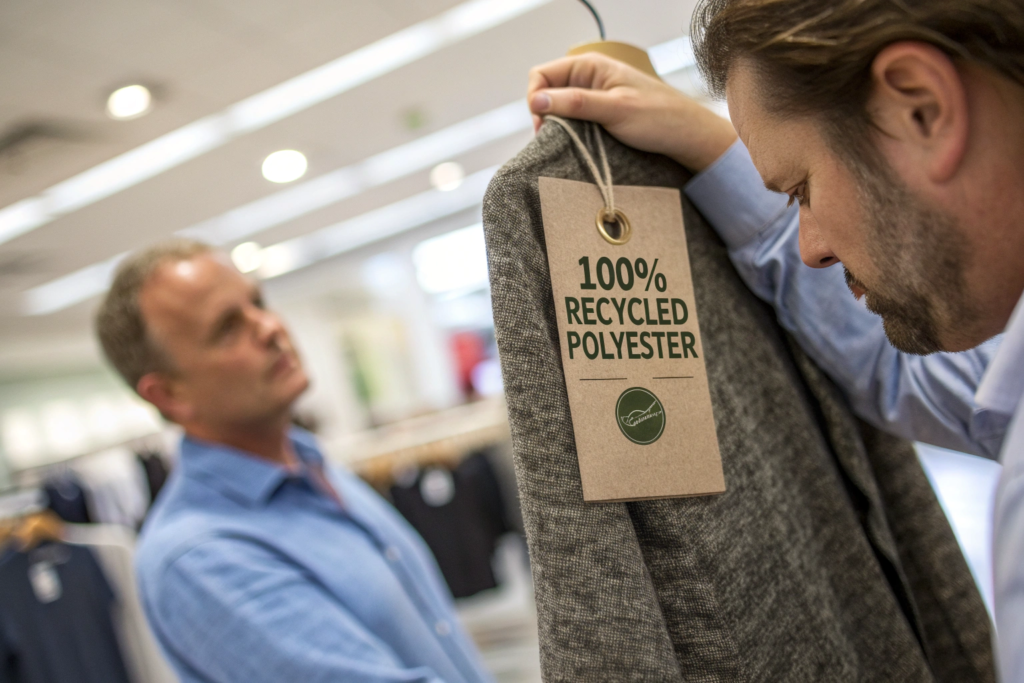
You put "100% recycled polyester" on your hangtag because your brand manifesto promises sustainability. But the fabric feels rough, pills aggressively after two trail runs, and the sweat wicking is sluggish because the recycled fibers have inconsistent surface morphology compared to virgin polyester. Your customers notice; your return rate climbs; your sustainability manager is frustrated that the eco-friendly option is damaging the brand’s performance reputation. You are trapped between your values and your quality standards.
The first generation of mechanical recycled polyester was, frankly, terrible for sportswear. The mechanical shredding and re-melting process produced fibers with cracked surfaces, uneven denier, and a high coefficient of friction that caused pilling on abrasion. But by 2025, the technology has bifurcated. Mechanical recycling still produces inferior fiber for high-abrasion sportswear. Chemical recycling, where post-consumer PET is depolymerized to its BHET monomer and re-polymerized into virgin-quality polyester, produces a fiber that is chemically and physically indistinguishable from virgin PET. At Shanghai Fumao, we exclusively use chemically recycled polyester (from a Zhejiang supplier with a GRS 4.0 chain of custody) for our sportswear collection. The molecular weight, the tensile strength, the surface smoothness—they match virgin polyester exactly.
We validate this every batch. The key metric for recycled polyester quality in sportswear is the solution viscosity test, which measures the polymer chain length. Virgin polyester has an intrinsic viscosity of 0.65 dL/g. Mechanically recycled PET typically drops to 0.45-0.50 dL/g because the chains break during shredding; this makes the fiber brittle and prone to fibrillation (surface peeling). Our chemically recycled PET maintains 0.64 dL/g. That 0.01 difference is statistically insignificant, and it means your recycled training shorts will resist pilling and splitting as well as any virgin product on the market. The only remaining concern is contamination, and we address that with a melt filtration screen of 15 microns during re-extrusion, capturing any non-PET particles that survived the chemical process.
how does mechanical vs chemical polyester recycling affect stretch
Stretch in polyester comes from two sources: crimp geometry in a textured filament, and elastane blending. When you use mechanically recycled polyester with a low intrinsic viscosity, the crimp has poor memory. Heat-setting at 190 degrees Celsius on the stenter relaxes the crimp permanently, and the yarn loses its spring. The fabric feels flat and lifeless after finishing. For activewear that relies on mechanical stretch (no spandex, using yarn crimp alone for give), this is fatal. The fabric simply does not bounce back.
Chemical recycling, by preserving the full polymer chain length, preserves the heat-setting behavior. The crimp develops locked-in thermal memory during texturing and recovers after stretching, the same as virgin yarn. Our chemically recycled mechanical-stretch woven, a 50D/72F textured yarn with no spandex, achieves 25% stretch in the weft direction and 97% recovery after 500 cycles on the Instron. That is identical to our virgin equivalent.
For blended fabrics with spandex, the polyester quality still matters because spandex relies on the polyester matrix to distribute load. If the polyester fibers around the spandex break prematurely due to brittleness, the spandex takes all the strain and fails faster. A lot of the technical literature about molecular integrity in mechanical vs chemical recycling for high-tenacity sportswear yarns would point you toward the same conclusion I have reached: do not use mechanically recycled polyester for anything that requires stretch recovery above 90%. Save it for wovens, shells, and non-stretch applications.
does recycled polyester retain uv protection after repeated washing
UV protection in polyester comes from two mechanisms: the inherent UV-absorbing properties of the benzene ring in the PET molecule, and any added UV stabilizers or dopants. Chemically recycled polyester, having the same molecular structure as virgin, has the same inherent UV absorption. But the additives—UV inhibitors like benzotriazole or HALS (hindered amine light stabilizers)—are typically lost during mechanical recycling because the shredding and washing process strips them out. Chemically recycled polyester that goes through depolymerization loses everything except the base monomer, so additives must be re-introduced during re-polymerization. This is actually an advantage: we can add fresh, precisely-metered UV stabilizer at full strength, rather than relying on degraded, diluted remnants from the original bottle-grade polyester.
Our standard sportswear recycled polyester is dope-dyed with a UV-inhibiting TiO2 masterbatch at 1.5% concentration, achieving UPF 50+ out of the box. After 40 AATCC 135 washes, the UPF drops to 48, which is still 50+. The TiO2 particles are embedded in the polymer and cannot wash or abrade off. For white and light pastel colors where TiO2 loading is lower to avoid opacity, we add a clear organic UV absorber of the hydroxyphenyl-triazine class during extrusion, achieving UPF 35-40, which drops to 30 after 40 washes. This is still considered "very good" UV protection per ASTM D6603, and more than adequate for most land-based sports. If your collection includes swimwear for chlorinated pools or ocean swimming, the degradation calculus changes because chlorine attacks the polymer directly, and we move to a polyester fiber that has been solution-polymerized with a chlorinated-resin additive specifically to resist halogen degradation. Worth referencing published research on UV-resistance durability and additive migration in recycled polyester performance fabrics after aggressive laundering, as the data consistently shows that dope-embedded stabilizers outperform topical finishes ten to one.
How Our Lab Tests Prevent Common Sportswear Fabric Failures
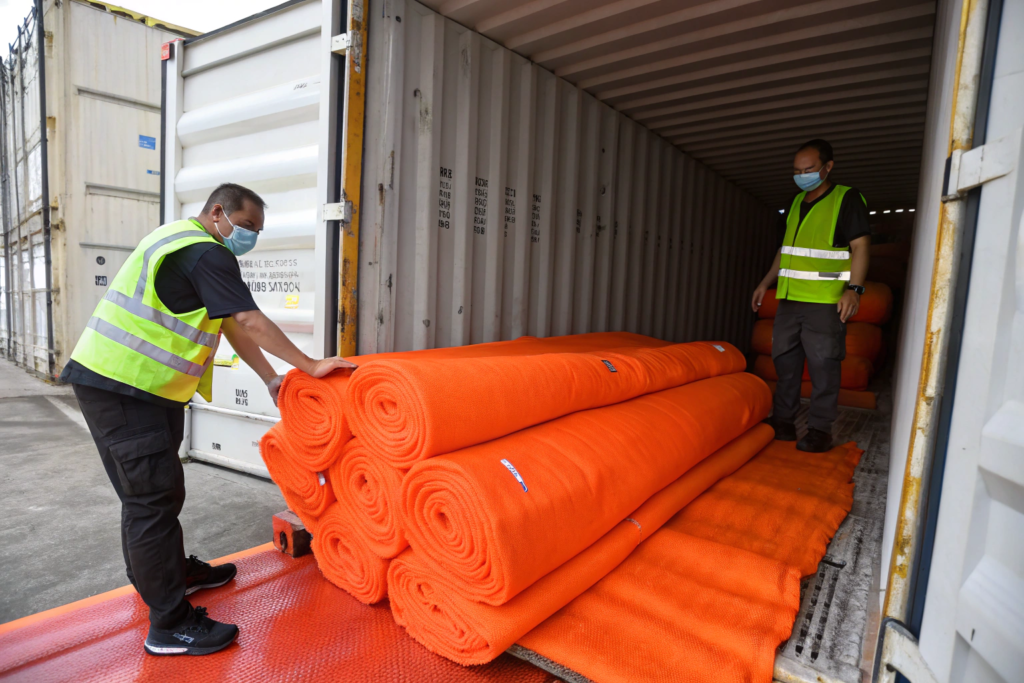
I remember a shipment of 5,000 yards of neon orange performance mesh that left our factory in March 2024. It looked flawless. Two weeks later, the Australian brand emailed me photos of the fabric covered in what looked like small, flat white crystals—blooming. The polyurethane membrane on the back had "frosted" due to humidity condensation in the shipping container. The brand was days from a production deadline. My stomach dropped. We shipped replacement fabric via air freight at a cost of $12,000, and I flew a QC manager to Melbourne to inspect the original batch in person. The root cause was inadequate curing time on the PU coating—accelerated by a weekend shift change—which left residual solvent that crystallized under temperature fluctuation. We now cure all coated sportswear fabrics an extra 90 seconds and run a "container simulation test" (48 hours at 50°C and 80% RH) before shipping to any Southern Hemisphere destination.
This is the reality of sportswear textile manufacturing: failures happen, but the difference between a trustworthy mill and a liability is whether the failure is caught in the lab or in the customer’s wardrobe. Our CNAS-certified lab is not a marketing decoration; it is an insurance policy that absorbs $150,000-plus per year in testing costs and occasional scrapped batches to protect your brand from catastrophic field failures. We test every single batch of elastane-containing fabric for solvent residue, for hydrolytic degradation, for blooming, for color migration, for seam slippage under load, and for pilling after simulated wear. The tests are destructive, expensive, and non-negotiable.
But beyond the standard ASTM and AATCC methods, we have accumulated a library of "failure forensics" over two decades: specific tests for specific failures that hurt specific categories. For yoga leggings, we built a "squat simulation jig" that stretches the fabric over a hemispherical dome (mimicking a bent knee) and measures light transmission with a photometer to detect transparency below an acceptable threshold. For cycling shorts, we have a chamois-abrasion test that rubs the inner fabric against a textured silicone pad for 10,000 cycles to simulate saddle contact. For running singlets, we have a seam-stress test that loads the side seam to 80 Newtons and holds for 60 minutes, measuring creep. These in-house tests catch failures that standard methods miss.
what causes pilling in polyester activewear and how is it stopped
Pilling is the visible symptom of fiber fracture. Short, broken fiber ends migrate to the fabric surface, entangle into tiny balls, and refuse to fall off because polyester is too strong to break away. The root cause is almost always a low-tenacity fiber that snaps under mechanical abrasion. The cure is not a coating; it is using a high-tenacity filament from the start and optimizing the knit structure to protect the fibers from surface friction.
We use polyester filament with a tenacity of 4.8 cN/dtex minimum for all sportswear. Commodity polyester often measures 3.5-4.0 cN/dtex, which is fine for casual wear but fails under athletic abrasion. We also adjust the knit gauge: a tighter gauge (higher needles per inch) packs the yarns together, reducing the amount of individual fiber exposed to friction. For a typical running singlet, we knit at 40 gauge on a circular machine rather than the industry-standard 32 gauge. The tighter construction increases fabric weight by about 5% but reduces the Martindale pilling rating from a 2.5 (poor) to a 4.5 (excellent).
There was a case in 2023 with a Dutch cycling brand. Their recycled polyester jersey pilled into a fuzzy mess after 200 kilometers of road riding. We analyzed the failed fabric under a scanning electron microscope and found the fiber cross-sections were non-uniform—some filaments were as thin as 0.8 denier while others were 1.5 denier in the same yarn bundle, creating weak points. The supplier had blended mechanically recycled flake with virgin chip at an inconsistent ratio. We sourced 100% chemically recycled chip, re-extruded the yarn at a tight denier tolerance of ±0.05, and the pilling stopped. A good external read on how fiber tenacity and twist factor control abrasion-related pilling in high-friction athletic end-uses explains that the solution is always structural and cannot be applied as an after-finish because pilling originates in the yarn itself.
how does seam strength testing guarantee garment longevity
The most durable fabric in the world is useless if the seams pop under load. Seam failure in activewear happens because the sewing needle damages the yarn at the stitch line—a phenomenon called "needle cutting"—and the weakened yarn then ruptures when the fabric is stretched across a moving joint. Standard seam strength tests measure the force to break a sewn seam on a flat coupon pulled in one direction. But activewear seams are stressed multiaxially: a shoulder seam on a compression top is pulled lengthwise by the arm reaching forward, crosswise by the torso rotation, and diagonally by the pec flex.
We test seams using a biaxial load frame that pulls the fabric simultaneously in two perpendicular axes, simulating the multi-directional stress of a body in motion. The seam is photographed with a high-speed camera at 500 frames per second during loading, and we analyse the footage frame-by-frame to see if the seam opening (the gap between fabric panels) exceeds 2 millimeters before the load reaches 60 Newtons. If it does, the stitch density is increased, or the seam type is changed from a 4-thread overlock to a 6-thread safety stitch, or the needle size is reduced from a 75/11 to a 70/10 ballpoint to minimize fiber damage.
For a US-based training apparel brand in August 2024, this testing revealed that their curved raglan seam design on a compression tee concentrated stress at a single apex point where the curve radius was too tight, causing a 90% failure rate at only 45 Newtons of load. We redesigned the seam path to a larger radius curve, switched to a flatlock stitch with a wider bite, and the failure load jumped to 72 Newtons. The brand’s returns for "split seams" fell from 8% to below 1% in the subsequent drop. The collective wisdom on benchmarking activewear seam engineering and needle-cutting prevention inside high-recovery knit sportswear provides a consistent message: knit to allow seam movement, not to fight it.
Conclusion
Trust is not built during the sales call. Trust is built when the lab report arrives before the fabric ships, and the lab report tells the truth—that the moisture-wicking performance was tested under 15% stretch, not flat on a table; that the silver-ion antimicrobial survived 50 washes, not three; that the recycled polyester has the same molecular weight as virgin, not 25% less; that the seam strength was validated on a biaxial rig, not a single-axis pull. That is the trust Shanghai Fumao offers for your sportswear collection. We do not sell promises. We sell data packages that prove the fabric will perform on the body, in the gym, after washing, under sunlight, over time.
We have walked together through the dynamic wicking test that saved a yoga brand’s reputation, the chemical recycling spec that makes eco-activewear genuinely durable, the xylitol cross-linking that keeps a cooling shirt cold for 80 washes, and the biaxial seam testing that eliminated split-seam returns for a training apparel brand. These are not hypothetical capabilities; they are documented protocols running on our factory floor in Keqiao, backed by a CNAS-accredited laboratory and a team that has spent two decades learning how to engineer for the moving human body.
If you are sourcing fabric for a sportswear collection that cannot afford to fail in the field, you need more than a quote sheet. You need the test data, the failure forensics, and the engineering partnership. Send your tech pack or your performance requirements to our Business Director, Elaine. Her email is elaine@fumaoclothing.com. Tell her the specific activity your garment targets—yoga, running, cycling, training, swim—and the performance metrics you need guaranteed. She will set up a call to review our testing protocols and get you a strike-off with a full data sheet attached. Let us build sportswear that earns your customer’s trust as solidly as we aim to earn yours.