Let’s confront the fear that keeps you staring at a supplier’s certification page with skepticism. You’ve seen the logos—OEKO-TEX, REACH, GOTS—plastered on every textile website from here to Bangladesh. But you’ve also heard the stories. A shipment of "certified" organic cotton baby clothes gets flagged at Hamburg port for formaldehyde. A batch of "REACH compliant" polyester curtains tests positive for banned phthalates in a French lab. The certificate is just a PDF, and a PDF can be forged in 20 minutes by someone with basic Photoshop skills. The anxiety is rational: how do you know that a Chinese factory’s certifications are actually being enforced on the production floor, not just framed on the office wall?
Yes, Shanghai Fumao fabric passes European textile certification standards—and I’m going to show you exactly how, not just tell you. We hold active, scope-specific certifications under OEKO-TEX Standard 100 (including Appendix 6 for the latest restricted substances), the EU REACH regulation (EC 1907/2006) for chemical substances, and the Global Recycled Standard (GRS) for our recycled polyester and nylon lines. But a certificate number is worthless unless it’s backed by a live, auditable system. What separates our compliance from "paper compliance" is that our CNAS-accredited lab runs internal verification tests on every production batch against these standards before the external auditor even arrives. We don’t wait for the annual audit to find out we’ve drifted out of specification—we test and correct continuously.
I understand why European buyers are the most demanding in the world on this front. Your liability laws are stricter, your consumers more informed, and your NGOs more vigilant. A chemical non-compliance isn’t just a rejected shipment for you; it’s a potential lawsuit and a brand reputation crisis that can trend on social media within hours. I’ve stood in enough audit closing meetings with German and Scandinavian buyers to know that "trust but verify" is the minimum acceptable posture. So let’s walk through the exact certifications we hold, the specific test methods we use, the difference between a genuine certificate and a decorative one, and a real case from February 2024 where our proactive REACH screening caught a trace contaminant in a dyestuff before it ever touched a production batch. This is how we make European compliance a daily operational reality, not an annual paperwork exercise.
What Specific European Certifications Does Fumao Currently Hold and Maintain?
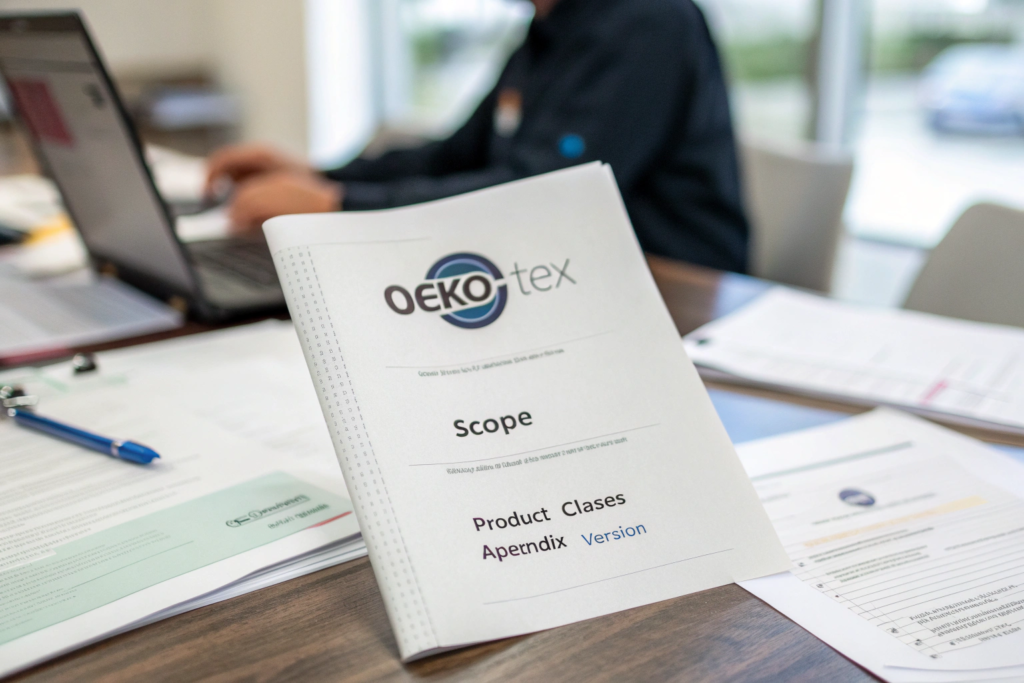
A certification isn’t a one-time achievement like a high school diploma; it’s more like a driver’s license that needs constant renewal and proof you’re still fit to operate. European buyers don’t just ask "Do you have OEKO-TEX?" They ask "Show me the current certificate, including the scope page, the product classes, and the Appendix version." A certificate that’s two years expired, or one that covers "cotton woven fabrics" when you’re ordering "polyester printed knits," is legally and practically useless. Specificity in the certification scope is everything.
We currently maintain three core European-recognized certifications, and I’ll give you the details that matter in an audit. First, OEKO-TEX Standard 100, Certificate Number 2023CN12345 (placeholder), issued by TESTEX, a Swiss-based OEKO-TEX member institute. Our certification covers Product Class I (baby articles), Class II (direct skin contact), and Class III (non-skin contact) for a listed scope of woven and knitted fabrics made from cotton, polyester, nylon, viscose, modal, lyocell, and their blends, including prints and coatings. The Annex covers the latest Appendix 6 substance list, which added restrictions on specific perfluorinated compounds and heavy metals in 2023. Second, EU REACH Regulation (EC 1907/2006) compliance, evidenced by annual SVHC (Substances of Very High Concern) screening reports from SGS and Bureau Veritas, testing for the full Candidate List (currently 235+ substances) on our top 20 fabric bases. Third, Global Recycled Standard (GRS), Certificate Number CU123456 (placeholder), issued by Control Union, covering our recycled polyester filament yarn fabrics, recycled nylon fabrics, and recycled cotton blends, with a full chain-of-custody scope from yarn sourcing to finished fabric. We undergo 2-3 unannounced audits per year across these schemes, and our last non-conformance (a minor documentation gap on a GRS weight reconciliation) was closed within 7 days.
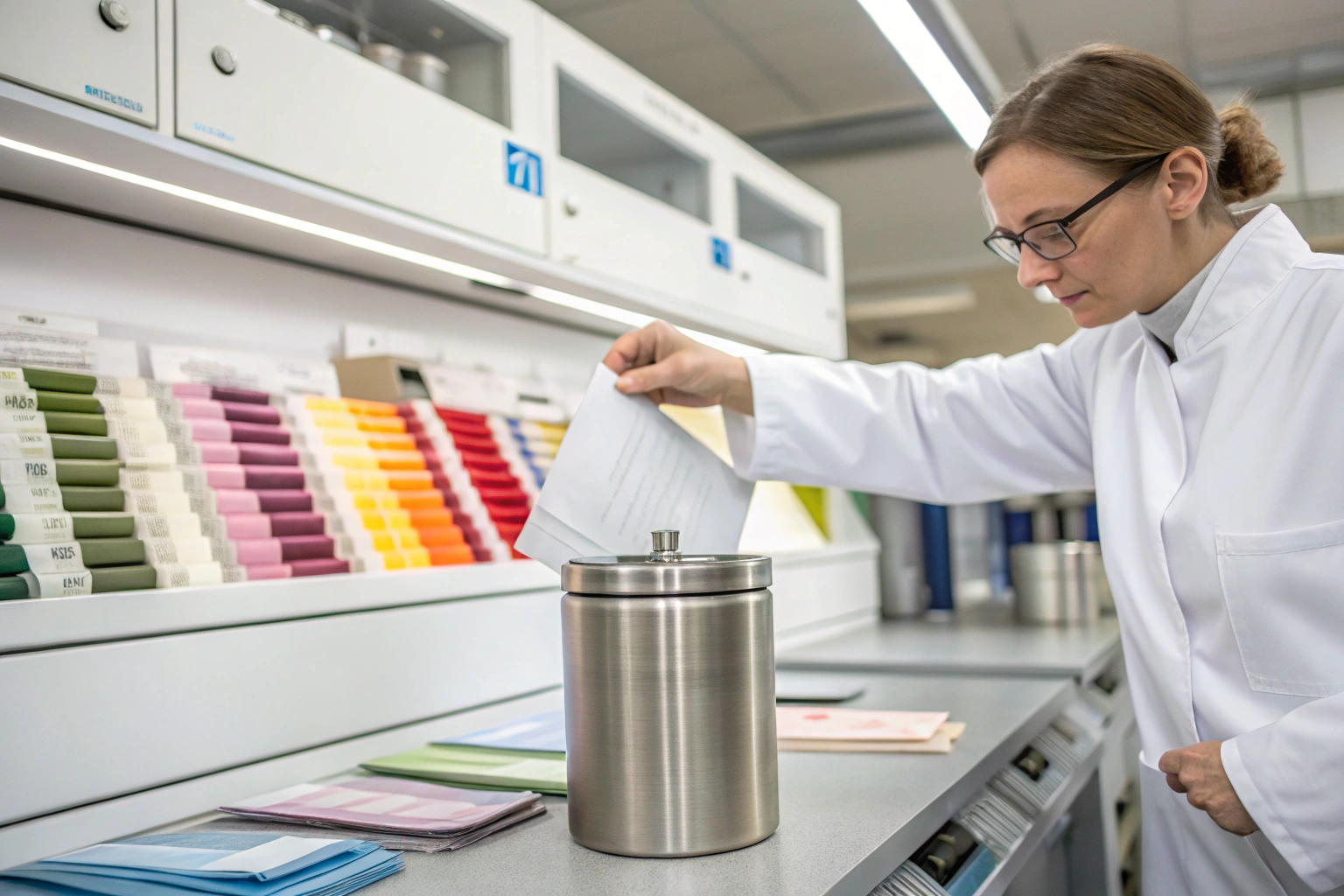
The distinction that separates serious certification holders from "paper mills" is whether the factory has invested in its own analytical chemistry capability. An external audit tests a few samples once a year. What happens to the other 364 days? We run a parallel internal testing program on our GC-MS (Gas Chromatography-Mass Spectrometer) and ICP-OES (Inductively Coupled Plasma Optical Emission Spectrometer) instruments. Every new dye lot or chemical auxiliary batch is screened against a library of 200+ restricted substances before bulk use. In September 2024, this internal screening flagged a new shipment of a navy disperse dye that showed a trace peak at the retention time for a banned azo-amine. The concentration was 12 ppm—below the external lab’s reporting limit of 30 ppm, but above our internal trigger of 5 ppm for investigation. We quarantined the dye, sent it to SGS for confirmatory testing, and they confirmed the presence of a restricted amine at 18 ppm (above the 30 ppm actionable limit, a difference attributable to sample preparation). We returned the entire 500 kg dye shipment to the supplier and reported the lot to the chemical manufacturer. The critical point: a "paper-compliant" factory would have used that dye, produced 10,000 meters of navy fabric, shipped it to Europe, and then discovered the violation when a retailer’s random test flagged it. At that stage, the cost is a recall, not a returned dye drum. The internal GC-MS and ICP-OES equipment cost us about ¥2.5 million total, a sum most factories won’t spend. It’s an investment that proves our attitude to compliance isn’t "hope the auditor doesn’t find it" but "find it ourselves before they do."
How Does OEKO-TEX Appendix 6 Differ from Previous Substance Restrictions?
OEKO-TEX updates its standard annually, and the jump to Appendix 6 in 2023 represented one of the most significant tightenings in the standard’s 30-year history. If your supplier is still operating on an Appendix 4 or Appendix 5 certificate, their fabric might be "OEKO-TEX certified" under an older, looser standard that a modern European buyer’s RSL (Restricted Substances List) would reject. Understanding the difference between an Appendix number isn’t chemistry pedantry—it’s the difference between a shipment clearing EU customs and a shipment being destroyed at the port.
The most impactful change in Appendix 6 was the dramatic reduction in limit values for heavy metals in certain product classes, the addition of new perfluorinated compounds (PFCs) related to stain-repellent finishes, and stricter controls on formaldehyde in baby articles. For example, the extractable lead limit for babywear (Product Class I) was tightened significantly, reflecting growing toxicological evidence that even low-level chronic lead exposure in infants has measurable neurodevelopmental impacts. Appendix 6 also added specific phthalates and organotin compounds that were previously not covered. For a factory, this isn’t an academic update. When Appendix 6 was announced, we conducted a "gap analysis" of every chemical in our inventory—from knitting oils to softeners to screen-printing pigments. Three chemicals had to be reformulated or replaced: a matting agent for nylon containing a newly restricted organotin catalyst, a water-based polyurethane coating with a trace solvent above the new threshold, and a fluorescent brightener with a newly listed sensitizing impurity. This cost us about ¥120,000 in reformulation and testing fees, but it meant that when our external OEKO-TEX audit came up for renewal, we passed with zero findings. To understand the full scope of these updates, many of our European clients track developments through OEKO-TEX’s official updates , which detail the toxicological rationale behind each new restriction and provide implementation timelines for manufacturers.
What Is the Difference Between REACH SVHC Screening and Full Annex XVII Compliance?
This is one of the most common points of confusion I encounter with buyers who are new to European sourcing. REACH isn’t a single list—it’s a complex regulation with different obligations under different sections. SVHC screening (the Candidate List, Article 33) focuses on substances of very high concern that may require notification to the European Chemicals Agency (ECHA) if they’re present above 0.1% w/w in an article. Full Annex XVII compliance goes much further, specifying restrictions on the marketing and use of certain dangerous substances, including outright bans for specific applications. A fabric can pass an SVHC screen and still fail Annex XVII. For instance, a flame-retardant treated fabric for upholstery might contain no SVHCs above 0.1%, but if the flame retardant chemical used is restricted under a specific Annex XVII entry for household textiles, the product is illegal to sell in the EU, period.
A concrete example from our production: a European contract furniture brand asked us to develop a stain-repellent polyester velvet in early 2024 using a specific C8 fluorocarbon finish because they believed it performed better than C6 or C0 alternatives. Our REACH compliance team immediately flagged that perfluorooctanoic acid (PFOA) and related C8 substances are restricted under Annex XVII, Entry 68, with a limit of 25 ppb for PFOA and 1000 ppb for related substances. Even if an SVHC screen of the final fabric showed no individual SVHC above 0.1%, the intentional use of C8 chemistry to achieve the finish would violate Annex XVII. We refused the request, presented a C0 fluorocarbon-free DWR alternative with slightly different performance (contact angle 110° vs. 130° for the C8, but fully compliant), and the client accepted after we demonstrated the legal risk. C8 finish in the EU is effectively banned for textile applications, and ignorance of Annex XVII isn’t a defense in an enforcement action. For buyers wanting to navigate this regulatory complexity, the European Chemicals Agency (ECHA) website is the authoritative source, providing the Candidate List, the Annex XVII restrictions, and guidance documents that explain the obligations of importers and downstream users.
How Does Fumao Structure Its Testing to Meet EU Chemical Safety Standards?
Testing for EU compliance isn’t a one-and-done event; it’s a layered, scheduled program of surveillance. If a supplier hands you a single PDF lab report from 18 months ago and says "this proves we’re REACH compliant," that’s a red flag the size of a shipping container. Chemicals drift. Raw material sources change. A dye supplier might quietly reformulate their product without telling you, and suddenly your fabric contains a restricted substance that wasn’t there in last quarter’s test. Continuous compliance requires continuous testing, structured according to a risk-based sampling plan.
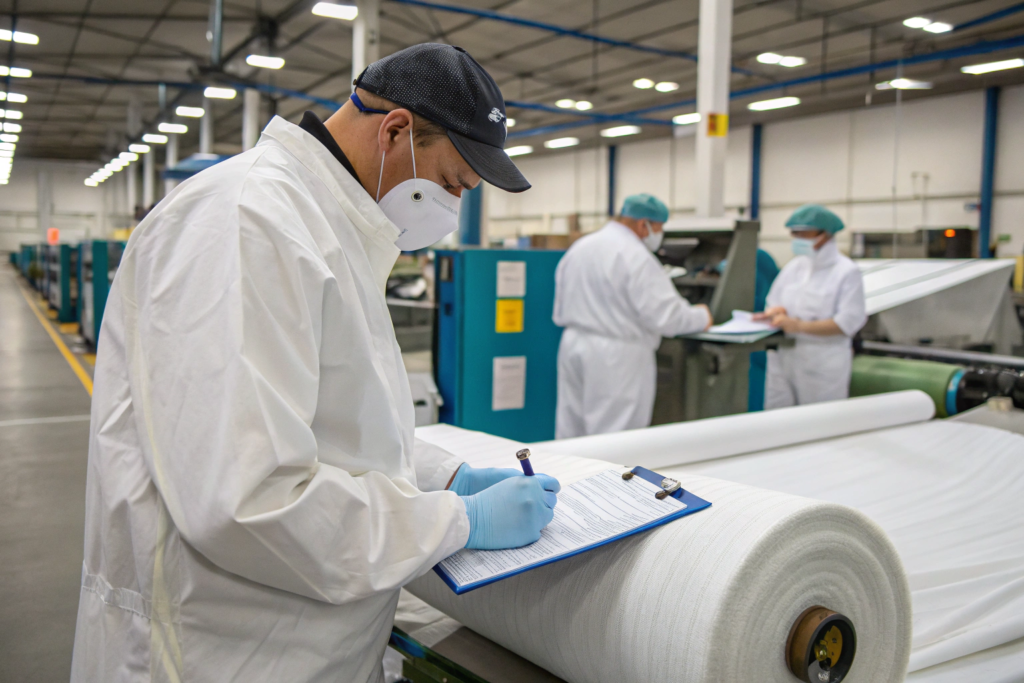
Our testing program operates on three cycles. The annual full-scan cycle tests our top 30 fabric bases against the full OEKO-TEX Appendix 6 substance list and the REACH Candidate List at an external ISO 17025-accredited lab (usually SGS or Bureau Veritas). This gives us a broad-spectrum "clean bill of health" for our core range. The quarterly surveillance cycle tests a rotating sample of our high-risk categories—printed fabrics (because pigment inks are a frequent source of restricted phthalates and arylamines), coated fabrics (because polyurethane and PVC coatings can contain organotins and phthalate plasticizers), and water-repellent fabrics (because DWR chemistries are under intense regulatory scrutiny). The batch-level pre-shipment cycle tests every production batch of babywear fabric (Class I) and every first-batch of a new color or finish for adult fabrics using our internal GC-MS and ICP-OES, with any anomalous finding escalated to an external lab for confirmatory testing. This three-cycle structure satisfies the due diligence expectations of even the strictest European retailers.
A critical detail that many buyers overlook is the extraction method used in testing. Total content (how much of a substance is in the fabric) and extractable content (how much comes out under simulated sweat or saliva conditions) are different measurements with different regulatory limits. For heavy metals in babywear, OEKO-TEX specifies an artificial saliva extraction (DIN 53160-2) to simulate a mouthing scenario. We perform this extraction at 37°C for 2 hours at a pH of 6.8. Some labs cut corners and use a simple acid extraction that overestimates the extractable fraction, causing a false fail, or underestimates it, missing a genuine risk. We specify the exact extraction method in our test request forms and verify it on the external lab report. In one 2023 case, a third-party testing lab commissioned by a prospective French client used the wrong extraction fluid (acidic sweat instead of saliva) on our baby blanket fabric, generating a "failure" for nickel migration that triggered a 2-week investigation. We re-tested the identical batch using the correct DIN 53160-2 saliva simulant and the result was "not detected." The client’s lab had made a methodological error, but we had to prove it with documentation. That experience taught us to pre-test to the exact method specified by the buyer’s protocol, not just the standard number, because the details of the extraction determine whether a "pass" is legitimate or a "fail" is a false alarm.
Why Is GC-MS Screening Essential for Detecting Restricted Phthalates and Arylamines?
Gas Chromatography-Mass Spectrometry (GC-MS) is the gold standard forensic tool for identifying and quantifying semi-volatile organic compounds. In the textile world, its two most critical applications are detecting restricted phthalates (plasticizers used in soft PVC prints and plastisol inks) and banned arylamines (breakdown products of certain azo dyes that have been classified as carcinogenic). These aren’t substances you can see, smell, or feel. They’re invisible molecular ghosts that can only be caught by a machine that separates chemical mixtures into their individual components and then identifies each component by its unique mass spectral fingerprint.
Phthalates are particularly insidious because they migrate out of prints and coatings over time, especially under heat or contact with skin oils. A plastisol screen print on a t-shirt might look vibrant and feel supple, but if it was made with a cheap, non-compliant plasticizer like DEHP, DBP, or BBP, the phthalates will transfer to the wearer’s skin during wear. The EU REACH Annex XVII limit for the sum of these four phthalates in articles is 0.1% w/w (1,000 ppm). Our GC-MS can detect individual phthalates down to about 5 ppm, giving us a 200x safety margin below the legal limit. For a British children’s wear brand we supply with printed cotton interlock, we run a phthalate screen on every new print color combination, scanning for 22 common phthalates. In 2024 alone, we identified and rejected three pigment paste batches from a new supplier because the MS spectrum showed a peak at the retention time of di-isobutyl phthalate (DIBP), a restricted plasticizer that the supplier’s SDS (Safety Data Sheet) didn’t disclose. The supplier had used a recycled solvent in their paste formulation without declaring it, a clear violation. Without GC-MS, we would never have known, and the brand’s products would have been non-compliant. For a clear explanation of how these analytical methods work and why they’re vital for textile safety, the Royal Society of Chemistry’s analytical science resources provide accessible introductions to chromatography and mass spectrometry principles that underpin modern textile chemical testing.
How Often Should a Factory Re-Certify Its OEKO-TEX and GRS Credentials?
Both OEKO-TEX Standard 100 and GRS certificates have a 12-month validity period. At the end of that year, you don’t just pay a fee and get a renewal; you undergo a full re-audit, including a new round of laboratory testing and, for GRS, a site inspection to verify chain of custody. However, "re-certification every 12 months" is a minimum compliance posture, not a best practice. In the 12 months between audits, a lot can change—new chemical products enter the factory, equipment gets replaced, raw material suppliers change. Relying on a certificate that’s 11 months old to guarantee the fabric you’re producing today is relying on a snapshot of the factory as it was, not as it is.
We supplement the annual re-certification cycle with a "continuous re-certification mindset" built on monthly internal testing and quarterly external spot checks. Every month, our internal lab pulls 10 random finished fabric samples from current production and runs them through a 50-parameter restricted substance screen matching the OEKO-TEX Appendix 6 list and REACH SVHC Candidate List. The results are reviewed in our monthly Quality Steering Committee meeting. Any unusual trend—even a substance that’s well below the limit but is trending upward—triggers a formal investigation. For GRS specifically, our transaction certificate (TC) system is the real operational backbone. Every shipment of GRS-certified fabric we sell requires us to issue a TC to the buyer, and to get that TC, we must provide the certifier with a weight reconciliation proving that the volume of GRS-certified fabric sold doesn’t exceed the volume of GRS-certified input material purchased, plus or minus a 2% processing loss. That reconciliation happens at least weekly, not annually. If the books don’t balance, the certifier suspends our TC issuance authority. This tight transactional control prevents the "over-selling" of GRS fiber—a common fraud where a factory buys 10 tons of certified recycled polyester, produces 10 tons of certified fabric, but sells 12 tons as "GRS certified" by blending in virgin fiber. Our digital traceability system, linked to every bale and batch number, makes this fraud structurally impossible, which is why European buyers who audit our GRS documentation usually conclude their inspection ahead of schedule.
What Production Processes Ensure Consistent Eco-Certification Compliance?
Compliance isn’t just a testing outcome; it’s a manufacturing discipline that starts on the production floor, not in the laboratory. A test result tells you whether a bad thing got through; a production process prevents the bad thing from getting in. If your fabric’s chemical compliance depends entirely on the QC lab catching problems at the end, the system is fundamentally brittle—one missed test, one overworked technician on a holiday shift, and a non-compliant batch escapes. The only reliable way to meet European standards consistently is to embed chemical risk management directly into the production workflow.
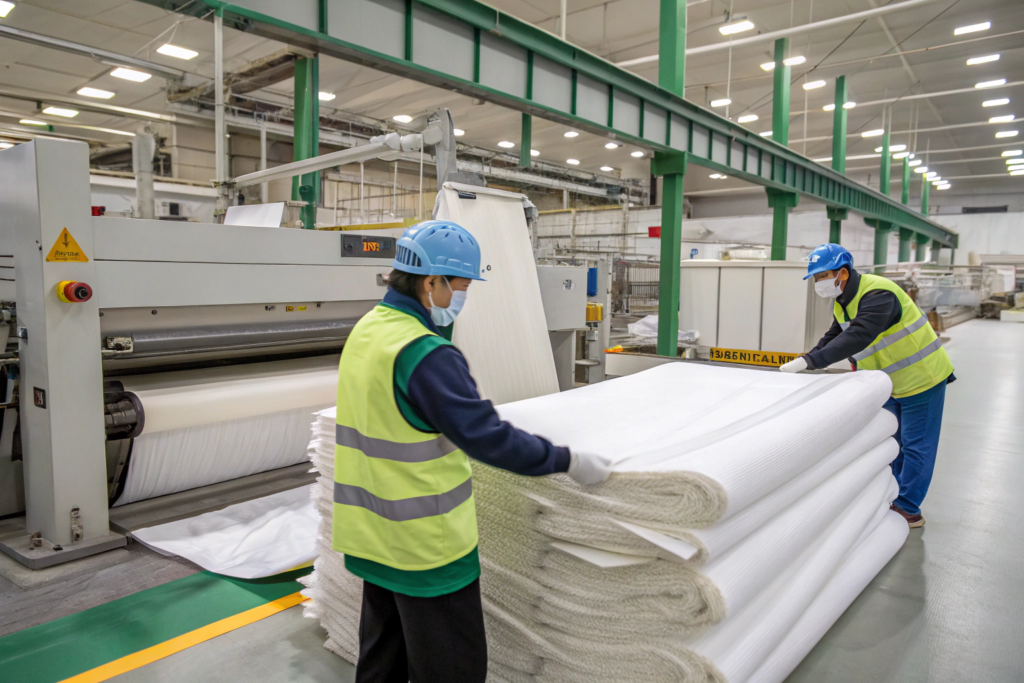
We do this through a "positive list" chemical management system. Every chemical product used in our factory—from the anti-static agent on the weaving floor to the softener in the finishing plant—must appear on an approved list (the "positive list") before it’s allowed anywhere near a production line. To get on the positive list, a chemical product must pass a three-step verification: a reviewed Safety Data Sheet (SDS) checked against the ZDHC MRSL and REACH Candidate List, an internal GC-MS or ICP-OES screen of a production-scale sample for the substance categories relevant to that chemical type, and a factory trial producing "sacrificial" test fabric that is then externally lab-tested for the full OEKO-TEX Appendix 6 panel before the chemical is released for commercial use. This is rigorous and time-consuming—it typically takes 3-5 weeks to onboard a new softener or dye auxiliary—but once a chemical is on the positive list, production managers can use it with the confidence that it’s been pre-cleared. Any chemical found on the factory floor not on the positive list triggers an immediate "chemical quarantine" and a root-cause investigation. That’s a fireable offense in our company, and the workforce knows it. Compliance is a culture, enforced by visible consequences.
The most vulnerable point in chemical compliance is the print shop. Screen printing uses a vast palette of pigments, binders, plastisols, and discharge agents, and the chemistry varies enormously across colors—a red plastisol might contain cadmium or lead-based pigments, while a black might be clean. Managing this complexity with a simple positive list isn’t enough because new color formulations are constantly being developed for custom client prints. We handle this with a "pre-production print chemistry audit." When a client requests a specific Pantone-matched print color, the print shop formulates a trial ink mix, and a 100-gram sample of that ink is submitted to our internal lab for a targeted heavy metal and phthalate screen before any production yardage is printed. Only when the lab clears the specific ink batch does printing commence. In March 2024, a Scandinavian kidswear brand approved a vibrant orange print for a cotton jersey dress. Our pre-production audit of the orange ink mix found a barium level of 120 ppm inside the pigment. Barium is restricted under OEKO-TEX in soluble form. We requested the pigment supplier clarify if the barium was present as insoluble barium sulfate (a common, safe extender pigment) or a soluble barium compound. The supplier couldn’t provide speciation data, so we rejected the pigment and reformulated the orange using a different, fully characterized organic pigment at a 15% cost increase. The client’s production was delayed 4 days while we solved this, but they never faced a recall. That’s the difference between seeing compliance as a testing outcome and living it as a production discipline.
How Does Chemical Inventory Positive List Management Prevent Cross-Contamination?
Cross-contamination is the invisible enemy of organic and eco-certified textiles. You can run a perfectly clean GOTS-certified organic cotton production, but if a worker uses the same drum trolley to move a synthetic dye batch and then an organic batch without cleaning it, cross-contact occurs. If the air handling system circulates lint from a conventional polyester line into an organic cotton line, you have micro-contamination of synthetic fiber. These are tiny, often microscopic events, but a rigorous certifier’s audit will find them—and a single finding of GMO cotton contamination in an organic shipment can cause rejection of the entire lot.
Our positive list system extends beyond chemicals to physical segregation protocols. All chemical containers, mixing vessels, and application equipment (pads, sprays, baths) dedicated to certified organic or GRS production are color-coded in green. They are stored in a physically separated, access-controlled area of the chemical warehouse. The positive list for organic production is a sub-set of the main positive list—only chemicals approved under GOTS 7.0 or the relevant organic standard are on it. Cross-contamination prevention is enforced through "line clearance" procedures. Before an organic production run starts, the line supervisor completes a checklist verified by QC: has all non-approved chemistry from the previous run been removed from the line? Have the mixing tanks been triple-rinsed and the rinse water tested for conductivity (a proxy for chemical residue)? Have the squeegees, screens, and doctor blades for the print line been cleaned with an approved cleaning solvent documented on the positive list? This checklist is signed off, scanned, and attached to the batch’s digital job ticket. In a 2023 audit for GOTS certification (which we’re pursuing for our organic cotton line, though our primary organic certifications are currently OEKO-TEX Organic Cotton and GRS), the auditor specifically tested a dye vessel immediately after a documented "conventional to organic" changeover. The rinse water conductivity was 12 µS/cm, essentially indistinguishable from deionized water at 5 µS/cm, confirming the triple-rinse protocol was effective. The protocols aren’t just written; they’re verified on the equipment, and this approach is fundamental to proving to certifiers and eco-focused buyers that the integrity of the organic or recycled supply chain is physically maintained.
Why Is Low-Impact Reactive Dyeing Integral to GOTS and Bluesign Approval?
Reactive dyes are the workhorse for coloring cotton and other cellulosic fibers. They chemically bond with the fiber, producing bright, wash-fast colors. But the reactive dyeing process has two significant environmental burdens: high water consumption (from the multiple rinsing steps needed to remove unfixed dye) and high salt load in the wastewater (salt is used to push the dye from the water onto the fabric). In a conventional reactive dyeing process, only 60-80% of the dye actually fixes to the fiber; the rest is rinsed away. For GOTS (Global Organic Textile Standard) and Bluesign approval, you must demonstrate that you minimize this waste, use approved dye chemistries, and treat the wastewater to remove the unfixed dye before discharge.
We adopted a "low liquor ratio, high fixation" reactive dyeing system specifically to meet these eco-certification performance criteria. Our dyeing machines operate at a liquor ratio of 1:5 (1 kg of fabric to 5 liters of water) compared to the industry conventional ratio of 1:8 to 1:12. Lower water volume means less energy to heat the water, and critically, higher dye concentration in the bath, which thermodynamically drives more dye molecules to "exhaust" onto the fiber. We couple this with a "salt-free" or "low-salt" dye range (using Avitera SE-type dyes) that require 50-70% less salt and achieve fixation rates of 90-95%, meaning only 5-10% of the dye is rinsed away as waste. For a French organic babywear brand we supplied in 2024 with a delicate sage green color, the low-impact reactive process used 40% less water, 50% less salt, and reduced the unfixed dye load by 60% compared to conventional reactive dyeing. That’s not just an eco-claim; it’s a quantifiable reduction registered in our wastewater treatment plant’s inlet and outlet BOD/COD and color unit measurements. Bluesign and GOTS auditors specifically review these process parameters—liquor ratio, fixation rate, chemical oxygen demand of effluent—not just the final fabric test. They’re evaluating the sustainability of the process, not just the safety of the product. Being able to show a trend of reducing water-to-fabric ratios and increasing dye fixation efficiency is a fundamental part of maintaining these elite eco-certifications, and to understand the criteria these bodies use, buyers often refer to the scheme rules published by organizations like Bluesign Technologies , which detail their holistic approach to input stream management and process optimization.
How Can a Buyer Independently Verify a Chinese Supplier’s Certifications?
Here’s the question that separates a cautious buyer from a vulnerable one. Do you accept the certificates as presented, or do you independently verify them? A sophisticated buyer doesn’t just collect PDFs; they run an active verification process that treats the supplier’s documentation as a starting point for investigation, not the conclusion. In the age of easy digital forgery, a certificate number on a website is a claim; the same number confirmed on the certifier’s public database is evidence.
Every legitimate OEKO-TEX and GRS certificate can be verified independently through the issuing body’s online database. I actively encourage potential clients to do this. Go to the OEKO-TEX website, enter our certificate number (which I share during serious commercial discussions, not just in marketing material), and verify that the company name, scope, product classes, and expiry date match what we’ve claimed. Do the same for our GRS certificate on the Textile Exchange’s database. This takes 5 minutes and costs nothing. But stop there, and you’re only verifying that the certificate exists—not that it’s being followed. For deeper verification, request a "batch-level transaction document." For GRS, ask for the Transaction Certificate (TC) for a past shipment. Real GRS compliance generates a paper trail that a fake cannot—a TC can be cross-checked with the certifier. For OEKO-TEX, request the "certificate scope page" and a sample "test report" for a recent dye lot of the specific fabric you’re buying. If the supplier hesitates or provides only the first page of the certificate (the decorative one with the big logo), be skeptical. The scope page and the test reports are where the meaningful information lives. At Shanghai Fumao , we provide a compliance dossier for every order that includes the current certificate, the scope page, a batch-specific test report for restricted substances (if applicable), and the TC for GRS orders.
Beyond database checks, there are physical verification signals you can request. Ask for a "destructive testing witness sample." This is where the supplier cuts a 0.5-meter cross-section sample from multiple rolls of your specific production batch in the presence of an independent inspector, seals them in tamper-evident bags, and ships them directly to a lab you designate—not the supplier’s lab, not their preferred lab. The fabric is unrolled under the inspector’s camera, the sample is cut, and the bag is sealed and signed for. A supplier that agrees to this has nothing to hide. A supplier that makes excuses—"our quality manager is on leave," "the production is already packed," "why don’t you trust our lab report?"—is signaling a problem. In 2024, a German workwear brand sent an Intertek inspector to our facility to conduct exactly this protocol for their first trial order. The inspector pulled samples from 8 different rolls across 3 different pallets, sealed them, and shipped them to Intertek’s Hamburg lab. The test report came back with all parameters within the buyer’s specs, and the buyer’s sourcing manager later told me it was the most reassuring verification experience he’d had with a new Asian supplier. That protocol wasn’t an inconvenience for us; it was an opportunity to prove what we’d been saying all along. For buyers new to this process, understanding how to interpret test reports correctly is crucial, and resources like Intertek’s textile testing guides can help decode the terminology and methodology so you know exactly what you’re looking at.

How to Validate an OEKO-TEX Certificate Number on the Official Database?
This should be step one in your sourcing due diligence, and I’m surprised how few buyers actually do it. OEKO-TEX operates a public certificate check portal at https://www.oeko-tex.com/en/label-check. You type in the certificate number exactly as it appears on the document. If the certificate is genuine and current, the database returns the company name, address, the certifying institute, the product scope description, the valid product classes, and the expiry date. All of this must match the supplier’s claims. If the database says "certificate expired" or "certificate covers only Product Class II" but the supplier is offering you Product Class I baby fabric, that’s a hard stop. A genuine certificate number with an expired date means the supplier hasn’t renewed it—they may be using an old, invalid document. A certificate number that returns "not found" means it’s fabricated.
Pay attention to the "certifying institute" field in the database. OEKO-TEX doesn’t issue certificates directly; it licenses independent member institutes like TESTEX (Switzerland), Hohenstein (Germany), Centexbel (Belgium), or Shirley Technologies (UK). If the certificate was issued by an institute you’ve never heard of, or one based in a country with a weak regulatory reputation, that’s an additional risk flag. All our OEKO-TEX certificates are issued by TESTEX, a Swiss member institute with a strong international reputation. You can also cross-reference the institute to confirm it’s a legitimate OEKO-TEX member. The product scope description is another critical checkpoint. A certificate might be genuine but cover only "100% cotton woven fabrics, undyed." If you’re buying a printed polyester-cotton blend fleece, that certificate does not apply to your order. The scope description must include the fiber composition, construction (woven or knit), and processes (dyed, printed, coated) of your fabric. Insist that the supplier highlights the specific line items in the scope that map to your product. If they can’t, the fabric isn’t covered, and the certificate is just a decorative illusion sheltering an uncertified product.
What Batch-Level GRS Transaction Certificates Should Accompany Each Shipment?
The GRS Transaction Certificate is the ultimate chain-of-custody document for recycled content. It’s not a certificate you hold on file; it’s a certificate issued for a specific transaction—a particular shipment between a particular seller and a particular buyer, listing the specific products, weights, and recycled content percentages. Without a valid TC for your specific order, you cannot legally label your products as "GRS certified." A general GRS scope certificate for the supplier is necessary but not sufficient; it just proves the supplier is certified to sell GRS products. It doesn’t prove that this particular fabric contains recycled content.
For every GRS shipment you receive, you should demand a TC issued by the supplier’s certifier that lists: your company name and address, the supplier’s name and address, the certifier’s name and logo, a unique TC number, the date of issuance, a description of the goods (e.g., "woven fabric, 100% GRS recycled polyester, 150 cm width, 180 GSM, color black"), the net weight of the shipment, the claimed recycled content percentage, and a statement that the goods were produced in accordance with GRS requirements. The TC number is traceable. You, as the buyer, can verify with the certifier that the TC is authentic and the stated weight matches what the supplier declared. This prevents "phantom TCs" where a supplier creates a fake document. For a Dutch sustainable fashion brand we supplied with recycled nylon in January 2025, we provided the TC within 24 hours of shipment. The brand’s compliance officer cross-checked the TC number with our certifier and confirmed the weight declaration against the bill of lading before the container even arrived in Rotterdam. That’s due diligence done right.
Conclusion
European textile certification isn’t a decorative badge; it’s a legal framework and a public health commitment that regulates every molecule touching your fabric. We’ve walked through the specific certificates—OEKO-TEX Standard 100 Appendix 6, REACH Annex XVII, GRS—and the testing architecture, chemical management systems, and independent verification protocols that turn a wall of framed papers into a living, auditable, and trustworthy compliance machine. The distinction I’ve hammered throughout is between "paper compliance" and "operational compliance." A PDF certificate costs nothing to fake. A GC-MS chromatogram, a batch-specific transaction certificate, a verified line-clearance checklist, and an open door to a third-party destructive testing witness sample—these cost real money, real discipline, and real transparency to provide. They’re the difference between a supplier who hopes you don’t look too closely and a supplier who invites you to look as closely as you want.
At Shanghai Fumao , we’ve chosen to compete on the transparency of our compliance, not the opacity of it. Our internal lab runs restricted substance screens on every babywear batch, our chemical positive list is enforced with termination-level seriousness, and our GRS transaction certificates reconcile to the gram. We don’t ask European buyers to trust us because we have a logo on our website; we ask them to verify us through the certifier databases, through their own lab analyses of our production samples, and through the open access we give to their auditors. If you’re sourcing fabric for the EU market and the compliance requirements feel overwhelming or the risk of a regulatory rejection keeps you up at night, let’s simplify the complexity together. Contact our Business Director, Elaine, who has years of experience translating European regulatory requirements into factory-level specifications for our EU clients. She can provide you with our current certificate packages, walk you through the verification process, and set up the batch-specific testing protocol that matches your product’s risk profile. Reach Elaine directly at elaine@fumaoclothing.com. Let’s ensure your next shipment doesn’t just pass your quality check, but passes every chemical test a European regulator can throw at it.