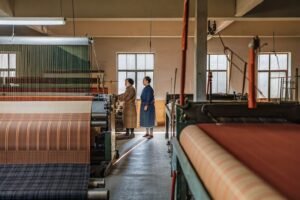
Let me hit you with a hard truth. You can have the slickest Instagram ads, the most viral TikTok reels, and a rebranding story that makes grown men weep, but if your fabric pills after three washes or shrinks like a cheap napkin, your brand is burning cash. The rebranding business model—private label, white label, influencer-led micro-brands—is a blood sport. You’re selling perception. The "brand" is the illusion you weave, but the physical fabric holds up that illusion. When the product fails, the customer doesn’t blame the anonymous mill in Asia; they slaughter your brand’s reputation with a one-star review that Google immortalizes forever.
The ideal rebranding fabric isn’t just "good quality." It’s fabric that solves the five existential threats of the private-label game: inconsistent handfeel across batches, high development MOQs that choke cash flow, lead times that miss your launch window, generic aesthetics that scream "AliExpress," and a lack of technical documentation for your own compliance department. At Shanghai Fumao, we built our entire B2B wholesale ecosystem inside the Keqiao cluster precisely to neutralize those threats. We’re not just a supplier; we’re the silent engine that lets you slap your hangtag on something genuinely premium, with full traceability and zero minimum drama on custom development.
If you’re trying to scale a rebranding empire, you need a fabric foundation that disappears into the background and never becomes the reason a customer churns. You need our library of 30,000+ seasonal designs. You need our 48-hour proto sample turnaround. And you need our QR code pass that lets your customers scan the garment and see the "clean" certification, so your word isn’t the only proof. Stick with me. I’m going to show you exactly why the right mill isn’t just a cost line, but your only real competitive moat.
How Can Premium Base Fabrics Elevate a Simple Logo Rebrand?
The silent killer of a logo rebrand is "commodity drag." You take a cheap, sheer cardigan that exists on ten thousand Amazon listings, stitch your beautiful logo onto the back, and call it a brand. The consumer isn’t stupid. They feel the thinness against their skin, they see the light shine through the weave, and they instantly associate your logo with cheapness. The base fabric is the canvas. If the canvas is garbage, the signature at the bottom corner doesn’t make it a masterpiece.
Premium base fabrics work because they signal intention without words. A heavyweight, compact-spun cotton jersey has a drape and a density that a cheap open-end yarn knit can’t fake. When someone pulls your rebranded hoodie off the rack, their brain makes a micro-second judgment based on surface friction and recovery. If the fabric is crisp, heavy, and springs back instantly when scrunched, their brain says "luxury." If it stays wrinkled and limp, it says "bargain bin." You cannot fix limp with a logo. You can only fix it at the yarn-spinning stage, which is where our vertical integration in Keqiao kicks in.
I recall an independent brand owner from the UK who rebranded basic modal-blend loungewear. He was putting his logo on a cheap interlock fabric from a random Pakistan supplier, and getting hammered by returns for shrinkage. He switched to our eco-friendly BAMSILK (bamboo silk) blend with a higher stitch density and a mechanical anti-shrink finish. Suddenly his "rebranded basic" became a premium staple that influencers praised for "the best fit ever." He didn’t change his logo, his packaging, or his price. He just stopped using a fabric that actively undermined his brand story. The clothes started selling themselves. If you really want to understand how fabric weight and stitch density translate directly into consumer "quality perception," you should read up on some practical techniques for selecting high-end knit fabrics for streetwear, which explains the physics behind the handfeel. The right base fabric is a cheat code for branding.
Delving deeper, the problem with rebranding generic fabrics is that they often have a "public" surface finish that is immediately recognizable to a savvy consumer. A standard 64-gram chiffon with a synthetic shiny finish looks like a prom dress from 2009. That fabric permanently attaches a dated aesthetic to your logo. By using proprietary finishes we develop in-house—like a "peach-skin" micro-sanding on a polyester twill or a vintage "wash-and-wear" crinkle on a cupro rayon—you give the consumer a tactile experience that is unique and disjointed from the cheap mass-market version. This tactile uniqueness is what makes them remember your brand and not just the logo.
Why Do Garment Dyeing Programs Require Specific Raw Yarn Quality?
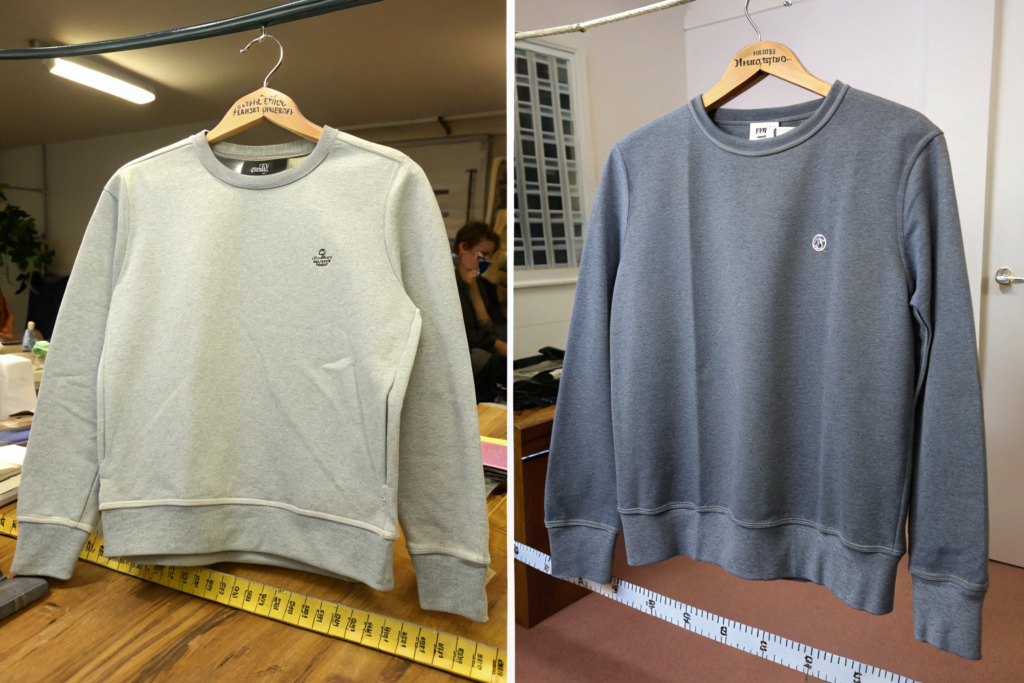
Garment dyeing—where you sew the hoodie in raw white fabric and then dye the finished piece in a vat of reactive dye—is a massive trend in rebranding because it allows for rapid color pivots and zero lead time on color decisions. But here’s where the cheap mills murder your rebrand: if the raw greige yarn has inconsistent micronaire or a mix of immature cotton fibers, the fabric will dye with "white belly." That means the inner core of the yarn never absorbs the dye, and after one wash, your "deep forest green" hoodie reveals a patchy, cloudy white base, looking five years old in a week.
Our specific raw yarn quality protocol uses combed, ring-spun cotton with a long staple length, ensuring even a low-twist, soft hand yarn is open to total dye saturation. When we provide raw PFD (Prepared for Dyeing) fabric, we guarantee that the pre-treatment scouring has removed 100% of the natural waxes and pectins, and the fabric has a hydrophilic threshold of less than three seconds, meaning water soaks in instantly. This uniformity ensures your garment dyer—whether it’s a specialist in Los Angeles or our own batch dye vat—gets a flawless, level shade every single time.
This is non-negotiable. I once walked a rebranding client through a nightmare where they had sourced cheap PFD hoodies. The dye house called them in a panic because the pockets, cut from a different fabric roll than the body, dyed three shades lighter. On the rack, the $120 hoodie looked like a two-tone clown suit. The cost to trash that batch was triple what they saved on cheap greige. We run a specific "dye-ability check" where we knit a single test tube of yarn, dye it in a deep navy (the hardest shade), and inspect it for neps and barré before releasing the lot. If you’re considering building an entire collection around this technique, there is a detailed overview of how to build a successful garment dye program that avoids these catastrophes, which echoes exactly the pre-treatment standards we enforce here.
Can Technical Finishes Become Your Secret Branding Weapon?
In the rebranding market, where everyone is selling a generic merino crewneck or a standard yoga legging, "performance" is a story that grabs margin. But you can’t just spray a cheap knit with a chemical and call it moisture-wicking; the finish has to be durable and invisible.
At Shanghai Fumao, we treat technical finishes as brand intellectual property. You can rebrand a standard poly-spandex blend and call it "ActiveFlex," but if the fabric doesn’t actually wick moisture away faster than a competitor, your brand is a hollow claim. We engineer permanent wicking via textured yarn geometry (capillary action) combined with a hydrophilic soil-release finish that lasts 50 industrial washes. This is a physical and chemical one-two punch that generic private-label catalogs don’t offer. When you rebrand our fabric, the performance is baked into the yarn, not sprayed onto the surface and washed down the drain after the first cycle.
This lets you build a rebranding narrative around honest results. One of our Scandinavian clients rebranded our UV-resistant, high-gauge single jersey for a kids’ sun-protection line. They didn’t just print a logo; they built an entire selling proposition around our embedded Titanium Dioxide shield in the fiber itself. They couldn’t have done that with a standard white-label fabric that they just "hoped" blocked UV. Their validation point was our lab test proving UPF 50+. The finish became the brand’s identity.
Why Are Low MOQ Custom Developments Critical for Startups?
The single biggest lie told to startup rebranders is, "You can have anything you want, just order 3,000 meters per color." That’s not a partnership; that’s a sales block. Startups need agility. They need to test the market with 200 units, not drown in 5,000 yards of unsold inventory that tortures their cash flow. However, most quality mills refuse to warp a weaving beam or mix a specific dye vat for such a tiny quantity, because the setup cost for a high-speed machine exceeds the revenue from the order.
At Shanghai Fumao, we fundamentally restructured our Keqiao development hub to support the startup model. We maintain small-sample warping mills, infrared lab-dyeing beakers, and digital printing machines designed to produce just 50 meters of custom-printed silk chiffon with zero setup fees. This isn’t a "favor" we do for you; it’s our investment in your growth. We know that today’s 200-meter order of a custom jacquard elastic rib is tomorrow’s 20,000-meter continuous run. By giving you a low-risk entry point, we’re essentially running a venture capital model on machinery—we accept the initial setup loss to secure a decade of scaling loyalty when your logo becomes the next big thing.
I had a direct-to-consumer startup founder from New York approach us with a bizarre idea: a heavyweight terry towel-fabric bomber jacket, custom-dyed in a very specific "burnt sienna" that matched her desert-aesthetic brand palette. The big mills laughed at her. We engaged our sample weaving schedule. We warped a narrow loom for 150 meters, garment-dyed the cut panels, and shipped her a 100-unit capsule in eight weeks. It sold out in four days. The buzz around that "towel fabric" texture landed her on a major fashion blog, and the re-order came in at 2,000 units six weeks later. The initial run was a money-loser for our production floor, but we bet on the concept. That’s the Keqiao way—bet on the creative, help them scale, and invent a new fabric category together.
This low MOQ strategy is not about being a "small order mill"; it’s about providing a bridge from prototype to mass production without changing the factory, which is where 90% of rebranders die. Usually, a startup makes a sample with a small boutique workshop, goes viral, and then moves to a big bulk factory—and the bulk version looks completely different, destroying the viral hype. We handle both within the same technical team. The stitching length, the dye masterbatch, the handfeel standard remain identical because it’s the same technician. You don’t have to re-engineer your winning product at the moment of your greatest cash flow risk. A practical guide on launching a clothing line with minimal capital explains why maintaining a consistent production partner through scale-up is more important than saving pennies on the initial sample phase.

What Is the "Design Block" and Why Startups Need It?
Design block isn’t just a mood board; it’s the physical property of a textile that makes it un-copyable by fast fashion competitors. If you’re rebranding a generic 180 GSM jersey from an open market, Shein can scrape your images on Tuesday and have a cheaper knock-off on their site by Friday. You have zero competitive moat. The design block—structural exclusivity—is your shield.
At Fumao, we offer low MOQ on proprietary knit geometry. We can build a specific "rib transfer" stitch or a custom "jacquard pointelle" pattern that is only available to your brand, often for as little as 300 meters. That means the physical structure of your fabric is a fingerprint registered to your label. Competitors can try to photograph the look, but they can’t replicate the precise drape and stretch recovery without buying our specific programming file and yarn tension data.
This transforms your rebrand from "logo on a blank" to "proprietary textile as a brand anchor." I recall an eco-friendly activewear label that needed a unique honeycomb thermal structure. Our knitting programmer built a custom needle selection sequence that created a deeper, more three-dimensional relief than standard piqué. The fabric became the brand’s signature. They trademarked the visual texture—not just the logo, but the actual weave pattern. You can’t do that with a middleman’s open stock fabric.
How Does Speed-to-Market Create a Rebranding Gold Rush?
Virality dies fast. A TikTok trend explodes on a Monday; you need physical inventory to be in the hands of customers within three weeks, or the trend dies and you’re left with a warehouse of stale meme fabric. The traditional supply chain, with its leisurely 30-day sampling and 60-day bulk lead times, is a weapon of mass destruction for a rebrander.
Our 48-hour sample policy and "super express" finishing line exist to arm you for the gold rush. This isn’t just about fast sewing; it’s about parallel processing of approvals. While our lab is dyeing your strike-off, our sourcing team pre-positions the raw greige inventory for a potential bulk order before you even approve the shade. That is a calculated risk we take. If you confirm the lab dip on a Thursday, we have the greige ready to load into the dye machine by Friday morning.
Time-to-fabric is your true competitive moat. If you see a gap for a specific "cherry red" performance woven short, you can be the first brand to flood the market with a quality version. By the time generic traders ship the copycat colors from a disconnected dye house, you’ve captured the early adopters, banked the reviews, and moved on to the next trend. That speed comes from having all the verticals (weaving, dyeing, finishing, coating) breathing the same air within the Zhejiang Keqiao cluster. They share a single, prioritized command, not five separate email chains.
Can Custom Eco-Finishes Justify Higher Rebrand Prices?
Your rebrand is a story about a better future. If that story is printed on fabric that leaches toxic heavy metals into a river, a single sustainability blogger can dismantle your entire brand equity in a 500-word expose. But conversely, if the fabric itself encapsulates your ethical narrative, you can charge a premium that defies economic gravity. Customers don’t pay extra for "100% Cotton." They pay extra for "GOTS-certified organic cotton, dyed with recycled water in a closed-loop system powered by solar, and woven with a zero-waste philosophy."
Custom eco-finishes allow you to anchor an idealistic price point. Our deep ¥550 million investment in green technology isn’t just a press release; it’s a factory floor reality. We have the capability to apply biodegradable softeners made from fatty acids instead of petrochemicals, fluorine-free durable water repellents (DWR) that protect against rain without poisoning the soil, and reactive dye systems with 90% bath exhaustion (meaning almost zero dye chemical is flushed into the waste stream). When you sell a rebranded jacket using our "Zero-D" fluorocarbon-free finish, you’re selling a technical miracle. The consumer can feel the purity. This lets you break the "race to the bottom" pricing that kills generic Amazon brands. The finish becomes a premium tier.
A few years back, we collaborated with a European rebrander who focused strictly on the "chemical-free baby" niche. They had a strong slogan but a weak product. We migrated them to our GOTS-certified organic brushed interlock, finished with only a natural olive-oil-derived softener. The certifications gave them the paperwork to justify a 120-euro price point for a baby sleeper, a product typically sold for 25 euros. They sold out every season. The fabric wasn’t just soft; it was medically "safe." In this landscape, knowing how to source GOTS certified organic cotton from China ensures you can confidently claim the organic label without greenwashing, which the modern consumer can sniff out instantly.
Digging into the nuance, the rebranding model allows you to tell the story of "Slow Chemistry." Fast fashion uses finishes that are chosen solely for speed and superficial gloss, like cationic silicone softeners that feel silky in-store but degrade after a few washes and are toxic to aquatic life. A custom eco-finish changes the wearing experience over time. The fabric ages gracefully; the biodegradable softener slowly fades but leaves the cotton’s natural hand to develop a vintage patina, rather than peeling off a plastic coating that turns sticky. This concept of "engineered aging" is a storytelling goldmine for a rebrand founder. You’re not just selling a new garment; you’re selling a garment that will become a beautiful, lifelong heirloom. That requires a mill like ours to formulate the finishing agents as a pharmaceutical-grade recipe, not just a dump-and-dash chemical slosh.
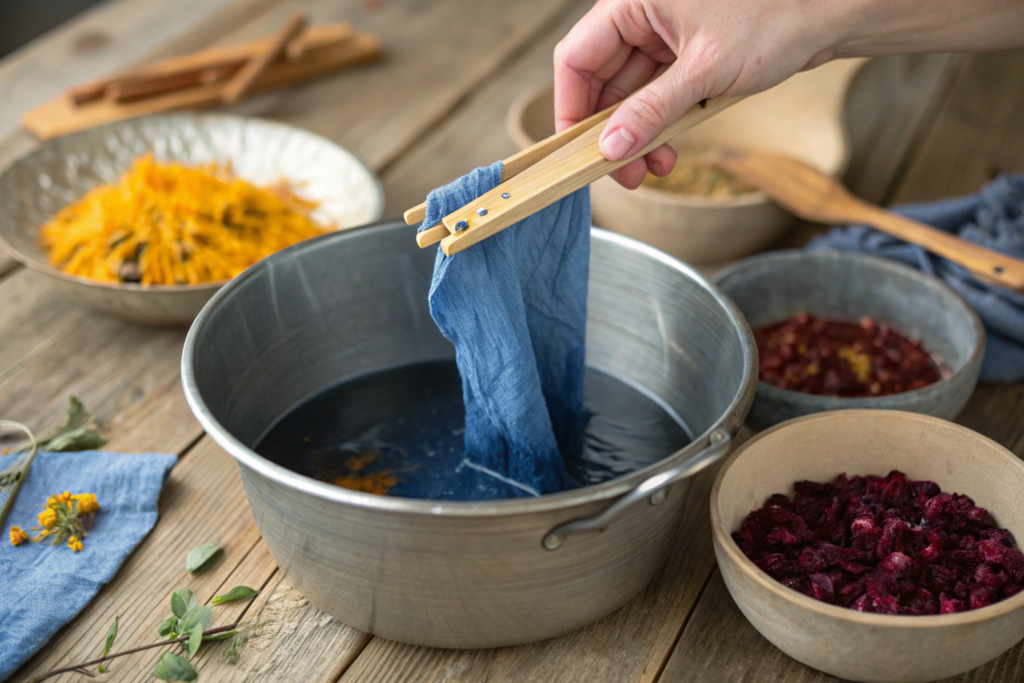
How Do You Avoid Greenwashing with Physical Documentation?
Greenwashing is the accusation that makes rebrand CEOs sweat through their shirts. Claiming "sustainable" without a verifiable chain of custody is suicidal in the era of blockchain transparency. The only shield against this is physical tractability that a consumer can interact with.
We embed that proof into the QR code on the roll. When your customer scans the hangtag or the inside label on the garment, they don’t just see a marketing landing page with videos of green grass. They see the raw transaction certificates issued by the certification body (like CU or Ecocert), the specific lot number of the organic cotton bale, and the dye house’s recirculated water percentage sensor reading for that specific run. This is not aggregated annual data; it is per-batch granular proof. This turns your rebranding claim from a "vibe" into a "database." Check out the criteria for understanding eco-textile certifications and their real meaning if you want to see what an authentic label actually requires, because the landscape is a minefield of self-declared "eco-friendly" fluff.
What Role Does Recycled Polymer Matrix Play in Brand Image?
The story of "ocean plastic" is still a powerful, resonant narrative for streetwear and athleisure rebrands, but only if the recycled polymer truly meets virgin-quality standards. A lot of early recycled polyester was brittle, with a harsh shine and poor color uptake that screamed "scratched eco-warrior" rather than "premium."
Our rPET (Recycled Polyethylene Terephthalate) program, driven by the AI trend analysis we do, has achieved what we call "virgin parity." Our recycled yarns are spun with a round cross-section that mimics the luster of virgin PET, and our specialized dyeing kettle profile ensures the uptake rate matches that of a standard bright polyester. This means your rebrand can confidently market a "recycled satin bomber" that feels lush and liquid, not crunchy and brittle. The polymer matrix of the fabric essentially becomes your brand’s sculpture. You can claim that the shimmering gunmetal color on your tracksuit is derived from post-consumer water bottles, and the garment performance and drape support that high-fashion narrative, not contradict it.
When a streetwear logo is printed on a fabric that has a visible grain and a heavy drape, it tells a story of substance. Recycled fabric that feels luxurious creates a cognitive dissonance in the consumer’s mind that is highly valuable—it proves that sustainability doesn’t mean sacrifice. This justifies a direct-to-consumer price point that is 30-50% higher than a non-eco synthetic competitor.
How Does Lab Data Help You Market Your Private Label?
In the rebranding arena, most of your competitors are selling feelings. They use words like "buttery soft" and "cloud-like comfort." That’s poetry, and it’s fine. But the high-ticket consumer—the one buying a $300 merino hoodie or a $150 yoga set from a brand they found on Instagram—wants proof. They’ve been burned by poetic lies too many times. Lab data is your kill-shot against buyer skepticism. It’s the difference between "trust me, bro" and "here is the independent physical evidence that our fabric performs."
When you partner with Shanghai Fumao, you aren’t just sourcing textiles; you’re sourcing marketing ammunition. Our CNAS-accredited testing center generates scientific reports that you can legitimately repurpose for your product listing pages. You don’t need to write vague copy; you can state that your garment’s Color Fastness to Light Rating is AATCC 16.3 Grade 4, meaning it won’t fade in a sunny shop window. You can claim that the Elastane Stretch Recovery is 95% after 10,000 cycles of stretch, meaning the knees in your leggings won’t bag out. This data-driven marketing is what builds a cult-like trust. It transforms your website from a lookbook into a technical briefing for the obsessed.
I’ve seen this work firsthand for a performance menswear launch. They were struggling to convince consumers that their "anti-stink" technology was real. Stink is subjective, right? Wrong. We tested their silver-ion treated single jersey in our microbial lab against a standard AATCC 100 protocol, and we provided a report showing a 99.9% reduction in Staphylococcus aureus after 24 hours. They posted a redacted version of the lab sheet on their product page. The Return Rate dropped by 18% in two months. Customers didn’t argue with the petri dish. Using your lab data in marketing is the most underutilized asset in private label; if you don’t understand how to leverage it, start by exploring how to use fabric performance data to increase online sales conversion. The numbers close the sale.
Beyond just specs, data tells a durability story that enables a secondary market. If your rebrand is built on longevity, you can publish the "Lifespan Data" of your fabric—the Martindale Abrasion Test score, for instance, showing that the fabric can withstand 50,000 rubs before showing wear. This supports a higher retail price because the Cost-Per-Wear becomes demonstrably lower than a fast-fashion alternative. You’re not just selling a piece of clothing; you’re selling a decade of reliable use.
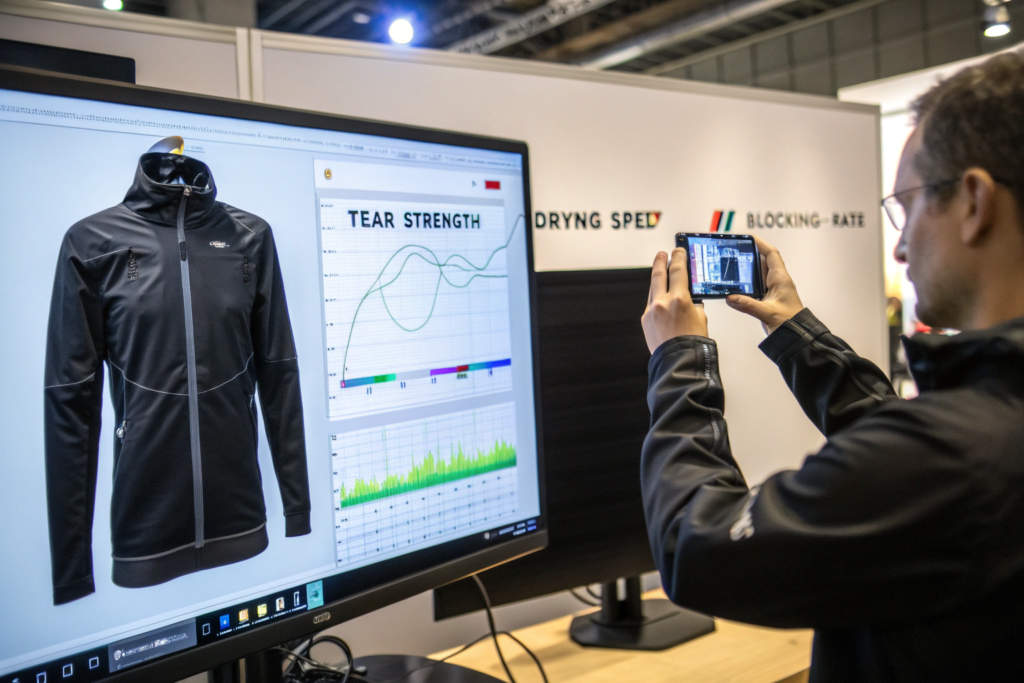
Why Should You Publish Your QMax Cool Touch Data?
QMax is a measurement of thermal effusivity—in plain English, how "cool to the touch" a fabric feels when your skin hits it. It’s a physical property measured in watts per square centimeter. If you’re rebranding bedding or summer athleisure, the QMax value is worth more than any flowery copy. A consumer browsing for a "cooling sheet" on a hot summer day is experiencing physical discomfort. The brand that says "0.200 W/cm² QMax Instant Cool Contact" communicates a level of expertise and engineering that the brand saying "feels cold" simply cannot match.
When we run our bio-based nylon cool fabrics, we test them specifically for this metric. We then pass that raw data to you as a marketing asset. You can create a comparison chart on your landing page: "Generic Viscose QMax: 0.12, Fumao Custom CoolTek QMax: 0.22." The consumer doesn’t understand the physics, but they understand the visualization of "twice as cooling." It converts.
The psychology is deep. The publication of objective metrics signals confidence. A shady brand hides behind subjective adjectives because they have something to hide. A transparent rebrand parades the lab data because it makes them bulletproof to returns and negative reviews. When a customer buys a "maximum cool" shirt and their own skin validates the sensation, you’ve created a physiological trust loop that no generic brand can break. That’s how you win a long-tail DTC war.
How to Use Tensile Strength Stats for Luxury Positioning?
Luxury is not about fragility; true luxury is the sensation of dense, durable protection. A luxury leather handbag feels heavy because it’s thick. The same applies to technical fabrics. Tensile strength—the force in Newtons required to tear a fabric apart—is a proxy for "quality of build" that you can leverage brilliantly.
If you’re rebranding a heavy canvas tote bag, a ripstop hiking shell, or a pair of heavyweight denim jeans, the "N-value" is your flex. Telling a customer that the fabric has a "Warp Tensile Strength of 850 Newtons" creates a perception of invincible engineering. They imagine the dense molecular chains gripping each other. This positions your rebrand not as a disposable fashion item, but as a functional tool or a piece of armor.
We deliberately optimize the weave density and the yarn twist in our fabric to push these physical limits so you have something to brag about. Tell them that the burst strength on your knee panel double-weave is over 600 kPa. These numbers give the male luxury consumer, in particular, the rational justification to spend the money. They’re not "wasting money on clothes"; they’re "investing in performance specifications." At that point, your logo becomes a badge of verified compliance.
Conclusion
Let me leave you with this crystal-clear picture. Rebranding success isn’t a lottery ticket; it’s a chemistry equation. The right fabric partner provides the catalysts that separate a forgettable Amazon listing from a cult-status DTC brand. When you build your label on Shanghai Fumao’s premium base fabrics, you’re locking in a tactile signature that giant fast-fashion copycats can’t rip off with a screenshot. When you leverage our low-MOQ custom development hub, you gain the agility to test, fail, adapt, and scale without bankrupting yourself on inventory. And when you weaponize our open-book lab data, you arm your marketing team with the "trust demolition" tools needed to justify premium pricing in a cynical market.
We’ve designed our Keqiao-based ecosystem from the weaving shed to the CNAS lab to be invisible scaffolding that props up your brand story. The logo is yours, the dreams are yours, but the molecular integrity of the yarn—the science of the softener, the QMax thermal buzz, the GOTS transactional certificate—that’s the invisible engineering we bring. In a world where everyone is printing logos on blanks, the blank itself has to be the most technically perfected weapon in your arsenal.
If you’ve got a rebrand concept burning a hole in your sketchbook, or if you’re trying to fix a failing supplier chain that’s bleeding your brand equity, let’s talk physics and chemistry, not just price. No jargon, no inflated promises—just a direct line to the engineers who can build your textile IP from scratch. Our Business Director, Elaine, is the gatekeeper to that technical depth. She’ll cut through the noise and get you straight to the solution. Contact her directly at elaine@fumaoclothing.com and let’s build a fabric that is worth sticking a label on.