
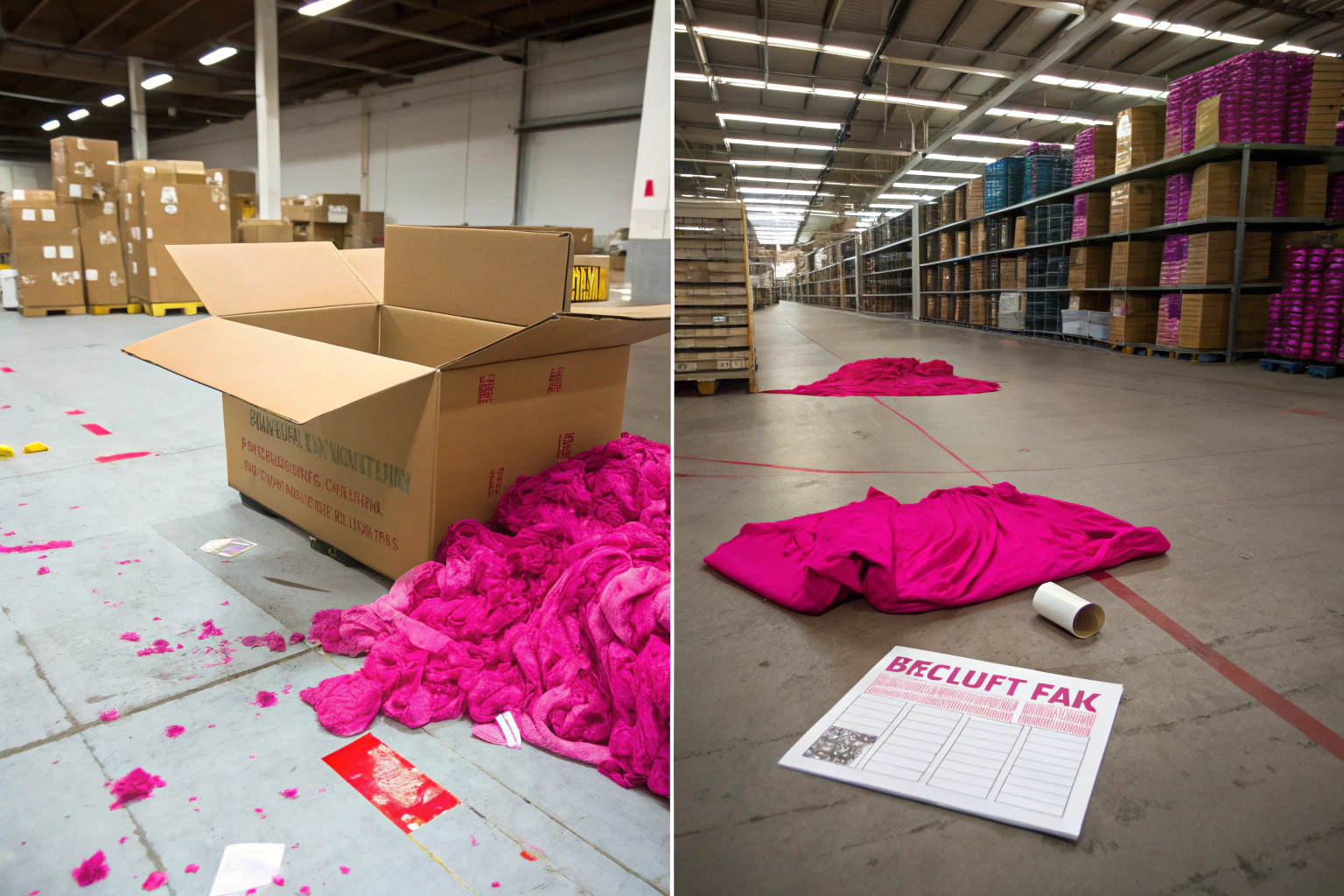
I have watched a small New York-based startup wire a $40,000 deposit to a supplier they found on a random B2B platform with zero factory audit. The communication was great. The WhatsApp replies were instant. The sample yardage felt like a cloud. Six months later, their entire container of "Premium French Terry" arrived smelling like a chemical plant, bleeding black dye all over the ivory contrast stitching, and crocking onto customers’ white sofas. That $40,000 became $120,000 in chargebacks, dead stock, and a destroyed brand reputation that still hasn’t recovered. The real problem wasn’t a bad factory—it was a sourcing decision made purely on price and a glossy photo. Fabric sourcing is not the first step in production; it is the first and most critical risk-management barrier between you and a brand-ending catastrophe. Get it wrong here, and no amount of perfect stitching or beautiful packaging design can save you.
Fabric sourcing sits at the intersection of chemistry, mechanical engineering, geopolitical logistics, and raw human trust. When you choose a supplier, you are not just buying a material—you are locking in a specific chemical dye inventory, a specific knitting machine gauge at a specific factory in Shaoxing or Gujarat, a specific freight route across the Pacific, and a specific financial counterparty who may or may not deliver on time. At Shanghai Fumao, I have built my entire business model around the truth that 80% of garment failures originate in the greige room, not the cutting table. A zipper can be replaced at the last minute. A fabric with a hidden flame-retardant deficiency or a sublimation time bomb cannot.
So, why do smart, experienced brands still treat fabric sourcing as a transactional price negotiation instead of a forensic investigation? Because it’s inconvenient to dig deep. The truth is, you must verify the tensile isotropy of a knit before you spec a seamless legging. You must demand the Safety Data Sheet for the water-repellent finish before you market a "Storm Shell" jacket. You must audit the dyehouse effluent treatment plant before you print "Made Responsibly" on your hangtag. In the coming paragraphs, I’m going to walk you through the invisible landmines that I’ve personally navigated—the tests that catch a counterfeited organic certification, the exact shrinkage tolerance formula for a wool blend coating, and how to structure a contract so the shipping date isn’t a work of fiction. This isn’t about finding a supplier; it’s about building a fortress around your supply chain.
How to Spot a Fabric Mill That Will Overpromise Failures?
A factory that overpromises and underdelivers usually leaves forensic evidence of their incompetence long before they ship a meter of fabric. You just need to know where to look, and honestly, it’s rarely in the showroom. The showroom is a theater set. I always walk straight to the "Grey Store"—the raw material warehouse. If a mill is running a high-end, tight-tolerance operation, the yarn cones are stacked on pallets, not on bare concrete. Moisture attacks cotton and viscose. If I see cones sitting directly on a dirty factory floor absorbing humidity and soil, I know their contamination control is nonexistent. That dirt ends up inside the knitting needles, causing needle lines and micro-holes two months later when the fabric is already cut and sewn in a factory 5,000 miles away.
Another dead giveaway is the "Sample Yardage Trap." A dishonest mill will knit your development sample on a brand-new, finely tuned 32-gauge prototype machine in their R&D corner, but they plan to run your 10,000-yard bulk production on a half-destroyed, worn-out 24-gauge machine that vibrates like an earthquake. The fabric hand feel will never match. To protect yourself, you must ask for a "Production Lot Sample" from the last bulk run of a similar GSM, not the custom lab swatch. I once audited a mill in Vietnam for a Denver-based outdoor brand; the lab sample was beautiful, but the production floor sample had visible barre marks—those horizontal stripes you see in cheap T-shirts—because their needle latches were worn. We blacklisted that mill immediately. The difference between a lab and a bulk reality is the only thing that matters when you’re wiring a 50% deposit.

Why Should You Audit the Yarn Warehouse Before the Weaving Shed?
Most fabric failures start at the spinning level, not the weaving level. You cannot knit a stable, high-recovery mesh from yarn with uneven twist levels. If the yarn spun by the mill’s upstream supplier has a high "Coefficient of Variation" in mass, the fabric will absorb dye unevenly, leading to a streaky, cloud-like appearance that no amount of chemical finishing can fix. The yarn warehouse tells you the truth about the mill’s financial health and quality standards. Are the cones neatly wrapped in plastic to prevent fly contamination? Is the storage temperature and humidity controlled? I use a handheld "Uster Tester" when I suspect trouble; it measures the evenness of the yarn in real-time by passing it through a capacitance sensor.
In 2021, I caught a major issue with a recycled polyester delivery for a Parisian fashion client. The cones looked fine visually. But when I checked the warehouse, the mill was mixing two completely different batches of rPET chips—one post-consumer clear bottle grade, one post-industrial blue-tinted scrap—without a blending protocol. Under a UV light, the mixed yarn fluoresced inconsistently. We tested yarn strength on the spot and found a 25% deviation in breaking force across the same lot. That fabric would have pilled and torn at the stress points within weeks of wear. To understand the deep science of inter-fiber friction and yarn hairiness, I often rely on the detailed technical notes on how to measure yarn evenness and imperfections using Uster Statistics on the official Uster Technologies knowledge base; they publish industry benchmarks that let you compare your mill’s capabilities against global percentile rankings.
How Do You Verify Dyehouse Certifications Without On-Site Visits?
International travel for an audit isn’t always possible, and a Zoom call showing a clean reception desk tells you absolutely nothing about the chemical vats in the back. The verification of a dyehouse’s safety and sustainability claims must shift to electronic forensic analysis. I demand a "ZDHHC Gateway Audit" or a similar third-party unannounced audit report, not just a generic ISO 9001 certificate that only proves they can file paperwork. The key is to look at the Chemical Inventory List submission to the ZDHC database. If the dyehouse hasn’t uploaded their positive chemistry inventory to a public gateway, they’re likely hiding an APEO or phthalate problem.
A trick I use is checking the specific color range they offer. If a dyehouse specializes in cheap workwear blacks and dark navy, they likely use high-concentration sulfur dyes that require a toxic sodium sulfide reducing agent. That chemistry is not compatible with a "Responsible Down Standard" or "GOTS" eco-label. You must ask for their wastewater test reports for "Adsorbable Organic Halides," conducted by an external lab like SGS or BV within the last three months. If they cannot provide a live, timestamped AOX result below 5 mg/L, they are discharging chlorinated pollutants. For a more granular understanding of this verification process, the comprehensive overview of how ZDHC wastewater testing verifies sustainable dyehouse practices on the GoBlu International sustainability platform explains exactly what parameters to look for beyond the marketing slides.
What Are the Essential Lab Tests Before Cutting Bulk?
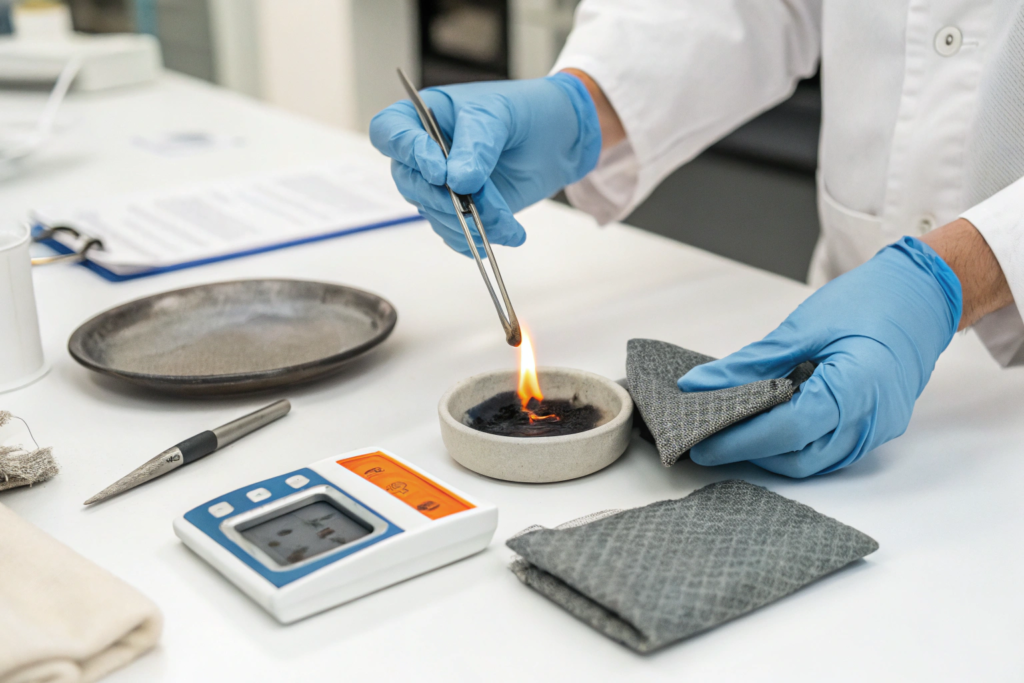
Once you approve a lab dip and sign the purchase order, there is a dangerous lull where brands assume the hard work is done. It’s not. The period between bulk production approval and the cutting table is where you need the most aggressive physical testing, because once that blade comes down, you own the fabric. I have a "Big Five" mandatory test battery that every single meter of fabric leaving our Keqiao facility must pass before we even think about packing. These tests are not negotiable, and they are not to be trusted solely to the mill’s internal report. We always use our own CNAS-accredited lab to cross-verify because I’ve caught "friendly" internal reports padding the numbers by measuring shrinkage after a cold hand-wash instead of a machine cycle.
The most catastrophic recalls I’ve witnessed came down to skipping one simple test. A children’s sleepwear brand shipped polar fleece without an ASTM D6413 vertical flammability test; the fabric melted and dripped instead of self-extinguishing. Another time, a high-end menswear brand used a wool coating that passed a Martindale abrasion test on the face but hadn’t been tested for pile crush on the reverse side, causing the collar to look shredded after three wears. When you cut corners on the lab bench, you are effectively making your customer the quality control department. And they will charge you back in the form of a one-star review, a social media callout, or a class-action lawsuit. The cost of testing is always, always a fraction of the cost of a recall.
How to Test Shrinkage Tolerances for a Garment’s True Fit?
Don’t trust the standard 5A wash cycle if your customer is going to boil-wash the shirt in a top-loader in rural Texas. The AATCC 135 test is an industrial standard using a specific load and a 46°C wash. It’s a good baseline. But I require our lab to also run a "Worst-Case Consumer Simulation"—a 60°C aggressive cotton cycle with high spin extraction and a hot tumble dry at 70°C. We measure the dimensional change in both wale and course directions on a calibrated marking template. The difference between a standard test and a worst-case test can be 4% extra shrinkage, and that 4% turns a perfect size Medium into an unwearable Small.
I handled a crisis for a Japanese premium casual wear brand in 2022. They used a 100% compact cotton jersey that passed the standard 3% shrinkage limit with flying colors at 2.5%. But the Zurich retail customer washed it in hot water and dried it on a radiator; it shrank 7%. We had to overhaul the finishing to include a "Sanfor-Knit" compressive shrinkage process that mechanically pre-shrinks the fabric before cutting. When sourcing, you must ask for the "Residual Shrinkage" value, which tells you how much shrink potential is left in the fabric after finishing. A value above 2% in knits is a ticking time bomb. The technical guide on how to properly conduct AATCC 135 dimensional stability testing on the James Heal textile testing blog provides a clear methodology to ensure your third-party lab isn’t fudging the load weight.
What Abrasion Resistance Data Predicts Pilling and Holes?
Pilling is friction fatigue, and it’s entirely predictable with the right machine. The Martindale tester is the gold standard, using standard wool abradant fabric and a consistent 9 kPa or 12 kPa pressure weight. But the number of "rubs" doesn’t tell the full story unless you know the specific endpoint. A standard upholstery grade fabric might survive 40,000 rubs, where a lightweight viscose challis for a blouse might die at 6,000. What matters more is the grading scale, typically a 1 to 5 visual comparison under ASTM D4970.
I always tell brands to look specifically at the "Pills per Square Inch" count under a low-angle light, not just the surface fuzz. A fabric can look "fuzzy but acceptable" until you realize the fuzz is the precursor to the actual pills forming after three more wears. I once rejected a 20,000-meter batch of merino wool suiting for a London tailor because the Martindale test after 5,000 rubs showed a Grade 2 (severe pilling), even though the raw fabric looked luxurious. We traced it back to a low mean fiber length in the wool top—short fibers have loose ends that migrate to the surface and ball up. Demand the test report, and specifically look at the ISO 12945-2 pilling grade; Grade 4 is commercial minimum, Grade 5 is indestructible. For those hunting for deeper standard references, the how to interpret Martindale abrasion and pilling test scores explained on the SDL Atlas textile testing blog is a masterclass in understanding the difference between surface flattening and actual fiber loss.
How Does Tight Pre-Production Planning Stop Cost Overruns?
A 15% cost overrun in a fabric program does not come from the yarn price spiking mid-season; it comes from the lost time at the pre-production negotiation table. The most expensive phrase I hear in my industry is "I need this expedited." Once you expedite, your freight shifts from sea to air, multiplying your logistics cost by five. Your dye priority surcharge kicks in, adding 8%. Your greige yarn allocation gets preempted, and you pay a spot premium. These costs are not organic; they are self-inflicted wounds from a sourcing calendar that forgot to account for a single long Chinese holiday or a dye strike-off rejection. I calculate that for a standard 5,000-meter woven shirting order, every single week of delay past the contract date costs the brand roughly $1,200 in combined freight, interest, and penalty clauses with the garment factory.
Pre-production planning is the most unglamorous, administratively boring, and financially critical phase of fabric sourcing. It’s where you build the "Buffer Time" into the Critical Path Method. I force my team to map backward from the retail delivery date, not forward from the PO date. If the goods must land in Rotterdam by August 1st, we subtract 28 days for sea freight, 10 days for customs and drayage, 30 days for garment sewing, 14 days for shipping the fabric to the garment factor, 25 days for bulk dyeing and finishing, and 15 days for greige knitting. That brings our absolute "Fabric Start" date to early March. But I add two invisible "Black Swan" buffers: one for the post-CNY labor shortage and one for a metamerism rejection on the lab dip. Without those buffers, your plan is just wishful thinking printed on a Gantt chart.

How Much Buffer Time Should You Reserve for Dye Lot Rejections?
I have a rule I call the "Rule of Three Strikes." If you are developing a complex shade like a muted sage green or a dusty rose—colors that live in the ugly, hard-to-hit middle of the gamut—plan for three lab dip submissions. Each round takes approximately 7 to 10 days. If you only budget one week of lead time for color approval, you are going to be forced to accept a "commercially acceptable" but metamerically failing fabric simply because you ran out of calendar. That is a brand quality compromise forced by a calendar negligence.
The specific buffer should be a minimum of 15 working days solely for the color approval cycle. This allows for spectral disagreement, a physical mail-out of a "lab dip submission" if the digital color file isn’t trusted, and the actual time for a busy creative director to review the swatch in a light booth at 2 p.m. on a Tuesday, not at midnight under a phone screen. On a project for an Austrian loungewear brand in January 2024, we cycled through four rounds of dyeing to hit a specific "Oat Milk" beige on a brushed fleece. Because we had a 20-day color buffer built into the schedule, the shipment still made the April window with zero air freight. The buffer paid for itself ten times over. For those building out their own planning spreadsheets, the practical guide on how to structure a textile critical path timeline for seasonal production on the Common Objective network shows real-world examples of brand calendars that include sensible rejection buffers.
Why Does the "Golden Week to Christmas" Crunch Crush Margins?
The period from October first, when China shuts down for Golden Week, through to the pre-Christmas shipping cutoff in late November, is a logistical bottleneck that I call the "Crusher." Everybody—the machines, the workers, the freight brokers—is running at overload to clear the year’s orders. Shippers jack container rates. Dyehouses prioritize high-volume repeat orders over smaller custom developments. Oxygen delustering and bleaching baths are run at maximum capacity, which means maintenance gets skipped. You will see more quality deviations in October and November than you will in the stable, quiet months of June.
Smart planners avoid the Crusher entirely by shifting bulk production to the "Summer Calm" window. We landed a massive 12,000-meter linen order for a Sydney resort brand in August 2023 precisely to dodge the Q4 chaos. The freight was 22% cheaper, the dyehouse was half-empty and fully focused on our quality standards, and the fabric arrived in Australia two months early, allowing the garment factory a luxurious, stress-free sewing schedule. If you must produce during the Crusher, add a minimum 20% cost contingency and 14 extra days to your lead time just to buy your way out of trouble. The industry-specific advice on how to navigate the China Golden Week shutdown for fashion supply chains on the Shipping and Freight Resource blog is a survival manual for anyone who hasn’t lived through the October panic firsthand.
When Should You Reject a Bulk Fabric Shipment Immediately?
The moment a container hits your receiving dock is not the time for polite diplomacy; it’s the time for brutal, militaristic inspection. I give my clients a clear, binary checklist to determine immediate rejection, and it doesn’t involve dragging the inspection out for two weeks while the garment factory sits idle. The first and most unforgivable trigger for a "return to vendor" is a systematic shade variation that exceeds the approved tolerance band. If you take twelve rolls out of a batch of fifty, cut a swatch from the beginning, middle, and end of each, and find a Delta E shift greater than 1.0 across the batch under D65, the entire order is likely contaminated. You are looking at a "side panel shading" disaster where the left sleeve comes from one roll and doesn’t match the body from another.
The second trigger is a width loss below the commercially usable cutting width. If you ordered a 58-inch usable width and the fabric consistently measures 56 inches after shrinkage, your marker maker can’t lay the patterns. That’s an entire production order that cannot start cutting. Don’t let a supplier convince you to "just adjust the marker" if the width is off by more than 1.5 inches; you’ll end up with fabric wastage that destroys your margin. The most aggressive rejection I ever performed was in September 2022 for a Canadian workwear brand. A 10,000-yard shipment of flame-resistant treated cotton showed 15% of the rolls with a "skewed weft"—the grains were bowed off-axis by more than 4%—meaning a pant leg would twist around the leg after washing. We rejected the entire lot on the dock, issued a formal NCR, and air-freighted a replacement batch from a backup mill because protecting the brand’s "Straight Fit" promise was non-negotiable.
How to Use the 4-Point Inspection System Like a Pro?
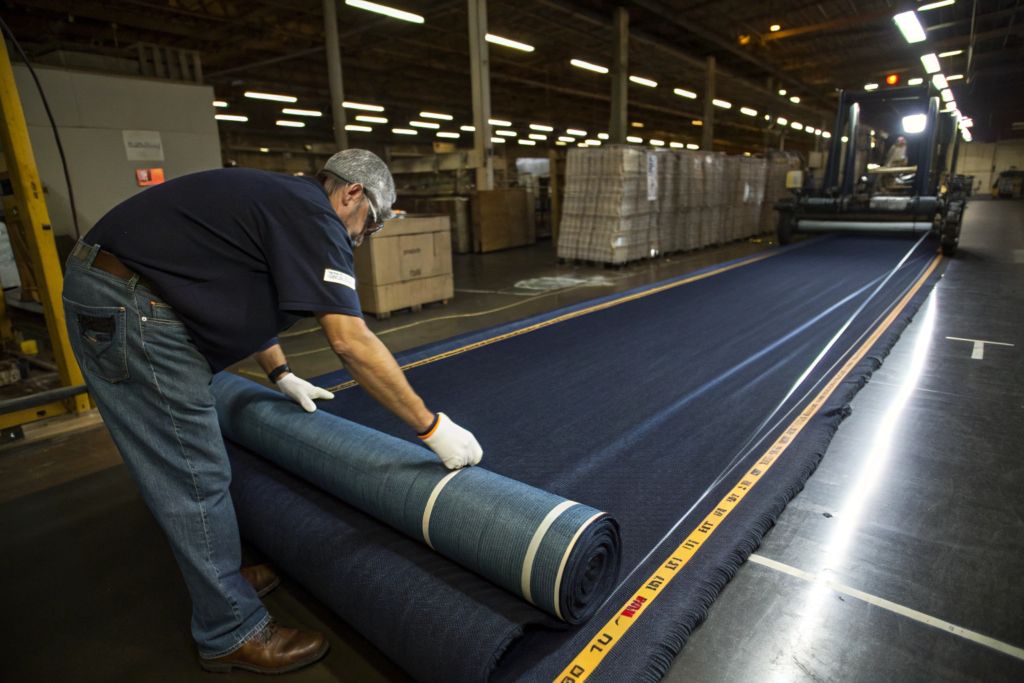
The "4-Point System" is the universal language of fabric defects, used by ANSI, AAMA, and pretty much every serious sourcing professional. It’s simple in theory: one point for defects less than 3 inches long, two points up to 6 inches, three points up to 9 inches, and four points for anything over 9 inches or a full-width hole. But a professional uses it as a detection pattern, not just a counting exercise. You don’t look for holes; you look for the "defect clustering." If I find three major defects within a linear yard, that’s not a random error; that’s a "repeating defect" from a broken sinker on a specific knitting feed. I immediately instruct the inspector to trace that type of defect across the entire batch.
A fabric roll scores a failing grade if the total penalty points per 100 square yards exceed 40. However, I set my internal threshold at 28 points for premium clients because the market expectation for a "best quality" label is tighter than the industry maximum. The inspection also requires a "Demerit Classification." A snagging defect that can be cut around is a minor issue. A color contamination from a mis-cleaned dye vessel is a critical major and automatically fails the roll irrespective of the point count. For an in-depth training on this methodology, the comprehensive walkthrough of how to implement the ANSI 4-point fabric inspection system on the Maker’s Row manufacturing blog is a must-read for anyone setting up a receiving QC protocol.
What Does a Hidden "Hand Feel" Failure Mean for Your Brand?
A fabric can pass every spectrophotometer test, shrink exactly to spec, and resist pilling, yet still fail the "Hand Feel" sensory test, and that is a fatal brand rejection. Hand feel is not subjective fluff; it’s a measurement of surface coefficient of friction, bending rigidity, and compression resilience. I’ve seen brands reject a shipment because the fabric felt "plastic-like" and squeaky compared to the approved lab dip. That usually happens when a dyehouse over-applies a silicone softener to hide a rough, low-count yarn, and then it washes out on the first laundry cycle.
I use a KES-FB Kawabata Evaluation System to settle hand feel disputes, which measures mechanical properties like tensile linearity and shear stiffness. The data doesn’t lie. But for a quick field check, I hold the fabric against my cheek. If it feels scratchy, the consumer will feel it on their neck. I witnessed a tragic rejection in 2020 for a Norwegian base-layer brand where the fabric "hand" felt amazing dry, but when wet with synthetic sweat in a friction test, the coefficient of friction spiked to a sandpaper-like level. The polymer finish had reversed its polarity in moisture. That’s a hidden disaster you only catch with a "Wet Hand Feel" protocol, something we now require for every activewear shipment. For a broader perspective on sensory testing, the detailed explanation of how fabric hand feel testing works using KES-FB technology on the SciTex textile science platform breaks down the exact mechanical metrics that differentiate a luxury hand from a cheap, sticky finish.
Conclusion
Fabric sourcing is the first step to avoid disasters because it is the only step where you can prevent a chemical, mechanical, or ethical failure from being cut and sewn into a billion stitches that you cannot unpick. We’ve walked through the warehouse floors where dirty yarn cones betray a mill’s quality culture, the light booths where metamerism hides in plain sight, the lab benches where Martindale machines predict pilling before the first wash, and the critical path calendars where a single missed buffer day costs thousands in air freight. The thread connecting every disaster I’ve described is a brand decision-maker who trusted a sales pitch over a spectral report, or a deadline over a shrinkage tolerance. In my twenty years running this operation at Shanghai Fumao, I can tell you that every catastrophic recall I’ve witnessed was preceded by a sourcing department that skipped the lab and rushed the calendar.
You cannot outsource your brand’s integrity to a supplier you’ve never audited. The safety of your customers, the consistency of your fit, and the credibility of your sustainability story all begin in the greige room of a mill that either respects the science or doesn’t. The good news is this: a disciplined sourcing process costs roughly 3-5% more in upfront testing fees but prevents the 30-50% margin destruction of a failed shipment. That math is simple.
If you’re building a brand and you’re tired of rolling the dice on unverified mills, let’s run a proper sourcing diagnostic together. We’ll audit your current fabric specs, review your lab testing gaps, and map out a production calendar that actually accounts for reality. Reach out to our Business Director, Elaine, who can walk you through our fully traceable development pipeline from yarn selection to final inspection. Send your current project brief to elaine@fumaoclothing.com. She can get a technical prescreen going within 24 hours. Don’t let your sourcing be the weakest link in your brand story.








