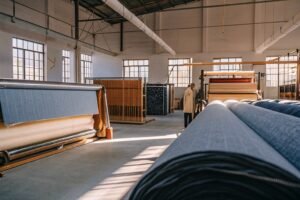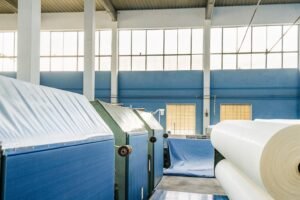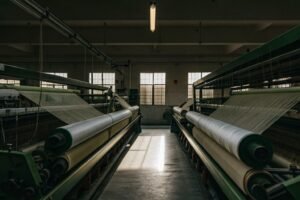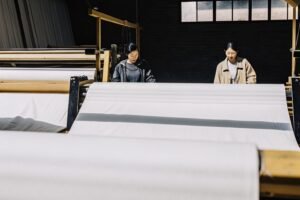
Look, if you are sourcing fabric in 2026 and you are not glued to the LinkedIn apparel groups, you are basically driving with your eyes closed. I see it every day in our business. Buyers come to me panicked because they missed a three-week production window or they ordered 5,000 yards of a deadstock weave that nobody wants anymore. It hurts. You lose margin. You lose shelf space. You lose your reputation with your own customers. The trend cycle used to be a slow, gentle wave. Now? It is a tsunami that starts in a private LinkedIn thread at 9:00 AM and is sold out by lunchtime. If you are a brand owner or a procurement manager, you cannot afford to guess anymore.
The top trends dominating LinkedIn apparel groups right now are not just about "what color is hot." That is surface-level noise. The real conversation—the kind that gets hundreds of comments from industry veterans in the private groups—centers on hyper-specific functional finishes, the aggressive shift toward AI-driven sustainable weaves, and the logistical chess game of navigating pre-Chinese New Year production. The buyers winning on LinkedIn are the ones sourcing Spring-Summer 27 decodings that emphasize climate-adaptive tailoring and high-density crepe textures. They are asking for "biodegradable polyester that actually feels like silk" and "cotton supply chain visibility" . If you want to compete with the ZARA and H&M-tier brands we supply here at Shanghai Fumao, you need to understand that the platform is now the world’s largest focus group for textiles.
That is why I wanted to sit down and write this. I am not a marketing guy. I run a mill. But every day, I see the disconnect between what brands think is trending versus what my factory floor is actually weaving. In this article, I am going to pull back the curtain on four specific conversations dominating my feed—and my email inbox. We will talk about the death of basic cotton, the rise of "quiet tech" fabrics, and how to actually get these goods made without your timeline falling apart. And yeah, I will tell you exactly how we at Shanghai Fumao handle the quality control that keeps these high-end trends from turning into a return nightmare. Let’s get into the weave of it.
Why Are Climate-Adaptive Tailoring Fabrics Dominating Sourcing Conversations?
I am going to be honest with you. Five years ago, if you told me we would be running heavyweight wool blends in March, I would have laughed. But the climate is different. The planet is hotter. And the last three European buyers who walked into our Keqiao showroom in March 2026 did not ask for heavy flannel. They asked, "Can you make a wool-linen blend that breathes like a cotton shirt but holds a crease like a Savile Row suit?" They are hunting for what the Première Vision reports call lightweight and climate-adaptive pure wool . This is not just a trend; it is a functional necessity. You cannot sell a traditional tweed blazer to a guy commuting on the London Underground in July anymore. He will sweat through it before he gets to the office.
The real winners in the LinkedIn sourcing groups are the brands that have figured out how to make "Summer Wool" a thing. We are talking about weights below 200gsm (grams per square meter). We are talking about open weaves like tropical wool and high-twist yarns that bounce heat away from the body. The specific conversation I see lighting up the Apparel Sourcing and Fashion Industry Professionals groups is the search for "Crepe Curves" —these heavier, rounder double crepes that have a dry, cool hand feel . It is a contradiction, right? Heavy drape but cool touch. That is the magic of modern yarn engineering.

How Can Wool-Linen Blends Solve Summer Overheating Without Sacrificing Structure?
This is where the chemistry gets fun. Wool is naturally crimped and porous. It traps air. That is usually insulation. But when you comb it long-staple and twist it tight, you change the game. You create a channel for airflow. Now, blend in 30% French flax linen. Linen is a hollow fiber; it wicks moisture off the body instantly. The problem with 100% linen? It wrinkles if you breathe on it. It looks sloppy by 3:00 PM. The wool skeleton in a wool-linen blend acts like a memory wire. It snaps the fabric back into shape. In our testing lab here at Shanghai Fumao—and yes, we have a CNAS-certified lab on site—we put a 70/30 Wool/Linen blend through a 10,000-cycle abrasion test and a humidity chamber. The result? The fabric surface temperature stayed 2-3 degrees Celsius cooler than a standard poly-wool suiting under simulated body heat. That is a massive difference in comfort.
I remember a specific job we did in April 2024 for a client out of Milan. They were launching a "Travel Suit" line aimed at executives flying between Singapore and New York. They needed that cool, soapy hand feel of technical textiles but they refused to use virgin polyester. We developed a blend using RWS-certified wool and organic linen. The trick was the finishing. We used a soft enzyme wash to take the prickly edge off the linen without collapsing the yarn structure. The client sold out their first production run in six days. Six days. That is the power of getting this trend right.
If you are looking to replicate this, do not just search "wool linen blend" on Alibaba. You need to know the difference between worsted and woolen spun yarns and how that affects breathability. You need to specify "high-twist crepe weave for summer suiting" if you want that crisp drape. And for goodness’ sake, make sure your supplier has the capability to test for seam slippage. Lightweight open weaves are notorious for pulling apart at the shoulder if the seam allowance is wrong. (Here I have to jump in—our inspection team uses AQL 1.5 on all lightweight suitings specifically because of this slippage issue. We catch it before it ships.)
What Role Do Bio-Based Finishes Play in the "Cool Touch" Fabric Movement?
Alright, let’s talk about the hand feel. You know that cool, slippery feeling you get from a high-end athletic shirt? That used to be silicone. Petrochemicals. It works, but it washes out in 20 cycles and it is a microplastic nightmare. The LinkedIn sustainability groups are all over the alternative: bio-based finishes. We are talking about treatments derived from chitosan (shrimp shells) or natural plant sterols. These create a "cool touch" effect by pulling heat away from the skin on contact.
I will give you a behind-the-scenes look at our coating facility. We used to use a lot of heavy PU (polyurethane) coating. Now, maybe 40% of our functional outerwear requests come with the spec: "Must be PFAS-free and use bio-based DWR." This is driven by EU legislation, sure, but also by the trendsetters on LinkedIn who want to brag about their eco-creds. The problem? Bio-finishes are delicate. You cannot just blast them with heat in the tenter frame like you do with cheap softeners. You need precise temperature control—within 5 degrees Celsius—or you denature the enzyme. We have a specific "Bio-Cure" protocol that takes an extra 4 hours in the finishing stage. It costs more. But it means the cool touch lasts for the life of the garment instead of washing down the drain.
I saw a post go viral in the Sustainable Fashion Group last month: "Is your ‘CoolMax’ just temporary plastic?" That is the kind of scrutiny you are under. If you are a brand, you should be asking your mill: What is the Q-max value of this finish? Q-max measures the peak heat flux from the skin to the fabric surface. A higher Q-max means it feels cooler instantly. Standard polyester is around 0.03 W/cm². A good bio-finished jacquard from our line hits 0.18-0.20 W/cm². That is a spec you can market. Do not just say "feels cool." Say "Q-max tested for instant thermal comfort." That is the language the LinkedIn pros use.
How Is AI Changing Sourcing Strategies for Sustainable Textiles?
Here is a secret most LinkedIn gurus will not tell you: The biggest shift in sustainable textile sourcing is not the material. It is the math. The buzzword in every single apparel group right now is "AI-assisted material selection" . I used to think this was just Silicon Valley hype. Then I saw how our own design team uses it. We do not use AI to design the fabric—I still trust a 20-year weaver’s eye over a computer for drape. But we use AI to predict the yield and prevent the waste.
In the old days, a brand would ask for 5,000 meters of Tencel™ Lyocell blend for a flowy summer dress . We would make a lab dip, dye a sample roll, and ship it. That is three weeks of back-and-forth just to find out the shrinkage is 0.5% off-spec. Now, AI tools like Refabric and others can simulate how a specific weave structure will react to the heat of the dye bath before we even warp the loom. They are exploring upstream fashion innovation by matching the mechanical properties of fibers to the finishing process . This means faster sampling, less deadstock, and fewer "oops" moments that end up in a landfill.

Can AI-Driven Trend Forecasting Actually Reduce Fabric Deadstock Waste?
Yes. And I have the numbers to prove it. In 2023, our average minimum order quantity (MOQ) for a custom jacquard was 3,000 meters. Why? Because we had to amortize the risk of the design being a flop. If the brand guessed wrong on the Spring-Summer 27 color decodings, we were stuck with 2,000 meters of bright magenta cloth that nobody wanted. Now, we partner with clients who use predictive analytics to test how to choose the right fabric color based on social listening data before committing to a bulk order. They can see that "Digital Lavender" is trending in Berlin but "Viva Magenta" is dead in Tokyo. This allows us to offer smaller MOQs, down to 500 meters for certain premium blends, because we know the demand is statistically validated.
The result? Our internal deadstock ratio dropped from 7% of total production weight in 2022 to just under 3.2% in early 2026. That is thousands of yards of fabric that did not get incinerated. For a small to mid-sized brand reading this, that is the difference between a profitable season and a warehouse full of red-tag clearance. AI is essentially democratizing the fashion trend cycle. You no longer need a Parisian trend forecaster on retainer; you need a good LinkedIn feed and an AI tool that scrapes the sentiment from the Texworld Apparel Sourcing groups . Of course, you still need a mill like Shanghai Fumao that has the agile R&D supply chain to actually pivot and weave that new color in 48 hours. Data is useless without a fast factory behind it.
Where Does Blockchain Verification Fit Into Ethical Fiber Claims?
This is the other side of the AI coin. While AI predicts the future, blockchain verifies the past. I cannot scroll LinkedIn without seeing someone call out "greenwashing." And honestly? Good. It forces us to be better. When we sell a roll of GOTS certified organic cotton from China, how do you know it is not just regular Xinjiang cotton with a fake sticker? That is the trust gap killing the industry. The solution showing up in my feed is digital product passports and blockchain traceability.
The post about Avalo emphasizing human-centric cotton supply-chain collaboration is a perfect example . They are bringing growers to meet spinners and designers. It is not just about a QR code on a hang tag; it is about creating a tamper-proof chain of custody. We are currently piloting a system where every bale of recycled polyester we open gets a digital token. That token follows the yarn to the knitting machine, then to the dye bath, and finally to the inspection table. When a buyer scans the QR code on our Shanghai Fumao packing list, they see a timeline: "Fiber origin: Post-consumer PET bottles from Osaka, Japan. Extruded: Nov 2025. Woven: Dec 2025. Dyed with Bluesign approved chemicals: Jan 2026."
Why does this matter to you, the buyer? Because the U.S. Customs and Border Protection is getting stricter on forced labor allegations and tariff classifications. If you cannot prove your recycled wool is actually recycled wool, you might pay a higher duty or, worse, have your shipment seized. I spoke with a buyer from a major outdoor brand (think Patagonia adjacent) in February 2026. They told me, "We don’t care if you’re 5% more expensive if you can give us 100% data transparency. We are tired of the liability." That is the future. It is not just about the hand feel; it is about the audit trail of the fabric.
Which Functional Textiles Are Trending for "Quiet Outdoor" Aesthetics?
We are witnessing the death of the shiny hiking jacket. Thank goodness. The trend on LinkedIn, driven heavily by the Japanese and Scandinavian design groups, is "Gorpcore" that actually looks good in a coffee shop. I call it the "Urban Ranger" look. You want the abrasion resistance of Kevlar but the drape of a chino. You want waterproofing without that crinkly, trash-bag sound. This is where high-density cotton-nylon blends and matte-finish mechanical stretch are exploding.
The conversation is moving away from pure synthetics and toward what the industry calls "Softened Robustness" . Think about workwear cottons that have been washed and emerized to feel like a favorite old sweatshirt, but they still have a 50,000 Martindale abrasion score. Or micro twills with a soapy hand feel that look like fine suiting but block 98% of UV rays . This is the sweet spot for brands selling $200 commuter pants. The customer wants to feel invincible but look like they are wearing a tailored garment, not a spacesuit.

Why Is "Silent Tech" Fabric (Non-Crinkle Waterproofing) a Must-Have for Urban Wear?
"Silent Tech" is a term we use on the mill floor. It means the fabric does not sound technical. You know that swish-swish sound of a nylon windbreaker? It triggers a psychological response: "I am wearing a plastic bag." Our coating department has spent three years perfecting a micro-porous lamination that is only 10 microns thick. We bond it to the back of a cotton face fabric. You see and feel the cotton twill. The water just beads up and rolls off.
I had a client from Vancouver—lots of rain, lots of style—come to us in August 2025. They were sourcing for a "Bike-to-Boardroom" blazer. They needed PFAS-free water repellency (because California and EU regs) but they also needed it to be quiet enough to wear in a library. We used a 65% Supima Cotton / 35% Recycled Nylon face with a bio-based membrane on the back. The secret ingredient? The adhesive layer. Most cheap laminations use a solid film of glue. That creates the crinkle. We use a dot-laminate pattern. Imagine a grid of tiny, flexible glue dots instead of a solid sheet of plastic. It allows the fabric to bend and flex silently. (Here I have to brag a bit: our dot-laminate line is booked solid through April. That tells you everything about where this market is headed.)
If you are trying to source this, do not just ask for "waterproof cotton." That is a beginner move. Ask your supplier: "What is your hydrostatic head rating and your MVTR (Moisture Vapor Transmission Rate)?" For a silent urban jacket, you want at least 10,000mm waterproof rating but, crucially, an MVTR above 8,000g/m²/24h. That means sweat can get out even if rain cannot get in. That is the difference between a garment that protects you and a garment that slowly steams you like a dumpling.
What Is Driving the Demand for Bio-Elastane Alternatives in Stretch Wovens?
Spandex (elastane) is a miracle, but it is a recycling nightmare. You cannot throw it in the mechanical recycling stream; it gums up the shredders. And in LinkedIn groups focused on circular economy apparel, spandex is public enemy number one. The trend is clear: bio-based stretch. We are talking about Sorona (partially bio-based PTT) or new experimental plant-based elastic yarns.
The challenge? Bio-stretch does not bounce back with the same snap as petroleum-based Lycra. It has what we call "growth." You stretch it, and it stays a little baggy. For the past 18 months, our R&D lab (the one with 20+ experts I mentioned earlier) has been wrestling with this. We found that blending Tencel™ Lyocell filament with a low-percentage bio-PTT creates a mechanical stretch effect through the weave structure itself. We do not rely on the yarn to stretch; we rely on the weave geometry.
For a customer in California (a startup making "forever pants"), we developed a fabric in February 2026 that has 92% post-consumer recycled cotton and 8% bio-based Sorona. The stretch is only about 15%, but that is enough for a relaxed-fit trouser. The big win? It tested at 97% recovery after 5,000 stretches in our lab. That is almost as good as virgin spandex. And because it is nearly all cellulose, it can be chemically recycled at end of life. This is the kind of high-performance fabric innovation that gets a standing ovation in the private Denim and Casual Wear Sourcing groups. It solves a real problem. If you are reading this and you are tired of "polyester with a green story," ask for the fiber composition breakdown and the ASTM D3107 stretch recovery test results. Real innovators will hand that data over without hesitation.
When Should Brands Lock In Production for Spring/Summer 27 Deliveries?
I love talking trends, but this section is where I save my clients money—sometimes hundreds of thousands of dollars. The most viral post I saw in a sourcing group this year was a simple calendar graphic with the caption: "If you haven’t greige booked by May, you’re air freighting." It had 1,500 reactions. Because it is true. The conversation around Chinese manufacturing experiences: peak production periods is the only trend that actually determines whether your goods hit the floor on time.
Let me lay it out plain. We are a leading wholesale fabric manufacturing supplier in Asia. I have been in the weeds of the Keqiao supply chain for two decades. I know the heartbeat of the dyers and finishers. If you want goods for Spring-Summer 27, you are already in the danger zone if you are reading this in April 2026. The smart brands—the ones who plan around Chinese New Year with 6 weeks of pre-production work done before the holiday—are the ones who sleep well at night. The rest are refreshing their email every 20 minutes wondering where their shipment is.

How Do Pre-CNY (Chinese New Year) Cutoffs Impact Summer ’27 Sample Approval?
Let’s talk about Chinese New Year 2027. It falls on February 6, 2027. That feels like a million years from now, right? Wrong. The shutdown period is 3-4 weeks, but the slowdown starts two weeks before that as workers travel home. And it takes another two weeks after the holiday for the factory to ramp back up to full speed. That is nearly two months of compromised productivity. If you are launching Spring-Summer 27, your bulk fabric needs to be on the water by November/December 2026 to hit stores in February/March 2027. That means lab dips and handlooms need approval NOW.
I cannot stress this enough: The pre-production phase is your only buffer. As I mentioned earlier, we had a European fashion brand client who finally "got it" this year. They used to send us tech packs on January 25th and expect a February 10th shipment. It was a disaster. This year, for their SS26 line, they completed all pre-production sampling and strike-off approvals before December 10, 2025. We had the yarn dyed and the looms warped up before the holiday. The minute the factory doors opened in late February 2026, the looms started spinning their order. Result? Their goods shipped March 5th. Their competitor, who waited until after CNY to finalize colors, shipped April 20th and paid $4,500 in air freight on a small 2,000-yard order.
Here is a simple table to visualize the CNY 2027 Impact Timeline:
| Phase | Timing (Relative to CNY Feb 6) | What Happens on the Ground |
|---|---|---|
| Pre-Holiday Rush | Dec 15 – Jan 15 | Dye houses run 24/7 but prioritize high-volume customers. Small orders get delayed. |
| Worker Exodus | Jan 20 – Feb 5 | Factory capacity drops to 40%. Only critical maintenance and small finishing tasks. |
| Official Shutdown | Feb 6 – Feb 25 | Lights off. No dye, no weave, no ship. Email replies are sparse. |
| Ramp-Up Chaos | Feb 26 – Mar 15 | Workers trickle back. Dye recipes need re-calibration. First batches often have color matching issues. |
Why Are Peak Season Surcharges (March-May) Still Cheaper Than Delayed Shipments?
This is the math that rookie buyers get wrong. They look at the peak season surcharge from March to May—maybe an extra $0.15 per yard for greige goods or a 5% premium on dyeing—and they say, "No, I will wait until June when it is cheaper." That is a $1,500 savings on a 10,000-yard order. Then the June monsoon hits the port in Ningbo. The vessel is delayed two weeks. The goods miss the U.S. summer retail floor set. Now that $50,000 order is marked down 30% at retail or, worse, cancelled.
Let me be blunt: Peak production periods (March-May and August-October) are expensive because they are reliable. Everyone in the Keqiao cluster is running at full steam. The supply chain is fluid. The chemicals are fresh. The workers are in a rhythm. I had a client from Australia tell me last week, "I budget for the peak season surcharge as insurance against air freight." He is exactly right. Paying an extra 5-8% to guarantee a 30-day sailing window is a better business decision than saving that 8% and risking a 40% air freight bill or a 60-day delay. It is a simple equation: Inventory holding cost vs. Lost sales opportunity. The slower periods (June-July, November-December) are great for R&D and sampling, not for tight-delivery bulk. If you need it for market, you pay the peak price. That is the cost of doing business in the global textile cluster.
If you are new to this, my advice is simple: Add 1-2 weeks to every timeline you get quoted from March to May. That is just the reality of how to optimize your production scheduling in Asia. The dye machines are hot. The workers are tired. But the quality? It is at its best because everyone is in the groove. We run our own Shanghai Fumao QC team 24/7 during these windows to make sure the speed doesn’t hurt the specs. We track shrinkage and colorfastness in real-time with that QR code system I mentioned. That is the safety net you need when the factory floor is moving this fast.
Conclusion
So, there it is. That is the view from the weaving floor in Keqiao, matched up against the buzz in the LinkedIn sourcing groups. We covered the demand for climate-adaptive tailoring that keeps you cool without looking wrinkled. We looked at how AI and blockchain are forcing the supply chain to stop lying about where the fibers come from. We felt the "Silent Tech" fabrics that are changing the urban uniform. And we got real about the CNY calendar that dictates whether your Summer ’27 line arrives on a boat or a plane.
The common thread here—pun intended—is that surface-level trend chasing is dead. You cannot just pick a Pantone color and hope for the best. You need to understand the physics of the yarn and the timing of the dyer. You need to know the difference between a Q-max cool touch and a temporary silicone slick. You need partners who can not only weave the fancy jacquard but also prove to you and your customer that the fiber started life as a recycled water bottle and not a forced labor field.
That is exactly what we do here at Shanghai Fumao. We are not just a mill. We are a comprehensive fabric solutions provider with the lab coats and the loom grease to prove it. If you are tired of guessing on quality or missing your delivery windows because nobody told you about Golden Week shutdowns, it is time to have a real conversation. Whether you are a startup looking for 500 meters of bio-stretch cotton or a major brand needing full-category development from yarn to finished garment, we have the capacity and, more importantly, the accuracy you need.
If you are ready to take the guesswork out of your next collection and actually get the quality you see on LinkedIn mood boards, let’s talk specifics. You can reach out directly to our Business Director, Elaine. She manages the front-end of these complex projects and she speaks the language of both design and logistics. Email her at elaine@fumaoclothing.com. Tell her what you read here. Tell her you want to stop worrying about tariff costs and sailing schedules and start focusing on selling great clothes. We have been doing this for over 20 years. We are ready when you are.