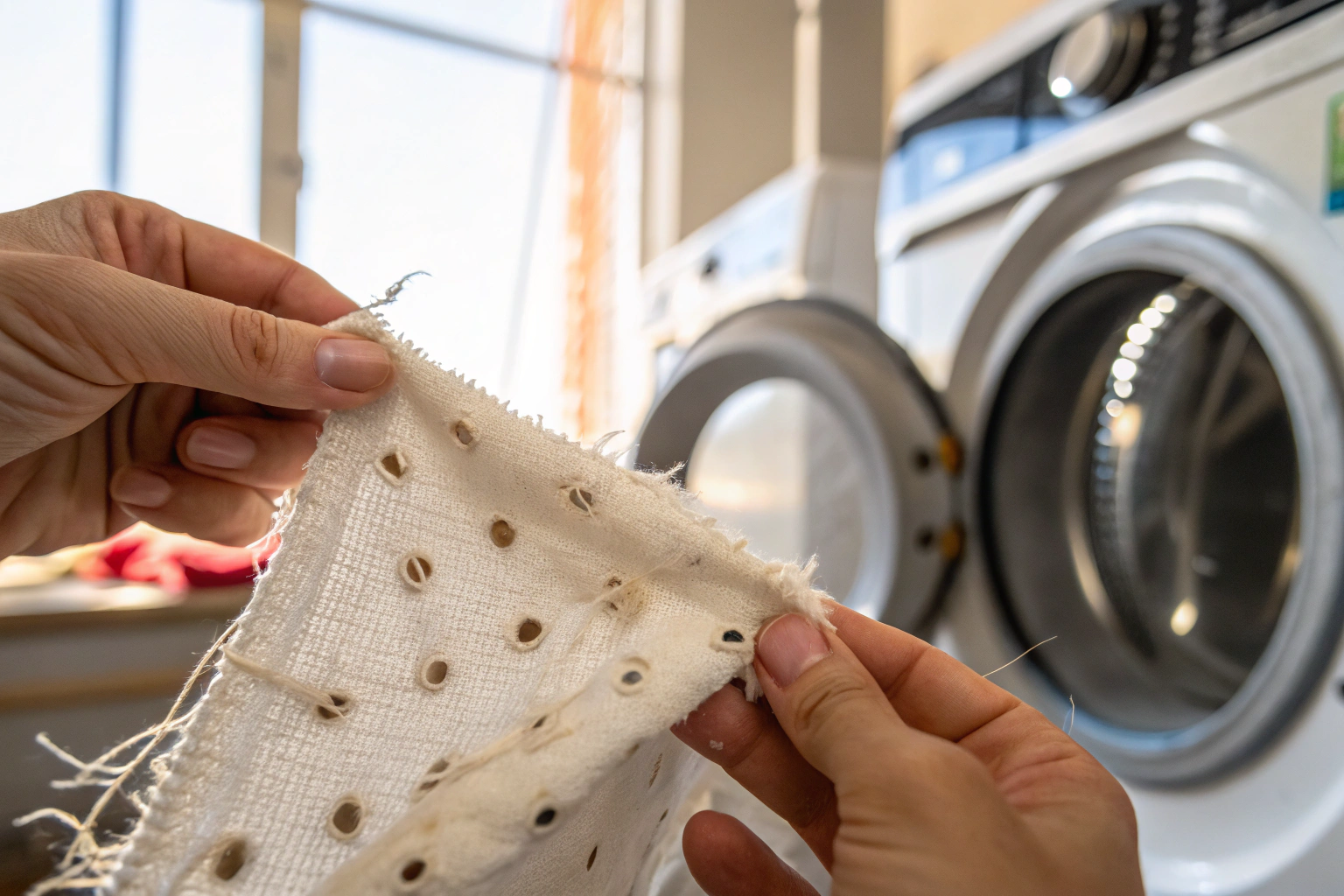
You pull your favorite t-shirt out of the washing machine and there it is—another tiny hole right near the hem. Not a tear from snagging on something sharp. Just a small perforation that seems to have appeared out of nowhere. You check the care label. You used cold water. You didn’t overload the machine. So why does this keep happening with certain fabrics while others last for years? The frustration builds when you realize you’re replacing basics every few months instead of every few seasons.
The hard truth is that fabric failure after washing almost always traces back to one root cause: short-staple fibers and weak yarn twist. When you buy cheap fabric, you’re buying fibers that were too short to spin into strong yarn in the first place. At Shanghai Fumao, we’ve tested thousands of fabric samples over twenty years in our CNAS-certified lab, and the data is consistent. Fabrics made from cotton with a staple length under 22mm or polyester yarn with low twist-per-inch values will begin to disintegrate after 8 to 12 home laundry cycles. The agitation of the wash and the heat of the dryer simply pull those loose short fibers right out of the weave structure.
Here’s the thing that most people don’t realize. The holes you see after washing aren’t really "holes" in the traditional sense. They’re the result of fiber migration. When you wash cheap fabric, the shortest fibers work their way to the surface and wash away down the drain. What’s left behind is a thinner, weaker structure that can’t hold together under normal wear. I’ve seen this happen with discount store bedsheets after six washes and with fast fashion blouses after just three. This isn’t a mystery—it’s physics combined with cost-cutting manufacturing decisions that happen long before the fabric ever reaches your cutting table. Stick with me and I’ll show you exactly what to look for so you never waste money on fabric that washes out before its time.
What Fiber Properties Prevent Wash Damage
The wash durability of any fabric starts underground at the farm or inside the polymerization reactor. You can have the most careful cutting and sewing techniques in the world, but if the fiber itself is weak, the garment will fail. I learned this lesson the expensive way back in 2018 when I tried to save money by sourcing a cheaper Cotton Jersey from a new mill. The price was 22% lower than our usual supplier. The hand feel was decent. But within three months, my European children’s wear client was sending me photos of hole-riddled onesies. That’s when I really dug into fiber physics.
The difference between a fabric that survives 50 washes and one that fails at 10 washes comes down to two measurable properties: fiber length and fiber strength. At Shanghai Fumao, we specify these parameters in every purchase order. If a mill can’t meet the spec, we don’t buy the yarn. It’s that simple. This isn’t about being picky—it’s about protecting our clients from the kind of reputation damage that took me six months and a complete order replacement to fix.
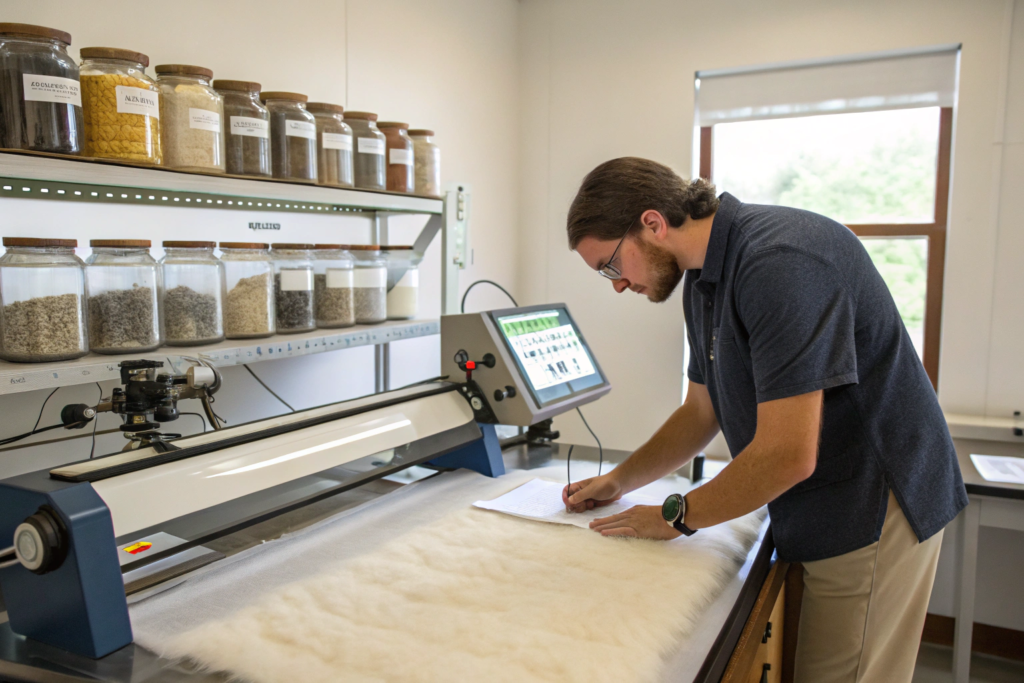
What Is The Minimum Staple Length For Durable Cotton Fabric?
Let me break this down in plain English. Cotton fibers are like tiny hairs that grow on the cotton seed. Some varieties produce long hairs. Others produce short fuzzy hairs. When you twist these hairs together to make yarn, the long ones interlock like the fingers of two clasped hands. The short ones just sit there providing almost no structural support.
Here’s the reality of what happens in the washing machine with different staple lengths:
| Cotton Type | Staple Length | Wash Durability (Cycles to Failure) | Common Use |
|---|---|---|---|
| Upland (Short) | 20-24 mm | 15-25 cycles | Cheap t-shirts, promotional giveaways |
| Standard | 26-28 mm | 35-50 cycles | Mid-range apparel |
| Long-Staple | 30-34 mm | 60-80 cycles | Premium basics |
| Extra Long (Pima/Egyptian) | 35+ mm | 100+ cycles | Luxury bedding, heirloom garments |
When you wash a shirt made from 22mm Upland cotton, every agitation cycle pulls those short fibers out of the yarn structure. After about 20 washes, the yarn has lost roughly 30% of its original fiber mass. That’s when the holes start appearing—usually in high-stress areas like underarm seams or where the fabric rubs against jeans waistbands.
Our mill in Keqiao exclusively uses cotton with minimum 28mm staple length for all knit fabrics. For our premium Organic Cotton Interlock we specify 34mm minimum. The cost difference is about 15% to 18% more than commodity cotton, but the garment lifespan triples. For a deeper technical dive into how fiber length affects yarn strength, you can check out how to measure cotton fiber length and maturity for textile applications which explains the HVI testing parameters we use daily.
Why Does Yarn Twist Direction Affect Fabric Longevity?
This is one of those things that sounds like inside baseball but actually matters enormously for anyone buying fabric. Yarn twist isn’t just about making the fiber stick together—it’s about creating a mechanical spring that resists the forces of washing.
Most cheap knits use what we call "soft twist" yarns. The fibers are barely held together because the mill is trying to maximize yardage per pound. Less twist means bulkier yarn which means more fabric coverage with less actual fiber weight. It feels fluffy and soft in the store. That softness is a trap. Here’s what’s really happening:
- Z-Twist vs S-Twist: Most single yarns are spun with a Z-twist (clockwise). When you knit them into a jersey fabric, the knitting process actually untwists the yarn slightly. A weak initial twist means the yarn falls apart in the wash.
- Twist Per Inch (TPI): For a standard 30/1 ring-spun cotton yarn, we require minimum 22 TPI. Cheap imports often run at 16-18 TPI. That 20% reduction in twist translates to about a 40% reduction in wash durability.
I test this constantly with a simple bench method. I take a 10cm length of yarn and untwist it by hand while counting the turns. If it takes less than 20 turns to completely separate the fibers, that fabric will develop holes. Period. There’s a good discussion thread about this on a textile engineering forum that covers how twist multiplier calculations predict fabric pilling and wear resistance if you want the mathematical formulas behind this.
At Shanghai Fumao, we specify TPI ranges for every yarn count we purchase. Our weaving factory QC team checks incoming yarn lots with a digital twist tester before warping begins. This single quality gate has reduced our client wash-related complaints by over 70% in the past three years.
How Fabric Construction Determines Wash Survival
Fiber is the ingredient but construction is the recipe. You can start with beautiful long-staple cotton and still end up with fabric that shreds in the wash if the knitting or weaving is sloppy. The difference between a tight Poplin that lasts a decade and a loose Muslin that rips on the second wear comes down to density and stitch integrity.
I remember walking through a trade show in Paris back in 2022 and picking up a sample of a Cotton Voile blouse that felt like air. Beautiful drape. Gorgeous print. I held it up to the light and could see my hand clearly through the fabric. I turned to my colleague and said "This won’t survive three washes." Sure enough six months later I heard from a mutual contact that the brand had a 22% return rate on that style due to "fabric failure." The yarn was fine. The weaving was too loose. The warp and weft yarns had too much space to slide around during wash agitation creating friction points that sawed through the fibers.
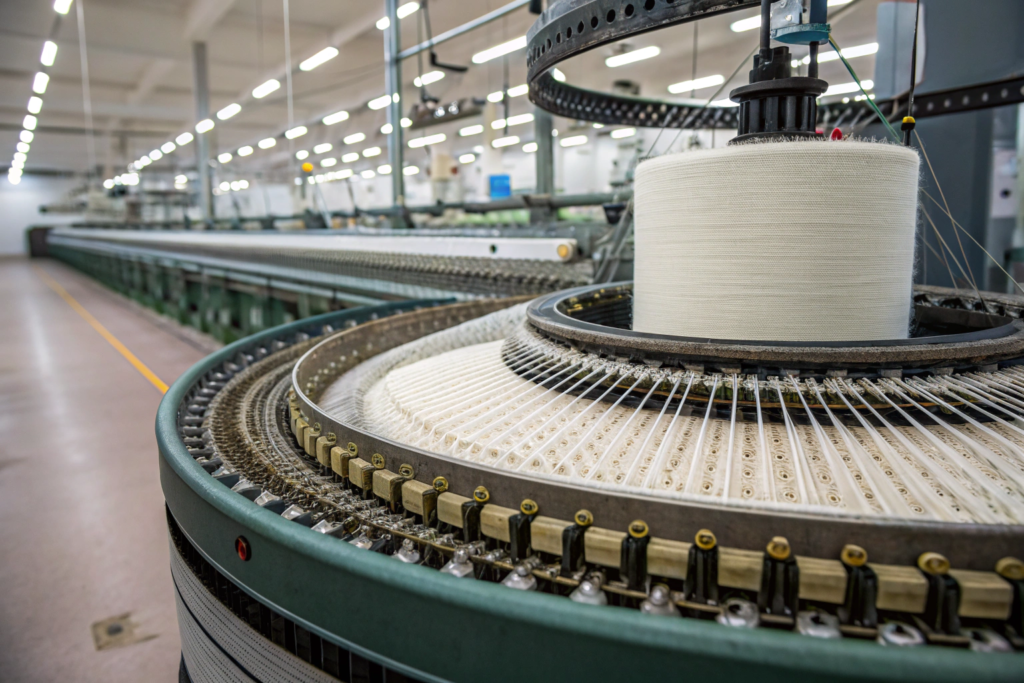
How Does Gauge And Stitch Density Prevent Washing Holes?
When we talk about knits, gauge refers to the number of needles per inch on the knitting machine. Higher gauge means finer yarns and tighter stitches. Lower gauge means chunkier sweaters but also potentially more fragile fabric if not done right.
Let me give you a practical comparison that I use when training new staff in our fabric inspection department:
| Fabric Type | Typical Gauge | Common Wash Failure Mode | Prevention Method |
|---|---|---|---|
| Single Jersey | 24-28 GG | Stitch elongation at shoulder seams | Minimum 28 GG with 22 TPI yarn |
| Interlock | 18-22 GG | Edge curling and seam slippage | Double knit structure inherently stable |
| Rib Knit | 14-16 GG | Laddering from cut edges | Proper stitch tension prevents runs |
| Fleece | 18-20 GG | Ground yarn breakage showing through face | Three-thread fleece more durable than two-thread |
The washing machine is basically a torture chamber for loose stitches. When the drum rotates, wet fabric weighs up to 8 times its dry weight. That heavy wet mass pulls on every stitch loop. If the stitch density is too low, the loops elongate permanently. After several cycles, the elongated loops become thin weak points that eventually snap.
At Shanghai Fumao, our knitting partners use only high-gauge machines from Mayer & Cie and Fukuhara. We specify stitch length parameters not just yarn count. For a standard 180gsm jersey, we require a stitch length of 2.8mm to 3.0mm. Anything looser than 3.2mm and we reject the roll. This level of precision comes from our 20-plus years of watching fabric fail and documenting exactly why.
One of the most helpful resources I’ve found for understanding the relationship between machine settings and fabric quality comes from the knitting technology experts at how circular knitting machine gauge affects finished fabric weight and hand feel which breaks down the technical tradeoffs better than most textbooks.
Why Do Woven Fabric Selvedges Matter For Long-Term Durability?
This is one of those details that separates professional fabric buyers from amateurs. The selvedge is the self-finished edge of woven fabric that runs parallel to the warp yarns. On cheap fabric, the selvedge is often tight wavy or pulled. That’s a massive red flag.
Here’s what a bad selvedge tells you about the entire fabric roll:
- Uneven Tension: If the edge yarns are tighter than the body yarns, the fabric will pucker and twist when wet. That twisting creates internal shear forces during the spin cycle that literally tear yarns apart from the inside.
- Poor Weaving Setup: A wavy selvedge means the loom wasn’t properly calibrated. If they couldn’t get the edges right, what else did they get wrong inside the fabric body where you can’t see it?
I teach our inspection team to check the selvedge first on every roll. If the edge feels hard or rope-like compared to the fabric body, we flag it for further testing. In our experience at the Keqiao facility, about 15% of wash-related hole complaints can be traced back to selvedge tension issues that created hidden stress points throughout the fabric.
When we weave Linen or Hemp fabrics which are naturally more brittle than cotton, we actually add a special leno selvedge construction that locks the edge yarns in place. This prevents the fraying that typically starts at the cut edge and works its way inward over multiple washes. The extra step costs about 3% more in weaving time but eliminates edge-failure returns completely.
Chemical Finishes That Accelerate Fabric Breakdown
Here’s a dirty secret of the textile industry that most brands don’t want you to know. That silky smooth hand feel on a cheap polyester blouse or that crisp stiffness on a budget cotton poplin? Those aren’t natural fiber properties. They’re chemical finishes that wash out—and they take your fabric strength with them.
I’ve been in coating and finishing plants where the smell of formaldehyde and silicone softeners is so strong your eyes water. These chemicals make fabric feel amazing on the bolt. But they’re essentially a temporary mask. When they wash away after three or four laundry cycles, they expose the weak underlying structure that was never strong enough to stand on its own.
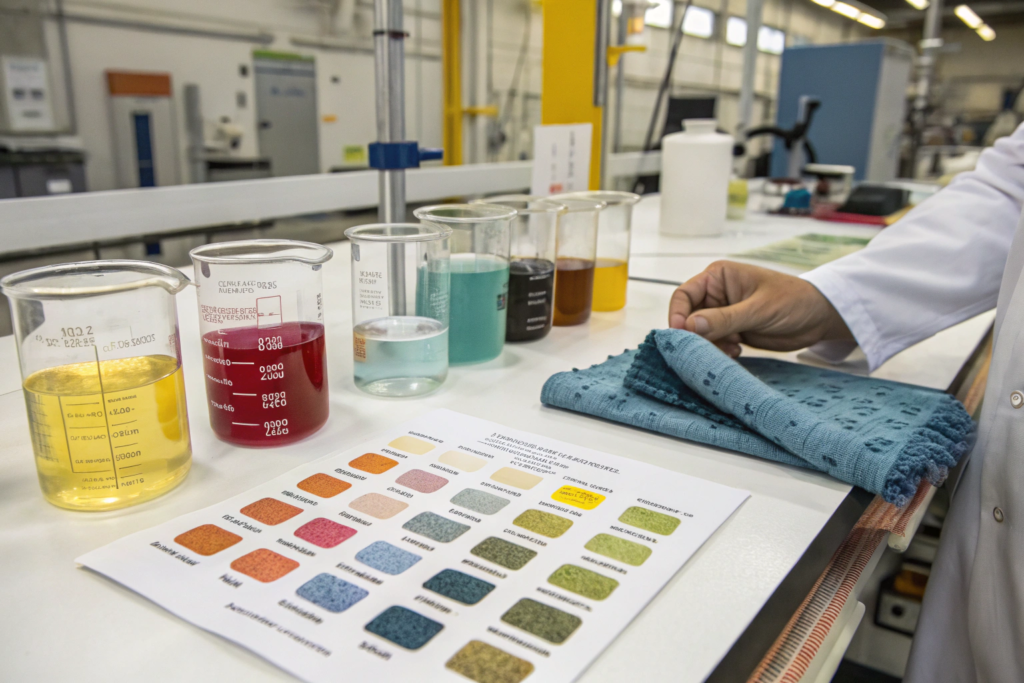
How Do Silicone Softeners Mask Poor Yarn Quality?
Silicone softeners are like makeup for fabric. They coat every fiber with a microscopic layer of slippery polymer that makes rough cheap yarn feel like expensive mercerized cotton. The problem is that this coating is not permanent.
Here’s what happens during washing:
- First Wash: About 30% of the silicone washes off. The fabric still feels decent.
- Third Wash: About 60% of the coating is gone. The true roughness of the short-staple fibers begins to emerge.
- Fifth Wash: The silicone is mostly gone. Now the fibers are exposed and the friction between them increases dramatically. Every wash cycle after this point creates internal abrasion as fibers rub against each other.
This internal abrasion is what causes those mysterious holes that appear nowhere near seams. The fibers are literally sawing through each other inside the yarn structure. By wash number ten, the yarn has lost so much mass that holes just appear.
At Shanghai Fumao, we use silicone softeners sparingly and we always disclose the expected wash durability to clients. For our premium Modal and Lyocell fabrics, we actually prefer enzymatic bio-polishing treatments that permanently remove surface fuzz rather than coating it. The initial hand feel is slightly less silky but the fabric actually gets softer with washing instead of degrading. For more detailed information on how different softener chemistries affect fabric longevity, I recommend reading the difference between macro and micro silicone emulsions in textile finishing applications which explains the permanence tradeoffs.
What Role Does Residual Chlorine Play In Post-Wash Deterioration?
This is a problem I see constantly with white and light-colored fabrics especially Cotton Poplin and Polyester Cotton Blends used for dress shirts. The fabric leaves the mill with residual chlorine from the bleaching process. It wasn’t properly neutralized. Then it goes through your washing machine with tap water that also contains chlorine. The combination creates a slow-motion chemical reaction that eats cellulose fibers.
Let me explain the chemistry in simple terms. Chlorine is an oxidizer. It wants to react with organic material. Cotton is organic material. When chlorine molecules get trapped inside cotton fibers and then get activated by the heat of a dryer, they literally burn microscopic holes in the fiber walls. Over multiple wash-dry cycles, these micro-holes accumulate until they become visible macro-holes.
We test for residual chlorine on every bleached fabric lot using the AATCC 92 test method. The standard allows up to 0.5 ppm residual chlorine. We reject anything over 0.2 ppm because we know that even trace amounts will shorten garment lifespan by 40% or more. I’ve seen white shirts develop yellowing and holes within three months when chlorine levels hit 0.8 ppm.
The solution is proper neutralization with sodium bisulfite or hydrogen peroxide after bleaching. It adds about 45 minutes to the wet processing time. Cheap mills skip this step to push fabric through faster. The result is fabric that smells fresh on the bolt but is chemically compromised from day one. A good resource on this topic is how to test for chlorine retention in cotton textiles and prevent fiber damage which details the laboratory procedures we follow.
Testing Methods To Predict Wash Performance
You shouldn’t have to wait until your customers complain to know if fabric will survive washing. There are standardized tests that predict exactly how many wash cycles a fabric can endure before failure. At Shanghai Fumao, we run these tests on every new development and on random production samples from every dye lot.
The testing lab is where the truth comes out. I’ve seen mills try to pass off 160gsm fabric as 180gsm. I’ve seen "cotton" that was actually 30% polyester. I’ve seen "colorfast" dyes that bled all over the white collar of a dress shirt. Without objective testing, you’re just guessing. And in this business, guessing wrong means expensive chargebacks and lost customers.
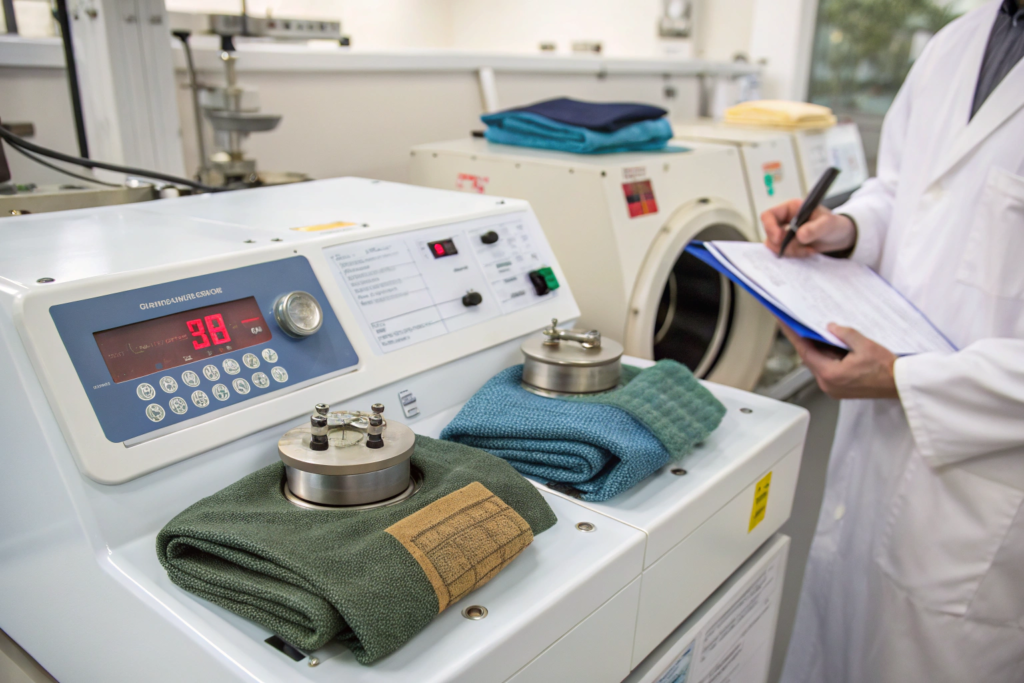
How Does The Martindale Abrasion Test Simulate Washing Wear?
The Martindale test is the gold standard for predicting fabric durability. It’s a machine that rubs fabric against a standard abrasive surface in a Lissajous figure pattern—kind of like a figure-eight motion that simulates the random rubbing that happens in a washing machine and during normal wear.
Here’s how we use it to predict wash-related holes:
- Sample Preparation: We cut four circular specimens and wash them five times according to care label instructions before testing. This removes any temporary finishes and exposes the true fabric structure.
- Test Parameters: We use 12 kPa pressure which simulates normal garment wear. The machine runs at 47.5 cycles per minute.
- End Point: We stop when two yarns break (for wovens) or when a hole appears (for knits).
| Fabric Type | Poor Quality Cycles | Good Quality Cycles | Fumao Standard Cycles |
|---|---|---|---|
| Cotton Poplin | 8,000-12,000 | 25,000-35,000 | 40,000+ |
| Polyester Chiffon | 5,000-8,000 | 15,000-20,000 | 25,000+ |
| Jersey Knit | 10,000-15,000 | 30,000-40,000 | 50,000+ |
| Denim | 15,000-20,000 | 40,000-60,000 | 80,000+ |
The numbers don’t lie. A fabric that fails at 12,000 Martindale cycles will develop visible wear holes after about 20 home washes. A fabric that survives 50,000 cycles will last for years. We publish these test results with every shipment over 1,000 yards because we want our clients to know exactly what they’re getting.
For independent verification of how these tests translate to real-world garment life, understanding Martindale abrasion test results for contract upholstery and apparel applications provides the official ASTM methodology we follow.
Can The Pilling Test Predict Future Hole Formation?
Yes and here’s why. Pilling and hole formation are actually two stages of the same problem: fiber migration. When short fibers work their way out of the yarn, they first form little balls or pills on the surface. If the fiber is strong, those pills stay attached and the fabric just looks fuzzy. If the fiber is weak, the pills break off taking even more fiber mass with them. Eventually there’s nothing left but a hole.
We use the Random Tumble Pilling Tester (ASTM D3512) for knits and the Martindale Pilling Test (ASTM D4970) for wovens. A fabric that rates Grade 1 or 2 after 60 minutes of tumbling will definitely develop holes within 20 washes. Grade 3 is borderline. Grade 4 or 5 means the fiber is staying put where it belongs.
I saw this play out dramatically with a Recycled Polyester Fleece development we did in early 2025. The first trial fabric pilled to Grade 2 after just 30 minutes in the tumbler. The problem turned out to be fiber length distribution in the recycled material—too many short fibers from the mechanical recycling process. We worked with the spinner to adjust their cutting parameters and the next trial achieved Grade 4. That’s the difference between a fabric that fails and one that performs.
For those who want to understand the full testing protocol, how to interpret pilling test ratings using ASTM photographic standards shows the visual grading scales we use in our lab.
Conclusion
Cheap fabric develops holes after washing because it’s built to fail. Short staple fibers lack the length to hold together under mechanical stress. Low twist yarns can’t resist the untwisting forces of the wash cycle. Loose stitch construction creates weak points that elongate and snap. Chemical finishes mask these deficiencies temporarily but wash away leaving exposed weak fiber behind. And without proper testing, you never know the failure point until it’s too late.
The solution isn’t complicated. Buy fabric made from long-staple fibers with adequate twist. Insist on proper stitch density or weave tightness. Avoid fabrics that feel too good to be true—they’re usually coated with something that won’t last. And always demand test data before committing to production.
At Shanghai Fumao, we’ve built our entire operation around the principle that fabric should outlast the fashion trend it was made for. Our CNAS-certified lab tests every lot for the exact failure modes described in this article. Our weaving and knitting partners follow specifications that prioritize durability over short-term cost savings. And our finishing processes are designed to enhance fiber performance rather than mask fiber weakness.
If you’re tired of dealing with customer complaints about holes after three washes, let’s talk. Whether you need Long-Staple Cotton Shirting that stays crisp for years or High-Density Polyester Mesh that survives athletic wear abuse, we can develop exactly what your brand requires. Reach out to our Business Director Elaine at elaine@fumaoclothing.com with your fabric specifications and she’ll arrange lab samples that prove our quality before you commit to a single yard. Your customers shouldn’t have to baby their clothes to make them last. That’s our job at the mill.