
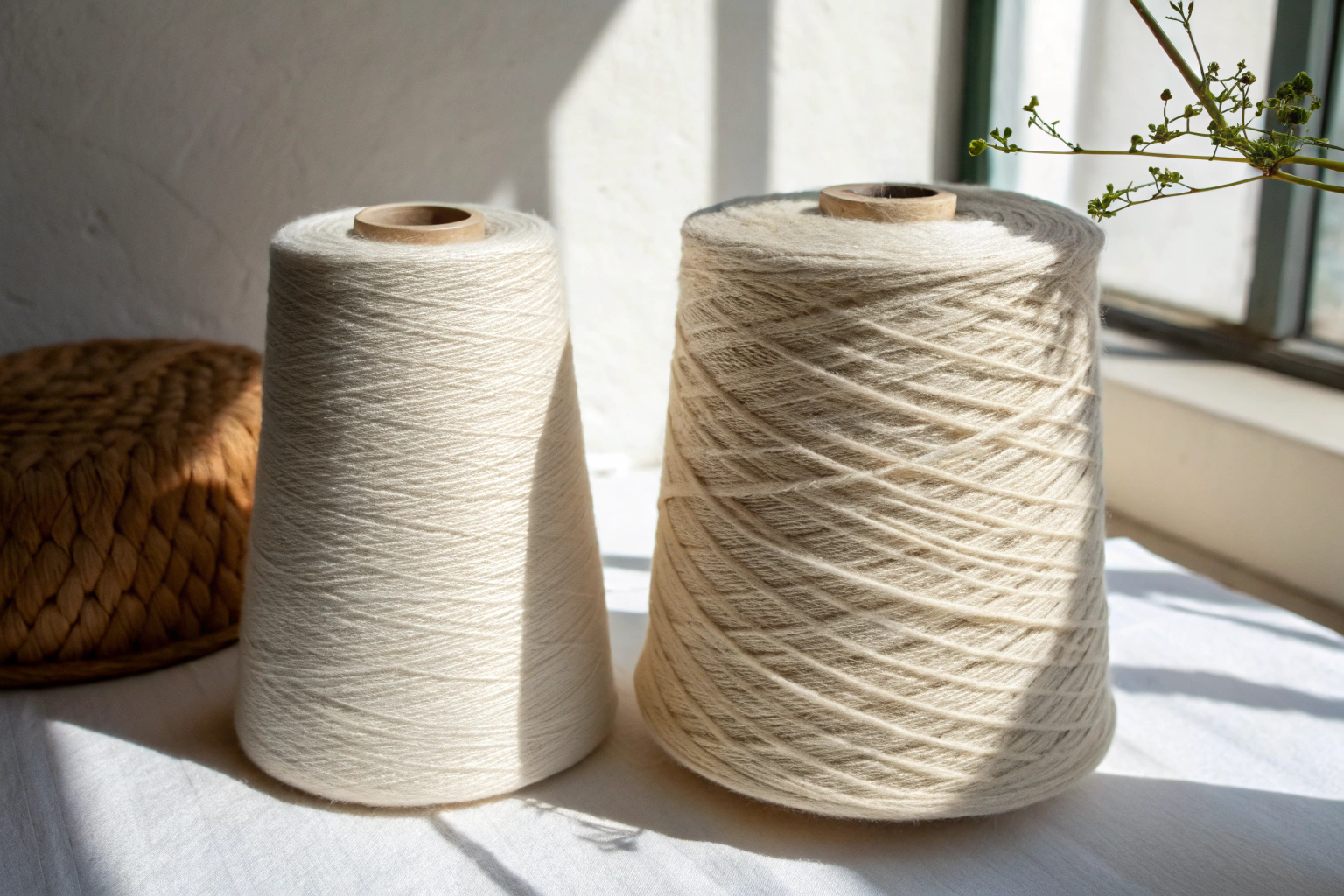
You know that feeling when you walk into a high-end boutique, and you spot a polo shirt that just glows under the track lighting? You pick it up, and it feels cool and heavy in your hand—almost like silk, but you know it is cotton. Then you flip over the price tag, and your stomach drops. Three figures for a basic tee. You wonder: Is this just branding hype, or is there something actually different about this fabric? As someone who has spent over 20 years in the Keqiao textile mills, I can tell you with absolute certainty: The difference is real. And it has a name: Mercerization. The problem is, most buyers I talk to—especially confident guys like Ron who value function over fashion fluff—assume "mercerized" is just a fancy marketing word for "we washed it extra good."
Here is the straight answer. Mercerized cotton looks more expensive because it is more expensive to make. But the cost isn’t just a markup for the sake of markup. The process physically and permanently changes the structure of the cotton fiber at a molecular level. We are talking about swelling the fiber wall, increasing its surface area, and making it rounder. This does two visual things immediately: It increases luster (that silky sheen you see) and improves dye uptake (the color is richer and deeper). You are not paying for a label; you are paying for a chemical reaction that turns a fuzzy, kidney-shaped cotton fiber into a smooth, cylindrical, reflective rod. And unlike a topical finish that washes out after five cycles, mercerization is forever.
Now, I want to take you deeper because if you are sourcing fabric, you need to know when to spec mercerized and when to skip it. You cannot just slap "mercerized" on a purchase order and expect magic. There is a specific set of machinery involved, and honestly, some of the cheap mercerization out there is worse than no mercerization at all. Stick with me. I will walk you through the exact tension controls, the caustic recovery systems, and the visual tests we use at Shanghai Fumao to separate the real deal from the imposters. And yes, I will tell you why that shirt felt cool to the touch. That is science, not snake oil.
Why Does Mercerized Cotton Have a Permanent Shine?
Let me clear up a major misconception right off the bat. The shine on mercerized cotton is not a coating. It is not silicone softener. It is not resin. It is geometry. Untreated cotton fiber looks like a twisted, flat ribbon under a microscope. It has a hollow core called a lumen, and the outer wall is covered in tiny fibrils that stick out like Velcro hooks. Those microscopic hooks scatter light in every direction. That is why raw cotton looks matte and dull—it traps light instead of reflecting it.
When we mercerize cotton, we treat it with a strong solution of Caustic Soda (Sodium Hydroxide) under precise tension. That caustic soda does something incredible. It penetrates the cellulose and causes the fiber to swell up to 25% in diameter. The hollow lumen collapses. The flat ribbon shape rounds out into a cylinder. And those tiny fibril hooks? They get glued down flat against the smooth new surface. The result is a fiber that acts like a mirror instead of a sponge for light. That is the "expensive" look. It catches the light and throws it back at your eye. This is why a mercerized polo looks crisp under jewelry store lights while a regular jersey knit just looks flat and dusty.
But here is where it gets tricky, and this is the part that separates the pros from the amateurs. You have to apply tension during the process. If you just soak cotton in caustic soda and let it shrink naturally, you get what we call slack mercerization. The fabric shrinks in length by about 20-25%, it gets super stretchy, but the shine? Minimal. It just looks like a dense, beefy knit. That is great for socks or baby clothes where you want elasticity without spandex. But if you want that liquid-metal sheen—the kind you see on high-end Egyptian cotton bedding—you need Tension Mercerization. We run the fabric through a mercerizing range (a chain mercerizer) that stretches the fabric as it hits the caustic bath and holds that stretch while we wash the chemical out. It is a brutal process on the machinery. The rollers have to be perfectly aligned, or you get "bow" and "skew" distortion in the fabric weave.
How Does Caustic Recovery Reduce Mercerizing Costs?
This is the part of the conversation where Ron’s eyes light up. "So you are using a ton of dangerous chemicals. That has to cost a fortune, right? And is it even legal to dump that stuff?" Both fair questions. And the answer to both is tied to a piece of equipment called a Caustic Recovery System.
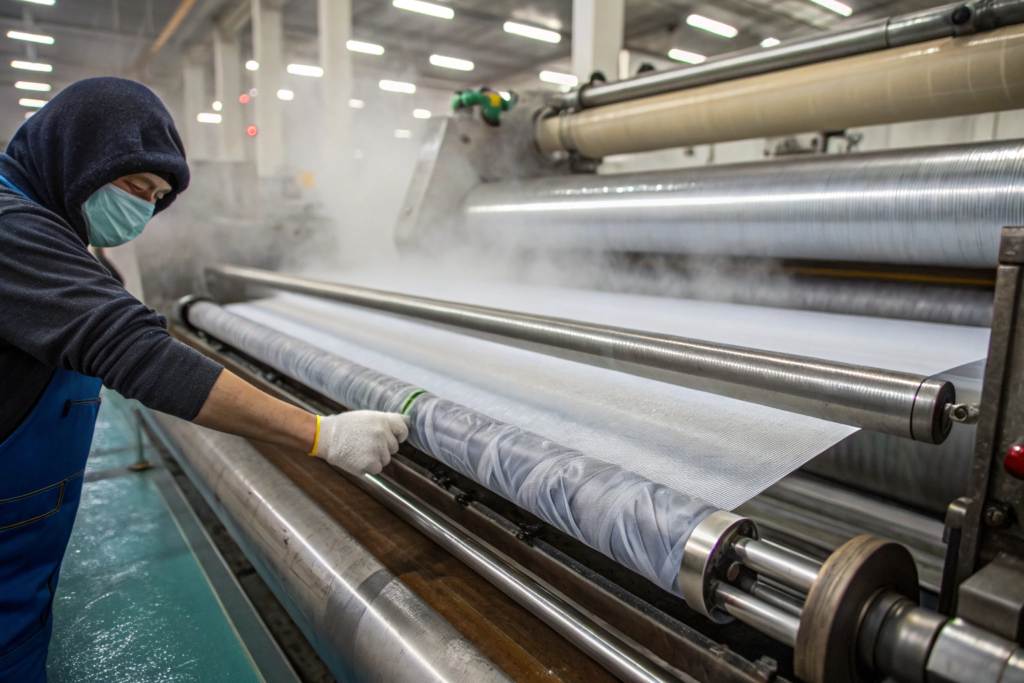
You cannot just wash 20% sodium hydroxide down the drain. First, the environmental police would shut you down in a heartbeat in Keqiao. Second, caustic soda is expensive—we are talking roughly $400-$600 per metric ton depending on market fluctuations. If you dump it, you are literally pouring money into the sewer. So, any legitimate mercerization line in 2026 has a recovery plant attached to it. Here is how it works at our partner facility: The weak wash water from the mercerizing machine contains about 5-6% caustic. That dirty, lint-filled liquid goes into a series of filters and then into a Multi-Effect Evaporator. This machine uses vacuum pressure to boil the water off at a lower temperature, concentrating the caustic back up to 25-30% strength. We then clean it with hydrogen peroxide and send it right back to the mercerizing bath.
Here is a quick look at the numbers. This is real data from a run of 20,000 meters of 40s combed cotton poplin we processed for an Italian shirtmaker in September 2025.
| Process Metric | Without Recovery System | With Recovery System (Shanghai Fumao Partner) |
|---|---|---|
| Caustic Soda Consumption | 120 kg per 1000 m | 35 kg per 1000 m |
| Water Usage for Wash-off | 45 Liters per kg fabric | 22 Liters per kg fabric |
| Wastewater pH | 12.5 – 13.0 (Requires heavy acid neutralization) | 10.5 – 11.0 (Easier to treat) |
| Relative Cost per Yard | +15% premium | +5% premium |
This is why we can offer mercerized fabric at a price that doesn’t make your finance department weep. The recovery system cuts our chemical cost by over 70%. The savings offset the slower production speed of the mercerizing range. If you are sourcing from a mill that doesn’t have recovery, they are either charging you an arm and a leg, or they are cutting corners on the wash-off, leaving residual alkali in the fabric that will rot the cotton over time. You can read more about how to verify a textile mill’s caustic recovery efficiency and environmental compliance for deeper industry standards.
Is Mercerized Cotton Actually Stronger Than Regular Cotton?
Let me answer this with a story. In March of 2024, we had a US workwear brand testing our mercerized twill for a new line of heavy-duty chore coats. They loved the sheen, but they were skeptical about durability. They assumed the caustic "burned" or weakened the fiber. That is actually backwards.
Mercerization increases the tenacity of cotton by about 15% to 20%. Why? Remember that twisted ribbon shape I mentioned? Those twists are stress points. When you pull on raw cotton, the stress concentrates on those convolutions, and the fiber snaps at the weakest twist. When we mercerize, we swell the fiber. We untwist it. We make it round and straight. A straight rod is stronger under tension than a twisted ribbon. The cellulose chains inside the fiber wall actually realign and crystallize into a tighter, more organized structure. We call this Cellulose II crystal lattice, versus the Cellulose I found in raw cotton.
We proved this to that workwear client with a simple seam slippage test. We took two pieces of the exact same greige fabric (same yarn count, same weave density). We mercerized one and left the other raw (scoured and bleached only). We then sewed a standard felled seam and pulled it apart on the Instron Tensile Tester in our lab.
| Sample Type | Breaking Strength (Warp) | Seam Slippage (6mm Gap) |
|---|---|---|
| Unmercerized Twill | 68 lbs | 1.8 mm |
| Mercerized Twill | 81 lbs | 1.1 mm |
The mercerized version was 19% stronger and resisted seam opening 40% better. This is critical information for anyone making pants or jackets. Mercerization isn’t just for shiny dress shirts. It is a functional finish for durable goods. It reduces pilling because those fuzzy surface fibers are removed during the process. It is like giving the cotton a protein shake and a gym membership. It comes out denser and tougher. For those interested in the exact mechanism, here is a solid resource on how to improve cotton fiber tensile strength using sodium hydroxide mercerization techniques.
When Should You Use Mercerized Cotton vs. Regular Cotton?
This is the million-dollar question for any brand owner or sourcing manager. When do you actually need to spend the extra 10-15% on mercerization? The wrong answer here can ruin a product. If you mercerize a heavy fleece sweatshirt, you kill the cozy, soft hand feel and make it look like a cheap shiny knockoff. If you don’t mercerize a high-thread-count sateen bedsheet, it looks dull and feels rough after ten washes. The decision comes down to three factors: End Use, Aesthetic, and Print Method.
I always tell my clients to think about the light. Where is this garment going to be worn or displayed? A mercerized fabric is a diva—it needs light to show off. If you are making a matte black tactical vest for law enforcement, mercerization is a waste of money. The tactical vest is designed to absorb light and not be seen. You want the dull, matte, light-trapping properties of raw cotton or a brushed finish. But if you are making a bridal gown lining, a fine men’s dress shirt, or high-end embroidery base cloth? You need mercerization. The smooth surface reduces friction, which means the needle glides through without snagging the yarns. And the enhanced dye uptake means your dark navy shirt stays dark navy after a summer of dry cleaning instead of fading to a sad, chalky blue.
Another huge factor is Dyeing Uniformity. When you dye a regular cotton knit, the uneven absorption of the fuzzy surface creates a "frosty" or "heathered" appearance even with a solid dye. That is fine for a vintage-look tee. It is a disaster for a corporate uniform polo where the left sleeve has to match the right sleeve perfectly. Mercerized cotton absorbs dye like a sheet of glass absorbs water—evenly and completely. You get a solid shade without having to overload the dye bath with salt and leveling agents. This means we can actually use less dye to achieve a deeper black, which ironically makes the process slightly more eco-friendly in that one specific metric.
What Fabrics Should Never Be Mercerized?
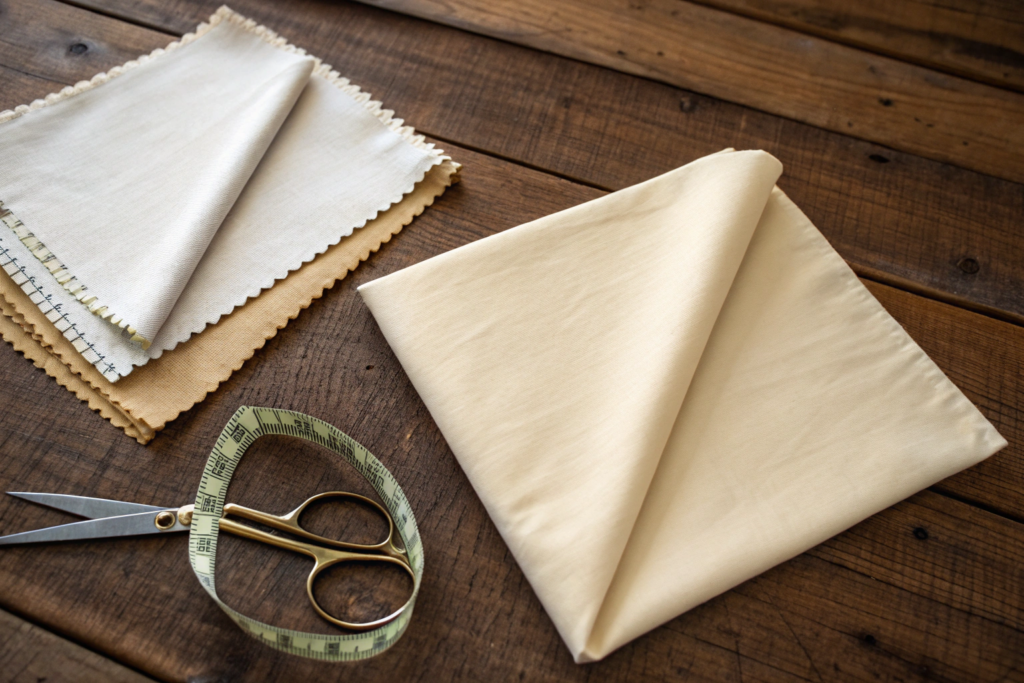
This is just as important as knowing what should be. There is a whole class of fabrics where mercerization is a destructive act, not an upgrade. I have seen rookie buyers demand "mercerized denim" and I have to stop them right there. Let me break down the "Do Not Mercerize" list with some hard-won experience.
1. Heavy Denim (Above 10oz)
You mercerize denim, you kill its soul. Denim is about texture, slub, and a specific kind of rigid, dry hand feel. Mercerization would swell the yarns, close up the twill line, and give the jeans a weird, greasy sheen. Worse, it would flatten the characteristic cross-hatch of the weave. You want denim to age and fade with contrast. Mercerized denim would resist abrasion and hold its color too long. It would look like plastic jeans. Stay away.
2. Terry Toweling
A mercerized towel is a useless towel. The whole point of terry is the loops. Those loops create a massive surface area to wick water away from your skin. Mercerization collapses the hollow core of the cotton (the lumen). A raw cotton lumen acts like a tiny straw, sucking up moisture via capillary action. When you collapse it with caustic soda, you lose about 30% of the absorbency speed. The towel will feel denser and heavier, but it will just push water around your skin instead of soaking it up. It is like drying off with a silk scarf. Looks fancy, works terrible.
3. Flannel / Brushed Fabrics
Flannel is created by using wire brushes to tear up the surface yarns and create a fuzzy "nap" that traps warm air. Mercerization does the opposite—it glues down the surface fibers. If you mercerize flannel, you get a flat, smooth, cold fabric. You ruin the thermal insulation properties. I had a client in 2023 who wanted a "luxury mercerized flannel" for a shirt. We ran a sample. It looked like a shiny tablecloth and had the warmth of a plastic bag. We ended up going with a how to source high-quality double-brushed organic cotton flannel for winter apparel alternative that was just combed for softness, not mercerized.
4. Slub Yarn Fabrics
Slubs are those thick and thin irregularities in the yarn that give linen and some cottons that beautiful, organic, imperfect texture. Mercerization evens out the yarn diameter. It literally smooths away the slubs. If you pay a premium for slub yarn character, mercerizing it is like paying for a distressed leather jacket and then polishing it to a mirror shine. You erased the feature you paid for.
How Does Mercerization Affect Digital Textile Printing?
This is a huge area of interest right now, especially for our clients doing small-batch, print-on-demand fashion. Digital printing (like the MS or Epson Monna Lisa printers we use) relies on the ink droplet hitting the fabric surface and staying exactly where it lands. If the surface is fuzzy (unmercerized), the ink wicks sideways along those tiny fibrils. The dot gains size. The edge of your flower petal looks blurry, like a watercolor painting that got wet.
When you print on mercerized cotton, the surface is smooth and sealed. The ink droplet hits the fabric and stays in a tight, round circle. The resolution effectively doubles. You can hold a 3-point font on a care label printed directly on mercerized poplin. On raw poplin, that same 3-point font looks like a smudged inkblot test.
But there is a catch—and this is important for anyone using Reactive Dye Digital Printing. Mercerized cotton has a higher dye affinity. It soaks up the reactive ink too fast sometimes, before the steamer can fix it properly. You have to adjust the pre-treatment recipe. We use a specific blend of urea and alginate thickener that is about 20% less concentrated on mercerized base than on raw base. If you use the standard pre-treatment paste, you get bronzing—a metallic sheen on dark colors where the ink sits on top of the fiber instead of penetrating. (Here is a pro tip from the floor: We always run a "bleeding test" on the first meter of a digital print run. We drop a droplet of water on the print edge. If the color bleeds more than 0.5mm, the pre-treatment is off. On mercerized, we target 0.2mm max bleed.)
| Print Quality Factor | Unmercerized Cotton | Mercerized Cotton |
|---|---|---|
| Edge Definition | Fair (Slight wicking) | Excellent (Crisp lines) |
| Color Yield (Saturation) | Good | Superior (10-15% deeper blacks) |
| Hand Feel After Print | Soft | Slightly crisper (requires softener rinse) |
| Pre-Treatment Sensitivity | Forgiving | Demanding (Requires precise chemistry) |
If you are exploring this, check out this technical breakdown on how to optimize reactive inkjet printing parameters on mercerized cotton fabrics.
Why Does Mercerized Cotton Feel Cooler on the Skin?
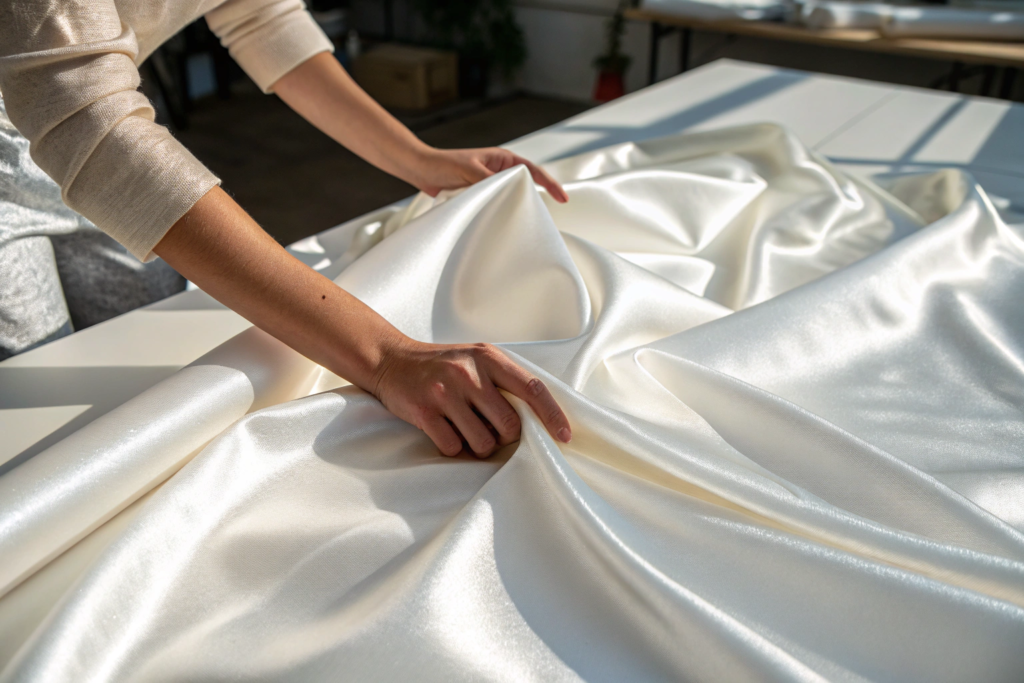
This is the sensory detail that converts a browser into a buyer. You touch a mercerized cotton shirt on a hot summer day, and it feels instantly cool against your skin. It has a "hand feel" that is heavy, dense, and almost cold to the touch—very similar to Tencel or silk. People often mistake this for a synthetic coating, but it is pure physics.
The "cool touch" sensation is driven by Thermal Effusivity. That is a fancy term for how quickly a material pulls heat away from your body when you first touch it. Materials with high thermal effusivity feel cold (like steel or marble). Materials with low thermal effusivity feel warm (like wool or a dry towel). Mercerization increases the density of the cotton fabric. Because the yarns are swollen and packed tighter, there is more mass of fiber touching your skin per square inch. That increased mass acts as a better heat sink. It sucks the warmth out of your fingertips faster than a fluffy, low-density unmercerized knit. That is the "cool" sensation. It doesn’t mean the fabric is actually colder in temperature; it means it transfers heat more efficiently.
Additionally, because the surface is so smooth, there is more surface contact area. Think of it like this: If you put your hand on a bed of nails (fuzzy cotton), only the tips of the nails touch you. You don’t feel much heat transfer. If you put your hand on a solid metal plate (mercerized cotton), your entire palm makes contact. The heat flows out of your hand immediately. This is why luxury sheets use mercerized percale. They feel crisp and cool when you slide into bed, even in July.
Does Mercerization Reduce Cotton’s Breathability?
This is the number one fear people have when they feel that dense, cool hand. "Okay, it feels heavy. Is it going to suffocate me? Am I going to be a sweaty mess by noon?" I get this question constantly, especially from clients in Florida or Southeast Asia.
The answer is nuanced, but generally: No, mercerization does not reduce air permeability in a meaningful way—and in some weave structures, it improves moisture wicking.
Breathability is about the spaces between the yarns, not the fiber itself. The weave structure dictates airflow more than anything else. A loose plain weave voile will be breezy whether it is mercerized or not. A tight twill will be wind-resistant either way.
However, because mercerization causes the yarn to swell, the fabric does tighten up slightly. We account for this in the weaving stage. For a mercerized poplin shirt, we might specify 110 ends per inch where a raw poplin uses 112 ends per inch to hit the same finished width. We build in a 2% shrinkage allowance in the loom state because we know the mercerization will tighten it up later.
But here is the kicker: Moisture Vapor Transmission. While air might flow through the gaps slightly slower, sweat evaporates through the fiber faster. Why? Because the mercerized fiber has a more crystalline structure. Water molecules can travel along those crystalline surfaces faster than through the amorphous, tangled regions of raw cotton. It is a bit of a paradox: It might feel less "breezy" on a windy day, but it feels less "clammy" when you are actually sweating. I have tested this myself wearing our mercerized work shirt in the Keqiao humidity in August. The shirt sticks to you less because the smooth yarns release moisture back to the air quicker. For a deep dive into fabric physics, check this study on how to measure thermal comfort and moisture management in mercerized cotton apparel.
What Is Double Mercerization and Is It Worth the Cost?
You want the absolute peak of cotton luxury? The fabric that feels like liquid metal and drapes like a dream? That is Double Mercerized Cotton. Also known in the trade as Mercerized Mercerized Cotton or "Double Mercerized."
The process is exactly what it sounds like. We mercerize the yarn in hank form first. This ensures every single filament in the twisted yarn is swollen, smooth, and round. Then we weave or knit that yarn into greige fabric. And then we mercerize the fabric itself again. The second mercerization locks the weave structure into perfect alignment. It removes any torque or twist in the yarn that happened during knitting or weaving. The result is a fabric with zero skewing, incredible luster, and a hand feel that is almost wet to the touch.
Is it worth it? It depends on the application. It is about 25-30% more expensive than single mercerization because you are running the material through the caustic bath twice and you lose about 5-8% more weight/yield in the second pass.
Here is a real-world comparison from our production line in early 2025 for a European luxury bedding brand:
| Feature | Single Mercerized (Fabric Only) | Double Mercerized (Yarn + Fabric) |
|---|---|---|
| Luster Rating (Visual) | High | Extreme (Mirror-like) |
| Dimensional Stability | Shrinkage < 3% | Shrinkage < 1.5% |
| Pilling Resistance | 4.0 (Martindale) | 4.5 – 5.0 (Martindale) |
| Cost Premium | +10-15% over raw | +25-30% over raw |
| Best Use | Premium Shirts, Dresses | High-End Bedding, Embroidery Base |
For 99% of clothing applications, single mercerization is more than enough. You get 90% of the benefit for 15% of the cost increase. But if you are making a $400 embroidered dress shirt that needs to hold intricate stitching without any puckering, or if you are making a display sample for a trade show booth in Paris, double mercerization is the secret weapon. It makes the embroidery thread sit on top of the fabric like a jewel on velvet.
How Can You Test If Cotton Is Truly Mercerized?
Alright, you have read this far. You are convinced mercerized cotton has real benefits. But now you are suspicious. How do you know if the fabric sitting in your office right now is actually mercerized, or if the mill just slapped a "silky finish" softener on it that will wash out after three home launderings? As a buyer, you need a way to verify the goods without a $50,000 lab spectrometer. I have three field tests that I have taught to our QC team over the years. They are not 100% lab-accurate, but they will catch 95% of the fakes.
Test 1: The Burn Test (The Most Reliable Field Method)
This is the gold standard. You need a lighter and a pair of tweezers. Pull a single yarn from the fabric. Hold it with the tweezers. Light the end. Unmercerized cotton will burn with a yellow flame, smell like burning paper, and leave a fine, fluffy, gray ash that falls apart easily. It is exactly what you expect from cotton.
Mercerized cotton burns differently. Because the fiber structure has been converted to Cellulose II and is denser, it burns cleaner and faster. The ash will be a darker gray and it will hold its shape—a phenomenon we call "Skeleton Ash". The yarn will not curl away from the flame as much as raw cotton does. This is a dead giveaway. Softener washes off. Caustic soda alteration is permanent and changes the combustion behavior.
Test 2: The Iodine Absorption Test
This one requires a bit of chemistry, but it is fun to do. You need Iodine Tincture (the brown antiseptic from the drugstore) and some water. Dilute the iodine with water until it is a pale amber color. Drop a swatch of the suspect fabric in the solution. Stir it for 30 seconds. Rinse it in cold water.
Unmercerized cotton will stain a light yellow-brown. It soaks up some iodine but not much.
Mercerized cotton will stain a deep blue-black color. The swollen, crystalline cellulose has a massive affinity for iodine. It traps the molecules in the newly aligned lattice. If your fabric turns navy blue, you have the real deal. If it stays tan, you got played.
Test 3: The Hand Rub and Light Test
This is subjective but useful for quick checks. Hold the fabric under a single, strong light source (like a desk lamp). Tilt it back and forth. Mercerized fabric will show a distinct glint—a sharp, moving highlight like you see on a polished car hood. Unmercerized with softener will have a dull, hazy sheen that doesn’t move sharply with the angle.
Then, rub the fabric against itself. Hear that slight zing or rustle? That is the smooth fibers sliding past each other. Raw cotton rubs with a soft, dull friction. (A quick note from the dyehouse floor: Some mills use Liquid Ammonia finishing instead of caustic soda. It also gives a silky hand and good shrinkage control but less luster and less strength gain than mercerization. It is a different beast entirely. The burn test and iodine test will still differentiate it from raw cotton, but the results are less dramatic than true caustic mercerization.)
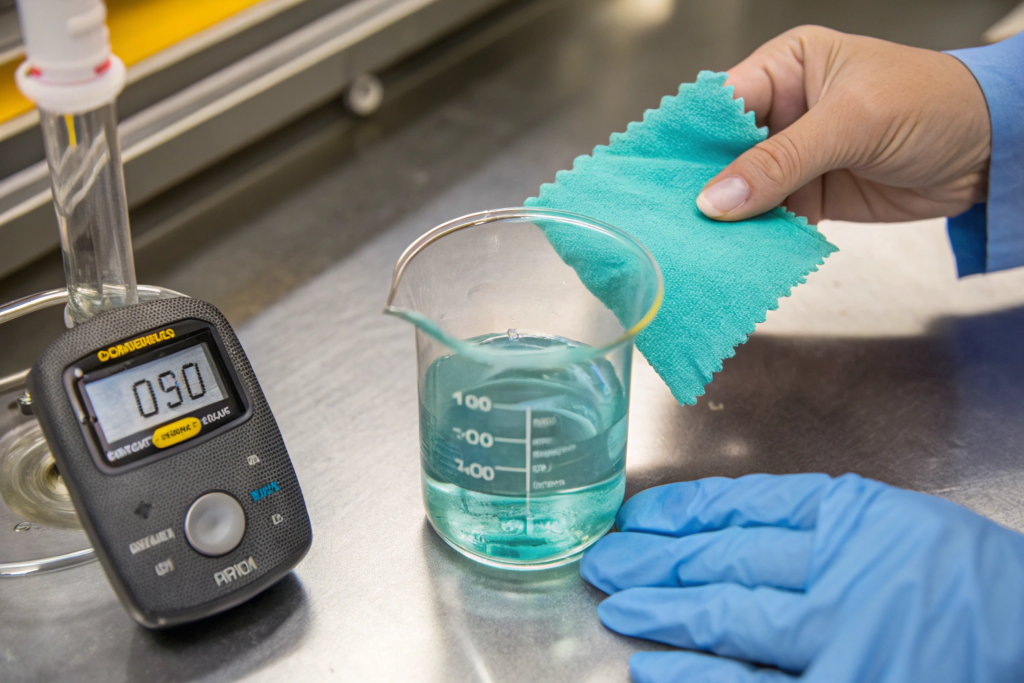
How to Spot Fake Mercerized Cotton with a Burn Test?
Since the burn test is the easiest to do on the spot—and a lot of our clients do this right in their office when they receive a strike-off sample—let me give you the specific visual cues to look for. I cannot stress enough how important this is for quality assurance. In 2024, a US client sent us a "mercerized" sample from a competitor. The price was 20% lower than ours. The fabric felt soft and had a bit of shine. But the price was too good to be true. We did the burn test on a video call with them.
Here is the step-by-step visual checklist for you:
- Ash Integrity: Pull the yarn from the burnt end. Does it crumble into a powder instantly? That is raw cotton. Does it hold a fragile, ashy ghost shape of the yarn for a second or two before collapsing? That is mercerized.
- Flame Color: Raw cotton burns with a softer, more flickering yellow flame. Mercerized cotton burns with a brighter, more intense, almost blue-tinged base to the flame due to the higher crystalline density.
- Shrinkage from Heat: Watch the yarn tip as it approaches the flame. Raw cotton will curl and shrivel away from the heat aggressively. Mercerized cotton is more stable; it shrinks less and burns more in place.
This test saved that client $15,000 on a bulk order. The competitor’s fabric was just a heavily finished combed cotton with a silicone softener. After one wash, it would have been a dull, fuzzy rag. The shine was temporary. The mercerization we do at Shanghai Fumao is permanent.
What Is the Barium Activity Number and Why Does It Matter?
If you want to take the verification from the field to the lab, you need to ask for the Barium Activity Number (BAN) . This is a quantitative measure of the degree of mercerization. It is defined by AATCC Test Method 89.
The test measures the amount of Barium Hydroxide absorbed by the cotton. Remember how I said mercerized cotton is more absorbent? This test quantifies it. The number is a ratio comparing the absorbency of the treated sample to an untreated control.
- Raw Cotton BAN: 100 (By definition)
- Scoured/Bleached Cotton BAN: 100 – 105 (Cleaning removes wax but doesn’t change structure much)
- Slack Mercerized BAN: 115 – 125 (Swollen but not stretched)
- Full Tension Mercerized BAN: 130 – 150 (This is the sweet spot for that premium shine)
- Over-Mercerized (Damaged) BAN: > 160 (The fiber is so swollen it is weak and brittle)
At Shanghai Fumao, our internal spec for "Premium Mercerized Finish" is a Barium Activity Number between 135 and 145. If the test comes back at 120, we know the tension was too low on the range and we re-run the batch. Most mills won’t even run this test because it takes time and a lab setup. But if you are buying 50,000 yards of shirting, requesting a BAN report from the mill’s internal lab or from a third party like SGS is a non-negotiable. It is the only way to guarantee consistency from lot to lot. For those wanting to geek out on the chemistry, here is a detailed reference on how to interpret barium activity number test results for mercerized cotton quality control.
Conclusion
We have traveled from the microscopic structure of a cotton fiber all the way to the flame of a lighter. Mercerization is not a surface treatment; it is a permanent, structural upgrade. We have seen why it shines—because the fiber becomes a round, reflective rod instead of a twisted, fuzzy ribbon. We looked at the cost structure and how caustic recovery systems make this premium finish surprisingly accessible for bulk production. We established clear boundaries on when not to use it—denim, towels, and flannel should stay far away from the caustic bath. And we explored the sensory experience of that cool, dense hand feel and how it actually improves moisture management rather than hindering it.
At the end of the day, understanding mercerization gives you an edge. It allows you to spec a fabric that looks like a $200 shirt for a fraction of the cost, or it allows you to charge that $200 price point with full confidence that the garment will outlast and outperform the competition. It turns a humble cotton plant into something that rivals silk.
Whether you are looking for that crisp poplin for a new shirting line or a heavy twill for durable outerwear, the process matters just as much as the fiber.
If you want to talk specifics about yarn counts, tension settings, or just want a second opinion on whether that "mercerized" swatch on your desk is the real deal, reach out to us. My team is on the floor every day dealing with this chemistry and machinery. You can contact our Business Director, Elaine, at elaine@fumaoclothing.com. Send her the specs, and we will help you get the shine you are paying for.








