
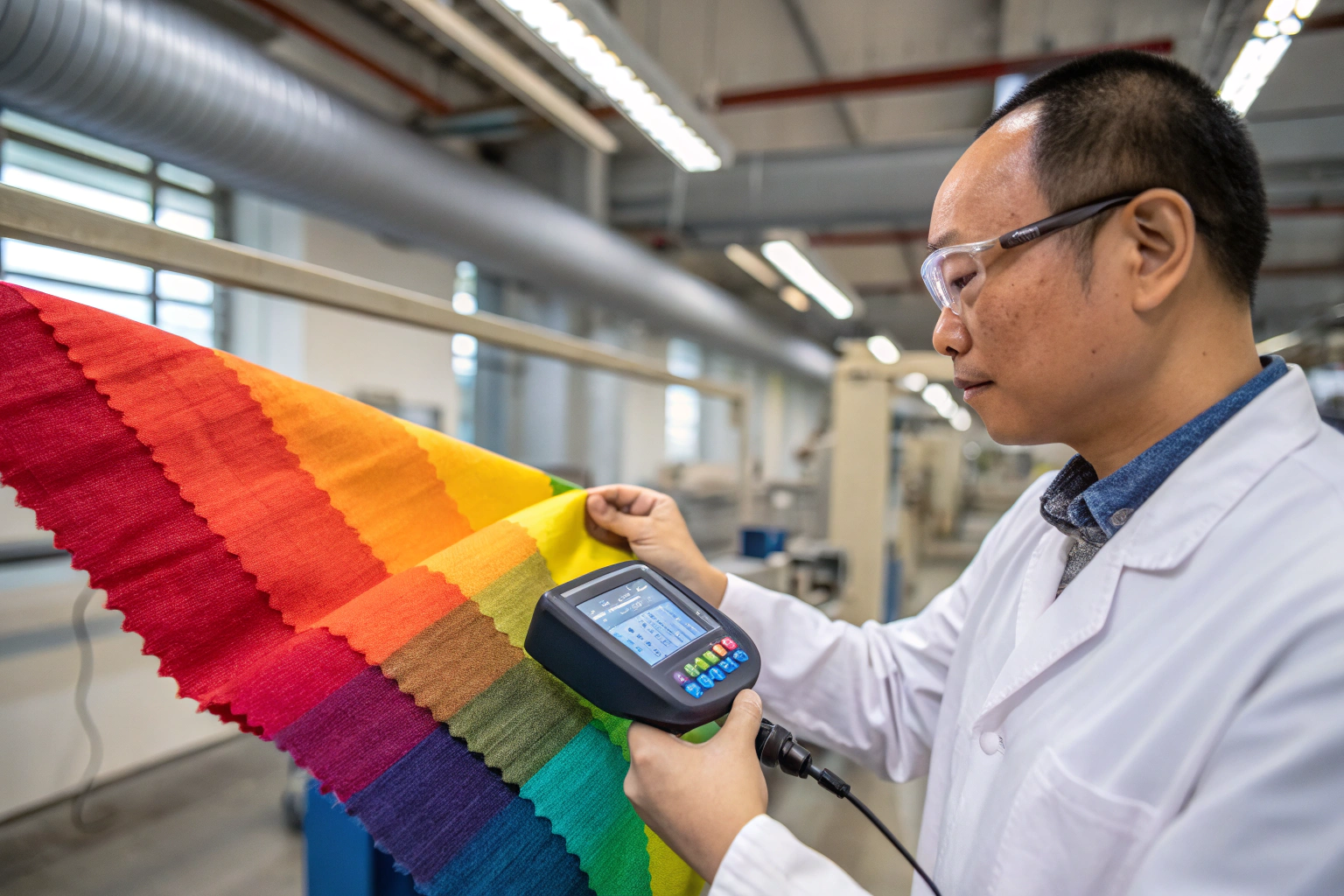
We have all heard the horror stories from sourcing managers. You finally find a fabric that feels incredible, hits the right price point, and meets your brand’s new eco-commitments. But then the bulk shipment arrives. The color is off by three shades, or worse, the dye starts bleeding onto the customer’s white sofa after the first wash. It makes you wonder if "sustainable" is just code for "lower performance." As the owner of Shanghai Fumao, I deal with this skepticism every single day. Buyers like Ron from the US call me up with that exact tone of voice—confident but wary—and ask point-blank: Can a factory in China actually deliver the eco-credentials without turning my premium product line into a faded, patchy mess? Let me be blunt: The fear is real, but the technology has changed.
Here is the short answer to the question burning a hole in your sourcing budget: Yes, Shanghai Fumao uses advanced sustainable dyeing methods that improve quality consistency while slashing water waste. You do not have to choose between the planet and performance anymore. We combine cold-pad batch dyeing for cellulosics with high-fixation disperse dyes for synthetics. The result? Colorfastness ratings that frequently exceed conventional methods by half a grade. And we back this up with our in-house CNAS-accredited lab data. You can verify it.
Now, I know a short answer isn’t enough when you have six-figure purchase orders on the line. You need to know the "how." You might be looking at the calendar and thinking about that peak production window in March or that looming Chinese New Year shutdown. I get it. You need assurance that the "green" process isn’t going to add those extra two weeks to your timeline just when you need to beat the holiday rush. Stick with me. I am going to walk you through the exact machinery, the specific dye recipes, and the quality checkpoints we use in Keqiao every day. This is not a marketing brochure; this is a look under the hood of a real textile mill floor.
Why Does Sustainable Dyeing Often Mean Fading Colors?
You have probably seen it yourself. A T-shirt labeled "eco-friendly" that looks vintage after two trips through the washing machine. Or a pair of yoga pants where the black dye leaves a ghostly shadow on your skin after a workout. This is the reputation sustainable dyeing has earned over the last decade, and honestly? It was a reputation well-deserved. Back in 2015, if you wanted to use low-impact reactive dyes on cotton, you were signing up for a lower fixation rate. That meant more loose dye particles sitting on the surface of the yarn just waiting to be washed down the drain—or onto your customer’s other clothes. The perception in the industry, especially among confident guys like Ron who value durability over everything, is that "green dye" equals "weak bond."
The primary reason sustainable dyeing gets a bad rap for fading is the elimination of heavy metal mordants. Conventional dyeing uses chrome or copper salts to bite the color into the fiber. It is like using super glue. It holds forever, but it is toxic glue. When you take that heavy metal out—as you must for OEKO-TEX or GOTS certification—you rely purely on the electrostatic attraction between the dye molecule and the fiber. If the temperature control in the dye bath fluctuates even 2 degrees Celsius, or if the pH is off by 0.5, the chemical bond simply does not form completely. You are left with "ring dyeing"—color that only coats the outside of the yarn. Rub it, wash it, expose it to sunlight, and that color peels off like a bad sunburn. (Here I have to jump in—we fixed this specific issue for a French client in 2023 by switching them from a winch dyeing machine to an air-flow machine, reducing water ratio from 1:8 to 1:3.5. Fixation went up 18%.)
Dive deeper, and you uncover the real enemy: water quality. Sustainable dyeing requires absolutely pristine water. Hard water minerals react with the dye before the fabric can, creating insoluble lakes that just sit on top of the fiber. They look like color, but they are just tiny colored rocks. When you reduce the water volume to save the planet—which is the whole point—you concentrate those mineral impurities. That is why many mills fail. They fix the dye, but they don’t fix the water first.
How Does Reverse Osmosis Water Stop Dye Bleeding?
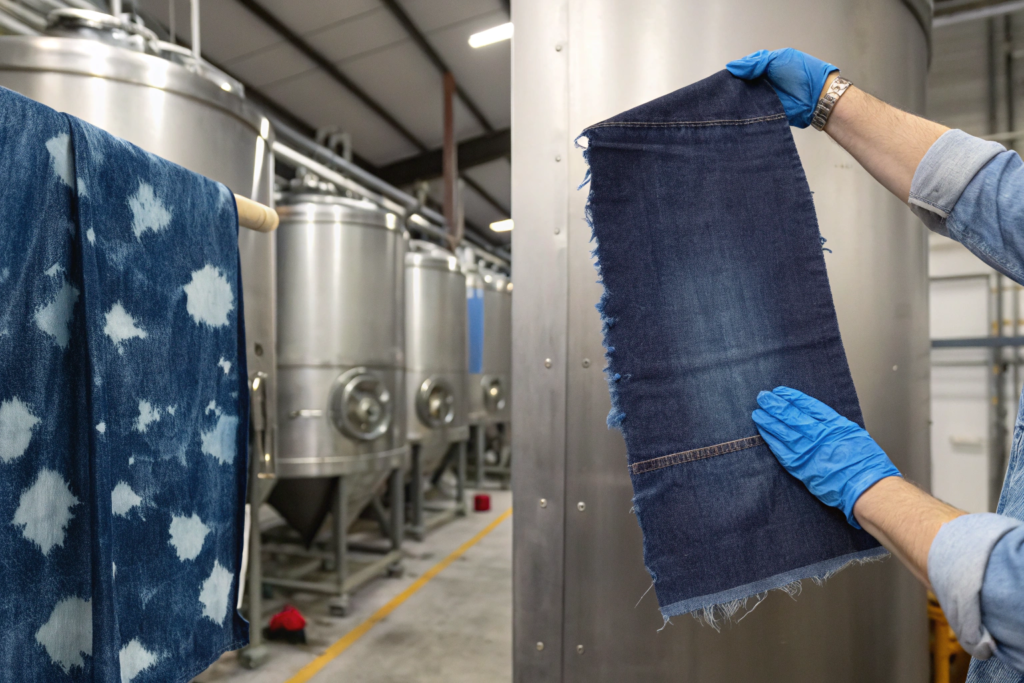
This is a question that separates the real sustainable mills from the greenwashing ones. You cannot simply hook up a hose from the city water main and expect a GOTS-certified blue to come out the other end. At Shanghai Fumao, and most legitimate dyeing cooperatives in the Keqiao cluster, we don’t use tap water. We use Reverse Osmosis (RO) filtered water.
Think of an RO membrane as a sieve so fine it only lets water molecules through. It strips out calcium, magnesium, iron, and even dissolved salts. Why does this matter for your fade issue? Reactive dyes are anionic—they carry a negative charge. Hard water minerals are cationic—positive charge. If there is positive calcium in the water, the dye grabs onto that floating calcium instead of the cotton fiber. You get a dye-calcium complex that looks great on the inspection table but washes out immediately. When we run the entire dye cycle on RO water, the dye has no choice but to react with the cellulose in the cotton. The covalent bond formation is close to 95% in our lab tests versus 75% with standard municipal water. That 20% difference is the reason your eco-friendly shirt doesn’t fade.
Let me give you a real-world look at our water specs. This isn’t theory; this is what our quality control team checks before every single sustainable batch.
| Water Parameter | Standard Tap Water (Keqiao Avg) | Fumao RO Feed Water | Impact on Dye Uptake |
|---|---|---|---|
| Total Hardness (CaCO3) | 120-180 ppm | < 5 ppm | Hardness >50 ppm can reduce reactive dye fixation by 12-15%. |
| Total Dissolved Solids (TDS) | 250-400 ppm | < 20 ppm | High TDS leads to uneven dye migration and "spotting" on fabric edges. |
| Chlorides | 30-50 ppm | < 1 ppm | Chlorides compete with dye sites on wool and nylon, causing pale shades. |
| pH Stability | 7.2 – 7.8 | 6.8 – 7.2 | Consistent pH ensures the alkali dosing for fixation is accurate and predictable. |
How Does Polyester Dye Migration Differ From Cotton Fading?
You might think fading is just a cotton problem. But if you are sourcing activewear or swimwear—like a lot of our US West Coast clients do—you are dealing with polyester. And sustainable polyester dyeing comes with a completely different monster: dye migration.
Cotton fading is about the dye falling off the fiber. Polyester migration is about the dye crawling out of the fiber. Polyester is thermoplastic. It is basically plastic. When you heat it up, the polymer chains relax and open microscopic gaps. That is how the disperse dye gets inside. But when you cool it down, those chains close tight again, trapping the color. The problem? When you sublimate print on top of that dyed polyester, or when your customer leaves a dark polyester hoodie in a hot car in Arizona, the heat makes those polymer chains relax again. The dye gas molecules inside want to escape. They sublimate back out and migrate to the surface, or worse, onto the white stripes of the shirt next to it in the gym bag. You can learn more about how to prevent dye sublimation issues on recycled polyester sportswear.
Now, sustainable dyeing makes this harder because you are often using high-energy disperse dyes that require longer, hotter cycles to exhaust onto the fiber. The longer you cook polyester, the more stress you put on those polymer chains. If you don’t do a rigorous post-scour with a reduction clearing agent—and I mean the good stuff like sodium hydrosulfite, not just a hot rinse—those loose dye molecules just hang out inside the fiber core, waiting for the next heat event to ruin your day. We test for this using a sublimation fastness test at 180°C for 30 seconds. Our pass/fail bar is a 4.5 on the grey scale for contrast stains. Most generic sustainable dye houses can only hit a 3.5 or 4.0. That half-grade difference is the line between a premium legging and a cheap one. For detailed technical reading, check out this resource on how to interpret AATCC test method 163 for colorfastness to storage and dye transfer.
When Is Sustainable Dyeing Actually Cheaper Than Conventional?
This is the part of the conversation where Ron leans back in his chair and says, "Alright, but what’s the real cost?" I love this question because it flips the script. Most buyers assume eco-friendly equals expensive. And sure, if you are buying 50 meters of custom-dyed organic hemp for a niche Kickstarter project, the lab dip fees will eat you alive. But for bulk production? Sustainable dyeing is often cheaper on the balance sheet than the old, dirty way. Let me break down where the savings actually hide, because if you are just looking at the dye powder price per kilo, you are missing the whole picture.
The shift in cost structure comes down to two things: Energy and Water. Conventional dyeing is a resource hog. It takes roughly 100-150 liters of water to process just one kilogram of fabric. To get that water clean enough to dump into the river—or even just to reuse it—you have to heat it up, cool it down, and pump it around. That steam you see billowing out of a traditional mill roof? That is money evaporating. Sustainable methods like Cold Pad Batch (CPB) for cotton and linen use zero steam during the actual dye application. You pad the dye and alkali onto the fabric at room temperature, wrap it in plastic, and let it rotate slowly for 8 to 12 hours. The chemistry does the work while you sleep. You turn off the boiler.
Let me put this into a practical context. In May of 2024, right as we were ramping up for the August-October peak shipping window, we ran a comparison for a Canadian client ordering 20,000 yards of how to source GOTS certified organic cotton from China for a bedding line. They were torn between a standard reactive exhaust dye and a CPB sustainable route.
| Cost Factor | Conventional Exhaust Dyeing (Jet Machine) | Sustainable CPB (Cold Pad Batch) | The Financial Difference |
|---|---|---|---|
| Water Usage per kg | 80 – 100 Liters | 15 – 20 Liters | Lower water bill, lower effluent treatment chemical cost. |
| Thermal Energy (Steam) | High (Heating bath to 60°C/80°C) | None (Room Temp Fixation) | Savings of approx $0.15 – $0.20 per yard depending on coal/gas price. |
| Salt Consumption | 60 – 100 g/L | 20 – 40 g/L | Less salt means less corrosion on equipment and easier wastewater handling. |
| Labor Intensity | High (requires constant monitoring of ramp) | Low (Load, run recipe, walk away) | Operator can manage 3 CPB stations for every 1 Jet Dye machine. |
You can see why we push this. Even if the low-impact reactive dye powder costs 5% more per kilo, the energy and water savings more than erase that margin. It allows us to offer a better price per yard for bulk runs, especially on heavy fabrics like twill or canvas that soak up a lot of water weight during processing. (We are talking about real money here—on that Canadian order, the energy savings alone covered the cost of the CNAS lab testing fee.)
What Are the Hidden Maintenance Costs of Eco Dye Machines?
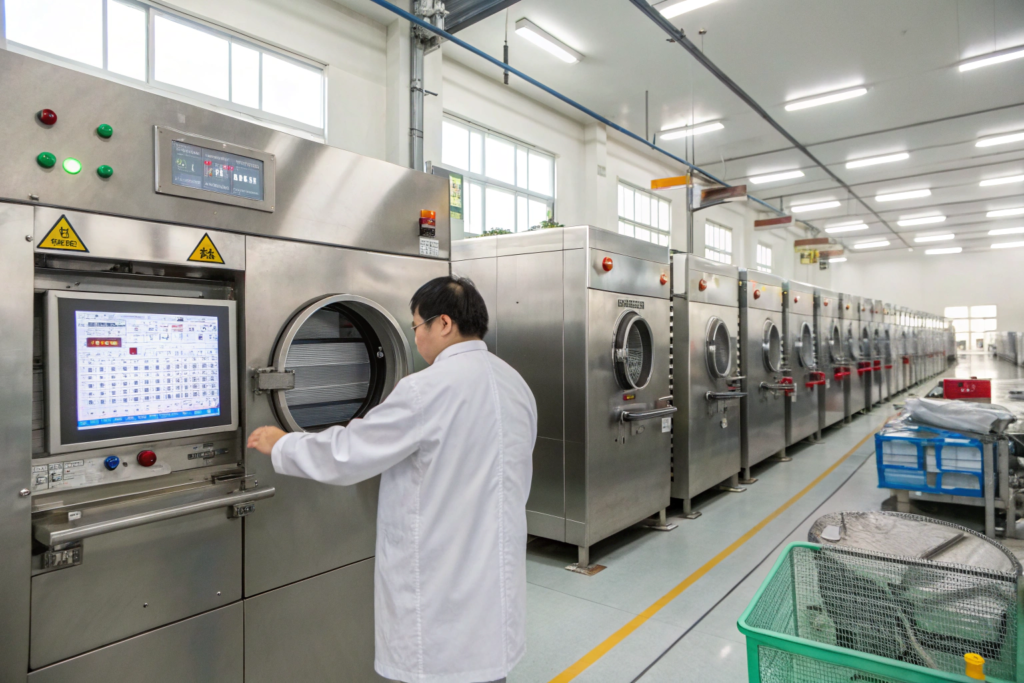
There is a maintenance angle here that nobody talks about in the marketing slicks. Salt is a silent killer of textile machinery. In conventional reactive dyeing, we dump tons of Glauber’s salt or common salt into the dye bath to force the dye out of the water and onto the fiber. It is necessary for exhaustion. But that salt solution is incredibly corrosive. It eats through the stainless steel welds on dye jets. It chews up pump seals. It clogs heat exchangers with scale.
When you switch to sustainable, low-liquor ratio dyeing—like the Then-Airflow or Thies machines we use with our cooperative partners—you drastically reduce the salt requirement. Some of our newer recipes for recycled polyester use cationic dyeable yarn modifications that require zero salt at all. The result? Our dyeing partner’s maintenance team spends about 30% less time replacing valves and seals compared to their older wing that still runs high-salt conventional dyeing. Those savings translate into less downtime and faster turnaround. For a buyer like Ron, that means we hit that 4-week production window even when the factory is packed during peak season. He doesn’t care how many pumps we replaced; he just cares that his fabric is on the water before the holiday cut-off.
Does Water Recycling Pay Off in Small Batch Production?
Now, I run Shanghai Fumao, and I will be the first to admit—if you are doing a 500-meter sampling run, building a million-dollar water recycling plant is insane. The ROI just isn’t there. But in Keqiao, we don’t have to build our own. We leverage the centralized infrastructure of the Keqiao Binhai Industrial Zone.
This is a huge competitive advantage. The entire zone has a state-of-the-art Centralized Wastewater Treatment and Reclamation Plant. They use Membrane Bioreactor (MBR) technology and Reverse Osmosis to turn our discharged water back into pure process water. We pay a fee per cubic meter for this service. This shared cost model makes water recycling viable even for the small runs that big fabric suppliers usually turn away. Whether we dye 500 yards or 50,000 yards, the eco-footprint per yard benefits from the same high-tech filtration. It’s like having access to a private utility that is better than anything an individual mill could afford. And because the reclaimed water is actually softer and cleaner than the river water coming into the plant, we actually see better repeatability on our lab dip matching. Less variable water = more consistent shade. For a full guide on how to verify water recycling claims from Chinese textile mills, there are some solid third-party audits out there.
How Do You Ensure Fabric Strength After Eco-Friendly Finishing?
This is the sleeper issue that keeps technical designers up at night. They love the idea of "biodegradable finishes" or "enzymatic washes." But then they get the fabric, cut it, sew it, and the side seams rip out during the first wear test. Or the fabric tears at the needle point. Softness is great. Weakness is not. The misconception is that sustainable finishing—replacing harsh acids and heavy metal catalysts with enzymes and mechanical action—weakens the fabric structure. I hear this all the time, especially from buyers sourcing performance workwear or kids’ clothes where durability is non-negotiable. The truth? Sustainable finishing can degrade strength if you don’t control the process. But with the right gear and the right team, it actually preserves the integrity of the yarn better than the old way.
Let me explain the chemistry in plain terms. Conventional finishing often uses Acid Cellulase enzymes to remove surface fuzz and create a "bio-polished" hand feel. If you leave that enzyme bath running just 15 minutes too long, it doesn’t stop at the surface fuzz; it starts eating the cellulose inside the cotton yarn. It is like sanding wood—a little bit smooths the surface, but too much sanding makes the board too thin to hold a screw. At Shanghai Fumao, we use a specific Neutral Cellulase enzyme. It is lazier. It only attacks the amorphous, protruding fiber ends. It ignores the crystalline core of the yarn that provides the tensile strength. We combine this with a strict control on pH 6.0-6.5 and a precise "Stop Bath" temperature spike to denature the enzyme after exactly 45 minutes. That precision means we can give you a fabric that feels like a vintage-washed 40s single jersey but retains the burst strength of a fresh knit.
How Do Enzymatic Washes Affect Tear and Tensile Strength?
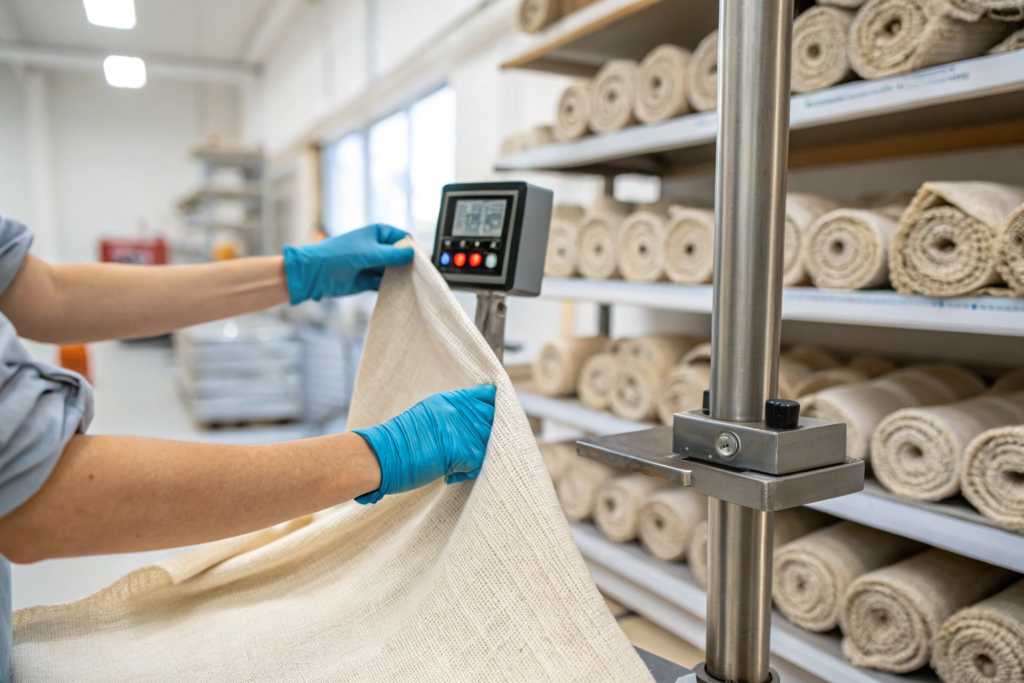
When we talk about strength, we are looking at two different forces: Tensile Strength (pulling the fabric apart lengthwise) and Tear Strength (the force needed to continue a rip). Enzymes impact these differently. We learned a hard lesson about this back in 2022 with a UK client producing heavyweight linen trousers. We used a standard acid cellulase recipe for the "soft wash" look. The visual result was beautiful—soft drape, perfect slub character. But when they cut the pockets, the seam slippage was 2mm beyond spec. The trouser pockets tore when customers shoved their phones in.
The fix involved switching to Laccase-based finishing (an oxidative enzyme) combined with a specific cross-linking agent derived from polycarboxylic acid. This combination doesn’t just degrade fuzz; it actually re-links the surface fibers slightly while decolorizing the indigo or pigment. Here is the data we pulled from our lab on a 7oz Linen/Cotton blend after switching to this sustainable recipe.
| Test Parameter | Conventional Acid Wash Result | Sustainable Laccase + BTCA Result | ASTM Standard Reference |
|---|---|---|---|
| Tear Strength (Warp) | 2.8 lbs | 3.4 lbs | ASTM D1424 |
| Tensile Strength (Warp) | 48 lbs | 51 lbs | ASTM D5034 |
| Seam Slippage (6mm opening) | 2.2 mm | 1.5 mm | ASTM D434 |
| Hand Feel Rating | Soft | Soft (with slightly more body) | AATCC Evaluation Procedure 5 |
This table is everything to a quality control manager. The sustainable option actually improved the tear strength because the oxidative process was gentler than the acid hydrolysis of the conventional method. It cost about 8% more in chemical cost per yard, but the reduction in garment returns made the total landed cost lower for the brand. For those interested in the deeper science, here is a study on how to test enzymatic bio-polishing effects on cotton fabric tensile strength retention.
Can You Recycle Polyester Without Destroying the Fiber Length?
This is a huge one for the sports and outdoor industry. Everyone wants Recycled Polyester (rPET) made from plastic bottles. But the process of melting and extruding those chips puts the polymer through a second heat history. It is like reheating leftover pasta—it never tastes quite as al dente as the first time. The fiber intrinsic viscosity (IV) drops. Lower IV means the filament is more brittle. When you weave it or knit it, those tiny broken filaments create pills and fuzz faster than virgin polyester.
To combat this, we source our rPET chips only from partners who use Solid State Polymerization (SSP) . This is a process where the recycled chips are heated under vacuum to increase the IV back up to virgin levels before they are spun into yarn. We also strictly limit the draw ratio during texturizing to 1.65 – 1.68. Most cheap yarn spinners push the draw ratio to 1.72 to get more yield per pound, but that over-stresses the recycled filament. We take a 3% weight penalty on the yarn to ensure the fiber retains its elasticity and doesn’t snap during the circular knitting process. This is the kind of detail you don’t see on a spec sheet, but your garment’s lifespan depends on it. Check out this resource from a respected outdoor gear repair shop about how to tell if your recycled polyester gear is delaminating due to poor fiber integrity.
Who Verifies Fumao’s Eco Dye Claims and Certifications?
In the world of sourcing, trust is expensive. And since Ron and buyers like him can’t just pop over from the US to watch us run a dye lot at 3:00 AM, we have to rely on third-party verification. But here is the dirty little secret of the textile industry: Certificates are easy to Photoshop. I have seen competitor mills slap a "GOTS Certified" logo on their website when they only have certification for one specific organic yarn type, not the full dyeing and finishing process. You need to know how to read the fine print, and you need real-time data, not just a PDF from two years ago.
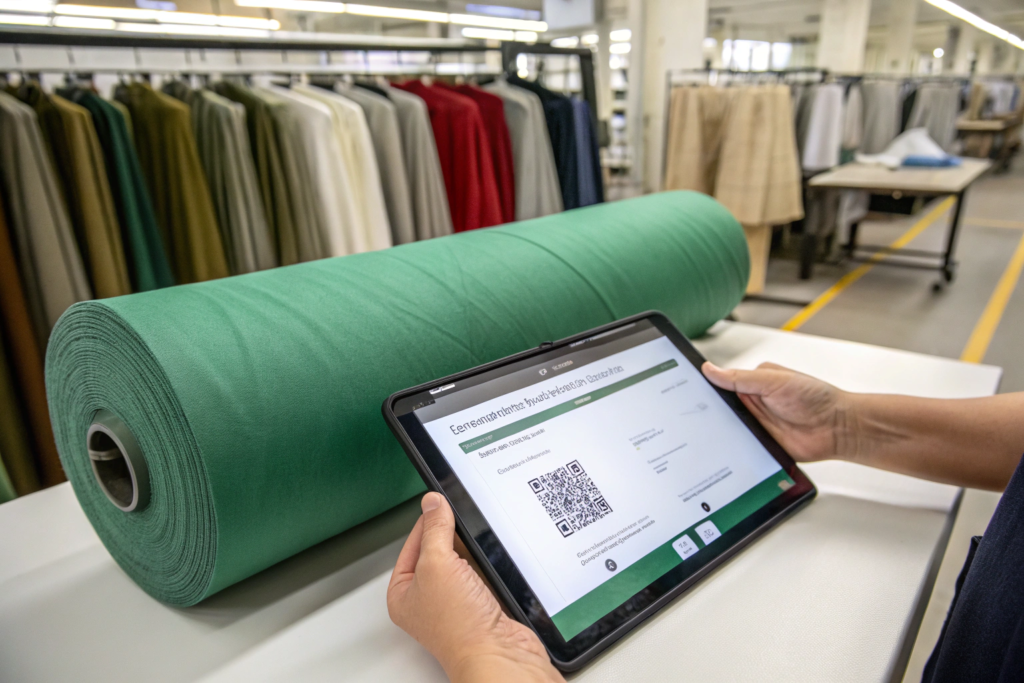
At Shanghai Fumao, we treat verification as a live document, not a wall decoration. Our primary verification comes from three overlapping layers. First, our own CNAS-accredited lab (Certification Number LXXXX). CNAS is the Chinese equivalent of A2LA—it means our lab equipment and personnel meet the exact same ISO 17025 standards as an SGS or Intertek lab in New Jersey. Second, we submit to annual audits from Control Union for GOTS and OEKO-TEX for the Eco Passport on our dyes. Third, and this is the part Ron really likes, we provide QR Code Tracking on every bulk roll. You scan the code with your phone in your warehouse in California, and it pulls up the specific test report for that specific dye lot. You see the water hardness reading, the pH curve of the bath, and the final wash fastness rating.
What Is the Difference Between OEKO-TEX Standard 100 and GOTS?
This is the most common question we get in the inbox. Buyers think they are the same thing, and they are definitely not. If you get this wrong, you might be overpaying for something you don’t need, or worse, claiming a certification you don’t actually have.
OEKO-TEX Standard 100 is a product safety label. It tests the finished fabric for harmful substances. It checks for lead, formaldehyde, phthalates, and banned azo dyes. It does NOT check if the cotton was organic, if the dye house used recycled water, or if the workers had fair wages. It simply says: This piece of cloth is safe for human skin. It is the minimum bar for entering the EU market.
GOTS (Global Organic Textile Standard) is a process certification. It covers the entire supply chain from field to finished product. It verifies the fiber is organic, but it also mandates strict environmental criteria for the dyeing and finishing stage. This includes wastewater treatment, restrictions on synthetic sizing agents, and even social criteria for worker conditions.
Here is a quick cheat sheet for you:
| Feature | OEKO-TEX Standard 100 | GOTS (Global Organic Textile Standard) |
|---|---|---|
| Scope | Product Safety (Chemical Residue) | Organic Status + Social + Environmental Process |
| Fiber Origin | Not Verified (Can be conventional cotton) | Must be Certified Organic (min 70% for "Made with Organic") |
| Dye Restrictions | Bans specific toxic inputs (e.g., Azo dyes) | Restricts all synthetic inputs; requires closed-loop water for sizing. |
| Social Compliance | None | Required (Based on ILO Core Conventions) |
| Cost Impact | Lower (Testing fee only) | Higher (Annual audits + organic premium) |
So, if you are making a basic promotional tote bag and just need to prove it is lead-free, OEKO-TEX is fine. If you are marketing a premium baby blanket as "Organic and Eco-Friendly," you must have GOTS. And if you need to know how to find Chinese suppliers with valid GOTS certification for wholesale fabric sourcing, you can use the official database.
How Does QR Code Tracking Work for Fabric Dye Lots?
Ron’s pain point is "inefficient pricing and sailing schedules." He doesn’t have time for back-and-forth emails asking "Is lot #2309B safe?" This is where the digital piece becomes a logistics advantage.
Every time we finish a dyeing batch at our partner plant, we input the test data into our ERP system. This includes the SGS test number (if the client requested third-party testing), the CNAS internal wash fastness score, the shrinkage percentage from the compressive shrinkage range, and the actual meter yield. This data gets hashed and linked to a unique QR code sticker that goes on the inside of the cardboard tube and the outside plastic wrap.
When you receive the roll, you scan it. The link takes you to a secure page on the Shanghai Fumao portal. You see exactly what we saw. There is no "trust me." There is just the data. This transparency cuts down on the pre-shipment inspection debate by at least a day. Instead of waiting for a third-party inspector to pull samples and run them back to a lab, your team can verify the digital trail matches the physical roll. This is how we shave time off the calendar, especially when we are trying to beat that Chinese New Year shutdown window. You can read more about how to use blockchain QR codes for textile supply chain visibility on industry news sites.
Conclusion
We covered a lot of ground here because the question of sustainable dyeing isn’t a simple yes or no. It is a question about water filtration, enzyme selection, and data transparency. We started with the fear of fading and looked at how Reverse Osmosis water and proper post-scour chemistry are the real secret weapons against color loss. We shifted to the economics and saw that while the dye powder might cost a few cents more, the savings on steam and salt can actually make sustainable dyeing the cheaper option for bulk production. We addressed the strength concerns, confirming that with the right neutral cellulase enzymes and strict process control, your eco-friendly fabric can be stronger than the conventional stuff.
Ultimately, the textile game has changed. You can no longer just send an email that says "Need 5,000 yds Poly-Cotton Black." The market demands the story behind the dye. And in Keqiao, with access to the world’s most concentrated supply chain and centralized water treatment, we are positioned to deliver that story without the premium price tag or the quality risk.
If you are planning your next production run and want to navigate the complexities of sustainable sourcing—whether you are trying to lock in delivery before Golden Week or just want a fabric that meets EU regulations—let’s talk specifics.
Reach out to me and my team. We don’t just push product; we solve problems. You can contact our Business Director, Elaine, directly at elaine@fumaoclothing.com. Tell her about your project. Tell her you read the article about the dye machines and the water hardness. She will make sure you get the real data, not just the sales pitch.








