
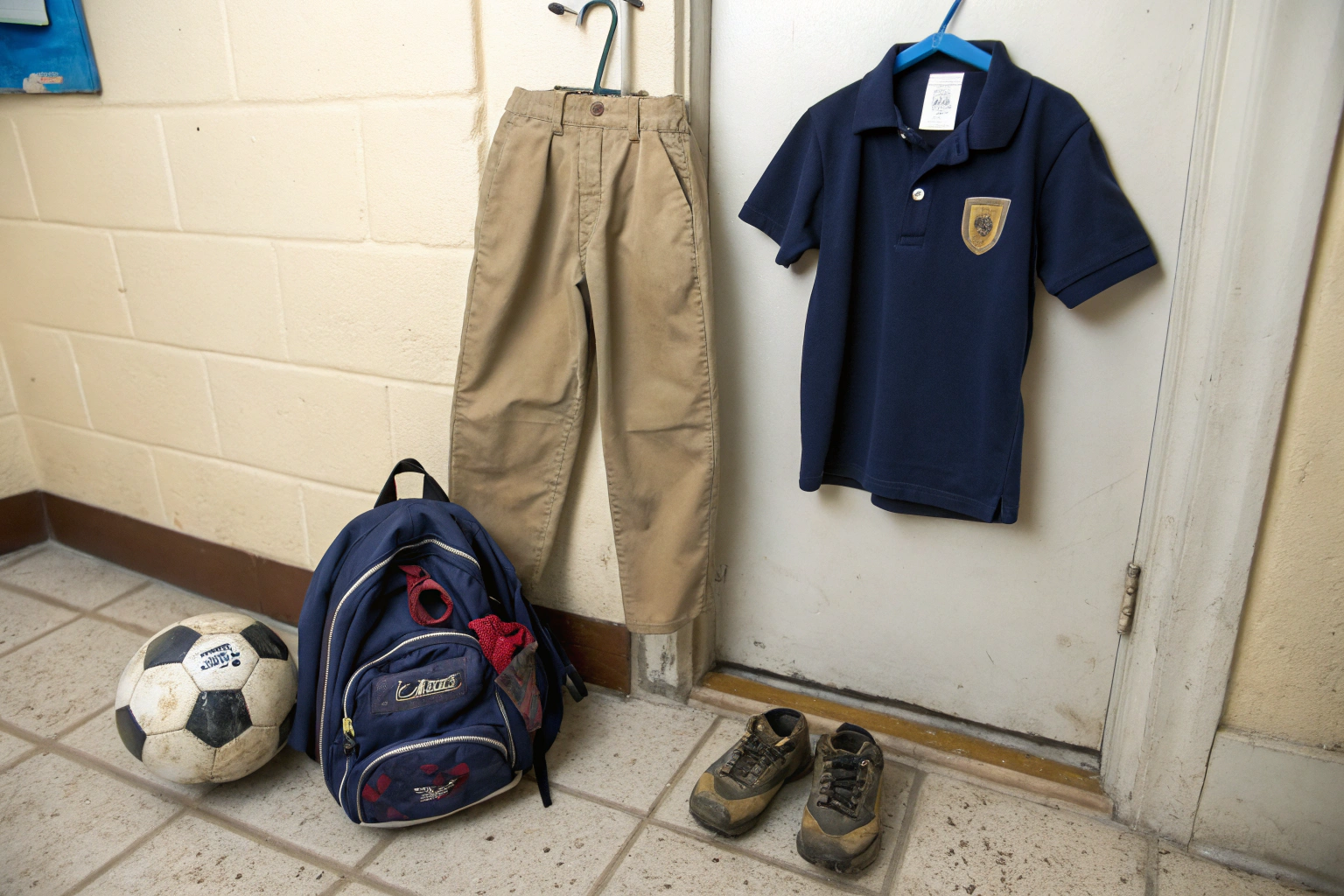
Let me tell you about the most demanding textile performance test on the planet. It’s not the Martindale Abrasion Tester. It’s not the ASTM Wash Fastness protocol. It’s a Seven-Year-Old Child on a Wednesday .
I’ve seen fabrics that survived 50,000 industrial rubs in the lab get destroyed in two weeks by a kid sliding into home plate on the gravel playground. I’ve seen seams that held 50 pounds of pressure pop open when a fifth-grader tried to stuff a entire library book into their back pocket.
Kids’ school uniforms are not just clothing. They are Personal Armor . They are subjected to Grass Stains Spaghetti Sauce Glue Sticks and Sheer Physical Exuberance . And they are washed. My goodness are they washed. Three maybe four times a week. In hot water. With whatever detergent was on sale.
The parents buying these uniforms have one question in their mind when they click "Purchase" or walk into the store: "Will this make it to June?" If the answer is "No" they will never buy your brand again. They will tell the other parents in the school pickup line. Your reputation is trashed.
At Shanghai Fumao we supply fabric to several school uniform programs. We’ve learned through brutal trial and error exactly which fibers and which constructions can survive the K-12 gauntlet. In this article I’m going to share the specific fabric specifications that separate a "One-Semester Wonder" from a "Hand-Me-Down Hero."
What Is the Best Polyester Cotton Blend for School Pants
This is the most important ratio in the entire school uniform industry. And I’m going to give you the exact answer right now. 65% Polyester / 35% Cotton Twill . This is the Goldilocks blend.
Let me explain the chemistry of why this specific ratio has dominated school trousers for 40 years.
The 65% Polyester:
- Strength: Polyester is a beast. It provides the Abrasion Resistance at the knees and the seat. It’s why the pants don’t develop holes after two months of desk-chair squirming.
- Wrinkle Resistance: Polyester has Thermoplastic Memory . It wants to stay flat. It comes out of the dryer looking Pressed . This saves parents hours of ironing.
- Shape Retention: Polyester prevents the dreaded "Baggy Knees" . Cotton stretches out and stays stretched. Polyester snaps back.
The 35% Cotton:
- Breathability: 100% Polyester is a Plastic Bag . Kids run hot. They sweat. The 35% Cotton allows Airflow and absorbs a small amount of moisture making the pants wearable for 8 hours.
- Comfort: The cotton provides a Softer Handfeel against the skin. It reduces the Static Cling that makes polyester pants stick to legs in winter.
- Dyeability: Cotton holds the Navy Blue and Khaki dyes beautifully giving a rich deep color that polyester alone can’t match.
Avoid the Trap: 60/40 or 50/50 blends. They sound similar but they perform significantly worse. The 5-10% shift in cotton content makes the fabric Shrink More and Wrinkle More . Parents will notice. They will complain.

How Does Twill Weave Prevent Knee Bagging in Active Kids
It’s not just the fiber. It’s the Geometry .
A Plain Weave (like a bed sheet) is a simple over-under grid. When a kid bends their knee the yarns slide past each other and Stay There . The fabric Grows . You get a permanent knee bump.
A Twill Weave (the diagonal lines you see on khakis) has Longer Floats . The weft yarn skips over multiple warp yarns. This structure acts like a Spring . When the knee bends the twill lines compress. When the leg straightens the twill lines Pull Back into place.
We specify a 2×1 Right-Hand Twill for uniform pants. It has the perfect balance of Diagonal Stretch and Vertical Recovery .
At Shanghai Fumao we test this by doing a Cyclic Knee Test . We stretch the fabric 500 times to simulate a month of bending. The Growth must be Less than 2% .
Why Is a Mechanical Stretch Finish Preferable to Spandex
Parents are suspicious of "Stretch" in school pants. They think it means cheap leggings material.
Spandex (Elastane): Adds 2-3% stretch. Great for comfort. Terrible for Durability. Spandex degrades under High Heat (dryers) and Chlorine Bleach (used in school laundry services). After 20 washes the spandex is dead. The pants are baggy and sad.
Mechanical Stretch: This is achieved by using Texturized Polyester Yarn in the weft. The yarn is crimped like a tiny spring. It provides Natural Give without any spandex. It is Immune to Bleach and Immune to Dryer Heat .
For a premium uniform pant that needs to survive industrial laundering a 100% Texturized Polyester or a 65/35 Mechanical Stretch is superior to any blend containing spandex.
How Can I Ensure Colorfastness in Navy and Khaki Uniforms
Navy and Khaki. The two pillars of school uniform color. And the two colors that cause the most Colorfastness Complaints .
Navy Blues: The problem is Crocking . The dark indigo dye rubs off on White Shirts . The kid comes home with a blue ring around their collar and a blue stain on their backpack straps. The parent is furious.
Khakis: The problem is Fading . After 10 washes the rich sandy beige turns into a Sickly Pale Yellow . The pants look old and tired.
The Solution for Navy: High-Fixation Reactive Dyes + Reduction Clearing.
We don’t use cheap Pigment Dyes that sit on the surface. We use Reactive Dyes that form a Covalent Bond with the cellulose in the cotton. After dyeing we run a Reduction Clear process that strips away Unfixed Dye . This is the loose dye that causes crocking. It’s an extra step that costs time and water but it’s non-negotiable for uniforms.
The Solution for Khaki: Vat Dyes or High-Lightfast Reactive Dyes.
Khaki is a light shade. It’s vulnerable to UV Degradation . We use dyes with a Blue Wool Scale Rating of 4 or Higher . This ensures the pants won’t fade to white after a summer of outdoor recess.
At Shanghai Fumao we test Every Dye Lot for AATCC 61 (Wash Fastness) and AATCC 8 (Crocking) . We require a Grade 4 for both.

What Is the AATCC 61 2A Wash Test for Uniform Durability
This is the lab test that simulates 50 Home Launderings in 45 minutes.
AATCC 61 2A uses a stainless steel canister. We put the fabric sample in with Steel Balls (to simulate abrasion) and a specific Detergent Solution . The canister is heated to 49°C (120°F) and rotated for 45 Minutes .
This accelerated aging tells us exactly what the pants will look like at the end of the school year.
We measure:
- Color Change: How much did the Navy fade?
- Staining: How much blue transferred to the white multifiber ribbon?
A passing grade is 4.0 . This means the color change is barely perceptible to the untrained eye.
How to Prevent White Polyester Shirts from Yellowing Over Time
The classic uniform white polo shirt. It looks crisp in August. It looks like a Dingy Yellow Rag by December.
The enemy is Optical Brightener Degradation and Body Soil Redeposition .
Optical Brighteners (OBAs) are chemicals that make white look "whiter than white." But OBAs degrade with UV Light and Heat . The shirt Reverts to the natural creamy color of polyester. That’s the yellowing.
Solution:
- Use Non-Optical White Fabric. It starts slightly creamier but it Stays Consistent all year.
- Use Anti-Redeposition Finishes. This prevents the dirt from the wash water from sticking back onto the shirt.
- Recommend Oxygen Bleach (Sodium Percarbonate) not Chlorine Bleach. Chlorine destroys the polyester fiber itself.
What Are the Best Stain-Resistant Finishes for Kids’ Clothing
Kids are Mobile Stain Generators . Ketchup. Mustard. Grass. Clay. Ink from a leaky pen.
The only way to give parents a fighting chance is Stain Release Technology .
There are two types of finishes and you need Both .
1. Soil Release Finish (Hydrophilic): This is applied to the Back of the fabric or is Exhausted in the dye bath. It makes the polyester fiber Water-Loving . Normally polyester is plastic. It holds onto oily stains (pizza grease). A Soil Release finish allows water and detergent to get under the stain and lift it off. This is crucial for Home Laundering .
2. Stain Repellent Finish (Hydrophobic/DWR): This is applied to the Face of the fabric. It’s often a C0 Fluorocarbon-Free DWR . It makes water-based stains (juice mud) Bead Up . The stain sits on the surface and can be Blotted Away before it penetrates.
The Combination Strategy: Repellency on the Face . Release on the Back . This is the same technology used in high-end tablecloths.
At Shanghai Fumao we offer a Dual-Action Stain Management Package specifically for school uniform fabrics. It adds about $0.35 per yard but it cuts return rates significantly.

How Does Acid Dyeing Improve Stain Resistance in Nylon
If the uniform includes a Nylon Jacket or Nylon Backpack standard dyeing makes the stains Worse .
Standard nylon dyeing uses Acid Dyes . The dye sites on the fiber are Positively Charged . They attract negatively charged Acid Dyes . But they also attract negatively charged Food Coloring and Tannins (coffee tea red wine).
The result? A nylon jacket that is a Stain Magnet .
The Fix: Stainblocker Treatment. After dyeing we apply a Syntan (Synthetic Tanning Agent) . This is a large colorless molecule that Blocks the Remaining Dye Sites . It fills the "seats" so the food coloring has nowhere to sit.
This is standard on residential carpet. It should be standard on kids’ outerwear.
Why Is Mechanical Finishing Better Than Chemical Finishing for Longevity
Chemical finishes (like softeners and stain repellents) Wash Off . That’s just a fact. After 20-30 washes the C0 DWR is gone. The parent needs to reapply a spray-on treatment.
Mechanical Finishes are Permanent . They are achieved by physically altering the surface of the fabric.
Brushing: The fabric is passed over rotating wire brushes. This raises a soft Micro-Fuzz . This fuzz hides stains and abrasion marks. It’s why Brushed Twill looks better longer than Smooth Twill .
Calendering: The fabric is passed through hot high-pressure rollers. This fuses the surface fibers into a Smooth Hard Shell . This repels dirt and resists pilling. It’s permanent.
For school pants Light Calendering followed by Light Brushing gives the best of both worlds: a smooth dirt-resistant face and a soft comfortable interior.
How to Reinforce High-Stress Seams in Children’s Apparel
The fabric can be bulletproof but if the Seams Fail the pants are trash. And kids’ seams fail in specific predictable places.
The Crotch Seam. The "Squat and Lunge" zone.
The Seat Seam. The "Slide into Home Plate" zone.
The Knee Seam. The "Constant Flex" zone.
Standard Construction (Fails):
- Single Needle Lockstitch: One thread on top one on bottom. It Grinning (gaps open) when stretched. Fails catastrophically when one thread breaks.
Premium Uniform Construction (Survives):
- Safety Stitch (5-Thread Overlock): This is a combination of a 2-Thread Chainstitch and a 3-Thread Overedge . It’s strong and it Seals the Raw Edge to prevent fraying.
- Double Needle Topstitch: This adds Redundancy . If one seam fails the other holds.
- Bartacks: At the base of the fly at the pocket corners at the ends of the seat seam. A bartack is a Dense Zig-Zag Weld of thread. It distributes the stress over a wide area. It Does Not Rip .
At Shanghai Fumao we work with our CMT partners to ensure the Seam Slippage is less than 1mm at 10lbs of force (ASTM D434). This is the difference between a seam that holds and a seam that "grins" open.

How Does Flatlock Stitching Reduce Irritation for Sensitive Skin
Kids with sensory issues or eczema Hate raised seams. They complain the pants are "scratchy."
Overlock Seams have a Ridge of thread on the inside. This ridge rubs against the thigh and waist.
Flatlock Seams are sewn with a special machine that Butts the Fabric Edges Together and sews them flat. There is Zero Ridge .
This is the standard for premium activewear. It should be the standard for kids’ uniform Polo Shirts and Underwear . The waistband and side seams should be Flatlocked for All-Day Comfort .
What Thread Type Prevents Seam Breakage in Active Play
The fabric stretches. The thread Must Stretch Too .
Cotton Thread: Breaks. Do not use for uniforms.
Spun Polyester Thread: Strong but Fuzzy . The fuzz creates friction and heat. Breaks under high-speed industrial sewing.
Corespun Thread (Polyester Core / Cotton Wrap): This is the Gold Standard . The Polyester Core provides Strength and Stretch . The Cotton Wrap provides Heat Resistance (from the sewing needle friction) and Softness against the skin.
We specify T-24 or T-27 Corespun Thread for all major uniform seams. It costs slightly more but it eliminates Seam Failure Returns .
Conclusion
Selecting the most durable fabrics for kids’ school uniforms is a science of strategic compromises. You need the strength and wrinkle resistance of polyester balanced with the breathability of cotton in a precise 65/35 ratio. You need a twill weave that recovers from knee bends and seams reinforced with safety stitching and bartacks. And you need colorfast dyes and stain management finishes that can survive 50 hot washes and a cafeteria full of spaghetti.
The goal is not to make an indestructible suit of armor. The goal is to make a garment that keeps its shape its color and its integrity long enough to be passed down to a younger sibling. That is the ultimate sustainability metric for a school uniform.
At Shanghai Fumao we apply the same rigorous standards to our uniform fabrics as we do to our performance outdoor gear. We test for abrasion wash fastness and seam strength. We understand that a disappointed parent is a lost customer forever.
If you are a uniform supplier or a school administrator looking for a reliable source of high-durability fabric please reach out to our Business Director Elaine. She can provide our Uniform Fabric Specification Pack and discuss our stock service program for core Navy and Khaki.
Contact Elaine at: elaine@fumaoclothing.com








