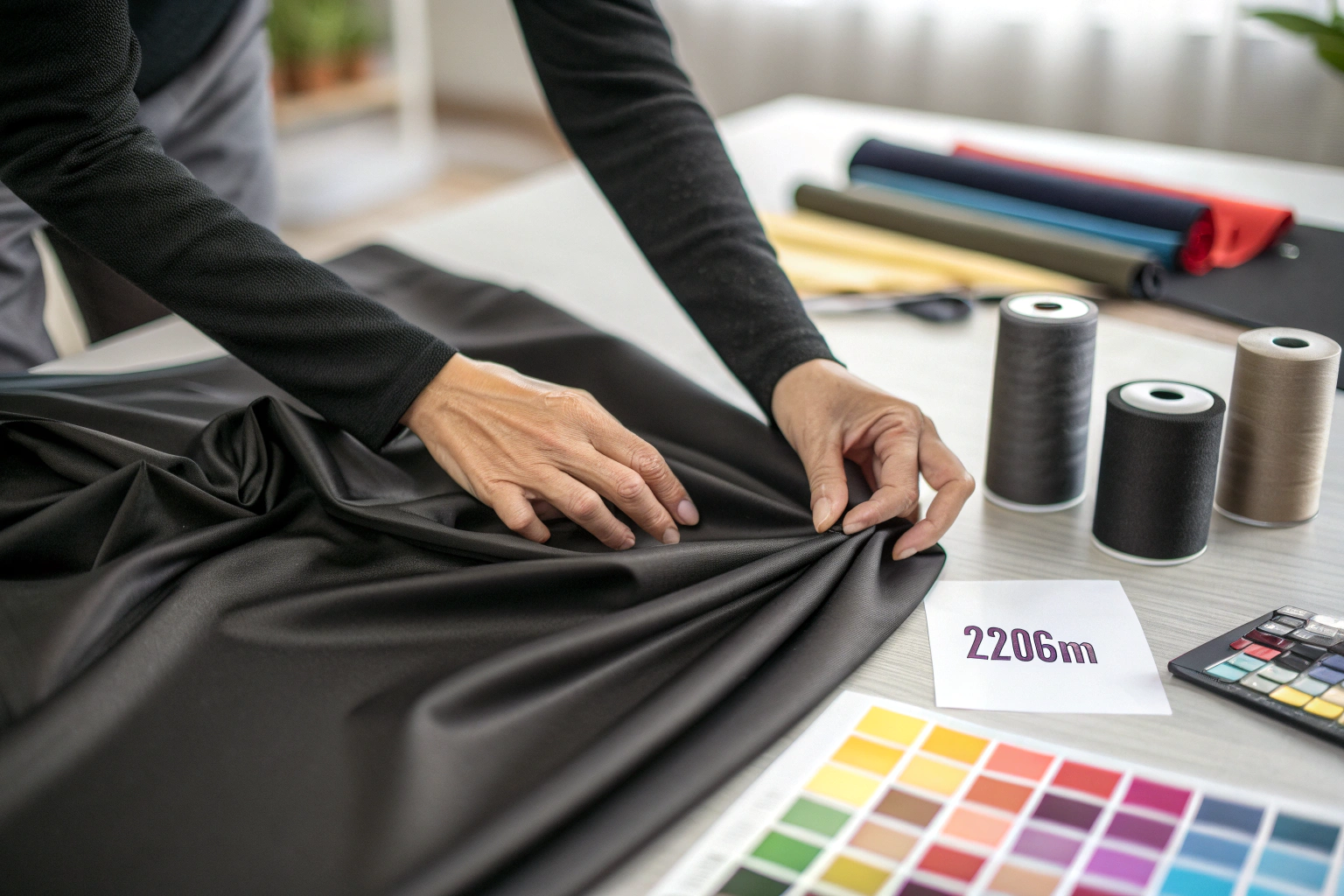
I’ve seen too many startup activewear brands crash before their second order. The reason isn’t marketing or design. It’s the fabric. They order "stretchy shiny stuff" from a catalog photo, and three months later, they get a shipment of see-through shorts that sag after two yoga sessions. That kills your return customer rate faster than a delayed delivery.
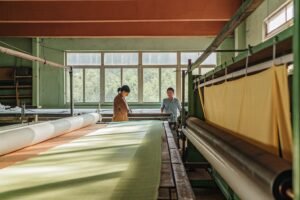
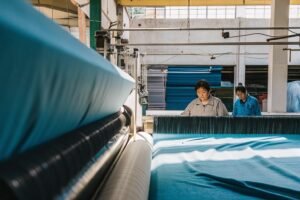
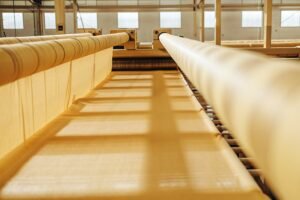
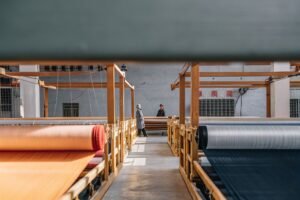
Lycra, or elastane, is not a one-size-fits-all material. For yoga and lounge shorts, you need a weight between 200gsm and 280gsm, a matte finish, and a cotton-modal or nylon face for softness. The perfect weight gives you compression without sheerness, coverage when you squat, and recovery that snaps back after a full day of wear. At Shanghai Fumao, we run our circular knitting machines specifically calibrated for these tight tolerances on elastane blends.
But sourcing this fabric from Asia without seeing the roll first is a minefield. You have to check the opaque factor, the elongation percentage, and the pilling resistance on the gusset area. I’ve been knitting and finishing these fabrics in Keqiao for over 20 years. Let me walk you through exactly how to spec that perfect weight so you don’t end up with a container of see-through shorts sitting in a warehouse in New Jersey.
What Is the Ideal GSM Range for Non-See-Through Yoga Shorts?
You cannot trust a mill that says "our fabric is squat-proof" without checking the grams per square meter. That number is your first line of defense against a sheer disaster. I put every new sample on a light table in our CNAS lab before a client even touches it.

How Many Grams Per Square Meter Stops the Sheer Problem?
Start at 220gsm for dark colors. That’s the minimum. If a brand orders a 180gsm black Lycra short from me, I will tell them straight up: "This will go sheer when the wearer bends forward." It’s simple physics. The fabric stretches, the knit structure opens, and light passes right through the gaps between the yarns. A 220gsm fabric in a 95% cotton 5% elastane blend has enough fiber density to block that light. For lighter shades like white or pastel pink, you need to push to 260gsm minimum. Light colors inherently allow more light transmission.
In April 2023, a yoga influencer brand from Australia contacted me after a PR disaster. Their first "butter soft" short went viral on TikTok, but not in a good way. Customers filmed the sheer effect in a forward fold. Our solution was a 260gsm 47.5% Modal, 47.5% Recycled Polyester, 5% Elastane blend. We also switched from a single jersey to an interlock construction. The interlock structure creates two connected knit layers, almost like a double wall. We sent the new batch to a third-party lab for a "sheer-to-squat test" using a standardized sphere probe. The result showed zero visible light penetration at 90 degrees. Their refund rate dropped from 15% to under 2% in one quarter. For a detailed breakdown on how knit structure affects opacity, you should read this technical analysis of interlock fabric light blocking properties.
Does a Higher Weight Mean You Lose the Soft Hand Feel?
Not if you choose the right cotton combing level. People think heavy fabric feels like a winter hoodie. But a 260gsm can feel like a cloud if you use a long-staple combed cotton or MicroModal. The key is the fiber diameter. A coarser carded cotton at 260gsm will feel stiff. A fine 60s combed cotton at 260gsm will feel like a luxury towel.
I had a Los Angeles-based loungewear client who insisted that heavy fabric couldn’t be "peachy soft." I sent them a sample of a 280gsm peach-finish fabric we developed using a bio-enzyme wash. The enzyme eats the tiny fiber ends on the surface, so the hand feel becomes incredibly slick and soft, even though the physical weight is high. They measured it against a 160gsm sample from a competitor, and our heavier fabric had a lower friction coefficient. You can check this comparative study on fabric friction testing to see how the coefficient is measured. So, the weight doesn’t dictate the touch. The finishing chemistry and fiber length do.
How Do You Balance Compression and Recovery in a Lounge Short?
A lounge short that bags out after a movie marathon is a sleeping pant, not a lounge short. The magic is in the elastane content and, more importantly, the elastane gauge and heat-setting process.

What Is the Difference Between 20D and 40D Elastane in Shorts?
"D" stands for denier, the weight of the elastic fiber itself. A 20D elastane is a thin, light filament. It gives a soft, subtle stretch, like in a floppy T-shirt. A 40D is a thicker filament. It has more snap, more resistance. For a yoga short, you need 30D to 40D if you want that secure, held-in feeling. If you want an ultra-buttery, barely-there lounge feel, then 20D is your spec.
But here is the catch: a 20D filament in a loosely knit fabric will "grow." That means the elastic dies over time. You get permanent knee bagging. To stop this, at Shanghai Fumao, we use a creora® or Lycra® branded 30D elastane and knit it under high tension. Then we heat-set the fabric at 195°C for exactly 45 seconds in a stenter frame. This "locks" the elastane in a stretched state. When you let it cool, it wants to snap back like a rubber band. In 2022, a UK-based yoga brand had a 13% return rate on "knee bagging." We dissected their failed fabric and found they used an unbranded 20D elastic, and the mill skipped the final heat-setting to save on gas. We matched the hand feel with a branded 30D and ran the stenter at the correct speed. The elastic recovery rate jumped from 89% to 97% after ten stretch cycles on a tensile tester. If you want to dig deeper into how heat-setting temperature affects spandex recovery, that article explains the polymer memory logic perfectly.
How Do You Spec a Waistband That Doesn’t Roll?
Waistband roll is the number one complaint in lounge shorts. It happens when the elastane tension in the waistband is mismatched with the body fabric. If you sew a super-tight elastic tape onto a soft, slinky body, the body loses. It curls into the tightest zone.
I always tell my cut-and-sew partners to use a self-fabric waistband with a fused interlining. This means you take the same fabric as the body, fold it over a thin strip of heat-activated adhesive, and press it. This creates a stable sandwich. In January 2024, a Dutch brand ran a big yoga short program with us. They initially wanted a 1-inch knitted elastic inside a body-fabric tunnel. I warned them about rolling. They tested a prototype, and the front edge curled like a scroll. We switched to a self-bound waistband with a 180gsm non-woven fusible interlining. They washed the pre-production sample 15 times in a commercial machine. Zero roll. Zero twist. For reference, you might need to check the standard compressive strength of fusible interlinings in waistbands to specify the right thickness for your design.
What Is the Best Fabric Composition for Sweat-Wicking and Breathability?
A yoga short that feels like a plastic bag in a hot studio is a design fail. The fabric must pull sweat off your skin, push it to the surface, and evaporate it fast. This requires a specific yarn composition and a specific knit structure.

Should You Choose a Polyester-Spandex or a Nylon-Spandex Face?
I prefer nylon for premium lounge shorts. Nylon is inherently softer than polyester and takes acid dyes that stay colorfast longer. However, nylon absorbs about 4% of its weight in water, so it dries slightly slower than a 100% polyester face. If your selling point is "fastest dry time," use a hydrophobic polyester with a wicking finish.
Polyester is plastic-based. It naturally repels water, which sounds good, but it can trap oil-based sweat and stink. Nylon breathes slightly better but needs a really good anti-microbial treatment to stop odor. In 2021, a hot yoga studio chain in Canada asked us for a "no-stink" short. Nylon was too slow to dry for their 40°C room. We proposed a 90% recycled polyester 10% Lycra blend. We used a "micro-channel" cross-section recycled yarn from Unifi for the face. These yarns have tiny grooves that act like pipes, sucking moisture away via capillary action. We then dyed the fabric without silicone softeners because silicone coats the grooves and ruins the wick. The dry time on a heated plate test was 12 minutes, compared to 22 minutes for their standard cotton-spandex. If you are researching how to measure moisture management, this guide to moisture management testing using a MMT tester explains the grading.
Do You Need a Mesh Gusset Liner in Your Specification?
This is a gusset detail that separates a well-sourced short from a rookie mistake. The gusset is that diamond-shaped piece in the crotch. If you just sew the four body panels together, the seam intersection gets thick and scratches. A double-layer gusset with a breathable cotton or mesh inner panel solves that.
I always spec a 100% cotton jersey liner for the inner gusset on our lounge shorts. Cotton absorbs the initial sweat spike and feels dry against the skin. The outer gusset shell keeps the Lycra compression look. In July 2024, an Australian buyer sourced a 220gsm recycled Nylon-Spandex short for Pilates. They forgot the liner spec. The factory just sewed a single layer of the shell fabric as the gusset. The friction on the inner thigh during the "Hundred" exercise caused chafing. We re-cut the gusset with a 160gsm modal liner pre-washed with anti-bacterial agent. The feedback on the next production was a 4.8-star average for comfort. A small piece of fabric makes a huge difference in functionality. For a closer look at how to construct a proper gusset liner in yoga pants, that tutorial shows the specific stitch types needed.
How Can You Verify the Lab Testing Behind an Elastane Specification?
Any supplier can print "Pass" on a PDF. I can print a gold star on a piece of paper. That doesn’t mean the fabric won’t fail when your customer puts it through a spin cycle. You need to trust the test methods, not just the test results.

What Does the "Stretch and Recovery" Test Actually Prove?
This test simulates years of wear in about ten minutes. We cut a 5cm by 20cm strip of fabric, clamp it into a tensile tester, stretch it to 80% of its length for 30 seconds, relax it, and measure how much it shrank. A passing lounge short fabric must have less than 5% growth after one minute of recovery. If it stretches from 10cm to 18cm but only returns to 10.8cm, that’s an 8% growth rate. That will bag.
At Shanghai Fumao, we benchmark against the ASTM D2594 standard. But we add a twist. We do the test five times in a row on the same sample to simulate a full day of "downward dog, savasana, repeat." A cheap 20D elastane might pass the first cycle but fail the fourth cycle. I once had an agent in India send me a competitor’s "240gsm Lycra" that passed a single-cycle test. We did our five-cycle test, and the growth rate shot to 14%. The elastane was dead. I told the European buyer to reject the lot. You need to ask for the cyclic stretch test report, not the single-shot certificate. The differences in understanding cyclic stretch recovery testing standards are critical to catching this.
Why Does Fiber Content Labeling Matter for Customs and Tariffs?
Lycra shorts fall under specific HTS codes. If you label the composition wrong, customs stops your shipment. If you say the fabric is "cotton spandex" but it’s actually "cotton viscose spandex," you might get hit with a higher duty or, worse, a misdeclaration fine.
In September 2023, we shipped a rush order of modal-spandex lounge shorts to a customer in Miami. Their designer updated the hangtag to say "Bamboo Spandex" because it sounded more eco-friendly to them. But mechanically, bamboo viscose and modal are different rayon processes with different HTS classifications for their raw fiber form. The US CBP flagged the container for a laboratory content check. It delayed the delivery by 18 days and cost them $2,300 in demurrage fees. I now tell all my customers: the generic fiber name on the bill of lading must match the commercial invoice, and it must match what our CNC laser fiber analyzer reads. If you sell bamboo, call it "viscose from bamboo" on the packet. Check this official guide on HTS classification for knit fabrics with elastane to make sure you declare the correct code. And always double-check the AATCC method for fiber composition analysis to get the percentage right.
Conclusion
Sourcing the perfect weight Lycra for yoga and lounge shorts requires you to think like a QC manager, not just a designer. The weight, feel, and recovery are all locked in before the first stitch hits the sewing line. Remember to aim for a 220-260gsm blend that pairs a soft face like Modal or Nylon with a 30D elastane core for snap. You need to ensure the mill heat-sets it properly to kill the bagging and uses a tight interlock or modified jersey structure to block light in a squat. The lab numbers—especially the cyclic stretch and Martindale pilling results—are your only insurance policy against a warehouse full of returns. Don’t just accept a sample that feels nice. Make them prove it.
At Shanghai Fumao, we don’t just push fabric off the shelf. We cut it, stretch it, wash it, and sweat in it before you ever buy a meter of it. We have over 20 years of experience knitting elastane blends specifically for the activewear market. We know what a downward dog does to a seam and what a spin cycle does to a waistband. If you want to build a tight supply chain for your next drop, I want you to succeed with a fabric that holds up and a weight that doesn’t betray your design.
If you are working on a new line of yoga or lounge shorts and need to figure out the exact blend, weight, and finish, let’s sort it out directly. You can email our Business Director Elaine at elaine@fumaoclothing.com with your target price point and desired hand feel. She can send you a pre-made tech pack of our bestselling 250gsm yoga short Lycra as a starting point. I’ll help you get that perfect weight, so your only reviews are about how good the fit is, not about the fabric.