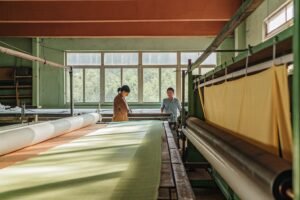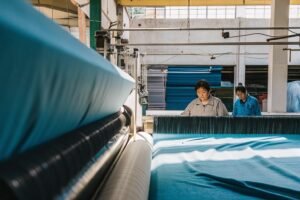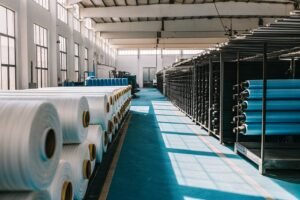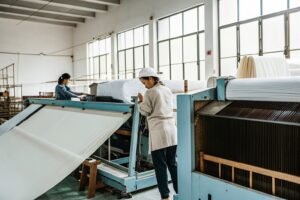
You’ve been burned by the generic contact forms on B2B marketplaces. You fill in your name, your email, your "expected order quantity," and then… silence. Or worse, a robotic reply from a sales agent who clearly didn’t read your tech pack and offers you a price for something completely off-spec. The frustration of trying to find a real human who understands the difference between a 21s open-end yarn and a 60s combed compact is the biggest barrier to starting a custom apparel project. You’re not looking for a chat widget; you’re looking for a technical partner who can look at your sketch and tell you the specific warp density you need to make that sleeve head stand up.
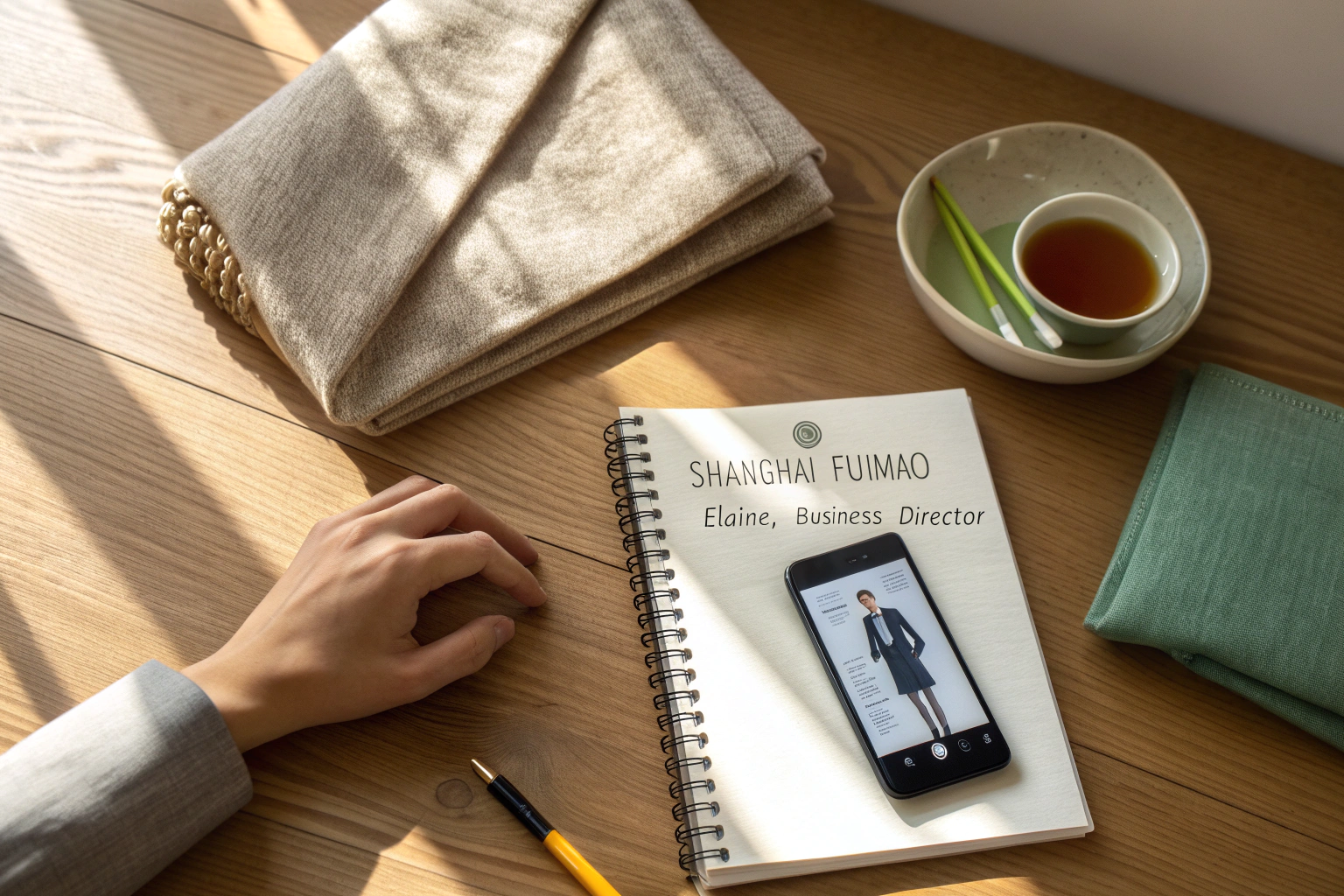
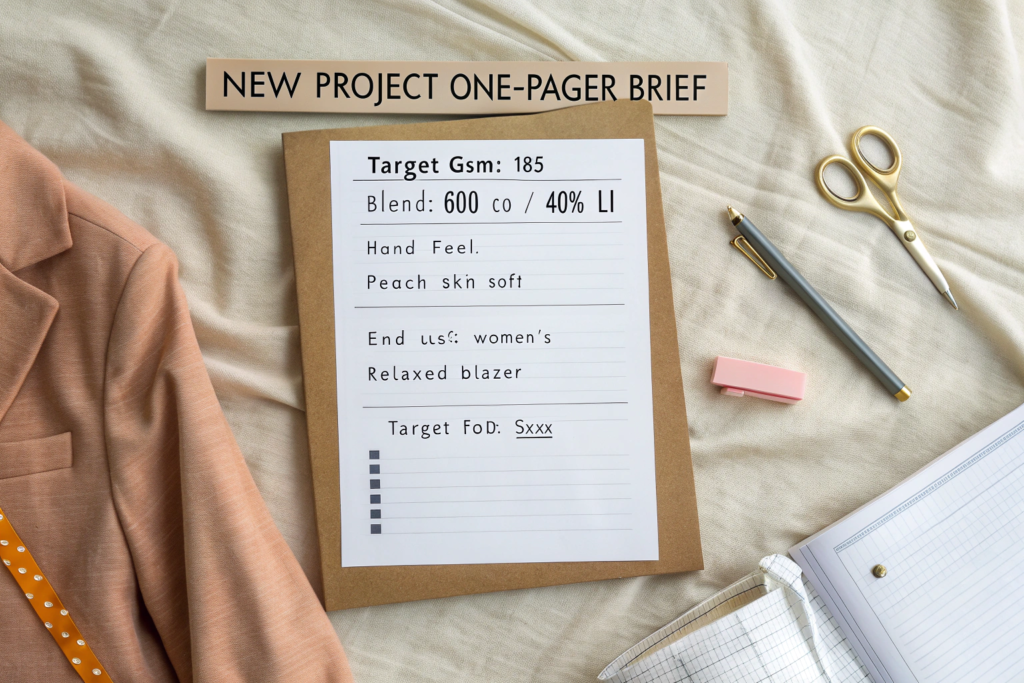
Contacting Shanghai Fumao directly for custom cotton linen apparel means bypassing the marketplace gatekeepers and connecting straight with our engineering and business team in Keqiao. The most effective channel is to reach our Business Director, Elaine, at elaine@fumaoclothing.com. But let me be clear: a "custom project" with a real mill isn’t a simple "hello, send me your price list" email. It’s a technical handshake. You need to send a brief that includes your target "GSM" (grams per square meter), the required "hand-feel profile" (crisp, fluid, sand-washed), and your "end-use application" (shirting, soft tailoring, resort wear). If you send an email with just a photo of a Zara shirt and say "make this," we will politely ask you for the physical spec, because fabric is physics, not just a picture. The magic happens when you give us the constraints, and we reply with the specific fiber blend, the weaving loom setup, and the dyeing recipe that hits your FOB budget.
So, what does that custom development pipeline actually look like inside our four walls? How do we translate your mood board into a warp beam? And what if you don’t have a tech pack—can a start-up or a small designer even get their foot in the door? Let me walk you through the exact steps, from the first email to the sealed shipping container.
What Is the Step-by-Step Custom Development Process?
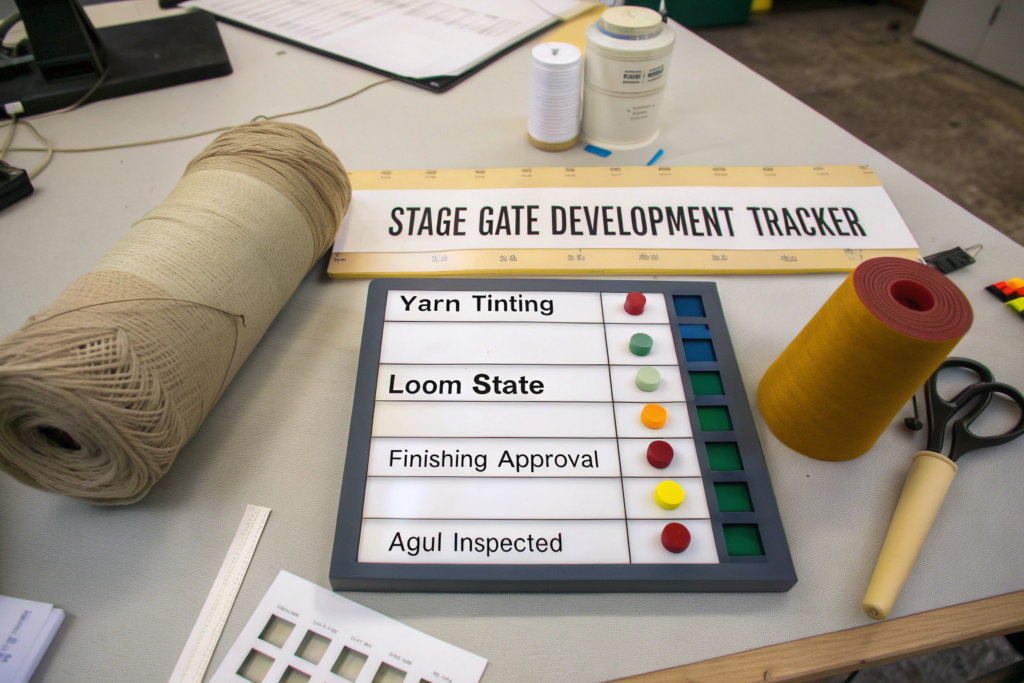
Once your email lands in Elaine’s inbox, it triggers a precise, seven-stage gated workflow that we’ve refined over two decades. This isn’t a chaotic "let’s see what happens" process. It’s a stage-gate system where you hold the signature authority to move to the next gate. The stages are: (1) Inquiry & Feasibility Review, where our engineers check if your concept can physically be woven; (2) Yarn Sourcing & Tinting, where we spin a specific trial batch of your custom blend; (3) Loom State Sampling, an unwashed, rough swatch to check geometry; (4) Finishing & Dyeing Approval, where you sign off on the final hand feel and color; (5) Bulk Greige Weaving; (6) Wet Processing & Sanforizing; (7) Final AQL Inspection & Export Packaging. You don’t pay the full 100% upfront; you pay a small development fee for the custom sampling, and then the bulk contract kicks in once you approve the pre-production sample. This protects both of us from the risk of misinterpretation.
How Do We Translate a Design Sketch into a Weaveable Tech Pack?
Designers think in silhouettes and emotions. Weavers think in interlacements and warp tension. The bridge between the two is the "fabric construction spec." When you send us a sketch of a relaxed, slouchy cotton-linen overshirt, we read between the lines. "Slouchy" translates to a lower weft density (maybe 52 picks per inch instead of 68) and a specific finishing wash (enzyme stone wash) to break the stiffness of the linen without fraying it. We don’t just guess; we plug your desired drape coefficient into our CAD system. Our textile engineers physically deconstruct your reference sample if you mail it to us. We take a 2-inch square, pick it apart thread by thread, and mount the yarns on a black velvet board. We measure the twist under a microscope, determine if it’s an S or Z twist, and count the threads per inch under a pick glass. We then cross-reference the weight (GSM) with the weave structure to reverse-engineer the exact yarn count. This is "tear-down analysis," and it prevents the "it just doesn’t look the same" disappointment later. It’s a skill that goes beyond simply knowing how to create a technical textile specification sheet from a fashion illustration.
What Happens During the Initial Yarn Spinning and Strike-Off Phase?
This is where it gets expensive for us, and exciting for you. We don’t just pull a yarn off the shelf. For a custom cotton-linen, we open a small batch of raw cotton lint (measured by micronaire) and hackled flax sliver. We manually blend these in a lab-scale blowing room to your exact ratio—say, 55% organic BCI cotton, 45% wet-spun Normandy linen. We then run this blend through a lab carding and drawing frame, and finally spin a small quantity of trial yarn, maybe 5 kilos. This trial yarn gets wound onto a mini-warper and threaded onto our sampling loom. We weave a "blanket" of different densities—a strike-off that shows your pattern at various picks per inch. We send you this blanket un-dyed first, just raw greige. You can feel the structural differences. Sometimes, a 58 PPI feels too dense; a 54 PPI feels perfectly airy. You circle the one you want with a fabric marker, sign the blanket, and courier it back. That signed blanket becomes our legal production standard. No guesswork.
How Can Small Brands and Start-Ups Access Our Custom Services?
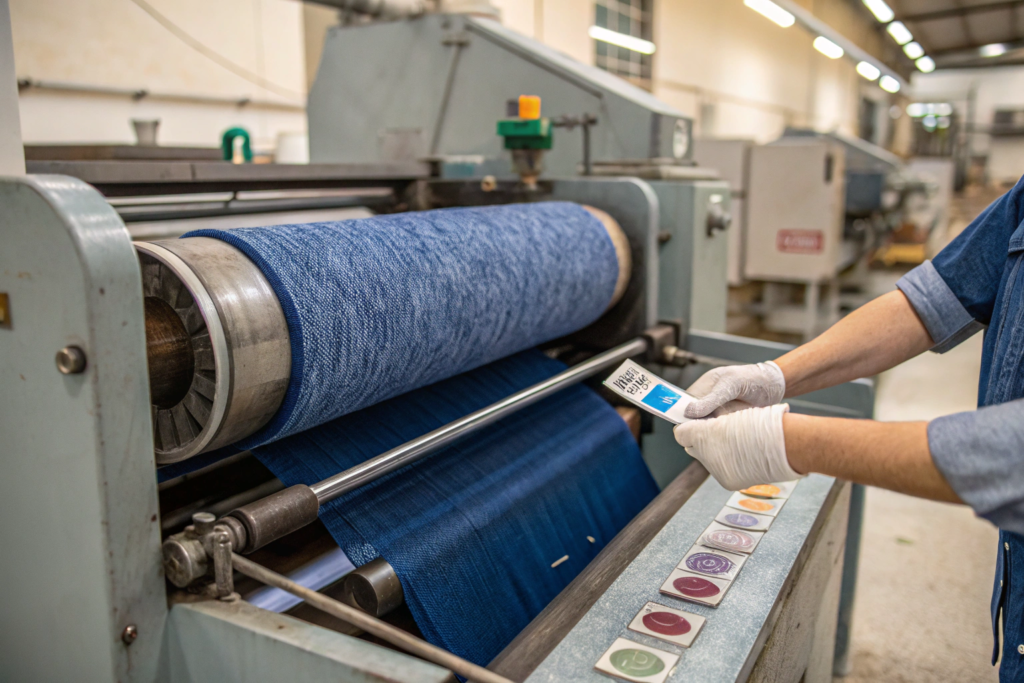
The biggest lie in this industry is "MOQ: 3000 meters." That shuts the door on the most innovative brands—the small, independent labels that actually push the needle on sustainable fashion. We restructured our production floor specifically to welcome "micro-brands." We operate a dedicated "mini-mill" line for orders that traditional factories would reject. This line uses a sectional warping machine specifically designed for short runs and a small batch jig dyeing machine instead of a massive continuous dyeing range. For start-ups, you don’t have to fill a container. You can order as little as 200 meters of a custom cotton-linen blend for your first collection drop. Yes, the price per meter is higher than a 10,000-meter bulk order because the machine changeover time is the same regardless of length, but you get the exact same long-staple fiber and the same Sanforizing treatment.
What Is the Minimum Order Quantity for a Start-Up Brand?
Let’s be brutally specific: our technical minimum is the warp length required to tie onto the loom. A full industrial beam might hold 5,000 meters. That’s too much. For our mini-mill service, we use a "sample warper" that builds a warp band from individual cones, allowing us to run a practical warp of just 150-200 meters. For fabric width (typically 57/58 inches), 200 meters gets you about 300 square meters of fabric—enough for roughly 130-150 shirts. That’s a perfect initial production run to test market reaction without bankrupting your storage space. For piece dyeing, the minimum is the vat capacity of our small jigger, which is about 80 kilos of fabric. If your fabric weighs 180 GSM, that’s roughly 300 meters. We will not lie to you and say we can do 50 meters perfectly. The dye shade variation on a 50-meter mini-run is too hard to control; you’d end up with a splotchy mess. We set the MOQ limits based on physics, not arrogance.
How Does Fumao Guide Start-Ups on Fabric Selection?
Most young designers come to us with a beautiful mood board and a piece of a vintage curtain they found at a flea market. They don’t speak textile code. That’s completely fine. We assign a dedicated sampling engineer to guide you through a "Sensory Audit." We courier you a "Sensory Starter Kit" containing three distinct 100% cotton-linen swatches: a "crisp finish" (unwashed loom state), a "soft finish" (bio-polished and enzyme washed), and a "vintage finish" (garment dyed with heavy stone wash abrasion). We ask you to sleep on them, wash them, wear them in your pocket for a day. See how they age. Once you pick the finish you love, we back-calculate the weave structure and the yarn twist needed. We also advise on color. Some start-ups want a bright digital print on slubby linen; we have to gently educate them that the slubs will "jump" the print head and blur the design, and instead steer them toward a smoother compact-spun linen-cotton. We walk you through the Cost vs. Performance curve to ensure you don’t design a fabric you can’t sell.
How Are Communication and Project Timelines Managed?
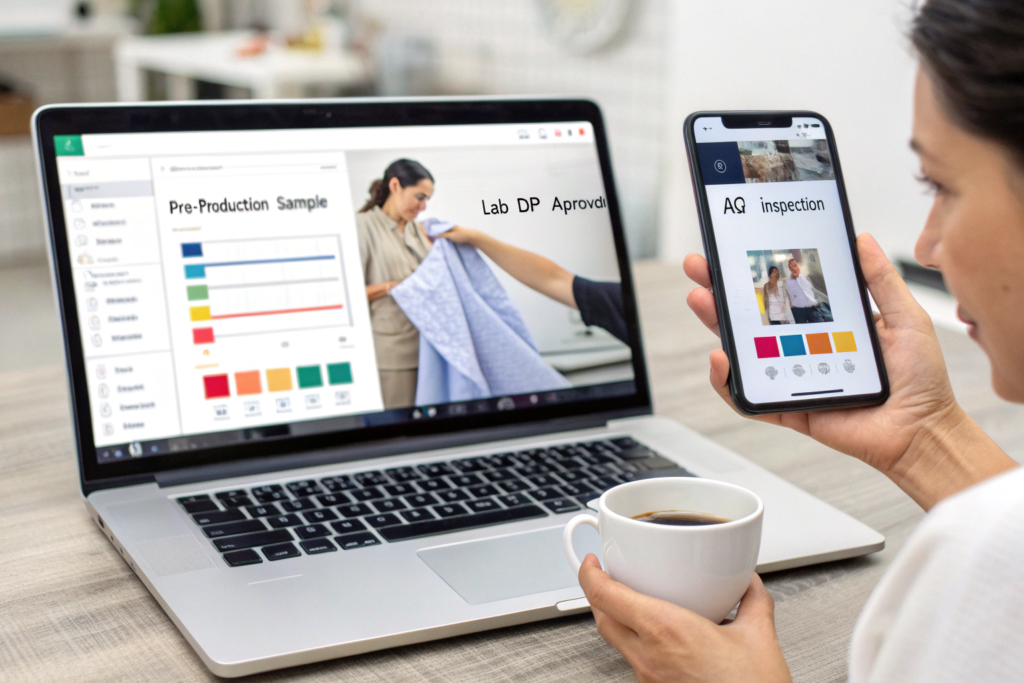
We bridge the 12-hour timezone gap between Keqiao and Los Angeles with asynchronous video and a shared project dashboard. You don’t wait three days for a WeChat reply. Once you are assigned a project code (for example, "C-L-24-089"), you get a login to our private client portal. This portal shows a Gantt chart of your sampling and bulk production timeline. You can see the exact stage: "Yarn Spinning – 40% Complete," "Weaving – Done," "Dyeing – Lab Dip Pending Approval." You approve digital lab dips on the portal by clicking a "Pass" or "Reject" button. This is critical for speed. A physical swatch courier takes 4 days to the US; a digital lab dip approval with spectral data takes 4 seconds. We often use a color calibrated screen share to finalize the initial hue, saving a week of transit time.
How Do We Handle Mid-Project Specification Changes?
Changing your mind halfway through is human nature, but it resets the clock. If you decide to change the color from Navy to Olive after we have already spun the yarn for Navy, there is a cost impact. The transparency of our portal prevents arguments. If you request a spec change, we instantly calculate the "knock-on effect." For example, a heavy pigment coating to achieve a "paper touch" finish will reduce the tear strength. Our system auto-flags that and asks, "Warning: This coating conflicts with your initial spec of 2000g tear strength. Proceed?" We don’t just blindly follow orders; we push back with data. I remember an Australian designer who wanted to add a softening wash to a fabric that was meant to be a structured, boxy shirt. Our team sent her a virtual 3D simulation of the shirt’s drape with and without the wash. She saw the silhouette collapse in the simulation and immediately cancelled the change. A factory that just says "yes" to everything is a factory that doesn’t care about your final product.
What Are the Standard Lead Times from Deposit to Delivery?
Under-promise, over-deliver. For a custom cotton-linen development from scratch, we block out 5-6 weeks for the sampling phase (yarn spinning, weaving blanket, finishing trial, courier time). Once the pre-production sample is approved, bulk weaving for a small-to-medium order (under 3,000 meters) takes 3-4 weeks, and bulk dyeing and finishing adds another 2-3 weeks. Adding it up, a custom project takes about 10-12 weeks from deposit to factory gate. However, if you are re-ordering an existing custom quality without any changes, we can cut the lead time to 6 weeks, because the yarn stocks are already checked and the dye recipes are locked. We always add a buffer for Chinese National Holidays (Golden Week in October, Chinese New Year in Jan/Feb). During CNY, we shut down for 3 weeks, and we inform every client in September to get their orders in early. This visibility allows you to plan your drops. The coordination of timelines is essential, and many find it useful to look at how to plan apparel production calendars around Chinese public holidays and peak manufacturing seasons.
What Information Should You Prepare Before Contacting Us?
A blank email takes time to clarify. The fastest route to a sample is a "One-Pager" brief. I don’t need a 50-page document, but I need the "Golden Triangle" of textile specs: Weight (GSM target), Composition (blend ratio), and Finish (desired hand feel). Even if you don’t know the exact numbers, describe the "reference garment." For example, "I want a dress that feels like this Acne Studios linen shirt I have, but in a 50/50 cotton-linen blend for under $7.00 FOB." That sentence gives me the quality tier, the fiber budget, and the cost ceiling. If you can include a physical reference swatch, that saves two weeks. We also ask for the "care instructions" you dream of. If you want a "machine washable, tumble dry" claim on a linen suit, that requires a very specific resin-free anti-shrinkage finish, which changes the cost and the hand feel entirely.
Why Is Defining the "End-Use" Critical for Fiber Selection?
A fabric that looks beautiful on a dress form might tear on a hiking trail. "End-use" dictates the safety standards and the physical test criteria. If you are making children’s sleepwear, we legally must use a specific OEKO-TEX Appendix 6 dye set that contains no allergenic disperse dyes. We also have to ensure the fabric is naturally flame resistant or passes the 16 CFR Part 1610 standard for flammability. If you’re making commercial upholstery for a hotel lobby, the Martindale abrasion cycles need to hit 40,000 rubs, which forces us to use a thicker weft yarn and a tighter weave than apparel fabric. When you tell us "this is for a unisex travel blazer," we immediately think "crease recovery" and "odor resistance." We might suggest adding a tiny 2% elastane core in the weft for stretch recovery, or a micro-porous membrane backing for wind-proofing. Your end-use is the filter we apply to all our technical advice. We don’t just sell you cotton-linen; we sell you the specific cotton-linen that survives your customer’s life. This logic applies universally when selecting a textile based on the specific performance requirements of the final garment application.
How Do Target FOB Prices Shape the Fabric Engineering?
Be upfront with your "hard cost ceiling." If your target FOB price is $4.50 per meter, I won’t waste your time offering a 100% Belgian wet-spun linen at $8.90. Instead, we engineer down to the budget. We might propose a 30% linen/70% BCI cotton blend that still looks texturally "linen-forward" because we use a high-twist cotton yarn to simulate the dry hand, or we might propose a linen/viscose blend that gives the drape and luster but at a lower base fiber cost. I appreciate a customer who says, "Elaine, I only have $5.00 to land this meter in London." It becomes a stimulating engineering puzzle. We look at the waste ratios, the dyeing route (piece dyeing vs. cheaper optical white), and the packing method. Sometimes, changing the selvedge design from a tight "tucked-in" selvedge to a simple "fringe" selvedge saves 1% on waste and hits the budget. We show you a "Good-Better-Best" pricing table, so you see exactly where your money goes. Honesty in pricing prevents us from sending a sample that you fall in love with but can never afford to scale.
Conclusion
Reaching out to a mill for custom fabric shouldn’t feel like shouting into the void. It starts with a single, targeted email to Elaine, carrying your target GSM, your blend ratio, and your end-use. It evolves into a scientific partnership: you sign a greige strike-off, we send you a mini-TC for your organic fibers, and you track the dyeing process on a live Gantt chart while sipping your morning coffee in New York. From the first sensory kit for a new designer to the stage-gate sign-off for a heritage brand, the process is built on physics and visual data, not vague promises.
We open our doors to start-ups with 200-meter dreams and to established brands with 50,000-meter realities. You come with the creative vision; we show up with the twisting machine and the ICP spectrometer. Your sketch is the question; our weave room is the answer.
So, open your email, attach your sketch or your reference swatch photo, and write down your "Golden Triangle" numbers. Send that to our Business Director, Elaine. She will break down the costing options and help you refine the spec before we even start charging you for the lab dip. Contact her today at elaine@fumaoclothing.com, and let’s start weaving your next collection.