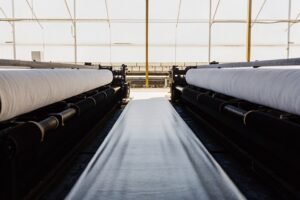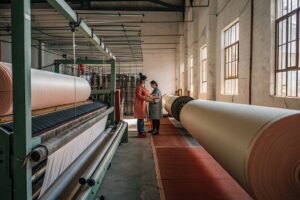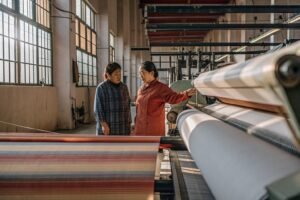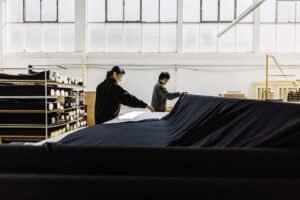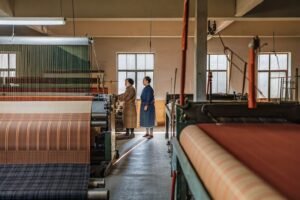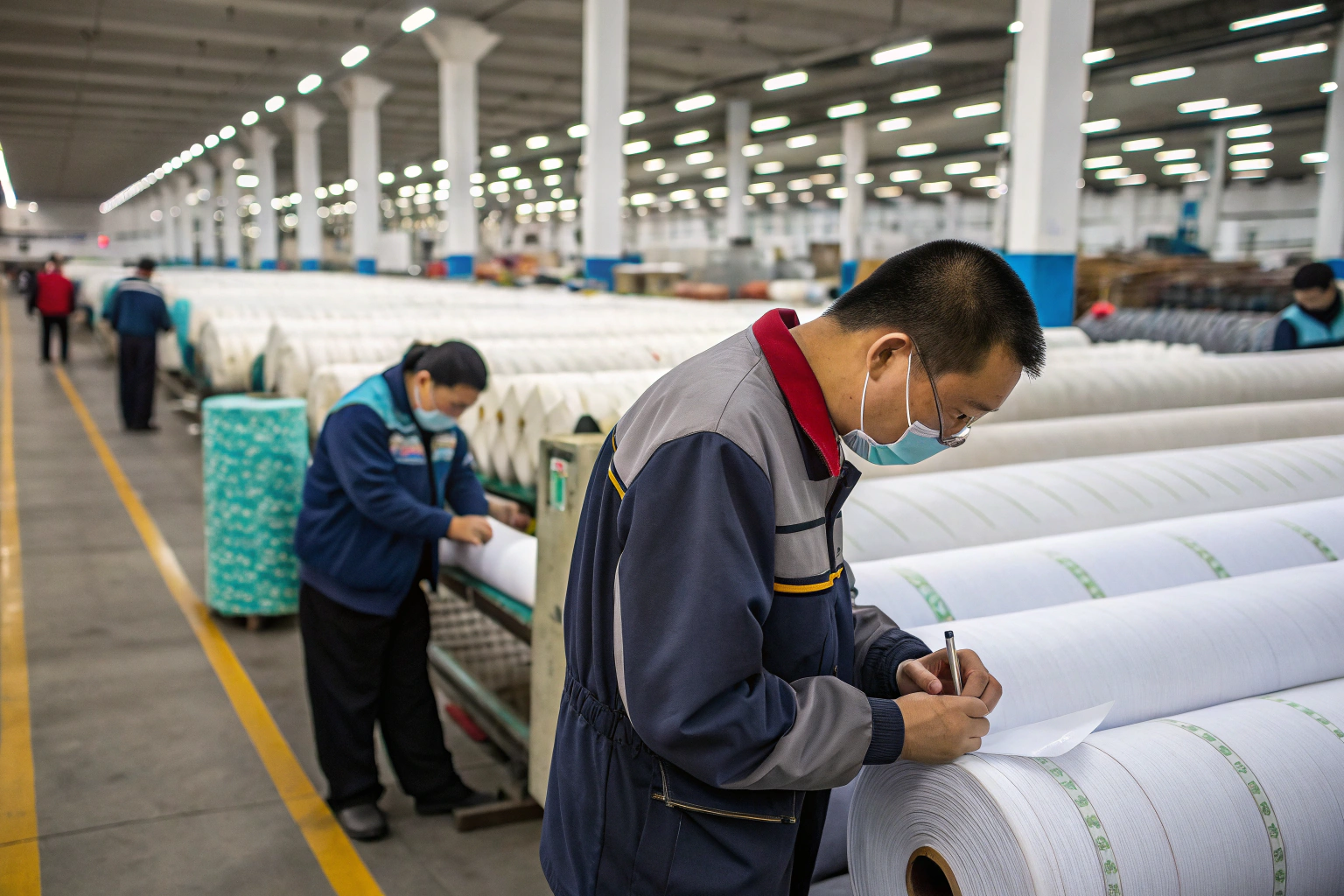
I’m going to say something that might shock you if you’ve never been to my factory floor. "Quality Control" in China is not a department. It’s a War. It’s a daily battle against the laws of physics the fatigue of human eyes and the relentless pressure of price.
I’ve walked through mills in Italy and Japan where QC is a quiet gentleman checking a few rolls an hour. That’s because they trust the upstream process. In China because we are the world’s factory we have learned the hard way that Trust is Expensive and Verification is Cheap . We have built an entire parallel industry of inspection agencies (SGS Intertek Bureau Veritas) precisely because the system requires External Accountability .
But here’s the part most Western buyers miss. Chinese QC is only as good as the Relationship Pressure behind it. You can have a 50-page QC manual. You can have a third-party auditor in the factory every week. But if the factory owner doesn’t Respect You those inspectors will be shown the "Clean Rolls" while the "Problem Rolls" are hidden behind the boiler room.
Effective QC in China is a blend of Scientific Measurement and Social Leverage . It’s about knowing the 4-Point System AND knowing what to say to the factory manager over a cup of tea to make sure he doesn’t try to slip you B-grade goods.
At Shanghai Fumao we’ve built our reputation on a QC system that is Internalized . We don’t rely on our clients to find defects. We find them ourselves because we know that a returned container from Long Beach costs 10 times more than the extra hour of inspection on our own floor. In this article I’m going to explain the real mechanics of Chinese textile QC from the mill owner’s perspective.
What Does a 4-Point Fabric Inspection Actually Entail
Let’s get into the weeds of the most important acronym in textile sourcing: The 4-Point System . This is the global standard (ASTM D5430) for grading fabric quality. If you don’t understand this you are buying fabric blind.
The system is simple. Defects are assigned points based on their Length .
- 1 Point: Defect up to 3 inches long.
- 2 Points: Defect 3 to 6 inches long.
- 3 Points: Defect 6 to 9 inches long.
- 4 Points: Defect over 9 inches long or a Full Width Defect (like a barre mark).
The inspector examines 100 Square Yards of fabric. They count up all the points. The total points per 100 square yards determines the Grade .
- Grade A (Premium): 0 – 20 points per 100 sq yds. This is what we ship to Japan and high-end European brands.
- Grade B (Standard): 21 – 30 points per 100 sq yds. This is standard for US wholesale apparel.
- Grade C (Reject): 31+ points per 100 sq yds. This is Deadstock . It should not be used for first-quality garments.
The Trap: Some mills calculate points per 100 Linear Yards which is NOT the same. A 60-inch wide fabric has much more surface area than a 44-inch fabric. Always ensure the report states "Per 100 Square Yards."
At Shanghai Fumao we run a 4-Point Inspection on 100% of production . Not 10%. Not a random sample. 100% . It’s slow. It’s expensive. But it’s the only way we can sleep at night.

How Do You Identify a Barre Mark vs. a Weaving Streak
This is where the art meets the science. Both are lines across the fabric. But one is Fixable and one is Permanent .
Weaving Streak (Stop Mark) : This happens when the loom stops. The tension relaxes and when it restarts there’s a visible line of denser weave. It is usually temporary. It washes out in the first wet process (dyeing or finishing). A good inspector will Flag it with a Removable Sticker and note "Should wash out."
Barre Mark : This is a Dyeing Defect . It’s a band of uneven color across the width. It happens when the dye liquor circulation in the jet machine is uneven. This is Permanent. It will not wash out. It will be visible in the finished garment. This is an Automatic 4-Point Defect .
You train inspectors to scratch the surface of the streak with their fingernail. If the color is on the surface (Barre) it’s bad. If it’s a shadow in the weave (Weaving Streak) it might be okay.
Why Is Shade Continuity Within a Roll Just as Important
This is the defect that destroys a cutting table. Shade Variation .
A roll of fabric might have zero physical holes. Perfect 4-Point score. But the Left Selvage is Navy and the Right Selvage is Midnight Blue . This is called Side-to-Center Shading .
If a garment factory cuts this fabric the left sleeve will be a different color than the right sleeve. The customer returns the jacket. The brand charges back the factory.
Our QC team checks Shade Continuity by cutting a swatch from the Beginning Middle and End of every roll and placing them side by side under a D65 Lightbox . We also compare the Left Center and Right of the roll. If there is a visible difference the roll is Downgraded to B-Grade even if the 4-Point score is perfect.
How to Verify That a Third-Party QC Report Isn’t Fake
I’m going to let you in on a dark secret of the industry. Fake QC Reports Exist. They are not even hard to get. A trading company with a copy of Photoshop and a PDF editor can change the "Grade B" to "Grade A" in 30 seconds.
Or worse there is Collusion . The factory pays the inspector a "red envelope" (cash bribe) to look the other way. The inspector writes a clean report and goes to a long lunch.
How do you as a buyer sitting in New York or London protect yourself? You Triangulate the Data .
Verification Tactic 1: The Timestamped Photo.
Demand that the inspection report includes High-Resolution Photos with Metadata . The photo of the defect should be taken with a phone that embeds GPS Location and Timestamp . You can check this metadata. If the photo of the "Inspection" was taken at 2:00 AM on a Sunday it’s suspicious.
Verification Tactic 2: The Random Request.
After the report is issued email the inspector (CC the factory) and say: "Thank you for the report. For our records please go back to Roll #XYZ and send me a photo of the Core Tube Label inside the roll."
A fake inspector won’t have access to the warehouse to do this. A real one will be annoyed but will do it. This is the Litmus Test .
Verification Tactic 3: The Reference Sample.
Ask the inspector to cut a 6×6 Swatch from a specific flagged defect and mail it to you via express courier. You need to see and feel the defect yourself. If the defect doesn’t exist in the swatch the report is fake.

What Are the Most Commonly Falsified Data Points on a QC Audit
The fraudsters are lazy. They tend to fake the same things over and over.
- Shrinkage Test Results: They just write "3%" because that’s the standard. They didn’t actually cut wash and measure. You must demand the Raw Data (Pre-wash measurement vs Post-wash measurement).
- Roll Length: They write what’s on the mill ticket (100 yards). They didn’t run it through the measuring machine. The actual yardage might be 94 yards. This is Theft .
- Color Continuity: They check "Pass." They didn’t look at the roll ends under a lightbox. You will find the shading in your cutting room.
Why Is On-Site Presence During Initial Production Critical
There is no substitute for Boots on the Ground . For the first production run with a new factory you or your agent Must Be There .
The first 500 Yards of a new order are the most dangerous. This is when the machine settings are dialed in. This is when the dye recipe is proven in bulk.
If you are present for the First Cut and the First Dye Lot you set the Quality Expectation . The factory manager sees that you are serious. He assigns his A-Team to your order.
If you just send a PO and wait for the UPS box you are rolling the dice. The factory will use your order to train their New Hires .
How to Build a Relationship That Improves QC Compliance
This is the part that Western business books miss. QC in China is Relational not Transactional.
A factory owner has 50 orders in his queue. He has 50 clients demanding "A-Grade Quality." He only has enough A-Grade fabric to satisfy 30 of them. Who gets the good stuff?
He gives it to the Clients He Respects . The ones who pay on time. The ones who don’t scream at his staff. The ones who visited his factory and commented on his new imported loom.
How to Build This Respect:
- Visit the Factory. Even just once. Bring a small gift from your hometown. This is Face .
- Pay the Sample Bill. Don’t nickel and dime the lab dip fees. This signals you are a serious business partner.
- Share the Success. If the fabric sells well send the factory owner a photo of the finished garment in a nice store. He will beam with pride. He will move heaven and earth to keep you happy on the next order.
At Shanghai Fumao our best QC performance is always on orders for clients who have been with us for 5+ years. It’s not because we want to cheat new clients. It’s because we Anticipate the veteran client’s standards. We know exactly what level of slub they will accept. That intuitive understanding only comes from a long relationship.

How to Give Feedback on Defects Without Damaging the Relationship
You receive the shipment. There’s a problem. 5% of the rolls have an issue.
The Wrong Way (Email): "Your quality is terrible. We found 20 defects. We demand a 20% discount."
Result: The factory owner loses Face . He gets defensive. He argues that the defects are within "Industry Standard." He delays your credit for 6 months.
The Right Way (WeChat Voice Note): "Hey [Name] hope you are well. Listen we opened the container and found a small issue on a few rolls. I’m sending you photos. Can you help me understand what happened here? I want to make sure we fix this for the next run."
Result: You have framed it as a Joint Problem-Solving Exercise . You have not attacked his competence. He will likely offer a Credit Note for the defective yardage without you even asking.
Why Is Consistent Order Volume the Best QC Incentive
The factory owner is a businessman. He thinks in terms of Annual Revenue per Client .
If you are a one-off buyer placing a single 500-yard order you have Zero Leverage . The factory doesn’t care if you never come back.
If you are a brand that places 500 yards every month the factory owner sees you as a Mortgage Payment . He cannot afford to lose you. He will personally walk the floor and inspect your order before it ships.
This is the single most effective QC strategy. Be a Consistent Buyer. Even if it means consolidating your fabric needs with fewer suppliers. The volume concentration gives you the leverage to demand and receive premium quality.
What Role Does Technology Play in Modern Textile QC
The days of relying solely on a tired woman with a flashlight are ending. Automated Vision Inspection is the new frontier.
We are now installing AI-Powered Camera Arrays on our inspection lines. These cameras scan the fabric at 100 meters per minute . They are trained on a database of Millions of Defect Images . They can detect a Missing End or a Reed Mark with greater accuracy than the human eye.
The system generates a Digital Passport for every roll. You can scan a QR code and see exactly where the defects are mapped on that specific roll. You can then use Automated Cutting Room Software to optimize the pattern placement and Cut Around the Defects .
This technology reduces Waste and increases Fabric Utilization . It’s the future of QC.
At Shanghai Fumao we are investing heavily in this technology. It removes Human Error and Subjectivity from the grading process.

How Does Spectrophotometry Ensure Global Color Consistency
Color is subjective. "Navy Blue" to me might be "Dark Purple" to you. We eliminate the argument with Science .
A Spectrophotometer measures the Spectral Reflectance Curve of the fabric. It assigns a numerical value to the color using the CIE Lab Color Space .
- L Value: Lightness (0 = Black 100 = White).
- a Value: Red/Green Axis.
- b Value: Yellow/Blue Axis.
We measure the Master Standard . We measure the Bulk Production . The difference between them is Delta E (dE) .
Our Standard: dE < 0.8 for solid colors. dE < 1.2 for heathers.
This is a Scientific Guarantee of color match. It’s not opinion. It’s math.
What Is the Future of Blockchain for Supply Chain Traceability
QC is not just about the fabric in front of you. It’s about Where It Came From .
Blockchain provides an Immutable Ledger of the supply chain. Every transaction (Gin to Spinner Spinner to Mill Mill to Dyer) is recorded as a Block . This record cannot be altered retroactively.
This technology is the ultimate weapon against Counterfeit Organic Claims and Forced Labor Allegations . If a brand is challenged by a watchdog group they can point to the blockchain record and prove the cotton came from a certified farm in India not Xinjiang.
We are currently piloting a blockchain traceability program for our premium organic cotton line. It’s the next evolution of the Transaction Certificate (TC) .
Conclusion
Quality Control in China is a multi-layered discipline that goes far beyond a checklist on a clipboard. It requires a deep understanding of technical grading systems like the 4-Point method a healthy skepticism of third-party reports and an investment in the social capital of long-term relationships. It is the combination of precise measurement and human trust.
For brands sourcing from China QC cannot be an afterthought handled by a forwarding agent. It must be a core competency embedded in the supplier selection process. The factories that consistently deliver Grade A fabric are those that have internalized a culture of quality driven by both technology and a genuine desire to satisfy their partners.
At Shanghai Fumao we view Quality Control as the foundation of our business. It is not a cost center. It is our brand promise. We combine skilled human inspectors with advanced spectrophotometry and automated vision systems to ensure every yard meets the standard.
If you are looking for a fabric partner who treats QC as seriously as you do and who can provide verifiable data to back up every shipment please reach out to our Business Director Elaine. She can walk you through our inspection protocols and share sample QC reports.
Contact Elaine at: elaine@fumaoclothing.com