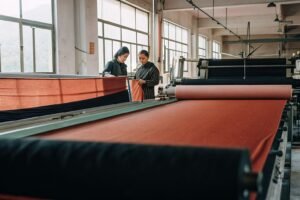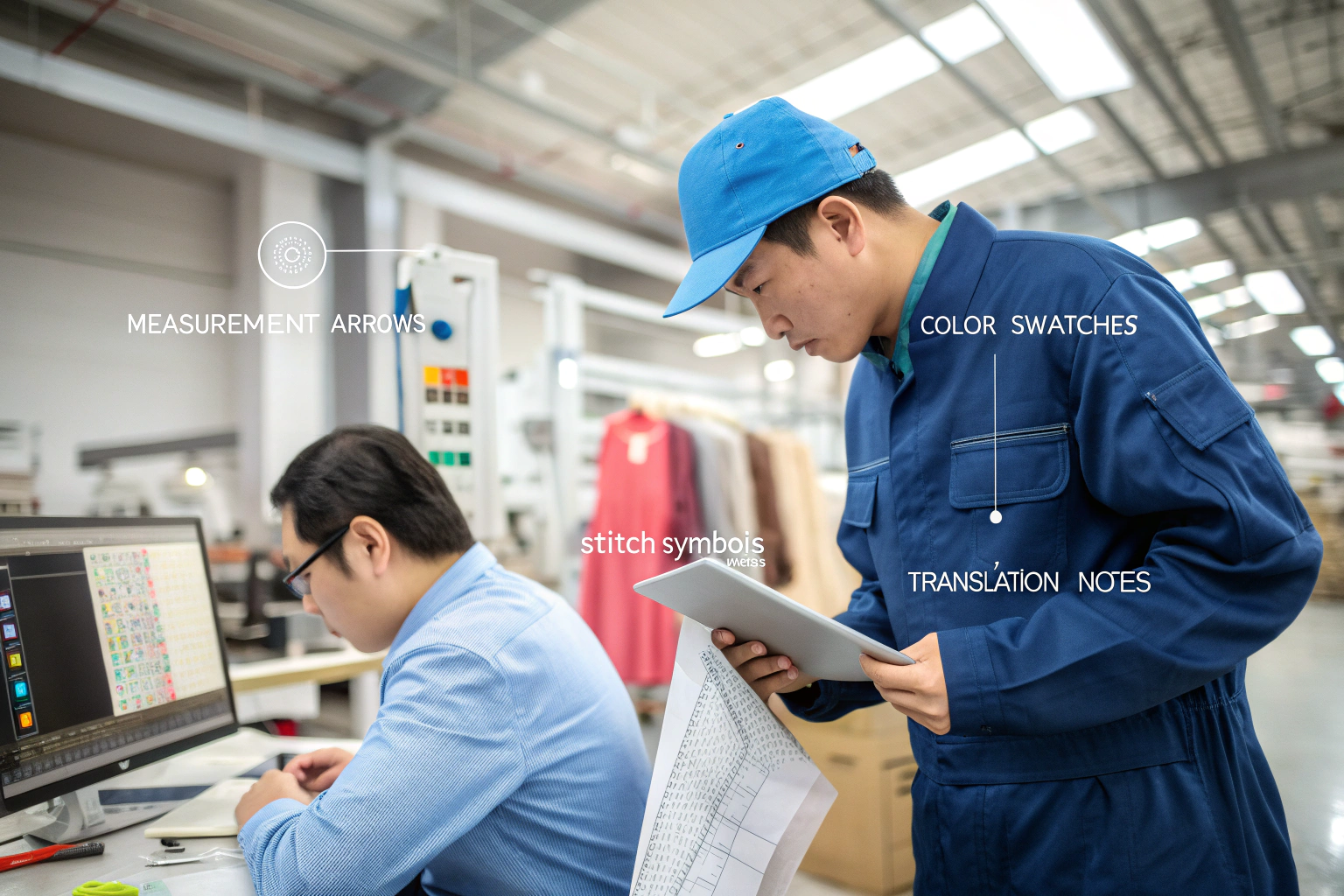
You’ve spent weeks perfecting your design. The sketch is beautiful, the tech pack is detailed, and you’ve specified every measurement down to the millimeter. You send it to the factory in China with confidence. Six weeks later, samples arrive, and you want to cry. The pocket is on the wrong side. The seam finish is completely wrong. The color looks nothing like your Pantone reference. You’re frustrated, the factory is confused, and you’re both losing money on a relationship that should be collaborative. I’ve watched this scene play out hundreds of times with buyers from New York, London, and Melbourne.
The hard truth is that effective communication with overseas factories isn’t about being more detailed—it’s about being more visual, more standardized, and more collaborative. You speak English, your factory speaks Mandarin or Cantonese or Vietnamese. Even with translators, technical language gets lost. What seems crystal clear in your studio in Los Angeles becomes confusing ambiguity on a factory floor in Keqiao. But here’s the good news: after 20 years of bridging this gap for hundreds of global brands, I’ve learned exactly what works and what doesn’t.
Why do my tech packs get misunderstood even when they’re detailed?
You spent eight hours on that tech pack. Every measurement is there. Every stitch type is specified. You even included reference images. So why did the factory send back something completely wrong? The answer hurts, but you need to hear it: your tech pack makes sense to YOU because you created it. But factories receive hundreds of tech packs from dozens of clients, each with their own format, terminology, and expectations. What’s obvious to you is confusing to them.
The real problem isn’t effort—it’s translation. Not just language translation, but translation of intent. You specify a "French seam" but the factory’s pattern maker learned "flat-felled" terminology. You mark "1/2 inch seam allowance" but the factory works in centimeters and rounds to 1.3cm instead of 1.27cm. These tiny mismatches accumulate until the finished garment is unrecognizable. In 2023, a Canadian activewear brand sent us what they thought was a perfect tech pack for leggings. The factory in our network produced samples with the waistband 3 inches too high because the client’s measurement diagram showed the waistband height from a different reference point than the factory used.
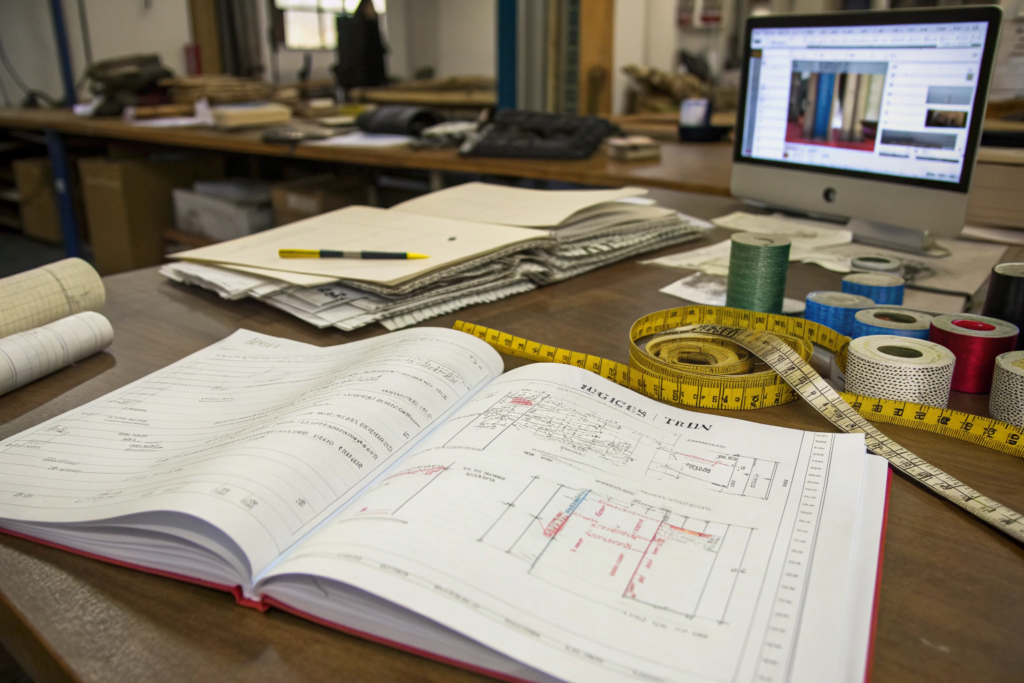
How can I standardize my measurement points to match factory expectations?
This single change will improve your sample accuracy more than any other investment. Different countries and different factories use different measurement standards. In China, many factories follow measurement guidelines established by major buyers like Target, Walmart, or European brands. If your measurement points don’t align with these standards, you’re creating confusion.
Let me give you a concrete example from 2024. A Swedish brand sent us specs for a woven shirt with the chest measurement taken 1 inch below the armhole. Their factory in Guangdong measured chest at the armhole itself, following standard GTM (Garment Technology) protocols. The difference was 1.5cm on the finished sample. Both sides thought the other was wrong. We solved it by creating a shared measurement guide with diagrams showing exactly where each measurement starts and ends. Now we include this guide with every new client’s first order. A comprehensive guide to standardized garment measurement points from the American Apparel & Footwear Association provides an excellent reference you can share with factories.
What visual tools actually prevent specification errors?
Words fail. Pictures succeed. I cannot emphasize this enough. Every time a client sends us a tech pack with written descriptions but no visual references, we brace for problems. The factories that work best with our network demand three specific visual elements.
First, technical flat drawings with every seam and design detail clearly illustrated. Not fashion sketches—technical flats showing construction. Second, call-out details zoomed in on complex areas like pocket construction, zipper installation, or decorative stitching. Third, reference images showing the desired finish—a photo of a similar garment, a close-up of the right seam type, an example of the correct hem.
A Los Angeles-based denim brand we work with takes this further. They send us physical "seam standards"—actual 4-inch samples of exactly how each seam should look and feel. The factory keeps these at every sewing station. When workers have questions, they look at the physical sample, not a translation. For a deeper dive into visual specification tools for apparel manufacturing, this resource from the Council of Fashion Designers of America offers practical templates and examples.
Why do factories sometimes ignore my specified construction methods?
This sounds like the factory being difficult, but usually there’s a reason. When a factory changes your specified construction method, it’s often because they know something you don’t. Maybe your specified seam type isn’t achievable with their available machines. Maybe the fabric you selected doesn’t perform well with that stitch density. Maybe they’ve made 10,000 similar garments and know a better, stronger method.
The problem is communication—they change the method without telling you, or they tell you in a way you don’t understand. I saw this in 2022 with a German outerwear brand. They specified a particular type of bound seam for a waterproof jacket. The factory knew their binding machine couldn’t handle that fabric weight with that seam allowance, so they substituted a different bound seam. The sample passed visual inspection, but production failed waterproof testing because the substituted method didn’t seal correctly.
The solution is dialogue, not dictation. When a factory suggests a change, ask why. Have them send a sample of their proposed method. Test it together. A discussion of collaborative problem-solving in garment manufacturing on the Sewn Product Manufacturing forum shows how successful brands build this dialogue into their process.
How do I bridge the language gap without speaking Mandarin?
You don’t need to learn Mandarin. But you DO need to understand how technical language gets lost in translation. Your factory’s sales manager speaks decent English. The pattern maker? Probably not. The cutting room supervisor? Definitely not. The sewing line workers? Zero English. When your carefully worded email passes through three layers of translation, meaning degrades with each step.
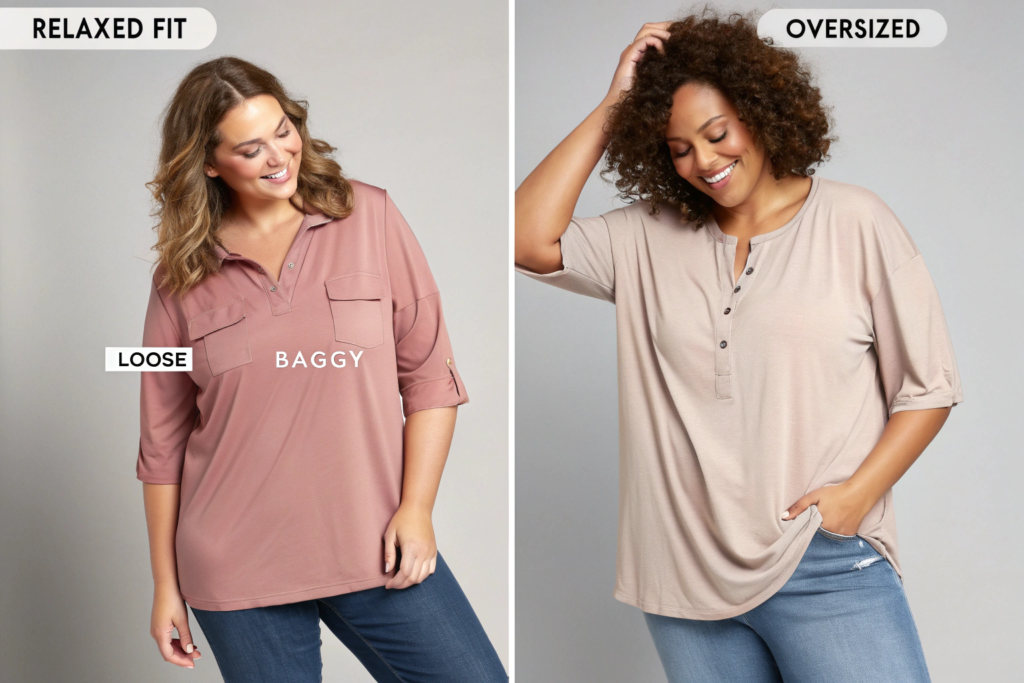
I watched a UK brand’s instructions for "relaxed fit" become "loose" become "baggy" become "oversized" as they moved through translation. The factory produced samples four sizes too big. The client blamed the factory. The factory blamed the translation. Both were right, and both were wrong. The real problem was assuming words alone could carry the message.
What specific terms cause the most confusion between English and Chinese?
After 20 years in this industry, I’ve compiled a list of terms that consistently cause problems. "Stretch" versus "give" versus "elastic recovery" all translate differently. "Hand feel" has no direct translation—factories learn to understand it through experience, not dictionaries. "Drape" similarly confuses translators who haven’t worked with fabric.
The worst offender is color communication. You specify "dusty rose" thinking it’s universal. The factory sees "dusty" and "rose" and produces something between gray and pink that pleases nobody. We had a New York client in 2023 specify "mushroom" for a textured weave. The factory produced three different "mushroom" samples—one gray-brown, one beige, one taupe—because the word had multiple interpretations. Now we insist on Pantone codes for every color, plus physical swatches whenever possible. A glossary of common English-Chinese textile terminology mismatches on the Global Sources supplier education site helps identify potential problem terms before they cause issues.
Should I use WeChat for factory communication, and how?
Yes, absolutely, but strategically. Email is for documentation and formal approvals. WeChat is for daily communication, questions, and clarifications. The best factory relationships I’ve seen use both channels intentionally.
Here’s what works: use email for official communications—order confirmations, spec sheets, approval records. Use WeChat for the 80% of communication that’s informal—sending photos of questions, asking for quick updates, clarifying minor details. A Toronto-based children’s wear brand does this brilliantly. Their WeChat group includes their account manager, the factory’s production manager, and their quality control person. When a question arises on the factory floor—"This zipper color doesn’t match the swatch, proceed or stop?"—they get an answer in minutes, not days.
But protect yourself. WeChat conversations disappear or get lost. Any decision that affects cost, quality, or timeline needs email confirmation. We require clients to confirm sample approvals by email even if they already approved by WeChat. A guide to effective cross-cultural communication tools for sourcing from the International Trade Centre offers practical advice on channel selection.
How can I use video to solve specification problems?
Video is your secret weapon. When words fail and photos confuse, video shows exactly what you mean. In 2024, a French brand had repeated problems with pocket placement on their trousers. Every sample had the pocket 2cm too low. They sent marked-up photos. The factory adjusted. Still wrong. Finally, the designer sent a 30-second video holding the sample against her body, pointing to the pocket, and saying "here, not here." The factory understood immediately. The next sample was perfect.
We encourage our clients to send video for complex instructions. Show how you want the fabric to drape. Demonstrate how a zipper should pull. Record yourself pointing to a competitor’s garment and saying "this seam, like this." Your factory can share these videos with workers who don’t read English. A tutorial on creating effective specification videos for overseas manufacturing shows simple techniques using just a smartphone and good lighting.
What sample approval system actually prevents production mistakes?
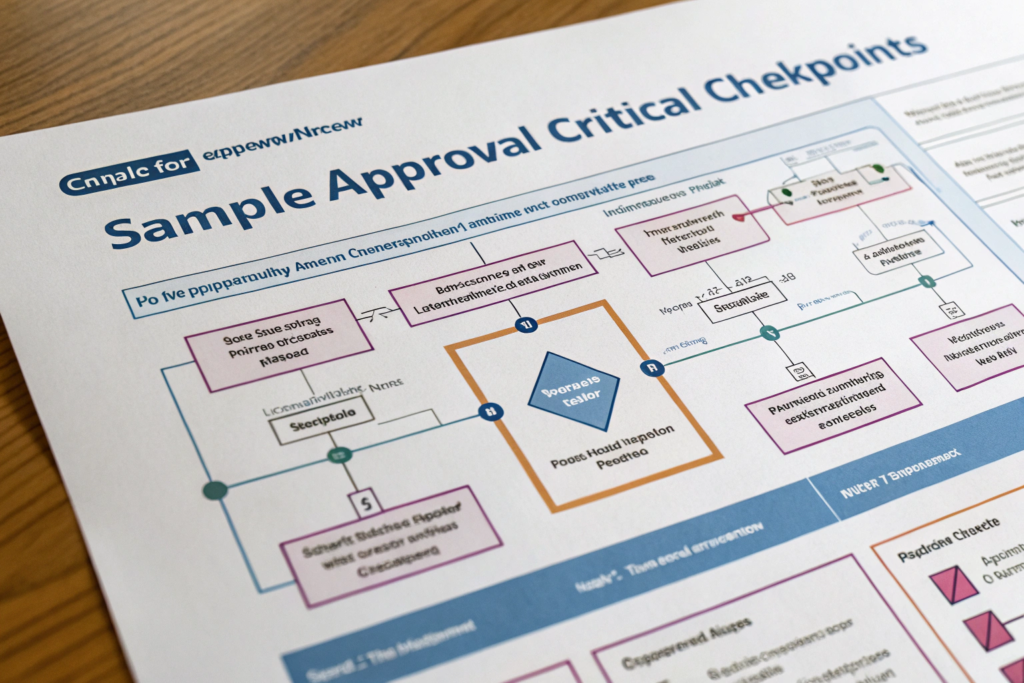
The standard industry process—first sample, counter sample, production sample, approval—works in theory but fails in practice because approvals happen too late. You approve a sample, the factory cuts 5,000 garments, and THEN discovers that the approved sample had a hidden flaw that only appears in bulk production. You’re stuck. The factory blames your approval. You blame the factory’s sample quality. Everyone loses.
The problem isn’t the number of samples—it’s what you check at each stage. Most buyers check style and fit on first samples, then assume later samples will automatically match. They don’t dig into construction details, material behavior, or finishing quality until it’s too late. By then, the factory has already committed to production methods that can’t be changed without starting over.
What should I check at each sample stage to catch problems early?
Let me give you the system we’ve developed with our most successful clients. It breaks the sample process into four distinct checks.
First sample (fit sample): Check only silhouette, proportion, and overall fit. Don’t obsess over stitching details or final finishes yet. The goal is to confirm the pattern works. A Seattle-based outdoor brand we work with sometimes goes through three fit samples before moving forward. They know that fixing the pattern early prevents disaster later.
Second sample (construction sample): Now check everything technical. Seam types, stitch density, reinforcement methods, pocket construction, zipper installation. This is where you catch the details. We had a Danish brand in 2023 whose second sample revealed that their specified seam tape wasn’t bonding properly to the fabric. They fixed it before bulk cutting, saving $12,000.
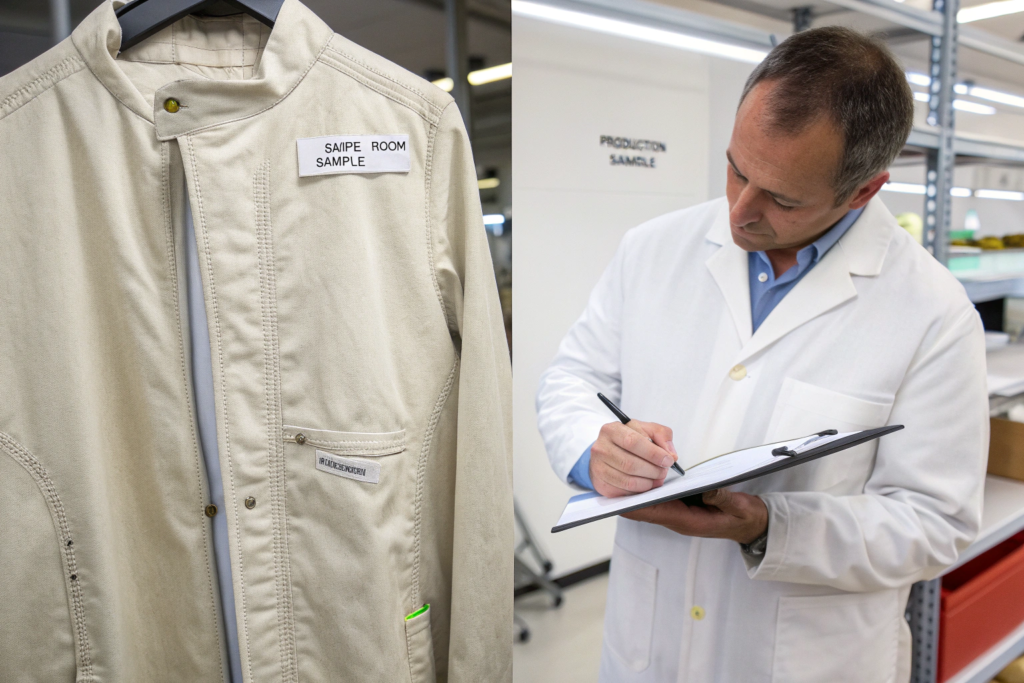
Third sample (production sample): This should be made using the actual production methods, not hand-crafted by the sample room. Check that the factory can reproduce the quality at scale. Look for tension differences, consistent stitching, and finishing quality.
Bulk sample (top-of-production): When production starts, request the first 5-10 pieces off the line. Check them immediately. If something’s wrong, you can stop production before 5,000 pieces are finished. A comprehensive sample approval checklist from the Quality Assurance International textile division breaks down exactly what to inspect at each stage.
How do I handle sample corrections without creating confusion?
This is where most communication breakdowns happen. You receive a sample, find 10 issues, and write a long email listing them all. The factory reads the list, fixes the three easiest problems, and ignores the rest. Your corrections get lost in translation and prioritization.
The better way: use a standardized correction request form with photos. We provide all our clients with a template that includes: (1) a photo of the problem area with a circle or arrow, (2) a clear description of what’s wrong, (3) a reference image showing what "right" looks like, and (4) a priority rating (must fix, should fix, nice to fix).
A London-based tailoring brand uses this system religiously. Their correction requests come back to the factory with annotated photos and priority rankings. The factory knows that "must fix" items stop production approval. "Should fix" items get addressed but don’t delay the timeline. "Nice to fix" items get noted for future seasons. This clarity prevents arguments about what was actually required. A downloadable sample correction template on the Sewport blog offers a good starting point you can adapt.
Why do some factories send perfect samples but terrible production?
This is the most frustrating problem in sourcing, and it has a specific cause: the sample room and the production floor are different worlds. Sample makers are highly skilled craftspeople who can make anything work. Production workers follow standard procedures and can’t adjust for every fabric variation or design complexity.
I saw this vividly in 2022 with a Melbourne swimwear brand. Their samples were flawless—beautiful stitching, perfect elastic tension, clean finishes. Production arrived with wavy seams and twisted leg openings. The problem? The sample maker had hand-adjusted tension for their specific fabric. Production machines ran at standard settings that didn’t work for that fabric.
The solution is to insist that production samples come from the production line, not the sample room. Request that the factory runs your fabric through the actual cutting and sewing machines that will handle your bulk order. The first 20 pieces might be slower as they dial in settings, but you’ll catch problems before they multiply. A technical explanation of sample-to-production scaling challenges on the Textile World magazine site helps buyers understand why this gap exists.
How do fabric specifications get lost between design and factory?
You chose a fabric based on a swatch. The weight felt right, the drape was perfect, the color sang. You sent the swatch to the factory and specified the fabric on your tech pack. The factory ordered what they thought was the equivalent. When the garments arrived, the fabric was stiff, the color was dull, and the drape was completely wrong. What happened?
Fabric communication is the most failed part of design translation. A swatch communicates everything—weight, hand feel, drape, color, finish. Words communicate almost nothing. When you say "medium-weight cotton twill," that could mean 150gsm or 250gsm depending on who’s interpreting. When you send a Pantone number, that specifies color but not finish—the same dye formula on a different fabric base looks completely different.
What fabric measurements must I specify beyond just the name?
Stop saying "cotton jersey" or "polyester crepe." Those words mean nothing without numbers. Here’s what your fabric specifications must include to prevent misunderstandings:
Weight: Specify grams per square meter (gsm) AND ounces per square yard. Give a tolerance range, not just a single number. "180gsm +/- 5%" is clearer than "medium weight."
Construction: For wovens, specify thread count (warp x weft). For knits, specify gauge and stitch length if possible. A Canadian basics brand we work with sends us fabric specifications that include photos of the fabric held up to light showing the weave structure.
Finish: Specify exactly what finishing treatments you require. "Pre-shrunk" isn’t enough—specify maximum shrinkage percentage after washing. "Softened" isn’t enough—specify what type of softener and what hand feel target.
Composition: Specify percentages exactly, and specify testing method. "95% cotton, 5% spandex" can vary wildly depending on whether it’s tested bone dry or conditioned. A comprehensive fabric specification template from the Textile Association of America includes all the technical parameters professional buyers use.
How can I communicate hand feel without sending physical samples?
Hand feel is the hardest thing to specify verbally. "Soft" to you might be "rough" to someone else. "Fluid drape" means nothing to a factory production manager who mostly works with stiff denim.
Physical swatches are still best, but when that’s impossible, use reference points. Compare to familiar fabrics: "should feel like a well-worn t-shirt, not like a new dress shirt." Use durometer-style scales when available: some labs can measure hand feel objectively using Kawabata evaluation systems. A New York luxury brand we work with sends us "hand feel targets"—actual garments from other brands that achieve the sensation they want. We analyze those garments and match the fabric characteristics.
For 2024, we’re testing a new approach with select clients: sending them a "hand feel kit" with 10 fabric samples numbered 1-10 covering the range of possibilities for their fabric type. They tell us "between 3 and 4, closer to 4," and we know exactly what they mean. A discussion of objective hand feel measurement techniques on the Textile Research Journal site shows how science is slowly solving this communication gap.
Why does the same fabric specification sometimes yield different results?
Because fabric is alive. It changes based on humidity, temperature, machine tension, and chemical batches. Two rolls of supposedly identical fabric from the same supplier can behave differently. When you specify fabric by name and weight only, you’re leaving massive variables uncontrolled.
The most successful brands we work with specify fabric by performance standards, not just construction. Instead of "95/5 cotton/spandex jersey 200gsm," they specify "95/5 cotton/spandex jersey 200gsm that stretches 25% in length and returns to 98% of original within 30 seconds, shrinkage under 5% after 3 washes, colorfastness 4.0 or better." These performance specs tell the factory what the fabric must DO, not just what it must BE.
A German technical wear brand takes this further. They specify fabric by test results. Their tech pack includes minimum acceptable values for tensile strength, tear strength, pilling resistance, and lightfastness. The factory can source fabric from any supplier as long as it meets these tested standards. This approach prevents the "but it’s the same specification" arguments when fabric performs differently. A guide to performance-based fabric specification from the Hohenstein Institute explains how to set meaningful standards.
Conclusion
Communicating design specs to overseas factories isn’t about being perfect—it’s about being understood. After 20 years bridging this gap, I’ve learned that the brands who succeed don’t have the most beautiful tech packs. They have the clearest communication systems. They use visuals over words, standards over opinions, and collaboration over dictation. They understand that a factory wants to make you happy—they just need you to show them how.
The investments that matter aren’t expensive. Take photos of every detail. Send videos of complex instructions. Use standardized measurement points. Specify fabric by performance, not just name. Build a sample approval system that catches problems early. Use WeChat for speed and email for documentation. These habits cost nothing but save thousands in sampling rounds and production mistakes.
At Shanghai Fumao, we’ve built our entire client relationship system around clear communication. We don’t assume we understand—we ask questions. We send photos of everything. We encourage clients to visit (virtually or in person) and see their production. We’ve learned that the best partnerships happen when both sides feel heard and understood. When a client from Los Angeles tells us "this is exactly what I wanted," that’s not luck—that’s a communication system working.
If you’re tired of sampling rounds that go nowhere and production that disappoints, let’s talk. Elaine, our Business Director, has helped hundreds of brands establish communication systems that actually work. She speaks the language of design and the language of manufacturing fluently. She can review your current tech pack and show you exactly where miscommunications are hiding. Contact Elaine at elaine@fumaoclothing.com to start a conversation about making your design communication crystal clear. Let’s turn your next collection into something you’re proud of—on time, on budget, and exactly as you imagined.