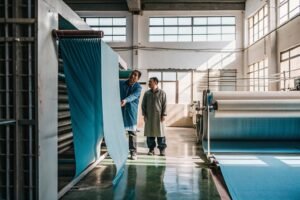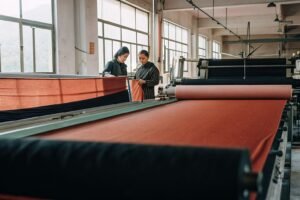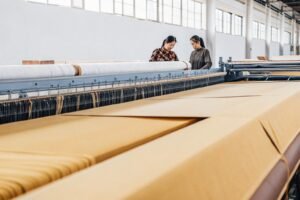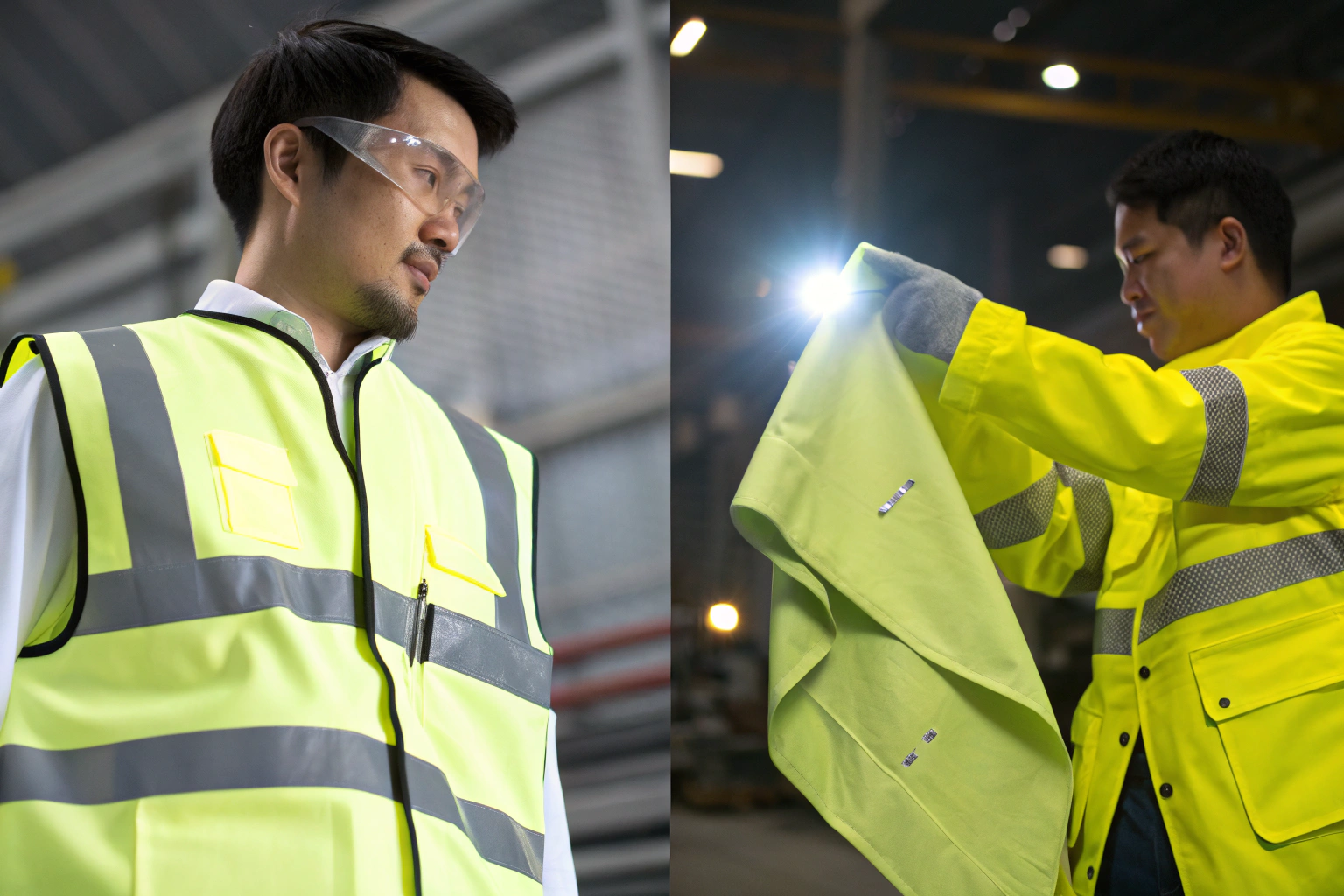
You’re sourcing safety workwear, and the stakes couldn’t be higher. This isn’t fashion where a slightly off shade just annoys the buyer. This is life safety. If the fabric doesn’t perform, if the colors fade after a few washes, if the reflective striping delaminates—workers become invisible. And invisible gets people hurt. I’ve had safety managers from European oil rigs and American construction firms sit across from me, and I can see the weight on their shoulders. They’re not just buying fabric. They’re buying protection for their people.
The best fabrics for high-visibility safety workwear combine three non-negotiable elements: fluorescent background colors that meet ISO or ANSI standards for chromaticity and brightness, durable retroreflective materials that bounce light back to its source, and base fabric constructions that survive the specific hazards of the job—whether that’s flame resistance, tear strength, or all-day comfort in extreme temperatures. And here’s the kicker: all of it has to survive industrial laundering, often for the life of the garment.
At Shanghai Fumao Textiles International, we’ve been engineering these technical fabrics for over two decades. We supply to PPE manufacturers and workwear brands across Europe and North America. And I’ve learned that when it comes to hi-vis, there’s no room for shortcuts. Let me walk you through exactly what goes into the best safety workwear fabrics, and how we ensure they perform when it matters most.
What Performance Standards Must High-Visibility Fabrics Meet?
Before we even talk about fibers or weaves, we have to talk about the law. Safety workwear isn’t like t-shirts where you can just make it up as you go. There are strict international standards that define exactly what "high-visibility" means. And if your fabric doesn’t meet those standards on paper, with lab test results to prove it, it doesn’t matter how good it looks. It won’t get certified, and it won’t get sold.
What are the key differences between ANSI/ISEA 107 in the US and ISO 20471 in Europe?
This is where a lot of buyers get confused, and where a sourcing mistake can cost you an entire market. The US standard (ANSI/ISEA 107) and the European standard (ISO 20471) are similar in concept but different in the details. Both require minimum amounts of fluorescent background material and retroreflective tape, and both specify where these materials must be placed on the garment. But the testing methods and pass/fail criteria aren’t identical.
For example, ISO 20471 requires that after 5 washes, the fabric still meets the minimum luminance and color fastness requirements. ANSI 107 also requires wash testing, but the number of wash cycles and the test methods can differ. More critically, the color coordinates—the exact shades of fluorescent yellow-green, orange-red, or red that are acceptable—have slightly different ranges between the standards.
I had a situation in 2023 with a Canadian distributor who wanted to sell the same hi-vis vest in both the US and European markets. They assumed one fabric would work for both. It didn’t. The fluorescent yellow we were making for our UK clients passed ISO 20471 easily, but when we tested it against ANSI 107 requirements, the chromaticity was just slightly outside the acceptable range for the US market. We had to develop a separate formulation specifically for the US. This detailed comparison guide between ANSI and ISO hi-vis standards explains the nuances. You need a supplier who understands both and can test accordingly.
How do we test for chromaticity and luminance factor in our CNAS-accredited lab?
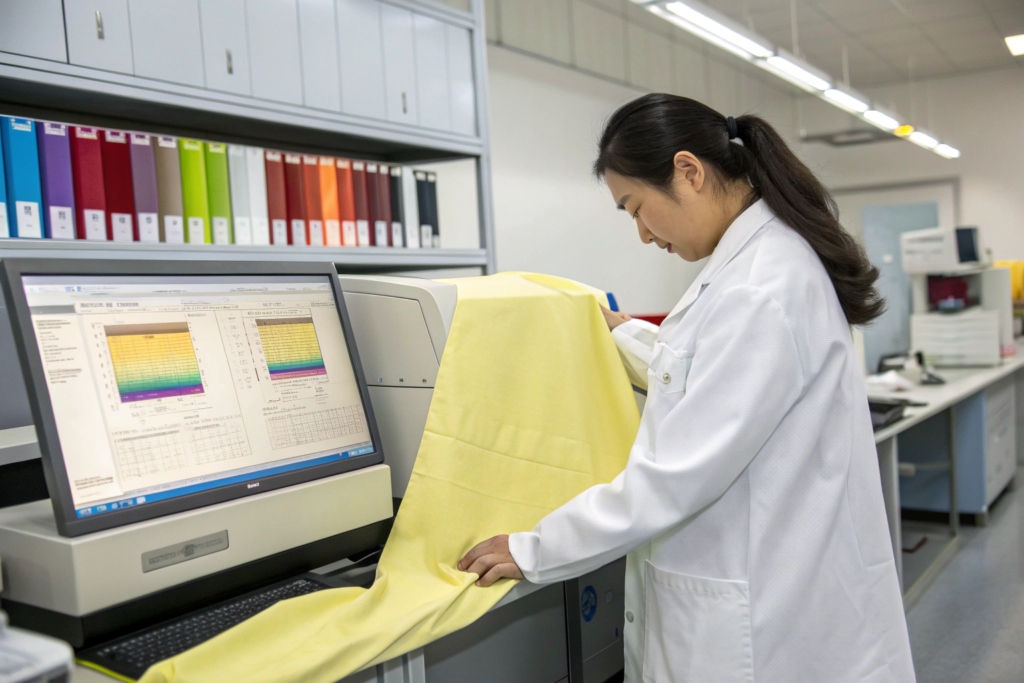
This isn’t something you can eyeball. Fluorescent colors work by absorbing ultraviolet light and re-emitting it as visible light, which is why they appear so bright. Testing this requires specialized equipment. In our lab, we use a spectrophotometer configured for fluorescence measurement. We place the fabric sample under standardized lighting conditions that include UV content, and we measure two things: the chromaticity coordinates (is it the right shade of yellow?) and the luminance factor (how bright is it?).
The luminance factor is critical. ISO 20471 requires a minimum luminance factor of 0.76 for fluorescent yellow-green. That means the fabric must reflect at least 76% of the light across specific wavelengths. If it drops below that, the garment fails, even if the color looks right to the eye.
We test every batch of hi-vis fabric we produce. Not just the first sample, but every production run. And we keep detailed records. When a German safety equipment manufacturer audits us—which they do every year—they don’t just take our word for it. They pull random rolls from our warehouse and send them to their own independent lab for verification. Our test results match theirs every time, because our lab is CNAS-accredited and we follow the same test methods they do. This technical explanation of fluorescence measurement in textiles shows why this matters. Without proper testing, you’re guessing. We don’t guess.
Which Fabric Constructions Work Best for Different Safety Workwear Applications?
The best fabric for a highway construction crew in Arizona in July is not the best fabric for a railway worker in Norway in January. And neither is right for a welder who needs flame resistance. The fiber content and fabric construction have to match the job site conditions. This is where technical textile expertise really matters, because you’re balancing safety requirements with comfort, durability, and cost.
Why is 100% polyester the dominant choice for fluorescent background fabrics?
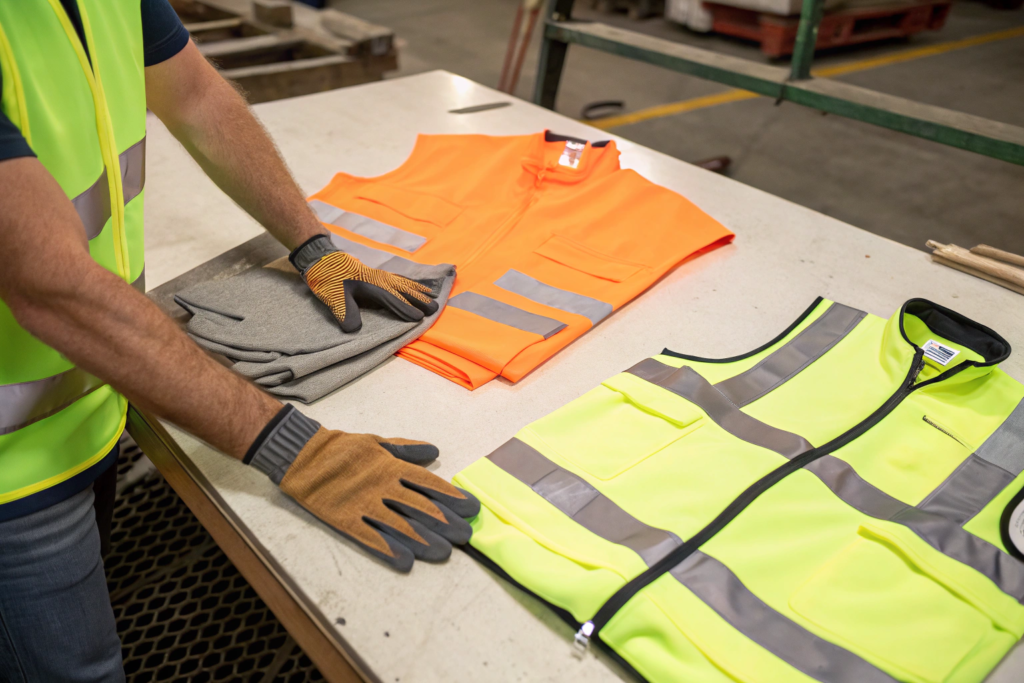
You’ll notice that almost all high-quality hi-vis fabrics are 100% polyester. There’s a reason for this, and it’s not just cost. Polyester has a unique molecular structure that accepts dye differently than natural fibers. For fluorescent colors, this is critical.
Fluorescent dyes are larger molecules than regular dyes. They need to be absorbed into the fiber in a way that allows them to continue fluorescing. Polyester, when dyed at high temperatures under pressure, opens up its molecular structure and traps these dye molecules inside. Cotton, by contrast, absorbs dye on the surface, which means the fluorescent effect is less intense and fades much faster with washing and UV exposure.
I had a US workwear brand in 2022 who came to us because they were getting complaints from their customers. Their hi-vis vests, made from a cotton-poly blend, were losing their brightness after just a few months in the field. We switched them to a 100% polyester twill with a modified cross-section fiber that actually increased the surface area for light reflection. The difference was dramatic. Their customers stopped complaining, and reorder rates went up. This explanation of why polyester is preferred for fluorescent safety wear gets into the fiber chemistry. It’s not marketing—it’s physics.
How do we engineer fabric weight and weave for different work environments?
Fabric weight is measured in grams per square meter (GSM), and for hi-vis workwear, it typically ranges from 130 GSM for lightweight summer vests up to 320 GSM for heavy-duty winter coats. But weight alone doesn’t tell the whole story. The weave structure matters just as much.
For high-heat environments like road construction in the southern US, we use a plain weave or a small twill in the 130-150 GSM range. The open structure allows air to flow through, keeping workers cooler. But we have to balance breathability with durability. Too open, and the fabric will snag and tear. We solve this by using high-tenacity polyester yarns—the same type used in tire cord—which are much stronger than standard polyester. A 150 GSM fabric made with high-tenacity yarns can have better tear strength than a 200 GSM fabric made with standard yarns.
For cold-weather and heavy industrial applications, we move to heavier twills or canvas weaves in the 240-320 GSM range. These fabrics are built to withstand abrasion from tools, rough surfaces, and repeated wear. We also incorporate mechanical stretch in some constructions. A Scandinavian railway contractor asked us to develop a hi-vis fabric for their track workers that would allow them to bend and kneel comfortably. We engineered a 240 GSM twill with elastane, giving it 15% stretch while maintaining full compliance with EN ISO 20471. The workers loved it, and the company saw fewer knee injuries from restricted movement. This guide to selecting workwear fabrics by industry and environment helps buyers match construction to application.
How Do We Ensure Retroreflective Materials Maintain Performance Over Time?
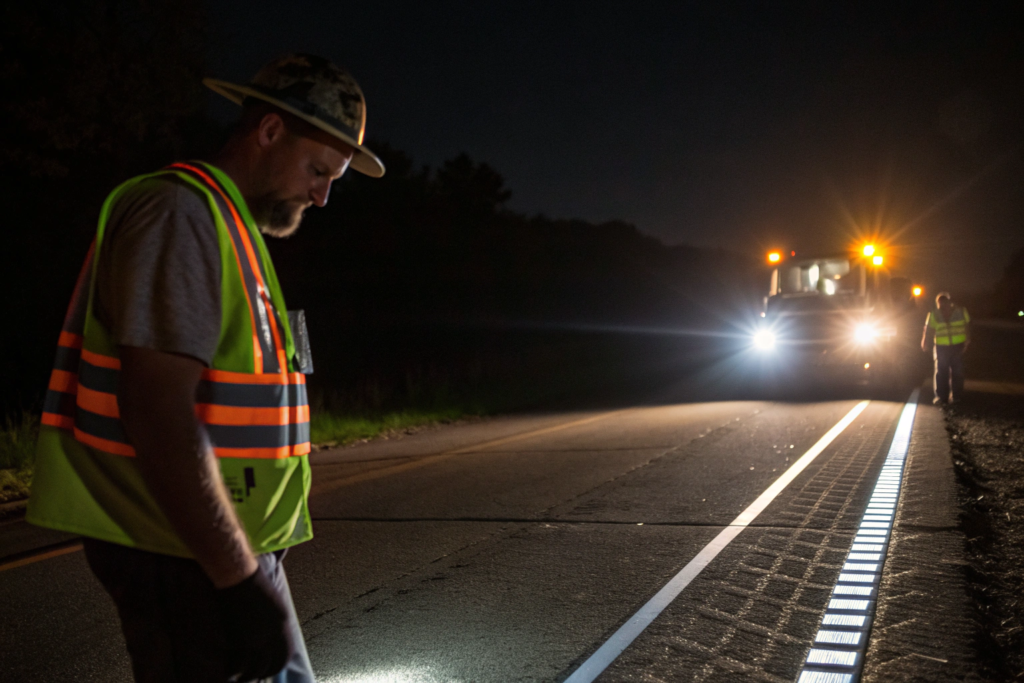
The fluorescent background gets you noticed during the day. But at night, or in low-light conditions like tunnels or dawn construction shifts, the retroreflective tape is what saves lives. These materials are engineered to bounce light directly back to its source—like a car’s headlights—making the worker appear to glow. But reflective materials are also the most vulnerable part of a hi-vis garment. They can crack, delaminate, or lose their reflective properties with washing and wear.
What is the difference between glass bead and microprismatic reflective technology?
This is a technical distinction that affects both performance and cost. Glass bead technology has been around for decades. Millions of tiny glass spheres are embedded in a resin coating on the fabric. When light hits them, it bends and reflects back. It’s effective and relatively inexpensive, but it has limitations. Glass beads are round, so they reflect light in many directions. The reflection is good, but not perfectly focused.
Microprismatic technology is newer and more advanced. Instead of spheres, it uses thousands of tiny cube-corner prisms molded into a film. These prisms act like tiny mirrors, reflecting light much more efficiently and directly back to the source. Microprismatic tape is significantly brighter than glass bead tape, especially at longer distances and wider angles. That’s why it’s required for the highest risk applications like emergency responders working on high-speed highways.
We offer both technologies depending on the client’s needs and budget. For general industrial use, glass bead tape often provides perfectly adequate performance at a lower cost. For first responders and highway construction, we strongly recommend microprismatic. A volunteer fire department in Ohio switched to our microprismatic vests a few years ago. The chief told me that his firefighters felt visibly safer working night scenes because approaching traffic slowed down sooner. They could see the reflective brightness from further away. This technical comparison of glass bead versus microprismatic reflectivity explains why the difference matters in real-world conditions.
How do we test reflective tape adhesion and durability through industrial laundering?
This is where many hi-vis garments fail. The reflective tape looks great when the garment is new. But after 25 industrial wash cycles at 75°C with harsh detergents, it starts to peel, crack, or lose its reflective power. And safety standards require that the garment remains effective for a specified number of washes—typically 25 or 50, depending on the standard.
We test reflective tape adhesion using a peel test machine that measures exactly how much force is required to pull the tape off the fabric. But lab numbers aren’t enough. We also run actual wash trials in industrial washing machines, using the same detergents and temperatures our clients will use. After 5, 10, 25, and 50 washes, we measure the reflective performance again. If the retroreflection drops below the standard’s minimum, we go back to the drawing board.
Sometimes the problem isn’t the tape itself, but the fabric underneath. If the fabric shrinks in washing but the reflective tape doesn’t, the tape will buckle and eventually detach. We’ve solved this by pre-shrinking our base fabrics more aggressively and by selecting tapes with similar shrinkage characteristics. For a major UK rail contractor, we developed a custom solution where the reflective tape is welded ultrasonically rather than sewn, eliminating needle holes that can let water in and start delamination. This industry guide to maintaining hi-vis garment performance through laundering is essential reading for anyone responsible for workwear programs.
What Innovations Are Making Hi-Vis Fabrics More Comfortable and Functional?
For decades, hi-vis workwear meant sacrificing comfort for safety. Heavy, stiff, hot, and uncomfortable. Workers hated wearing it, which meant they sometimes didn’t wear it—defeating the entire purpose. That’s changing. New fiber technologies and fabric constructions are making hi-vis fabrics that workers actually want to wear. And when workers wear their PPE willingly, everyone is safer.
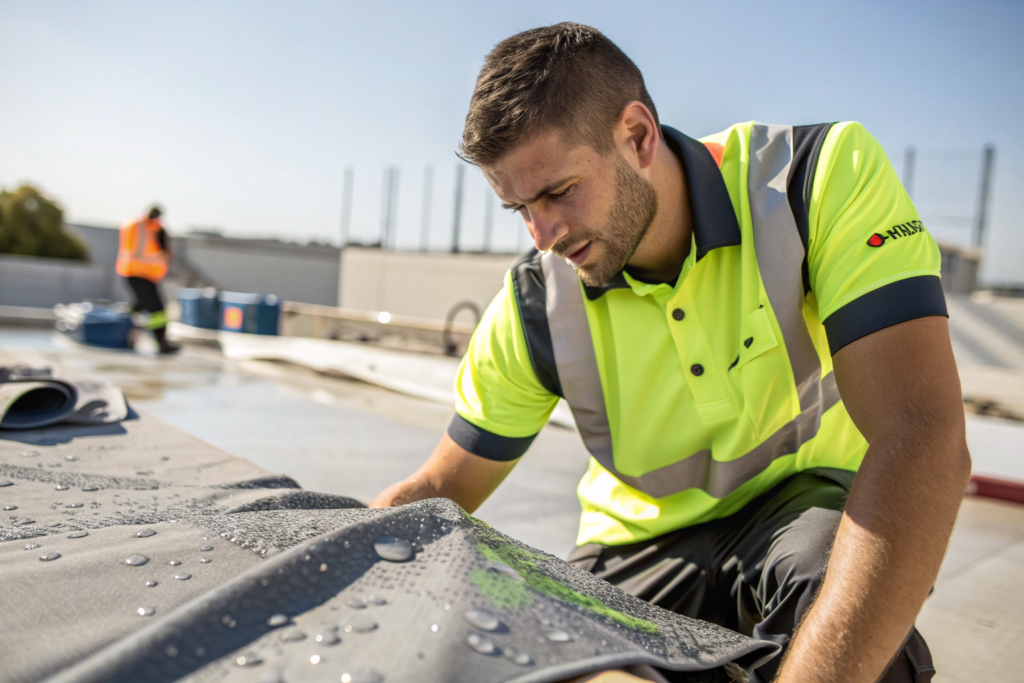
How are moisture-wicking and breathability technologies being integrated into hi-vis fabrics?
Heat stress is a real danger for workers in hi-vis clothing, especially in summer or in hot environments like foundries or roofing. Traditional polyester fabrics can trap heat and moisture, leaving workers soaked in sweat and at risk of dehydration and heat exhaustion.
We’ve addressed this by using specialized fiber cross-sections and fabric constructions. Some of our hi-vis fabrics use fibers with grooves along their length that pull moisture away from the skin and spread it across the surface where it can evaporate faster. Others incorporate hydrophilic and hydrophobic finishes that actively transport sweat. We’ve even developed a line of hi-vis mesh fabrics for vests where the ventilation is literally built into the construction.
A Texas-based oilfield services company came to us with a problem: their workers were refusing to wear the required hi-vis over-garments in the summer because they were just too hot. We developed a lightweight, moisture-wicking hi-vis T-shirt that met ANSI Class 2 requirements on its own, without an over-vest. The workers loved it. Compliance went from below 60% to over 95% in one season. This article on moisture management technologies in performance workwear shows how far this field has come. Safety doesn’t have to mean suffering.
What about FR (Flame Resistant) hi-vis fabrics for high-risk industries?
For workers in oil and gas, electrical utilities, welding, and similar industries, hi-vis isn’t enough. They also need flame resistance. Combining these two requirements in one fabric is technically challenging because the treatments can interfere with each other. Fluorescent dyes can be damaged by FR treatments, and FR finishes can affect color brightness.
We offer several solutions depending on the specific hazards. For arc flash protection, we use inherent FR fibers like modacrylic blended with cotton or nylon, then dye them to meet hi-vis standards. For flash fire protection, we use FR-treated cotton or cotton/nylon blends with specialized fluorescent dyeing processes that maintain the FR properties. In both cases, the retroreflective tape must also be FR—standard reflective tape will melt and burn.
I remember a Norwegian offshore platform operator who needed hi-vis coveralls that would protect against both hydrocarbon flash fires and the harsh North Sea environment. We developed a 280 GSM FR cotton/nylon blend with microprismatic FR reflective tape. The fabric was tested to ISO 11612 for flame resistance and EN ISO 20471 for hi-vis, passing both with margin. Their safety manager told me it was the first time they’d found a supplier who understood both requirements equally. This guide to selecting FR hi-vis workwear for hazardous environments breaks down the options. It’s a specialized field, and you need a partner who knows it.
How Can You Navigate Tariffs and Logistics When Importing Safety Workwear Fabrics?
Let’s be practical. You’ve found the right fabric. It meets all the standards. It’s comfortable and durable. Now you have to get it from our factory in Keqiao to your warehouse in the US or Europe without unexpected costs or delays. Safety workwear fabrics often fall into specific tariff categories, and getting the classification wrong can cost you thousands in duties. Plus, timing is critical—you can’t have safety gear arriving after the winter work season starts.

What HTS codes apply to hi-vis safety fabrics, and how do tariffs impact your costs?
Hi-vis fabrics don’t have their own special code. They’re classified by their fiber content and construction. A 100% polyester woven hi-vis fabric falls under HTS 5407. A cotton blend might be under 5209 or 5211. Knit fabrics have their own sections. The key is precision—and understanding how trade policies affect these categories.
Section 301 tariffs on Chinese-made textiles have added complexity for US importers. Some fabric categories are hit with additional duties; others have exclusions. We work closely with customs brokers to ensure every shipment is classified correctly. We don’t guess. We provide complete product specifications, and our partners verify the codes before the ship sails.
We also help clients explore duty mitigation strategies. For example, fabrics that are cut and sewn in certain countries may qualify for preferential treatment under trade agreements. If you’re manufacturing garments in Vietnam or Mexico, the fabric’s origin and classification affect your duty rate on the finished goods. We provide all the documentation you need—country of origin certificates, detailed commercial invoices, and test reports—to support your customs clearance. This official HTS search tool and tariff resource is where every importer should start. But having a partner who’s done it thousands of times makes all the difference.
How does our production planning protect your delivery schedule during peak seasons?
Safety workwear demand often spikes before certain seasons—winter gear in Q3, summer gear in Q1. And Chinese New Year always falls somewhere in January or February, shutting down production for 3-4 weeks. If you’re not planning around these cycles, you’re setting yourself up for delays.
We work with clients to map out their production calendar 6-9 months in advance. For a European safetywear brand that launches new collections in March, we schedule their fabric production to finish before Chinese New Year. That means their raw materials are ready the moment the holiday ends, and they’re not competing for post-holiday production slots with everyone else.
For a US client who was constantly missing their fall delivery windows, we shifted their ordering cycle. Instead of placing orders in August for October delivery—which is impossible with shipping times—they now place orders in April for June production and July sailing. The fabric arrives in September, just in time for their production run. Simple shift, huge impact. This guide to navigating Chinese New Year production shutdowns for textile buyers is something we send to every new client. Plan ahead, and the holidays become manageable instead of disruptive.
Conclusion
High-visibility safety workwear isn’t a commodity. It’s a technical product where lives depend on performance. The best fabrics combine fluorescent brightness that meets international standards, retroreflective materials that survive industrial laundering, and base constructions engineered for the specific work environment—whether that’s extreme heat, flame hazards, or arctic cold. And behind all of it, there has to be a quality system that tests, verifies, and documents every batch.
At Shanghai Fumao Textiles International, we’ve been making these fabrics for over 20 years. Our CNAS-accredited lab tests for chromaticity, luminance, and durability. Our production team understands the nuances of fiber selection and fabric construction. And our logistics experts help you navigate tariffs, shipping schedules, and seasonal production challenges. We don’t just sell fabric—we provide the peace of mind that comes from knowing your safety gear will perform when it matters.
If you’re sourcing hi-vis workwear for your brand or your own workforce, you need a partner who takes this as seriously as you do. You need someone who understands that a faded vest or delaminated tape isn’t just a quality complaint—it’s a safety failure waiting to happen.
Let’s talk about your next project. Our Business Director, Elaine, works with safetywear brands across the US and Europe. She can walk you through our capabilities, our testing protocols, and our production planning process. Email her at elaine@fumaoclothing.com. Tell her what you’re trying to protect. She’ll tell you how we help you protect it.