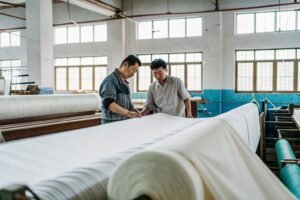
Let me share a story I’ll never forget. In early 2021, a promising athleisure brand from California proudly launched their first collection of "performance-ready" leggings. Their factory had delivered on time, under budget, and the prints were vibrant. Six weeks later, their inbox flooded with complaints: customers reported rashes and a "chemical smell" that wouldn’t wash out. Panic testing revealed the issue—the factory had used a cheap, non-compliant dye-fixative containing high levels of formaldehyde and allergenic amines to achieve those vibrant colors quickly. The brand faced a total recall, lawsuits, and a reputation shattered overnight. The factory? They simply disappeared from Alibaba, rebranded, and moved on. That brand’s fatal mistake wasn’t choosing a bad factory; it was choosing one that treated fabric safety as an afterthought rather than the foundation.
Partnering with a factory that prioritizes fabric safety is not an ethical "nice-to-have"; it is the single most critical strategic decision for brand survival and growth in today’s market. It is your primary defense against catastrophic financial loss, legal liability, and irreversible brand erosion. A safety-first factory embeds compliance into its DNA—from raw material sourcing to final shipment—transforming it from a cost center into your most powerful competitive advantage: trust. This partner doesn’t just sew garments; they engineer risk out of your supply chain.
You might think, "My brand is small, and I need to compete on price first." I argue that’s when safety matters most. A large corporation can survive a recall; a startup cannot. This article will detail why a safety-prioritizing factory is your most valuable business partner, protecting your finances, enabling innovation, future-proofing your operations, and ultimately, building a brand that consumers trust with their health.
How Does a Safety-First Factory Protect Your Financial Bottom Line?
On a spreadsheet, the cost of a "safety-first" factory might appear as a 5-10% higher FOB price compared to a cut-rate competitor. This is a dangerous illusion. The true cost of a non-compliant factory is hidden, deferred, and potentially business-ending. A safety-first factory operates on the principle of preventive cost management, investing upfront to eliminate the devastating downstream costs that can destroy your profitability.
Let’s quantify the hidden costs a safety-last factory externalizes onto you:
- Recall Costs: Logistics, destruction, refunds, and retailer penalties. A single recall can cost hundreds of thousands.
- Legal Liability: Lawsuits from consumers alleging harm. Defense costs alone are crippling.
- Lost Sales & Market Exclusion: Retailers drop you; marketplaces ban your listings.
- Brand Rehabilitation: The near-impossible cost of rebuilding consumer trust after a safety scandal.
A safety-first factory absorbs these risks internally through its systems. Their investment in certified materials, in-house QC labs, and rigorous process controls acts as an insurance policy you don’t have to pay a premium for—it’s built into the operational model.

Can This Actually Improve Your Margins? A Case Study.
Yes, by drastically reducing cost volatility. In 2022, a European sustainable basics brand was sourcing from two factories: Factory A (low-cost, minimal safety checks) and Factory B (our partner factory, safety-first). Factory A’s price was 15% lower. Over 18 months, Factory A had two major quality holds requiring air freight to meet deadlines (cost: $12,000) and one batch rejection due to failed colorfastness (cost: $8,000). Their effective cost became higher than Factory B’s consistent, on-spec delivery. Furthermore, products from Factory B had a 30% lower return rate due to quality issues, directly improving the brand’s net profitability. The safety-first factory delivered predictable, lower total cost of ownership.
How Does It Streamline Operations and Save Time?
Time is your most scarce resource. A safety-last factory creates constant friction: delayed shipments due to failed lab tests, endless back-and-forth on sample approvals, and firefighting quality crises. A safety-first factory operates with a system that prevents fires.
Their process typically includes:
- Pre-vetted Material Libraries: Like ours at Shanghai Fumao, they stock fabrics that are pre-certified (OEKO-TEX®, GOTS) and pre-tested for key performance criteria.
- In-House Rapid Testing: They have basic lab equipment to check pH, colorfastness, and shrinkage before sending samples to third-party labs, catching 95% of issues early.
- Digital Documentation: All certificates, test reports, and production records are organized and accessible, slashing the time you spend on compliance admin.
This system turns weeks of uncertainty into days of confident progress. Your team stops being supply chain detectives and can focus on design, marketing, and sales.
How Does It Become Your Innovation & Market Access Engine?
A factory that masters safety is not a passive order-taker; it’s an active enabler of growth. Their deep expertise in chemistry, regulations, and advanced materials becomes your R&D department. They don’t just execute your designs; they help you realize ambitious ideas that would be too risky elsewhere.
Think about entering a new, lucrative market: children’s wear in the EU, performance wear in the US, medical textiles. Each has a steep regulatory wall (CPSIA, REACH, FDA-like standards). A commodity factory sees this as a barrier. A safety-first factory sees it as a competitive moat they help you cross. They already understand the test protocols, have relationships with accredited labs, and know which material formulations will pass. They de-risk your market expansion.

What Does "Co-Development" Look Like in Practice?
In late 2023, a US outdoor startup approached us with a vision: a fully recyclable, PFC-free waterproof jacket. A standard factory would have said "impossible" or quoted an exorbitant price for R&D. Because we prioritize safety and advanced chemistry, we had already been experimenting with next-generation plant-based DWR (Durable Water Repellent) finishes. We partnered with them on a development project. Our chemists worked on the finish formulation, our lab tested for performance and OEKO-TEX® compliance, and our production team developed application parameters. Within 4 months, we had a viable prototype. The brand launched a groundbreaking product, and we added a new capability to our portfolio. This is the symbiotic innovation that safety-focused systems enable.
How Does It Future-Proof Your Product Line?
Regulations are constantly tightening. Bans on PFAS, stricter formaldehyde limits, and new due diligence laws are on the horizon. A safety-last factory reacts to these changes with panic, forcing last-minute—and expensive—material substitutions on you. A safety-first factory is proactively aligned with these trends.
They often:
- Use standards like OEKO-TEX® as a baseline, which updates its criteria annually to stay ahead of regulations.
- Participate in industry forums and have early awareness of legislative changes.
- Develop "future-compliant" material options before they become mandatory.
For example, when the EU began signaling a crackdown on PFAS, we had already developed a library of PFAS-free water-repellent fabrics for our clients. When the brand’s competitors scrambled, our partners had a ready-made, compliant solution. This foresight protects your product from sudden obsolescence and gives you a first-mover advantage. Staying informed through resources like the Sustainable Apparel Coalition’s materials guide is part of this proactive stance.
How Does It Build Unbreakable Consumer Trust and Brand Equity?
In the age of social media and conscious consumerism, your brand is defined by your worst mistake. Fabric safety failures—allergies, chemical smells, toxins—are the kind of mistakes that go viral and stick forever. Conversely, a demonstrable commitment to safety is a powerful, emotive brand story. A factory that prioritizes safety provides you with the credible proof points to tell that story.
You can move from vague claims like "eco-friendly" to specific, verifiable statements: "Every garment is made from OEKO-TEX® certified fabrics, screened for over 100 harmful substances." This is a trust signal that converts cautious shoppers into loyal advocates. It answers the unspoken question in every parent’s or sensitive individual’s mind: "Is this safe for me/my family?"

Can Safety Credentials Drive Direct Sales and Loyalty?
Absolutely. Data shows that products with third-party safety and sustainability certifications consistently outperform their uncertified counterparts in categories where trust is paramount (children’s wear, activewear, intimate apparel). They justify a premium price, reduce purchase hesitation, and lower return rates.
We tracked this with a DTC sleepwear brand. After they switched to our safety-certified fabrics and prominently featured the OEKO-TEX® label on their product pages, they saw a 22% increase in conversion rate for those items and a 40% reduction in returns citing "skin irritation" or "odor." The certification provided the confidence to buy. Their customer service team reported fewer anxiety-driven pre-purchase questions. The factory’s safety priority directly translated to the brand’s commercial strength and customer peace of mind.
How Does It Empower Authentic Marketing and Storytelling?
A safety-first factory is a source of rich, authentic content. You can share behind-the-scenes stories: tours of their QC lab, interviews with their chemists, explanations of what each test means. This transparency is marketing gold. It builds an educational narrative around your brand, positioning you as an authority and a careful curator.
At Shanghai Fumao, we provide our brand partners with "Transparency Packs" – video clips of our testing process, infographics about banned substances, and access to our material traceability system. This allows even a small brand to tell a big, trustworthy story. This aligns with the growing consumer demand for radical transparency in the fashion supply chain.
What Are the Tangible Hallmarks of a Safety-First Factory?
Identifying a true safety-first partner requires looking beyond sales pitches. Here are the tangible, investable hallmarks:
- Certifications as a Baseline, Not a Marketing Sticker: They have core certifications (like OEKO-TEX® STANDARD 100 for products, STeP for facilities) and can explain the systems behind them. Their certificates are current and verifiable online.
- In-House Laboratory Investment: They have a dedicated QC lab with basic equipment (pH meter, colorfastness tester, lightbox). It’s actively used, not for show.
- Material Traceability Systems: They can trace a garment back to the fabric lot and, ideally, to the dye batch. They use barcodes or QR codes.
- Dedicated Compliance Team: They have staff whose job is to track regulations, manage testing, and conduct internal audits.
- Openness to Audit and Collaboration: They welcome your visits, third-party inspections, and collaborative problem-solving. They see your scrutiny as alignment, not distrust.

How to Vet a Factory’s True Commitment?
Ask these operational questions:
- "Walk me through your process when a new fabric arrives." Do they test it first, or just put it into production?
- "What happens if an internal test fails?" Look for a clear non-conformance procedure.
- "Can you show me your system for ensuring all trims (buttons, zippers) are compliant?"
- "How do you stay updated on changing safety regulations in our target markets?"
A safety-first factory will have clear, documented answers. A safety-last factory will give vague, evasive responses.
The Shanghai Fumao Model: A Case Study in Operationalizing Safety.
For over a decade, we have built our model around being a safety-first fabric supplier, which makes us the ideal partner for safety-first garment factories. Our hallmarks include:
- CNAS-Accredited In-House Lab: We conduct over 50% of required tests internally before third-party certification, ensuring control.
- Digital Lot Tracking: Every fabric roll has a QR code linking to its test reports and origin data.
- "Safety by Design" R&D: Our development starts with regulatory compliance as a key input, not an afterthought.
- Strategic Partnerships: We work closely with certified dyehouses and mills, auditing their processes as an extension of our own.
This system doesn’t just protect our clients; it attracts the best garment factories in the world to partner with us, creating a virtuous cycle of quality and reliability for the brands we all serve.
Conclusion
Partnering with a factory that prioritizes fabric safety is the ultimate strategic investment in your brand’s longevity, profitability, and integrity. It is a decision that pays dividends not just in avoided disasters, but in operational efficiency, innovative capability, market access, and the priceless currency of consumer trust. In a competitive landscape where low price is easily copied, a supply chain built on verified safety is a moat that cannot be crossed overnight.
Choosing this path means selecting a partner who views your success as intrinsically linked to their own operational excellence. It is a commitment to building a brand on a foundation of responsibility, not luck. At Shanghai Fumao, we have staked our entire business on this principle, and we invite you to experience the difference it makes. If you are ready to build a brand that stands for safety and quality from the inside out, let’s connect. Contact our Business Director, Elaine, to begin a partnership where your vision is realized with unwavering commitment to the highest standards. Reach her at: elaine@fumaoclothing.com.