Let me start with a confession that might shock you coming from a factory owner. In 2026, I still lose sleep over quality. Not because my own house isn’t in order—it is. I lose sleep because the global textile supply chain has become a game of telephone where the original message gets garbled with every handoff. You spec a 280GSM brushed-back fleece with a specific hand feel. By the time that spec travels from your New York office to a sourcing agent in Hong Kong to a trading company in Shenzhen to a mill in Vietnam that’s actually subcontracting the knitting to a smaller mill in Cambodia? The fabric that lands on your dock in Los Angeles bears about as much resemblance to your approved sample as a fast-food burger resembles the menu photo. It’s technically the same thing. But it’s not really the same thing.
The inconsistency epidemic in 2026 has three root causes. First, the great supply chain fragmentation that followed the pandemic and tariff wars. Brands diversified away from China to Vietnam, India, Bangladesh, Turkey, and Mexico. That was smart for risk management. But it also fractured quality oversight across more facilities with less experienced management. Second, the labor churn crisis. The global textile workforce is aging out, and the new generation doesn’t want to work in hot, loud factories. Training cycles are shorter. Experience walks out the door faster than it can be replaced. Third, and this one is uncomfortable to admit, the erosion of buyer technical knowledge. Your average fashion buyer in 2026 knows Instagram trends and TikTok aesthetics intimately. They know what "cozy" looks like. They don’t know that "cozy" requires a specific yarn count, a specific loop length, and a specific finishing recipe. They outsource that knowledge to suppliers who may or may not have it themselves.
At Shanghai Fumao, we’ve watched this play out in real-time. We get panic emails every week. "The bulk fabric doesn’t feel like the lab dip." "The color is off by two shades." "It shrank 8% instead of 3%." And nine times out of ten, the root cause isn’t that the mill is "bad." It’s that the communication chain broke, the testing protocols were skipped to save three days, or the buyer didn’t know what questions to ask on the front end. Inconsistency is a symptom. The disease is a supply chain that’s stretched too thin, moving too fast, and staffed by too many people who’ve never actually run a dye machine.
Now, I’m not here to just complain about the state of the industry. I’m here to give you the tools to be the exception. The buyers who get consistent quality in 2026 aren’t the ones with the biggest budgets. They’re the ones with the sharpest processes. They understand why inconsistency happens, so they can build systems to prevent it. This article is my attempt to pull back the curtain on the messy, human, mechanical reality of why that roll of fabric doesn’t always match the dream in your head. I’ll show you where the breakdowns happen, how to spot them before they ship, and how to structure your sourcing so you’re not playing quality roulette with every order.
I’m going to walk you through the exact points in the production cycle where quality drifts. I’m going to explain the difference between a mill that tests fabric and a mill that understands fabric. And I’m going to share the specific documentation and communication protocols that separate the amateurs from the pros. Because in 2026, you can’t just "trust the factory." You have to verify, and more importantly, you have to know what to verify. Let’s dig into the messy reality.
The Fragmentation of Global Textile Supply Chains
Here’s what nobody tells you about "supply chain diversification." When you move from buying fabric from one integrated mill in China to buying from a network of smaller specialists across three countries, you haven’t just changed your vendor list. You’ve multiplied your quality risk by a factor of ten.
Let me give you a real example. In 2019, a typical order for a French terry hoodie fabric might have looked like this: Yarn spun in China, knitted in China, dyed in China, finished in China. One country, probably one province, maybe even one industrial park. Quality control was straightforward. One QC manager could walk the entire process.
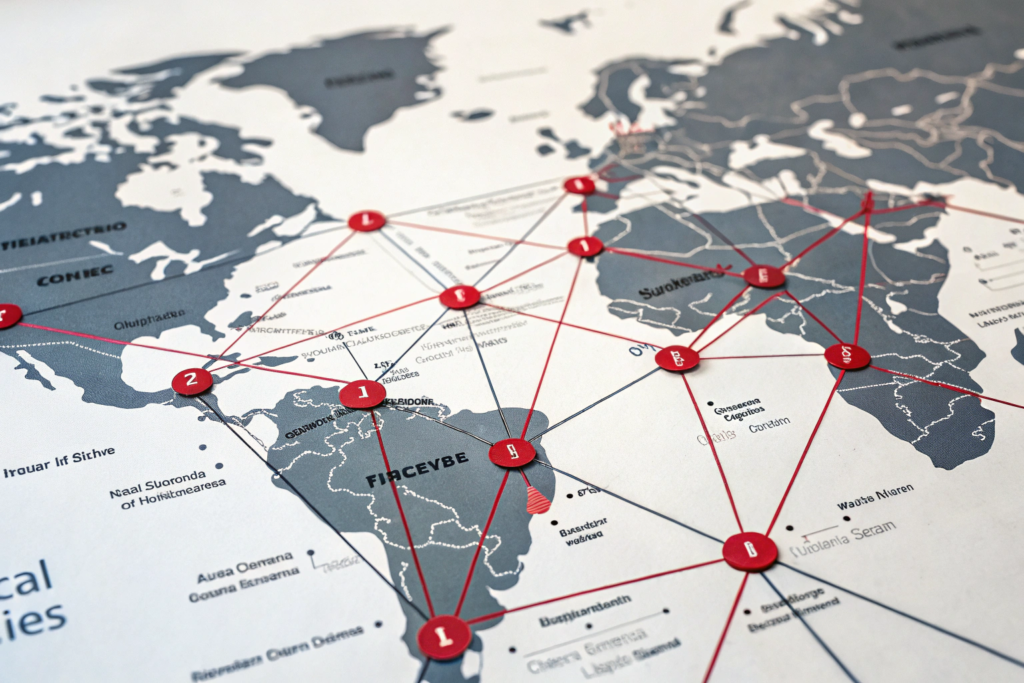
In 2026, that same fabric often looks like this: Yarn spun in India (cheaper cotton). Shipped to Vietnam for knitting (lower labor cost). Greige fabric shipped to China for dyeing (because Vietnam’s dyeing capacity for complex colors is still limited). Dyed fabric shipped back to Vietnam for finishing and inspection. Then shipped to Bangladesh for cut-and-sew. That’s four countries. Four sets of customs clearance. Four different quality standards. Four different languages. And at least three different companies handling the fabric, each with their own margin to protect and their own incentive to cut corners.
This fragmentation creates handoff gaps. Each time the fabric changes hands, there’s a moment where nobody owns the quality. The Indian spinner checks the yarn. It passes. They ship it. The Vietnamese knitter receives it, but they don’t re-test the yarn strength. They just knit it. The greige fabric goes to China. The Chinese dyer sees it and notices the knitting is slightly loose, which will affect dye uptake. But the contract is just to dye it, not to reject it. They dye it anyway. The Vietnamese finisher gets a fabric that doesn’t quite meet spec, but their job is just to apply the softener. They apply it. The brand in California opens the container and wonders why their "premium" hoodie feels thin and the color is blotchy. Whose fault is it? Everyone’s. And no one’s.
Why Do Multi-Country Production Runs Create More Defects?
The simple answer is variation stacking. Every manufacturing process has inherent variation. A yarn’s thickness varies by ±3%. A knitting machine’s tension varies by ±2%. A dye bath’s temperature varies by ±1°C. A finishing stenter’s speed varies by ±5%. In a single-location, integrated supply chain, those variations are monitored and adjusted in real-time. The dyer knows exactly which knitting machines are running and can tweak the dye recipe to compensate for a slightly tighter knit.
In a fragmented, multi-country supply chain, those variations don’t compensate. They accumulate. The yarn is 3% thinner than spec. The knitting is 2% looser to compensate, which makes the fabric less stable. The dye bath runs 1°C cooler because the operator is new, reducing dye penetration. The stenter runs 5% faster to meet a shipping deadline, locking in internal stresses. None of these variations alone is a "defect." But stacked together? You get a fabric that’s 8% lighter than spec, pills after three washes, and has a visible shade difference from the approved sample.
And here’s the kicker: Nobody in this chain has the authority or the incentive to stop the process and say, "Wait, this isn’t right." The Indian spinner did their job. The Vietnamese knitter did their job. The Chinese dyer did their job. The Vietnamese finisher did their job. Everyone hit their individual KPIs. But the system failed the customer.
I saw this happen in Q3 2025 with a Canadian activewear brand. They sourced organic cotton yarn from India, had it knitted in Vietnam, and dyed in China. The final fabric had a terrible barre effect—horizontal stripes caused by uneven yarn tension. The Indian mill’s yarn was within spec. The Vietnamese knitter’s tension was within spec. The Chinese dyer’s process was within spec. But the combination of the specific Indian cotton’s short fiber length and the Vietnamese machine’s gauge created a resonance that produced visible striping only after dyeing. Nobody caught it because nobody had seen the whole picture. The brand had to liquidate 4,000 yards at a 60% loss. That’s the cost of fragmentation.
(Here I need to add a practical tip: If you’re doing multi-country sourcing, you must appoint a single quality owner—either an internal tech designer or a third-party inspection agency—who has authority to stop production at any stage. This person needs to see test reports from every handoff, not just the final inspection. This resource on managing quality across fragmented global supply chains covers the governance structures that work.)
How Do Tariff Policies Unintentionally Lower Fabric Standards?
This is the unintended consequence nobody in Washington or Brussels talks about. Tariffs are designed to protect domestic industries or punish certain trade practices. But in textiles, they often just incentivize lowest-cost bidding and specification gaming.
Here’s how it plays out on the ground. An American importer faces a 25% Section 301 tariff on Chinese polyester woven fabric. To stay competitive on retail price, they need to reduce the landed cost of that fabric by 15-20%. They can’t change the tariff rate. They can’t change the shipping cost. So they pressure the factory to reduce the FOB price.
The factory, operating on thin margins already, has a few levers to pull:
- Reduce the fabric weight. Spec calls for 180GSM. They produce at 170GSM. The customer can’t easily weigh the fabric, especially after it’s made into garments. The fabric feels "close enough." But it’s less durable, more sheer, and the drape is wrong.
- Substitute cheaper yarn. Spec calls for combed cotton. They use carded cotton. Combed cotton removes short fibers and impurities, creating a smoother, stronger yarn. Carded is cheaper but rougher and pills faster. Again, hard for the buyer to detect without a microscope.
- Shorten finishing times. Spec calls for a 45-second dwell time in the softener bath. They run it at 30 seconds to increase throughput. The fabric feels soft off the machine, but the finish washes out after two home launderings.
Tariffs create a price umbrella that makes these small degradations economically rational for desperate factories. And because the buyer is already stressed about the tariff cost, they’re less likely to scrutinize the quality as closely. They just need the goods to arrive.
I’m not saying tariffs are wrong policy. I’m saying you need to understand the behavioral economics they create. If you’re buying from a country with high tariffs, you must be more vigilant about quality, not less. You need to insist on third-party testing of weight, fiber composition, and performance before shipment. And you need to build relationships with mills like Shanghai Fumao that refuse to play the degradation game, even when pricing pressure is intense. We’d rather lose an order than lose our reputation for maintaining consistent fabric specifications under cost pressure from import duties.
The Skilled Labor Crisis in Global Textile Mills
I’m going to say something that keeps textile executives up at night. The most valuable asset in my factory doesn’t have a barcode. It’s not the Karl Mayer warp knitting machine or the Monforts stenter. It’s my head dyer, Mr. Chen. He’s 57 years old. He started in this industry when he was 16. He can look at a beaker of dye solution and tell you if the concentration is off by 2% just by the way the light hits it. He can smell a finishing bath and know if the pH is drifting.
Mr. Chen is irreplaceable. And in about eight years, he’s going to retire to play with his grandchildren. Who replaces him? His son works in tech in Hangzhou. His daughter is a marketing manager in Shanghai. Neither of them wants to spend 12 hours a day in a hot, humid, chemical-smelling dye house. And they’re not alone.
This is the skilled labor cliff facing the global textile industry. It’s not just China. It’s Italy, Japan, the US (what’s left of it), and yes, Vietnam too. Young people globally are choosing service jobs, tech jobs, anything over manufacturing jobs. The work is hard. The environment is challenging. The pay, while improving, doesn’t match the perceived lifestyle cost of "blue collar" work. So the average age of a master textile technician climbs higher every year. And as they retire, their tacit knowledge—the stuff that isn’t in any manual—walks out the door with them.
This labor shortage creates quality inconsistency in two ways. First, you have fewer experienced eyes on the production line. Second, you have higher turnover among the junior workers who are there. A mill might train a new inspection operator, get them up to 80% proficiency after six months, and then lose them to a better-paying electronics assembly job down the road. Then you start over with another trainee. Constant churn means constant rookie mistakes.
Can Automation Replace the "Golden Hands" of Experienced Technicians?
Yes and no. Automation is fantastic for precision and repeatability. A modern knitting machine with digital yarn feed control can maintain tension within 0.5% variation all day long. A human operator can’t do that. A spectrophotometer can read color differences the human eye literally cannot perceive. Automation has dramatically reduced certain classes of defects, especially in yarn spinning and basic weaving.
But automation fails at diagnosis and adaptation. A machine can tell you the yarn tension is 2.3 cN, which is outside the spec of 2.0 ± 0.2 cN. It will stop and flash a red light. It cannot tell you why the tension is high. Is the yarn package wound too tight? Is the tensioner bearing worn? Is the humidity in the room too low, causing the yarn to contract? Answering those questions requires a human with experience—someone who has seen that specific pattern of tension drift before and remembers that it usually happens in November when the weather turns dry.
Here’s a concrete example from our coating factory. We apply a polyurethane coating to make fabric waterproof. The coating machine has sensors for viscosity, temperature, and knife gap. It’s highly automated. But the adhesion of that coating to the fabric depends on the fabric’s surface energy, which is affected by residual oils from knitting, ambient humidity, and the exact dwell time in the pre-treatment oven. Our senior coating technician, Lao Wang, adjusts the machine settings by "feel." He runs his thumb over the fabric as it enters the coating head. If it feels slightly "grabby," he knows the pre-treatment was perfect. If it feels "slick," he knows there’s still a trace of knitting oil, and he slows the line speed by 2 meters per minute to increase dwell time. The machine can’t feel that. It just reads numbers.
So, automation reduces variation. But it doesn’t eliminate the need for wisdom. The most consistent mills in 2026 are not the ones with the most robots. They’re the ones that have paired advanced automation with an apprenticeship system that transfers wisdom from the Lao Wangs and Mr. Chens to a new generation before they retire. At Shanghai Fumao, we’ve digitized a lot of that wisdom. We have a database of "tribal knowledge"—specific machine adjustments for specific fabric constructions under specific weather conditions. But even that database is only as good as the human who knows when to consult it. For a broader look at this issue, this article on the manufacturing skills gap and efforts to attract younger workers hits close to home.
Why Do Different Shifts Produce Different Fabric Quality?
This is one of those dirty secrets of manufacturing that nobody puts in the brochure. The fabric produced on the night shift is often different from the fabric produced on the day shift. Not wildly different. But measurably different. And the reason is simple: supervision and fatigue.
Day shift has the plant manager, the quality manager, the head technician, and the customer’s visiting inspector all walking the floor. Everyone is alert. Machines are running at optimal speed. Problems are caught quickly because there are more experienced eyes around.
Night shift has a skeleton crew of supervisors. The most experienced technicians have the seniority to avoid night work. The crew is younger, less experienced, and often more tired. They’re working against their body’s natural circadian rhythm. At 3:00 AM, a subtle change in the sound of a bearing or the smell of a motor might go unnoticed. A dye bath might run 1.5°C off-spec for an hour before someone catches it. The stenter operator might not notice the fabric is "bowing" (curving) slightly because they’re fighting to stay awake.
I’ve seen the data from our own production logs. The defect rate on night shift is consistently 1.5-2% higher than day shift for complex, high-touch fabrics like jacquards or delicate silks. It’s not a huge difference, but in a competitive market where buyers are demanding perfection, it matters.
How do we manage this? Several ways:
- Rotation: We rotate the senior technicians through night shift on a scheduled basis so there’s always at least one "grey hair" on the floor.
- Simplification: We schedule the most complex, quality-sensitive production runs for day shift whenever possible. Night shift gets the long runs of basic, forgiving fabrics.
- Technology: We use camera-based inspection systems on our stenter frames that don’t get tired. They flag defects regardless of the time of day.
- Incentives: Night shift workers get a quality bonus that’s higher than day shift, payable if their defect rate stays within 0.5% of the day shift average.
But even with all that, shift variation is real. It’s a human factors problem that no amount of ISO certification fully solves. Smart buyers understand this and ask their suppliers about how to verify shift-to-shift quality consistency in textile production. They request production records that include shift timestamps, not just daily summaries. (Here’s the brutal truth: if your fabric is always perfect on re-orders, you’re probably on day shift. If it’s "mostly good but sometimes a little off," you’re getting night shift production).
The Erosion of Buyer Technical Knowledge
Twenty years ago, if you wanted to be a fabric buyer for a major brand, you apprenticed. You spent years in the mills. You learned to distinguish between a 40/1 and a 60/1 yarn by rubbing it between your fingers. You understood how twist affects drape. You could look at a selvedge and tell if the loom was running too fast.
Today, many fabric buyers come from merchandising or marketing backgrounds. They’re brilliant at trend forecasting, data analysis, and negotiating cost. But they’ve never stood next to a running loom. They’ve never smelled a dye bath. They communicate with suppliers via email and WeChat, using words like "soft," "drapey," and "premium" that mean different things to different people.
This isn’t a criticism. It’s an evolution. The industry has changed. But it creates a specification vacuum. When the buyer can’t precisely articulate what they want, the supplier has to guess. And when the supplier guesses, the result is inconsistent.
I get tech packs that say things like "Hand feel: soft and luxurious." What does that mean? To one person, "soft" means a brushed, fuzzy surface like a sweatshirt. To another, it means a slick, silky surface like a charmeuse. Without objective, measurable specifications—fiber micronaire, yarn count, fabric weight, finishing chemistry—the supplier is flying blind. They produce what they think is "soft and luxurious." You receive something that might be soft and luxurious, but not in the way you imagined. And that’s how inconsistency is born.

What Specific Questions Should Buyers Ask About Fabric Specifications?
Stop asking "Is this good quality?" It’s a meaningless question. Every supplier will say yes. Start asking questions that demand objective, verifiable answers. Here’s my cheat sheet:
1. "What is the exact yarn count and construction?"
- Bad answer: "It’s cotton."
- Good answer: "It’s 40/1 combed cotton, single jersey knit, 28 gauge, 180GSM finished weight, with a tolerance of ±5%."
- This tells you everything. 40/1 is the yarn thickness (higher number = finer yarn). Combed means short fibers removed. 28 gauge is the machine fineness (higher = tighter knit). 180GSM is the weight. This is a recipe, not a description.
2. "Can I see the lab test report for colorfastness, shrinkage, and pilling?"
- Bad answer: "We guarantee good quality."
- Good answer: "Here is the PDF from our CNAS lab showing AATCC 61-2A wash fastness Grade 4.5, AATCC 135 shrinkage -3% length x -2% width, and ASTM D4970 pilling Grade 4 after 1,000 cycles."
- This is data. It’s verifiable. It protects you from claims.
3. "What is your internal tolerance for shade variation (dE value)?"
- Bad answer: "We match the lab dip."
- Good answer: "We work to dE < 0.8 for solid colors under D65 lighting. We provide the spectral data for every dye lot."
- dE is the mathematical difference between colors. <1.0 is generally imperceptible to most people. >2.0 is visible. This question alone separates serious buyers from tourists.
4. "How do you ensure batch-to-batch consistency for repeat orders?"
- Bad answer: "We keep records."
- Good answer: "We retain a physical reference sample and the digital spectral curve for every approved color. Before running a repeat order, the dye master must achieve a match to the original reference within dE < 1.0, verified by spectrophotometer. We also test a pre-production sample from the new batch against the retained sample."
5. "What are the traceability documents for the fiber content?"
- Bad answer: "It’s organic cotton."
- Good answer: "Here is the GOTS Transaction Certificate (TC) number for this specific lot, tracing the fiber back to the certified gin in India. You can verify it on the GOTS public database."
Asking these questions changes the dynamic. It tells the supplier you’re not a mark. You know what matters. And it gives you a paper trail to hold them accountable. For more on this topic, here’s a practical guide on essential questions fashion buyers should ask fabric mills about quality control.
How Do Vague Tech Packs Lead to Costly Production Errors?
Let me walk you through a real disaster I witnessed from the sidelines. A US-based DTC brand sent a tech pack for a "linen-blend summer dress" to a new supplier in India. The tech pack was beautifully designed. It had flat sketches, Pantone color references, and measurement specs. It said: "Fabric: 55% Linen / 45% Rayon. Hand feel: soft, breathable, natural."
What was missing? The critical details.
- Yarn type: Was the linen wet-spun (smoother, more expensive) or dry-spun (slubby, rustic)? Wet-spun drapes. Dry-spun wrinkles aggressively.
- Weave structure: Was it a plain weave (crisp, prone to wrinkling) or a twill weave (softer drape, more wrinkle recovery)?
- Finishing: Was there an anti-wrinkle resin applied? A silicone softener?
The supplier, wanting to hit the target price, used a dry-spun linen in a plain weave with no special finishing. It was "55% Linen / 45% Rayon." It met the letter of the tech pack. The bulk fabric arrived. It was stiff. It wrinkled if you looked at it wrong. It had a scratchy hand feel. It was nothing like the flowy, effortless dress the designer had envisioned.
The brand rejected the fabric. The supplier pointed to the signed tech pack. "This is what you ordered." And legally, the supplier was right. The brand ended up paying a 50% claim just to get something shipped, and they liquidated the resulting garments at a steep discount. The cost? Over $80,000 in lost margin, plus a damaged supplier relationship, plus a missed season.
The lesson: Your tech pack is a legal contract. Vague language like "soft" and "natural" is unenforceable. You need objective specifications. If you don’t know how to write those specifications, you need a partner who can help you translate your aesthetic vision into how to write precise fabric specifications to avoid production errors. At Shanghai Fumao, we often spend 2-3 weeks in the development phase just nailing down the exact construction details before we even make a lab dip. That upfront time investment saves months of delay and tens of thousands of dollars on the back end.
The Decline of In-Line Quality Inspection Protocols
There’s a dangerous trend I’m seeing across the industry, especially among smaller mills trying to compete on price. They’re shifting from in-line inspection to final inspection only.
Here’s the difference. In-line inspection means you check quality at multiple points during production. You check the yarn before knitting. You check the greige fabric before dyeing. You check the dyed fabric before finishing. You check the finished fabric before packing. Catching a defect early is cheap. You can fix the machine setting, or at worst, you’ve wasted a few yards of greige goods.
Final inspection means you check the fabric only after everything is done—dyed, finished, rolled, and ready to ship. Catching a defect at this stage is expensive. The entire roll is scrap or downgraded. You’ve already paid for the yarn, the knitting, the dyeing, the finishing, and the labor. And if the defect is systematic—say, a recurring machine fault—you might have produced thousands of yards of defective fabric before anyone notices.
Why are mills moving to final-only inspection? Because in-line inspection requires more labor. It requires stopping machines to pull samples. It requires technicians, not just machine operators. It slows down throughput. In a low-margin environment, the pressure is to keep the machines running at all costs. "We’ll catch it at the end" becomes the mantra. But by the end, it’s too late.
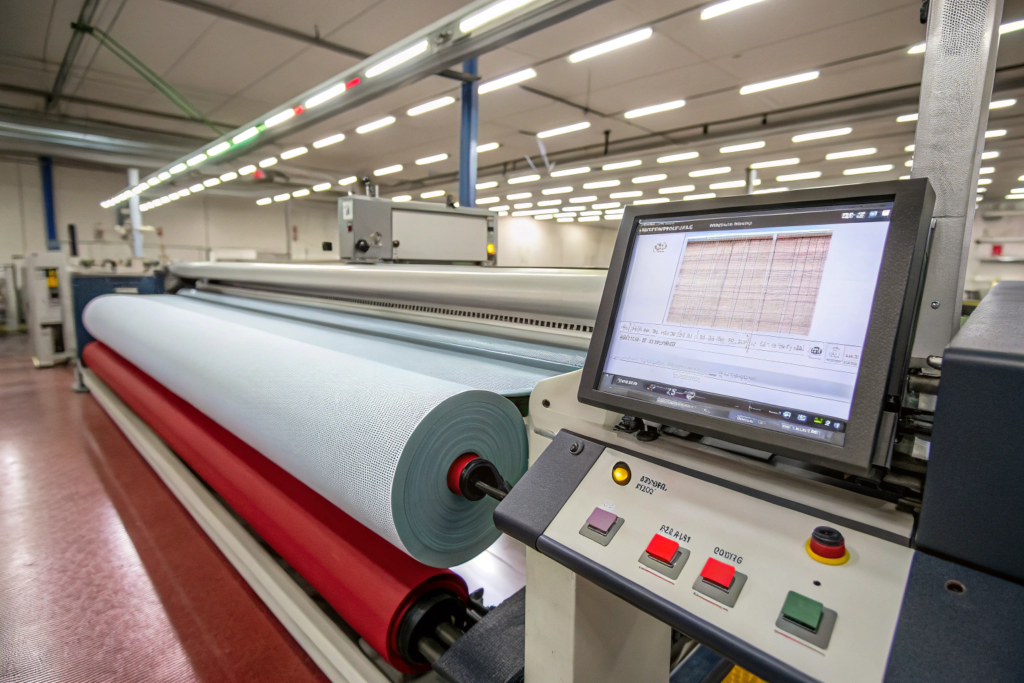
Why Is Pre-Dyeing Fabric Inspection Often Skipped?
This is the single biggest source of preventable quality issues in 2026. Greige fabric inspection is boring, tedious work. You’re looking at undyed, off-white fabric under harsh light, trying to spot subtle knitting flaws, yarn contamination, or thin spots. It’s hard to see. It’s easy to miss things. And because it’s pre-dye, there’s a psychological bias to think, "Maybe the dye will cover it up."
Spoiler alert: Dye does not cover up defects. It amplifies them.
A thin spot in the knit will absorb dye differently and appear as a light streak. A slub (thick lump) of yarn will appear as a dark spot. A tiny hole will become a very obvious hole once the fabric is a solid navy blue. Oil spots from knitting machine lubrication are invisible on greige goods. After dyeing? Bright yellow spots that cannot be removed.
Skipping greige inspection is like painting a wall without checking if the drywall has holes. You’re just making the problem more colorful.
We learned this lesson the hard way about 12 years ago. We had a big order for a client’s signature black ponte roma fabric. We were rushing. We skipped the full greige inspection, just doing spot checks. The fabric came out of the dye bath looking beautiful. It was only at final inspection that we saw it: a recurring horizontal line every 18 inches, across the entire production run. It was a needle defect on one of the knitting machines. A tiny burr on a single needle was snagging the yarn. We caught it at final. But we had already produced 8,000 yards of defective fabric. We had to eat the entire cost—yarn, knitting, dyeing—and start over. The order shipped three weeks late. The client was furious.
Since that day, we have a non-negotiable rule: 100% greige inspection for all premium orders. We use a combination of automated camera systems and human inspectors. The camera catches the repetitive, mechanical defects (like that needle line). The human catches the random, organic defects (like a fly embedded in the yarn). It costs about $0.03 per yard. It saves us thousands of dollars and countless sleepless nights. If you’re sourcing from a new supplier, ask point blank: "What percentage of greige fabric do you inspect before dyeing?" If the answer is less than 100% for premium fabrics, you’re gambling. This resource on the critical importance of greige goods inspection in textile quality explains the technical reasons why this step is non-negotiable.
How Does Rushed Finishing Compromise Long-Term Fabric Performance?
Finishing is where fabric gets its personality. It’s where we add the softener that makes it feel like butter. Where we apply the resin that controls shrinkage. Where we heat-set the width and stabilize the dimensions.
Finishing is also the easiest place to cheat. It’s the last step before packing. If production is behind schedule—and it always is, somewhere—the pressure lands on the finishing department. "We need this on the truck by Friday. Speed up the stenter."
Speeding up the stenter means the fabric spends less time in the heat chamber. Less time means the finish doesn’t cure properly. The softener sits on the surface instead of bonding to the fiber. The shrinkage control resin doesn’t cross-link fully. The width-set doesn’t "relax" into a stable state.
The fabric comes off the machine looking and feeling fine. It passes a quick visual and hand-feel check. It gets packed and shipped. The customer opens the container and is happy.
Then the customer washes the garment once. The softener washes out because it wasn’t cured. The fabric shrinks 6% because the resin wasn’t set. The seams pucker because the width-set wasn’t stable. And now the brand has a problem that doesn’t show up until the end consumer is already wearing the product. That’s the nightmare scenario—a latent defect that triggers returns and bad reviews weeks or months after delivery.
At Shanghai Fumao, we use process control locks on our finishing equipment. The stenter speed, temperature, and dwell time are logged digitally for every roll. If an operator tries to speed up the line beyond the validated parameters for that fabric construction, the system flags it and requires a supervisor override. This prevents "midnight speed-ups" when no one is watching. We also run a post-finish wash test on samples from every batch to verify that the shrinkage and performance specs are actually met, not just assumed.
This is the kind of invisible, behind-the-scenes discipline that separates consistent quality from "it looked good when it left the factory." For more on this, here’s a technical piece on the role of stenter frame parameters in fabric dimensional stability.
Conclusion
So, why is fabric quality so inconsistent in 2026? It’s not one thing. It’s a perfect storm. It’s supply chains stretched across four countries with nobody owning the handoffs. It’s a generation of master technicians retiring without apprentices to replace them. It’s buyers who know Instagram but not yarn counts. And it’s production pressure that incentivizes skipping the boring, unglamorous inspection steps that actually prevent defects.
The consistent thread through all of this is a lack of systems thinking. The mills that still produce excellent, reliable fabric in this chaotic environment are the ones that have built robust systems. They don’t rely on heroic individual effort. They rely on calibrated equipment, documented processes, verified data, and a culture that values catching problems early over shipping fast.
That’s what we’ve built at Shanghai Fumao over the last two decades. It’s not flashy. Our factory floor doesn’t look like a sci-fi movie. But we have the spectrophotometer that doesn’t lie about color. We have the wash tests that verify shrinkage before the fabric is cut. We have the greige inspection cameras that catch needle lines before they become $80,000 problems. And most importantly, we have the people—the Mr. Chens and Lao Wangs—who know what to do when the machine flashes a red light that the computer can’t diagnose.
Consistency isn’t an accident. It’s a choice. It’s a choice to invest in testing equipment when it’s cheaper to skip it. It’s a choice to hire and train quality technicians when it’s easier to just hire machine operators. It’s a choice to reject a batch of yarn that’s almost within spec, knowing it will cause problems down the line.
If you’re tired of playing quality roulette with every order, the solution isn’t to find a cheaper supplier. The solution is to find a partner who has made the choice to build a system that delivers consistency. That partner needs to be able to show you the data, explain the process, and prove that the fabric in the container matches the sample you approved.
If you want to have a real conversation about your specific quality requirements—not just vague promises, but actual specifications and test protocols—let’s talk. We can review your current quality issues, analyze your tech packs for gaps, and build a sourcing plan that gives you predictable, repeatable results.
For a detailed discussion about your fabric quality challenges and how our systems can provide the consistency you need, please contact our Business Director, Elaine. She can arrange for sample test reports and walk you through our quality assurance documentation.
Contact Elaine: elaine@fumaoclothing.com
Consistency is possible. You just have to know where to look and what questions to ask. Let’s find it together.