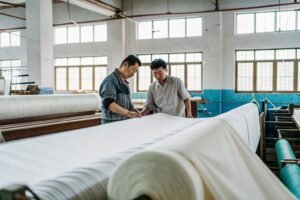
When you place an order for fabric, you’re not just buying material—you’re buying trust. You trust that the vibrant color won’t cause allergies, that the soft hand-feel isn’t hiding formaldehyde, and that the performance finish is safe for skin contact. At Fumao Clothing, we don’t take that trust lightly. We engineer our fabrics to pass not just the basic tests, but the strictest global standards from day one. The result? A 98% first-pass rate at third-party labs like SGS and Intertek, and peace of mind for brands that can’t afford a recall.
Our fabrics pass because safety isn’t an afterthought or a final inspection checkpoint; it’s the foundational principle woven into every stage of our integrated supply chain. From sourcing GOTS-certified organic cotton yarn to using a rigorously controlled "Positive Chemical List" at our partner dye houses, we build compliance into the recipe. It’s the difference between trying to filter out impurities at the end and starting with pure ingredients. We operate with a simple philosophy: you cannot inspect quality and safety into a product; you must manufacture it in.
This isn’t marketing talk; it’s our daily operational reality in Keqiao, the world’s textile capital. In this article, I’ll pull back the curtain on the four pillars of our safety-first system: Pre-emptive Raw Material Control, Chemistry-Led Manufacturing, In-House & Third-Party Verification, and Full-Chain Traceability. You’ll see exactly how and why our fabrics consistently meet the demands of OEKO-TEX® Class I, EU REACH, and even retailer-specific RSLs.
Pillar 1: Pre-emptive Raw Material Control
The safety journey of a fabric begins long before it reaches the loom. Up to 80% of potential contamination is determined at the raw material stage. That’s why our first and most critical control point is our upstream sourcing network. We don’t buy yarn and dyes from an open market; we partner with a select group of certified and audited suppliers.
For natural fibers, we prioritize GOTS-certified organic cotton, RWS-certified wool, and FSC-controlled viscose. These certifications guarantee not just the absence of pesticides or unsustainable forestry, but also traceability back to the farm or forest. For synthetics, we source GRS-certified recycled polyester and nylon, ensuring the recycled content is free from contaminants. Our yarn suppliers must provide full mill test reports and batch-specific documentation. This pre-emptive vetting eliminates risks like pesticide residues in conventional cotton or heavy metal catalysts in non-certified synthetics at the very origin.

How does sourcing certified yarn prevent downstream failures?
Certified yarn is your first and strongest line of defense. Let’s take GOTS-certified organic cotton as an example. To hold this certification, the cotton must be grown without toxic pesticides and genetically modified seeds. But crucially, the GOTS standard also governs the entire processing chain—spinning, knitting, dyeing, and finishing—mandating strict environmental and social criteria and banning harmful inputs. When we start with GOTS-certified yarn, we are already aligned with the world’s most rigorous organic processing standard. This massively simplifies achieving finished fabric certifications like OEKO-TEX®. In 2023, a German children’s wear brand switched to us because their previous supplier’s "organic" jersey kept failing for pentachlorophenol (PCP) residues. The root cause was uncertified cotton contaminated during ginning. By switching to our GOTS-integrated supply chain, they had zero failures on their next four bulk orders.
What is our "Green Chemistry" sourcing protocol for dyes and auxiliaries?
The dyes and chemicals used in processing are the other half of the raw material equation. We maintain a "Positive List" of pre-approved dyes and auxiliaries from reputable chemical companies like Archroma and Huntsman. This list is curated against the latest versions of the OEKO-TEX® Standard 100 Restricted Substances List (RSL), EU REACH SVHC list, and major retailer RSLs (e.g., H&M, Inditex). Before any chemical enters our partner dye house, its technical data sheet (TDS) and safety data sheet (SDS) are reviewed by our R&D team. We ban entire problematic chemical groups, such as APEOs (alkylphenol ethoxylates), certain phthalates, and PFCs (perfluorinated chemicals) for water repellency, opting for newer, safer C6 or PFC-free alternatives. This proactive chemical management is why our fabrics pass strict tests—we never allow non-compliant inputs into the process.
Pillar 2: Chemistry-Led Manufacturing in Controlled Facilities
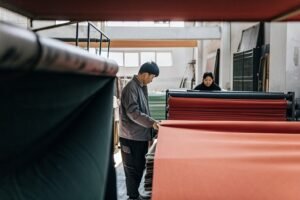
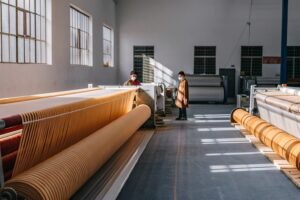
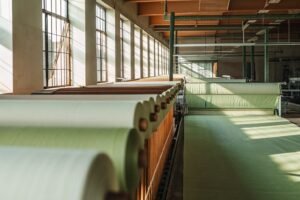
Owning the right ingredients is only half the battle. Consistent safety is achieved through controlled, repeatable processes. Our strength lies in our deeply integrated network of cooperative factories—from weaving and knitting to dyeing, printing, and finishing—all operating under our unified technical management system.
We don’t just send a fabric specification to a dye house; we provide a "Process Control Sheet." This document details not just the color formula, but the specific, approved dyes to use, the pH targets at each wash stage, the temperature ramp rates, and the final finishing recipe. Our on-site technicians supervise key production batches, especially for new developments or high-risk orders (e.g., babywear in white or pastels). This hands-on control ensures that the theoretical safety of our "Positive List" is executed correctly in practice, preventing cross-contamination or process deviations that could lead to failures.

How does our dyeing and washing process eliminate residues?
Thorough washing is the unsung hero of fabric safety. After dyeing, fabrics must be washed to remove unfixed dyes and chemical residues. Many failures occur due to insufficient washing. Our process control sheets mandate multiple hot wash cycles at specific temperatures with a neutralization stage. We target a final pH of 4.0-7.5 (skin-neutral) for all apparel fabrics. For babywear (Class I), we often implement an extra "super-wash" cycle. We then test the wastewater from the final rinse for key parameters as an inline check. This rigorous washing protocol ensures that substances like free formaldehyde, heavy metals, or alkaline residues are reduced to levels far below the OEKO-TEX® limits. It’s the textile equivalent of rinsing a dish until the soap is completely gone.
What measures prevent cross-contamination in production?
Cross-contamination is a silent killer of safety claims. Running a light-colored organic cotton baby jersey after a batch of dark, synthetic athletic wear on the same machine is risky. We enforce strict scheduling and cleaning protocols at our partner facilities:
- Dedicated Production Lines: Where possible, we reserve lines for similar product types and risk categories.
- Mandatory Cleaning Logs: Factories must document and sign off on a full cleaning cycle of dyeing machines, print screens, and finishing equipment between dissimilar orders.
- Physical Audits: Our QC team conducts unannounced checks to verify cleaning logs and storage practices for chemicals and fabrics.
This disciplined approach prevents the transfer of allergens, optical brighteners, or restricted substances from one batch to another, guaranteeing the purity of your order.
Pillar 3: In-House & Third-Party Verification Layers
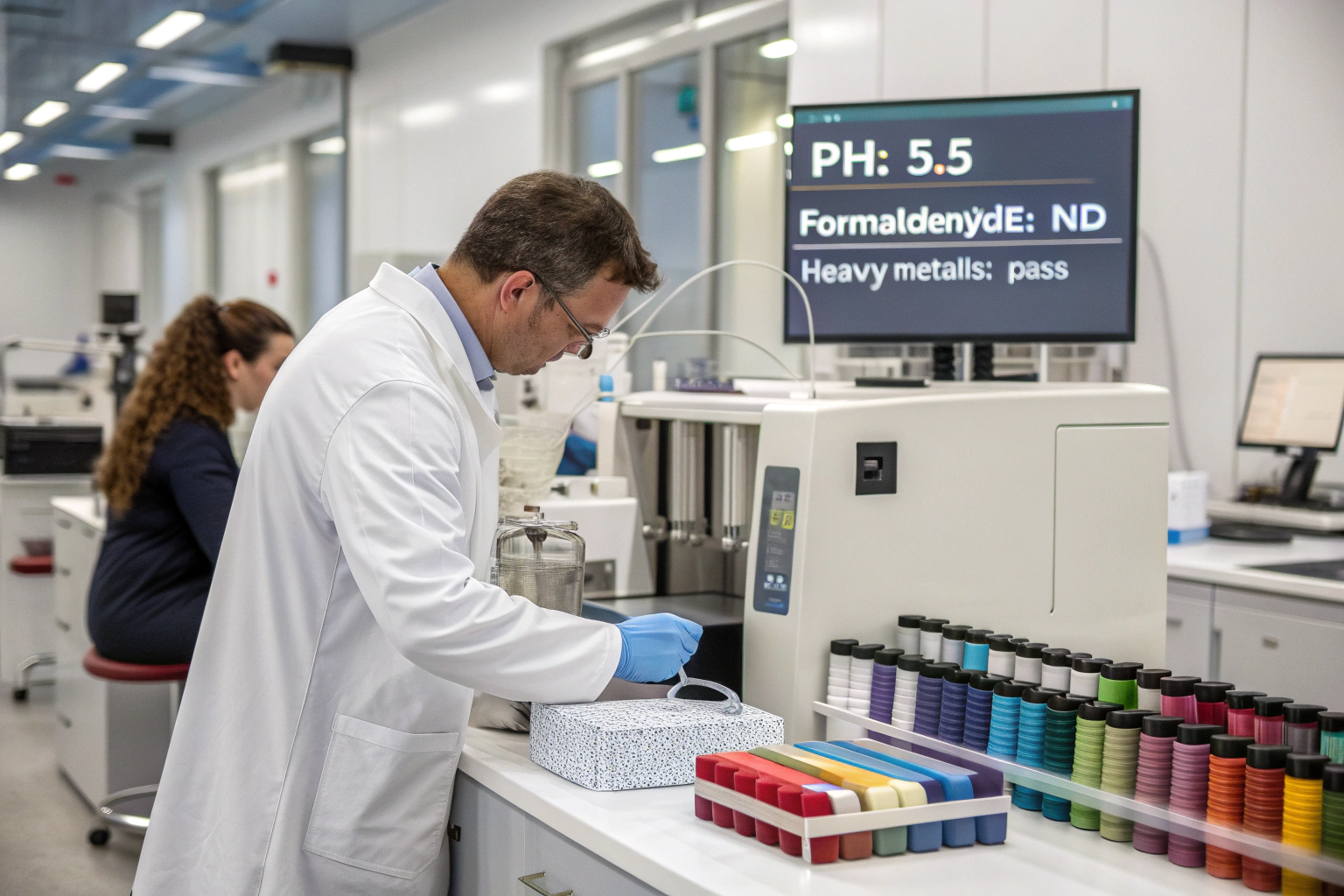
Testing isn’t just something we do before shipping; it’s integrated throughout our workflow. We employ a dual-layer verification system: our own CNAS-accredited in-house lab for rapid pre-screening and process control, followed by mandatory final verification from internationally accredited third-party labs.
Our in-house lab is equipped to perform over 30 critical tests, including pH, formaldehyde content (extraction method), colorfastness to perspiration and saliva, and basic heavy metal screening. This allows us to catch potential issues within hours, while the fabric is still at the factory. For instance, if our inline pH test after washing shows a value of 8.5, we immediately reject the batch and send it back for re-washing, long before it goes for costly external testing. This internal gatekeeper role is why our first-pass rate at external labs is so high—we’ve already filtered out the non-conformities.

What specific tests does your CNAS lab perform, and why is it accredited?
Our CNAS accreditation (China’s equivalent to ISO/IEC 17025) means our lab meets international competence standards. Its results are recognized globally. Key pre-screening tests include:
- pH Value Test: Ensuring skin-friendly neutrality.
- Formaldehyde Content (Water Extraction Method): A quick screen for free formaldehyde.
- Colorfastness to Perspiration (Acid & Alkaline): Simulating sweat conditions.
- Colorfastness to Saliva: Mandatory pre-check for baby fabrics.
- Dimensional Stability (Shrinkage): A quality and safety marker, as excessive shrinkage can concentrate chemicals.
This capability allows us to provide clients with preliminary test data within 48 hours of sample production, enabling faster decision-making and risk assessment. For a US sportswear brand last quarter, our in-house saliva fastness catch on a sample saved them from a potential 6-week delay later in the process.
Why is final third-party certification non-negotiable?
While our in-house lab is crucial for control, we believe the final arbiter of safety must be an independent, globally recognized authority. For every bulk production lot, we submit sealed, blind samples to labs like SGS, ITS, or Bureau Veritas. We test against the full scope of the required standard—be it OEKO-TEX® Standard 100, AATCC, or a specific retailer’s RSL. We pay for this test, and we provide the full report to our client. This final step provides the undeniable proof needed for customs clearance, retailer onboarding, and consumer trust. It closes the loop, transforming our internal controls into an externally verified guarantee.
Pillar 4: Full-Chain Traceability & Digital Documentation
In today’s market, proof is as important as the product itself. We provide a transparent, digital trail for every meter of fabric we sell. Through our QR Code Traceability System, each bale of finished fabric is tagged with a unique code.
Scanning this code with a smartphone provides instant access to a digital dossier containing:
- Raw Material Certificates: GOTS, GRS, etc., for the yarn.
- Dye & Chemical Compliance Statements: From our "Positive List" suppliers.
- In-House QC Test Data: pH, formaldehyde pre-screen results.
- Final Third-Party Test Report: The official OEKO-TEX® or other certificate.
- Production Details: Dyeing lot, finishing batch, and date.
This isn’t just for show. It empowers your brand. When a retailer asks for proof of compliance during an audit, your team can scan the code on your inventory and present the complete story in seconds. It turns a complex supply chain into a transparent, accountable pipeline.

How does this traceability protect my brand during a retailer audit?
Retailer audits are becoming more forensic. They want to see the chain of custody. Our digital traceability system provides that effortlessly. For example, if a retailer like Zalando questions the organic content of a garment, you can provide not just the final GOTS transaction certificate, but also trace back to the specific GOTS-certified yarn lot used. This level of detail demonstrates unparalleled supply chain mastery and due diligence, strengthening your position as a preferred vendor. It turns a stressful audit into a demonstration of your brand’s operational excellence.
Can I access this information during the pre-production stage?
Absolutely. Transparency begins with sampling. When we send you lab dips or strike-offs for approval, we include the preliminary test data from our in-house lab. For custom developments, we can even provide a "Project Safety Dossier" that outlines the certified raw materials and approved chemical pathways we plan to use. This allows you to make informed sourcing decisions with safety data in hand, before a single meter of bulk fabric is produced. It’s collaborative risk management.
Conclusion
Fumao Clothing’s fabrics pass the strictest tests because safety is not a filter we apply at the end—it’s the architecture of our entire operation. From certified origins and controlled chemistry to multi-layer verification and digital transparency, every step is designed to build compliance in, not inspect it out. This system delivers more than just a passing test report; it delivers certainty, speed, and a foundational trust that allows your brand to grow with confidence.
In an industry where shortcuts are tempting, we choose the longer, more responsible path. We believe that the true cost of fabric isn’t just the price per meter, but the total cost of risk it carries. Our mission is to bring that risk to zero.
Ready to source fabrics with a guarantee of safety engineered into every fiber? Partner with a supplier whose processes are as clean as the products they deliver. Let Fumao Clothing be the foundation of your next collection. Contact our Business Director, Elaine, to request samples and see our traceability system in action. Email Elaine at: elaine@fumaoclothing.com.