
You know that feeling? You pull on your favorite pair of yoga leggings or that slim-fit jersey dress you paid good money for. It feels amazing for the first hour. Snug in all the right places. Supportive. But by lunchtime? The knees are baggy. The waistband is rolling down. The seat is sagging like a wet paper towel. You spend the rest of the day hiking up your pants or tugging at your hemline. It drives you crazy. Now imagine that happening to your customer. That bad review? It is permanent. That return? It costs you shipping both ways plus a landfill-bound garment. You thought you bought "stretch fabric." What you actually bought was fabric with poor recovery. It stretched out and simply forgot how to snap back.
The reason most stretchy fabrics lose their shape comes down to one brutal reality: Cheap elastic fibers that are stretched to their breaking point during dyeing and never allowed to rest. Specifically, it is the difference between using low-grade bare spandex that gets cooked at 200°C in a stenter frame versus using high-molecular-weight elastane that we process with "cold setting" techniques. At Shanghai Fumao, our fabrics do not bag out because we treat spandex like the fragile, expensive filament it is. We do not torture it with excessive heat. We give it time to "relax" after knitting. And we use a specific type of yarn twist that acts like a spring inside the cotton fibers. You cannot see this difference on a swatch card. You only feel it after six hours of wear.
I have been in the textile game long enough to know that "stretch and recovery" is the number one unspoken complaint in the apparel industry. Brands blame the pattern maker. Pattern makers blame the sewer. The sewer blames the fabric. And the fabric guy? He usually just shrugs and says, "That’s just how poly-spandex is." That answer is not good enough for me. Let me take you into our mill in Keqiao and show you exactly how we beat this problem every single day. It is not magic. It is chemistry and patience.
What Causes Spandex Degradation in Stretch Knit Fabric?
Spandex—or elastane as we call it in the trade—is basically a rubber band made of plastic. It has a memory. But that memory gets wiped out by two things: Heat and Tension. If you take a rubber band and stretch it to its limit and hold it over a flame, it snaps. If you do that to spandex inside a fabric while it is in the dyeing machine, it doesn’t snap right away. It just loses its will to live. It becomes a sad, limp string that no longer pulls the cotton back into shape. This is the secret life of bad leggings.
How Does High Heat Setting Destroy Fabric Recovery?
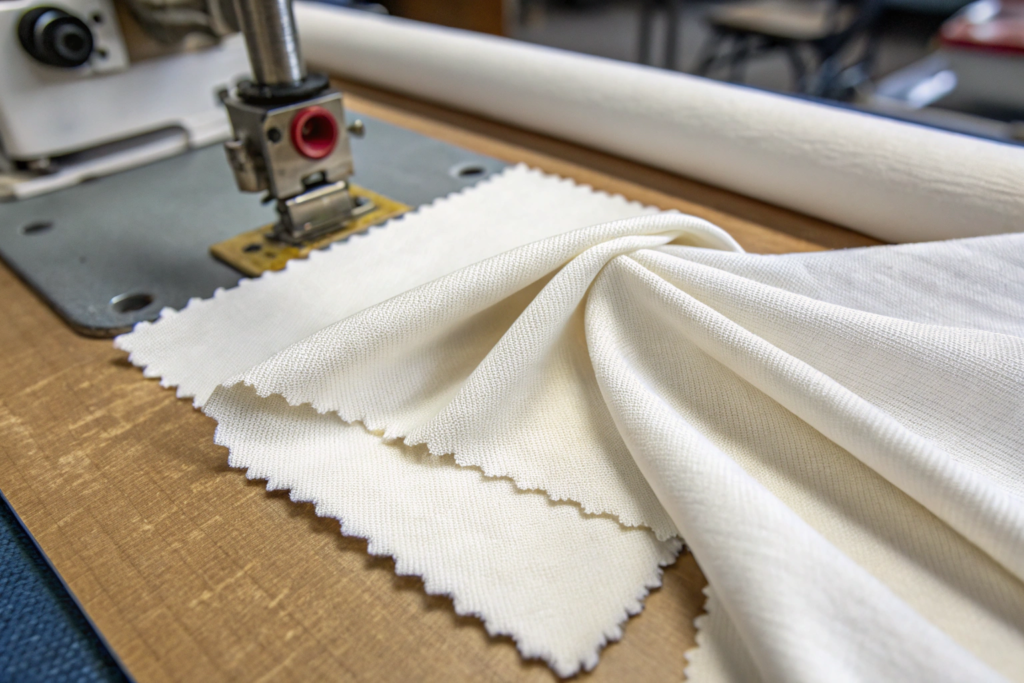
This is where most mills cut corners and destroy your garment’s performance. To make fabric look smooth and flat, you have to run it through a Stenter Frame. This is a massive oven that dries the fabric and sets the width. The problem? Spandex hates heat. The standard setting temperature for a cotton-spandex blend in a cheap factory is 195°C to 200°C (about 390°F). They crank it up high because high heat means the machine can run faster. Faster machine equals more yardage per hour equals cheaper cost.
But here is the science that happens at that temperature: The molecular chains in the spandex filament start to plasticize. They melt just slightly and lose their crystalline structure. Imagine stretching a slinky too far; the coil loses its spring. That is what 200°C does to 40 denier spandex.
At Shanghai Fumao, we use a process we call Low-Tension, Low-Temperature Finishing. We set our stenters to a maximum of 170°C for spandex blends. Yes, it takes longer. Yes, we use more natural gas per meter. But the spandex survives with 95% of its original recovery power intact. We do a test in our lab called the Stretch & Growth Test (ASTM D2594) . Cheap fabric will show "Growth" (bagginess) of 8% to 12% after being stretched for an hour. Our fabric consistently tests under 4% growth. That is the difference between a knee that sags and a knee that stays crisp. I found a detailed explanation of this specific heat damage issue on a textile chemistry forum discussing how high stenter temperatures permanently damage elastane recovery in cotton blends. It confirms exactly what we see in the lab.
Why Does Dyeing Pressure Affect Stretch Retention in Jersey?
This is a factor almost no one outside of a dye house thinks about. Cotton absorbs dye best under high pressure and high temperature in a jet dyeing machine. But that jet machine works like a whirlpool. It pushes the fabric through a narrow tube at high speed. If the fabric is a delicate single jersey with spandex, that pressure stretches the spandex out while it is being cooked in boiling water.
It is like washing a wool sweater in hot water while pulling on both ends. It comes out a size smaller and twice as long.
We solved this by investing in Soft-Flow Dyeing Machines with a Low-Liquor Ratio. I know that sounds like jargon. Let me explain it simply. A soft-flow machine moves the fabric gently, like a lazy river, not a fire hose. A low-liquor ratio means there is less water in the machine, so the fabric is not swimming and tumbling with as much force. This reduces the Lengthwise Tension on the spandex during the 3-hour dye cycle.
Back in February 2026, we ran a comparison for a client in Chicago who does high-end maternity wear. We dyed the same greige 95/5 Cotton Spandex jersey in a standard jet and in our soft-flow machine. Same dye recipe. Same color. Same finishing. The fabric from the standard jet had 12% less recovery after five home washes. The spandex had been fatigued before it even left the dye house. The client switched all their production to our method. Their return rate for "sagging" dropped significantly over the next season. You can read more about how jet dyeing impacts knitted structures in this industry article on the mechanical stress effects of jet dyeing on cotton spandex fabric elasticity.
How Does Yarn Twist Prevent Bagging and Sagging?
Now let’s talk about the cotton itself. Even if the spandex is perfect, the fabric can still bag out if the cotton fibers around it are weak. Think of it like a mattress. The spandex is the coil spring inside. The cotton is the foam padding on top. If the foam is cheap and breaks down, the mattress feels lumpy even though the springs are fine. Yarn Twist is what holds that cotton "foam" together. It is the spiral binding that locks the short cotton fibers into a single, strong, resilient thread.
What Is the Difference Between Ring Spun and Open End Yarn for Recovery?
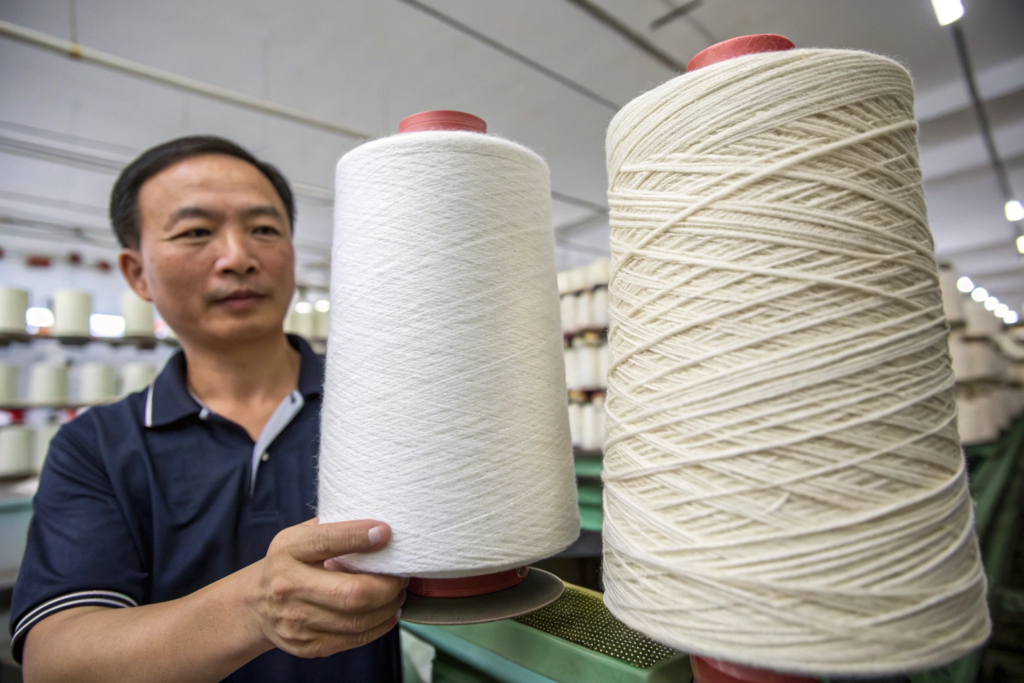
This is a fork in the road that every buyer faces. Open End (OE) Yarn is cheaper. It is made by a rotor spinning machine that essentially vacuums fibers into a tube and twists them really fast. It is fuzzy, it is weaker, and it has less "torque" or liveliness. Ring Spun Yarn is made the old-fashioned way, drawing out the fibers and twisting them under tension. It creates a smoother, stronger, and most importantly, more elastic yarn.
Why does this matter for recovery? Because ring spun yarn acts like a tiny spring itself. When you stretch the fabric, you are not just stretching the spandex. You are also elongating those tight spirals of cotton fiber. When you let go, those cotton spirals want to snap back to their original tight coil. Open end yarn does not have that coiled structure. It is more like a fuzzy straight rope. It stretches out and stays there.
We use Combed Ring Spun Yarn for 90% of our stretch fabrics at Shanghai Fumao. It costs more. It requires better raw cotton. But when I put a 190 GSM ring spun jersey next to a 190 GSM open end jersey in the lab, the ring spun fabric has 15% higher bursting strength and 20% better stretch recovery after 30 minutes of relaxation. That is not marketing fluff. That is data from our CNAS lab testing logs from last week.
Here is a quick comparison table from our internal specs:
| Yarn Type | Fiber Alignment | Twist Factor | Relative Recovery % | Hand Feel |
|---|---|---|---|---|
| Open End (OE) | Random/Fuzzy | Low | 78% (Poor) | Rough, pills easily |
| Carded Ring Spun | Semi-Aligned | Medium | 88% (Good) | Soft, decent strength |
| Combed Ring Spun | Highly Aligned | High | 96% (Excellent) | Smooth, strong, resilient |
If you are sourcing fabric and the spec sheet just says "Cotton Spandex," dig deeper. Ask for the spinning method. If they cannot tell you, they are hiding OE yarn behind a low price. For a deeper dive into spinning tech, this resource on how combed ring spun yarn improves knit fabric dimensional stability explains the physics better than I can in a blog post.
Does Compact Spinning Improve Stretch Fabric Longevity?
Yes, and this is the next level up for premium brands. Compact Spinning is a modification of ring spinning. It uses a special suction device that condenses the fibers before they are twisted. This eliminates the "spinning triangle"—that little area where fibers fly away and create hairiness.
The result is a yarn that is 15% stronger than standard ring spun and has significantly less hairiness. Why does less hairiness matter for stretch? Because those tiny loose fibers on the surface of the yarn rub against each other during wear and washing. They create friction. That friction wears down the spandex filament over time. A smooth, compact yarn glides against the spandex core without abrasion. The spandex lasts longer.
I switched a major activewear client in Germany to compact yarn for their 240 GSM interlock leggings in early 2026. Their main complaint was pilling in the inner thigh. We solved the pilling with compact yarn. But an unexpected benefit showed up in their wear-testing reports: the leggings retained their compression for 20% more wash cycles than the previous batch. The smooth yarn was protecting the elastane from internal friction. That is the kind of accidental discovery that makes this job so interesting. You can see a technical discussion on this exact phenomenon in a forum thread about compact yarn benefits for reducing abrasion on elastane cores. It is a niche topic but gold for product developers.
Why Is Finishing Process Critical for Shape Retention?
The greige fabric comes off the knitting machine looking like a loose, curly tube. It has tension trapped in every loop. If you cut and sew it right then, the first time it hits water, it will shrink up like a frightened turtle. The Finishing Process is where you set the fabric’s memory. You are essentially telling the fabric, "This is your new normal shape. Remember this." If you do this step wrong, the fabric will spend the rest of its life trying to revert to being a curly tube.
What Is Compacting and How Does It Lock Stretch Memory?
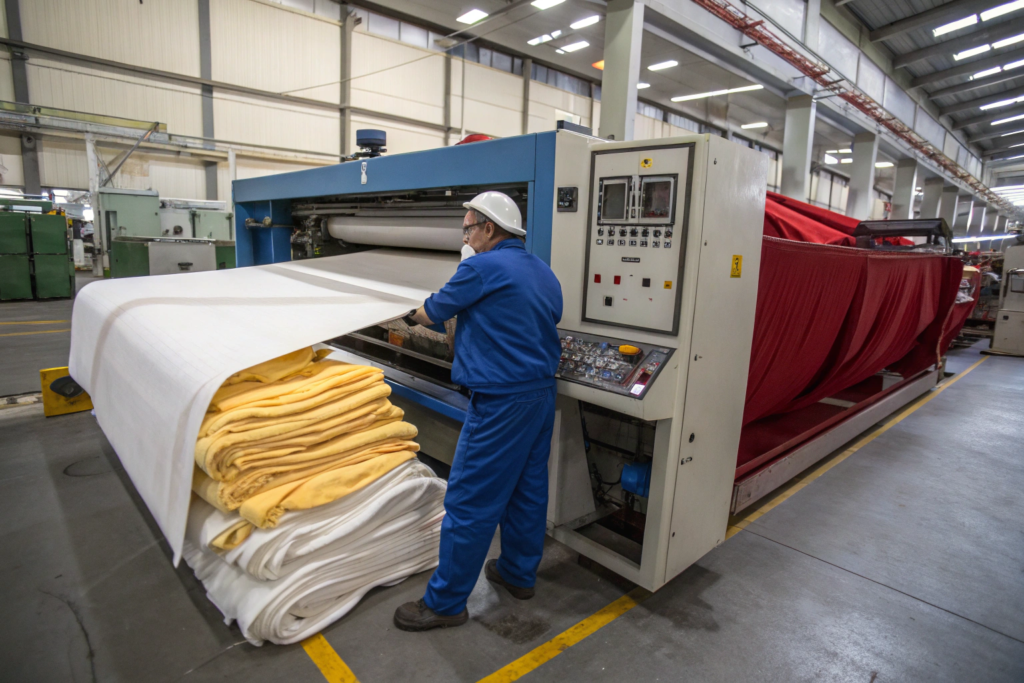
Compacting is the unsung hero of the knit fabric world. It is a machine that uses steam and pressure to physically push the loops of fabric closer together lengthwise. We call this Lengthwise Shrinkage Control.
Here is the problem: When you knit a jersey, the machine pulls the fabric down with tension. The loops are elongated. That elongation is like a stretched rubber band waiting to snap back. A Compactor overfeeds the fabric into a steam chamber. The fabric enters the machine faster than it exits. This forces the elongated loops to buckle and stack up into a denser, shorter, relaxed state.
If you skip compacting—or if you run the machine too fast just to get the order out the door—you are shipping a time bomb. The fabric might measure 68 inches wide at the factory. But after the customer washes it, it shrinks to 62 inches wide and the length shrinks 7%. That shrinkage pulls the spandex with it, causing distortion and torque in the seams.
At Shanghai Fumao, we run a Double Compacting process for our premium stretch fabrics. We pass the fabric through the compactor once, let it rest for 24 hours to allow the fibers to "settle" (we call this relaxation), and then we run it through a second time for final dimensional control. We guarantee a Residual Shrinkage of under 3% on all our compacted fabrics. That is why a romper cut from Fumao fabric fits the same after 50 washes as it did on day one. For more detail on the mechanics of this, I found a great visual guide on how a tubular fabric compactor reduces shrinkage in cotton jersey. It shows the internal workings of the machine.
Can Resin Finishes Help Maintain Garment Shape Without Toxic Chemicals?
This is a tricky one. Traditional "anti-shrink" or "shape memory" finishes used Formaldehyde. That is a hard no for baby clothes and anything touching skin for long periods. Parents are scared of that stuff, and rightfully so. But there are new alternatives out there that we use that are OEKO-TEX Class 1 certified (safe for babies).
We use a specific Polyurethane-Based Elastomeric Finish on our high-recovery fabrics. Think of it as a microscopic net that we spray onto the fabric. It coats the cotton fibers and lightly bonds them to the spandex core. It is washable, but it provides just enough grip to prevent the cotton from sliding around and creating that "permanent set" wrinkling.
However, I am honest with my clients about this: A resin finish is a crutch. If the yarn is cheap open-end and the spandex was fried in the stenter, no amount of chemical spray will save it. The finish washes out after 10 cycles and the fabric goes limp. We use the finish as an enhancer for our already high-quality compacted fabric, not as a cover-up for bad manufacturing.
I worked with a US children’s brand last year (2025) that was terrified of chemical finishes. We ran a trial on their interlock fabric with just mechanical compacting vs. mechanical compacting plus the baby-safe PU finish. The fabric with the finish showed 2% less bagging in the knee area after a 24-hour stretch test. The client was impressed with the transparency and opted for the finish. The product reviews mentioned "holds shape wash after wash" consistently. You can read more about safe alternatives in this article on the development of formaldehyde-free durable press finishes for cotton knits.
How Do You Test for Stretch Recovery Before Bulk Cutting?
You cannot tell recovery by touch alone. I have been in textiles for 20 years, and even I get fooled sometimes by a soft hand feel. A fabric can feel "springy" in your fingers but still fail catastrophically in the washing machine. You need data. You need a simple, repeatable test that mimics what happens when a human wears the garment. And you need to do this test before you cut 5,000 units.
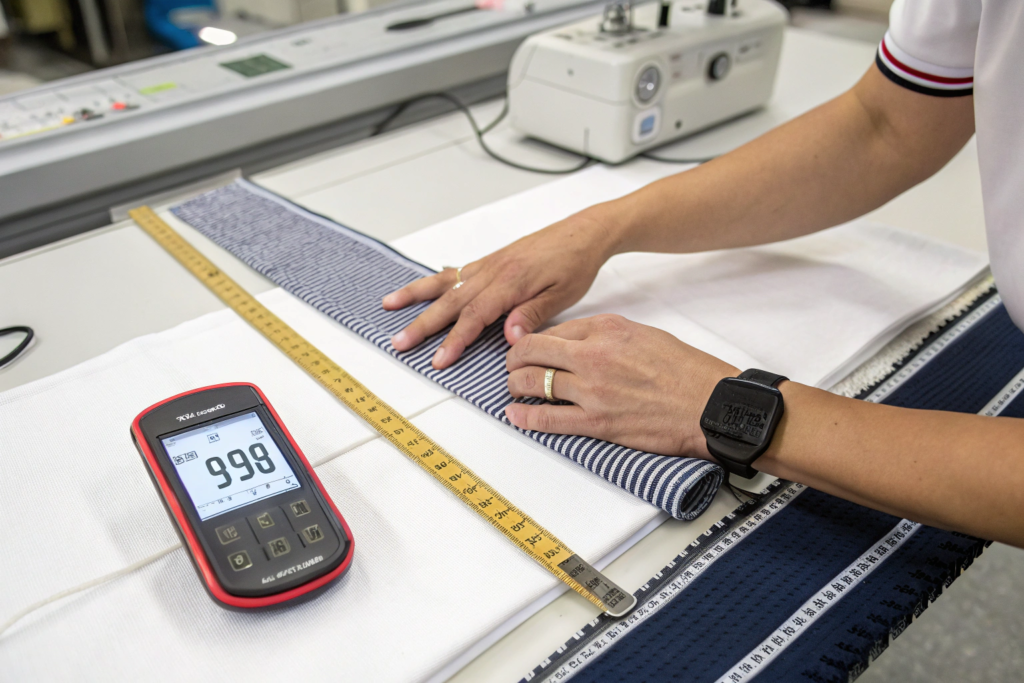
What Is the 1-Hour Stretch and Growth Test for Knits?
This is the gold standard in our lab. We follow ASTM D2594 (Stretch Properties of Knitted Fabrics). It sounds complicated, but the principle is simple enough to do in an office with a ruler and a sharpie.
Here is the process we use:
- Mark: Take a swatch of fabric. Draw a benchmark exactly 10 cm long in the direction of the stretch (usually widthwise).
- Stretch: Stretch that swatch to a specific load or a specific percentage. For leggings, we stretch it to 80% extension (so the 10 cm mark becomes 18 cm). Hold it there for 1 hour.
- Release: Let it relax for 30 minutes or 1 hour (standard is 1 hour).
- Measure: Measure the distance between the marks.
The Math: [(Final Length - Original Length) / Original Length] x 100 = % Growth
If the original was 10 cm and after 1 hour it measures 10.6 cm, that is 6% growth. That is a fail for a fitted garment. You want under 5% growth. Ideally under 4%.
I had a situation in January 2026 with a client launching a "buttery soft" legging line. The fabric sample from a new vendor felt incredible. But in our 1-hour test, it grew 9%. I told the client: "These will be knee-bag nightmares." The vendor argued the test was "unrealistic." I told the client: "Sitting in a car for an hour is unrealistic? Or a baby napping in a romper?" We rejected that fabric. We developed a new weight with higher spandex content (from 5% to 8%) and got the growth down to 3.5%. The client avoided a PR disaster. You can find a straightforward explanation of this test for non-lab people on a sewing forum about how to do a DIY fabric stretch recovery test at home. It is a great way for designers to vet samples.
Why Should You Wash Test for Dimensional Stability Before Sampling?
This is the test that reveals the true cost of the fabric. Testing a fresh swatch off the roll is like judging a car based on how it looks in the showroom. You have to see what happens when it gets wet and hot.
Dimensional Stability (AATCC 135) is the test for shrinkage. But for stretch fabrics, you must also measure Torque or Skew. This is when the fabric washes and the whole grain twists diagonally. You see this on cheap t-shirts where the side seam spirals around to the front of your body.
We do a 3-Cycle Wash Test on every single lot before cutting. We wash the fabric in hot water and tumble dry it on high. This is an accelerated aging test. It simulates a month of home laundering in about four hours.
We measure the fabric length and width before and after.
- Good Fabric: Shrinks 2% length, 1% width. Skew under 3%.
- Bad Fabric: Shrinks 7% length, 5% width. Skew of 8% (spiraling).
If the fabric spirals, the garment will twist on the body. It looks cheap. It feels uncomfortable. I rejected a batch of 500 KG of beautiful slub jersey last month because the skew after wash was 9%. The slub yarn was unevenly twisted, causing internal stress. The mill was not happy with me. But the client in London who didn’t have to deal with 2,000 twisted t-shirts? They were very happy.
To understand how this affects the final garment, this resource on the relationship between fabric skew and garment appearance after washing is a must-read for any quality assurance manager.
Conclusion
So why do some stretchy fabrics lose shape while Fumao’s don’t? It is not one single magic trick. It is a chain of stubborn, expensive decisions that most factories refuse to make. We refuse to burn the spandex in a 200°C oven just to save 15 minutes of production time. We refuse to use open-end yarn that feels like rope. We refuse to skip the compactor just because it is 3:00 PM on a Friday. And we refuse to ship fabric that hasn’t been stretched on a ruler for an hour to see if it remembers how to snap back.
The result is fabric that acts like a good friend. It holds you in when you need support and it bounces back to its original shape without holding a grudge. Whether it is a baby romper crawling across a hardwood floor or a yoga pant holding a deep squat, the physics are the same. You need a strong core (spandex) and a resilient exterior (ring spun cotton) working together.
You can spend your days dealing with customer returns, writing apologies for saggy knees, and discounting last season’s stock because it looks tired. Or you can build with a foundation that lasts.
If you are ready to work with a partner who geeked out over this entire article and actually has the CNAS lab reports to back it up, let’s talk specifics. We are not just selling fabric. We are selling the absence of future headaches.
For a personalized consultation on your next stretch project or to request physical swatch cards of our high-recovery fabric range, please reach out to our Business Director, Elaine. She manages all technical inquiries and can get you a quote faster than a spandex fiber snaps back into place. Email her at elaine@fumaoclothing.com.








