I got a call last month from a CEO of a mid-size American apparel brand. He was furious. He’d spent six months sourcing a performance stretch woven through Alibaba. The supplier had a gold-star rating. The samples were perfect. The price was $1.20 lower per meter than my quote. He wired the deposit, received the bulk, cut it, sewed it, and shipped his collection. Two weeks later, his DTC returns hit 18%. The fabric pilled. The color bled. The stretch recovery was gone after five washes. He paid $1.20 less per meter and lost $200,000 in returned inventory, brand damage, and wasted production. That CEO now buys directly from our factory under a partnership agreement. No platform intermediary. No rating inflation. No anonymous trading company pretending to be a mill.
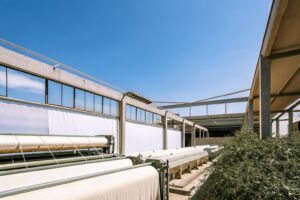
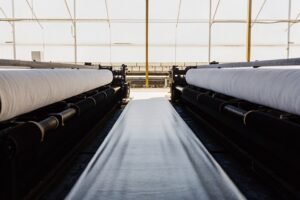
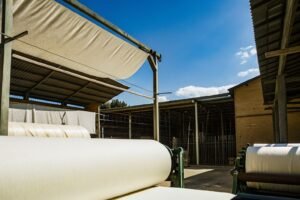
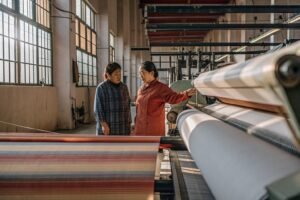
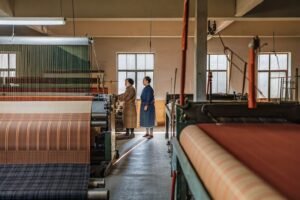
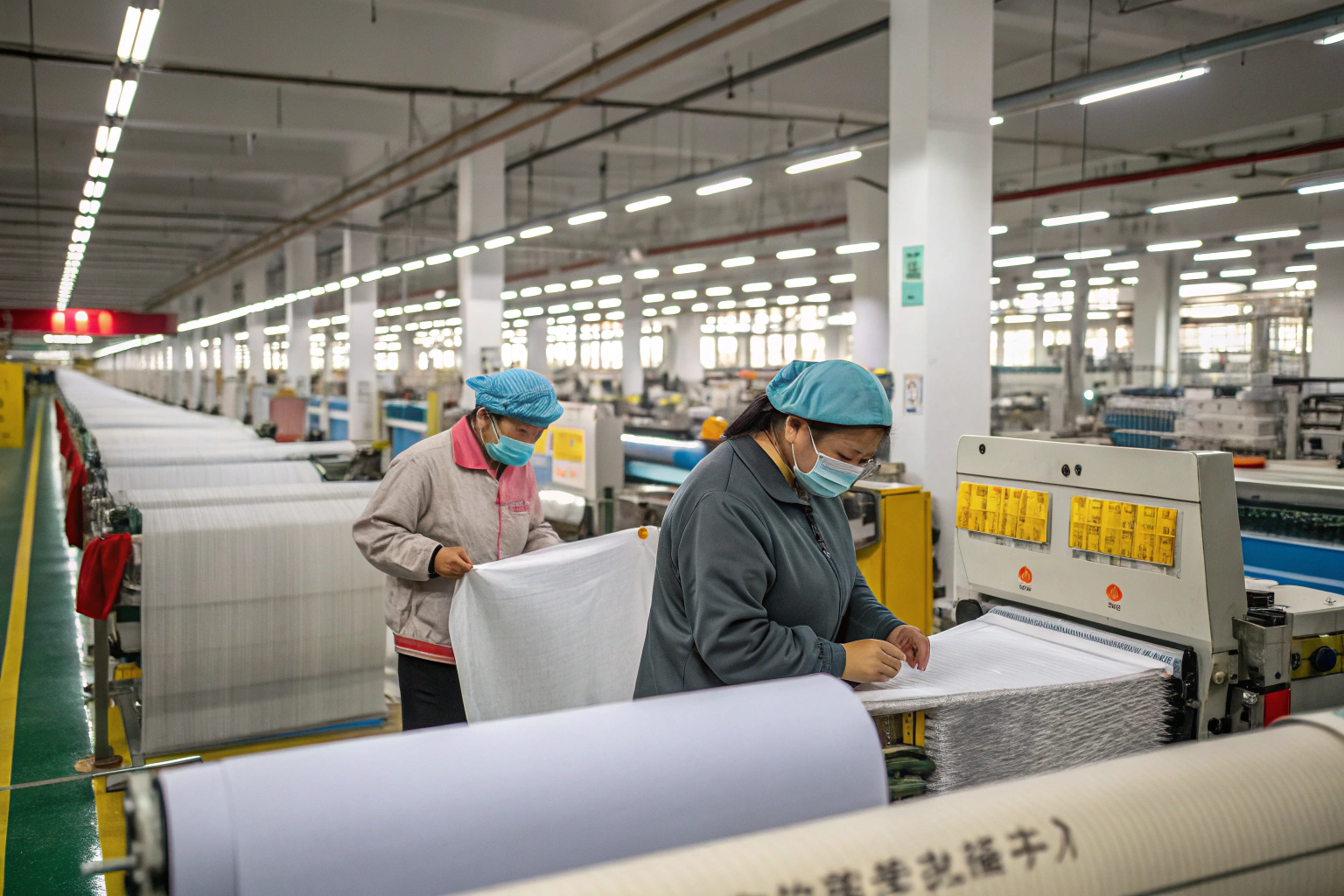
Alibaba is not the villain here. It’s a discovery tool. But the distance between a well-optimized Alibaba storefront and the actual dye vat that produces your fabric can be thousands of miles and several layers of subcontractors. The CEOs I talk to—the ones who’ve been burned by batch inconsistency, missed lead times, and ghost-supplier syndrome—are moving to a direct-factory model. They want a named contact who walks the production floor daily, not a sales agent in a Shenzhen trade office. In this article, I’m going to unpack exactly why this shift is accelerating, what a direct partnership actually looks like in operational terms, and how it changes your risk profile as a brand. I’m writing this from inside Shanghai Fumao‘s Keqiao weaving plant, not a rented co-working space. That distinction matters more than you think.
Why Is Alibaba No Longer Trusted by Serious Apparel CEOs?
The trust architecture of Alibaba is built on reviews and badges. A "Gold Supplier" badge means the company paid a membership fee and passed a basic verification—it doesn’t mean they own a weaving shed, control a dye house, or even hold inventory. A "Verified Supplier" has undergone a third-party factory audit, but the audit report is often a snapshot of a facility the trading company borrowed for the day. I’ve seen Alibaba storefronts with 4.9-star reviews, hundreds of five-star ratings, and a product catalog of 5,000 SKUs, but when you trace the legal entity behind the listing, it’s a two-person trading desk in a Yiwu commercial building with zero production assets. The fabric samples they ship out are cut from stock they bought at a wholesale market. When you place a bulk order, they outsource production to the lowest-bidding subcontractor that month. You’re not buying from a mill; you’re buying from a procurement roulette wheel.
The serious apparel CEOs I work with have been burned enough times to recognize the pattern. They know that a rating system where suppliers can pressure buyers into removing negative feedback—or outright pay for fake reviews—does not produce reliable quality signals. They know that an Alibaba Trade Assurance policy covers delivery timelines and basic product conformity, but it does not cover the cost of a failed production run that passes the delivery deadline but fails the pilling test six weeks later. The platform protects the transaction, not the relationship. And in textiles, the relationship is the only asset that actually controls quality. The shift away from Alibaba among professional buyers is documented in procurement risk analysis of B2B platform sourcing versus direct factory engagement for apparel brands, which confirms that platform-mediated transactions carry higher inconsistency costs than direct-factory procurement.

How Do Trading Companies on Alibaba Disguise Themselves as Factories?
The naming convention is the first clue. A real factory in Keqiao has a name like "Shaoxing Keqiao XX Weaving Co., Ltd." The company name declares a specific manufacturing activity in a specific industrial zone. A trading company disguising itself as a factory will name itself "Zhejiang XX Textile Co., Ltd." or "Hangzhou XX Fabric Co., Ltd."—vague terms that imply capability without specifying it. They’ll list a factory address that is actually a business park office within an industrial zone. When you ask for a video call showing the production floor, they’ll decline ("our factory policy prohibits video for security reasons") or they’ll show you a pre-recorded walkthrough of a factory that isn’t theirs.
The most deceptive tactic is the dual-entity structure. The sales contract is signed with "Company A," which holds the Alibaba account and the bank details. The production is executed by "Company B," a different legal entity that actually owns the looms. If something goes wrong, Company A claims they’re just the sales agent and Company B is responsible. Company B claims they have no direct contractual relationship with the buyer and refer them back to Company A. The buyer is stuck in a liability loop with no clear party to pursue for compensation. I’ve had a distressed US buyer call me for advice after exactly this situation: $15,000 deposit paid to Company A, fabric delivered late and defective by Company B, neither entity would take ownership of the failure. Alibaba’s dispute resolution offered partial refund of the platform-processed amount, but the deposit wired off-platform was lost. Direct factory partnership eliminates this dual-entity shell game entirely—you sign with the entity that owns the machines, and the person you negotiate with is the person responsible for production outcomes.
What Specific Risks Do Platform-Mediated Transactions Create?
The platform creates a structural incentive to prioritize short-term transaction success over long-term quality. A supplier on Alibaba lives and dies by their review score, delivery time metrics, and dispute rate. The rational strategy for a trading company is to ship something by the deadline—even if it’s not quite what you ordered—because a late delivery penalty is algorithmically enforced, while a "slightly different hand feel" is subjective and harder to claim through dispute resolution. The platform optimizes for measurable, binary outcomes: delivered or not delivered, 100% quantity or not. It does not optimize for the qualitative outcomes that make or break a garment: drape, recovery, pilling grade, batch-to-batch shade consistency.
The second structural risk is information loss. When you communicate with a trading company’s sales agent, you’re one degree removed from the production floor. Your spec sheet gets translated, summarized, and forwarded. The nuance—"the hand feel should be slightly drier, like a sand-washed silk, not slick"—gets lost in the relay. The trading agent doesn’t have the technical vocabulary to translate that correctly, and the subcontractor doesn’t have a commercial relationship with you to justify calling you directly for clarification. So they guess. The fabric arrives with a silicone-coated slickness that you specifically didn’t want, and you’re stuck because the purchase order didn’t quantify "dry hand feel" with a FAST bending rigidity number. A direct factory partner like Shanghai Fumao receives your spec sheet directly from you to our production engineer, and if there’s ambiguity, the engineer calls or emails you within 24 hours. There is no relay. Quality consistency failures in multi-tier textile supply chains mediated by B2B platforms details how each intermediary layer multiplies the error rate.
What Does a Direct Factory Partnership Actually Look Like?
A direct factory partnership is not a transactional vendor relationship where you send a PO and wait for a shipping notification. It’s a standing operational connection where you have named contacts at each production stage—dye house, weaving floor, finishing, QC lab—and you communicate with them directly, often via WeChat or WhatsApp, outside of any platform interface. You know who dyes your fabric. You know what machine it runs on. When a quality question arises, you get a photo of the defect within an hour, not a three-day email chain through a sales intermediary.
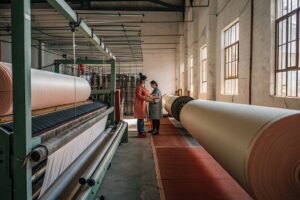
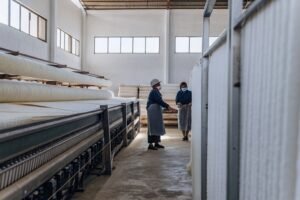
At Shanghai Fumao, our direct partners—brands that have moved beyond the trial-order phase—have access to a dedicated account team. This team includes a merchandiser who manages the day-to-day communication, a QC engineer who can pull test data from the CNAS lab and explain it in plain English, and a production scheduler who can tell you exactly where your lot is in the queue. The buyer can request a real-time video inspection of the dyeing batch, and we’ll connect them via WeChat video to our QC inspector on the dye house floor. They can see the fabric coming off the stenter frame, check the shade against their standard on a live feed, and approve it before the batch proceeds to packing. This is not a premium service we charge extra for—it’s the standard operating model for any brand that consolidates their sourcing with us. The difference between this and a platform-mediated transaction is the difference between cooking in a restaurant kitchen with the chef and ordering through a delivery app with no idea who’s preparing your food.

How Does a Factory Partnership Change Quality Control Processes?
In a platform-mediated transaction, quality control is a one-time, end-of-production event. An inspector—either the factory’s internal QC or a third-party service you hire—checks the finished fabric against a standard before shipment. If it fails, you’re in a crisis: the production is already complete, the material is cut, the lead time is consumed. Your choices are accept the defective fabric and deal with the consequences, or reject it and miss your delivery window. Both are terrible.
In a direct partnership, quality control is a continuous process that begins at raw material intake and runs parallel to production. The buyer receives inspection data at each stage. The yarn lot is tested for tensile strength and CV% of evenness before weaving begins. The greige is inspected for weaving defects before dyeing. The lab dip is approved by the buyer before bulk dyeing starts. The first 50 meters of the dyed bulk are measured for shade, hand feel, and dimensional stability, and the data is shared with the buyer for a "first-bulk approval" before the rest of the lot proceeds. If something is wrong at the 50-meter checkpoint, only 50 meters are affected, not the entire 3,000-meter run. This staged-approval model eliminates the binary pass/fail moment at the end and replaces it with a series of small, correctable checkpoints. A Swedish brand working with us under this model reported that their defect-related production delays dropped from 12% of orders to under 2% in their first year of direct partnership. The in-line quality inspection and process control systems for textile production versus final inspection only models explains the statistical quality engineering behind this shift, and it’s worth understanding if you’re still relying on AQL end-of-line checks alone.
What Does a Direct-Factory Pricing Model Look Like Compared to Alibaba?
You might expect Alibaba to be cheaper. The listings certainly look cheaper—prices per meter that seem impossibly low. But the sticker price on Alibaba is rarely the landed price you actually pay. Trading companies on Alibaba often quote a low base price and then add charges for sampling, for lab dips, for color matching, for finishing modifications, for packing upgrades, for documentation. The final invoice can be 25% to 35% higher than the initial listing price. And that’s before the hidden costs of quality failure—re-orders, air-freight expediting for replacements, chargebacks from your retail customers.
A direct factory partnership typically produces a transparent, itemized price that includes all processes. There’s no platform commission (Alibaba charges suppliers fees that get built into the price). There’s no trading company margin stacked on top of the factory margin. The price per meter might be slightly higher than an Alibaba listing price at first glance—perhaps $0.50 to $1.00 more—but it’s an all-in price that reflects the actual production cost plus a sustainable margin. More importantly, the factory has an incentive to build a long-term price structure with you. At Shanghai Fumao, we offer declining price tiers based on cumulative annual volume, not per-order volume. A brand that orders 500 meters every month for a year hits a price tier that a brand ordering a one-time 6,000 meters doesn’t see. The relationship-based pricing model aligns the factory’s interests with the brand’s growth. The total landed cost comparison between B2B platform sourcing and direct factory procurement for textile imports reveals the hidden line items that platform pricing often omits.
How Do CEOs Verify a Factory Is Real, Not Just Another Trading Desk?
The verification process for a direct factory is not a document review—it’s a live, real-time walkthrough. A PDF of a factory audit report can be photoshopped. A pre-recorded factory tour video can be shot at a different company’s facility. But a live WeChat video call where you direct the camera operator to specific areas of the facility, ask to see specific machines, and request that they zoom in on a specific serial number or a daily production whiteboard—that’s almost impossible to fake in real time.
Here is the verification protocol I recommend to every CEO who’s evaluating a new supplier. Step one: Ask for the company’s business license and the "business scope" section must include "manufacturing" not just "trading" . Step two: Request a live video call through WeChat or WhatsApp. Don’t accept a pre-recorded video. During the live call, ask to see the factory entrance with the company name sign, then walk through the production floor. Ask the person to wave at a random machine operator and have the operator wave back at the camera—this proves the person holding the phone belongs to the facility. Step three: Ask to see a specific machine you identified from their equipment list. If they claim to have 24 rapier looms, ask to see the production scheduling board that lists machine utilization for the day. Step four: Ask for the GPS coordinates of the factory entrance, not just an address. Then check the location on satellite view in Google Maps. Does it show a building with a roof structure consistent with a textile mill (large, single-story, sawtooth roof for north-facing light)? Or does it show a multi-story office building in a commercial zone? Step five: Ask for a sample of three different fabric types currently in production, with photos of those exact fabrics on the loom or in the dyeing machine. The goal is to match physical samples to in-situ machine photos.

What Red Flags Should CEOs Look for During a Virtual Factory Tour?
The first red flag is hesitation. When you ask to see a specific area—"Show me the yarn storage room"—and the camera operator pauses, says "let me ask my manager," or tries to redirect you, something is off. A genuine factory employee knows the layout and can walk there immediately. A trading agent in a borrowed or rented space will need to navigate permission from the actual facility owner, which causes a delay or a deflection.
The second red flag is a mismatch between the equipment and the claimed capacity. If the factory claims a production capacity of 500,000 meters per month, you should see a production floor with enough looms to support that volume. A rapier loom produces roughly 150 to 250 meters per 24-hour day, depending on the fabric construction. To produce 500,000 meters per month, the factory needs approximately 80 to 120 looms running continuously. If the video shows 15 looms in a small shed, the capacity numbers are fabricated. Count the looms. Do the math.
The third red flag is an absence of quality infrastructure. A real textile factory has a dedicated inspection area with a fabric inspection machine, a light table, and a separate QC office with testing equipment. A trading company’s "factory" will show you the weaving floor but will struggle to show you a functioning, organized quality lab. Ask to see the lab’s latest calibration certificate for the Martindale tester or the spectrophotometer. If they can’t produce it on camera, the lab may not exist, or it may not be their lab. A thorough guide to this verification process is found in virtual factory audit techniques for verifying textile manufacturing facilities through live video inspections, which outlines the specific questions and camera requests that separate a real facility from a borrowed backdrop.
How Do I Confirm the Factory’s Certifications Are Legitimate?
A PDF of an OEKO-TEX or GOTS certificate is not verification. It’s a claim. The verification is checking the certification number against the issuing body’s public database, and then confirming that the certificate holder name matches the legal entity on the business license and the bank account you’re wiring money to. I’ve seen a trading company present a valid OEKO-TEX certificate that belonged to their subcontractor—a different legal entity in a different city. The certificate was real, but it wasn’t theirs. The fabric the buyer received was not produced by the certified entity.
When a factory sends you a certificate, go to the issuing body’s website—OEKO-TEX has a public label check page, GOTS has a public database of certified entities—and enter the certification number. Verify that the certified company name, the certified product scope, and the certified facility address all match the information on the supplier’s business license and the purchase order. If any of these don’t match, you’re not dealing with the certified entity. Additionally, ask the factory to send you a photo of the physical certificate on their office wall, with a handwritten note next to it showing today’s date and your company name. This proves the certificate is physically present in their facility. A factory that has the certificate on their wall and can photograph it on demand with a custom note is a factory that actually holds the certification. The OEKO-TEX public label check database for verifying textile certification authenticity and facility ownership is the definitive verification tool.
What Are the Long-Term Margin Benefits of Cutting Out the Middleman?
The margin benefit of direct factory sourcing is not just the per-meter price difference. That’s the smallest component. The real margin benefit comes from three compounding factors: the elimination of quality-failure costs, the reduction of internal sourcing labor, and the ability to negotiate declining cost structures over time. A CEO who sources through Alibaba and spends $50,000 on fabric per season might save $0.75 per meter on the Alibaba price—roughly $3,000. But if one lot fails quality and requires a replacement order with air freight, that single incident wipes out the $3,000 price advantage and adds a $4,000 loss on top. The math is brutal and asymmetric: the price savings are small and certain; the quality failures are large and unpredictable. Direct sourcing doesn’t just lower the per-unit cost—it narrows the variance of outcomes, which is what CEOs actually care about when they’re managing P&L risk.
The labor cost of supplier management is another hidden margin drain. A platform-based sourcing approach requires constant supplier vetting, re-negotiation, sample evaluation, and problem resolution across multiple vendor relationships. An apparel brand might have 6 to 10 active fabric suppliers if they’re sourcing ad-hoc through Alibaba, each requiring separate communication, separate QC protocols, and separate payment management. A direct-factory consolidation reduces that to 1 or 2 primary mill partners. The CEO’s sourcing team can manage deeper, not wider. They can develop new fabrics instead of constantly re-quoting basic constructions. The time saved is margin-created—fewer people managing fewer relationships producing better fabric that generates fewer returns. The supplier consolidation and direct procurement margin optimization models for mid-size apparel brands quantifies this operational leverage.

How Does a Long-Term Factory Partnership Reduce the Cost of Quality?
When you’re a one-time Alibaba buyer, the supplier has no incentive to invest in process improvements specific to your order. They run your fabric, ship it, and the relationship is over. The quality you get is the quality the factory produces for anyone. You’re buying standard output, not optimized output. When you’re a recurring direct partner with a multi-season purchasing history, the factory treats your production as a continuous program, not a discrete transaction.
This continuity creates learning-curve efficiency. The dye master knows that your brand’s specific Navy—"Navy Brand X"—always requires a 2% additional blue G dye component to hit the exact target shade without a correction run. The weaving supervisor knows that your tight-tolerance poplin runs better on Loom Number 3, which holds warp tension more consistently. The finishing manager knows that your fabric’s hand feel specification requires a 0.8% silicone softener concentration, not the 1.2% standard, and they apply it consistently across every lot. These micro-optimizations are small individually but compound into a measurable quality improvement: fewer seconds, fewer shade corrections, fewer rework batches. Over 18 months of partnership, our defect rate for a US casualwear brand’s core twill program dropped from 3.2% (first two orders) to 0.9% (orders 7 through 10). The cost of quality—inspections, rework, rejected inventory—fell proportionally. The learning curve effects in long-term textile supplier partnerships and their impact on first-pass yield rates explains why quality compounds with relationship length.
What Are the Financial Risks of Over-Reliance on Alibaba for Bulk Orders?
The largest financial risk is payment protection gap. Alibaba Trade Assurance covers orders placed and paid through the platform up to a certain coverage limit. But many trading companies on Alibaba push buyers toward off-platform payment—TT (telegraphic transfer) directly to their bank account—by offering a lower price for "direct payment." The buyer saves 3% on the platform fee, but loses all transaction protection. If the shipment is defective or doesn’t arrive, Alibaba has no leverage over the supplier because the transaction didn’t occur on the platform. The buyer is now in an international commercial dispute with a Chinese company they’ve never met, in a Chinese legal jurisdiction they don’t understand. The legal cost of pursuing recovery often exceeds the value of the lost goods.
The second risk is intellectual property leakage. A factory partner with a multi-year relationship and a signed exclusivity agreement has a commercial incentive to protect your proprietary fabric developments. A trading company on Alibaba that sources from multiple subcontractors has no such incentive. Your custom print artwork, your unique blend ratio, your signature color palette—these are sent to the lowest-bidding dye house or printing mill, and they stay in that mill’s archives for future customers to browse. I’ve seen a brand’s "exclusive" floral print appear on a competitor’s garment six months later, traced back to the same Alibaba supplier who had no contractual obligation to protect the artwork. Direct factory relationships are structured with enforceable IP clauses, and the factory’s commercial interest in keeping your repeat business aligns with protecting your designs. The intellectual property protection frameworks for direct textile manufacturing partnerships versus platform-mediated sourcing covers the specific contractual language that’s enforceable in Chinese manufacturing contracts.
Conclusion
The shift away from Alibaba toward direct factory partnerships is not a rejection of technology. It’s a recognition that fabric is not a commodity product that can be reliably sourced through a platform designed for standardized, low-complexity goods. Fabric quality is a continuous variable, not a binary attribute. It emerges from process control, not final inspection. It’s maintained through relationships, not ratings. The CEOs I see moving to direct partnerships are the ones who’ve learned, through painful and expensive experience, that the cheapest per-meter price on a screen is rarely the cheapest total cost on a P&L statement.
A direct factory partnership changes the geometry of the buyer-supplier relationship from adversarial-transactional to collaborative-continuous. You move from negotiating every order like a one-off deal to building a production system that learns your specific requirements, optimizes around them, and compounds quality improvements over time. You get a named contact at every stage of production. You get live video access to your fabric in process. You get a pricing model that rewards loyalty, not just volume. And you get the confidence that the legal entity you’re paying owns the machines that make your cloth.
If you’re a CEO or a sourcing director who’s tired of the Alibaba roulette—the inconsistent samples, the unverifiable certifications, the supplier who disappears after one bad batch—I want to invite you into a different sourcing model. Not as a sales pitch, but as a operational alternative that I’ve watched work for brands of every scale, from startups to established mid-market labels. Reach out to our Business Director, Elaine, at elaine@fumaofabric.com. She can arrange a live WeChat video walkthrough of our Keqiao weaving and finishing facilities, share our direct-partnership pricing structure, and connect you with some of our long-term brand partners who can speak to the difference between platform sourcing and factory partnership. Let’s see if a direct relationship makes sense for your production.