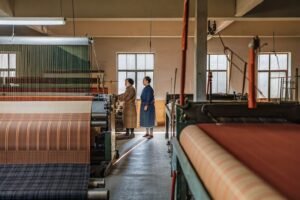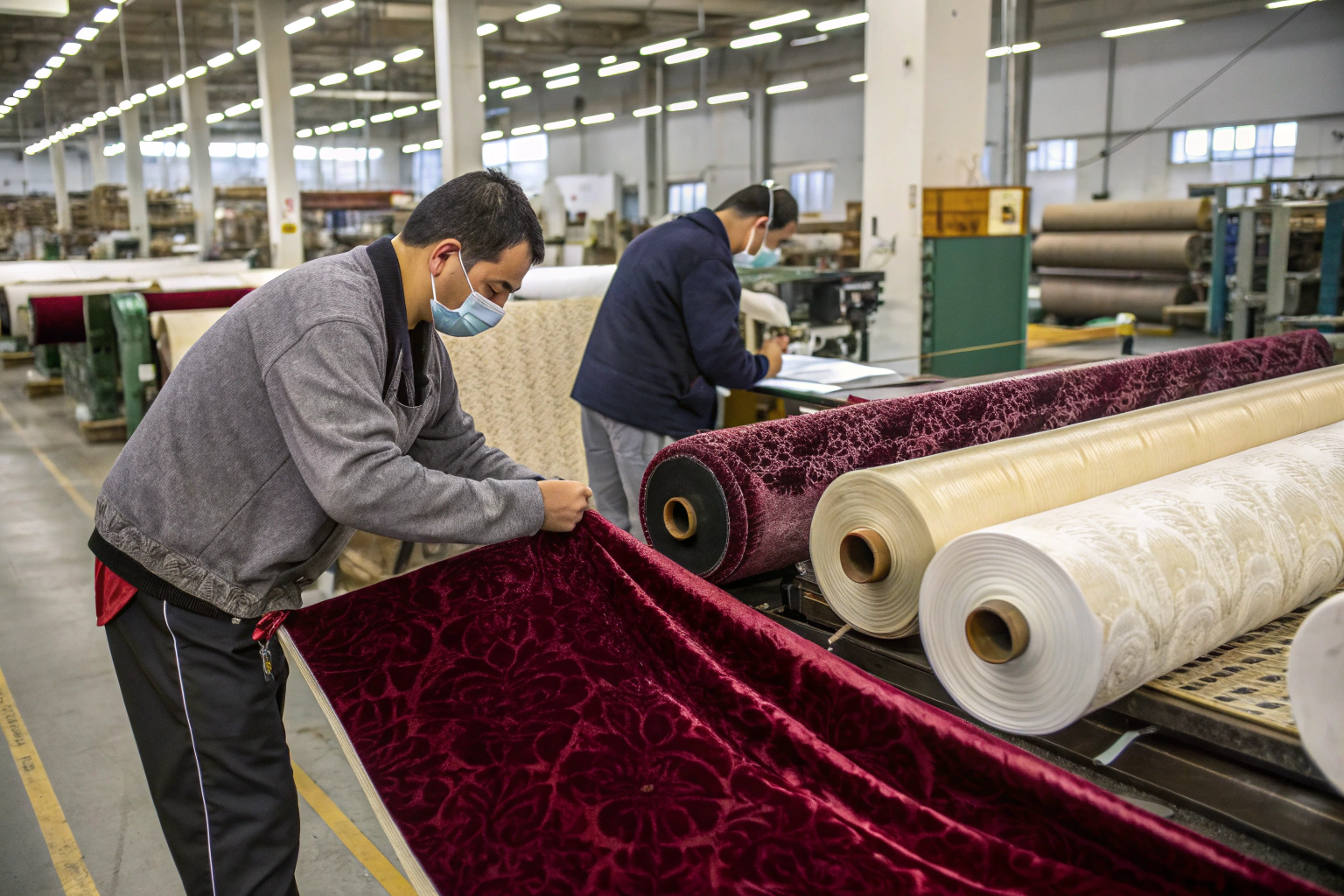
A buyer once asked me why he should work with us instead of one of the mega-mills in Jiangsu that churns out a million meters a month. I told him to call the mega-mill and ask for 300 meters of a custom burnout velvet with a specific devoré pattern, in a color he’d need a lab dip for, on a timeline that matched his collection launch, not their production schedule. He called. The mega-mill’s minimum order quantity was 5,000 meters. The development timeline was twelve weeks. The surcharge for a custom color was 35%. The sales rep referred him to a "stock program" of five basic weaves in twelve colors. He called me back. We delivered the 300 meters, custom-developed, in five weeks, at a 20% surcharge that he credited against his first bulk reorder. That’s the 5-line factory difference.
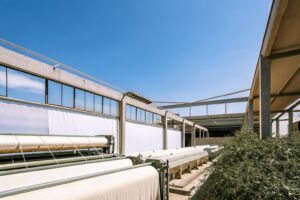
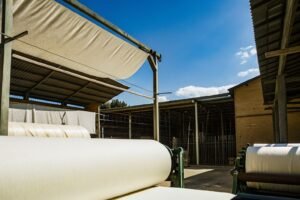
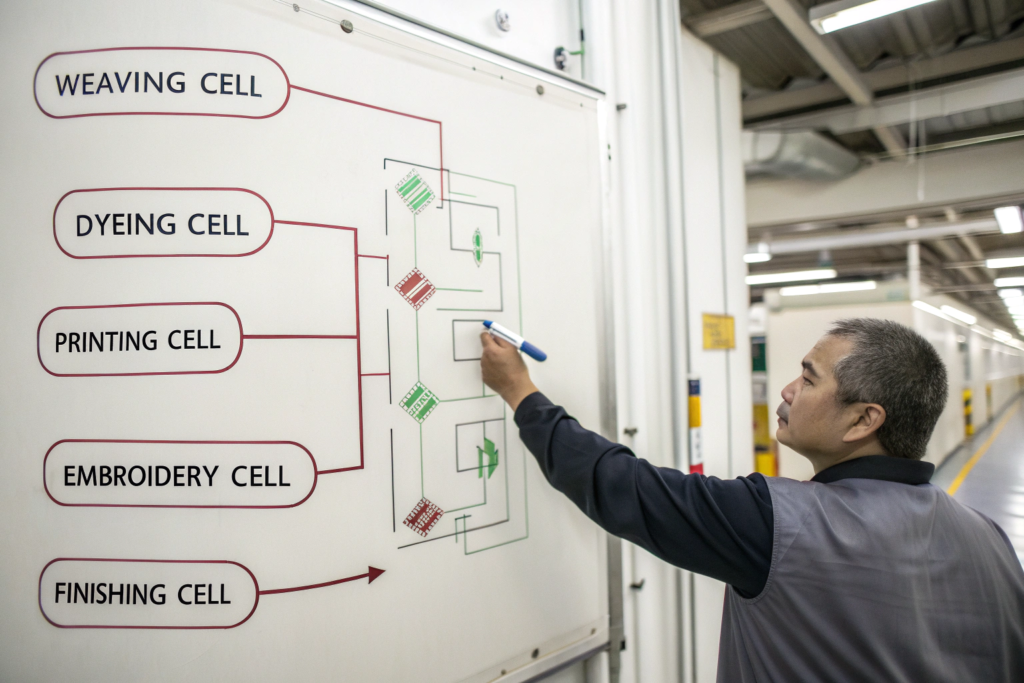
A 5-line factory is a factory organized around a limited number of distinct production capabilities—weaving, dyeing, printing, embroidery, finishing—each operated as a flexible work cell rather than a high-volume continuous production line. The "5-line" designation isn’t a literal number for every factory; it describes a structural principle: a factory that operates a small number of specialized, flexible production cells can reconfigure faster, develop new products quicker, and accept smaller minimum order quantities than a mega-factory whose entire business model is built on uninterrupted, high-volume runs of standardized products. At Shanghai Fumao, our production architecture follows exactly this principle, and it’s why custom development brands keep coming back to us after the mega-mills turn them away. In this article, I’ll explain why the 5-line structure produces superior agility, how it changes the economics of custom orders, and why your custom fabric development might be better served by a specialized flexible factory than by a massive commodity producer.
What Is a 5-Line Factory Structure and Why Does It Matter?
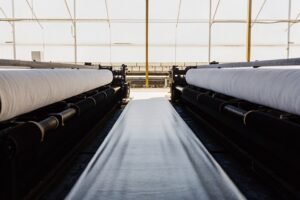
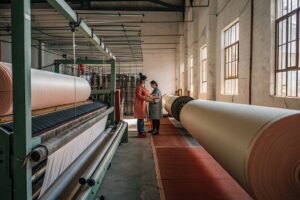
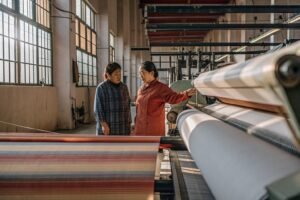
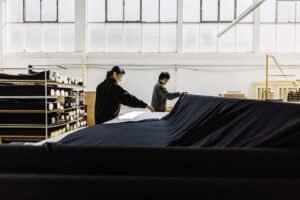
The term "5-line" describes a factory that organizes its production capacity into a limited set of distinct, flexible manufacturing cells rather than a single, massive, continuous production line. In a continuous-line mega-factory, fabric flows in one direction through a fixed sequence of machines optimized for a single product type at maximum speed. Changing the product requires stopping the line, reconfiguring machines, and losing hours or days of production. In a 5-line factory, each production cell—weaving, dyeing, printing, embroidery, finishing—operates semi-independently, with work-in-progress moving between cells based on the specific requirements of each order. An order that needs weaving, dyeing, and finishing moves through those three cells. An order that needs weaving, printing, embroidery, and finishing moves through a different sequence. The cells are reconfigurable because they’re not locked into a single continuous flow.
This structure matters for custom orders because custom is, by definition, a deviation from standard flow. A custom color requires the dyeing cell to stop a standard shade run, clean the vessel, prepare a new dye recipe, and run a small batch. In a continuous-line factory, this interruption is so costly that the factory either refuses the custom order entirely or prices the interruption at a prohibitive surcharge. In a 5-line factory, the dyeing cell is designed for batch flexibility—it expects to run small lots, change colors frequently, and handle variable specifications. The interruption cost is lower because the cell’s operating model assumes variation rather than fighting it. At Shanghai Fumao, our cooperative dyeing cell runs atmospheric jiggers and overflow machines that can handle batch sizes from 200 meters to 3,000 meters without significant efficiency loss. The cell isn’t optimized for maximum volume; it’s optimized for maximum flexibility within a volume range. That optimization choice—flexibility over volume—is the strategic difference between a custom-development factory and a commodity factory. The cellular manufacturing principles in textile production and their impact on production flexibility and small-batch efficiency provides the operational theory behind why cell-based factories outperform continuous-line factories on custom and variable-demand production.
How Does Cell-Based Production Reduce Setup Time for Custom Orders?
In a continuous-line factory, setup is a line-wide event. When the product changes, every machine in the sequence must be adjusted—the warp beam changed, the dye recipe switched, the finishing parameters recalibrated—and the entire line is idle until the last machine is ready. In a cell-based factory, setup is a cell-level event. Only the cell that needs to change changes. The weaving cell might continue running a standard greige while the dyeing cell is being cleaned and recharged for a custom shade. The finishing cell might continue processing a previous dye lot while the embroidery cell is being programmed with a new pattern. The setup time for a custom order is not the sum of all cell setup times; it’s the critical path through the longest individual cell setup, plus the queue time for cell availability.
This parallel processing capability collapses the custom development timeline. A mega-factory needs to schedule a custom order into a gap in the continuous line, and that gap might not appear for four weeks. A 5-line factory can sequence the custom order through each cell as the cell becomes available, often starting the first cell (weaving or greige preparation) within days of order confirmation, even if the finishing cell won’t be available for two weeks. The work-in-progress waits between cells, but the lead time to start is short. For a brand that needs a custom development sample for a collection presentation, the difference between a four-week wait to start and a two-day wait to start is the difference between making the presentation and missing it. The setup time reduction and production scheduling flexibility in cellular versus continuous-line textile manufacturing configurations provides the comparative data on setup time and throughput variability.
Why Are 5-Line Factories More Willing to Develop New Fabrics?
Development willingness is a function of development cost and opportunity cost. In a mega-factory, developing a new fabric means taking a high-volume production line offline for a trial run. The opportunity cost—the revenue lost from not running standard production during the trial—is enormous. The development fee the factory would need to charge to compensate for that opportunity cost is higher than most brands are willing to pay, so the factory simply doesn’t offer development services. They refer small development inquiries to their stock program and only develop new fabrics for customers placing million-meter annual contracts. In a 5-line factory, the opportunity cost of a trial run is lower because the cell isn’t running at maximum capacity constantly. There is scheduled downtime, there are gaps between batches, there are periods where a cell is waiting for work-in-progress from another cell. The trial run can be slotted into an existing gap, and the opportunity cost is near zero.
The development cost itself is also lower in a 5-line factory because the cells are designed for small-batch operation. A sample weaving on a rapier loom that’s already set up for small-lot production takes a few hours of technician time and a few kilos of yarn. A sample dyeing in a small jigger takes a few hours and a few liters of dye solution. The incremental cost of the trial is mostly labor, not material or machine time. At Shanghai Fumao, our development costing model treats the first custom sample as a relationship investment, not a profit center. We charge a development fee that covers our direct costs, credited against the first bulk order. The fee is low enough that brands can afford to develop multiple options and choose the best one, rather than gambling on a single expensive trial. The mega-factory’s development model—high fee, long lead time, high minimum—is designed to discourage development. The 5-line factory’s development model—low fee, short lead time, low minimum—is designed to encourage it. The textile factory new product development cost structures and sample development economics in cellular versus mass-production manufacturing configurations breaks down the cost components and explains the structural cost advantage of flexible factories.
How Does a 5-Line Factory Handle Low Minimum Order Quantities?
Low MOQ is not a policy decision; it’s an equipment decision. A factory’s MOQ is determined by the physical minimum fill volume of its dyeing machines, the minimum warp length that justifies a loom setup, and the minimum finishing batch that can be processed without quality degradation. A mega-factory invests in large equipment because large equipment produces more meters per hour at lower cost per meter—when running at full capacity. A 5-line factory invests in smaller, more flexible equipment because the business model is built on variable demand and custom specifications, not maximum-volume commodity production.
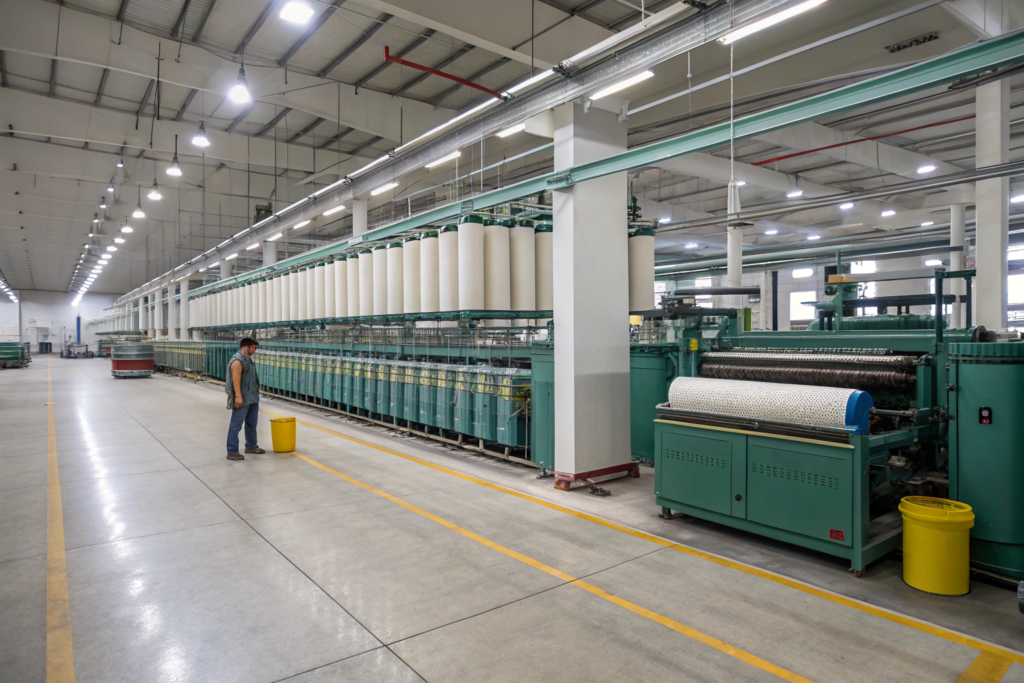
At Shanghai Fumao, our dyeing cell includes atmospheric jiggers with a minimum fill volume that allows high-quality dyeing of lots as small as 200 to 300 meters for medium-weight wovens. The jigger is not as fast per meter as a continuous dyeing range, but it produces consistent shade quality on small batches because the fabric passes through the dye bath in multiple controlled immersions rather than a single continuous pass. Our weaving cell includes rapier looms that can economically run warp lengths as short as 500 meters because the setup time on a modern rapier loom—with electronic dobby and quick-style warp change systems—is measured in hours, not days. A mega-factory running projectile looms with beam warping systems designed for 10,000-meter warp runs simply cannot set up for a 500-meter warp without losing money on every meter. The equipment choice drives the MOQ, and the MOQ drives the customer type. The 5-line factory chooses equipment that serves the custom, small-batch customer. The mega-factory chooses equipment that serves the commodity, large-batch customer. The textile dyeing and finishing equipment minimum batch size specifications and their impact on minimum order quantity requirements for fabric mills provides the equipment-to-MOQ mapping for different machine types.
What Is the Real Cost Difference Between a Small and Large Dye Lot?
The per-meter dyeing cost for a 300-meter lot is higher than for a 3,000-meter lot, but the premium is not as large as most buyers assume. The fixed costs of a dye lot—the setup labor, the dye formulation, the machine cleaning between lots—are amortized over fewer meters, increasing the per-meter fixed cost. But the variable costs—dyestuff, chemicals, water, energy—are roughly proportional to the meterage. A 300-meter lot uses roughly one-tenth the dye, one-tenth the chemicals, one-tenth the water, and one-tenth the energy of a 3,000-meter lot. The per-meter dye cost is higher for the small lot primarily because the fixed setup cost is spread over fewer meters, not because the small lot is inherently inefficient.
For a typical reactive dyeing of a medium-weight cotton woven, the fixed setup cost of a dye lot is approximately ¥800 to ¥1,200. Amortized over 300 meters, that’s ¥2.70 to ¥4.00 per meter. Amortized over 3,000 meters, it’s ¥0.27 to ¥0.40 per meter. The difference is roughly ¥2.50 to ¥3.50 per meter. On a fabric with a base production cost of ¥18 to ¥22 per meter, the small-lot premium is approximately 12% to 18%. That’s the structural cost difference, and it’s what a 5-line factory’s surcharge reflects. A mega-factory that quotes a 50% surcharge for a small lot is not covering their actual cost difference; they’re pricing the order to either go away or become extraordinarily profitable, because they don’t want the scheduling disruption at any price. The small-batch dyeing cost analysis and per-meter cost comparison for different dye lot sizes in textile manufacturing provides the detailed cost breakdown and explains the non-linear relationship between lot size and per-unit cost.
How Do 5-Line Factories Schedule Small Orders Without Disrupting Production?
The scheduling challenge for small orders is not the production time; it’s the transition time between orders. A mega-factory running a continuous line minimizes transitions because each transition costs production. A 5-line factory running flexible cells designs the workflow to absorb transitions. The key scheduling technique is "capacity buffering"—each cell is operated at a target utilization rate below maximum capacity, typically 75% to 85%, leaving scheduled gaps in the production calendar. Small orders fill these gaps. The cell is never 100% booked, so a small order never needs to displace a large order; it slots into an existing capacity buffer.
The second technique is "compatible sequencing"—the production scheduler groups small orders by color family or fabric type so that the transition between orders is minimal. Three small orders for different shades of blue on the same base fabric can run sequentially in the same dye vessel with a quick rinse between shades, rather than a full vessel cleaning and color change. The scheduling software or the experienced human scheduler groups compatible small orders together to reduce the aggregate transition time. This is a skill that commodity factories don’t develop because they don’t run enough small orders to need it. The 5-line factory’s scheduler processes dozens of small orders weekly and develops the grouping intuition that maximizes throughput. At Shanghai Fumao, our production scheduler can look at a week’s order book and instinctively group compatible custom dye lots to minimize vessel cleaning cycles. This scheduling competence is a competitive advantage built from experience, not from equipment. The production scheduling optimization techniques for high-mix low-volume textile manufacturing in cellular factory configurations details the buffering and sequencing strategies.
What Custom Capabilities Does a Multi-Cell Factory Offer That a Mega-Factory Cannot?
A continuous-line mega-factory is optimized for process efficiency within a single production pathway. It does one thing extremely well—churn out millions of meters of a specific fabric type with consistent quality at the lowest possible cost. But a fabric that requires combining processes from different production pathways—a jacquard weave with a digital print overlay, a burnout velvet with metallic embroidery, a coated fabric with a laser-cut pattern—falls outside the mega-factory’s operational capability. The jacquard weaving cell is in one part of the factory, the digital printing cell is in another, and the production scheduling system isn’t designed to route a single order through both. The mega-factory either refuses the multi-process custom order or outsources one of the processes, losing control over quality and timeline.
A 5-line factory with multiple specialized production cells in the same facility can route a single order through any combination of cells required by the specification. The work-in-progress moves from weaving to embroidery to finishing within the same factory, under the same quality management system, with the same production scheduler tracking its progress. The factory’s operational DNA is built around variable routing, not fixed routing. At Shanghai Fumao, our production cells include weaving, dyeing, printing, embroidery, coating, and finishing. An order can start in weaving, move to dyeing for a base color, move to printing for a pattern overlay, move to embroidery for a decorative embellishment, and finish in the coating cell for a water-repellent treatment. The order travels through four or five cells, and the production scheduler tracks it at each handoff. This multi-process integration is impossible in a mega-factory whose operational model assumes a single, linear process flow. The multi-process textile manufacturing integration and cross-cell work-in-progress management in cellular factory configurations explains the operational challenges and solutions for routing complex custom orders.
How Does Having Embroidery and Printing In-House Change Development Speed?
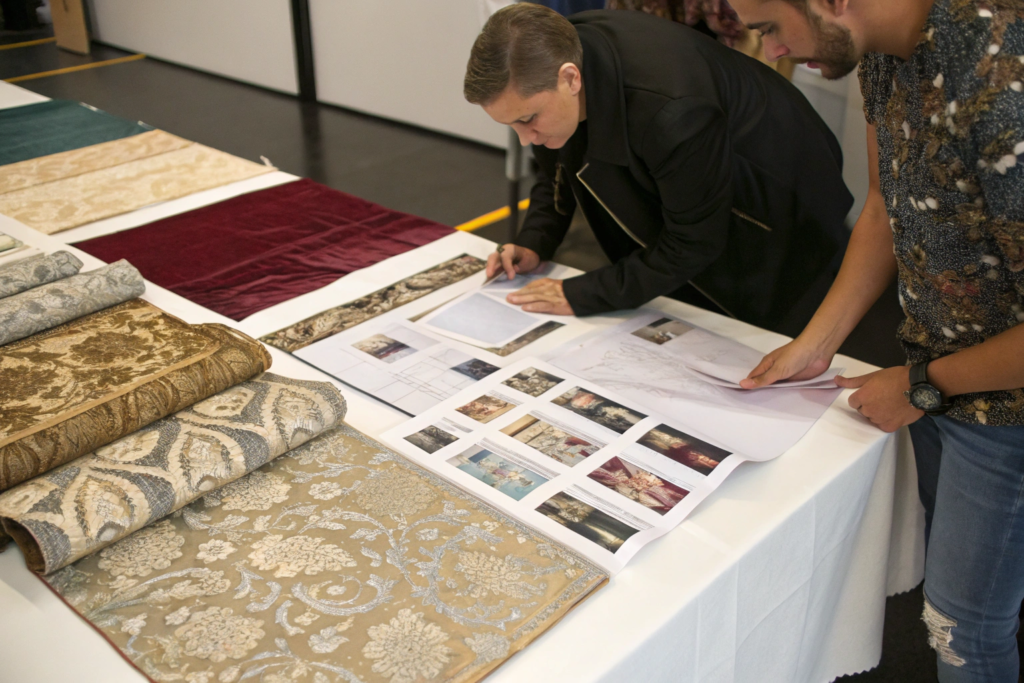
Embroidery and printing are the most design-sensitive processes in textile manufacturing. A custom embroidery pattern requires digitization, stitch-out sampling, tension adjustment, and often multiple iterations to get the stitch density and backing right for the specific base fabric. A custom print requires color separation, screen engraving or digital file preparation, strike-off sampling, and color adjustment against the Pantone standard. When these processes are outsourced to third-party specialists, each iteration involves a physical sample shipment, a communication delay, and a scheduling queue at the external vendor. A single embroidery design approval can take two to three weeks if the embroiderer is in a different facility.
When embroidery and printing are in-house cells, the iteration cycle collapses to hours. The digitizer creates the embroidery file in the morning. The sample machine stitches it out by lunchtime. The development team reviews it, marks adjustments, and the revised file is stitched by end of day. The same-day iteration cycle compresses a three-week external approval process into two or three days. For a brand developing a custom embellished fabric for a collection with a fixed deadline, the in-house iteration speed is the difference between a fully resolved design and a "good enough, we ran out of time" compromise. At Shanghai Fumao, our embroidery cell runs sixty multi-head Barudan machines, but critically, it also runs a dedicated sample machine staffed by a senior digitizer who handles development work exclusively. A custom embroidery development doesn’t wait in the production queue; it runs on the sample machine within hours of digitization. The in-house versus outsourced textile embellishment development cycle time comparison for embroidery and digital printing processes quantifies the cycle time reduction.
Can a 5-Line Factory Produce Technical Finishes That Mega-Factories Avoid?
Technical finishes—water repellency, antimicrobial treatment, flame retardancy, UV protection—require process control that introduces quality risk. A finish applied incorrectly can ruin an entire dye lot. A finish chemical that contaminates a dye vessel can affect subsequent lots that shouldn’t receive the finish. A finish that requires a specific curing temperature and dwell time ties up the stenter frame for a longer cycle than a standard finish, reducing throughput. Mega-factories avoid these risks and throughput losses by either refusing technical finishes entirely or offering only a limited menu of standardized, low-risk finishes.
A 5-line factory with a dedicated coating and finishing cell handles technical finishes as a core competency, not a disruption. The finishing cell’s equipment is set up for variable processes—different chemical baths, different cure profiles, different application methods. The cell’s operators are trained on a wide range of finish chemistries. The cell’s scheduling expects variable cycle times. A water-repellent finish that requires a 160°C cure for 90 seconds is a standard operation, not a line-stopping deviation. At Shanghai Fumao, our coating and finishing cell handles water repellency, antimicrobial, flame retardant, UV protection, soil release, and anti-static finishes, often in combination. A fabric that needs a water-repellent finish with an antimicrobial additive is a routine order, not a research project. The technical textile finish application capabilities and process control requirements for flexible manufacturing cells in specialty fabric production details the equipment and operational requirements for multi-finish capability.
Why Does the 5-Line Model Offer Better Communication and Responsiveness?
In a mega-factory, a custom development inquiry passes through multiple organizational layers before reaching a person who can make a technical decision. The buyer contacts the sales representative. The sales representative contacts the merchandiser. The merchandiser contacts the production planner. The production planner contacts the dye house supervisor. The answer travels back through the same chain, with information loss and delay at each handoff. A simple question—"Can you adjust the hand feel to be slightly drier?"—might take three days to get an answer, and the answer might be "we can try" with no further detail, because the person who actually knows the finishing chemistry is four organizational layers away from the buyer and the question got simplified in transit.
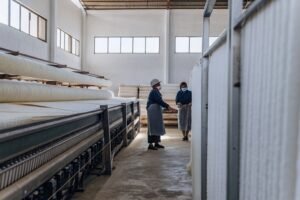
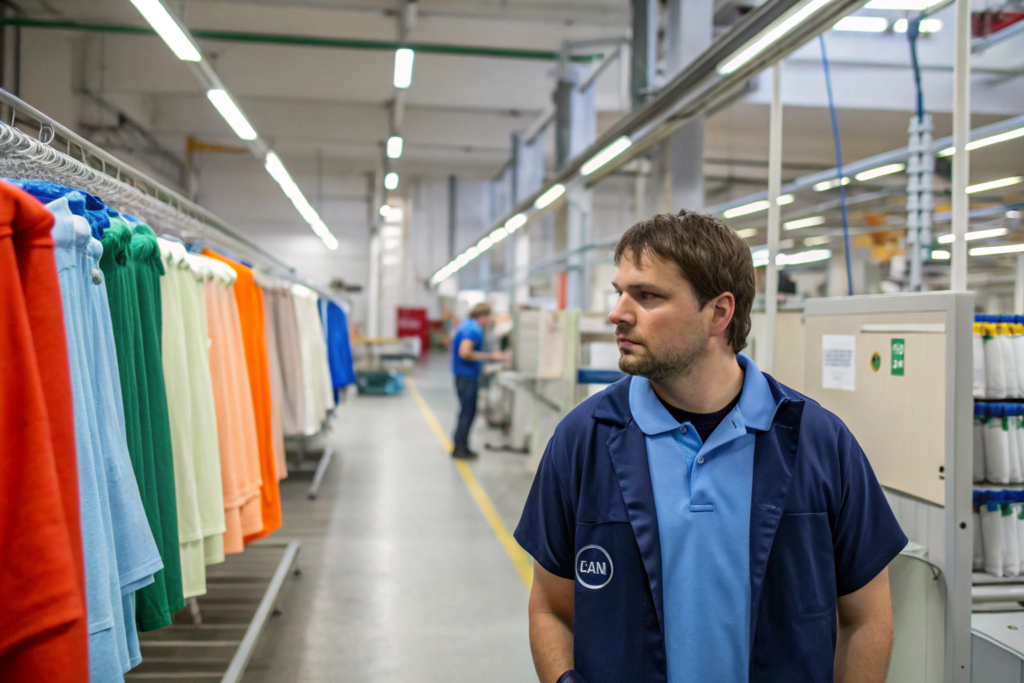
In a 5-line factory, the organizational structure is flatter because the production team is smaller and the cells are closely located. The sales representative or merchandiser who communicates with the buyer sits in the same building as the dye master, the finishing technician, and the QC lead. They can walk to the dye house, ask the question, and return with an answer in minutes. The buyer’s question about hand feel goes directly to the finishing technician who controls the softener concentration, and the answer comes back with technical specificity: "We can reduce the silicone softener from 1.2% to 0.8% and increase the mechanical compacting to maintain drape. This will produce a drier, slightly crisper hand feel. Do you want us to run a trial swatch?" This communication speed and technical specificity is a structural advantage of the smaller, cell-based factory, not a cultural difference. The mega-factory’s communication is slow because the organization is deep; the 5-line factory’s communication is fast because the organization is shallow. At Shanghai Fumao, our custom development clients communicate directly with a dedicated merchandiser who has a desk on the production floor, not in a separate sales office. The merchandiser can check production status, pull QC data, and ask the dye master a technical question without leaving the building. The organizational structure impact on communication responsiveness and decision speed in textile manufacturing for custom and development orders analyzes the relationship between organizational depth and custom order responsiveness.
How Does Direct Access to the Production Floor Change Problem Resolution?
When a quality problem arises on a custom order, the speed of diagnosis and resolution determines whether the order ships on time or late. In a mega-factory, a quality problem reported by the buyer goes through the same multi-layer communication chain as any other inquiry. By the time the dye house supervisor learns about a shade deviation on an order that shipped two weeks ago, the root cause—a calibration drift, a raw material change, a process deviation—may have affected multiple subsequent lots. The communication delay amplifies the quality impact.
In a 5-line factory, the buyer’s quality concern goes directly to the merchandiser on the production floor, who can pull the retained sample, check the QC data, and consult with the production team within hours. If the problem is confirmed, the dye house or finishing cell is notified immediately, and the root cause investigation begins before the next lot enters the process. The problem is contained to a single lot, not amplified across multiple lots. The buyer gets a response with a diagnosis and a corrective action plan within 24 to 48 hours, not a week of silence followed by a vague reassurance. This rapid problem-resolution capability is especially important for custom development orders, where each lot is unique and a quality failure on a 300-meter custom lot cannot be replaced from stock inventory. The fabric is irreplaceable because it was made specifically for that order. The communication architecture that catches and resolves problems quickly is a form of risk management for the buyer. The quality problem communication and resolution cycle time comparison between cellular and traditional hierarchical textile manufacturing organizations provides the cycle time data and the organizational design factors that drive the difference.
What Does a Flatter Organization Mean for Pricing Transparency?
In a multi-layer sales organization, each layer adds cost and markup opacity. The sales agent adds a commission. The trading company intermediary adds a margin. The export department adds a handling fee. The buyer receives a final price that bundles all of these markups into a single per-meter figure, with no visibility into how much is actual production cost and how much is intermediary margin. When the buyer tries to negotiate, the sales agent can only adjust their own commission; the other layers are fixed by separate commercial agreements.
In a 5-line factory that sells direct without intermediary layers, the pricing conversation happens between the buyer and the person who controls the production cost. The merchandiser or sales manager understands the actual cost structure—the yarn cost, the weaving cost, the dyeing cost, the finishing cost, the margin—because they work in the same building as the production team and have access to the cost data. The price they quote reflects the actual production cost plus a transparent margin, not a chain of opaque markups. When the buyer negotiates, the negotiation is about margin and volume commitments, not about layers of intermediary fees that neither party can control. This pricing transparency builds trust and enables collaborative cost engineering: "If we increase the order from 500 to 1,000 meters, the per-meter price drops by $0.40 because the setup cost amortizes better" is a conversation that requires the salesperson to understand production costing. The direct-factory salesperson does; the multi-layer intermediary often doesn’t. The direct factory sales versus multi-tier intermediary pricing structure analysis in textile export supply chains details the cost layers and the transparency differential.
Conclusion
The 5-line factory model is not a compromise between quality and volume. It’s a strategic alternative to the mega-factory model, optimized for a different type of customer and a different type of product. The mega-factory is optimized for standardization, volume, and cost minimization. The 5-line factory is optimized for flexibility, customization, and responsiveness. For a brand that needs 50,000 meters of a basic cotton twill in three standard colors, the mega-factory is the right supplier. For a brand that needs 500 meters of a custom jacquard with metallic embroidery, a water-repellent finish, and a specific shade developed from a Pantone chip, the mega-factory is the wrong supplier. The 5-line factory exists precisely to serve that second brand.
The structural advantages that make the 5-line model more agile—cellular production architecture, small-batch equipment, multi-process integration capability, flat organizational communication, transparent direct pricing—are not accidental. They’re deliberate design choices that trade off maximum volume efficiency for maximum flexibility. A factory cannot be both a mega-factory and a 5-line factory. The operational models are fundamentally different. The brand that understands this distinction stops wasting time asking mega-factories for custom development and starts building relationships with the specialized flexible factories that are built for exactly the work they need done.
If you’re developing a custom fabric—something that doesn’t exist in any stock catalog, something that combines multiple processes, something that needs a specific hand feel and a specific finish and a specific embellishment—you’re describing the kind of order our 5-line production architecture was built to handle. At Shanghai Fumao, our weaving, dyeing, printing, embroidery, coating, and finishing cells are designed to work together on exactly these kinds of complex custom developments. We handle the small trial order, we handle the iterative sampling, and we scale with you when the design succeeds and the volumes grow. Reach out to our Business Director, Elaine, at elaine@fumaofabric.com. Describe what you’re trying to develop. She’ll connect you with the right cell lead for a technical conversation about feasibility, timeline, and cost. Let’s build something that doesn’t exist yet.