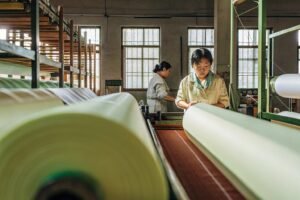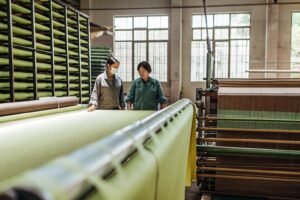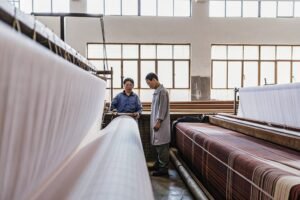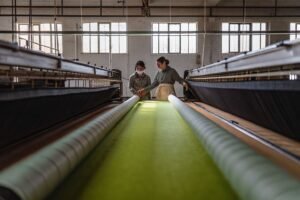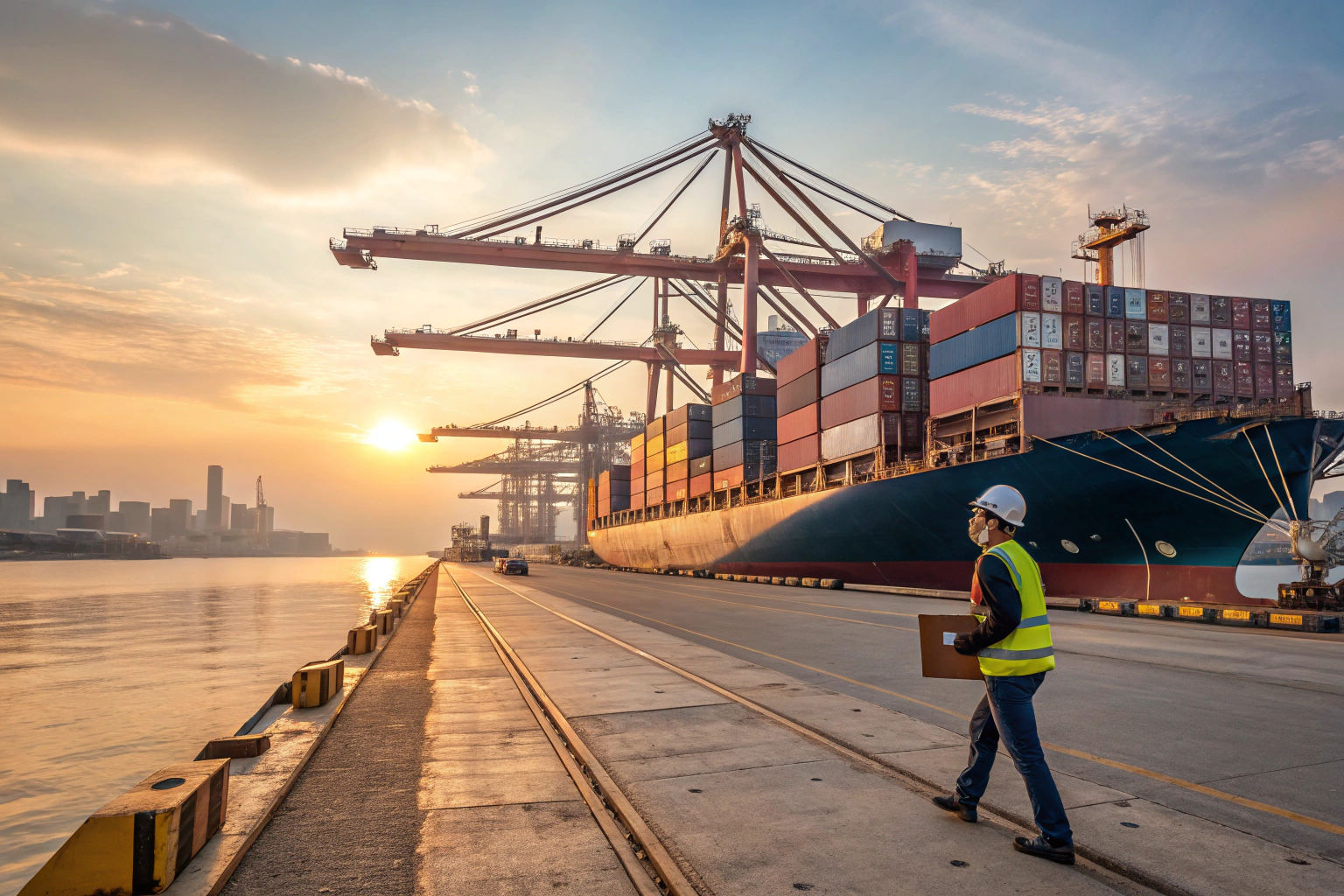
You’ve done the hard part. You found the perfect fabric supplier. You navigated the lab dips, the strike-offs, and the production schedule. The 5,000 yards of custom-printed viscose are packed, wrapped, and sitting on a pallet in a warehouse in Keqiao. You breathe a sigh of relief. Then the supplier sends you an email: "Fabric ready. Please arrange shipping and send us your forwarder details." Your relief evaporates. You don’t have a forwarder. You have no idea how to get 5,000 yards of fabric from a loading dock in China to your cutting room in Los Angeles. You just hit the Logistics Wall.
This is the moment many new importers realize that buying fabric is only half the battle. The other half is Moving It Across the World. You can’t just call FedEx for a 2,000-kilo pallet of textiles. You need a specialized partner who lives and breathes the arcane rules of international shipping, customs regulations, and port terminal operations. You need a Freight Forwarder.
I’m Jack, and I run Shanghai Fumao. I don’t just make fabric. I have to get it into my clients’ hands. Over twenty years, I’ve worked with dozens of forwarders—some excellent, some terrible. I’ve seen shipments held hostage by customs, containers "rolled" at the port, and freight bills inflated with hidden fees. I’m going to explain exactly what a freight forwarder does, why you desperately need a good one, and how to avoid the ones that will turn your smooth fabric order into a logistical nightmare.
What Exactly Does a Freight Forwarder Do with My Fabric Shipment?
Think of a freight forwarder as the Travel Agent for Your Cargo. You want to go from Shanghai to Chicago. You could try to book the flight yourself, arrange the taxi to the airport, navigate security, and deal with customs at the other end. Or you could use an agent who bundles all of that into one smooth itinerary.
A freight forwarder doesn’t own the ships or the planes. They are Logistics Architects. They buy space on vessels (ocean freight) or planes (air freight) at wholesale rates, and they manage the complex web of Drayage (trucking), Customs Brokerage, and Documentation that connects the dots.
For a fabric importer, the forwarder’s specific responsibilities are critical:
- Booking Space: They find a vessel leaving Shanghai that has space for a 20-foot container and arrives in Long Beach on a schedule that matches your deadline.
- Documentation: They prepare the Bill of Lading (B/L) —the legal document that proves ownership of the goods. They file the ISF (Importer Security Filing) with U.S. Customs 24 hours before the vessel sails. If this is filed late or wrong, you get a $5,000 fine. No exceptions.
- Customs Clearance: They work with a licensed Customs Broker to classify your fabric under the correct HTS Code (Harmonized Tariff Schedule) . Fabric classification is notoriously complex. A woven cotton twill has a different duty rate than a knitted synthetic fleece. A good forwarder ensures you pay the correct duty, not a penny more, and avoids costly customs exams.
- Final Mile Delivery: They arrange the truck to pick up the container from the port, deliver it to your warehouse, and return the empty container to the depot.
At Shanghai Fumao, we work with forwarders daily. We provide the Commercial Invoice and Packing List. The forwarder takes those documents and translates them into the language of global customs authorities. They are the Translators of Trade.

How Does a Forwarder Differ from a Customs Broker?
This is a crucial distinction. Many freight forwarders offer In-House Customs Brokerage, but they are two different functions.
- Freight Forwarder: Focuses on the Transportation. They care about vessel schedules, container availability, and trucking routes. They move the box.
- Customs Broker: Focuses on the Regulation. They are licensed by the U.S. Customs and Border Protection (CBP). They care about HTS codes, trade agreements, and duty payments. They clear the box through the border.
You can hire a forwarder and a separate broker. But it’s often more efficient to use a forwarder who has a brokerage department. This creates a Single Point of Failure (or Success) . If there’s a customs hold, the forwarder’s brokerage team is right there to resolve it, rather than you having to play phone tag between two different companies who may blame each other for the delay.
I always advise my clients at Shanghai Fumao to ask a potential forwarder: "Do you have a licensed Customs Broker on staff, or do you outsource that function?" In-house brokerage is generally faster and more accountable.
What Information Does My Forwarder Need from Me and My Supplier?
This is where the handoff often breaks down. You assume the forwarder "knows what to do." The forwarder is waiting for information from you.
Here is the exact checklist of what a forwarder needs to move a fabric shipment:
- Commercial Invoice: From the supplier (Shanghai Fumao). Must show the Seller, Buyer, Detailed Description of Goods (not just "Fabric," but "100% Cotton Woven Twill Fabric, Dyed"), Quantity (Yards/Meters) , Unit Price, and Total Value.
- Packing List: From the supplier. Must show the Number of Rolls/Cartons, Gross Weight (Kgs) , Net Weight (Kgs) , and Dimensions (CBM – Cubic Meters) of each package. This is how the forwarder calculates the Chargeable Weight/Volume.
- Shipper’s Letter of Instruction (SLI): A form you fill out for the forwarder. It tells them exactly how you want the shipment handled. Do you want it routed via Long Beach or Savannah? Do you want door delivery or will you pick up at the CFS (Container Freight Station)?
- Customs Bond: You must have a Continuous Customs Bond on file with U.S. Customs. Your forwarder/broker can help you obtain one. It’s like an insurance policy for the government to ensure duties get paid.
At Shanghai Fumao, we make this easy. As soon as the fabric is packed, we email a Pre-Alert Package directly to the client’s forwarder. It contains the commercial invoice, packing list, and warehouse address for pickup. We do this proactively to keep the process moving. You can learn more about the required paperwork by reading a guide to essential shipping documents for importing from China and how to complete a Shipper’s Letter of Instruction correctly.
How Do I Choose Between a Large Global Forwarder and a Local Specialist?
The freight forwarding industry has two distinct tiers: the Global Giants and the Local Specialists. Both can move your fabric. But the experience, the cost, and the level of hand-holding will be vastly different.
The Global Giants (Kuehne+Nagel, DHL Global Forwarding, Expeditors, DSV):
- Pros: Massive buying power. They get the best rates from the steamship lines because they book millions of containers a year. They have offices in every major port. They have robust, integrated technology platforms.
- Cons: You are a very small fish in a very big pond. If you are shipping one container a month, you will likely be assigned to a junior account manager. Service can be impersonal and bureaucratic. They are optimized for Fortune 500 clients with complex, multi-modal supply chains.
The Local Specialist (Independent, Niche Forwarder):
- Pros: You are a valued client. The owner of the company might be the one answering your emails. They are Hungry for your business and will work harder to solve problems. They often have deep expertise in specific trade lanes (e.g., Shanghai to US West Coast) or specific commodities (e.g., textiles).
- Cons: Their rates might be slightly higher because they don’t have the same volume leverage. Their technology portal might be less slick. If your supply chain expands to Vietnam or Bangladesh, they might not have a local office.
For a small to medium-sized fabric importer moving 1-10 containers per year, I almost always recommend a Local Specialist or a Mid-Sized Niche Forwarder. The personalized service is worth the slight premium. When your container gets flagged for a customs exam at 5:00 PM on a Friday, you want a forwarder who knows your name and will make a phone call, not one who sends you an automated email telling you to check the portal on Monday.
At Shanghai Fumao, we maintain relationships with both types. We can recommend a forwarder based on the client’s volume, destination, and level of experience. We never force a client to use "our" forwarder (that’s a red flag for kickbacks). We provide a list of Trusted Partners and let the client choose.

What Are the Red Flags of a Bad Freight Forwarder?
The freight forwarding industry has low barriers to entry. Anyone can rent a desk, get a phone, and call themselves a forwarder. They are selling a service they don’t fully control. Here are the red flags to watch for:
- The "Low-Ball" Quote: They quote you $2,800 for a container when everyone else is at $3,500. This is a classic Bait and Switch. They will book the space, and then a week before sailing, they’ll hit you with a "Peak Season Surcharge" or "Port Congestion Fee" that brings the total to $4,000. You have no choice but to pay because your goods are already at the port.
- Vague on Details: You ask, "What is the cut-off date for the ISF filing?" They say, "Don’t worry, we handle it." They should be able to give you a specific deadline. If they are vague about compliance details, they are likely cutting corners.
- No Textile Experience: You ask, "Have you handled fabric shipments before?" They say, "Cargo is cargo." Wrong. Fabric requires specific stowage (away from engine heat to prevent blocking) and specific documentation (detailed fiber content for customs). A forwarder who doesn’t know textiles can cause a customs seizure.
- Outsourced Everything: You find out they are just a "middleman" who hands your file to a larger forwarder. You’re paying a markup for no added value.
At Shanghai Fumao, we’ve seen clients burned by all of these. (Here’s a hard truth: If the forwarder’s quote seems too good to be true, it is. You will pay for it later in stress and hidden fees.) You can learn more by reading how to spot and avoid freight forwarding scams when importing from China.
Should I Use My Supplier’s Recommended Forwarder?
This is a nuanced question. The short answer is: Generally, No. The long answer is: It depends on the Incoterms.
If you are buying FOB (Free on Board) , the supplier is responsible for getting the goods to the port in China. They may say, "We have a good forwarder, very cheap. Use them." This is often a conflict of interest. The forwarder works for the supplier, not for you. When there’s a problem at the destination port, the forwarder is more loyal to the supplier (who gives them constant business) than to you (a one-time shipper).
If you are buying CIF (Cost, Insurance, Freight) , the supplier controls the freight. They choose the forwarder. They build the cost into the fabric price. This is convenient, but you lose Visibility and Control. You don’t know the real freight cost, and you can’t track the container as easily.
At Shanghai Fumao, our policy is: We recommend. You decide. We can introduce you to 2-3 forwarders we trust and have worked with for years. We are transparent that we receive Zero Commission from them. We want you to have a good logistics experience because that reflects well on us as a supplier. The final choice is always yours.
What Are the Most Common Fabric-Specific Shipping Delays?
Fabric is not a neutral cargo like a box of screws. It is Organic, Absorbent, and Sensitive. It interacts with its environment during the long ocean voyage. Understanding these unique risks helps you communicate effectively with your forwarder and take preventative measures.
The most common fabric-specific delays and damages occur because of Moisture and Heat. A container crossing the Pacific in summer is a sealed metal box sitting under the equatorial sun. The internal temperature can exceed 140°F (60°C) . At night, the temperature drops. The warm, moist air inside condenses on the cold metal ceiling and "rains" down on the top layer of fabric rolls. This is Container Rain.
If this happens, the forwarder might not even know until the container is opened at your warehouse. Then you have a Mildew Claim. And here’s the brutal truth: Steamship lines almost Never pay claims for moisture damage to textiles. They classify it as "Inherent Vice" —meaning the cargo was prone to damage by its very nature. The responsibility is on the shipper (or you, the importer) to pack it correctly.
At Shanghai Fumao, we mitigate this risk at the packing stage. We use Container Desiccants (large bags of calcium chloride that hang from the ceiling and absorb moisture) and we line the floor with Kraft Paper. But we also advise our forwarders to request "Below Deck Stowage" for fabric containers. This keeps the container out of the direct sun on the top of the ship, reducing the temperature swing. A good forwarder knows how to request this on the Bill of Lading.

What Is a Customs Exam and Why Does It Delay Fabric?
A Customs Exam is when U.S. Customs and Border Protection (CBP) decides to physically inspect your container. It’s the logistics equivalent of being pulled over for a random breathalyzer test. It adds 3 to 7 days to your transit time and costs $500 – $1,500 in exam fees (payable to the CBP-bonded warehouse where the exam happens).
Fabric shipments get flagged for exams more often than you’d think. Common triggers:
- Vague Description: "Fabric" is a red flag. "100% Cotton Woven Twill Fabric" is much better.
- Quota or Anti-Dumping Concerns: Certain fabric categories from China have complex duty regulations. CBP wants to verify the fiber content and country of origin.
- Random Selection: Sometimes, it’s just bad luck.
A good forwarder/broker can’t prevent a random exam, but they can Minimize the Pain. They know exactly which documents to provide to the CBP officer to prove the fabric’s classification. They have relationships with the exam sites and can expedite the process.
At Shanghai Fumao, we support this by providing Mill Test Reports and Detailed Fiber Content Certificates with every shipment. If CBP questions the fiber content, we can provide lab-verified proof immediately. This is the kind of backup that turns a 7-day exam into a 2-day exam. You can read more about the process by looking at what to expect during a U.S. Customs import exam and how to minimize delays and how to write a clear cargo description to avoid customs holds.
How Do Port Congestion and "Rolled" Containers Affect Fabric?
You check the vessel tracking. The ship arrived in Long Beach on time. You expect your container in 2-3 days. Then your forwarder emails you: "Container rolled. Vessel bypassed port. Next arrival in 10 days."
"Rolled" means the steamship line overbooked the vessel (like an airline). They left your container sitting on the dock in Shanghai, waiting for the next ship. This happens constantly on the busy Trans-Pacific trade lane.
A forwarder with strong Carrier Relationships can sometimes get "Protected Status" for your booking, meaning it’s less likely to be rolled. A small forwarder with no leverage is at the mercy of the shipping line’s computer algorithm.
Additionally, Port Congestion at the destination (especially LA/Long Beach) can add weeks to the delivery. The ship is anchored offshore, waiting for a berth. There is nothing the forwarder can do to speed this up. But a good forwarder gives you Realistic ETAs upfront. A bad forwarder tells you the "best case scenario" to get your business, and then makes excuses later.
At Shanghai Fumao, we are realistic with clients about transit times. We don’t promise 14-day delivery from Shanghai to LA. We say 18-25 days, factoring in port congestion. Managing expectations is key to a good partnership.
How Do I Calculate the True Landed Cost with Forwarder Fees?
The price the forwarder quotes you is Never the Final Price. It’s a base rate. The true cost of moving a container includes a dozen Accessorial Charges that can add 20-30% to the freight bill. If you don’t understand these charges, you can’t accurately price your garments.
Here is the anatomy of a real ocean freight invoice from Shanghai to an inland US warehouse. (All figures are approximate for a 40-foot container).
| Charge Description | Estimated Cost (USD) | Who Charges It? | Notes |
|---|---|---|---|
| Ocean Freight (Base Rate) | $2,800 | Steamship Line | The quoted rate. |
| Bunker Adjustment Factor (BAF) | $450 | Steamship Line | Fuel surcharge. Fluctuates with oil price. |
| Terminal Handling Charge (THC) – Origin | $150 | Port of Shanghai | Fee to move container in port. |
| Terminal Handling Charge (THC) – Destination | $180 | Port of LA/LB | Fee to move container out of port. |
| Chassis Fee | $250 | Trucking Company | Rental of the wheeled chassis to haul the container. |
| Pier Pass / TMF | $80 | Port of LA/LB | Traffic mitigation fee for daytime trucking. |
| Customs Clearance Fee | $125 | Customs Broker | Fee for filing entry documents. |
| Single Transaction Bond | $75 | Customs Broker | (If you don’t have a continuous bond). |
| Inland Trucking (to warehouse) | $600 | Trucking Company | Drayage from port to your door. |
| TOTAL LANDED FREIGHT | $4,710 | This is 68% higher than the $2,800 base rate. |
At Shanghai Fumao, we encourage our clients to ask their forwarder for an "All-In" Quote before booking. A professional forwarder will provide a detailed breakdown like the table above. An unprofessional one will just say, "About $3,000." If they can’t explain BAF and THC, they are not managing your cost. They are hiding it. You can verify these fees by reading a glossary of ocean freight surcharges and accessorial fees and how to calculate the total landed cost of imported goods.

What Is Demurrage and Detention, and How Do I Avoid It?
These are the two most painful "penalty" fees in importing. They occur when the container sits idle for too long.
- Demurrage: The fee charged by the Port Terminal when your container sits in the port after it has been unloaded from the ship but before it is picked up by the truck. Free time is usually 3-5 days. After that, it’s $100-$200 per day.
- Detention: The fee charged by the Steamship Line when you keep the container at your warehouse after it has been delivered but before it is returned empty to the depot. Free time is usually 3-5 days. After that, it’s $150-$300 per day.
A disorganized forwarder doesn’t warn you about the free time clock. They let the container sit at the port for 7 days while they "process paperwork." You get a bill for $500 in demurrage. You are legally obligated to pay it, even if it was their fault.
A good forwarder manages the clock aggressively. They pre-clear customs before the vessel arrives. They schedule the truck for the First Available Delivery Appointment. They send you reminders: "Container has 2 days of free time left. Please confirm empty return location."
At Shanghai Fumao, we have seen clients lose thousands to demurrage because of a slow forwarder. It’s one of the most avoidable costs in the entire supply chain. Ask a potential forwarder: "What is your process for ensuring we don’t incur demurrage or detention?" Their answer will tell you everything about their operational competence.
Conclusion
A freight forwarder is not just a vendor. They are a critical, non-negotiable link in your fabric supply chain. They are the difference between a smooth, predictable import process and a chaotic, expensive mess. A great forwarder makes the complex world of international logistics feel almost invisible. A bad forwarder makes every shipment a source of anxiety and unexpected cost.
The key is to choose a forwarder who understands Textiles, communicates with Transparency, and manages the Details proactively. Don’t just chase the lowest quote. Chase the Highest Competence. Ask about their customs brokerage capabilities. Ask for an all-in rate breakdown. Ask how they handle rolled cargo and demurrage. Their answers will reveal whether they are a true partner or just a booking agent.
At Shanghai Fumao, our responsibility to you doesn’t end when the fabric leaves our loading dock. We are committed to supporting a smooth logistics handoff. We provide the accurate, detailed documentation that forwarders need to do their job right. We can recommend trusted partners from our network. And we are always here to help troubleshoot when the inevitable curveballs of global shipping occur.
If you are planning your first import shipment or looking to upgrade your current logistics partner, let’s talk. Our Business Director, Elaine, works closely with our recommended forwarders and can help you navigate the initial steps of setting up your import process. Reach out to her at elaine@fumaoclothing.com. Let’s make sure your fabric gets home safely, on time, and on budget.