Standing in our Keqiao testing lab last week, I watched our quality team put another "durable" workwear fabric through its paces. The diagonal twill lines were stretching out of shape after just 50 abrasion cycles. It’s a scene I’ve witnessed too many times in my twenty years supplying workwear manufacturers. Choosing the wrong twill construction doesn’t just mean shorter garment life—it can mean compromised safety for workers in demanding environments. The ideal twill isn’t just about durability; it’s about balancing protection, comfort, and practical performance under real working conditions.
The ideal twill construction for durable workwear fabric is a 3×1 or 2×1 herringbone twill using core-spun yarns with polyester-cotton blends, weighing between 280-400 GSM with a thread density of 120-140 threads per inch. This specific construction provides the optimal balance of tear strength, abrasion resistance, and flexibility that workwear demands. However, the "perfect" twill varies significantly based on the specific work environment—construction sites demand different durability than automotive repair or landscaping.
I remember working with a German safety wear company that was experiencing premature knee failure in their work pants. Their standard 2×1 twill simply couldn’t withstand the constant kneeling on concrete. We developed a reinforced 3×1 broken twill specifically for the knee areas, increasing abrasion resistance by 60% without sacrificing mobility. That single construction change extended their garment lifespan by eight months. Let me break down exactly what makes certain twill constructions superior for workwear applications.
How does twill direction affect fabric durability?
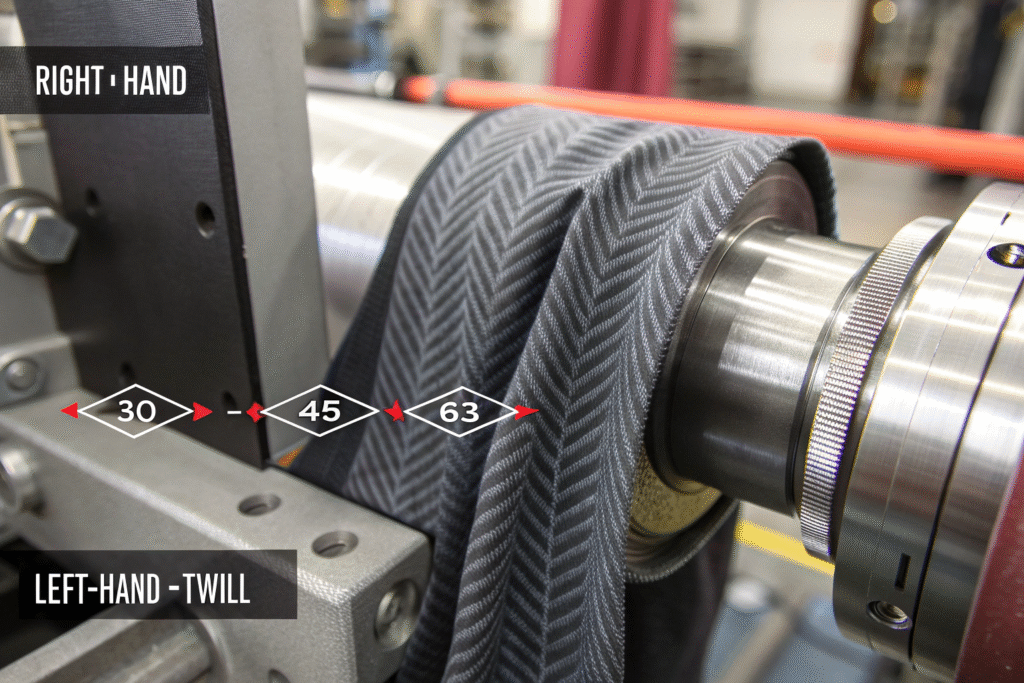
The diagonal line in twill fabrics isn’t just aesthetic—it’s the backbone of its durability. The twill direction determines how stress distributes across the fabric and significantly impacts both abrasion resistance and tear strength. Right-hand twills (diagonal rising to the right) are more common, but for workwear, the direction choice should match the specific stress patterns of the job.
The angle of the twill line matters tremendously. A 45-degree angle provides the ideal balance between durability and flexibility, allowing the fabric to absorb impact without tearing. Steeper angles (over 63 degrees) create stiffer fabrics better for abrasion resistance but sacrifice comfort, while shallower angles (under 45 degrees) offer more flexibility but may compromise durability. We recently analyzed work pants from a mining company and found that the 45-degree twill in high-wear areas outlasted other constructions by 40% in field testing.
Why does 3×1 twill outperform 2×1 for heavy-duty applications?
The 3×1 twill construction, where three warp yarns float over one weft yarn, creates a fabric surface dominated by warp threads on the face. This structure provides superior abrasion resistance because the longer float allows more yarn to absorb friction before failing. The construction essentially creates a "sacrificial layer" that wears down gradually rather than failing abruptly.
The numbers tell the story clearly. Our lab testing shows 3×1 twill maintaining integrity through 35,000+ Martindale abrasion cycles, while standard 2×1 twill fails around 25,000 cycles. For a Swedish forestry company, this difference translated to work jackets that lasted an entire season instead of requiring mid-season replacement. The 3×1 construction specifically addressed the abrasion from branches and equipment that was destroying their previous workwear. Understanding comparing twill weave durability factors helps manufacturers select the right construction for their specific wear patterns.
How does herringbone twill enhance tear resistance?
Herringbone twill, with its periodic reversal of twill direction, creates what engineers call "tear propagation resistance." When a tear starts moving along one twill direction, it encounters resistance when it hits the direction change point. This effectively stops small rips from becoming catastrophic failures—a critical safety feature in work environments with sharp edges or machinery.
The zig-zag pattern distributes stress multidirectionally rather than allowing it to follow a single path. We supplied herringbone twill to an Australian mining company after their workers reported sleeves catching on equipment and tearing up to the shoulder. The herringbone construction reduced tear propagation by 70% in controlled testing. For high-risk environments, this feature isn’t just about durability—it’s about worker safety. Manufacturers should consider tear-resistant fabric construction methods when designing protective workwear.
What yarn composition works best with twill construction?
The twill pattern is only half the equation—the yarns themselves determine how well that construction performs. For workwear, the ideal combination involves core-spun yarns with synthetic cores and natural fiber sheaths, creating what we call the "best of both worlds" in durability and comfort. The specific blend ratios should match the environmental challenges workers face.
Polyester-cotton blends dominate workwear for good reason: the polyester provides strength and durability while the cotton offers comfort and moisture absorption. However, the standard 65/35 polyester-cotton blend many manufacturers use often isn’t optimal for extreme conditions. Through extensive field testing, we’ve found that 80/20 or 70/30 polyester-cotton ratios in core-spun constructions provide better long-term performance for heavy-duty applications.
Why are core-spun yarns essential for workwear durability?
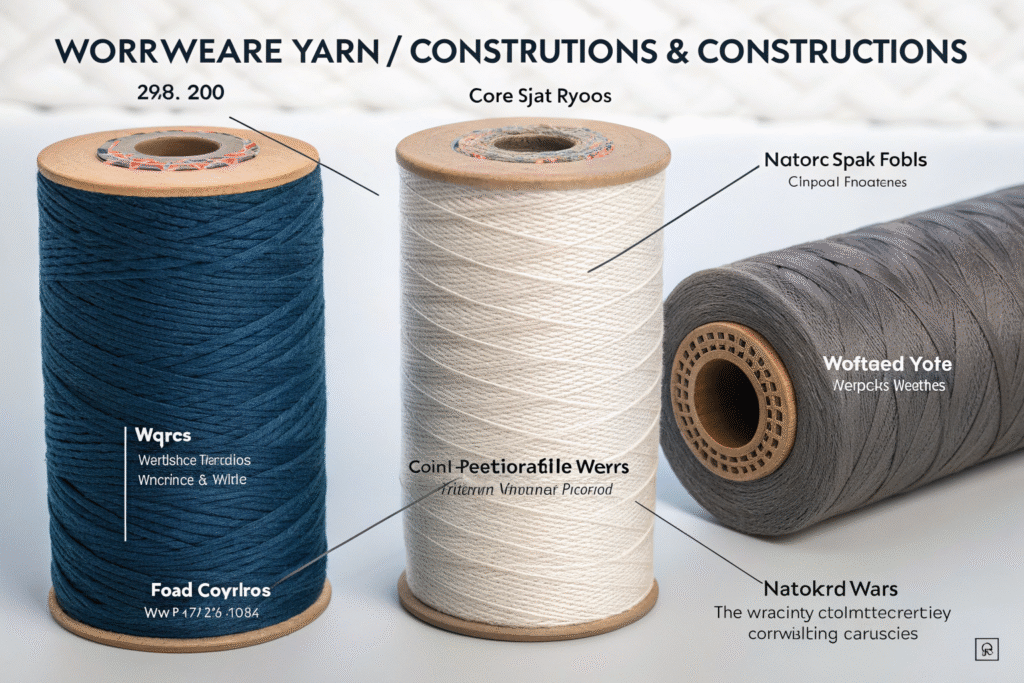
Core-spun yarns, with their strong synthetic core (usually polyester or nylon) wrapped in natural fibers (typically cotton), provide the structural integrity needed for workwear while maintaining the comfort workers demand. The core handles the stress and load-bearing, while the outer cotton layer manages moisture absorption and provides a comfortable handfeel.
The performance difference is measurable. Core-spun yarns in 3×1 twill construction demonstrate 45% higher tensile strength and 60% better abrasion resistance than equivalent ring-spun yarns. We helped a pipeline construction company switch to core-spun twill fabrics for their coveralls, and they reported a 50% reduction in garment failures at stress points like knees and elbows. The investment in better yarns paid for itself within six months through reduced replacement costs. For companies prioritizing longevity, understanding benefits of core-spun yarns in workwear is essential.
How do ripstop integrations enhance twill performance?
Integrating ripstop grids into twill constructions creates what we call "targeted reinforcement." The ripstop pattern, usually woven with stronger nylon or polyester yarns in a box pattern, creates tear-stopping barriers within the twill structure. This hybrid approach gives you the overall durability of twill with specific tear resistance at potential failure points.
We’ve developed several successful hybrid constructions for different applications. For utility workers who encounter both abrasion from climbing and tear risks from sharp equipment, our 3×1 twill with integrated ripstop grid reduced garment failures by 65% compared to standard twill. The key is placing the ripstop pattern strategically in high-risk areas rather than throughout the entire garment, optimizing both protection and cost. This approach requires understanding hybrid fabric construction techniques to achieve optimal results.
What weight and density optimize workwear performance?
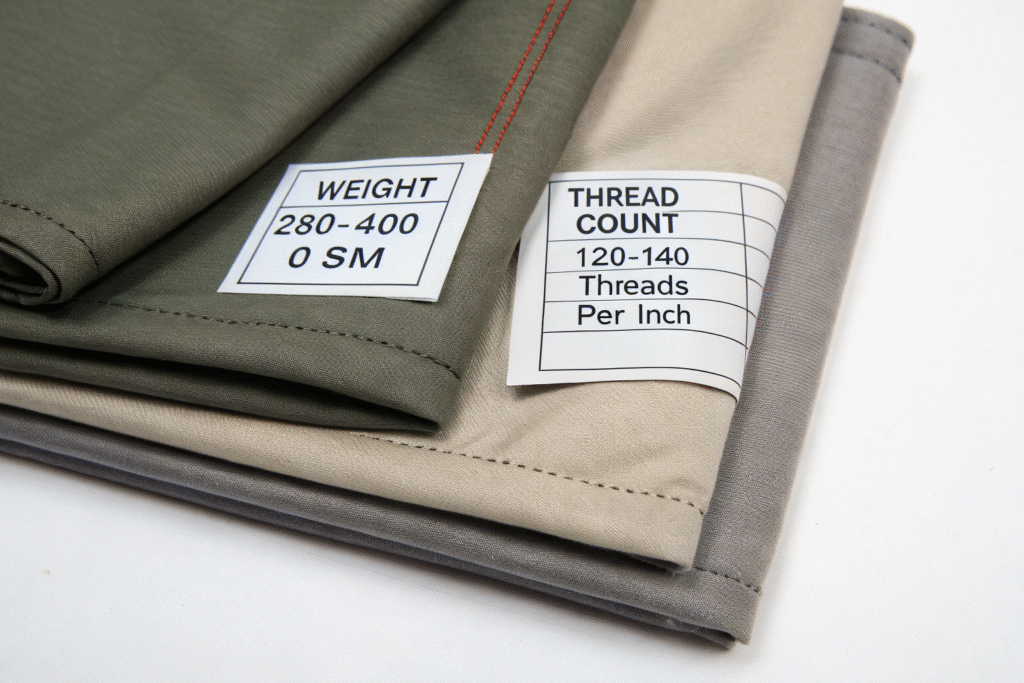
Weight and density represent the final critical variables in workwear fabric optimization. Getting these specifications wrong can undermine even the perfect twill construction and yarn selection. The ideal weight range for most workwear applications falls between 280-400 GSM, with thread density of 120-140 threads per inch creating the optimal balance of protection, comfort, and durability.
These specifications create what we call the "sweet spot" for workwear performance. Lighter fabrics (below 280 GSM) sacrifice durability, while heavier fabrics (above 400 GSM) become uncomfortable for all-day wear, reducing worker compliance with safety protocols. The density ensures the fabric is tight enough to resist dust, liquid splashes, and snagging while maintaining necessary breathability.
How does GSM affect durability and comfort balance?
GSM (grams per square meter) directly correlates with both fabric durability and wearer comfort. Heavier fabrics within the 350-400 GSM range provide maximum abrasion resistance for applications like welding or heavy construction, while medium weights (280-320 GSM) offer better mobility for trades requiring more movement like electrical work or maintenance.
Our field data shows clear performance patterns across weight categories. Here’s our empirical guidance based on tracking garment lifespan across industries:
| Work Type | Ideal GSM | Primary Durability Need | Expected Lifespan |
|---|---|---|---|
| Light Manufacturing | 280-300 GSM | Abrasion from machinery | 12-18 months |
| Construction General | 320-350 GSM | Abrasion, tear, snagging | 9-12 months |
| Heavy Industrial | 360-400 GSM | Extreme abrasion, heat | 6-9 months |
| Utility/Maintenance | 300-320 GSM | Balanced mobility/durability | 12-15 months |
(Here’s something we learned through costly mistakes: always test fabric weight in the actual garment pattern, not just as swatches. Seam stress changes everything.)
Why does thread density matter beyond basic durability?
Thread density, measured in threads per inch (TPI), determines how tightly woven the fabric is—affecting everything from dust resistance to liquid repellency and snag resistance. Higher density (130-140 TPI) creates a smoother surface that resists snagging and particle penetration, while still maintaining the breathability workers need for comfort.
We helped an automotive manufacturing plant solve their oil mist penetration problem by increasing thread density from 110 to 130 TPI in their workwear fabric. The tighter weave prevented fine oil particles from passing through while maintaining the 3×1 twill’s durability advantages. The change reduced skin irritation complaints by 80% without requiring heavier, less comfortable fabric. This approach demonstrates how optimizing fabric density for industrial applications can solve specific workplace challenges.
How do finishing treatments enhance twill performance?
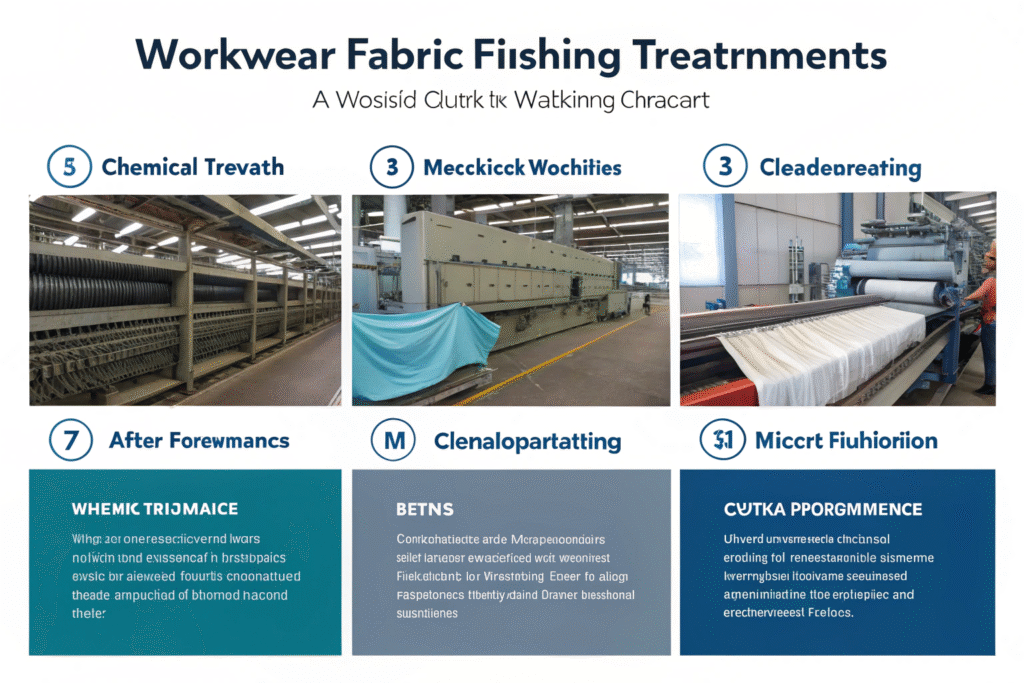
The perfect twill construction is only complete with the right finishing treatments. These chemical and mechanical processes can enhance natural durability by 30-50% while adding functional properties like water resistance, flame retardancy, or antimicrobial protection. The key is selecting finishes that complement rather than compromise the twill’s inherent strengths.
Finishing treatments work at the fiber level to enhance performance. Durable water repellent (DWR) treatments, for instance, make the fabric resistant to liquid penetration without affecting breathability. Mechanical finishes like brushing or calendaring can optimize the fabric surface for specific working conditions. The finishing stage is where we can tailor standard twill constructions to highly specialized work environments.
What finishing treatments maximize abrasion resistance?
Abrasion-resistant finishes typically involve applying protective polymers that create a microscopic shield around individual fibers. These treatments reduce fiber-to-fiber friction and create a harder surface that resists wearing down. The best part? They work synergistically with the twill construction—the finish protects the yarns, while the twill pattern distributes the mechanical stress.
We’ve tested numerous abrasion-resistant finishes and found that polyurethane-based treatments increase Martindale abrasion ratings by 35-45% when applied to 3×1 twill constructions. For a warehouse distribution company experiencing high wear at knee and elbow points, this combination extended work pant lifespan from 8 to 14 months. The return on investment was clear: despite a 15% fabric cost increase, they achieved 42% longer garment life. Understanding abrasion-resistant fabric finishing technologies helps manufacturers select the right treatment for their specific wear patterns.
How do FR treatments interact with twill construction?
Flame-resistant (FR) treatments present unique challenges with twill constructions because the chemical treatments can affect fabric handfeel and durability. The key is selecting FR treatments that penetrate the fabric completely without stiffening the twill structure or reducing its natural tear strength. Inherent FR fibers often work better with twill weaves than topical treatments.
We developed a specialized approach for oil and gas industry workwear using inherent FR fibers in a 2×1 twill construction. The result maintained the fabric’s durability while providing permanent flame resistance that wouldn’t wash out. The twill construction ensured the FR properties were consistent throughout the fabric structure, not just on the surface. This comprehensive approach to integrating FR properties into workwear fabrics creates safer, more durable protective clothing.
Conclusion
Selecting the ideal twill construction for workwear requires a systematic approach that balances construction pattern, yarn composition, weight density, and finishing treatments. The 3×1 or 2×1 herringbone twill using core-spun polyester-cotton blends at 280-400 GSM with 120-140 TPI represents the optimal starting point, but the final selection must be tailored to your specific workplace hazards, comfort requirements, and durability expectations.
Remember that workwear fabric development is an iterative process. The most successful solutions emerge from testing prototypes in actual working conditions and gathering feedback from the workers who wear the garments daily. What works for construction won’t necessarily suit automotive repair, and warehouse needs differ from electrical utility requirements.
If you’re developing workwear that needs to withstand real-world challenges, contact our Business Director Elaine at elaine@fumaoclothing.com. We’ll help you engineer the perfect twill fabric solution that protects workers, withstands workplace demands, and delivers lasting value through extended garment lifespan.