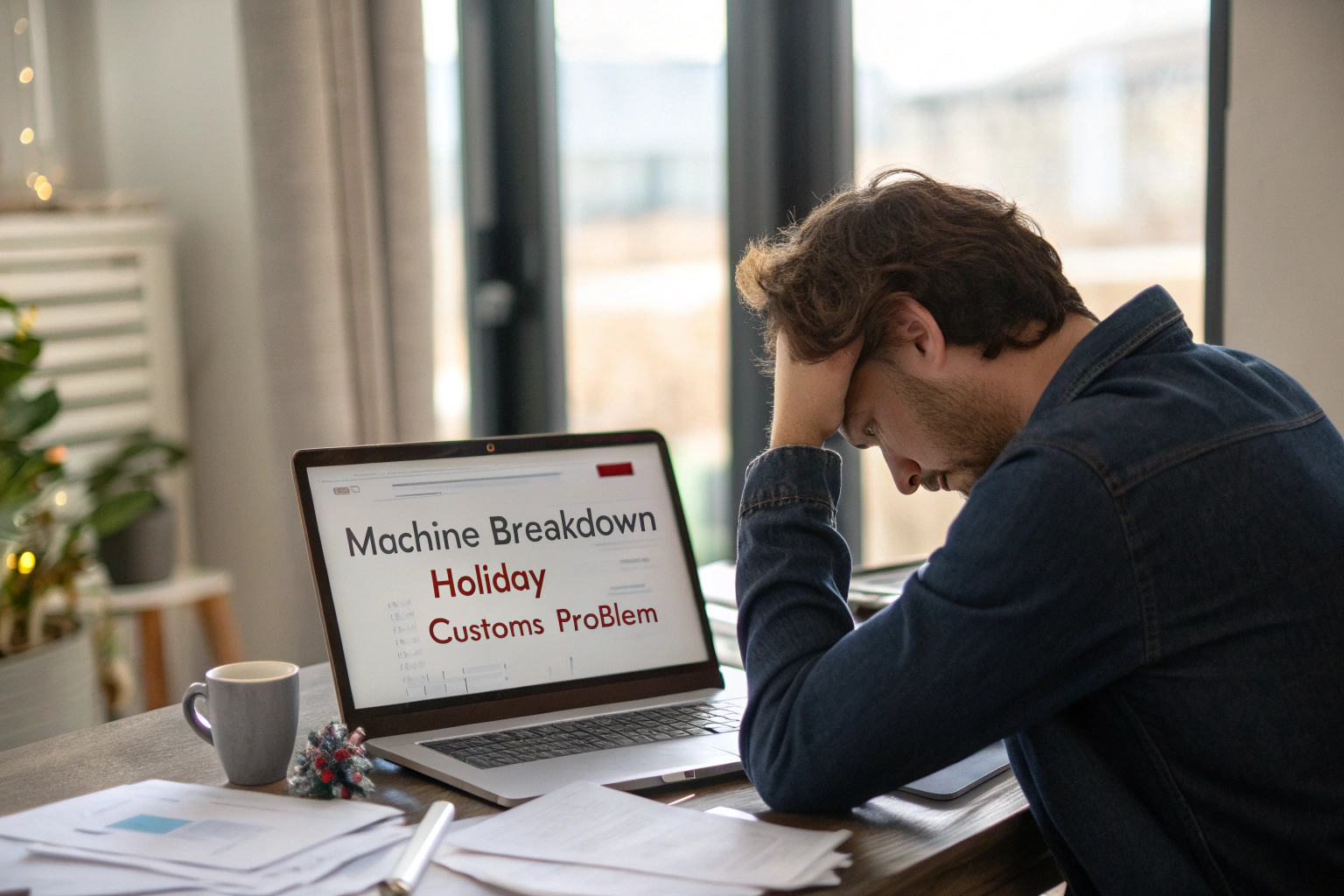
I’ve seen the emails. A startup founder in Brooklyn has spent six months developing a brand. They’ve sourced a design, built a website, and grown an Instagram following. They finally find a fabric supplier on Alibaba who has the exact organic cotton twill they need at a price that makes their margins work. The communication is friendly. The digital samples look great. The supplier sends a proforma invoice for a 30% deposit on a $15,000 order. $4,500. The founder, excited and feeling the pressure of their launch timeline, wires the money. And then the delays start. "Machine breakdown." "Holiday." "Customs problem." And then silence. The deposit is gone, absorbed into the vast, anonymous machinery of a fraudulent trading company that never had a factory, never had the fabric, and never intended to ship anything. The pain isn’t just the lost money, though that’s devastating enough. It’s the betrayal of trust, the collapse of a dream, and the months of wasted time that a small business can never recover.
I’m going to tell you exactly how to prevent that nightmare, from the perspective of a legitimate, twenty-year-old Chinese fabric manufacturer who has seen every scam and every shortcut from the inside. At Shanghai Fumao, we lose business to fake suppliers every month. They offer prices we can’t match because they don’t pay for real yarn, real quality control, or real compliance. They steal our product photos, our certifications, even our factory videos, and use them to bait buyers into sending deposits for fabric that doesn’t exist. I’m tired of it. This article is my comprehensive guide on how to verify a Chinese fabric supplier—any supplier, not just us—before you risk a single dollar. Use these methods on us. Test us. A legitimate supplier will welcome the scrutiny because we have nothing to hide. A fake supplier will make excuses, apply pressure, and disappear when you ask the hard questions. Let’s walk through the live video call verification that reveals a real factory, the documentation audit that proves compliance isn’t forged, and the Alibaba Gold Supplier trap that catches so many first-time buyers.
How Can a Live Video Call Reveal a Real Factory vs. a Trading Company?
A trading company can fake a website. They can fake a certificate. They can even fake a sample—just buy a meter of good fabric from a real mill and mail it to you. But they cannot fake a live, interactive, unscripted video walkthrough of a working textile factory. The live video call is the single most powerful verification tool you have, and it’s free. But you can’t just ask for a "factory tour." You have to be smart about what you ask to see, because a clever trading company can rent access to a factory floor for an hour, or they can take a pre-recorded video and try to pass it off as live. You need to turn the video call into a dynamic, unpredictable interrogation that reveals the physical reality of the operation.
Here is my step-by-step protocol for a live video verification call. Step one: the "Proof of Life" signal. At the start of the call, before they show you anything, ask them to write a specific word or number you just invented—say, "Blue Elephant 42"—on a piece of paper and hold it up to the camera in front of the factory floor. This proves, with high confidence, that the video is live and not a recording. A recorded video can’t respond to your spontaneous request.
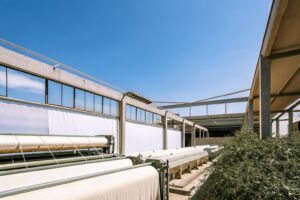
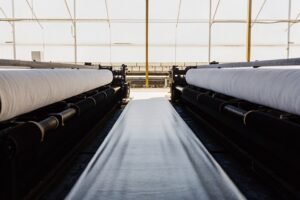
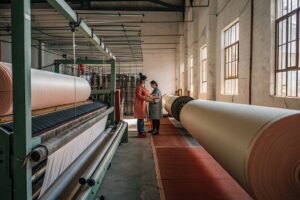
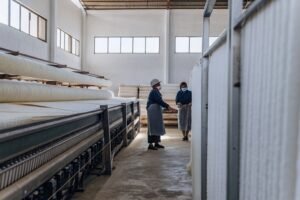
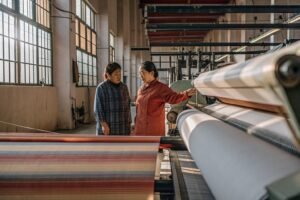
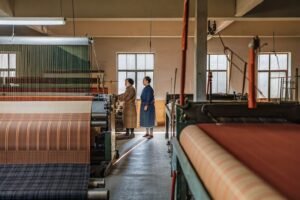
Step two: the "Warp Beam Walk." Ask them to walk the camera to a weaving loom that is currently running. Get close. Can you see the warp yarns moving up and down? Can you see the reed beating the weft yarn into place? Can you hear the rhythmic, mechanical clatter of a real rapier or air-jet loom? A trading company’s "factory tour" video often shows a static, wide shot of a clean, quiet room with machines that might not even be turned on. A real factory is noisy, slightly messy, and the machines are in active, aggressive motion.
Step three: the "Yarn Inventory Check." Ask them to walk the camera to the yarn storage area. A real factory has a substantial inventory of raw yarn—pallets stacked with cones of yarn, labeled with yarn count, composition, and lot numbers. A trading company doesn’t hold yarn inventory; they buy finished fabric from mills. If the "factory" has no yarn stock, or the yarn area looks suspiciously small and tidy, you’re likely talking to a middleman.
Step four: the "Specific Customer Order Check." Ask a question about a specific, ongoing production. "Can you show me the fabric currently on the inspection table? What is that fabric, and who is it for?" A real factory manager knows exactly what’s on the floor. They can say, "This is a 300 GSM cotton-linen canvas for a Canadian brand, lot number 2406-CA." A trading company representative will stumble, give a vague answer, or say the camera can’t go to that area.
I conduct these calls regularly with potential clients who are nervous about their first order with us. I don’t mind them. I prefer them. It gives me a chance to show off our actual looms, our actual yarn stock, and our actual QC department. A buyer from a British menswear brand did this with me in 2024. He asked for the "Blue Elephant" test. He asked to see the warp beam storage. He asked to see a specific inspection report for a current lot. I walked him through everything. He placed his trial order the next day. A trading company would have failed every step. For a deeper dive, reading about how to conduct a live video factory audit in China, with a checklist of specific areas to inspect and questions to ask provides a comprehensive protocol, and understanding the visual and operational differences between a real textile manufacturing plant and a trading company’s rented or staged "showroom factory" sharpens your eye for the subtle signs.

How Can I Tell If a Fabric Sample Was Genuinely Made by the Supplier?
The sample is the bait. A fraudulent supplier knows that the quality of the sample is what closes the deal. So they will source the best possible sample—often a meter of high-quality fabric cut from a genuine mill’s production, or even a competitor’s sample—and send it to you as "their" work. The sample is perfect. You’re impressed. You wire the deposit. The bulk order arrives, and it’s a completely different fabric: thinner, rougher, wrong color, pilling instantly. This is the "bait-and-switch," and it’s devastatingly common.
How do you verify that the sample actually came from the supplier’s own production? First, ask for a "sealed sample." A sealed sample is a sample swatch that is heat-sealed into a clear plastic sleeve with a label inside that states the fabric composition, weight, lot number, and date. The seal prevents tampering. If the supplier is a real mill, they produce sealed samples from their production runs as a standard practice. If they resist or say it’s "not necessary," that’s a yellow flag.
Second, ask for a "loomstate sample" alongside the finished sample. The loomstate sample is the raw, greige fabric straight off the loom, before any dyeing or finishing. A trading company cannot produce a loomstate sample of the exact same weave structure as the finished sample, because they don’t control the loom. A real mill can cut a swatch from the greige roll that will become your finished fabric. If the supplier can provide both the loomstate and the finished swatch, with a clear, logical relationship between them, that’s strong evidence of genuine manufacturing.
Third, ask for the sample to be pulled from the middle of a production roll, not the end. The beginning and end of a fabric roll can sometimes be of slightly different quality than the middle. A trading company will snip a perfect sample from the very end of a roll they bought from a mill. A real mill, confident in its quality, will cut a sample from the middle of a running production roll, and they can even do it on the live video call you’re conducting.
A US-based apparel brand I work with was nearly scammed in 2023. They received a beautiful organic cotton flannel sample from a supplier they found on a B2B platform. The price was 40% lower than ours. They asked for a loomstate sample. The supplier went silent for three days, then said the loomstate sample "wasn’t possible because the fabric was special." The brand walked away. They later discovered, through an industry contact, that the supplier was a trading company that had sourced the sample from a legitimate mill and was planning to fulfill the bulk order with a cheap, non-organic substitute. For more investigation techniques, reading about how to spot a bait-and-switch fabric supplier and the specific documentation and sampling requests that deter or expose fraudulent operators arms you with preventative measures, and understanding the process of creating sealed, traceable textile samples and the role of sample libraries in legitimate mill operations shows you what a professional sampling program looks like.
What Specific Machinery Should I Ask to See in Operation?
A textile factory is defined by its machinery. Specific machines are required for specific processes, and a trading company simply doesn’t own them. Asking to see a specific machine in operation is like asking a suspected fraudster to produce a passport with a specific watermark. They can’t fake it on the spot.
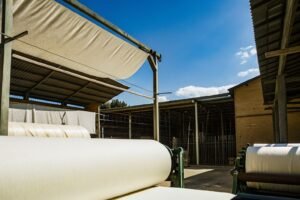
For a weaving mill, ask to see the rapier or air-jet looms running. These are large, noisy, complex machines. You can identify them by the projectile (a small, bullet-like device that shoots the weft yarn across the warp) in a rapier loom, or the burst of compressed air in an air-jet loom. Count them. How many are running? A small, real weaving mill might have 20-30 looms. A large one might have 100+. A trading company’s "factory" will have zero looms, or a few dusty, non-operational machines.
For a dyeing house, ask to see the "jigger" or "overflow" dyeing machines. These are large, cylindrical, stainless-steel vessels. The dyeing process is wet, steamy, and slightly messy. If the dyeing floor is dry, clean, and quiet, it’s not an active dyeing operation. Ask to see a dye formula sheet for a current batch—a clipboard with handwritten or printed notes about dye percentages, temperature ramps, and timing.
For a finishing plant, ask to see the "stenter frame" in operation. This is the long, oven-like machine that dries the fabric, sets the width, and applies finishing chemicals. It’s one of the most expensive and essential pieces of equipment in a textile plant. A real finishing plant has a stenter. A trading company doesn’t.
I once had a potential client tell me, "I asked the other supplier to show me the stenter, and they said it was ‘being cleaned’ and I couldn’t see it. Then they pressured me to pay the deposit by Friday to ‘hold the production slot.’ I told them no." That buyer is now a loyal Fumao client. For more technical identification, understanding the key machinery used in each stage of textile manufacturing—spinning, weaving, dyeing, and finishing—and how to identify them visually provides a visual reference, and reading about the typical machinery investment and factory layout of a legitimate textile mill versus a trading company’s office or warehouse operation helps you understand the scale and complexity you should be seeing.
How Can I Verify Supplier Certifications Are Legitimate and Current?
A PDF of a certificate is worth the pixels it’s printed on—until you independently verify it on the issuing organization’s website. Certificate fraud in the Chinese textile industry is a sophisticated business. Fraudsters use Photoshop to alter the company name on a real certificate, change the expiry date, or even fabricate a certificate entirely using high-quality scans of logos and signatures. A glossy PDF attached to an email is not proof of anything. You must verify the certificate at the source.
Here’s the non-negotiable verification process for the three most common textile certifications.
For OEKO-TEX Standard 100: Every valid OEKO-TEX certificate has a unique certificate number (e.g., "SH025 158162") and a test institute identifier (e.g., "Testex," "Hohenstein"). Go to the official OEKO-TEX website (oeko-tex.com) and use their "Label Check" tool. Enter the certificate number exactly as it appears on the supplier’s document. The tool will return one of three results: "Valid," "Invalid," or "Not Found." A "Valid" result will display the exact company name, the product description, and the expiry date. If the company name on the website doesn’t match the name on the supplier’s proforma invoice, the certificate is stolen or forged. If the expiry date has passed, the certification is lapsed. Do not accept a screenshot of the OEKO-TEX website from the supplier. Verify it yourself, live, on your own browser.
For GOTS (Global Organic Textile Standard): GOTS certificates are issued by approved certification bodies (e.g., Control Union, Ecocert, Soil Association). Each certificate has a unique license number and a specific scope (e.g., "Weaving, Dyeing, and Finishing of Organic Cotton Fabrics"). Go to the GOTS public database (global-standard.org) and search for the supplier’s company name. If they appear in the database, verify that the scope of their certification covers the specific processes they claim to perform. A company with a GOTS "Trading" scope is not a manufacturer. They are a trader who can buy and sell GOTS goods but cannot process them. If your supplier is claiming to be a weaver or a dyer, their GOTS scope must explicitly state "Weaving" or "Dyeing."
For BCI (Better Cotton Initiative): BCI does not certify individual mills with a "BCI Mill Certificate." Instead, BCI operates a mass-balance chain of custody system. A legitimate BCI supplier will have a "BCI Transaction Certificate" for a specific volume of BCI cotton, and they should be listed as a BCI member or supplier on the BCI platform. Ask for the BCI membership ID and verify it directly with BCI.
I had a European home textiles brand tell me in 2025 that they audited a potential new supplier and found their OEKO-TEX certificate was expired by 18 months. The supplier had sent a certificate with a photoshopped date. The brand discovered this only because they checked the Label Check tool, not just the PDF. They avoided a fraudulent transaction. For a complete verification guide, reading the OEKO-TEX official guide to using the Label Check tool to verify the validity and scope of a Standard 100 certificate is the primary source, and understanding the GOTS public database and how to interpret the scope, certification body, and validity of a GOTS certificate for a textile manufacturer is essential for organic claims.

How Can I Spot a Forged BCI or GOTS Transaction Certificate?
Forging a BCI or GOTS certificate is a bit more complex than forging a simple PDF, because these certificates are issued for specific volumes of product and are tracked through a chain of custody. However, forgers have adapted. Here are the tell-tale signs of a forged or misrepresented transaction certificate.
For BCI: A real BCI Transaction Certificate is issued by a BCI-approved certification body and includes a unique transaction number, the seller’s BCI membership ID, the buyer’s BCI membership ID, the volume of BCI cotton (in metric tons), and the product description. A forged certificate often has a transaction volume that is suspiciously large or round—like "100.00 metric tons"—and the product description is vague, like "cotton fabric." A real certificate has a precise volume (e.g., "12.75 metric tons") and a specific product description (e.g., "100% BCI combed compact cotton ring-spun yarn, Ne 40/1, for knitting"). The transaction number can be verified with the issuing certification body.
For GOTS: A GOTS Transaction Certificate (TC) is issued for a specific shipment of GOTS goods. It lists the seller, the buyer, the product, the volume, and the GOTS certification numbers of both parties. A forged GOTS TC often has mismatched certification numbers—the seller’s GOTS number doesn’t match the company name, or the buyer’s GOTS number belongs to a different company. You can cross-reference the seller’s GOTS number on the GOTS public database. If the number doesn’t return the same company name, it’s a forgery.
A more common trick than outright forgery is the "false scope" misrepresentation. A supplier has a genuine GOTS certificate, but the scope is limited to "Trading and Storage." They present this certificate to you and claim to be a GOTS-certified manufacturer. But their certificate does not authorize them to weave, dye, or finish GOTS fabric; they can only buy and resell it. If they are commissioning the production from an uncertified sub-contractor and selling it to you as "GOTS certified," that is a serious violation and your product will not be legally GOTS-compliant. Always check the specific scope wording on the GOTS certificate. For more forensic detail, reading about the BCI chain of custody model and how to verify the authenticity of a BCI Transaction Certificate through the BCI platform explains the mass-balance system, and understanding the GOTS certification scope categories—what "Weaving," "Dyeing," "Trading," and other scopes actually authorize a company to do prevents the "false scope" trap.
Is an "Alibaba Gold Supplier" Badge Enough Verification?
No. I’ll say it again for emphasis: an Alibaba Gold Supplier badge is not verification of a legitimate factory. It’s verification that a company has paid a fee to Alibaba and passed a basic, often superficial, third-party verification check. The Gold Supplier verification is a commercial product sold by Alibaba, not a rigorous due diligence process. I know this because Shanghai Fumao is an Alibaba Gold Supplier. The verification process involves a third-party inspector visiting the company’s registered address, checking the business license, and confirming that "production equipment exists." It does not verify that the equipment is the supplier’s own (it could be rented or belong to a different company), that the equipment is currently operational, that the certifications are current, or that the company has a clean legal and financial history.
Fraudulent suppliers purchase Gold Supplier status specifically to exploit the trust that international buyers place in the badge. They know that a Western buyer sees the gold badge, assumes "Alibaba has verified them," and lowers their guard. The badge is a marketing tool for Alibaba and for the supplier. It is not a guarantee of anything.
You must go beyond the badge. Use the Gold Supplier status as a starting point—it means the company exists and has a business license—but then perform the independent verifications I’ve outlined in this article. Use the live video call protocol. Use the OEKO-TEX and GOTS database checks. Use the "warp beam walk" and the "yarn inventory check." A legitimate Gold Supplier will pass all of these tests. A fraudulent one will fail. A buyer from a Canadian workwear brand told me they were scammed by a Gold Supplier in 2022. They lost a $7,000 deposit. When they investigated afterwards, they discovered the Gold Supplier’s "factory" was a rented conference room with a few fabric samples on a table, and the badge had been obtained using falsified documents. The badge meant nothing. For more on platform verifications, reading about what the Alibaba Gold Supplier verification actually entails, its limitations, and why it should not be your sole due diligence method provides the reality check, and seeing the range of other verification badges and assessment reports available on Alibaba, including "Verified" and "Assessed Supplier," and what they do and don’t cover helps you understand the full platform ecosystem.
Why Should I Conduct an Independent Factory Audit Before a Large Order?
For a small trial order of a few hundred meters, the digital verification methods—the live video call, the certificate checks, the sample analysis—are usually sufficient. You’re risking hundreds of dollars, not tens of thousands. But if you are about to place a large, business-critical order—5,000 meters, 20,000 meters, a full container—you need physical, on-the-ground verification. You need an independent factory audit conducted by a professional third-party inspection company that works for you, not for the supplier.
An independent audit serves three purposes that a video call cannot fully achieve. First, it verifies the physical reality and ownership of the factory. An auditor visits the address on the business license. They confirm that the factory exists, that it is operating, and that the machinery matches the supplier’s claims. They check land deeds, utility bills, and employee records to confirm that the factory is genuinely owned and operated by the supplier, not a subcontracted or rented facility.
Second, it verifies the social and ethical compliance of the factory. An auditor interviews workers privately, checks payroll records, verifies age documentation, inspects dormitory conditions, and checks fire safety equipment. This is not just about ethics; it’s about protecting your brand from the catastrophic reputational damage of being associated with a sweatshop or a forced labor facility. A video call cannot verify these things because the supplier controls what the camera sees.
Third, it verifies the quality management system. An auditor reviews the factory’s internal QC procedures, checks the calibration of testing equipment, inspects the storage conditions for raw materials and finished goods, and reviews records of past quality inspections and defect rates. This gives you a data-driven assessment of the likelihood that your order will be produced to specification.
There are several reputable international third-party inspection companies that specialize in textile factory audits in China. SGS, Intertek, Bureau Veritas, and QIMA are the largest and most recognized. They offer a range of audit types, from a basic "Factory Capability Assessment" to a full "Social Compliance Audit" aligned with SMETA or WRAP standards. A basic factory capability audit costs approximately $500-$800 USD and takes one auditor one day on-site. It’s one of the best investments you can make before a large deposit.
I tell my own clients: if you want to audit our factory, please do. We are audited by SGS and Intertek multiple times a year for various clients. We have the audit reports available. A supplier that resists an independent audit, that makes excuses, or that pressures you to skip this step is a supplier with something to hide. For more on this, reading about the different types of third-party factory audits available in China for textile and apparel buyers, and how to select and commission the right audit for your needs provides a comprehensive guide, and understanding what happens during a typical textile factory social compliance audit, including the worker interview process and the document review checklist prepares you for the depth of investigation that a real audit entails.

What Should a Third-Party Quality Inspection Check Before Shipment?
An independent factory audit verifies that the supplier is a legitimate, capable, and compliant operation. A pre-shipment quality inspection verifies that your specific order, the fabric you are paying for, is correct and defect-free before it leaves China. These are two different things, and for a large order, you need both.
A pre-shipment inspection (PSI) is conducted after the fabric is 100% produced and at least 80% packed. An inspector from a third-party company visits the factory, pulls a random statistical sample of the finished rolls based on the Acceptable Quality Level (AQL) you’ve specified (usually AQL 2.5 for textiles), and inspects each sampled roll against your specifications. The inspection covers:
- Quantity: Counting the rolls and verifying the total meterage.
- Visual Defects: Inspecting the fabric on a lighted inspection table for weaving defects, dyeing defects, stains, holes, and barre marks, using the industry-standard 4-Point System.
- Color Continuity: Checking the shade band from each roll to ensure color consistency from beginning to end of the lot, and against your approved lab dip standard.
- Hand Feel and Drape: A subjective but important assessment against your approved sample.
- Packaging and Labeling: Verifying that the rolls are properly wrapped, labeled, and packed for export.
- Measurement: Checking the fabric width, weight (GSM), and construction (threads per inch) against the spec sheet.
The inspector issues a detailed report with photographs of any defects found, a defect point summary, and a final "Pass," "Fail," or "Pending" result. This report gives you the power to accept or reject the shipment before you pay the final balance. Without a PSI, you’re paying for a container of fabric sight unseen, based purely on trust. With a PSI, you’re paying based on verified data. For deeper understanding, reading the standard operating procedure for a third-party textile pre-shipment inspection using the AQL sampling method and the 4-Point System provides the technical protocol, and seeing sample PSI reports for textile shipments, illustrating the type of defects found, the photographic evidence, and the final assessment criteria shows you what the deliverable looks like.
How Do I Check a Supplier’s Legal and Export History?
Before you enter into any financial transaction, you should perform a basic legal and reputational check on the supplier. This is not difficult to do, and it can reveal red flags that a clever fraudster has hidden from their marketing materials.
First, check the supplier’s business license. Every legitimate Chinese company has a business license (营业执照) with a unique Unified Social Credit Code (统一社会信用代码). Ask the supplier for a copy of their business license. The license will state the company’s full legal name, registered address, legal representative, registered capital, and business scope. Cross-reference this information. Is the company name on the license exactly the same as the name on the proforma invoice and the bank account? A different name is a massive red flag. Is the business scope broad enough to include "fabric manufacturing" or "textile production"? A company with a scope limited to "trading" or "consulting" is not a manufacturer.
Second, use the China National Enterprise Credit Information Publicity System . This is a free, official government website (gsxt.gov.cn) where you can search for any registered Chinese company by its name or credit code. The system shows the company’s registration status, any administrative penalties, any ongoing lawsuits, and any "abnormal operation" listings. A company with a history of lawsuits from foreign buyers, or a company that has been listed as "abnormal" for failing to file annual reports, is a high-risk counterparty. The website is in Chinese, so you may need a Chinese-speaking colleague or a service provider to help you navigate it.
Third, check the supplier’s export history and reputation through industry channels. Search the supplier’s name on industry forums, LinkedIn, and trade publications. Have they exhibited at reputable trade shows like Intertextile Shanghai or Première Vision? A company that has exhibited at a major trade show has passed the show organizer’s vetting process and has a public, physical presence that is harder to fake. Ask for references—specific, named clients in your country or region that you can contact directly. A legitimate supplier will have reference clients. A fraudulent supplier will make excuses.
I always provide my business license to new clients before they ask. It’s on our website. I encourage them to check it on the government system. A buyer from a German outdoor brand did this in 2025. He searched our credit code, confirmed our registration, and saw our clean legal record. He told me later it was a "critical trust-building step." For more on this, reading a practical guide to performing a Chinese company background check, including using the National Enterprise Credit Information Publicity System and interpreting business license information is an essential step-by-step guide, and understanding how to use trade show exhibitor lists and industry association directories to verify a supplier’s market presence and credibility adds another layer of public verification.
What Are the Safest Payment Methods for a First Fabric Order?
You’ve verified the factory. You’ve checked the certifications. You’ve even conducted an audit. Now comes the moment of financial truth: sending money to a foreign entity. The payment method you choose is your final and most important layer of protection. Sending a direct bank transfer (T/T) to a supplier you’ve never worked with, no matter how well-verified they seem, is like handing cash to a stranger on a promise. You need payment terms that give you recourse if the goods don’t arrive, don’t match the specification, or don’t exist.
Here are the payment methods, ranked from safest (for the buyer) to riskiest.
1. Alibaba Trade Assurance (for orders placed through Alibaba). Trade Assurance is a free service provided by Alibaba that protects the buyer if the supplier fails to ship on time or if the product quality differs significantly from the agreed specifications. The payment is held in escrow by Alibaba and only released to the supplier after you confirm satisfactory receipt of the goods. If there is a dispute, Alibaba provides mediation. For first-time buyers using Alibaba, Trade Assurance is the strongest protection available. However, it only covers orders placed and paid through the Alibaba platform.
2. Letter of Credit (L/C). A Letter of Credit is a bank-to-bank guarantee. Your bank issues a letter of credit in favor of the supplier, promising to pay a specified amount once the supplier presents specific, compliant shipping documents (bill of lading, commercial invoice, packing list, inspection certificate). The supplier is paid by the bank, not by you, and only when they prove the goods were shipped as specified. An L/C provides strong protection but involves bank fees and complex documentation. It’s suitable for larger orders (typically $20,000+).
3. Documentary Collection (D/P). Documents against Payment. The supplier’s bank sends the shipping documents to your bank. Your bank releases the documents to you (allowing you to claim the goods) only upon your payment. This is less expensive than an L/C but offers less protection because the goods have already been shipped, and you are paying against documents, not a physical inspection.
4. PayPal or Credit Card (for small sample orders). PayPal and credit cards offer buyer protection and chargeback mechanisms. However, they are rarely practical for large bulk orders due to high transaction fees and limits.
5. Direct Bank Transfer (T/T) with 30/70 Terms. This is the standard in the industry for established relationships but is risky for a first order. A 30% deposit upfront, 70% against the copy of shipping documents (or before shipment) is the typical T/T structure. The deposit is at risk if the supplier is fraudulent. Only use T/T for a first order if you have conducted thorough due diligence and are working with a well-verified, long-established supplier.
I always recommend Trade Assurance for first orders through Alibaba, and an L/C for large, direct orders. A buyer who insists on sending a direct T/T to an unverified supplier is taking an unnecessary risk. A supplier who refuses Trade Assurance or a Letter of Credit and pressures you for a direct T/T is waving a red flag. For a complete financial guide, reading about the safest international payment methods for importing goods from China, with a detailed comparison of Trade Assurance, Letters of Credit, and T/T terms provides the banking perspective, and understanding how Alibaba Trade Assurance works in practice, the dispute resolution process, and its limitations for fabric and textile orders ensures you know exactly what’s covered and what’s not.

Is PayPal a Viable Option for International Textile Deposits?
For sample orders and very small trial runs (up to a few hundred dollars), yes, PayPal is a viable and relatively safe option. It provides buyer protection, and the transaction is simple and fast. However, for the bulk orders that define the textile trade—$5,000, $15,000, $50,000—PayPal is not viable for several reasons.
First, the transaction fees are prohibitive. PayPal charges a cross-border commercial transaction fee of approximately 4.4% plus a fixed fee. On a $10,000 deposit, that’s a $440+ fee. A bank transfer might cost $25-50. The cost difference is massive. Second, PayPal’s buyer protection for "Significantly Not as Described" (SNAD) claims is designed for consumer goods, not industrial materials. Disputing a fabric quality issue through PayPal is a grey area, and PayPal’s resolution process is not specialized in textile trade standards like the 4-Point Inspection System or AATCC colorfastness tests. It’s a blunt instrument. Third, many legitimate Chinese textile manufacturers do not accept PayPal for bulk orders because the fees are too high and the chargeback risk (from unscrupulous buyers) is too great. It’s simply not a standard B2B payment method in the industry.
Use PayPal for samples. Use Trade Assurance or a Letter of Credit for bulk orders. Don’t try to crowbar a consumer payment tool into a commercial transaction. For more on this, reading about the PayPal business account fees for international commercial transactions and the limitations of PayPal’s seller and buyer protection for B2B goods clarifies the cost structure, and understanding the specific limitations of using consumer payment platforms for cross-border industrial purchasing, and why dedicated trade finance instruments are preferred validates the "samples only" recommendation.
How Do I Structure a Secure Payment Schedule for Bulk Orders?
The payment schedule is a negotiation, and the structure you agree on determines your financial exposure at each stage of the production process. A secure, balanced payment schedule protects both the buyer (from losing their deposit) and the supplier (from producing goods that the buyer then refuses to pay for).
The industry standard for a first order, and the schedule I recommend to new clients, is a 30/70 T/T structure with a pre-shipment inspection gate. This means:
- 30% Deposit: Paid upon order confirmation, against the proforma invoice. This deposit covers the raw material cost and reserves the production slot. It’s at risk if the supplier is fraudulent, which is why all the verification steps in this article must be completed before this payment.
- 70% Balance: Paid after the fabric is produced, inspected, and ready to ship. Specifically, the 70% balance is triggered by the issuance of a pre-shipment inspection report from a third-party inspector that you have commissioned and that has returned a "Pass" result. The supplier then sends you the copy of the bill of lading, proving the goods are on the vessel. You then release the final payment.
This structure gives the supplier the working capital they need (the 30% deposit) and gives the buyer the assurance that the goods exist, meet the specification, and are on the ship before the majority of the money is transferred.
A more buyer-protective structure for large, high-risk orders is an L/C at sight with a 10% advance T/T. The buyer pays a 10% deposit upfront to cover the supplier’s initial costs. The remaining 90% is covered by an irrevocable Letter of Credit. The bank pays the supplier upon presentation of compliant shipping documents, including a third-party inspection certificate. This minimizes the buyer’s cash exposure before shipment.
I’ve used both structures with new clients. A UK-based brand placed their first order with us in 2024 using a 30/70 T/T with an SGS inspection gate. They paid the 30% deposit, SGS inspected the goods and issued a Pass report, we sent the bill of lading, and they paid the 70% balance. The transaction was smooth, and both parties were protected. For more on structuring payments, reading about the common payment term structures used in international textile and apparel trade, including T/T, L/C, and documentary collection, and the risk allocation of each provides a comprehensive industry overview, and understanding how to use third-party inspection reports as a payment trigger in a supply agreement, creating a "payment against inspection" gate adds that crucial layer of buyer protection.
Conclusion
Verifying a Chinese fabric supplier before you pay a deposit is not about paranoia; it’s about professional survival. The difference between a successful, long-term sourcing partnership and a devastating financial loss is a few hours of rigorous, methodical verification before you wire the money. You now have a complete verification toolkit. You can conduct a live video call that demands a "proof of life" signal, a warp beam walk, and a yarn inventory check. You can independently verify every certification on the issuing organization’s official database, checking for forged dates, mismatched company names, and false scopes. You can commission an independent factory audit from SGS or Intertek for a few hundred dollars, buying you an on-the-ground, professional assessment of the factory’s reality, compliance, and capability. And you can structure your payment using Trade Assurance or a Letter of Credit, ensuring your money is protected until the goods are verified and shipped.
Apply these methods to every new supplier, without exception. Apply them to us. We will pass every test. A supplier that encourages your due diligence, that provides business licenses, that welcomes independent audits, and that accepts secure payment terms is a supplier that has built a real business on quality and trust. A supplier that makes excuses, applies time pressure, and demands unprotected payment is a supplier that is betting on your inexperience.
If you’re evaluating potential fabric partners and want to test these verification methods on a company that will pass them, you can start with Shanghai Fumao. Request our business license, our live OEKO-TEX certificate number, and schedule a video call walkthrough of our Keqiao factory. Our Business Director, Elaine, handles all new client verifications and can provide our complete compliance documentation package. Reach her at elaine@fumaoclothing.com. Verify everything. Trust only what survives the test.