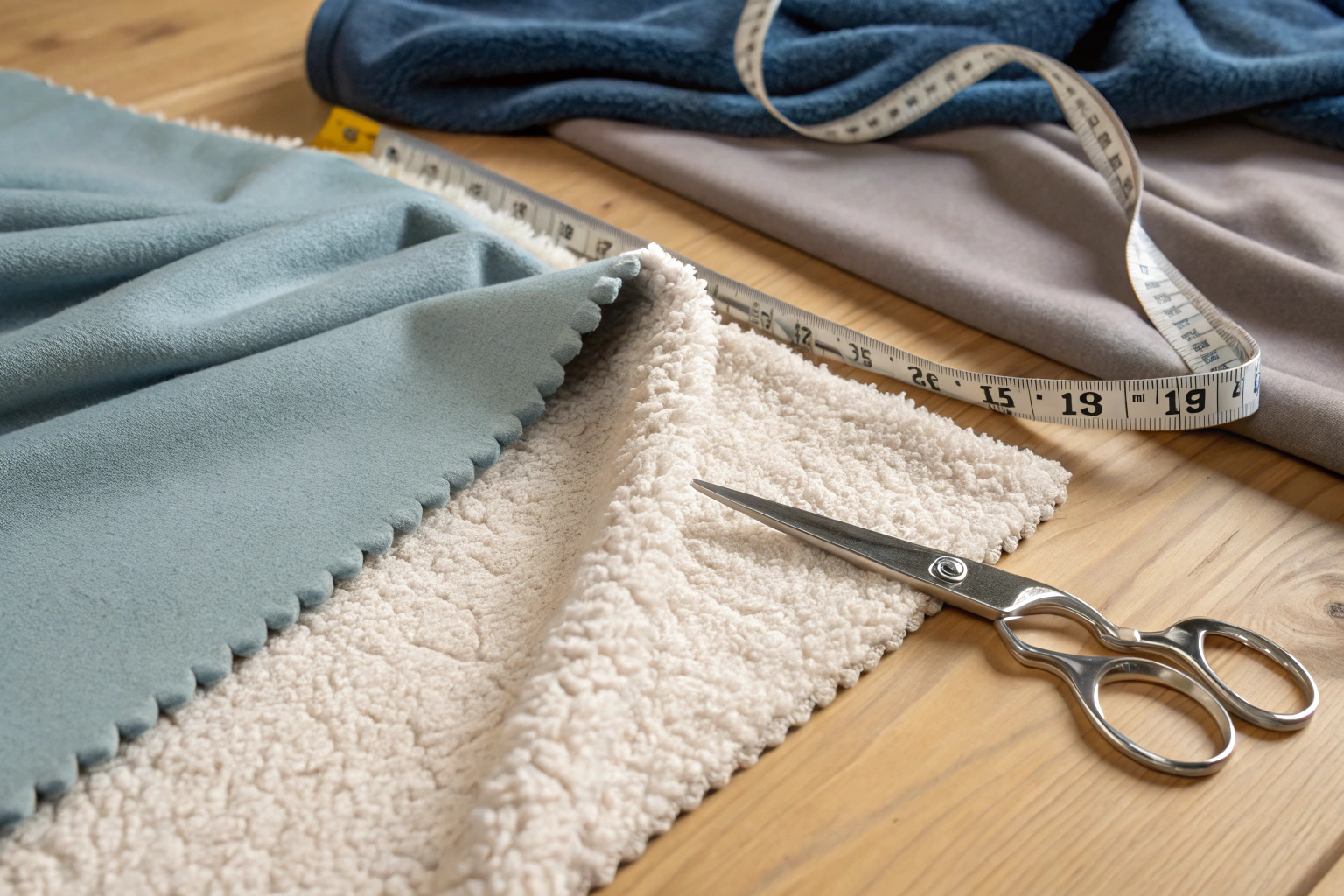
I get this question almost every week from startup athleisure brands. They spend hours scrolling through supplier catalogs, touching samples, but still mix up the loop side. And when you mix them up, you order the wrong face for the wrong season. That’s a $15,000 mistake sitting on a shipping container from Shanghai to LA.
A French Terry features visible, unbrushed loops on the back. A fleece back loop uses the same loop structure but then goes through a brushing process that breaks the fibers and creates a fuzzy nap. The result? French Terry feels cool and structured. Fleece back feels warm and fuzzy. Both start from the same knitting machine, but the finishing line determines the fabric personality.
But there’s more to it than just “brushed or not.” If you are sourcing private-label joggers for winter retail or lightweight hoodies for a summer drop, you need to understand how yarn count, loop density, and shrinkage react differently in these two fabrics. I’ve been running knitting lines in Keqiao for over 20 years at Shanghai Fumao, and I’ll walk you through the technical differences, real production cases, and how to avoid the "pilling nightmare" that ruins brand reviews.
How Do You Visually Identify French Terry vs. Fleece Back Loop Fast?
When a fabric buyer walks into our showroom in Keqiao, I don’t hand them a spec sheet first. I flip the fabric over. That’s the quickest test.
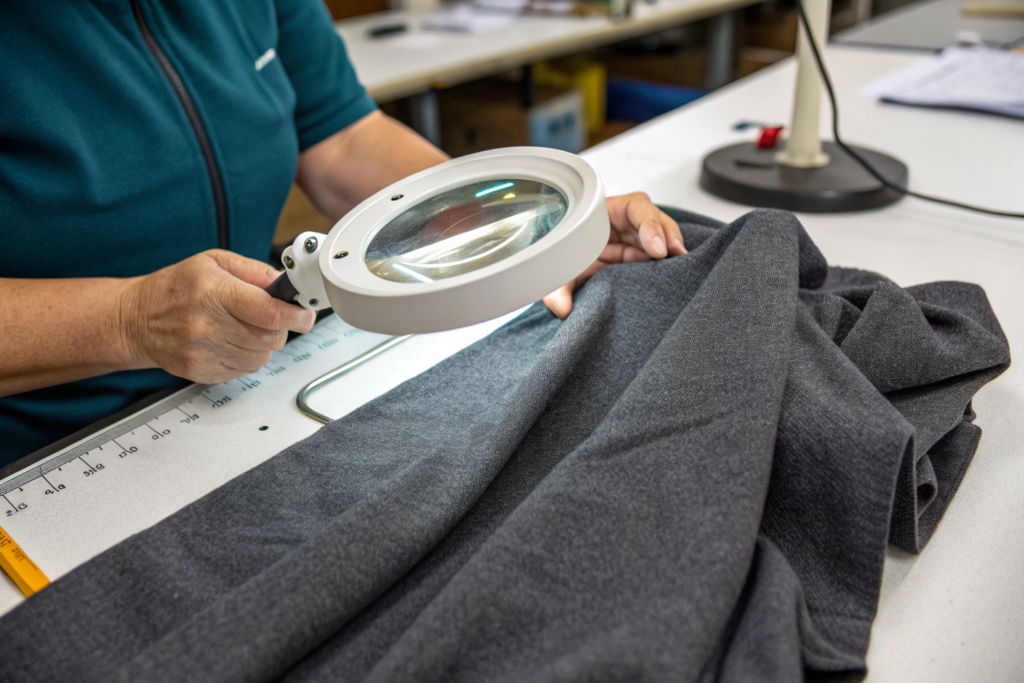
Can You Tell the Difference Just by Looking at the Back Side?
The back of a French Terry looks like a neat grid of tiny towers. These are the ground yarn loops. They stand distinct and clean. You see clear spacing between them. The technical term is "loop clarity." The fleece back loop starts identical to that on the knitting machine. But after napping, those loops disappear. They turn into a mat of tangled, raised fibers. I call it the "cotton candy effect." When I train new QC staff at Shanghai Fumao, I have them run a fingernail across the back. If the loops spring back separately, it’s French Terry. If they feel like a flannel shirt, it’s fleece.
This visual check matters because some mills try to pass off a low-quality fleece back for French Terry by just brushing it lightly. But a true French Terry needs no brushing at all. It relies on the knitting precision to get softness. In 2022, a Canadian streetwear brand visited our factory to solve a "stiff back" issue on their French Terry. We found their previous Turkish supplier used open-end yarns instead of ring-spun. The loops collapsed after dyeing. We switched them to a compact ring-spun 20s cotton, and the loop structure popped right back. Their customer returns dropped by 12% the next season.
What Does the Face Side Reveal About Your Fabric Quality?
The face side tells you the yarn quality and stitch density. For both fabrics, a high-quality face is a smooth single jersey knit. It has a clear wale line—that’s the vertical rib you see on the outside. But here’s a trick: on cheap fleece, the brushing machine can push fibers through the face side. You’ll see a slight fuzziness on the face. That’s a defect we call "fiber migration." If you hold a black fleece hoodie up to the light and see a cloudy haze on the face, the brushing force was too aggressive. I learned this the hard way in 2018 when we ran a batch too fast through a high-speed napper. The face looked dusty. We sold that batch as a discount "vintage wash" lot, but I never made that speed mistake again. Now, when you check your sample, look for a clean, crisp face with zero fuzz for both French Terry and high-quality fleece.
How Does the Production Process Change the Feel and Durability?
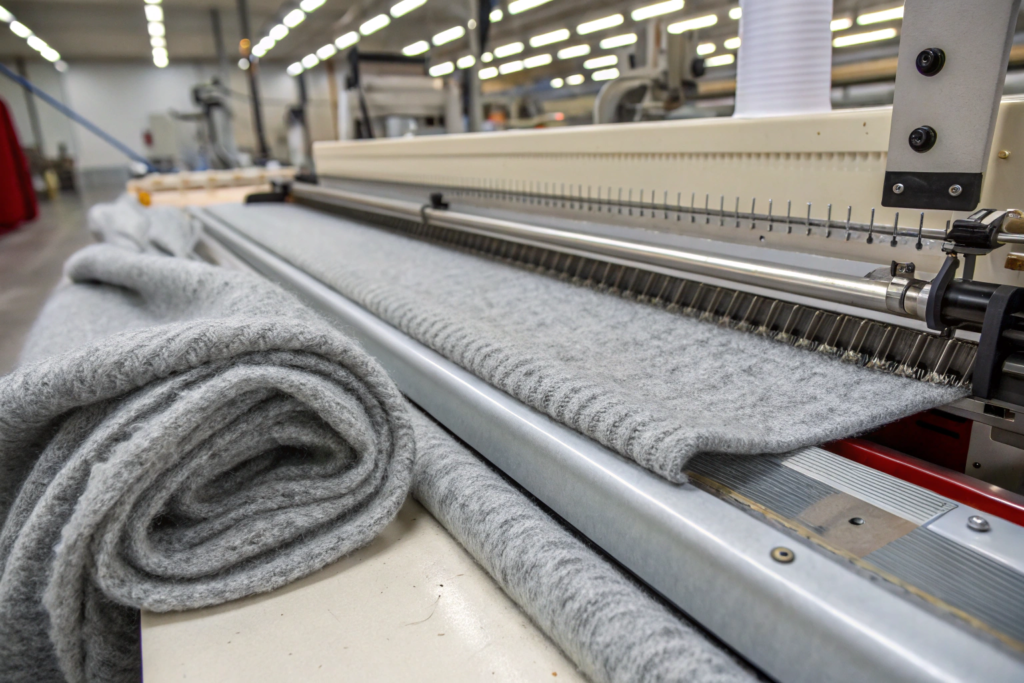
The knitting machine spits out the same grey loop fabric. But the moment a fleece body enters the napping line, its physical structure changes forever.
Why Does Fleece Back Loop Shrink More Than French Terry?
We have to plan for this during cutting. Brushing tears the yarn fibers apart to create softness. That physical tearing weakens the yarn strength slightly and releases tension. When the fabric hits water in the first home laundry, it retracts more. In our CNAS-certified lab, we run a standard AATCC 135 shrinkage test. A typical 320gsm French Terry tests at 3-4% shrinkage lengthwise. A heavily brushed fleece at the same weight will hit 5-6% unless we pre-shrink it properly with a compactor.
(Here I gotta step in—our compacting machine runs 24/7 during peak months. It squeezes the fabric mechanically so you don’t lose inches later.)
In August 2024, a UK premium loungewear brand needed 280gsm fleece to match a specific shrinkage tolerance of under 3%. Most mills said no. We adjusted the overfeed ratio to 12% during compacting and dropped the fabric tension to near zero. Final shrinkage came in at 2.8%. Here is the comparison of our internal specs for both fabrics at similar weights:
| Fabric Type | Yarn Count | Weight (gsm) | Brushing Passes | Length Shrinkage |
|---|---|---|---|---|
| French Terry | 20s/70D Spandex | 320 | 0 | 3.5% |
| Fleece Back Loop | 20s/70D Spandex | 320 | 2 (Face/Back) | 5.5% |
Does Brushing Really Ruin the Fabric Strength?
It reduces it, but a good mill controls the loss. The "napping process" uses metallic wire rollers that scrape the surface. If your fabric has cheap recycled polyester ground yarns with short fiber staple lengths, the brushing pulls them right out. That’s how you get pilling. To avoid this, we use only virgin polyester or long-staple combed cotton for the loop yarn. We also limit the napper speed to 12-15 meters per minute.
I remember in 2021, a US fitness brand complained their fleece joggers pilled after two washes. I cut open the sample and put the back under a microscope. The fiber ends were unevenly sheared. The reason was their previous factory made three aggressive passes on a single-roll napper to hit "softness" fast. We changed the process to two gentle passes on a tandem double-roll napper. The bursting strength improved from 180 kPa to 220 kPa. Here is a detailed guide on fabric napping techniques to see how the roller speed affects the nap. You also need to check your elastane recovery after heat setting, because spandex loses power if you overheat it during finishing.
What Are the Best Clothing Applications for Each Fabric Type?
You wouldn’t wear a wool trench coat to the gym. Same logic applies here. I always tell my brand owners: French Terry cools you down. Fleece back warms you up.

Why Do High-End Streetwear Brands Prefer French Terry for Summer Drops?
French Terry is a niche fabric. It has a crisp hand feel. It doesn’t stick to your skin in humidity because the loops create an air gap. Also, the unbrushed back takes screen printing beautifully. The ink sits flat on the loops without getting absorbed into a fuzz pile. That’s why luxury streetwear brands that focus on heavy graphic hoodies stick to 400gsm+ French Terry.
At Shanghai Fumao, we developed a special "dry touch" French Terry for a Korean streetwear label in 2023. They needed a 380gsm fabric that felt like vintage single-stitch but had zero shrinkage. We used a 16s open-end cotton on the face and a 10s slub yarn for the loop. The slub yarn gave the back an irregular, organic texture. The brand sold out their "Heritage Summer Drop" in three days. If you want to know how to source GOTS certified organic cotton for streetwear French Terry, you must verify the organic certificate before cutting because conventional cotton can contaminate the look of the loop.
When Should You Switch Your Winter Line to Heavyweight Fleece Back?
Switch when your customer demands the "hug feeling." A 350gsm+ fleece back loop traps body heat like double-glazed windows. The fuzzy surface area is massive, so it holds still air. That’s insulation.
For winter joggers, I recommend a fleece back with at least 30% combed cotton in the loop yarn. In November 2023, a Russian distributor came to our warehouse needing an anti-pilling fleece for a brutal Moscow winter collection. Regular fleece would mat down under a heavy parka. We used an "anti-pilling polyester" fiber with a triangular cross-section for the back loops. The triangular shape resists entanglement. We also applied a low-friction hydrophobic finish on sportswear fleece to repel snow melt. The distributor reordered three times that season. But always remember, a heavyweight fleece back loop adds bulk. If you want a slim-fit hoodie for the ladies’ market, stick to 280gsm and brush only the inner face lightly.
How Do You Ensure Consistent Quality When Sourcing from Asian Mills?
I’ve walked through hundreds of dyeing plants across Zhejiang. The smell of cheap acetic acid tells me everything before I see the dyeing chart. Quality control is where many anonymous Alibaba suppliers fail.
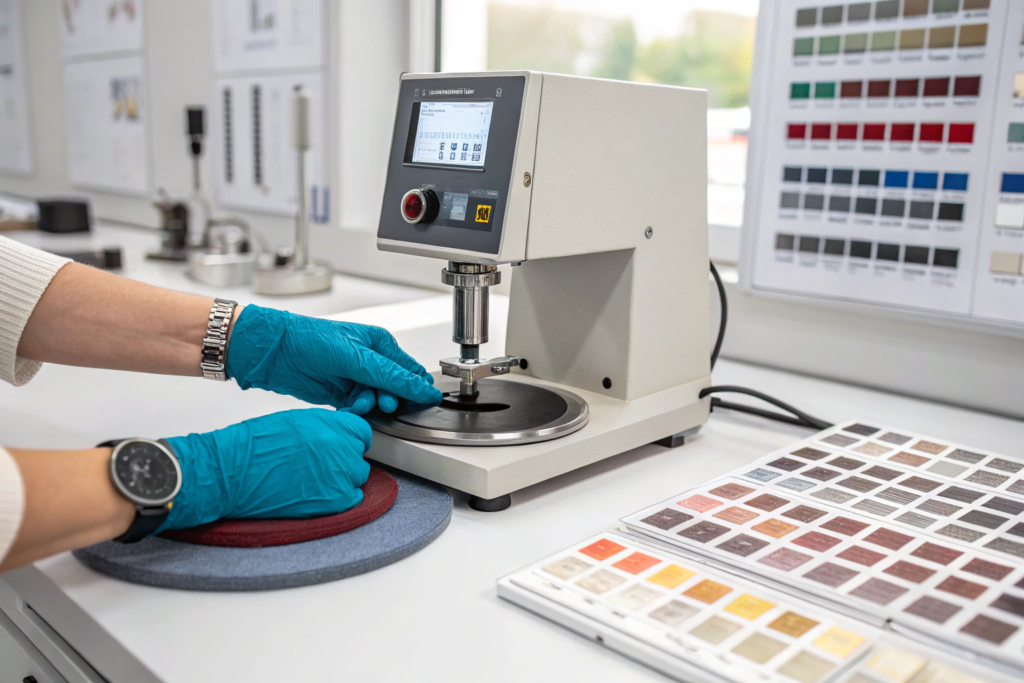
What Testing Standards Should a Fabric Mill Guarantee for Loop Fabrics?
You need more than a generic "OEKO-TEX" label. Demand the specific test for pilling resistance, like ASTM D4970 or ISO 12945-2. For French Terry, loop pull-out force is critical. If the ground yarn is loose, a thumb will push through the loop when a customer stretches. We test this with a tensile tester set to hook a single loop and pull until rupture. Our pass rate for French Terry loop pull is a minimum of 3.5 kg force.
For fleece, the nightmare is shedding. You wash a black fleece jacket once, and your white sink turns grey. To check this, we run the "Martindale abrasion test" for 2,000 cycles and weigh the lost fibers. We guarantee less than 0.5% weight loss.
In 2024, a German luxury home-textile brand needed a "zero-shed" fleece for pet beds. The specification seemed impossible because all brushed cotton sheds slightly. Our R&D team at Shanghai Fumao tried a bio-polishing enzyme wash after brushing. The cellulase enzyme ate the tiny loose fiber ends without harming the nap body. The fiber loss rate dropped to 0.08%. The client flew from Hamburg just to shake our sample over a black velvet board, and no white dust fell. That’s the level of CNAS accredited fabric testing lab procedures you should ask your supplier about. Here is a standard operating procedure for Martindale pilling tests to check if your supplier follows the right steps.
How Do You Avoid Color Consistency Issues Between the Face and the Loop?
This is the "two-face" problem. Cotton and polyester take dyes differently. In a cotton-poly blend loop knit, the cotton loves reactive dyes. The polyester only takes disperse dyes. If the loop back looks white or pale compared to the face, the mill didn’t use enough disperse dye on the polyester loop yarn.
To fix this, we do a "two-bath dyeing" for heather blends. It takes longer and costs more in steam, but the results match. We also inspect the fabric roll under a D65 light source in our dark room. We cut the fabric from selvage to selvage, fold it inside out, and check the back shade against the face shade. It must pass the grey scale rating of colorfastness to light at level 4 or higher.
In January 2023, a Southern California surf brand ran an entire cut of French Terry boardshorts and the inside loops were staining the white rash guards. We traced the problem to the reduction clearing step. The previous mill skipped a proper caustic wash to remove unfixed surface dye. We reprocessed the undamaged rolls with a hydrosulfite reduction clear, and the crocking test jumped from grade 2 to grade 4. That saved their spring break launch.
Conclusion
French Terry and fleece back loop share a mother machine but live different lives. One stays true to its knitted structure, cool and crisp. The other sacrifices that structure to become a soft, fuzzy insulator through napping. Your choice boils down to the end use: summer layers need French Terry’s breathability and print surface. Winter comfort needs fleece back’s warmth. But technical quality—shrinkage, pilling, and color fastness—depends entirely on how the mill controls the finishing line speed, brushing aggression, and dyeing chemistry. A factory with a name on the door will show you these specs. A trading office with just a phone will promise you "very good quality" without any data.
That’s why at Shanghai Fumao, we never ship a loop fabric without a lab report stamped with the batch number. Textile production is a mix of science and old-school feel. I can’t touch a sample through a screen, but I can send you the numbers that tell the truth about how it will behave.
If you are planning your next collection and need a partner who can break down fleece specs or French Terry constructions without the guessing game, just reach out. We work with brands launching their first drop and factories producing fifty thousand units a month. Don’t lose sleep over shrinkage or pilling complaints. Contact our Business Director Elaine directly. She knows the current stock lists and lead times by heart. Email her at elaine@fumaoclothing.com with your weight and composition target. I’ll make sure you get the right loop, brushed or unbrushed, before the winter cargo rush starts.