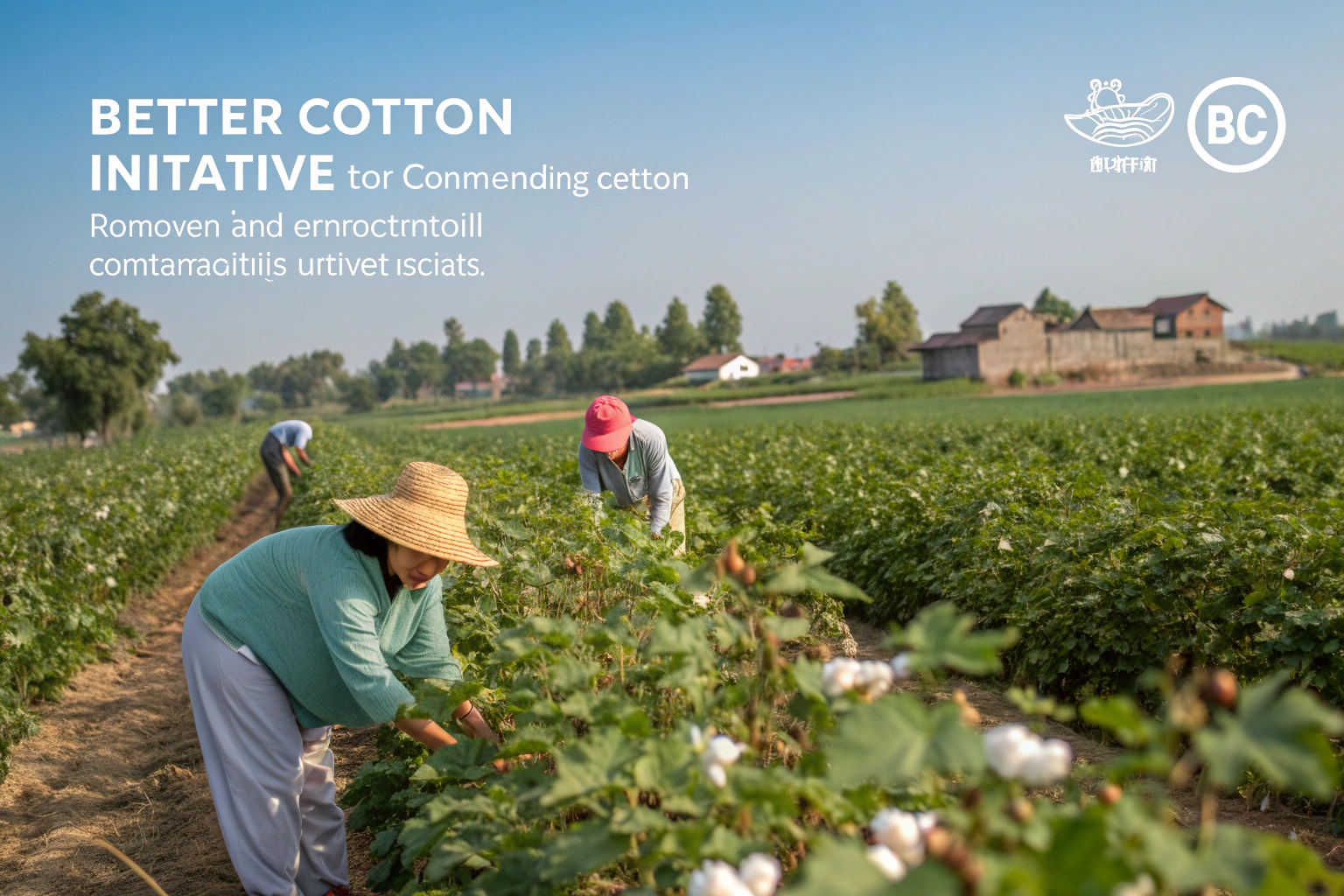
You’re sourcing cotton for your garment line and you keep seeing “BCI” pop up—on supplier profiles, in fabric descriptions, even in competitors’ marketing. But what does it actually mean for your production? Is it just another logo, or does it offer real, tangible benefits for your manufacturing process and brand value? In a market flooded with claims, understanding BCI is key to making informed, strategic sourcing decisions.
BCI stands for the Better Cotton Initiative. It’s not an organic standard. Think of it differently: while organic certification (like OCS or GOTS) focuses on changing the farming system itself (no synthetic pesticides, GMOs), BCI focuses on improving the way conventional cotton is grown. Its goal is to make global cotton production better for the people who produce it, better for the environment it grows in, and better for the sector’s future. For garment manufacturers and brands, it represents a pragmatic, scalable step towards more responsible sourcing without the full cost and supply constraints of organic.
So, why should you care as someone who turns fabric into clothes? Because BCI certification impacts your supply chain’s stability, risk profile, and marketability. It’s about sourcing cotton with a better backstory—one that addresses water use, chemical handling, and decent work—which is increasingly what your buyers and end consumers are asking for. Let’s dive into what BCI means on the ground, from the field to your factory floor.
How Does BCI Actually Work? The "Mass Balance" System Explained
This is the most critical—and most misunderstood—part of BCI. BCI does not guarantee that the cotton in your specific shirt is physically traceable back to a BCI farm. Instead, it operates on a Mass Balance chain of custody model. Here’s a simple analogy:
Imagine two big silos: one filled with red beans (BCI cotton), one with white beans (conventional cotton). Farmers pour their BCI beans into the red silo. At the other end, a brand wants to buy the equivalent of 1,000 bags of red beans to make “BCI Bean Soup.” The mill doesn’t ship them physical red beans from the red silo. Instead, they take 1,000 bags of beans from the mixed supply (which contains both red and white), but they credit this withdrawal to the BCI red bean silo. The brand gets to claim they “supported” the production of 1,000 bags of BCI beans.
In practical terms for garment manufacturing:
- A farmer grows cotton according to BCI’s Principles and Criteria (covering water stewardship, soil health, crop protection, biodiversity, fiber quality, and decent work).
- This “Better Cotton” is ginned, baled, and enters the global cotton supply chain, where it gets mixed with conventional cotton.
- A spinner, mill, or brand purchases BCI Credits equivalent to the volume of cotton they want to claim as “BCI.”
- They can then apply the BCI label to products made from the conventional cotton they sourced, because their credit purchase supports and incentivizes more BCI farming.
Why this matters for you: You are not buying a physically segregated, traceable fiber. You are investing in a system of continuous improvement for conventional cotton. The benefit is scale and accessibility; the trade-off is direct traceability.

What Are the On-Farm Standards Behind the Logo?
For a cotton farmer to be licensed to sell BCI cotton, they must be trained and assessed against seven core principles:
- Crop Protection: Minimizing harmful pesticide use, promoting integrated pest management.
- Water Stewardship: Using water efficiently and protecting water sources.
- Soil Health: Maintaining and improving soil quality.
- Biodiversity: Preserving and enhancing natural ecosystems.
- Fiber Quality: Maintaining the quality of the cotton fiber.
- Decent Work: Ensuring fair terms for workers, including no child or forced labor.
- Management System: Effective farm planning and record-keeping.
This holistic approach is what gives the BCI claim its substance. It’s about reducing the negative impact of conventional cotton farming, step by step.
Why Would a Garment Manufacturer Choose BCI Cotton?
For manufacturers and brands, BCI offers a strategic middle path. It’s a way to address sustainability pressures without the full cost and complexity of going organic. Here are the core value propositions:
1. Risk Mitigation and Supply Chain Resilience: BCI’s focus on decent work and responsible pesticide management helps mitigate social and environmental risks in your raw material supply chain. This is increasingly important for brands facing due diligence laws (like the German Supply Chain Act) and retailer demands for ethical sourcing. Sourcing BCI cotton is a demonstrable step towards responsible procurement.
2. Meeting Retailer and Consumer Demand at Scale: Major global retailers—including H&M, IKEA, Levi’s, and Gap—have committed to sourcing more sustainable cotton, with BCI being a major pillar of their strategy. If you want to be a supplier to these companies, having BCI-certified materials in your pipeline is often a requirement or a strong advantage. For the end consumer, the BCI logo is a recognized symbol of a “better choice,” even if they don’t understand the mass balance details.
3. Cost and Availability Advantages vs. Organic: BCI cotton is typically only marginally more expensive than conventional cotton (often a 1-5% premium), and it’s vastly more available. Organic cotton makes up about 1% of global production; BCI accounts for over 20%. This means you can source large volumes consistently, without the price volatility and lead time challenges sometimes associated with organic.
4. A Stepping Stone to Deeper Sustainability: For brands beginning their sustainability journey, BCI is an accessible entry point. It builds internal experience with certified materials and supply chain reporting before potentially moving to more rigorous (and expensive) traceable systems like organic or recycled.

A Real Manufacturing Perspective
At Shanghai Fumao, we offer both BCI and OCS organic cotton fabrics. We see clear use cases for each. A large-scale sportswear manufacturer producing millions of units annually might choose BCI for their core volume lines because it’s scalable and cost-effective. They might reserve OCS organic cotton for a premium, story-driven sub-line. This hybrid approach allows them to make a significant overall impact while managing costs.
The BCI Claim: What Can You Actually Say on Your Label?
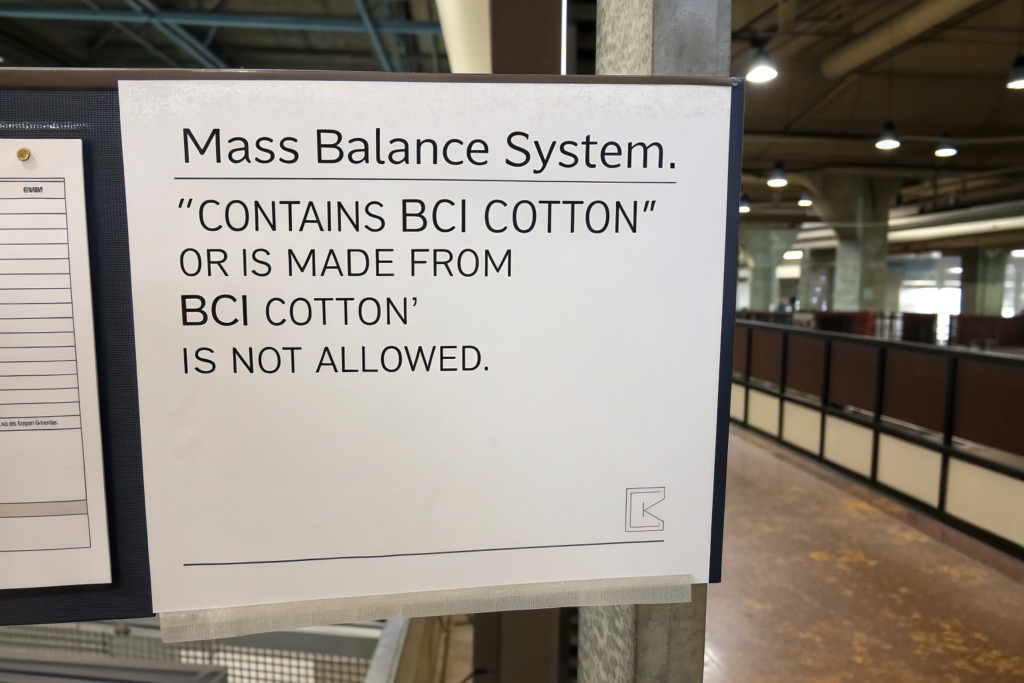
This is governed by strict rules. Because of the Mass Balance system, you cannot claim the final product “contains BCI cotton” or is “made from BCI cotton.” The correct claim is about supporting the system.
Approved Claim Examples:
- “We source cotton through the Better Cotton Initiative.”
- “This product contains cotton sourced as Better Cotton.”
- Use of the BCI logo on hangtags or packaging (requires licensing).
What You Cannot Say:
- “Made with 100% BCI Cotton.”
- “This garment is BCI certified.” (The product itself is not certified; the claim is about sourcing.)
The language is intentionally focused on the brand’s sourcing choice, not a physical property of the product. This is the fundamental difference from a content claim standard like OCS.
How is the Claim Verified? The Licensing Process.
To use the BCI name or logo, your company must become a BCI Member and then a Claimant. This involves:
- Membership: Joining BCI and paying an annual fee based on turnover.
- Claimant Status: Reporting your annual volume of BCI cotton sourced (via credits) through BCI’s online platform.
- Licensing Agreement: Signing an agreement for logo use.
- Possible Audit: BCI or its partners may conduct checks to ensure claim compliance.
The system relies on self-reporting and periodic audits, rather than the batch-by-batch document tracing of OCS.
BCI vs. Organic Certification (OCS/GOTS): A Side-by-Side Comparison
To make the right choice, you need to see them in contrast. Here’s a clear breakdown:
| Aspect | BCI (Better Cotton Initiative) | OCS (Organic Content Standard) |
|---|---|---|
| Core Focus | Improving conventional cotton farming practices. | Verifying the organic content of a product. |
| Chain of Custody | Mass Balance. Credits support production; physical mixing occurs. | Identity Preservation or Content Claim. Tracks or verifies the physical organic material. |
| Physical Traceability | No. You cannot trace the fiber to a specific BCI farm. | Yes (for Identity Preservation) or to the batch level (for Content Claim). |
| On-Farm Requirements | Principles & Criteria for sustainable farming (can use some synthetic inputs). | Must meet organic farming standards (no synthetic pesticides/GMOs). |
| Cost Premium | Low (1-5% over conventional). | High (20-40% over conventional). |
| Supply Scale | Very large (~20% of global cotton). | Small (~1% of global cotton). |
| End Product Claim | “Sourced as Better Cotton.” Supports the system. | “Contains X% organic cotton.” Describes the product. |
| Best For… | Brands seeking wide-scale impact, cost-effective risk mitigation, and retailer compliance. | Brands needing verifiable, traceable organic content for marketing, regulatory, or ethical reasons. |
The Takeaway: BCI is about improving the mainstream. OCS/GOTS is about creating and verifying an alternative. They are complementary tools in a responsible sourcing toolkit.

Practical Steps for Integrating BCI into Your Garment Production
If BCI aligns with your strategy, here’s how to implement it:
- Source from Certified Suppliers: Work with spinners, mills, or fabric suppliers who are BCI members and can supply you with a Transaction Certificate (BCI TC) or proof of credit purchase for the cotton volume in your order. At Fumao, we can provide this for our BCI fabric ranges.
- Calculate Your Volume: Work with your supplier to determine the volume of cotton (in kilograms or tonnes) in your finished products.
- Join BCI as a Member/Claimant: Engage with BCI directly to report your volumes and obtain the license to use the logo.
- Train Your Team: Ensure your sales, marketing, and QC teams understand the correct claims and the difference between BCI and organic.
- Communicate Transparently: Use the approved claim language. Educate your customers on what “sourcing through BCI” means—focus on the positive impact on farming communities and the environment.
A Note on “BCI Blended” Fabrics
BCI credits apply to the cotton portion of a fabric. If you have a 60% cotton, 40% polyester blend, you can only claim BCI for the 60% cotton portion. Your claim should reflect this: “Made with cotton sourced as Better Cotton.”
Conclusion
BCI cotton certification is not a silver bullet, but it is a highly practical and impactful tool for garment manufacturers. It offers a way to participate in global cotton sustainability at scale, mitigate supply chain risks, meet major retailer requirements, and communicate a commitment to improvement—all without the cost and complexity of full organic traceability.
For brands at the beginning of their journey or those producing high-volume basics, BCI is often the most sensible first major step. For brands whose identity is built on verified purity and traceability, organic standards remain the gold standard. The smartest brands often use both, applying the right tool for the right product line.
Understanding the “mass balance” model is crucial to setting the right expectations internally and with your customers. It’s a claim about supporting better practices, not a promise of a physically distinct fiber. When communicated honestly, it represents a credible and important contribution to a more sustainable industry.
At Shanghai Fumao, we believe in offering clear choices. We provide both BCI and OCS certified fabrics, along with transparent explanations of what each delivers. This allows our partners to build a responsible sourcing portfolio that matches their business goals and values. Interested in exploring BCI or OCS options for your next line? Contact our Business Director, Elaine, for a detailed consultation. Email: elaine@fumaoclothing.com.