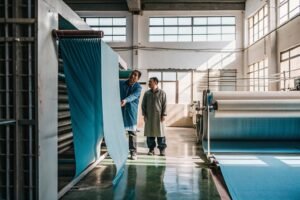
As a fabric supplier shipping globally, I’ve seen many U.S. clients like Ron suddenly face customs holds because their fabric failed an obscure regulation called 16 CFR 1610. Your entire shipment, your production schedule, and your profitability can hinge on this single test. It’s a common pain point, especially for those importing from China, where understanding and proactively testing for U.S. standards is the key to smooth, tariff-free entry.
The 16 CFR 1610 standard is a U.S. regulation that tests the flammability of clothing textiles to ensure consumer safety. You pass it by using fabrics that have been pre-tested and certified by a qualified laboratory to meet the specified burn rate criteria. This isn’t just about compliance; it’s about protecting your brand and ensuring your products reach your customers without costly delays or recalls. For a U.S. buyer, navigating this is critical for efficient pricing and avoiding hidden tariff-like costs from seized goods.
Let’s break down this complex standard into simple, actionable steps. Understanding 16 CFR 1610 will empower you to source fabrics confidently and keep your supply chain secure.
What is the 16 CFR 1610 flammability standard?
If you’re importing apparel fabrics into the U.S., 16 CFR 1610 is a regulation you cannot ignore. It’s the law that governs how quickly and intensely a fabric made into clothing can burn. The goal is simple: to prevent clothing-related burn injuries to consumers. As a supplier, we see this not as a hurdle, but as a baseline for quality and safety that protects everyone in the supply chain, from us to the end-user.
The standard was first established in the 1950s and has been updated over time. It classifies fabrics into three main classes based on their flammability. Class 1 is normal flammability and is acceptable for clothing. Class 2 is intermediate flammability, which is also generally acceptable but may have restrictions. Class 3 is rapid and intense burning, and it is banned for use in clothing. The test involves exposing a small, mounted fabric sample to a controlled flame for one second and measuring how long it takes for the flame to spread a set distance. The Consumer Product Safety Commission (CPSC) is the U.S. agency that enforces this rule.
Why was the 16 CFR 1610 standard created?
The standard was created in response to historical incidents where highly flammable clothing, like brushed rayon "torch sweaters" in the 1940s and 1950s, led to severe injuries and deaths. The government stepped in to set a minimum safety benchmark for all clothing textiles sold in the United States. This proactive measure has successfully prevented countless injuries for decades. It’s a classic example of regulation designed for public good, and it’s why we invest in our CNAS-accredited lab to pre-emptively test fabrics, saving our clients from potential legal and reputational disasters.
How does the 16 CFR 1610 testing procedure work?
The test is precise and scientific. A fabric sample is dried in an oven, cooled in a desiccator, and then mounted at a 45-degree angle in a specialized chamber. A controlled flame is applied to its surface for exactly one second. The technician then times how long it takes for the flame to travel up the fabric a distance of 5 inches. The results, combined with observations about the base fiber and surface texture, determine the final classification. The entire process is designed to be repeatable and accurate, which is why using an accredited lab is non-negotiable for definitive results.
How can I ensure my fabric order passes 16 CFR 1610?
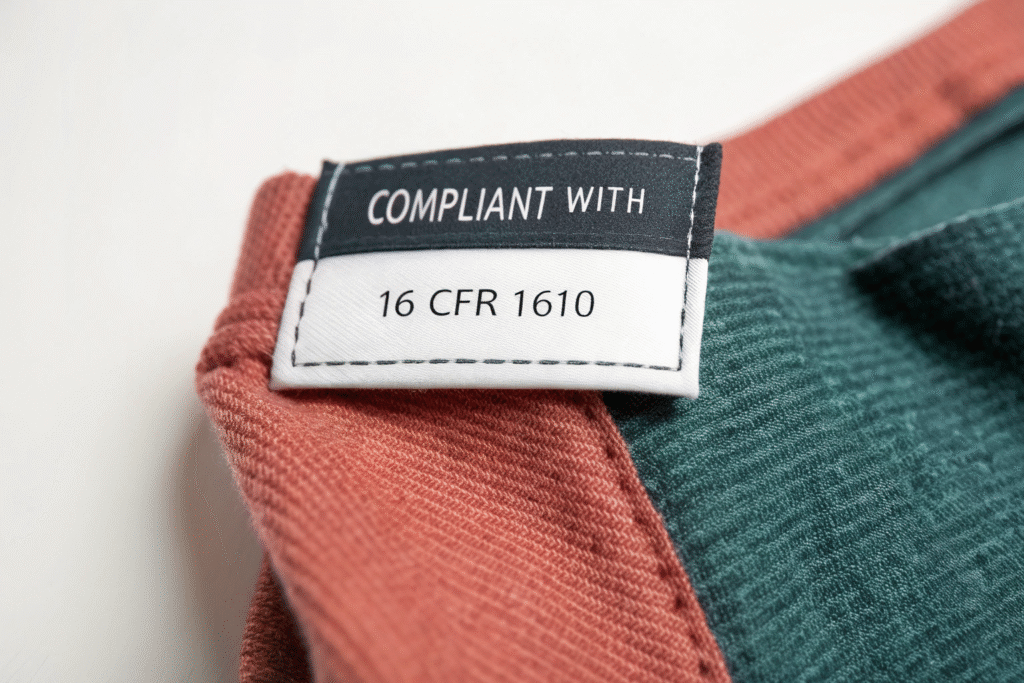
Passing 16 CFR 1610 starts at the sourcing stage. You don’t want to find out your fabric is non-compliant after it’s already on a ship to the U.S. The most efficient way to ensure compliance is to partner with a fabric supplier who understands the standard and has integrated testing into their production process. For our clients like Ron, we provide a Certificate of Compliance (CoC) with shipments, which serves as proof that the fabric has been tested and passed, streamlining their customs clearance.
The first step is to request pre-production testing. Before you place a bulk order, ask your supplier for test reports from an accredited laboratory. At Fumao, we conduct this as a standard service. We run small-batch samples through the full test in our in-house lab. This proactive step eliminates the risk and gives you the confidence to proceed with your order, knowing the timeliness of your delivery is secure.
What are the best fabric choices to guarantee compliance?
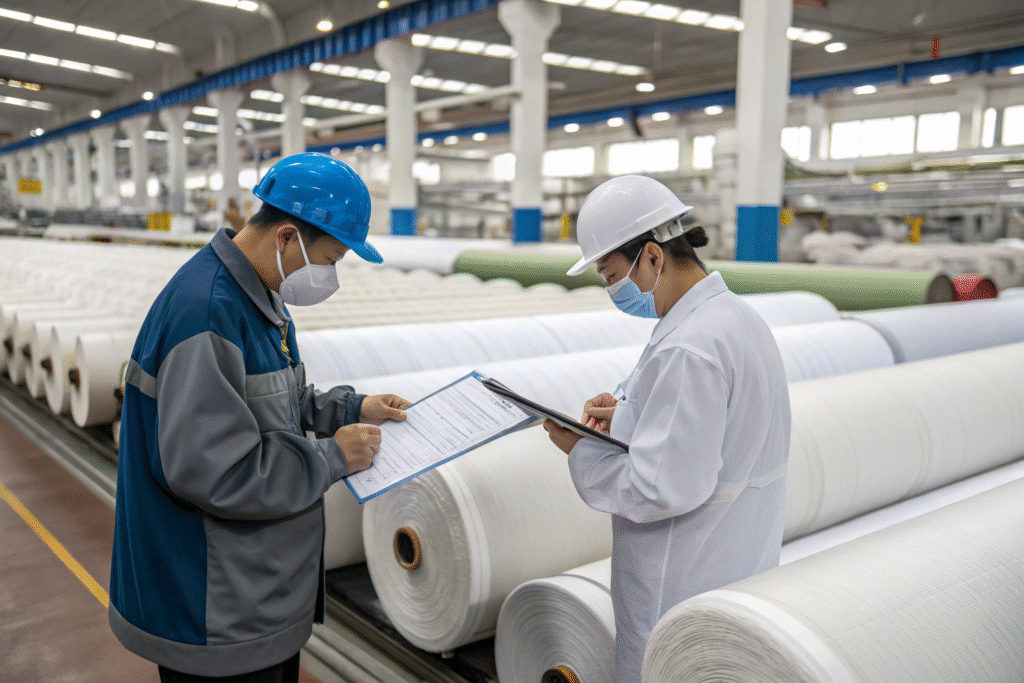
Many common fabrics inherently meet Class 1 requirements. Plain weave fabrics made from natural fibers like cotton and linen often pass easily, as do many polyester and nylon blends. The challenge often comes with raised-fiber surfaces, like fluffy velvets or brushed fleeces, which can burn faster. If your design requires such a fabric, you must work with a supplier with strong R&D capabilities to develop a version with flame-retardant treatments or specific fiber blends that meet the standard.
Why is supplier verification critical for passing the test?
Your supplier’s commitment to quality control is your first line of defense. A supplier without a robust QC system might cut corners, leading to inconsistent fabric quality that could fail a spot check. You need a partner who understands the importance of batch-to-batch consistency. Ask potential suppliers direct questions: "Do you have in-house flammability testing capabilities?" "Can you provide a test report for this specific fabric?" "What is your process for ensuring every production run meets the same standard?" Our answer involves detailed tracking and a dedicated QC team that oversees every stage, from weaving to packaging.
What are the classes of flammability under 16 CFR 1610?
Understanding the classification system is key to making informed sourcing decisions. The 16 CFR 1610 standard doesn’t just give a pass/fail result; it categorizes fabric performance into specific classes. This helps you gauge the safety level of the material you are purchasing. For general clothing, Class 1 is your target.
The classification is primarily based on the "burn time" – the time it takes for the flame to spread the specified distance during the test. However, the standard also considers the fabric’s original fiber content and whether it has a raised fiber surface. This nuanced approach ensures that different fabric constructions are evaluated fairly.
| Class | Flammability Rating | Description | Acceptability for Clothing |
|---|---|---|---|
| Class 1 | Normal Flammability | Fabric has a slow burn rate. | Acceptable and safe for clothing. |
| Class 2 | Intermediate Flammability | Fabric has a medium burn rate. | Generally acceptable, but may be restricted for loose-fitting garments. |
| Class 3 | Rapid and Intense Burning | Fabric has a fast burn rate. | Banned for use in clothing. |
What is the difference between Class 1, 2, and 3 fabrics?
Class 1 Fabrics: These are the safest and most common for apparel. They have the longest burn times. Examples include most tightly woven cottons, standard polyesters, and many silks.
Class 2 Fabrics: These fabrics burn faster than Class 1 but are not automatically banned. They might include some lightweight rayon or fabrics with a slight nap. However, using them requires careful consideration of the garment’s design.
Class 3 Fabrics: These are highly flammable and cannot be used for clothing. They often include certain types of brushed acrylic pile or untreated, lightweight, fuzzy fabrics. Importing Class 3 fabric for apparel will result in seizure by customs.
How does fabric surface texture affect the classification?
The surface texture is a critical factor. Fabrics with a raised fiber surface, like plush velvet or fleece, are tested twice – once on the original surface and once again after the surface pile has been brushed. This is because a fluffy surface can ignite more easily and propagate a flame faster. A fabric that might pass as a flat weave could be classified as Class 2 or even Class 3 if it has a specific raised texture. This is a key area where our R&D team adds value, by engineering textures that are both aesthetically pleasing and compliant.
What happens if my fabric fails the 16 CFR 1610 test?
A failure is a serious business event. If your fabric is tested at the port of entry and fails, the U.S. Customs and Border Protection (CBP) and the CPSC can detain and ultimately refuse its entry. The immediate consequences are financial: you lose the cost of the goods, the shipping fees, and any duties paid. More damaging, however, is the disruption to your supply chain, leading to delayed deliveries and lost sales.
Beyond customs, the risks escalate. If non-compliant fabric somehow makes it to market and is discovered, you could face a forced recall. This involves the cost of retrieving the product from stores, a public relations crisis, and potential legal liability if the product causes harm. This directly impacts the "security" pain point that buyers like Ron are deeply concerned about. Protecting your brand’s reputation is far more important than the cost of a simple pre-shipment test.
What are the legal and financial risks of non-compliance?
The legal risks are significant. The CPSC can pursue civil penalties against importers and retailers for distributing non-compliant products. In cases of willful violation, criminal penalties can also apply. Financially, the direct loss of the seized shipment is just the beginning. You may also be liable for storage and destruction fees levied by customs. Furthermore, the reputational damage can cause your retail partners to lose trust, affecting your long-term business relationships and profitability.
How can I mitigate risks before shipping from China?
The solution is proactive risk management. Do not wait for U.S. customs to be your quality checkpoint. Insist that your supplier in China or Southeast Asia provides a passing test report from a recognized lab before the fabric is ever cut and shipped. We build this into our process. Our QR code tracking system allows clients to access real-time quality control data, including test reports for composition and flammability, providing peace of mind and ensuring logistical timeliness. This due diligence is your most powerful tool for efficient and secure sourcing.
Conclusion
Navigating 16 CFR 1610 doesn’t have to be a daunting challenge. By understanding the standard, choosing the right fabrics, and most importantly, partnering with a verified and transparent supplier, you can turn compliance from a risk into a competitive advantage. It ensures the security of your shipments, protects your brand, and guarantees that your products are safe for your customers. Remember, passing this test is not just about following the law; it’s about demonstrating a commitment to quality and safety that builds trust.
If you’re looking for a reliable partner in Asia to co-create compliant, high-quality fabrics for your clothing line and ensure smooth sailing to the U.S. market, we are here to help. Let’s discuss your next project. For a direct conversation about your specific needs, please reach out to our Business Director, Elaine, at elaine@fumaoclothing.com. We are ready to support your success.