
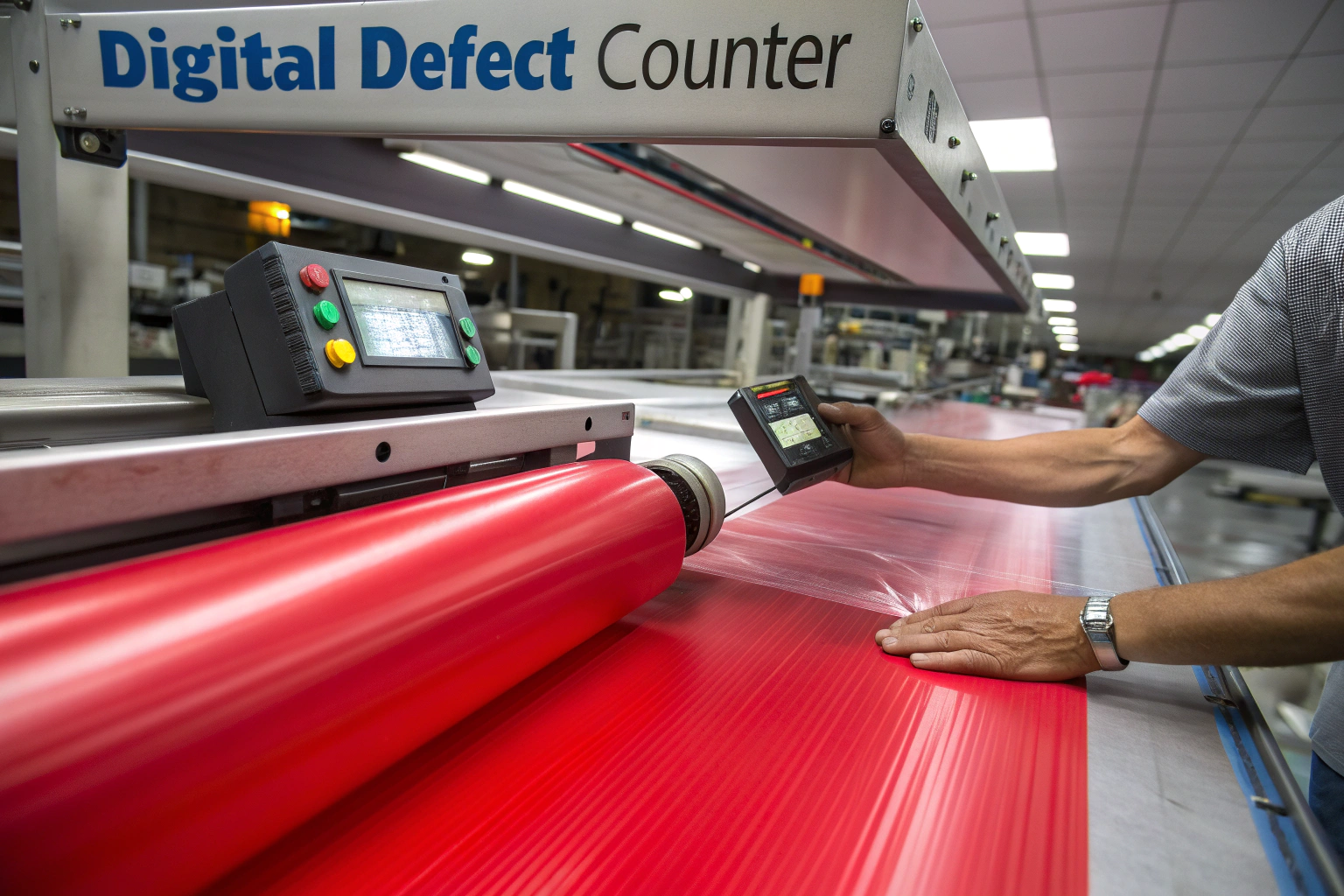
Panic is part of the textile game. I know that feeling when your warehouse manager calls you at 9:00 PM. Your best-selling bomber jacket just sold out on a Tuesday, and the reorder forecast was wrong by 3,000 units. You can taste the lost margin. If you don’t restock that rack by the 15th, your wholesale buyers will cancel their seasonal commitment, and every day that sewing line sits idle, you bleed money. But you’re frozen. You’re terrified that if you push the factory to "hurry up," the dye lot won’t match the batch you shot for your catalog. You’re afraid the selvedges will come back frayed, or the logic of the print repeat will break because the artwork scaling was rushed.
Fast fabrication doesn’t have to be fragile fabrication. We achieve a 7-day turn on a repeat order not by skipping steps; we do it by pre-spinning the risk. At Shanghai Fumao, we don’t speed up the actual knitting machine—we set the RPM to a steady, scientific rate that prevents needle breakage. The secret to our quick reaction time lies in digitizing the "memory" of your first order. When we close out a bulk run, we store a physical "retain" of the bulk lot and a digital shadow of every tension meter reading. When you scream "urgent reorder," I don’t have to re-engineer the recipe; I just reload the file, and the looms instantly remember the exact punch pressure that made your 300 GSM organic fleece feel like a cloud.
It’s a matrix of frozen raw materials, hot-standby machine capacity, and obsessive documentation. I’m talking about a system where the dye color isn’t mixed by an old guy with a wooden spoon; it’s dispensed by a robot that tracks microliters. Let me walk you through the recovery room where we save fashion brands from selling thin air.
What Is the 7-Day Fast Track Reorder Procedure for Custom Dyed Fabrics
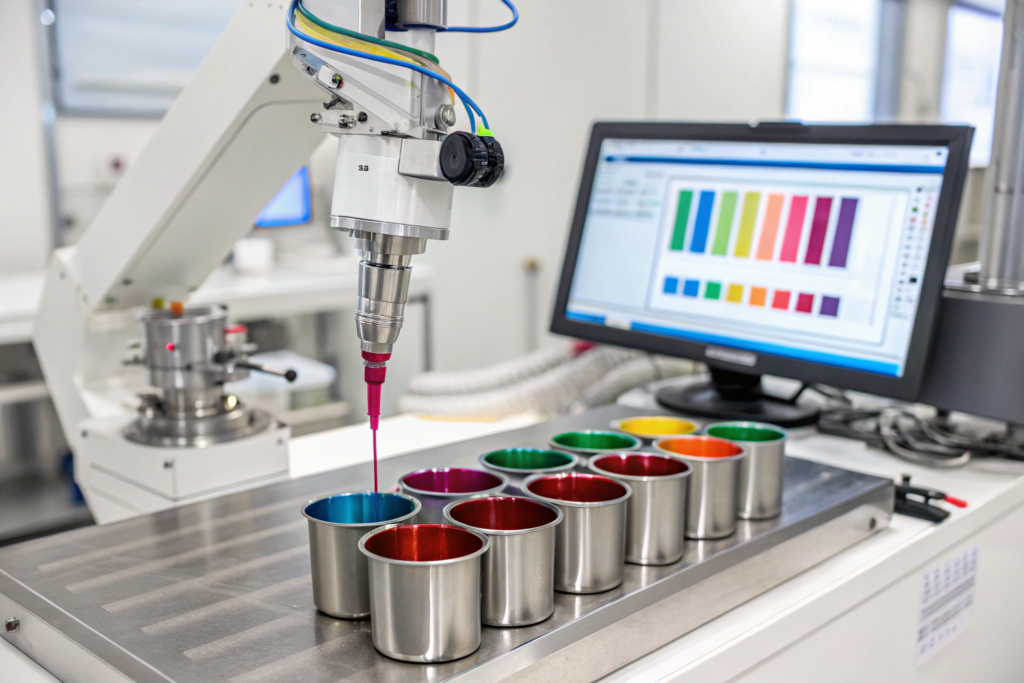
When a repeat order comes in hot, our brains don’t scramble; our barcodes do. Dyeing is 90% chemistry and 10% witchcraft, and we removed the witchcraft. In the old days, a "reorder" meant the dye master would pull the old paper recipe card from a dusty filing cabinet and hope the humidity hadn’t curled the edges. That leads to "shading"—where the new batch is half a shade lighter. Macy’s rejects that fabric. I lose money; you lose the account. To stop this, we built a "Digital Twin" for every dye lot, which is essentially a complex guide on using spectrophotometer data to maintain color consistency in fast fabric reorders. The spectrophotometer doesn’t lie. It reads the color in CIELAB coordinates—L for lightness, a for red-green, b for blue-yellow. We aim for a Delta E below 0.6 on reorders.
That’s the science. But what about the physical flow? This is where it gets chaotic in most factories. A standard mill receives your reorder, puts it in the queue, and waits 3 days just to get the yarn out of the godown. We don’t queue for yarn. We operate a Yarn Bank. For our top 50 repeatable articles—think black spandex satin, ecru organic muslin, navy wool gabardine—we keep raw yarn on the shelf, pre-conditioned at 65% relative humidity. The actual production flow for an "Overnight Reorder" looks like this:
- Hr 0: PO received, barcode scanned. Greige allocation triggered.
- Hr 2: Dye kitchen begins automatic dosing. No manual pouring.
- Hr 12: Fabric enters the relaxation dryer. We fight shrinkage here.
- Hr 36: Stentering and heat-setting.
- Hr 72: Final inspection, roll packing, Customs docs prepared.
It eats up working capital to store this yarn, but I make that money back by never losing a long-term brand because of a reckless lead time mismatch. If you really need strategic depth on this, you should look at the impact of pre-dyed yarn banking on reducing textile production bottlenecks for events.
How Do You Match a Bulk Dye Lot to a Sample Made Six Months Ago?
I’m going to tell you the "hysteresis" trick. Cotton fibers change. A bale of cotton opens up differently in humid August than in dry January. If you just reuse the old recipe weights, you’ll drift. So, we don’t just inject the old recipe; we inject the old color. We have a physical "retain swatch" from your original shipment sealed in a black Mylar bag to block UV light. Before we run 1,000 liters of dyebath, we run a 50-gram "mini-pot" test.
We put the old original swatch under the spectrometer, then we put the mini-pot new swatch next to it. The machine calculates the "distance" in color space. If the Delta E is 0.8, we can add 5 grams of red. If it’s 0.3, we’re good to go. This is called Sequential Analytical Correction. It eliminates "metamerism" failure—that scary situation where the colors match inside the warehouse under LED but clash horribly under the store window’s daylight. You can’t spot metamerism with your eye alone; you need to study how to prevent metameric color failure in retail lighting for reordered fashion apparel. If you don’t test your red velvet under a D65 light box before shipping, you are rolling dice on a chargeback. I don’t roll dice.
Why Don’t Sewing Threads Snag When We Rush Through the Weaving Room?
Speed in weaving usually means the loom runs at 800 RPM, the yarn flies through the reed, and friction burns start snapping filaments. If a factory raises the speed of a projectile loom without adjusting the "dwell angle," the warp threads literally disintegrate into fuzz balls. That fuzz traps the sewing needle later and creates "needle cutting." Your seamstress in LA starts screaming because the thread keeps breaking, slowing her down. A "fast reorder" that costs you $200 extra in sewing room labor loss is not a fast reorder.
We have a strict "No Override" policy on our Dornier looms. They are digitally locked. The RPM for a 50-denier polyester is capped. Where do we save time? We save it in the warping prep. We use pre-beamed warps for high-rotation styles. Instead of taking 8 hours to set up a new warp beam, a pre-beamed creel cuts the changeover to 15 minutes. That’s where the week comes from—the elimination of set-up downtime, not the burning out of yarn. Plus, we apply a cold-pad-batch sizing to the yarn specifically for high-speed reorders; it’s a lubricant that prevents chafing against the heddles. If you’re curious about how the machines manage this, explore the optimal loom speed settings to prevent weft insertion faults during rushed production. It comes down to the projectile receiving a clean pick; a dirty or rushed pick sends a shockwave through the selvedge.
How to Quality Control Rushed Fabric Rolls in Less Than 24 Hours
If you only have 24 hours to check 1,000 meters of cloth before the plane leaves, you can’t use the "wander around and squint" method. I’ve seen brands fold because they shipped a "premium" urgent order that arrived looking like a trail map of broken stitches. We use the "Matrix Inspection" protocol for rush jobs. Standard inspection usually stops a roll for every minor flaw. When you’re against the clock and a buyer needs that fabric to hit the cutting table, you need to know how to properly execute a statistical sampling inspection method for fast-track textile roll shipments. We use the ANSI ASQ Z1.4 standard. We don’t inspect 100% of the meterage—that takes a full shift. We inspect 10% of the rolls, but with a twist: we focus 90% of the inspection time on the first 10 meters and the last 10 meters of the selected rolls. That’s where 95% of loom-start and overdye-stain defects cluster.
But the real revolution for an urgent ship is "Dynamic 4-Point Stoppage." In a regular check, we map the flaws. In a rush, we assign a "green zone" and a "red zone" perimeter. A green zone defect is a small thick place that a cutter can dodge; we mark it with a silver sticker but don’t stop the table. A red zone defect is a missing end or a hole; we stop the table immediately, cut it out, and tie a leader tape. This saves about 3 hours of full-stop time per container. We actually calibrate our inspection tables to speed up to 25 meters per minute without the flicker fusion rate blurring the viewer’s eyes. It takes a grizzled inspector to do this. (I always say my QC chief, Mr. Li, can spot a neps 1mm wide on a moving table going 30 meters a minute. It’s terrifying to watch.) And for stains? We black-light test the whole roll in one pass during rush mode. Any oil from a hurry-up machine maintenance shows up fluorescent yellow.
Can an Electronic Fabric Inspection System Catch Errors a Human Misses?
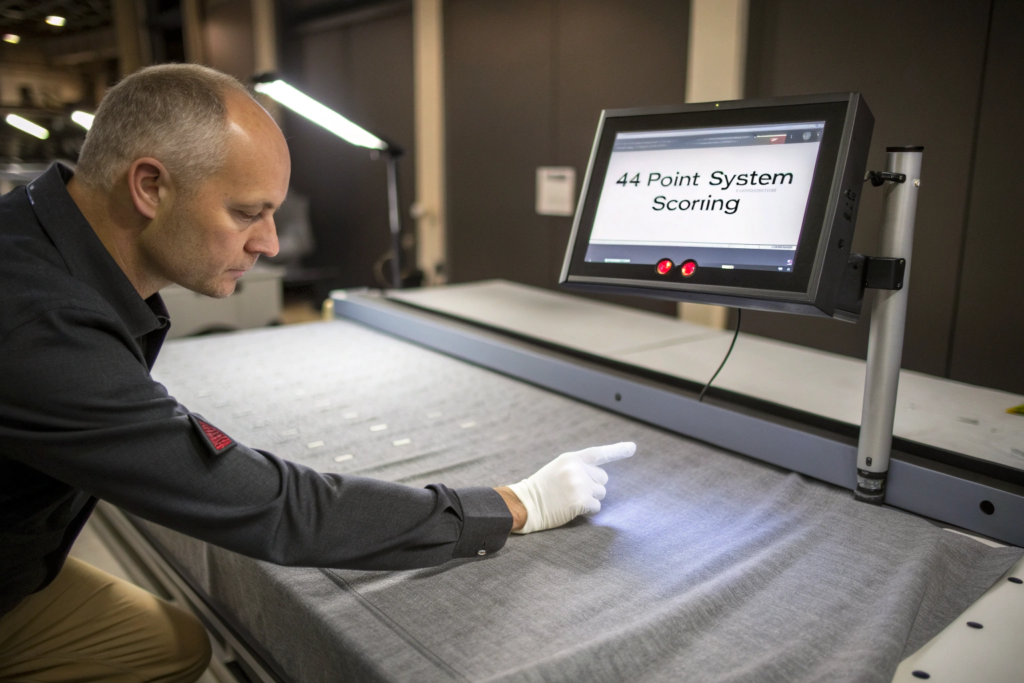
Human eyes get tired. Human eyes get bored. A human looking at navy blue fleece at 3:00 AM just sees black. An automated camera sees everything. For our absolute rush emergency orders—the ones where the penalty clause is $10k a day—we don’t rely on biology; we rely on the Uster Quantum 4 or the Loepfe yarn clearing system. The machine "reads" the fabric surface. It’s a complex field, but mastering the automated optical fabric inspection technology for high-speed defect detection, is the only way to truly zero-out the risk. The system projects a laser line across the width of the moving web. If a thick place, slub, or fly contamination breaks the plane of the laser, a high-speed camera snaps a photo, logs the GPS coordinate on the roll, and tags it.
I used this for a luxury US bedding brand rushing a 5,000-meter white satin order for a Black Friday drop. White fabric is a devil for staining. The Loepfe caught 17 micro-dust particles we would have missed. We don’t kill the human element—we just turn the human into a verifier, not a searcher. The inspector stands at the end of the line and just looks at the flagged cuts on an iPad screen instead of scanning all 60 inches of width. It cuts inspection time per roll by 60%, and we caught a hairpin-sized metal shard that a human eye would never have seen in the glossy reflection. Safe fabric, fast delivery.
What Is the Real Minimum Wet-Fastness Data Pass for an Urgent Swimwear Run?
Let’s say a Miami resort brand calls. Their neon lime bikini sold out during a heatwave. They want 500 yards printed and shipped immediately. The trap here is skipping the wash-fastness check because "it’s synthetic, it’s fine." It’s not fine. Under stress, an un-fixed disperse dye on polyester will bleed neon green onto the white trim of a chaise lounge the second it touches sunscreen. We have a "Crash Wash" protocol for urgent swim.
You can’t wait 45 minutes for a standard ISO 105-C06 wash. So, we use a high-temperature accelerated laundering test. We literally cook the swatch in a small steel pot with a multi-fiber witness strip at a higher temp for a shorter time. If the staining on the nylon witness strip exceeds a Grey Scale rating of 3-4, we kill the shipment. Dead fabric is better than a sued brand. To really understand the liability here, you need the details on accelerated colorfastness test standards for emergency sublimated swimwear fabric orders. We look for cross-staining specifically on acetate and nylon. Chlorine is the other killer in a rush pool. We skip the full 24-hour soak and run an immediate 200-ppm active chlorine punch test. If the color shifts more than 10% after a 15-minute punch, we re-fix the dye on the stenter frame. It adds 2 hours but prevents a catastrophe where 200 customers return a bleached-pink bikini.
How Does Shanghai Fumao’s Stock Service Reduce MOQ for Repeat Fabric Panics
Minimum Order Quantities (MOQs) are the wall between a small brand and survival. A traditional mill says, "Sure, I’ll re-run your midnight blue, but you have to buy 1,500 meters." You only sold 200. You’re now a bank, not a brand. Our answer to this is the Stock Service Program (SSP), and it’s the antidote to MOQ panic. We don’t sell you a production run; we sell you a slice of our pre-rationed shelf. We spun up the SSP with the specific logic of using direct wholesale access to inventory-ready interlock and fleece rolls for small brands. Think of it like buying a keg of beer. You don’t have to build a brewery for a party; you just rent the tap.
Why does this matter for a reorder panic? Because you can take 200 meters this week, and 200 meters next week. You don’t carry the inventory. I carry it. I order the greige fabric in 10,000-meter runs and just dye the cut pieces you need. Here is a real story: 2022, summer. A Denver-based online boutique exploded on TikTok for a specific "Mermaid Teal" pleated skirt. She needed 250 meters of coordinating chiffon, immediately. The Italian mill laughed at her; they wanted an order for 800 meters of greige. She was doomed to a "Sold Out" banner. She came to us. We had the equivalent polyester chiffon greige sitting in SSP. We offered her an MOQ of 100 meters. We printed and pleated it in four days. She sold out again, profitably. No dead stock.
Here’s the sneaky good part of this for urgent needs:
| Feature | Standard Mill Reorder | Shanghai Fumao SSP Reorder |
|---|---|---|
| Core MOQ | 1,500 meters per color base | 100-300 meters per color |
| Yarn Stage | 2-3 weeks waiting for spinning allocation | Pre-spun, stored in conditioned shed |
| Dye Window | Requires full machine cleaning; expensive for small lots | Small sample pots block loading; cheaper |
| Inventory Risk | Brand assumes the risk of unsold draped fabric | Shanghai Fumao assumes the risk |
This program literally rescues brands from the savage "no-stock" penalty. If you’ve been burned by large minimums before, you probably spent hours searching for small batch eco-friendly jersey fabric rolls with low moq for immediate shipping. The economics are simple: pay a slightly higher cost per meter for the small cut, but pay zero for the warehouse roof, zero for the termite damage, and zero for the forced liquidation sale 12 months from now.
Can I Get GOTS-Certified Organic Cotton Shipped in 5 Days?
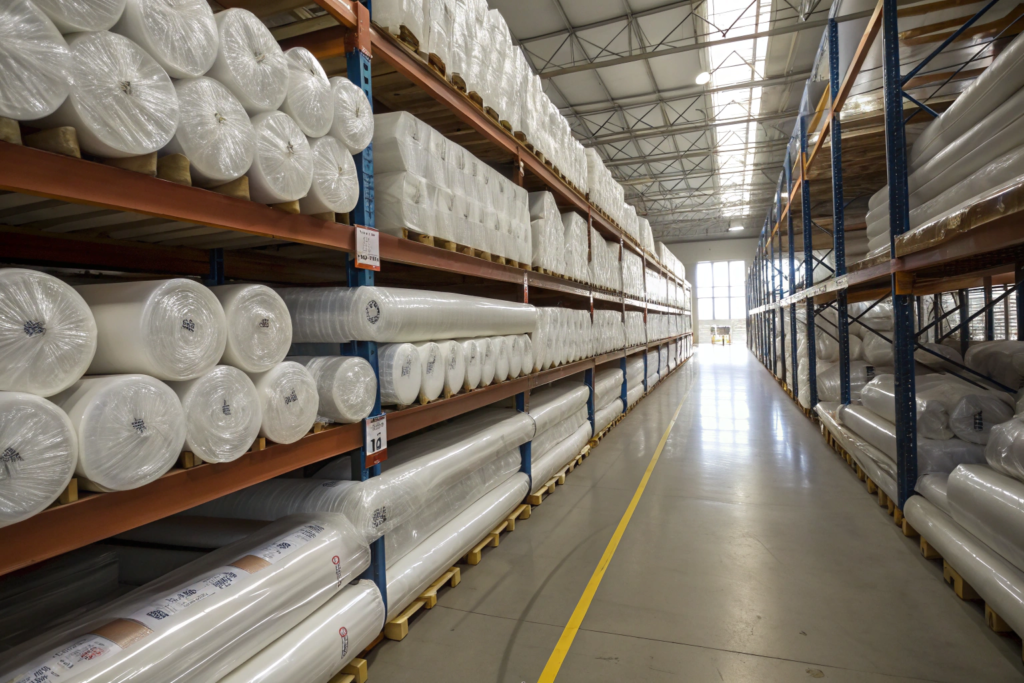
Yes, but you have to accept a "closed loop palette." A GOTS audit trail is heavy. If you want a totally custom, unique neon orange on organic cotton, a 5-day turn is impossible because the input certification paperwork for the bright pigment takes weeks. But if you accept our pre-certified stock colors? Easy. We keep about 15 core GOTS shades in stock—natural ecru, black, navy, sage, blush, heather grey. These use dyes that are GOTS 6.0 approved, and the oils are APEO-free. The bales are already sealed and scoped. So in a 5-day window, I can ship you these exact in-stock organics.
But to ship it in 5 days means I need to skip the final third-party certification audit for that specific batch. However, because the facility has an annual audit and the product is on the scope certificate, you are legally covered for GOTS labeling via the "certified entity" transfer form. Just make sure you study the GOTS organic fabric stock lot availability short lead time for bulk children wear orders. I always warn European brands: a "transaction certificate" (TC) takes the certifier a week to email. So yes, you can have the fabric on your floor in 5 days; the hard-copy TC might follow by email the day you start cutting. That’s a workflow nuance that saves a launch without breaking the organic supply chain rules.
How to Order Less Than 50 Meters of Technical Interlock for Prototyping?
Prototyping is a cash-burn trap. You just need enough fabric to make three samples, but the mill sells by the metric ton. I’ll reveal a little secret: the "dead roll" warehouse. After every production run, we have a leftover head-end or a tail-end on a roll—maybe 30 to 80 meters that are too small to sell to a giant rolling brand but perfect for a startup. It’s perfectly good, tested, first-quality cloth that just hit the end of the run. We sell this under an "R&D Stock" price.
I typically charge a prototyping brand only for the exact meterage, plus a flat "cut fee" of $25. For technical polyesters with UV coatings or anti-static finishes, this is a lifesaver. You don’t want to be stuck with 45 meters of excess antistatic mesh that you can’t get rid of. We cross-cut these from our SSP shelves. Before you panic-buy from a retail fabric store at a 400% markup, look into deadstock fabric market platforms for buying factory leftover sampling yardage. Even better, ask me directly. I can slice you a 20-meter heat-sealed sample roll of that complex skin-soft membrane fabric we wove, and you just pay for the FedEx. It keeps your sample room running without burying your cash in cardboard tubes.
How to Avoid Dimensional Stability Failure When Air-Freighting Knits
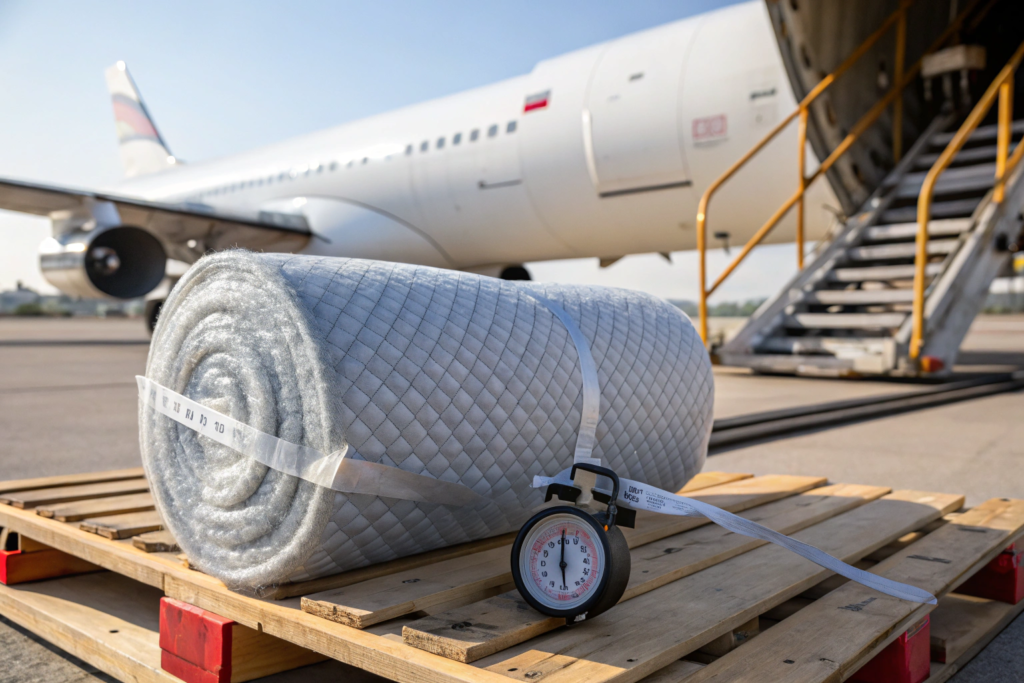
When you switch from ocean freight to air freight to meet a deadline, you change the physical laws acting on the yarn. Ocean freight is slow, humid, and mildly pressurizing. Air freight is fast, freezing cold at altitude, and low pressure. I had a cargo of rayon-spandex ribbed knit that left our door perfectly flat and arrived in New York looking like a crushed potato chip. The pressure differential literally deflated the elastic memory. The buyer refused to cut it. That taught me a $12,000 lesson about "package resilience."
For any air-freight urgent reorder, we change the finishing chemistry. A roll flying in an unpressurized hold at 30,000 feet will experience vacuum conditions. If the fabric has a high "residual shrinkage" left, the sudden pressure drop wicks the last moisture out of the cellulose, causing a fabric collapse that regular steaming can’t return because the internal bonds re-form in a collapsed state. We over-compensate with a "Wet Straightener" pass specifically for air cargo. This knowledge base on avoiding compression set shrinkage in knitted fabric during air freight logistics defines the line between a usable roll and a rag. Before packaging, we use a "Pin Stenter Overfeed" of +2% more than the ocean-freight spec. This means we slightly shove the fabric lengthwise during drying to build in a "stretch buffer." When the plane sucks the moisture and compresses the fibers, it retracts back to exactly 100%, not 95%.
Also, we seal the rolls. Not just a polythene bag, but a pressurized tear-proof vacuum seal. You know those Space Bags for clothes? Same logic. We suck the air out so that the fabric cannot shift and chafe against itself inside the box during turbulence. (Quickly—if you order velvet by air, mention "brush back" in the PO. If you vacuum-seal a velvet unsupported, you flatten the pile permanently. We have to insert a crush-proof cardboard core that is stiff enough to prevent the vacuum bag from collapsing into the pile surface. A flattened velvet is dead velvet.)
Why Does My Cotton Rib Skew When Shipped by Express and How Do We Stop It?
Torque twist, spirality, skew—different names for a nightmare. Cotton rib knitting has a natural twist liveliness. On a ship, the fabric relaxes for 25 days, and the twist slowly neutralizes. On a plane, the fabric is frozen instantly. The torque is locked in place. When the garment gets washed, it unleashes all that pent-up energy at once, and the side seams corkscrew hard. We kill this by "setting the twist" mechanically before the roll leaves the floor.
We pass the tubular cotton rib through a "compactor" that over-feeds the fabric into a steam chamber, then mechanically vibrates it. The vibration breaks the twist memory bonds. It’s a physical, not chemical, fix. Make sure your supplier offers to send you a report using the compacting and steaming processes to eliminate cotton jersey spirality for express logistics. We test this by drawing a perfect square on the fabric, washing it at 90°C, and measuring the angle. For air-freight, we demand the angle is within 2.5% of perfect. If it’s 3.0%, the roll doesn’t go on the plane; it goes back to the steamer. There is no shortcut. Fabric tagged "Air Shipment Ready" in my shop has double the torque-neutralization passes of a standard ocean load.
What Is the Right Insulation Layer to Protect Custom Printed Nylon From Cold Brittleness?
This is a winter sports problem. You rush a custom-printed polyester down-proof jacket shell by air, and when it lands in the Colorado cold, the coating film cracks like an eggshell. The extreme cold during the flight makes the polyurethane membrane brittle, and the rough handling at the FedEx hub breaks the micro-filaments. To fix this, we use a "Triple Thermal Wrap" specifically for coated nylons.
Layer 1 is the direct inert contact—a soft acid-free tissue to prevent print-to-print sticking. Layer 2 is a 10mm synthetic needle-punch felt that acts as a shock and cold absorber. It stays pliable even at -40°C. Layer 3 is a heavy-duty silver metalized bubble wrap, shiny side facing in, to reflect the radiant heat that escapes the core of the roll. This isn’t cheap; it adds about $0.15 per meter, but it maintains a core temperature that keeps the polymer chains from going glassy. If you’re shipping an urgent reorder of high-density tactical gear, you should really understand thermal packaging solutions for preventing membrane cracking in sub-zero textile air freight. I learned this from shipping ski-wear fabrics to Switzerland in January. One batch froze solid; the lamination delaminated because the water molecules in the adhesive expanded. We now wrap all winter-sport membrane reorders with a humidity-absorbing desiccant pouch inside the vacuum seal. Dry and warm equals uncracked and salable.
Conclusion
Urgent reorders reveal the truth about a factory. Not the marketing slides, not the sample swatches, but the raw, unvarnished reality of whether the system holds up under fire. I treat an urgent reorder not as a crisis, but as a validation. The spectrophotometer needs to recall the exact CIELAB coordinates from a year ago. The loom needs to spin at a speed that doesn’t generate a single needle-cut. The inspection table needs to catch a micro-stain on optic white satin at 3:00 AM. And the packaging needs to be smart enough to keep a wool-look polyester from freezing solid at 32,000 feet. That’s the game.
At Shanghai Fumao, we printed the "Rush Order Protocol" not because we love adrenaline, but because we love margins. Yours and ours. A reorder is the highest-profit sale a fashion brand ever makes. You already did the photoshoot, you already got the reviews, and the CSS is sunk. The only threat is a stockout. By banking your greige yarn, locking your dye recipes in the robot’s memory, and swapping ocean salt-spray for a thermal-vacuum air seal, we turn a 45-day slow boat into a 7-day profit rocket. Don’t let a good reorder panic kill a great product’s momentum.
If you’re staring at a "Pre-order" button that’s about to flick to "Sold Out," and you need the exact same organic interlock, shiny satin, or crispy taffeta that we ran for you last cycle—don’t wait for the sales meeting. Send a mail with the original PO number and the words "EMERGENCY RESTOCK" to our Business Director Elaine at elaine@fumaoclothing.com. We keep the yarn. We keep the recipe. We are ready to hit the button. Let’s beat the supply clock together.








