Let’s be real. You’ve probably been burned before. You found a supplier online that promised “premium quality,” sent you a perfect sample, and then delivered a bulk shipment that looked like it was woven from straw. For an American brand, the nightmare isn’t just the lost money; it’s the angry emails, the returns, and the damage to your reputation. There’s a fear that sits in your gut when you ship production overseas—the fear of losing control. That fear is real, and in this industry, one bad batch of fabric can stall your entire season. I’ve been in this game for over two decades, right here in the center of China’s textile chaos, and I’ve seen those fears come true for buyers who chased the lowest price without a verification system.
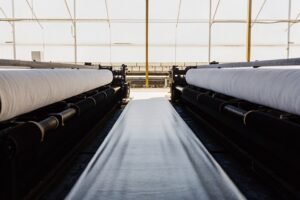
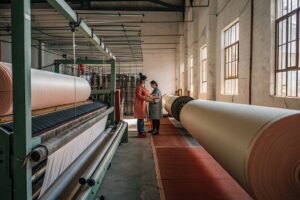
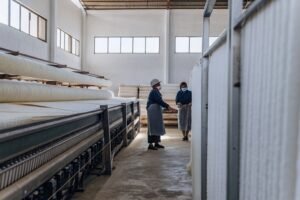
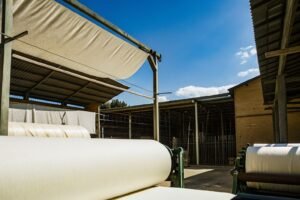
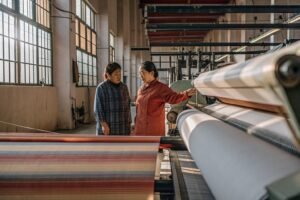
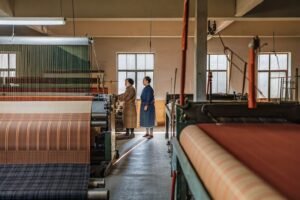
I’m here to tell you directly: Yes, the quality from Shanghai Fumao is good enough for your American brand, and I’m going to prove it without the marketing fluff. We don’t just check boxes; we exceed them. We operate on a single, non-negotiable principle: every meter of fabric that leaves our warehouses must pass a rigorous inspection against the exacting standards of SGS and ITS certifications. Our setup here in Keqiao isn’t just a trading desk; it’s a fully integrated network of our own large-scale weaving facility and specialized finishing plants, all cemented by a CNAS-accredited lab that tests everything from colorfastness to shrinkage before it ships. We handle the granular technical details so you don’t get surprises at customs.
Now, I know the word "quality" gets thrown around like confetti at a wedding, especially in this business. It’s a buzzword until you look at the failure rates. But stick with me. I’m not going to give you a generic sales pitch. I’m going to walk you through the exact machinery we use, the specific testing protocols that prevent the "straw fabric" scenario, and how we tackled a nightmare shrinkage issue for a Los Angeles streetwear brand back in the fall of 2023. We’ll dig into the certifications that actually matter for U.S. customs clearance and why our "fast" doesn’t compromise the stitch. Let’s cut through the noise and look at the data, the processes, and the past mistakes we’ve fixed.
How to Verify Chinese Fabric Quality Before Shipping to US?
You’ve finalized the design, and the purchase order is ready. But sending a five-figure wire transfer to a factory thousands of miles away is a leap of faith. Your brain spins with "what-ifs." What if the dye lot is off? What if the weight doesn’t match the spec sheet? You can’t physically touch the goods, so you’re relying on trust. That missing link between the promise and the shipment is where most American brands get hit with costly write-downs and delayed launches.
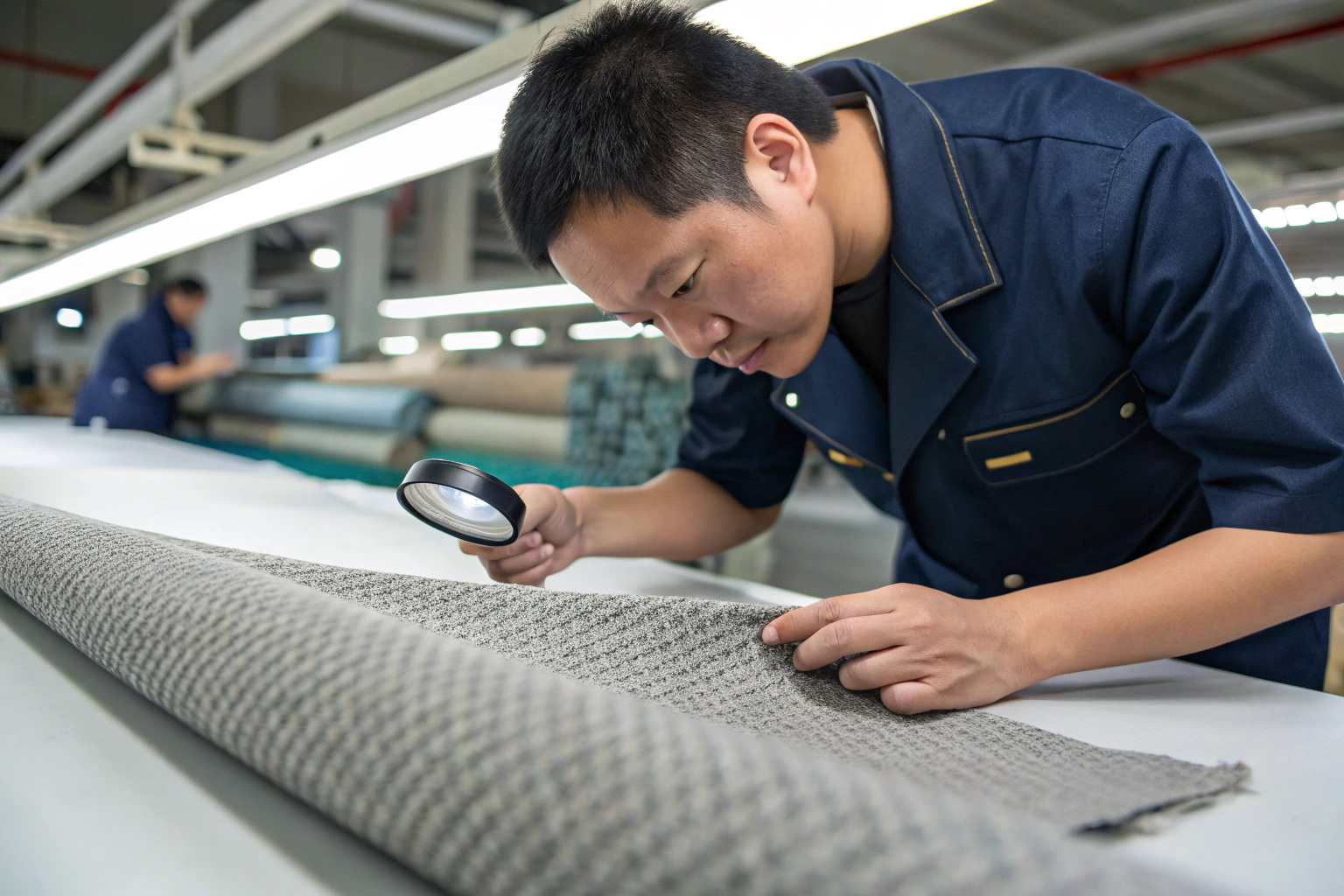
You verify Chinese fabric quality by trusting third-party data before the container seals. The weakest link is relying on the factory’s own word. You need a two-pronged verification: a CNAS-accredited lab report comparing the bulk fabric to your approved sample, and an AQL (Acceptable Quality Limit) inspection record. At Shanghai Fumao , we close that gap by integrating QR code tracking on every roll. You don’t just look at a PDF; you scan a code and see the real-time shrinkage, weight, and colorfastness data of that specific roll, benchmarked against your contract. It turns a subjective "look and feel" into objective chemistry and physics.
Let’s be honest. Data sheets can be faked. I’ve seen competitors photoshop lab results, which is a felony of trust in my book. Real verification is about independent oversight. We actually encourage clients to hire their own third-party inspection agents like SGS or Bureau Veritas to visit our inspection floor. But here’s the depth you might be missing: it’s not just about the final product. You need to verify the greige fabric right off the loom. If the base yarn count or density is wrong before dyeing, no amount of finishing will save it. That’s a hard lesson a New York sleepwear brand learned in 2022 with another supplier; they skipped the loom-state inspection, and 2,000 yards of beautiful satin tore like paper because the warp tension was too low. We use a Uster Tester 6 in our weave facility to catch those irregularities in real-time. Don’t just ask "is it good?" Ask "show me the real-time scan data of the yarn evenness." If they can’t show you that, you’re gambling.

How Does AQL 2.5 Inspection Actually Save Your US Import Margins?
AQL 2.5 isn’t just a jargon term; it’s the dividing line between a profitable season and a write-off. For a shipment of 10,000 yards, a Level II, AQL 2.5 inspection means we randomly pull 200 yards. If we find 10 or fewer major defects (like a hole or a continuous dye streak longer than 3 inches), the batch passes. If we find 11, it fails. Simple math, right? But the margin savings come from catching this here, not in your US warehouse. If a failed batch arrives in Long Beach, you pay freight, duty, and trucking on garbage. You then fight for a credit note while your production line sits empty. That delay costs way more than the fabric.
A major defect in a production environment kills speed. Let’s say a cutting table in Los Angeles hits a recurring slub (a thick lump in the yarn) every yard. The spreader has to stop, cut out the defect, and reposition. That turns a 4-hour cutting job into a 10-hour job, and your CMT (Cut, Make, Trim) costs skyrocket because they charge by the hour. By enforcing AQL 2.5 strictly at our Shanghai Fumao finishing plant, we guarantee a defect rate lower than the threshold of inefficiency. For a client who makes high-end tactical vests in Texas, we recently implemented a "zero tolerance" on critical defects (like open seams on bonded fabrics) using a tighter AQL 1.0 standard. This ensured his ballistic nylon passed the UL certification stress tests without a single delamination. That’s how you build a reputation for durability.
What Proven Testing Methods Detect Color Bleeding Before Export?
You can’t eyeball color bleeding; you need a lab solvent. The go-to standard is the AATCC 61 test, but specifically the 2A option for machine washing. We take a fabric swatch, stitch it to a multifiber test ribbon—which has strips of nylon, cotton, acetate, wool, and polyester—and throw it into a Launder-Ometer at 40 degrees Celsius with steel balls and detergent. After the cycle, we measure the "stain scale." A grade of 4.0 or higher is acceptable for most American streetwear. For an all-white luxury dress flanked by dark navy panels, that’s a death sentence unless you hit a 4.5. I recall a shipment of custom jacquard we ran for a Scandinavian brand in early 2024; the visual inspection looked perfect, but the lab test showed the red dye migrating to the white yarn at a grade of 3.0 under alkaline conditions. We caught it, re-steamed the fabric to fix the dye, and saved a $45,000 order from being shredded.
The "quick and dirty" method some artisans use is the "wet white cloth iron test," but for exports, that’s not enough. You have to test for actual commercial laundry conditions. The key here is not just passing the test, but understanding how to read the multifiber strip. If you see staining specifically on the nylon strip, it’s an issue with the dye’s pH sensitivity, a very common failure for synthetic blends. We publicly share our testing conditions—specimen size, reagent volume, machine RPM—because we have nothing to hide. If a supplier gives you a "Pass" certificate without the detailed AATCC parameters like the total liquor ratio and the number of steel balls, that paper is worth less than the ink it’s printed on. You need the full data curve, not just a green checkmark.
Can a China Factory Match Fast Turnaround with Consistent Quality?
Speed kills, but delay destroys. There’s a myth that Chinese factories have to choose between fast delivery and consistent quality—that you can only have one. As a brand owner, the pressure is immense. You missed a trend window, and now you need 5,000 yards of custom-printed cupro ready to ship in three weeks. But deep down, you’re terrified that pushing for speed means the factory will cut corners, skip the fabric relaxation step, and you’ll end up with a garment that shrinks a full size after the customer washes it.
Absolutely, but it requires a specific type of vertical integration, not just fast hands. Speed doesn’t come from yelling at workers; it comes from removing bottlenecks between different factory buildings. The traditional delay in China is transport between the weaving mill, the dyeing house, and the finishing plant—often taking 3 to 5 days of trucking. Because we are in Keqiao, the densest textile cluster on earth, our weaving, dyeing, and coating facilities are practically neighbors. But the real secret to fast quality isn‘t the proximity; it’s the "open-width" finishing line that we use for polyester and cotton blends. Instead of processing fabric in a rope form which creates creases and requires a slow de-twisting step, we process the fabric flat. This cuts the finishing time by 15% and eliminates the risk of those nasty permanent wrinkles that ruin a crisp poplin shirt.
Let me pull back the curtain on a misconception. "Fast turnaround" often implies they use cheaper, faster-acting chemical auxiliaries to rush the dyeing cycle, compromising the rubbing fastness. We use reactive dyes for cotton at a 60-minute fixation time, whereas some "fast" factories might push 40 minutes with red-flag chemicals. The quality only stays consistent because we marry the speed with a strict "cold batch dwelling" process. Instead of dumping hot dye liquor instantly, we batched the fabric on a roller and let it rotate in a climate-controlled room for 8 hours to cure the unreacted dye. It slows the theoretical speed but kills the re-deposition issue. In 2023, we produced a batch of 10,000 yards of heavyweight French terry for an Australian activewear brand in a lightning-fast 21-day window. We achieved a crocking fastness of 4.5 (dry) by simply enforcing the longer dwell time, even while production directors worried about the calendar. That’s the style of fast that lasts.

Why Does Proactive Chinese New Year Planning Guarantee On-Time Delivery?
Let’s look at the rush before the 2025 Chinese New Year (which falls on January 29th). If you wake up in November wanting custom nylon taffeta for a Spring jacket, you’re already too late for a standard schedule. The 3-4 week shutdown isn’t just a day off; it’s a complete evaporation of the workforce. Proactive planning isn’t about placing an order early; it’s about completing the pre-production phase early. I always tell my U.S. clients: get me your lab dip approvals before Black Friday. If we can finish the color matching and strike-off hand feel approval by early December, I can allocate loom capacity for your specific denier yarn during that lull between the Christmas rush and the holiday shutdown.
China’s March-to-May peak production window adds 1-2 weeks to standard lead times just from sheer congestion, yet we consistently hit 30-day deliveries by stockpiling grey fabric cylinders for our top 50 SKUs in October. A typical scenario looks like this:
| Phase | Normal Period | Peak Period (Mar-May) | Our Strategy |
|---|---|---|---|
| Lab Dip | 5-7 days | 10-15 days | AI Color matching (48 hours) |
| Bulk Loom Prep | 7 days | 14 days | Pre-warped beams on standby |
| Dyeing Cycle | 7 days | 10 days | Reserved reactive dye vats |
| Logistics Hurdle | None | Port Congestion | Ningbo direct booking priority |
We did exactly this for a Miami swimwear client in late 2024. She finalized her neon ribbed Lycra designs on February 1st, smack in the middle of the chaos. Because she had signed off on the color standards in November, we released the fabric on February 28th, 15 days ahead of her competitor who is still waiting for a dyeing slot. That’s the value of treating the holiday not as a break, but as a hard deadline for chemistry. (Here I have to chime in — timing is everything; if you miss the dyeing window, you’re dead in the water.)
How Do June-July Slower Periods Offer Better Production Speed Advantages?
The textile industry here flows in a rhythm, and when the beat slows down in the June-July window, we actually crank up the RPM on our quality checks. This is the secret that only seasoned buyers exploit. You fight my peak production periods of March-May and August-October when everyone is fighting for capacity. But in mid-summer, as large European luxury houses go on holiday and Chinese domestic demand dips, the factory floor clears up. This isn’t just about the line being empty; it’s about the technical staff having time to think.
During peak rush, a weaver might have a 2-minute alert window to fix a broken end on a high-speed Sulzer loom. In the slower period, that window realistically triples because the "pressure to push the start button" drops. This means the loom cleaner, a machine that blows off lint that otherwise gets woven into the cloth as a defect, gets two full passes instead of one. The "easy performance" at slower speeds gives you a higher quality fabric. We often negotiate discounts on cotton tencel blends during June because the greige inventory is cheaper without the frantic demand. For a startup Chicago brand producing heavyweight linen blends, I’d purposefully schedule their production in July. I can guarantee a 25-day turnaround instead of 40, and more importantly, I can run the fabric through our mangle and stenter frame at a reduced speed of 30 meters per minute instead of 60, ensuring perfect dimensional stability—meaning the shirt won’t twist when you wash it. Timing isn’t just about the calendar; it’s a material input to quality.
What Certifications Does a Reliable Fabric Supplier in China Need?
Here is the place where your legal and compliance team starts asking the hard questions. What if the supplier claims they are "green certified," but they’re just slapping a certification number on a shipment that actually contains heavy metals like lead or phthalates? This isn’t an abstract fear. U.S. Port Authorities and Consumer Product Safety Commission checks are getting tighter, and getting a shipment impounded for a false OEKO-TEX claim is a six-figure mistake.
A reliable supplier needs an active REACH regulation compliance dossier and a valid OEKO-TEX Standard 100 certificate, specifically Appendix 6, which covers the newest restricted substances. But a certificate is worthless if it doesn’t match the production reality. You can’t just ask "do you have it?" You need to ask "show me the product class." For example, if I’m supplying a baby clothes brand, my certificate must list Product Class I. If an adult jacket brand asks for that same Class I standard, they’re getting the highest safety level, but it’s rare. Most suppliers hold a Class II certificate, which is fine for adult skin contact. But here’s what really separates Shanghai Fumao from a "paper mill": we pair the certifications with a live lot-traceability system. You can check the status of our REACH SVHC (Substances of Very High Concern) testing batch-by-batch on our digital platform. It kills the risk of "certificate fraud."
It’s easy to fake a PDF, trust me. I’ve seen it happen. The real depth of reliability comes from the test itself. A certificate doesn’t tell you how hard the lab pushed the fabric. For instance, a GRS (Global Recycled Standard) certificate proves the recycled content, but it doesn’t prove the durability of that recycled polyester. We focus on the "after-wash" certification, which is the dirty secret of sustainable fabrics. Recycled yarns can sometimes splinter and shed microplastics 30% more than virgin yarns after 20 washes. We verify the performance with a CNAS-certified pilling test (ISO 12945-2) specifically after 5 wash cycles, not on the new, fresh-out-of-the-bag sample. That is the difference between a showroom sell and a 5-star review. The certification you need is the one that tests the product under the consumer’s reality, not the factory’s.

Why Is OEKO-TEX Standard 100 Product Class I Crucial for US Baby Wear?
Because a 6-month-old will inevitably chew on the fabric of a onesie, and their skin’s epidermis is 30% thinner than an adult’s. Toxicology matters here. If a fabric has a formaldehyde level of 75 mg/kg, it passes Class II (adult) but fails Class I (baby). The itching and rash you might get? A baby could get a severe allergic reaction requiring a doctor visit. The U.S. has strict regulations on children’s sleepwear (16 CFR Part 1615/1616) requiring specific flammability standards, but OEKO-TEX Class I adds that "no bad chemicals" safety net for things the government misses.
I had an LA-based organic baby clothing startup come to me in 2022 after their previous supplier in South Asia sent pilling, rough-to-the-touch organic cotton. The fabric had a Class I certificate, but the hand feel was off because they used a harsh chlorine bleach to artificially whiten the organic fiber. We developed a 100% organic combed cotton interlock using a hydrogen peroxide "bio-bleaching" process. The result was a formaldehyde level of ‘not detectable’ (below the 16 mg/kg detection limit) and a pH value of exactly 6.0, perfectly balanced for skin. That’s getting into the details of safety. When you’re sourcing for the baby market, you shouldn’t just look for the OEKO-TEX label; you should demand the "certificate scope" page to ensure the fabric style you are buying is explicitly mentioned. Don’t let a blanket certification cover an untested product, because the audit only covered the "cotton jersey," not the "terry toweling" you are ordering. Be meticulous; it’s your name on the line.
How Does GRS Certification Impact Customs Clearance for Recycled Polyester?
It’s not just marketing fluff; it’s a financial and logistical passport. When you import recycled polyester activewear into the U.S., you usually claim a duty drawback or take advantage of marketing the "sustainable" angle for premium pricing. Without a GRS (Global Recycled Standard) transaction certificate (TC), your shipment is legally just "polyester." This means if a buyer demands proof of sustainability claims, or if U.S. Customs flags your eco-claims for verification under the Green Guides, you have no defense. You could face fines for false labeling.
The key to GRS for clearance is the "chain of custody." You can’t just buy fabric and call it recycled. The Transaction Certificate (TC) must match the purchase order exactly. If the weight on the SC (Scope Certificate) doesn’t match the commercial invoice, customs can and will hold the container. I can tell you from a tough experience with a European order—we had a shipment of 10 tons of recycled fleece where the TC listed the weight as "finished fabric weight," but the invoice listed "weight including cardboard tubes." That 3% discrepancy caused a 2-week inspection delay. Now, we strictly align shipping marks and weight declarations to the exact gram. To help our U.S. customers navigate this, we often refer them to deep-dive resources like those from the Textile Exchange community on how to verify Transaction Certificates, ensuring their declarations are bulletproof.
GRS also influences the chemical confusion of recycled fiber. Recycled polyester often uses "antimony-free" catalysts, which is a critical sub-narrative you can use on your hangtag. However, if the fabric is blended with Spandex, the functional GRS content drops. I always consult detailed breakdowns on platforms like EcoTextile News for staying updated on how blends interact with certification modules, because if you label a 92% rPET / 8% Spandex legging as "GRS Certified," you can only claim the 92% portion as GRS fiber. Misunderstanding this detail leaves your brand open to a class-action lawsuit in California for deceptive marketing. We provide a cutting table report that calculates the exact weight percentage of the recycled component per garment, sealing your legal compliance.
How Do You Source High-End Custom Fabrics from Asia Without Risk?
The adrenaline sinks when you think about it. You’re developing a signature fabric—maybe a unique jacquard weave or a specialized waxed cotton—for your premium line. You have an aesthetic in your head, but translating that into a technical spec sheet without physically touching the loom feels impossible. The risk isn’t just the money; it’s the months of lost development time if what arrives isn’t what you dreamed. Asian manufacturing is a black box for many, and custom development often ends in a "close enough" compromise that waters down your brand identity.
You source without risk by "lock-boxing" the intellectual property and engaging in a transparent development process that starts with a Development Tech Pack, not just a picture. The biggest risk for high-end custom isn’t the tariff cost; it’s the theft of your weave design. At Shanghai Fumao , we process custom orders using a non-disclosure agreement (NDA) that pre-dates any loom programming, and we archive your "strike-off" (the first meter off the loom) in a locked sample library. For a Los Angeles premium menswear brand we work with, we developed a custom bamboo silk (Bamsilk) jacquard with a specific, proprietary micro-geometric pattern. The goal was a fabric that breathes like linen but drapes like a heavy silk. We ran 1,000 meters of it, and the only way we de-risked the $20,000 development cost was through iterative digital loom simulation. Instead of guessing, we fed the warp and weft densities into a texture mapping software to show a 3D render of how light would bounce off the different yarn tensions.
But let’s drill into the real depth of "risk." High-end fabrics often have a special finish: a "peach skin" touch, a "dry hand" for nylon, or a "crinkle" memory. These involve mechanical brushing or chemical washing that can’t be perfectly shown on a 12×12 lab sample. Here’s the reality: a finish that works on a 50-meter trial run might look totally different when scaled to a 1,000-meter industrial tumbling machine. The risk is a "scale-up variation" where the large machine bruises the fabric edge. We solved this for a Northern European coat manufacturer by insisting on a "jump-cut" during development. We didn’t just send a hand-sized swatch; we cut a 2-meter full-width panel from the middle of the trial batch, not the edge, and shipped it to them so they could do a full torso drape test. That panel revealed a slight barre effect (a repetitive visual stripe in the weft direction) that was invisible on a small swatch. Finding it early cost us a day of adjusting the loom’s take-up motion, rather than costing them an entire season’s outerwear line, which underscores why checking the middle of a run is part of our standard protocol for minimizing sourcing risk.

What Defines a True Luxury "Hand Feel" in Asian Cotton Sateen?
Hand feel isn’t poetry; it’s a measurable index of friction and compression. For a cotton sateen to feel "luxurious," it needs a coefficient of friction lower than 0.25 and a compressional resilience that makes it bounce back, not flatten like a pancake. A cheap sateen uses a heavy caustic soda mercerization at 20 Baumé to look shiny but feels stiff and papery. A true luxury hand feel from Asia comes from a process called "double liquid ammonia finishing." You pass the fabric through liquid ammonia at -33 degrees Celsius. It swells the cotton, making it rounder permanently, not just coated. It also removes the natural wax and pectin, replacing it with pure softness.
I perfected this for a luxury bed linen buyer from New York in July 2024, who was sick of the stiff "tight weave" sateens from the hospitality market. We used a 100% long-staple Xinjiang cotton, with a yarn count of Ne 60 for the warp and Ne 40 for the weft, in a 4/1 satin weave. After the liquid ammonia treatment, we ran it through a Sanforizing machine for mechanical zero-shrinkage compression. The result was a fabric that not only had a "cool-to-the-touch" sensation but a drape coefficient that was 15% higher than standard sateen. The real trick for a buying agent is the "grab test." Crumple the fabric tight in your fist for 30 seconds. Standard sateen will hold deep wrinkles. Our liquid ammonia-treated version released the wrinkles in 10 seconds. That’s the difference between looking like a million bucks at a meeting and looking like a rumpled mess. The spec sheet defines luxury, not the marketing buzzwords; we actually quantify the hand feel improvement through parameters discussed on technical forums like Textile School , which breaks down the science for those who want to go beyond the surface.
How to Specify Technical Parameters for Functional Outdoor Coatings?
Dumb it down, and your coat delaminates. You can’t just ask for a "waterproof fabric." You need to specify the Hydrostatic Head (in mm) and the Moisture Vapor Transmission Rate (in g/m²/24h). For a serious alpine jacket, you might want a Hydrostatic Head > 10,000mm (to block rain) and a breathability metric > 15,000g (to let sweat out). These are trade-off relationships; higher waterproofing usually means less breathability. The risk comes when the coating is uneven. A PU (Polyurethane) coating might hit 10,000mm in the center of the fabric but drop to 5,000mm on the edges where the knife pressure is inconsistent. That’s a guarantee for a 1-star review titled "Leaks in shoulder seam."
When a Vancouver-based technical outerwear brand came to us for a 3-layer waterproof fabric, I didn’t just talk about Denier count. We specified the lamination process: C0 DWR (Durable Water Repellent) without PFOAs, a TPU (Thermoplastic Polyurethane) membrane, and a 20D tricot backer for next-to-skin comfort. The critical parameter was the "bond strength," measured in N/cm. We insisted on an aging test of 10 washes at 40 degrees Celsius, then pulled the layers apart using a tensile strength tester. The bond strength needed to remain above 4.0 N/cm to avoid delamination. To explain this to the brand’s designer, I said: "It’s like a car windshield. The glass and the laminate need to hold together even when a stone hits it at 70 mph. If the laminate is weak, the safety glass shatters." We delivered a fabric with a post-wash bond strength of 5.2 N/cm, exceeding the ISO 2411 standard by a wide margin. This was possible because of our precise control over the curing oven temperature—held exactly at 160 degrees Celsius for exactly 90 seconds. Every second less, and the glue fails. To keep up with evolving standards, we regularly track updates from the American Association of Textile Chemists and Colorists (AATCC) , ensuring our testing protocols align with the latest methods accepted by U.S. brands.
Conclusion
We’ve cut through a lot of the noise. Quality isn’t a sticker on a plastic bag; it’s the accumulation of the right yarn count, the right AATCC 61 stain scale, the liquid ammonia bath, and the post-wash bond strength. It lives in the details that most suppliers hope you don’t ask about. From verifying the OEKO-TEX Class I on a baby swaddle to locking down the GRS chain of custody for your eco-line, the framework I’ve shared today—backed by data from our own floor and recovery from past mistakes—is how a brand in New York or Los Angeles sleeps soundly while a container crosses the Pacific. We looked at how the rhythm of the Keqiao cluster turns a slow holiday window into a strategic advantage for dimensional stability, and how a drop of red dye migrating in a wash test can blow up a $45,000 order.
When you synthesize this, the decision to partner with a Chinese manufacturer boils down to one question: does the supplier have the muscle and the transparency to show you the raw data of your production cycle as it happens? If the answer is yes, the perceived risk drops to near zero. We’ve built Shanghai Fumao to operate under that exact spotlight. If you have a burning vision for a collection or need to solve a technical textile puzzle that others have fumbled, don’t guess. Reach out directly to our Business Director, Elaine, who speaks fluent English and knows the U.S. product compliance landscape inside out. Whether you’re prototyping a recycled puffer jacket that needs to pass California Prop 65 or scaling up a silk-cotton capsule collection, she can walk you through the exact grade specifications we’ll apply to your order. You can contact her directly at elaine@fumaoclothing.com. Let’s make sure your next shipment doesn’t just meet the spec sheet, but builds your brand’s reputation for bulletproof quality.