
If you’re a brand owner selling clothing or home textiles, you’ve probably stared at a wall of anonymous supplier claims and felt a knot in your stomach. We all know the horror stories: beautifully curated Instagram brands crumbling overnight because their supply chain was a house of cards. The anxiety doesn’t come from the fabric itself—it comes from the terrifying gap between what a supplier promises and what they actually deliver. When a customer asks, “Is this really organic cotton?” or “Were the workers treated fairly?”, a certificate PDF just doesn’t cut it anymore. That document feels cold, distant, and frankly, easy to fake. The real problem isn’t finding a factory; it’s proving your product’s authenticity in a world drowning in greenwashing and empty marketing. This broken trust is costing you sales, eroding your margins, and keeping you up at night.
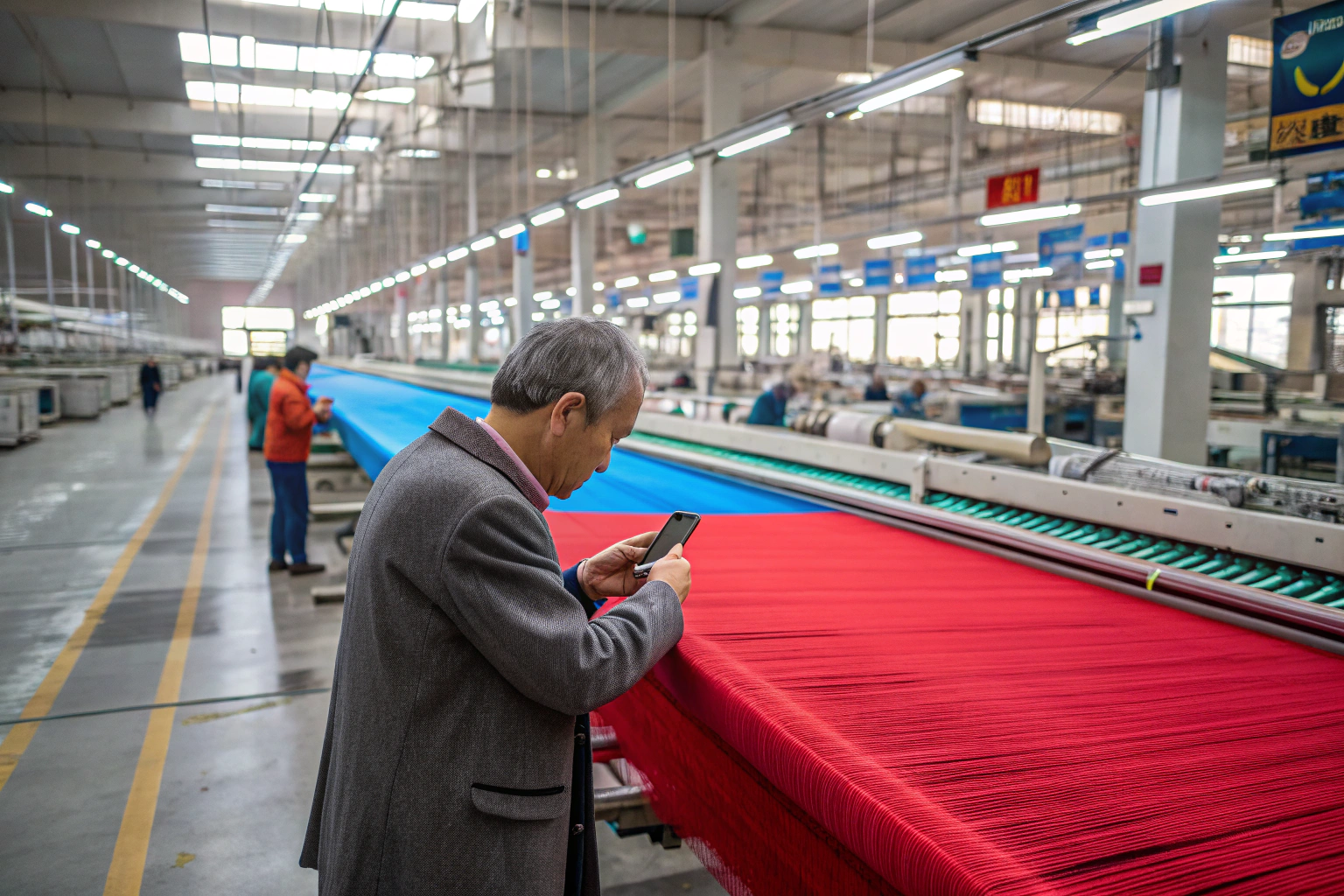
The solution is hiding in plain sight, and it lives inside our factory in Keqiao. High-resolution, real-time visual proof from your actual production floor is the ultimate trust-builder. At Shanghai Fumao, we’ve turned transparency into a marketing weapon for our clients. We don’t just hand you a generic stock image of a textile machine; we give you a live window into your specific order—showing the warp beams loading on our looms or the color matching happening in our CNAS-certified lab. When a customer sees a detailed shot of a technician inspecting the selvedge of your twill weave or a video of the screen printing process for your custom design, the abstract concept of "quality control" becomes tangible reality. This visual proof shatters skepticism. It shows that a real human being, with deep expertise and professional tools, is guarding the standard of every meter of fabric you sell. This isn’t just about transparency; it’s about transferring our 20 years of credibility directly to your website, transforming your brand story from “trust us” to “see for yourself.”
Look, I know the logistics of sourcing from China can feel like a black box. You’re probably budgeting extra time to account for that 3-4 week shutdown during Chinese New Year or trying to beat the rush before Golden Week shuts the supply chain down. But imagine leveraging those peak production periods in March through May to generate a flood of visual content, showing your customers exactly why the wait is worth it. This isn’t just a guide on photography; it’s a roadmap to building a bulletproof brand. Stick with me, and I’ll show you how to turn our shop floor into your strongest sales tool, even when U.S. tariff news is making your margins tight.
How to Verify Supplier Quality Through On-Site Factory Photography?
Staring at a grainy, low-resolution photo of a “factory” that looks suspiciously like a random warehouse is a fast track to a sourcing disaster. The fear isn’t just that the fabric is late; it’s the sinking realization that you might have wired a 30% deposit to a middleman who has never touched a loom. This "virtual quality check" anxiety is brutal. You can’t fly to China every week, but you need hard proof that the jacquard fabric you’re buying isn’t being held together by hope and starch. The guesswork is a risk your brand simply cannot afford to take.
You don’t need a plane ticket to audit a supplier; you need the right photos to do the job for you. By requesting highly specific, real-time photography from the production floor, you can run an effective remote audit. At Shanghai Fumao, we don’t just snap a blurry picture of a box. We show you the "greige" fabric inspection report right next to the roll. I always tell our clients to look for the calibration stickers on our lab equipment in the background. A photo of a lab technician running a colorfastness test on our Crockmeter, with today’s date visible on the screen, tells you we have nothing to hide. This visual honesty proves that we own our quality control process, rather than outsourcing it to an unreliable third party. It’s the difference between hearing a story and seeing a signed confession of quality.
When you use factory photography for quality verification, you need to move beyond staged smiles and empty hallways. You need forensic evidence. A photo of a pile of raw yarn sitting on a dirty floor is a screaming red flag. A photo of our climate-controlled yarn storage—where we keep the relative humidity stable to prevent brittleness—is a green light. We help our European clients audit our 4-point fabric inspection system by sending live shots of the inspection table. The image clearly shows the lighting conditions, the speed of the fabric scrolling, and the green "passed" chalk mark on the selvedge. This is how you prevent sub-standard rolls from ending up in a container heading for Long Beach. It’s not just a photo; it’s a process confirmation that validates our CNAS accreditation. This visual data complements the digital tracking on our labels, showing you the exact shrinkage rate before we cut the fabric.

Why Do "Behind-the-Scenes" Factory Shots Outperform Polished Studio Ads?
You are battling a wall of sameness. Every brand has a sterile white-background studio shot of their products, but your customer’s brain is trained to ignore this "marketing gloss." It feels manufactured, distant, and untrustworthy. However, a gritty, well-lit photo of a craftsman’s hands precisely aligning a silk screen for a repeat pattern triggers a completely different psychological response. (Here is a raw insider tip: we always dust the floor before these shots, but we leave the dye-stained gloves on the table. Perfection is the enemy of authenticity.)
Studio ads scream "I outsourced this," while factory shots whisper "I made this." Our clients have seen a massive lift in engagement just by swapping a model photo for a video of our circular knitting machine producing a seamless yoga wear tube. This kind of content grounds your brand in reality. When you show a spool of recycled polyester yarn being fed into a machine, you don’t have to shout about sustainability; the photo proves it. This visual evidence of the value chain replaces empty claims with physical facts, making your marketing message feel less like a scam and more like an invitation to witness the craft.
How Can Live Production Timestamps Stop Sourcing Delays?
We all know the agony of the "shipping delay" email. Your marketing campaign is live, but the stock is stuck in dyeing. The date stamp on a photo acts as a legal contract with reality. We encourage our clients to ask for a "selfie" of the product with a clock or a daily newspaper (yes, we still buy newspapers for this) in front of the finishing machine.
This method saved one of our New York-based clients during the chaotic post-COVID shipping crisis in August 2022. They needed about 2,000 yards of linen-viscose blend for a summer drop. We sent daily images of the fabric moving from the stenter machine to the cutting table, with GPS-tagged timestamps. This transparency diffused their anxiety immediately. They used these photos internally to adjust their launch calendar and externally in a newsletter explaining a slight delay, which actually increased customer loyalty. It’s a hardcore check against the Chinese manufacturing peak periods. If we promise the fabric is on the loom during the March-to-May rush, the photo proves we aren’t lying to buy time.
How to Create Visual Proof of Ethical and Sustainable Sourcing?
The biggest fear for a modern fashion brand isn’t just a stitching flaw; it’s a viral TikTok video exposing a sweatshop in your supply chain. The "greenwashing" accusation is a lethal weapon in today’s market, and a generic certificate of organic cotton from an unknown body does nothing to protect you. Your customers are increasingly sophisticated, and they view brands with a baseline suspicion. They aren’t just buying clothes; they are buying a statement, and if your ethical stance is a facade, your brand equity can vanish overnight. The pain point is the gap between a certificate and a living, breathing ethical environment.
To neutralize this skepticism, you need to move from "certification" to "visualization." You need to show the human element of ethical production in a dignified way. We don’t just tell you we invest in green energy; we show you the solar panels on the roof of our dyeing facility. When a customer questions your claim about low-carbon production, a photo of our water recycling system—showing the clear, treated water flowing back into the process—is an indisputable argument. At Shanghai Fumao, we take it a step further. We photograph the ergonomic workstations and the ventilation systems in our coating factory. Showing a worker in a clean, organized environment with professional safety gear carries more weight than a 100-page audit report.
Visual storytelling lets you turn abstract ESG (Environmental, Social, and Governance) commitments into concrete proof points. You can’t photograph "fair labor," but you can photograph the process. We help brands build a "visual contract" with their end-users. For a client in Germany specializing in baby clothes, we provided a full photo essay of our eco-friendly printing process. We showed the non-toxic, water-based inks mixing to match a specific pastel pink, the squeegees applying the paste, and the final fabric being dried in a gas-free heat chamber. This visual proof trumps any tag that simply reads "eco-friendly." It’s the difference between a suspect marketing claim and a verifiable reality.

What Makes a Carbon Footprint Real Through Factory Photography?
Calculating a carbon footprint is complex mathematics, but seeing it is simple physics. Most brands fail to communicate their sustainability because it’s invisible. Photography makes it visible. You can’t see CO2, but you can see the biomass pellets we use to fuel our boilers instead of coal.
I always advise brands to focus their lenses on the "energy transition" elements. Capture the transportation within the plant. A photo of a forklift running on electricity, not diesel, moving a pallet of Tencel fabric speaks volumes about our commitment to clean production. When we document a recycled polyester batch, we don’t just take a photo of the white flakes; we photograph the QR code tracking system we use to trace the bottles from source to yarn. This traceability, visible in a single photo, directly attacks the skepticism surrounding recycled content.
How Do You Document Safe Working Conditions Authentically?
This is where many brands stumble into "poverty porn" or staged, awkward grinning. Authentic documentation of working conditions requires respecting the craft. The secret is to never stage a photo of a worker looking at the camera and smiling. Always capture them in flow.
Last fall, a Scandinavian home-textile client was terrified of a social media backlash regarding labor rights. We sent them unposed, candid-style images of our technical director adjusting the warp tension on a rapier loom—focusing on the dexterity of the hands and the precision of the machine. We also included wide shots showing the clear, lighted exit pathways and the organized fire extinguishers. These images didn’t look like charity guilt-trips; they looked like a high-tech automotive factory. We matched these with shots from our break areas, showing the clean water dispensers. This documentation isn’t just defensive armor; our clients use it as a proactive marketing tool, proving that their supply chain is built on engineering excellence, not cheap labor exploitation.
How to Use Visuals to Navigate US Tariff and Customs Hurdles?
The volatility of US tariffs on Chinese textiles is a massive headache. You’re probably lying awake calculating if your 301 exclusion is going to expire on your shipment of bamboo silk. This uncertainty freezes your cash flow and makes planning a nightmare. The traditional way to handle this is frantic emails and pleading for a low-advised customs value, which is illegal and puts your entire business at risk. The emotional pain comes from the helplessness of waiting for a customs officer to determine your fate without having a voice in the discussion.
Visual documentation is your legal shield and your negotiation sword. We use factory photos to provide undeniable proof of manufacturing process and product classification, which directly impacts the tariff code. For example, there is a significant tariff difference between a "coated fabric" and a "laminated fabric." We help our U.S. clients by providing detailed, macro-lens photos of the cross-section of a PU coated fabric. The image clearly shows the adhesive layer distinct from the textile base, providing visual evidence for the Harmonized System (HS) code classification. When you present this to your customs broker, you are arming them with hard evidence to justify a lower duty rate.
Additionally, in an era where de minimis rules are under scrutiny, proving the value of your goods is critical. We document the intricate handwork of embroidery or the complex repeat pattern of a jacquard loom to justify the product’s true artistry and technical value. A high-end fashion client recently used our detailed macro shots of 3D embroidery to argue that their fabric shouldn’t be categorized under a generic broadwoven tariff band. The photos demonstrated that the "ornamentation" was an integral part of the weave, not a superficial addition. This visual evidence directly saved them about 8% on that shipment. It transforms the shipping process from a blind gamble into a transparent, defensible operation, giving you a competitive edge against those still shipping in the dark.

Why Do Customs Brokers Need High-Res Classification Photos?
Customs clearance often fails not because the product is bad, but because the description is vague. A customs broker sitting at JFK doesn’t know if your "velvet" is a weft-knit pile or a woven warp pile. This distinction matters for Chapter 60 vs Chapter 58 of the tariff schedule. We provide high-resolution macro photography that acts as a digital fingerprint.
We take a photo of a dime placed against the cut edge of the fabric to show scale and structure. We show the backside of the knit to prove it’s a weft insertion. These aren’t pretty lifestyle images; they are technical evidence. We file these photos with the shipping documents so the broker can instantly see the stitch construction. This proactive approach stopped a detention in May 2023 for a client shipping "flocking fabric." Customs initially classified it as an expensive synthetic fur, but our macro cross-section photo showed the short, electrostatically adhered fibers, proving it was a textile flocking, not fur, saving a ton of money and a week of demurrage.
How Can Product Craftsmanship Photos Justify Fair Market Value?
US Customs looks for undervaluation. If you declare a price that seems "too low," they will sting you with a penalty. But what if you are simply an efficient buyer working with a vertically integrated powerhouse? You need to justify that your price is fair, not fake. High-quality craftsmanship photos tell the story of value.
When we ship a high-thread-count cotton sateen, we attach photos showing the yarn count measurement on the micrometer and the surface smoothness under a gloss meter in our lab. These visual specs correlate directly with the price. If Customs questions a declared value, the broker immediately pulls up the photo demonstrating the mercerized finish that adds intrinsic value to the raw fiber. This "image audit trail" also perfectly serves your marketing team. You get a dual-use asset: a customs document that converts into a luxury product page visual, explaining to your customer why this cotton feels so expensive.
How to Optimize Factory Content for E-commerce Product Pages?
You know the depressing statistic: a generic product page converts at a mediocre rate because it feels like a commodity. If you’re selling a bamboo t-shirt, you are competing with a million other bamboo t-shirts. The pain point is the "race to the bottom" on pricing. When a customer sees the exact same copy and the exact same white-background photo on your site and a competitor’s, they choose the cheaper one. You bleed margin because you haven’t given them a reason to justify the premium, leaving your brand feeling hollow and interchangeable.
Injecting "factory floor" assets into your e-commerce layout shatters this commodity vibe. It transforms a "product" into a "project." We help brands break the "boring grid" layout by supplying dynamic, layered content that tells the origin story. Imagine a split-screen on your Shopify page: on the left, a high-resolution swatch of your linen; on the right, a looping GIF of that same linen being pulled taut on our inspection table, the glare of the light demonstrating the slub texture. This isn’t just a fabric; it’s a material with a birthplace. By integrating photos of our yarn sourcing and weaving directly into the product slider, you invite the customer into the Keqiao workshop, leveraging our legacy of "weaving the world’s style" to build your own brand authority.
But visual content must be designed for conversion, not just storytelling. We segment our photography to hit different psychological triggers. We provide "Hero" shots that focus on the fabric’s texture—so crisp you can almost feel the coolness of the Lyocell—and "Process" shots that show the garment dyeing technique. This strategy works wonders for the "price-to-value" ratio. When a customer is staring at a $150 dress and asks, "Why is it so expensive?", the carousel doesn’t just show a model on a beach; it shows the dress being screen-printed by hand and checked for alignment errors. This visual disclosure of the labor and precision involved rewires the customer’s brain to see the price as a bargain.

How to Turn a "How It’s Made" Video into a Trust Badge?
A trust badge isn’t just a shield icon for a secure checkout; it’s a piece of content that tells the customer, "We aren’t hiding anything." A tightly edited "How It’s Made" clip acts as a super-badge. It answers the unasked question: "Is this a scam?" We help create this by filming the "bottleneck" processes that distinguish high quality from low quality.
(Let me interject here: our turnaround on raw video footage is incredibly fast.) Specifically, we film the seam slippage test in our lab. We push a needle through the fabric to measure the resistance. It sounds technical and boring, but it’s visual proof of durability. We then overlay a simple caption: "Will this dress pull apart at the seams? Not likely." This kind of content, hosted natively on your product page, reduces return rates dramatically because it sets the correct expectation for the fabric’s weight and rigidity before the customer buys.
How Does Real-Time Inventory Visualization Build Urgency?
Scarcity marketing fails if it’s fake. If you have a countdown timer that resets every day, you destroy trust. But what if you showed the actual stock on the shelf? We connect our warehouse data with a visual dashboard for our DTC clients. A simple wide-angle shot of a specific shelving unit, updated weekly, with the raw fabric rolls labeled with your brand’s hang tag, creates undeniable scarcity.
When a customer sees that there are literally only five rolls of that "discontinued floral silk" sitting in our Keqiao facility, the urgency is authentic. This isn’t just about FOMO (Fear Of Missing Out); it’s about pre-selling production capacity. During the slow months of November, we work with brands to photograph the raw fabric rolls and allow them to offer a "pre-booking" model. The customer sees the greige fabric waiting to be dyed, understands the timeline, and feels like they are part of a bespoke experience rather than just pulling mass junk off a shelf. It manages delivery expectations seamlessly while keeping the cash register ringing.
Conclusion
We’ve walked through the entire pipeline, from verifying the deep technical quality of our looms to the final click on your e-commerce checkout page. The takeaway is simple: generic stock imagery is a liability, and factory-sourced visuals are your brand’s equity. We’ve shown how a date-stamped picture of a lab test can save you from thousands of dollars in shipping delays, and how a macro lens shot of a coated fabric can shave 8% off your U.S. tariff bill. This isn’t just about having pretty content; it’s about having a forensic accounting system for trust. When you show the exact water recycling system or the skilled hands guiding a silk screen, you stop being a reseller of commodities and start being a curator of quality.
The supply chain nightmares of peak season congestion and opaque certification are not going away, but you can armor yourself against them with transparency. We built our facility in Keqiao to be a global content studio, not just a factory. Every beam on the loom and every drop of dye in the bath is an asset waiting to be captured to build your brand’s confidence. Stop hiding behind generic marketing fluff and start leveraging the physical reality of your supply chain to separate yourself from the noise.
If you are ready to stop chasing cheap suppliers and start building a documented, transparent, and bulletproof supply chain that delivers high-quality woven and knit fabrics, I invite you to reach out to us directly. At Shanghai Fumao, we don’t just fill orders; we partner with brands to create a visual narrative that sells. For a direct discussion on how we can support your next collection of woven cotton, functional outerwear, or home textiles with full visual documentation and fast development, please contact our Business Director, Elaine. Drop her an email at elaine@fumaoclothing.com. Let’s make something authentic together.








