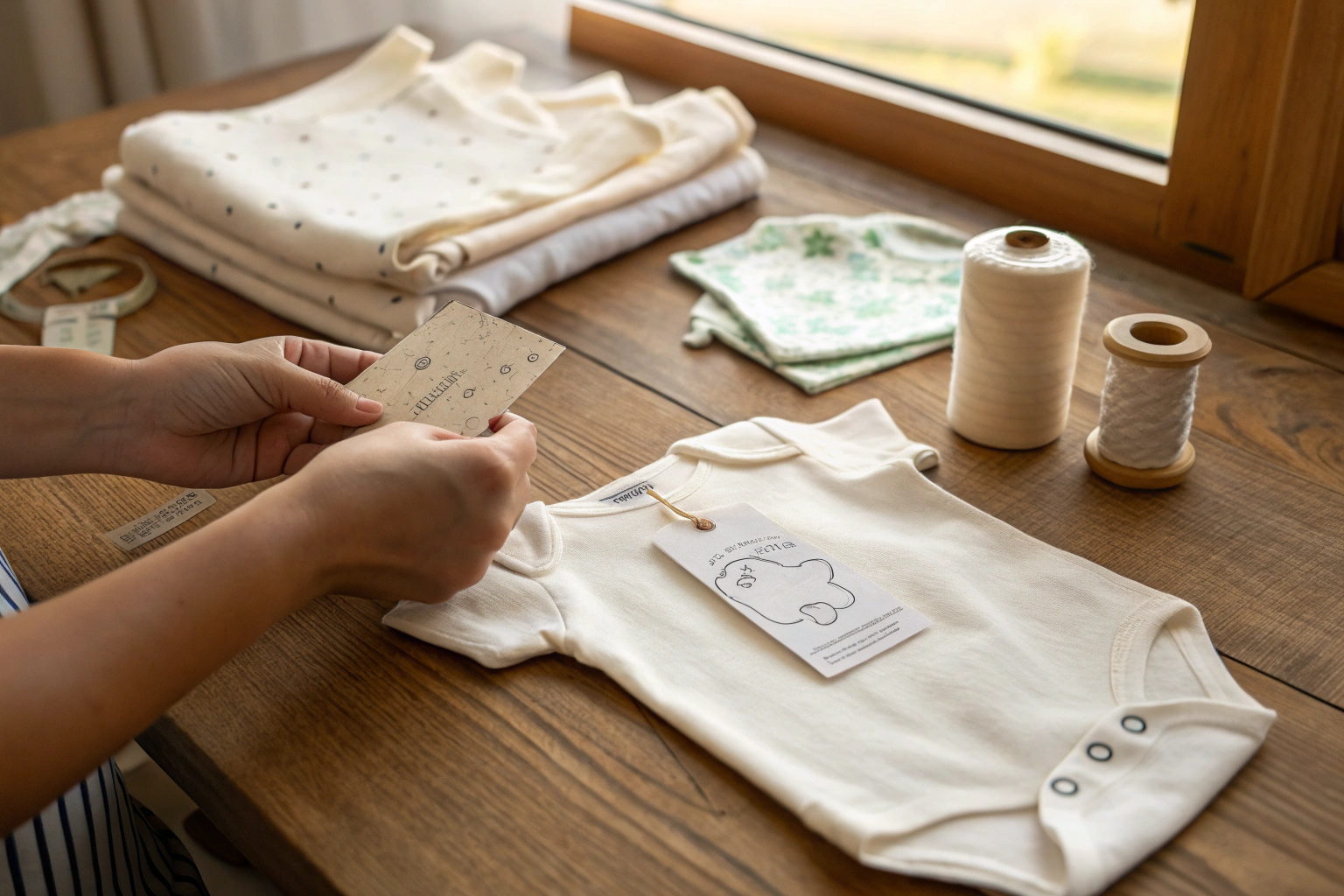
Let me tell you something I’ve learned from twenty years in the textile game. There is no margin for error when it comes to baby fabric. Zero. You can get away with a slightly off shade of navy on a men’s jacket. You cannot get away with a single milligram of harmful formaldehyde or heavy metal in a onesie that goes against a newborn’s skin. The stakes are just higher. And that’s why sourcing GOTS certified cotton is not just a marketing checkbox. It’s a legal shield and a moral baseline.
I’ve seen too many small brands get burned because they trusted a supplier who said "Yes yes organic cotton" and then couldn’t produce a single piece of paper when the shipment landed in Long Beach. They ended up with a warehouse full of inventory they couldn’t legally sell as "organic" and a huge hole in their cash flow. The pain of a failed organic certification audit is real. It’s not just about the fabric softness. It’s about the Chain of Custody. If that chain breaks anywhere between the farm in India and the cutting table in Los Angeles you lose the right to use the word "GOTS" on your hang tag.
At Shanghai Fumao we’ve been navigating the GOTS certification landscape for over a decade. We supply fabric to some of the strictest baby brands in Europe and the US. And I can tell you that the difference between a real GOTS supplier and a fake one is about 50 pages of documentation and a factory that smells like a hospital not a chemical plant. My goal with this article is to give you the exact roadmap we use to verify our own upstream suppliers. I’m going to show you what to look for what to ask for and what red flags should make you run for the hills.
This isn’t about being a hippie. This is about risk management. When you’re selling baby clothes one recall or one social media post about a rash can destroy your brand forever. GOTS certification is your insurance policy against that nightmare. Let’s break down exactly how you secure that insurance.
What Exactly Does GOTS Certified Cotton Mean for Infants
Let’s get the acronyms straight because the industry loves to confuse people. GOTS stands for Global Organic Textile Standard. It is the worldwide leading textile processing standard for organic fibers. Notice I said "processing" not just "farming." That’s the key difference between a bale of organic cotton and a roll of GOTS certified fabric.
Many people think "organic cotton" means the whole thing is safe for baby. Not true. You can take organic cotton from a beautiful farm in Turkey and then dye it in a factory in China that uses Azo Dyes and Formaldehyde Fixatives. The finished fabric will be soft but it will be loaded with carcinogens and skin irritants. That fabric is organic at the fiber level but it’s toxic at the finishing level. For a baby with developing skin and an immature immune system this is a disaster waiting to happen.
GOTS certification covers the entire supply chain. It tracks the seed the harvest the ginning the spinning the knitting or weaving the dyeing and the finishing. Every single facility that touches that fiber must be audited by a third-party certification body. They check for Social Compliance no child labor no forced labor fair wages. They check for Environmental Compliance wastewater treatment chemical input lists. And they check for Quality Assurance restrictions on harmful substances. When you buy a roll of fabric with a GOTS label and a Scope Certificate you are buying a promise that every hand that touched that cotton was treated fairly and every chemical used was safe for a baby’s mouth. That’s what you’re paying for.

How Does the GOTS Standard Regulate Chemical Inputs for Babywear
This is the part that keeps me up at night if I think about cheap fabric from uncertified mills. The list of banned substances in GOTS is long and specific.
For baby clothing the standard is even stricter than for adult clothing. GOTS has a special classification called "GOTS Goods for Organic Textiles (Grade 1: Baby)" . This applies to products intended for children up to 36 months of age. The allowable limits for Heavy Metals like Lead and Cadmium are near zero. The limits for Formaldehyde are essentially undetectable (less than 16 ppm). Compare that to standard fabric which can legally contain up to 75 ppm or more and still be sold in the US. That’s a massive difference in chemical load.
The standard also bans all Azo Dyes that can break down into carcinogenic amines. It bans Chlorine Bleaching. It bans Phthalates in prints. It bans PFAS (forever chemicals) in any water-repellent finishes. Basically if it sounds like something you wouldn’t want your kid to drink GOTS doesn’t allow it in the fabric. We have a specific Positive List of approved chemicals we can use in our dye house. If it’s not on that list it doesn’t come through the gate. That’s a huge operational shift from conventional production. If you want to see the specific scientific rationale behind these restrictions I recommend reading up on the detailed GOTS version 7.0 criteria for chemical inputs in organic textile processing and their toxicological assessment. It’s dense but it explains exactly why certain dyes are banned.
What Is the Difference Between OEKO-TEX and GOTS for Infant Safety
This is a question I get constantly from new brand owners. "I found fabric with OEKO-TEX. That’s the same as GOTS right?" Wrong. They are completely different and for baby clothing GOTS is superior.
OEKO-TEX Standard 100 is a Product Test. It means the finished fabric was tested for a list of harmful substances and passed. It’s a snapshot in time. It’s a good standard and it’s much better than nothing. It guarantees the fabric you’re holding is safe.
GOTS is a Process Certification. It guarantees the fabric is safe and that the cotton was grown organically and that the workers who made it were treated fairly and that the wastewater was treated properly. It’s a holistic view of the entire life cycle of the product.
Here is a simple comparison table based on what we have to document for our annual audits.
| Certification Aspect | OEKO-TEX Standard 100 | GOTS (Global Organic Textile Standard) |
|---|---|---|
| Fiber Origin | Not verified (Can be conventional) | Must be Certified Organic |
| Chemical Safety | Tested for harmful substances | Inputs strictly controlled + Tested |
| Social Compliance | Not included | Mandatory (ILO Core Conventions) |
| Environmental Management | Not included | Mandatory (Wastewater Treatment) |
| Best For | General apparel safety | Baby clothing & Organic Claims |
For a baby onesie OEKO-TEX is the floor. GOTS is the ceiling. You want the ceiling.
How Can I Verify a Supplier’s Genuine GOTS Certification
Alright you’ve found a supplier maybe even us at Shanghai Fumao who says they sell GOTS cotton. Don’t just take their word for it. The internet is full of fake certificates. I’ve seen PDFs that were edited in Photoshop with a changed date and a fake logo. You need to verify independently.
The GOTS organization provides a free public tool for exactly this purpose. It’s the GOTS Public Database. Every certified entity is listed here. This is your first and most important stop.
Here is the step-by-step verification process I teach my junior merchandisers. First ask the supplier for their Scope Certificate (SC) Number. Not their Transaction Certificate. The Scope Certificate is the license to operate. It looks like "CU 123456" or "ECOCERT 7890". Second go to the GOTS website and enter that number. Third check the Company Name and Address. Does it match the name on their invoice and website? Fourth and most critically check the Scope section. This lists exactly what they are certified to do. Does it say "Weaving of Organic Cotton Fabrics"? Or does it say "Trading of Textile Products"? If they claim to be a mill but the scope only says "Trading" they are a middleman and they are buying from someone else. That’s a red flag for cost and traceability.
If the certificate is expired or the number doesn’t show up walk away. It doesn’t matter how nice the swatch is. They are lying about their credentials and if they lie about that they will lie about the fiber content.

How to Read a GOTS Scope Certificate for Fabric Mills
This document is the Rosetta Stone of organic sourcing. It’s usually one page but it contains a universe of information. You need to learn how to decode it.
Look at Section 1: Certified Operator. This is the legal name and address of the facility. This address should be the physical factory location not a sales office in a fancy high-rise.
Look at Section 2: Certification Body. This is the auditor. Reputable bodies include Control Union ECOCERT CERES and OneCert. If it’s a certification body you’ve never heard of do a quick Google search to see if they are accredited by GOTS.
Look at Section 4: Product Categories. This is the most important part for a buyer. It lists the Processing Steps the facility is allowed to perform under GOTS. You need to see specific wording relevant to your order. For baby fabric you want to see "Knitting" "Weaving" "Dyeing" and "Finishing" . If you only see "Trading" or "Storage" this company cannot legally produce GOTS fabric. They can only buy and resell it.
I’ve seen brands get tripped up by this. They buy "GOTS Fabric" from a trader who has a Trading Scope Certificate. The fabric is GOTS certified but the brand has no direct line of sight to the mill. If there’s a quality issue or a contamination risk they have to go through a middleman who may not be transparent. At Shanghai Fumao our Scope Certificate explicitly lists "Weaving Knitting Dyeing Finishing" because we own and control those processes.
Why Are Transaction Certificates Crucial for Baby Clothing Brands
The Scope Certificate is the license. The Transaction Certificate (TC) is the receipt. And for baby clothing brands the TC is the only document that proves your specific shipment is GOTS certified.
When we ship a container of GOTS fabric to a baby brand we issue a TC that matches the invoice number. That TC states: "Company A (Shanghai Fumao) sold 5,000 yards of GOTS Certified Cotton Jersey to Company B (Baby Brand)." This document travels with the goods. When the brand goes to get their GOTS certification for the finished garment they need our TC to prove the inputs were certified.
Without that piece of paper the chain of custody is broken. If you are audited by GOTS or if a consumer watchdog group asks for proof you must produce that TC. If you can’t you are committing fraud by labeling the garment as GOTS. This is serious business. The Federal Trade Commission (FTC) in the US fines companies for false organic claims.
Here is a simplified view of how the paper trail works from farm to finished garment.
| Stage in Supply Chain | Certification Required | Document Issued |
|---|---|---|
| Cotton Farm | Organic Farm Certificate | Farm Scope Certificate |
| Ginning / Spinning | GOTS Scope Certificate | Transaction Certificate (TC) to Mill |
| Knitting / Weaving Mill | GOTS Scope Certificate | Transaction Certificate (TC) to Brand |
| Cut & Sew Factory | GOTS Scope Certificate | Transaction Certificate (TC) to Retailer |
| Baby Brand / Retailer | GOTS Scope Certificate | Label claim verified by TCs |
If you want a deep dive into this process from a regulatory perspective I recommend looking at resources that explain the requirements for labeling textile products as organic under the USDA National Organic Program and FTC Green Guides. It helps you understand the legal weight of the word "organic" on a hang tag.
Where Are the Best Regions to Source GOTS Baby Cotton
Geography matters when you’re sourcing GOTS cotton. Not all cotton is created equal and not all certification bodies have the same rigor in different countries. Based on our supply chain experience at Shanghai Fumao there are three main hubs for high-quality GOTS cotton suitable for babywear.
The first and largest is India. India is the world’s biggest producer of organic cotton. The states of Madhya Pradesh and Gujarat are the heartland. The advantage of Indian cotton is the Staple Length. Indian organic cotton tends to be a medium-long staple which is great for soft durable jersey and interlock fabrics. It spins well and has a nice natural handfeel. The disadvantage is the Water Situation. Cotton is a thirsty crop and some regions of India face water scarcity. This is why sourcing from Rain-Fed organic projects is better than sourcing from irrigated ones. You have to ask those questions.
The second hub is Turkey. Turkish organic cotton is considered the gold standard by many European baby brands. The Aegean Region produces a very clean high-quality fiber with excellent whiteness. Because Turkey is closer to Europe the carbon footprint for shipping is lower if your production is in the EU. Also Turkish spinning mills are incredibly advanced. They produce Combed Compact Yarns that have almost zero hairiness. That’s crucial for baby clothes because loose fibers can be inhaled by infants. Turkish GOTS cotton is more expensive but for premium newborn layette it’s often worth it.
The third hub is China (Xinjiang) . This is a sensitive topic but it’s important for transparency. There is GOTS certified organic cotton grown in China. However due to recent US legislation the Uyghur Forced Labor Prevention Act (UFLPA) any cotton or cotton product from Xinjiang is subject to a Rebuttable Presumption of Forced Labor at the US border. This means even if the cotton is GOTS certified it will be detained by CBP unless you can prove the supply chain is clean of forced labor. For a baby brand shipping to the US market this is an absolute nightmare of paperwork and risk. For this reason most of our US-bound baby fabric uses cotton from India or Turkey processed in China. We keep the origin documentation pristine.

How Does Indian Organic Cotton Compare to Turkish for Softness
This is a question of spinning technology versus fiber genetics. Both can be incredibly soft but the route to that softness is different.
Indian Organic Cotton is naturally soft because of the fiber structure. It has a slightly higher Micronaire (fineness) reading. It feels cottony and plush. It’s perfect for Open-End Yarns used in cozy fleece for baby blankets or for Ring Spun Yarns for classic jersey.
Turkish Organic Cotton is known for its Purity and Cleanliness. The ginning process in Turkey is exceptional resulting in very little trash or contamination in the bale. When you combine that clean fiber with Combed Compact Spinning you get a yarn that is incredibly smooth and almost silky. It doesn’t pill. It stays smooth wash after wash.
I often tell my clients: "Indian cotton is for the baby’s blanket. Turkish cotton is for the baby’s first outfit." It’s a generalization but it holds true in terms of handfeel. Both are excellent and both are GOTS certifiable.
Here is a technical comparison of the two fiber origins based on spinning mill data.
| Fiber Characteristic | Indian Organic Cotton (Typical) | Turkish Organic Cotton (Typical) |
|---|---|---|
| Staple Length | 28mm – 32mm | 30mm – 34mm |
| Micronaire (Fineness) | 3.8 – 4.5 | 3.5 – 4.2 |
| Trash Content | Medium (Requires cleaning) | Low (Cleaner bales) |
| Best Spinning Method | Ring Spun / Open End | Combed Compact |
| Resulting Handfeel | Soft / Cozy | Silky / Smooth |
What Are the Logistics of Importing GOTS Cotton from Asia
Bringing GOTS cotton into the US or EU requires more than just a container. It requires a Paperwork Firewall. Because the cotton is organic it cannot be mixed with conventional cotton at any point. This affects how it’s shipped.
Segregation in Transit: The container must be clean. We have to provide a Fumigation Certificate showing the container was not treated with banned pesticides. The fabric rolls must be wrapped in poly bags marked "GOTS Organic Cotton" to prevent cross-contamination with conventional cargo in the same ship.
Customs Clearance: For the US market the HTS code for organic cotton is the same as conventional cotton. But you must be prepared to provide the Transaction Certificate to CBP if requested. If you are claiming duty preference under GSP you need a Form A as well.
Warehousing: Your warehouse needs a GOTS Scope Certificate for Storage if you want to store certified goods before selling them. This is a step many small brands miss. They break the chain of custody in their own stockroom. You need to have an Organic Control Plan that outlines how you prevent co-mingling.
This level of detail can be daunting but it’s the cost of entry. For more information on the specific import regulations I suggest looking at USDA Agricultural Marketing Service guidelines for the importation of organic products into the United States. It clarifies the role of the NOP import certificate.
What Are the MOQs and Pricing for GOTS Baby Fabric
Let’s talk numbers. This is where the rubber meets the road. GOTS certified fabric for baby clothing is more expensive than conventional fabric. There’s no way around it. The question is how much more expensive and what do you get for that premium.
At the mill level the cost difference comes from three main buckets. First the Raw Cotton Premium. Organic cotton lint costs about 20-30% more than conventional cotton lint because the yields are lower and the certification costs money. Second the Certification Overhead. We pay an annual fee to the certification body plus the cost of the annual audit which takes several days of management time. Third the Process Segregation. We have to stop production clean all the machinery run a "flush" batch of organic fabric to clean out any conventional fibers and then run your order. This takes time and time is money in a textile mill.
For a basic 180 GSM GOTS Cotton Jersey in a natural undyed state you can expect to pay around $4.50 – $6.00 per yard depending on volume. Compare that to conventional cotton jersey of the same weight which might be $2.80 – $3.50 per yard. That’s a significant jump. For dyed fabric add another $0.80 – $1.50 per yard for GOTS approved reactive dyes. Printing adds even more because the screens and pastes must be GOTS compliant.
However Minimum Order Quantities (MOQs) for GOTS are often Lower than for conventional fabric at mills that specialize in this niche. Why? Because the organic market is driven by smaller ethical brands. At Shanghai Fumao our MOQ for custom GOTS colors is around 500 yards per color. For stock colors it’s as low as 100 yards. This is a huge advantage for a baby brand that needs to test the market with a small capsule collection.

How to Calculate True Landed Cost for Organic Cotton Blends
When you’re budgeting for baby clothes don’t just look at the fabric price per yard. You need to calculate the Landed Cost and then the Garment Cost.
Fabric Cost is just the start. Add Air or Ocean Freight. Because GOTS cotton is a premium product many brands choose Air Freight for their launch quantities to get to market faster. That adds $1.50 – $3.00 per yard. Add Duty. Organic cotton has the same duty rate as conventional cotton (around 8-12% for most apparel items). Add Cutting Waste. Because GOTS fabric is expensive you want to maximize efficiency. We recommend a Marker Efficiency of at least 85% for baby onesies.
Then you have the Trim Costs. If you’re making a GOTS certified garment the Sewing Thread must also be GOTS certified. The Labels and Hang Tags must meet GOTS criteria for paper and ink. The Poly Bag for shipping must be biodegradable or certified compostable in some cases. These little things add $0.30 – $0.50 per garment.
Here is a sample cost build-up for a simple baby onesie to show you where the money goes.
| Cost Component | Conventional Cotton Onesie | GOTS Certified Cotton Onesie |
|---|---|---|
| Fabric (per garment) | $0.65 | $1.10 |
| GOTS Trim Package | N/A | $0.25 |
| CMT (Cut Make Trim) | $1.20 | $1.30 (Certified Factory) |
| Testing & Certification | $0.05 | $0.20 (TC Fees) |
| Total FOB Cost | $1.90 | $2.85 |
| Retail Price (5x Markup) | $9.50 | $14.25 |
Why Do Stock Service Programs Reduce GOTS Sourcing Risk
This is a specific service we offer that solves a huge problem for baby brands. The problem is Lead Time vs. Cash Flow. If you need custom-dyed GOTS fabric the lead time is 8-10 weeks. You have to pay a deposit and wait. If you’re a small brand that’s a lot of cash tied up in fabric that hasn’t even arrived yet.
A Stock Service Program means the mill holds inventory of Greige GOTS Fabric in core weights. We keep 180 GSM Jersey and 220 GSM Interlock on the shelf in a prepared-for-dye (PFD) state. When you place an order we only dye the yardage you need. This cuts the lead time from 8 weeks to 3-4 weeks. It also reduces your financial exposure because you’re not paying for the greige goods until we dye them.
This is the smart way to source GOTS for baby clothing. You get the speed of conventional sourcing with the integrity of organic certification. You can test colors and styles in small batches and scale up quickly if something sells out. It’s how we help brands compete with the big guys without having to warehouse thousands of yards of fabric themselves. For more tactical advice on managing inventory for small brands you can find useful discussions on online forums for children’s clothing brand owners discussing fabric inventory management and MOQ challenges. Real talk from real founders.
How to Ensure Colorfastness for Baby Clothes Without Harsh Chemicals
Babies drool. Babies spit up. Babies have blowouts. Baby clothes get washed a lot. Like a lot a lot. If the color isn’t fast you’re going to have a lot of very angry parents sending you photos of faded sad-looking onesies. But you’re working with GOTS which bans all the harsh Heavy Metal Fixatives that conventional dye houses use to lock in color. So how do you get bright safe colors that don’t bleed?
The answer is Low-Impact Fiber Reactive Dyes and Expert Process Control. This is where the skill of the dye house technician matters more than the chemicals they use. With reactive dyes the dye molecule forms a covalent bond with the cellulose fiber. It literally becomes part of the fabric. If you do this correctly with the right temperature the right pH and the right salt concentration the bond is permanent.
But here’s the catch. After dyeing the fabric is full of Unfixed Dye. This is the loose dye that didn’t bond. If you don’t wash it out thoroughly it will bleed all over the baby’s other clothes. GOTS requires a rigorous Soaping and Rinsing process using hot water and specific detergents. This process uses more water and energy than conventional dyeing. It’s one of the hidden environmental costs of making safe baby clothes. But it’s non-negotiable.
At Shanghai Fumao we run a Cold Pad Batch Dyeing process for our GOTS cotton. This uses significantly less water and salt than traditional exhaust dyeing and it results in incredibly level color with minimal loose dye. It’s a better way to make fabric.

What Are GOTS Approved Alternatives to Azo and Heavy Metal Dyes
Let’s get specific about the chemistry. Azo dyes are cheap and vibrant. But some of them can break down into Aromatic Amines which are carcinogenic. GOTS bans them. So what’s left?
We use High-Fixation Reactive Dyes from suppliers like Huntsman and DyStar. These dyes have a fixation rate of over 85% meaning most of the dye bonds to the fabric and doesn’t go down the drain. They are more expensive per kilo but we use less of them.
We also use Natural Dyes for some specialty baby lines. Indigo for blue madder root for pink walnut hulls for brown. The problem with natural dyes for baby clothes is Color Consistency. Every batch of plants is slightly different. You cannot achieve the exact same Pantone shade season after season. And Lightfastness is often poor. A natural dyed onesie will fade in the sun much faster than a reactive dyed one. Parents need to know this. It’s not a defect it’s a characteristic.
For prints we use GOTS Approved Pigments. These are water-based inks that sit on the surface of the fabric. They don’t penetrate the fiber like dyes. They feel a bit stiffer initially but soften with washing. They are excellent for achieving crisp bright graphics on baby t-shirts.
How to Test for Color Bleeding at Home and in the Lab
As a buyer you need to know how to verify what the supplier tells you. There is a simple field test you can do in your office.
The Wet Crock Test: Take the fabric swatch and a piece of plain white cotton cloth. Wet the white cloth with warm water. Rub the colored fabric vigorously against the white cloth for 10 seconds. If any color transfers to the white cloth the fabric has poor Wet Crocking Fastness. That’s a fail for baby clothes. The drool will cause the color to rub off on the baby’s skin.
In the lab we use a Crockmeter which is a standardized rubbing machine. We also use a Launder-Ometer to test wash fastness over multiple cycles. The GOTS standard requires a Grade 3-4 or higher for color change and staining. This means the color stays put.
If you want to understand the science behind these tests better there are great resources explaining the AATCC test methods for colorfastness to crocking and washing for textile manufacturers and quality control professionals. It’s the language the lab technicians speak.
Conclusion
Sourcing GOTS cotton for baby clothing wholesale is not a simple transaction. It’s a commitment to a higher standard of manufacturing. It requires you to become a student of certification documents a skeptic of supplier claims and a partner to a mill that has invested in the infrastructure to do things the right way. The cost is higher the paperwork is thicker but the peace of mind is priceless.
When you hold a GOTS certified baby onesie you’re holding a product that represents the best of what the textile industry can be. Clean farming safe chemistry and fair labor. That’s a story that resonates with millennial and Gen Z parents in a way that "50% off" never will. It’s not just fabric. It’s trust woven into cloth.
At Shanghai Fumao we’ve built our baby fabric program around this exact philosophy. We don’t cut corners on GOTS because we know the end user is the most vulnerable consumer in the market. We keep the paperwork clean we keep the dye house clean and we keep the cotton pure.
If you’re ready to develop a GOTS certified baby collection and you need a partner who can walk you through the certification maze reach out to our Business Director Elaine. She manages our GOTS documentation and can provide you with sample yardage copies of our Scope Certificate and realistic lead times based on the current organic cotton market. Let’s make something safe and beautiful for the next generation.
Contact Elaine at: elaine@fumaoclothing.com