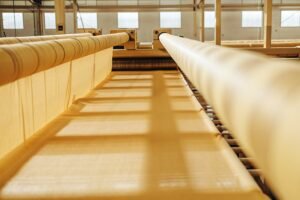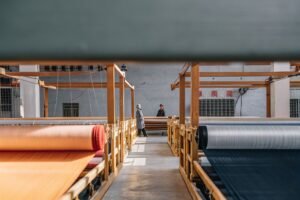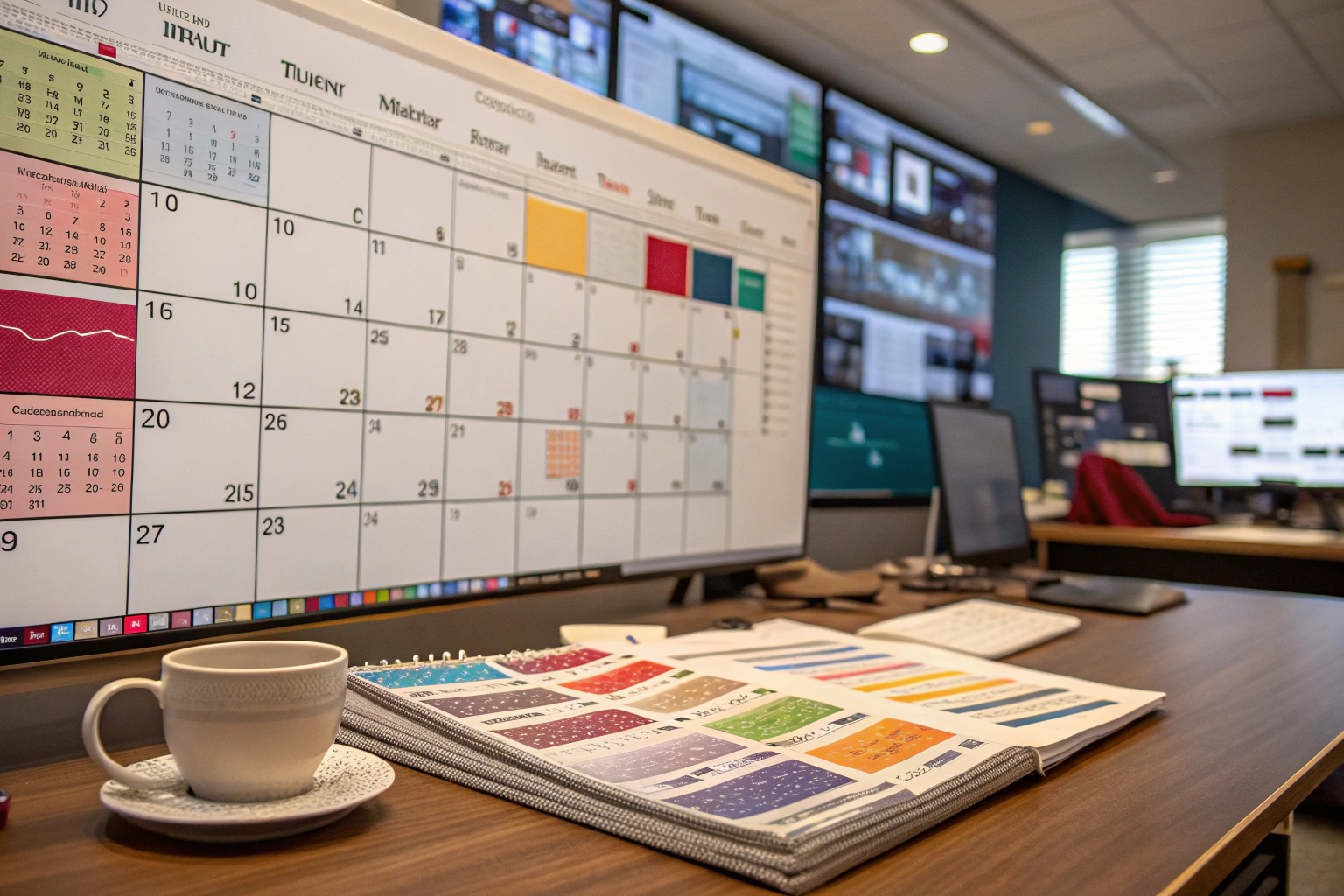
You know that sinking feeling when you check your email and see "Delay Notice" in the subject line? Your Spring collection launch is in six weeks, the photo shoot is booked, the influencers are waiting, and your fabric is stuck in a holding pattern somewhere in the Pacific. Or worse, it’s still sitting on a dyeing machine in Zhejiang because nobody told you the factory shuts down for an entire week for the National Day holiday. I’ve been in this industry for over two decades, running mills and shipping containers from Keqiao to every continent, and I can tell you with absolute certainty: Most sourcing delays aren’t supply chain disruptions. They’re planning failures. You’re not fighting a broken system; you’re fighting a calendar you don’t fully understand.
The secret to stress-free sourcing isn’t finding a magic factory that never sleeps. The secret is a Year-Round Fabric Sourcing Calendar that aligns with ancient lunar holidays, monsoon seasons, and the brutal reality of peak production backlogs. At Shanghai Fumao , we don’t just wait for orders to come in. We actively coach our clients on when to place those orders. A well-timed PO in November can arrive in 4 weeks. That same PO placed in late January? You might not see it until April. The difference is knowing the rhythm of the textile cluster here in Keqiao—a cluster that moves 25% of the world’s fabric.
This isn’t a generic "plan ahead" lecture. This is a month-by-month tactical guide built from the trenches of a Chinese weaving and dyeing conglomerate. I’m going to show you exactly when to press "go" on development, when to avoid the dye house at all costs, and how to leverage the slow months to get better pricing and faster samples. Whether you’re a brand owner in Los Angeles, a designer in London, or a buying agent in Sydney, syncing your watch with our clock is the single biggest competitive advantage you can unlock this year.
Let’s tear down that old spreadsheet and build a calendar that actually works.
When Is the Best Time to Source Fabric from China?
Look, I’m going to give you the answer straight up before we dive into the nitty-gritty of the other months. If you want the absolute sweet spot—the Goldilocks zone of Chinese fabric sourcing—it’s late June through early July, and the second week of November through the first week of December.
Why these weird, specific windows? Because they sit in the shadow of chaos. They are the calm after the storm of peak season and before the absolute madness of the holiday rushes. Let me explain what the calendar looks like from my desk in Keqiao.

What Are the Busy and Slow Seasons in Chinese Textile Mills?
This is the heartbeat you need to memorize. If you internalize this table, you’ll avoid 80% of the stress that keeps other buyers up at night.
| Period | Production Status | Impact on Sourcing | Insider Advice |
|---|---|---|---|
| Jan – Mid-Feb | SHUTDOWN / SLOW RAMP | Critical. Chinese New Year (CNY). Factories close for 2-4 weeks. | Do not expect any production. Use this time for design and sampling prep. |
| Mar – May | PEAK SEASON 1 | Heavy congestion. Lead times extend by 1-2 weeks. | Good luck getting a discount. Prices firm up. Focus on relationships to secure loom space. |
| Jun – Jul | SLOW SEASON (Opportunity) | Low capacity utilization. | Best time for bulk orders. Factories hungry for work. Lead times are short. |
| Aug – Oct | PEAK SEASON 2 (The Madness) | Extreme backlog for Winter/Holiday goods. | Expect 2-3 week delays. Dye houses are overflowing. Quality control can slip if not managed tightly. |
| Nov – Early Dec | PRE-HOLIDAY LULL | Factories pushing to clear orders before year-end inventory. | Second best time for bulk. Good leverage for pricing before CNY shutdowns begin. |
| Late Dec | WIND DOWN | Only small, urgent orders possible. | Shipping lines are a mess. Ports are jammed. Wait for January to ship if possible. |
I remember a specific instance in August 2021—right in the teeth of Peak Season 2. A European client insisted on placing a 2,000-meter order for a complex printed viscose challis. Normally a 3-week job. I told her it would be 6 weeks minimum. She didn’t believe me. She thought I was just managing expectations. By the time her greige fabric even got into the printing queue, the backlog was so deep that her fabric didn’t hit the water until mid-October. She missed her pre-Christmas delivery window and had to air freight the garments. That mistake cost her €12,000. Don’t be that buyer.
Why You Should Avoid Chinese New Year for Bulk Production
You might be thinking, "Chinese New Year is just a week off. How bad can it be?" Oh, my friend. You sweet summer child. Chinese New Year isn’t a vacation; it’s a migration event. 90% of the workforce in Keqiao’s dyeing and finishing plants are migrant workers from inland provinces like Anhui, Henan, and Sichuan. They travel home to see their families—often for the only time all year.
Here’s the timeline nobody tells you about:
1. The Pre-Holiday Rush (2 Weeks Before): Factories are trying to cram 4 weeks of work into 2 weeks to get invoices out the door before closing the books. Quality goes down. Machines are run at max speed, and inspections get sloppy. We caught a dye lot error in January 2023 that would have ruined 5,000 meters of fabric for a US brand because the operator was rushing to finish his shift to catch a train.
2. The Shutdown (1-3 Weeks): Absolute silence. Emails bounce back. Lights off.
3. The Post-Holiday Hangover (2-4 Weeks After): This is the real killer. Only about 70% of workers return in the first week. Some never come back; they found jobs closer to home. The factory is running on a skeleton crew. The yarn supply chain is dry because spinning mills have the same issue. A job that took 14 days in November suddenly takes 35 days in February.
If you want to learn more about how to navigate supply chain disruptions during lunar new year shutdowns, this logistics blog breaks down the port congestion data really well. But my advice? Just don’t do it. Plan to have your fabric on the water before January 15th, or wait until March to even start the conversation.
How to Schedule Fabric Development for Spring Summer Collections?
This is where I see the biggest disconnect between Western design calendars and Eastern manufacturing reality. You’re feeling the summer heat in July, swimming in the ocean, and you think, "Ah, I should start thinking about next year’s swimwear." Meanwhile, here in Keqiao, we’ve been weaving your Spring/Summer ’27 fabrics since last month. You’re already behind.

When Should I Start Sourcing Lightweight Cotton and Linen?
Listen closely because this is the most actionable advice in this entire article. If you want first pick of the best linen from the new flax harvest or the softest cotton voile, you need to be in development mode by July and August of the previous year.
Let me give you the Shanghai Fumao internal timeline for a Spring/Summer ’27 collection launching in March 2027:
| Phase | Timing | Action Required | Notes |
|---|---|---|---|
| 1. Concept & Sourcing | July – Aug 2026 | Review new yarn developments. Request handloom samples of linen and cotton. | This is when you want to be in our showroom (virtual or physical). The new season’s sample books are just printed. |
| 2. Lab Dips & Strike-offs | Sept – Oct 2026 | Finalize custom colors on lightweight bases. | Critical Window. If you wait until November, the printing mills are swamped with Winter bulk orders. Your sample will be deprioritized. |
| 3. Sampling Yardage | Nov – Dec 2026 | Order 50-100m for proto samples. | Beat the CNY shutdown. Get fabric in hand for January sample sewing. |
| 4. Bulk Order Placement | Early Jan 2027 | Place PO immediately after CNY. | You are first in the queue when looms restart in mid-Feb. |
| 5. Bulk Production | Mar – Apr 2027 | Weaving & Dyeing. | Smooth sailing. You avoided the peak season rush for Fall goods. |
In August 2024, a Australian boutique owner came to us looking for custom-dyed linen in a specific sage green for a December launch (Southern Hemisphere Summer). Because she started in August, we had the lab dips approved by September 15th. The yarn was spun and dyed in October. We wove the fabric in November—a traditionally slower month for linen mills who are gearing up for wool blends. Her fabric was cut and sewn in November, and she was selling dresses by the first week of December. Perfect timing. That’s the power of knowing the calendar.
What Is the Optimal Timeline for Printed Viscose and Rayon Development?
Prints are a different animal. You’re not just dealing with the greige mill and the dye house; you’re adding a printing mill and an engraving studio into the mix. This adds at least 3-4 weeks to any timeline.
For Spring/Summer prints (florals, geometrics, tropicals), the optimal design finalization date is September 1st.
Here’s why:
- Engraving Capacity: The screens or digital cylinders for rotary printing take time to etch. In October, these engravers are working 24/7 on Christmas plaids and heavy Winter jacquards. Your delicate floral motif will be a low priority unless you pay a 50% rush fee.
- Dye Sublimation Issues: Lightweight viscose is notoriously tricky to print in high-humidity summer months. The fabric absorbs moisture from the air, which messes with the ink penetration. Printing in October/November, when the weather in Keqiao is cool and dry (low humidity), yields much sharper, cleaner results.
- Wash Testing Turnaround: You need to wash test those prints to make sure the red flower doesn’t bleed into the white background. In peak season, our CNAS lab has a 5-day backlog for wash tests. In October, it’s 24 hours.
If you’re new to custom printing, I highly suggest reading up on how to prepare artwork files for rotary screen printing to avoid engraving delays. This technical forum post saved one of our clients two weeks of back-and-forth file corrections last year.
When to Order Winter Fabrics to Avoid Peak Season Delays?
Winter is coming. And if you’re in the fashion business, "Winter" starts in July. Not for the consumer, but for the supply chain. This is the heaviest, most logistically complex time of the year. We’re talking about fabric that weighs three times as much as summer cotton, taking up more space on trucks and ships. Get this window wrong, and you’re not just late; you’re paying a fortune for air freight on bulky wool coats—a margin-killing combination.

How Early Do I Need to Order Wool and Heavy Coatings?
I want you to do something radical. I want you to think about Christmas in May. That’s right. When you’re planning your Memorial Day BBQ, we need to be planning your Winter ’27 wool order.
The Target Date: Finalize bulk orders for wool and heavy coatings by May 31st.
"Why so early?" Because wool supply is finite and seasonal.
- Shearing Season: The best Australian Merino wool is shorn in Spring (Southern Hemisphere) which is our Autumn (September/October).
- Scouring and Topmaking: This raw, greasy wool has to be washed, carded, and combed. This takes months.
- Spinning Capacity: There are only a handful of high-quality worsted wool spinners in China. They book their production slots for the entire year by April or May.
If you wait until August to source a heavy melton wool for a peacoat, you are shopping from leftover stock lots. You have zero control over color and limited options on weight. You’re basically a raccoon digging through the trash behind a restaurant—you might find something edible, but it’s not a curated menu.
Here’s a case study: In May 2022, a Canadian outerwear brand committed to a 500g/m² recycled wool blend coating with us. Because we locked in the spinning contract in May, we secured the exact shade of charcoal they needed and had the yarn on cones by August. We wove the heavy fabric in September, just as the weather cooled down enough for the looms to run efficiently (heavy fabrics generate heat). The fabric was in Vancouver by October 15th. They had coats on the rack by November 1st.
Contrast that with a competitor who waited until July 2022. They wanted a similar fabric. We had to tell them the spinner was fully booked until November. The earliest they could get fabric was February 2023—useless for that winter season. For a deep dive into global wool production cycles and how they impact textile sourcing lead times, the Australian Wool Innovation website has some great data, but trust me, the May deadline is real.
Why October Is Too Late for Bulk Fleece and Sherpa Orders
This is the trap that catches 80% of new streetwear and loungewear brands. They spend the summer designing the perfect hoodie, finalize the tech pack in August, and send the PO to the factory in October. "It’s fine," they think, "It’s only polyester fleece. It’s fast."
It’s not fine. October is a bloodbath for fleece.
Here is the reality of the Sherpa/Fleece supply chain in October:
- Yarn Shortage: Every single factory in Shaoxing and Jiangsu is running Polyester DTY yarn for fleece. The yarn mills have a 20-30 day backlog just to twist the yarn.
- Dye Machine Gridlock: Fleece has to be piece-dyed (usually). The high-temperature dye vessels are all full of deep burgundy, forest green, and navy blue—the colors of Fall/Winter. You are competing with Zara, H&M, and Uniqlo for machine time. Guess who wins?
- Brushing Bottlenecks: The finishing process that makes Sherpa fluffy requires specialized brushing machines. There are fewer of these machines than looms. In October, they run 24/7. Maintenance suffers. I’ve seen brushes get dull and produce a flat, matted Sherpa because the factory is too busy to stop and change the wire.
If you place a Sherpa order in October, expect a minimum lead time of 45-60 days. If you placed that same order in June or July, the lead time is 20-25 days. Plus, in June/July, the dye house is doing bright neons for Spring/Summer activewear. Your dark Fall colors stand out in the queue and get processed faster because they require less cleaning of the dye machine between batches.
How Does the Chinese Holiday Calendar Affect Fabric Shipping Dates?
We’ve talked a lot about the factory floor. But the fabric doesn’t teleport to Los Angeles or Rotterdam. It has to get on a boat. And the boat schedule is just as unforgiving as the loom schedule. This is where you need to think like a logistics manager, not just a designer.

When Is Golden Week and How Does It Disrupt Shipping?
Golden Week is the first week of October (Oct 1 – Oct 7). It marks the founding of the People’s Republic of China. While it’s only a 7-day public holiday, its impact on shipping is nuclear.
Here’s the sequence of events:
- Late September: Every factory in China is trying to push out every last roll of fabric before they close for the holiday. They finish production on the 28th or 29th. Then they scramble to pack containers.
- September 30th: The absolute last day to get a container to the port of Ningbo or Shanghai for a vessel sailing on October 1st or 2nd. If you miss this cut-off, your container sits at the factory for 10-14 days.
- Oct 1 – 7: Ports operate with skeleton staff. Customs clearance slows to a crawl. If your paperwork has a single typo, it won’t get fixed until Oct 8th.
- Oct 8 – 15: The Great Catch-Up. This is the most congested period of the entire year. There are 20% more containers than usual trying to get on 20% fewer vessels (some shipping lines reduce capacity knowing the holiday is coming).
I had a US client in September 2023 who had an order of knit rib fabric finished on September 29th. Great, right? Wrong. The trucking company was booked solid. The container didn’t get to the port until October 9th. It missed the vessel connection. Then it had to wait for the next vessel 7 days later. That 7-day delay at origin turned into a 21-day delay in final delivery because of transshipment port congestion in Busan. The client missed a key wholesale trade show. Don’t let this be you. Target having your container at the port gate no later than September 25th.
Why You Should Book Container Space Six Weeks in Advance
This used to be a "nice to have." Since the pandemic and the Red Sea crisis, it’s a "must have or you’re not shipping."
Gone are the days of calling a freight forwarder on a Tuesday and having a truck pick up on Thursday. Vessel space is a finite commodity. Shipping lines use complex algorithms to decide how much space to allocate to Ningbo vs. Shenzhen. They "blank" (cancel) sailings when demand drops to keep rates high.
The Rule of 6 Weeks:
For any order over 5,000 meters (roughly one 40ft container), you need to tentatively book your vessel slot 6 weeks before the Estimated Time of Departure (ETD).
Why? Two reasons:
- Rate Negotiation: Spot rates spike without warning. If you’re booking 2 weeks out, you pay whatever the market rate is that day. If you lock in a NAC (Name Account Contract) rate 6 weeks out, we can often secure a fixed price that is 10-15% lower.
- Equipment Availability: In peak season (Aug-Oct), there is a chronic shortage of 40ft High Cube containers in Keqiao. By booking early, the forwarder reserves an empty container from the depot and has it sitting at our warehouse, ready for loading the day the fabric is finished.
At Shanghai Fumao , we integrate this with our "Silk Road Keqiao" logistics partnerships. When we confirm a bulk order, our logistics team immediately flags the target ETD. If the fabric finish date is looking like October 5th (smack in Golden Week), we advise the client during the production process to either expedite production (pay rush fee) or accept a post-holiday ship date. Transparency here saves the relationship.
If you’re managing your own logistics, you absolutely must understand how blank sailings and vessel capacity management impact import schedules. This freight industry blog tracks the weekly cancellations; it’s a great resource to see if your planned route is about to get axed.
Conclusion
Building a year-round fabric sourcing calendar isn’t about having a crystal ball. It’s about respecting the rhythm of a massive, ancient, and highly efficient industrial ecosystem. You’ve seen the pattern: Slow Summer for Light Goods. Late Autumn for Heavy Goods. Avoid January and October like the plague.
The difference between a frantic, over-budget season and a smooth, profitable one is almost always a 90-day shift in your planning. Start sourcing your Spring linen in July, not September. Lock in your Winter wool in May, not August. Book that container space before you even see the greige fabric. These aren’t tricks; they’re the standard operating procedures of every successful global brand that sources from China. They just don’t put it in their marketing brochures.
You have the calendar now. You have the inside track on how the holidays really impact the dye house and the docks. The next step is applying this to your specific product line.
If you’re looking at your range plan for next year and feeling that familiar knot of anxiety in your stomach about whether you’re going to make your delivery windows, let’s talk. At Shanghai Fumao, we don’t just supply fabric; we supply the peace of mind that comes from knowing exactly when that fabric will arrive. We can help you reverse-engineer your collection launch dates into a realistic, actionable production calendar that works with China’s schedule, not against it.
Ready to get your timeline on track? Reach out to our Business Director, Elaine. She has the master calendar and can slot your project into the schedule to ensure you hit your marks.
Contact Elaine directly at: elaine@fumaoclothing.com
Stop fighting the clock. Start syncing with it.