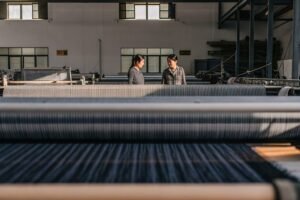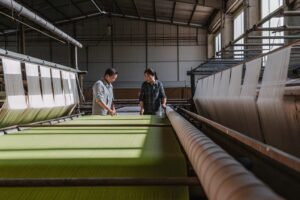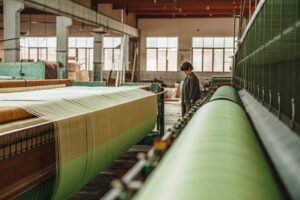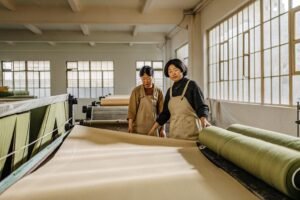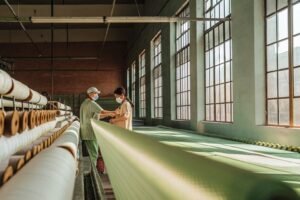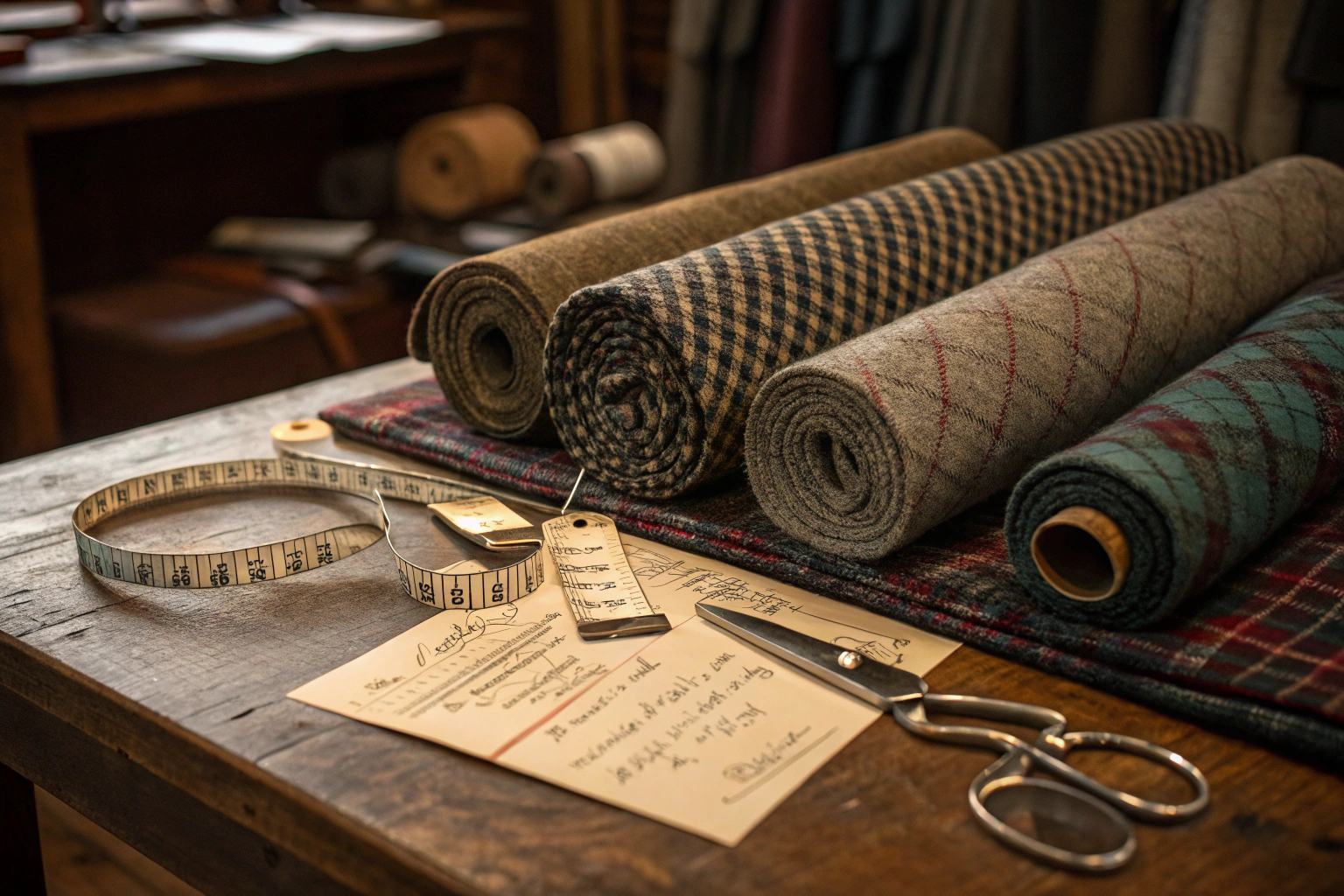
Let me tell you a story about a mistake that turned into a goldmine. About eight years ago we over-ordered on a batch of heavyweight Italian-style wool coating for a European client. Beautiful stuff. 80% Wool 20% Nylon. Deep charcoal melange. But the client changed their collection direction last minute. They switched to a camel hair blend. We were left holding about 1200 yards of this incredible wool with no home. It sat in the corner of our warehouse for six months taking up space. I was annoyed.
Then a small independent outerwear brand from Portland found us. Not through a fancy trade show. Through a deep Google search for "deadstock wool coating supplier." They bought the entire lot for about 60% of the original market price. We were happy to clear the space. They were ecstatic because they got a fabric that would normally cost them $22 a yard for about $13. They made a limited run of 50 stunning chore coats. Sold them out in three days at $450 each. They came back the next season begging for more. But of course it was deadstock. It was gone forever.
That’s the game with deadstock wool. It’s not about consistency or repeat orders. It’s about Scarcity and Story. It’s about finding a unicorn in a dusty warehouse and building a product around it. For limited edition outerwear this is the most authentic way to source. You’re using fabric that already exists. You’re diverting it from potential landfill or incineration. And you’re creating a garment with a built-in narrative: "Made from rare reclaimed Italian deadstock."
At Shanghai Fumao we sit on a mountain of this stuff. Not because we’re bad at planning but because the nature of textile production is messy. There are always overruns canceled orders and end-of-line colors. My goal here is to teach you how to access this hidden supply chain how to verify the quality of wool that’s been sitting on a shelf and how to negotiate a price that makes your limited edition outerwear wildly profitable.
Where Are the Best Sources for Deadstock Wool Fabrics
The world of deadstock wool is not like the normal fabric market. It’s not listed in clean online catalogs with perfect photography. It’s buried. You have to know where to dig.
The first and most obvious source is Mill Overstock. This is what I described in my opening story. Every weaving mill from Biella in Italy to Shengze in China overproduces by 5-10% to cover quality defects and dye lot variations. When the order is finished that "safety stock" gets moved to the back of the warehouse. Over time it accumulates. Mill owners hate this inventory. It’s cash tied up in physical space. They are motivated to sell it often at or below cost just to free up the warehouse bay.
The second source is Canceled Orders. This is where you find the really premium stuff. A luxury fashion house orders 5000 yards of a custom-developed wool cashmere blend in a specific shade of "Moss Green." They go bankrupt. Or they change creative directors. Or the order gets canceled due to a shipping dispute. That fabric is already woven and finished. It’s sitting in a warehouse in Prato or Keqiao with nowhere to go. The mill cannot sell it to another big brand because it was a proprietary color development. They are stuck. They will sell it for pennies on the dollar to a deadstock dealer or directly to a small brand who doesn’t care about the exact Pantone reference.
The third source is Vintage Jobbers and Converters. These are middlemen who specifically buy up excess inventory from mills and fashion houses. In the US you have places like Mood Fabrics or B&J Fabrics in New York. In Italy you have the warehouses around Prato. In China we have a whole district in Keqiao and Guangzhou dedicated to stock lots. The key is to find the jobbers who specialize in Natural Fibers. There are plenty of guys selling deadstock polyester. You want the guy with the dusty wool archive.

How Do Canceled Orders Create Opportunities for Small Brands
This is the sweet spot for limited edition outerwear. The big brands operate on 18-month lead times. They place massive bets on color and texture trends. And they are often wrong. When they cancel an order for a Brushed Mohair Blend because "teddy bear coats are out" that fabric becomes available.
The opportunity for a small brand is that you are Agile. You don’t need 5000 yards. You need 200 yards. That canceled order might be 800 yards. Too small for a big brand to bother with but perfect for you. You can buy the entire remaining stock and own the exclusivity.
I’ve seen this play out beautifully with wool Herringbone and Houndstooth patterns. A big brand might order a specific scale of houndstooth. They cancel. A small brand buys it makes 40 blazers and markets them as "Exclusive Italian Wool Limited to 40 Pieces." It’s a compelling story because it’s true. You can’t get that fabric anywhere else in the world.
At Shanghai Fumao we keep a running list of these canceled lots for our deadstock clients. We know which mills in our network have "problem inventory." If a client tells me they are looking for "interesting wool textures for a fall capsule" I can send them photos from that list within 24 hours. It’s a completely different sourcing conversation than "What is your MOQ for custom dye?"
What Is the Difference Between Jobbers and Mill Direct Deadstock
This is a cost-versus-convenience calculation.
Mill Direct Deadstock means you are buying straight from the factory that made the fabric. The advantage is Price. There is no middleman markup. The disadvantage is Service. The mill is not set up to deal with small buyers. They don’t want to cut 50 yards off a roll. They want to sell the whole pallet. They also don’t have great photos. They might send you a blurry WeChat photo of a roll label. You have to know exactly what you’re looking at.
Jobbers or Converters are the middlemen. They buy the pallet from the mill unroll it take nice photos and list it online. They will cut you exactly 10 yards. The advantage is Convenience and Curation. The disadvantage is Price. They mark it up 30-50% for their service.
For a brand just starting out with deadstock a reputable jobber is worth the markup. You save time and you avoid the risk of buying a pallet of "Wool Coating" that turns out to be a scratchy wool/poly blend with a weird smell. For more context on this specific niche I recommend exploring resources that track the historical role of textile jobbers and converters in the New York garment district and their modern evolution online. It gives you a sense of how this shadow market operates.
How Can I Verify the Composition of Unlabeled Deadstock Wool
Deadstock wool often comes with missing labels faded handwriting or sometimes no documentation at all. The hang tag fell off five years ago. The mill worker doesn’t remember what the blend was. The jobber says "I think it’s wool." You cannot build a brand on "I think." You need to know for sure especially if you’re selling outerwear at a premium price point.
This is where you have to become a bit of a forensic textile scientist. You need to rely on field tests that you can do in your studio or on a video call with the supplier. The most reliable of these is the Burn Test.
Take a small snippet of the fabric. Hold it with tweezers over a non-flammable surface a metal sink is perfect. Touch a flame to it. Wool is a protein fiber. It will ignite slowly and burn with a small sputtering flame. The smoke smells exactly like Burning Hair . It’s unmistakable. Once the flame is removed it will Self-Extinguish. Wool does not like to stay lit. The residue will be a Crushable Black Ash like a charcoal briquette.
Polyester or Nylon on the other hand will melt away from the flame. It will drip like hot plastic. The smoke will smell like burning Chemical Sweetness. It will leave a Hard Black Bead that you cannot crush between your fingers.
Cotton or Viscose will burn quickly with a bright flame. It smells like Burning Paper. It leaves a fine soft Gray Ash.
If the fabric is a blend the burn test gets trickier. You’ll see the wool ash mixed with a hard plastic bead. That tells you it’s a wool/synthetic blend. This test takes 30 seconds and it gives you 90% of the information you need. I require my team to do this on every deadstock lot we consider purchasing. It has saved us from buying "100% Wool" that was actually 50% Acrylic more times than I can count.

How to Perform a Bleach Test for Protein Fibers at Home
This is a more specific test for distinguishing Wool from Alpaca or Cashmere. It’s not perfect but it’s helpful for luxury deadstock.
Take a few strands of the yarn and place them in a small glass of Undiluted Household Bleach. Leave it overnight. Wool will completely Dissolve. It turns into a gooey yellow liquid. Alpaca and Cashmere will also dissolve but usually a bit slower. Silk dissolves quickly. Synthetic fibers will be completely Unaffected. They’ll just float there looking exactly the same as when you put them in.
This test is destructive so only do it on a tiny swatch. It confirms that the fiber is indeed an animal protein. It’s a great way to verify a claim of "Deadstock Cashmere Coating." If the strands don’t dissolve after 12 hours in bleach it’s not cashmere.
Here is a quick reference table for these field tests. I keep this laminated in our sample room.
| Fiber Type | Burn Test Flame | Burn Test Odor | Burn Test Residue | Bleach Test (12 Hrs) |
|---|---|---|---|---|
| Wool | Sputters Self-Extinguishes | Burning Hair | Crushable Black Bead | Dissolves Completely |
| Silk | Burns Slowly Self-Extinguishes | Burning Hair | Crushable Black Bead | Dissolves Completely |
| Cotton/Linen | Fast Bright Flame | Burning Paper | Soft Gray Ash | No Effect (Bleached) |
| Polyester | Melts Drips | Sweet Chemical | Hard Black Bead | No Effect |
| Acrylic | Rapid Flame Melts | Chemical/Fishy | Hard Irregular Bead | No Effect |
Why Is Handfeel So Deceptive with Vintage Wool Stocks
This is a warning from someone who has touched thousands of deadstock rolls. Handfeel lies. Just because a deadstock wool feels stiff and scratchy on the roll does not mean it’s a bad fabric.
Wool fabrics especially those that have been sitting folded on a shelf for five years develop a "Set" . The fibers dry out. The natural lanolin has evaporated. The finishing resins have cured hard. The fabric feels like cardboard.
But here’s the magic. Steam it. Take a steamer or a hot iron with a press cloth and give that fabric some moisture and heat. It’s like watching a flower bloom. The wool fibers relax. The natural crimp returns. The handfeel transforms from sandpaper to soft cozy warmth. This is the Latent Quality of wool.
This is why I always tell my deadstock clients: "Don’t judge the fabric by how it feels in the dusty warehouse. Judge it by how it feels after we Sponge and Decate it." That’s the finishing process we do to revive old wool. A cheap wool/poly blend won’t revive. It’ll just stay stiff or melt under the iron. A good quality wool will come back to life beautifully. You can find more practical advice on this topic in communities of tailors and home sewists discussing how to restore and pre-treat vintage wool fabrics before cutting. Real experience beats theory every time.
What Are the Risks of Buying Deadstock Wool for Outerwear
I’ve painted a pretty romantic picture of deadstock so far. Now let me tell you about the dark side. Because there are real risks and if you don’t manage them you’ll end up with 200 yards of unusable fabric and a very angry production manager.
The first risk is Yardage Accuracy. Deadstock rolls are often remnants. The roll label might say "85 Yards." It might actually be 78 yards because someone cut a sample off five years ago. It might have 10 yards of severe creasing at the end that you have to discard. You cannot trust the label. You must Measure and Inspect every single roll. At Shanghai Fumao we run every piece of deadstock through our inspection machine before we ship it. We note the exact usable yardage. If we don’t do this the client gets a surprise shortage in their cutting room and that’s a disaster for a limited run.
The second risk is Hidden Defects. Deadstock has been sitting around. It might have Mildew from being stored in a damp corner. You can’t always smell it through the poly bag but when you open it up it hits you. It might have Crease Marks that are permanent. Wool is thermoplastic. If it was folded under a heavy pallet for three years in a hot warehouse that crease might be set forever. It might have Fading on the outer layer of the roll where sunlight hit it. The first five yards are a shade lighter than the rest.
The third risk is Repeatability. This is the defining characteristic of deadstock. You cannot reorder. Ever. If your limited edition coat sells out in 24 hours and you have 50 more customers begging to buy one you have to say "Sorry it’s gone." That’s a good problem to have from a brand heat perspective but it’s a real business limitation. You need to plan your production around the exact yardage you have not the yardage you wish you had.

How to Handle Width Variations in Deadstock Wool Pieces
This is a technical issue that drives pattern makers crazy. Deadstock wool often comes from different mills and different eras. A roll of Italian deadstock might be 150 cm wide. A roll of British deadstock might be 59 inches wide. That’s a difference of a few centimeters.
If you are making a limited run of 50 coats and you have three rolls with three different widths you have a problem. You cannot use the same marker. You have to re-nest the pattern for each width. This adds labor cost and time.
The solution is to Group by Width. When you buy deadstock try to source enough yardage of a single width to cover your entire production. If you have to mix widths do it in separate cutting tickets. Don’t try to spread a lay with two different fabric widths. It’s a recipe for mismatched sleeves.
I always advise clients to build a Buffer into their deadstock orders. If you need 150 yards for your run buy 180 yards. The extra 30 yards covers you for width variations shrinkage in the sponging process and the inevitable end-of-roll defects. With deadstock there is no "just send me another roll" option. The buffer is your insurance policy.
What Is the True Cost of Shrinkage in Unfinished Deadstock Wool
This is the hidden cost that kills margins if you’re not prepared for it. Some deadstock wool is Loomstate or Unfinished. It came off the loom and was never washed or treated. This is common with stock from smaller Italian mills.
Loomstate wool will shrink significantly when it gets wet. Not 2-3%. We’re talking 8-12% shrinkage in the first wash or steam. If you cut a coat from loomstate wool without pre-shrinking it the customer wears it in the rain once and the sleeves ride up to their elbows. It’s a return nightmare.
Before you cut deadstock wool for outerwear you must London Shrink it or Sponge It. This involves exposing the fabric to controlled moisture and steam to relax the fibers. You lose yardage in this process. That 100-yard roll might yield only 88 yards of usable pre-shrunk fabric. You must factor this into your cost calculation.
Here is a simple cost calculator adjustment for deadstock wool.
| Cost Factor | Assumption for New Fabric | Adjustment for Deadstock Wool |
|---|---|---|
| Base Fabric Cost | $18.00 / yard | $9.00 / yard (50% discount) |
| Shrinkage Allowance | 3% | 10% (if unfinished) |
| Defect Allowance | 2% | 7% (end of roll damage) |
| Inspection Labor | Included | + $0.50 / yard |
| True Landed Cost | ~ $19.50 / yard | ~ $11.00 / yard |
The discount is still significant but it’s not as deep as it first appears. Knowing this math prevents you from under-pricing your limited edition coats.
How to Market Outerwear Made from Reclaimed Deadstock Wool
This is where the magic of deadstock translates directly into dollars. You are not just selling a coat. You are selling a Provenance. You are selling a Story. And stories command higher prices.
The marketing angle for deadstock wool outerwear is Scarcity and Sustainability. You can say things that a mass-market brand cannot say. "Made from Rare Reclaimed Italian Wool." "Only 47 Pieces Exist in the World." "Diverted from Landfill." These are powerful emotional triggers for the modern conscious consumer. They appeal to the desire for individuality. Nobody wants to walk into a party and see three other guys wearing the same jacket. With deadstock that’s impossible.
But you have to back it up. You can’t just say it. You need to Show the Process. Post videos of your designer in the dusty warehouse pulling the roll off the shelf. Show the faded mill tag. Show the fabric on the cutting table. Use the term "Found Fabric" . It’s a term of art in the sustainable fashion world. It implies you went on a treasure hunt.
We have clients who include a small Certificate of Authenticity with each limited edition coat. It states the mill of origin the fiber content and the number of pieces made. It’s a beautiful touch that turns a garment into a collectible. It justifies a higher retail price because the customer feels they are buying a piece of fashion history.

How to Frame Scarcity as a Premium Feature Not a Limitation
I’ve had conversations with brand owners who are nervous about the "no reorder" aspect. They see it as a supply chain failure. You need to flip that mindset. Scarcity is the Feature.
The modern consumer is bombarded with endless choice. They are paralyzed by it. When you tell them "We only made 50 of these and when they’re gone they’re gone" you are doing them a favor. You are making the decision for them. You are creating Urgency. That’s Marketing 101.
You also avoid the Markdown Trap. Brands that overproduce inventory have to slash prices at the end of the season. That trains their customers to wait for the sale. If you make 50 coats and you have 500 people on your email list you will sell out at full price. Every time. You preserve your brand integrity and your margin.
Frame the conversation around Craftsmanship. "We let the fabric dictate the design. We found this incredible wool and we knew we had to make something special with it." This positions the brand as a Curator rather than just a manufacturer. It’s a more elevated brand position. For more insight into this marketing strategy I suggest looking at case studies of small fashion brands successfully using the deadstock and limited drop model to build community and reduce inventory risk. The numbers don’t lie.
What Labeling Requirements Apply to Deadstock Wool Products
This is the legal fine print you cannot ignore. In the US the Wool Products Labeling Act and the Textile Fiber Products Identification Act apply. You must disclose the fiber content by percentage.
If the deadstock wool is unlabeled you have to do the burn test or send it to a lab for a Quantitative Fiber Analysis. You cannot guess. You cannot put "100% Wool" on the label unless you know for a fact that it is. If you’re unsure it’s safer to label it as "Wool Blend" or send a sample to a lab like SGS or Intertek for analysis. It costs about $150 and it protects you from an FTC fine.
Also if you are making a "Made in USA" claim the fabric must be sourced in the US or the transformation must be significant. Deadstock wool from Italy cut and sewn in the US is usually labeled "Made in USA of Imported Fabric." That’s a compliant and attractive label for American-made outerwear.
For the European market the EU Textile Regulation (1007/2011) applies. It’s similar to the US rules. You must list the full fiber composition. The term "Reclaimed Wool" or "Recycled Wool" can only be used if the wool fiber has been mechanically pulled apart and re-spun. Deadstock Fabric is not technically "Recycled Wool." It’s "Reclaimed Fabric" or "Pre-Consumer Waste." Be careful with your terminology.
Conclusion
Finding deadstock wool for limited edition outerwear is part detective work part negotiation and part romance. It’s not the easiest way to source fabric. It’s messy and unpredictable. But for a small brand looking to create something truly unique and sustainable it’s one of the most rewarding paths you can take.
You get access to premium Italian and British woolens at a fraction of their original cost. You get a built-in story of scarcity and environmental responsibility. And you get the creative constraint of designing around what’s available which often leads to more interesting products than designing from a blank slate.
The key is to partner with a supplier who understands the deadstock game. You need someone who can verify the fiber content measure the yardage accurately and honestly assess the quality of fabric that’s been sitting on a shelf for a few years. You need someone who won’t sell you a roll full of mildew or permanent creases.
At Shanghai Fumao we’ve turned our "warehouse problem" into a resource for creative brands. We know our deadstock inventory intimately. We know which rolls are hidden gems and which ones are best left for the recycling bin. We’re happy to share that knowledge with brands who appreciate the beauty of a fabric with a past.
If you’re working on a limited edition outerwear capsule and you want to explore what deadstock wool we have available right now reach out to our Business Director Elaine. She can send you photos of our current deadstock selection including weights widths and exact yardage. She can also advise on the pre-shrinking and finishing process to make sure that dusty roll turns into a beautiful coat.
Contact Elaine directly at: elaine@fumaoclothing.com