
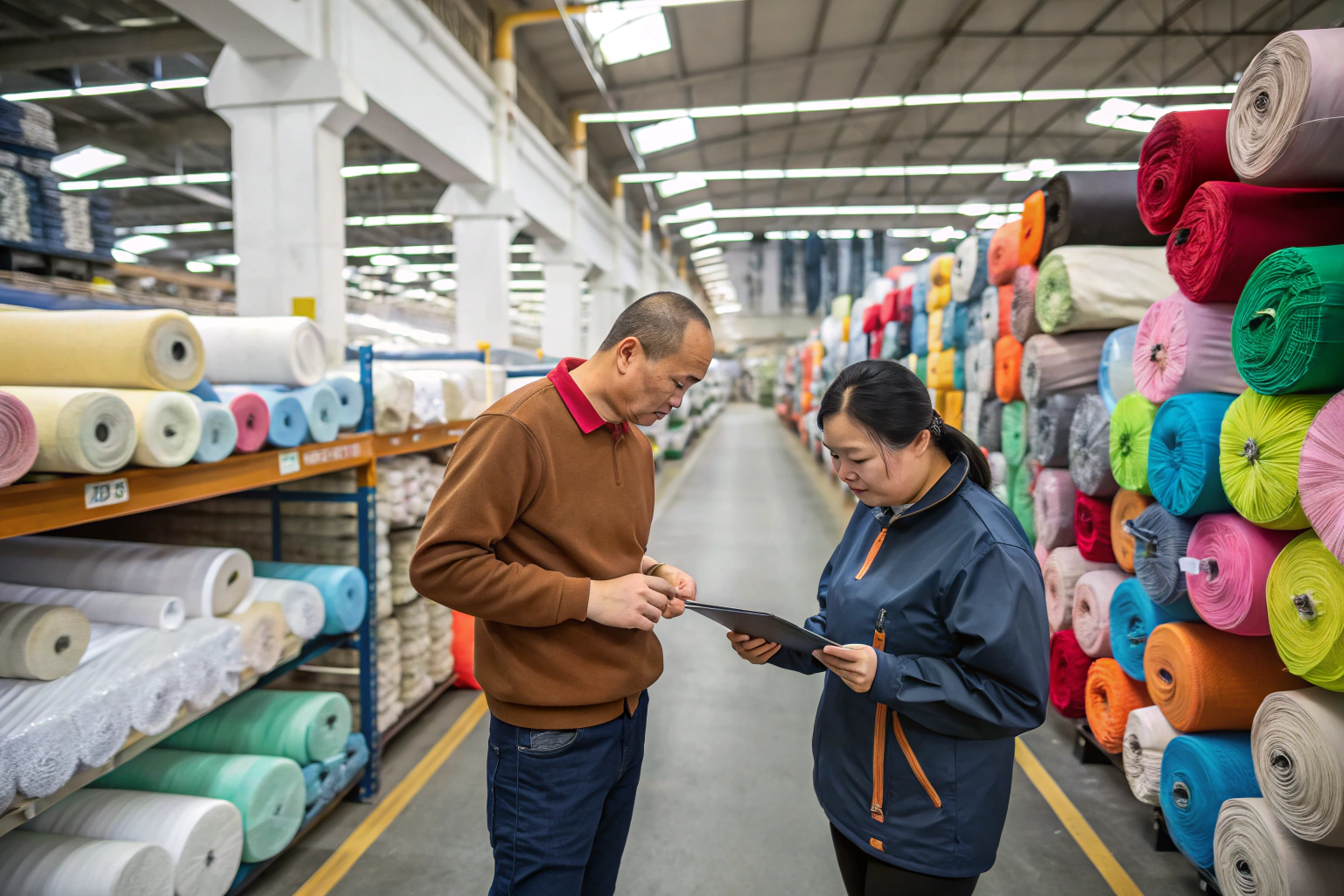
Look, I get it. You find a gorgeous jacquard or a perfect bamboo silk blend on Alibaba or at a trade show. The FOB price per meter makes your margins look incredible. You do the quick mental math in your head and think you’ve struck gold. But then the container hits the Port of Long Beach. Suddenly, you’re drowning in terminal handling charges, customs brokerage fees nobody mentioned, and a duty rate that doesn’t seem to match what you Googled. I’ve seen this movie a hundred times from my office in Keqiao. Ron, you’re a confident guy who knows his sourcing, but the gap between the invoice from Shanghai Fumao and the final check you write to get those bolts on your cutting table in LA is where the real cost of doing business hides. You aren’t just paying for yarn; you’re paying for time, risk, and paperwork. And if you don’t track every single line item, you’re basically guessing at your actual COGS. That’s a fast track to a bad quarter.
Calculating the true landed cost isn’t just addition. It’s a forensic exercise in supply chain logistics. The real formula is: FOB Price + Freight + Insurance + Duty + Customs Fees + Banking/Payment Spread + Warehousing Drayage. But the real secret sauce is understanding the timing and the hidden multipliers specific to fabric imports. For example, most buyers forget that US Customs duty is charged on the CIF Value (Cost, Insurance, Freight), not just the FOB price. So you’re paying tax on the shipping cost itself. And if you’re sourcing eco-friendly innovations like our Recycled Polyester blends or Tencel, the HTS code classification can swing your duty rate from 8% to 26% depending on if you mislabel the weave structure. That’s a six-figure mistake on a full container.
I’m going to walk you through the exact calculations we use to help our partners forecast their cash flow. I’ll share some real numbers from our shipping desk—not just theory. Because at the end of the day, a cheap fabric that arrives late or with surprise fees isn’t cheap. It’s a liability. Let’s break down the four biggest levers that determine whether that shipment of linen or nylon actually makes you money.
How Does China’s Manufacturing Calendar Impact Shipping Costs?
Let’s be blunt. The calendar is a weapon in this industry. If you ignore the rhythm of China’s production cycle, you will pay a premium for air freight or, worse, lose shelf space. I’ve been in this game long enough to know that time literally equals money when you’re dealing with ocean schedules. A two-week delay in weaving means your goods miss the vessel cutoff. Then you’re sitting at the dock for another seven days waiting for the next sailing. That’s an extra week of storage and an extra week of your capital tied up in transit. And if you push a factory to rush during peak season, guess what? Quality drops. Yarn tension gets sloppy on the knitting machines. Dye lots shift. I’ve seen it.
The secret to lowering your landed cost isn’t just negotiating pennies on the meter price. It’s about optimizing the logistics efficiency. And you can’t do that if you’re fighting 25% of the world’s textile volume for space on a vessel during the August shipping crunch. Understanding the ebb and flow of production in Keqiao is just as important as knowing the difference between a plain weave and a twill.
When Do Peak Production Periods Increase Freight Rates?
Every August, I get the same panicked emails from the US and Europe. "Elaine, where is my greige goods?" "Why is the dyeing queue two weeks long?" Welcome to the back-to-school and holiday retail rush. From March through May and again August through October, the entire Yangtze River Delta textile cluster—my backyard—is running at 110% capacity. We’re printing velvets for winter coats and churning out chiffon for spring dresses simultaneously.
From a cost calculation perspective, here is the actual impact on your landed price per meter during these peaks:
- Container Spot Rates: Expect a spike of 15% to 30% on the spot market for Trans-Pacific routes. If you locked in a contract rate of $4,000 per 40HQ in February, you might see $5,800 in September.
- Factory Surcharges: While we at Shanghai Fumao try to hold firm on quoted prices, many smaller dyeing houses and finishing plants impose "rush fees" of roughly ¥0.5 – ¥1.0 per meter. On a 20,000 meter order of jersey knit, that’s an extra $1,500 you didn’t budget for.
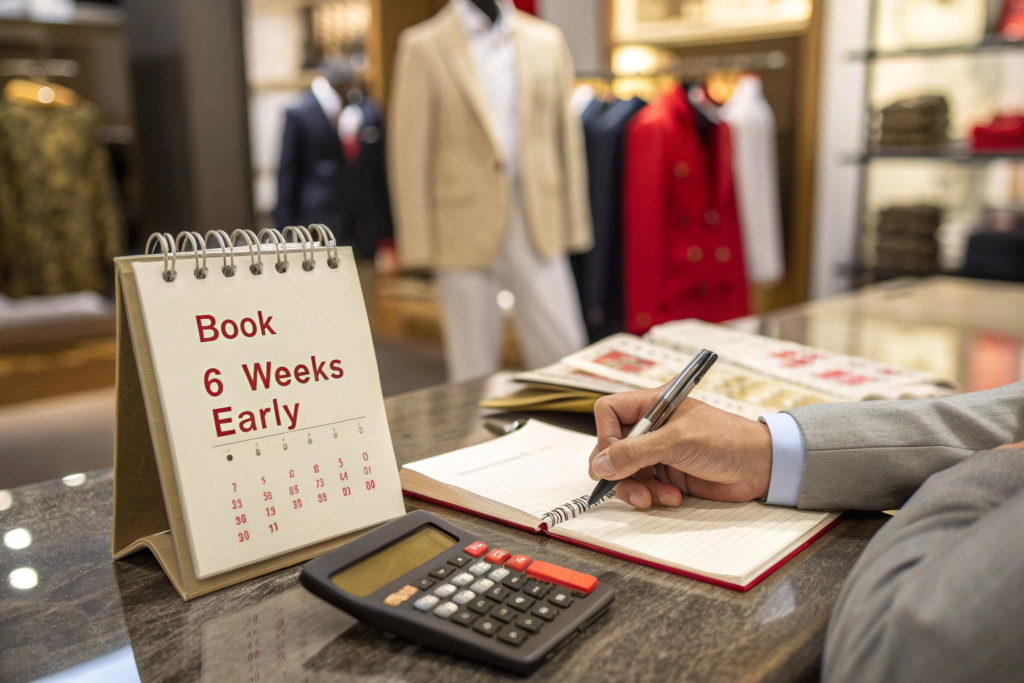
I always advise my clients to consider "Cost of Delay" as a line item. If you miss the September 15th sailing cutoff because the embroidery factory is backed up, your goods arrive November 1st instead of October 15th. That’s two weeks of lost floor sales. I learned this lesson hard in 2022 when a European fast-fashion brand lost a full month of sales on a jacquard coat because they didn’t factor in the Mid-Autumn Festival downtime. Now, we plan their pre-production samples 6 weeks before major holidays. You can read more about navigating these specific holiday shutdowns on industry forums like this discussion on managing China production timelines during peak manufacturing seasons.
Why Does Chinese New Year Shutdown Require Early Booking?
This is the big one. I cannot stress this enough. Chinese New Year (CNY) isn’t just a week off. It’s a full-stop reset of the industrial workforce. Our dyeing and coating partners in Keqiao usually shut down 10 days before the actual holiday and take 10 days after to ramp back up. That’s a three to four-week black hole in production.
If you want to know how to optimize fabric supply chain planning for Chinese New Year shutdowns, you need to think backward from February. Here’s the math we use at Shanghai Fumao for our US clients:
- Labor Shortage Post-Holiday: About 30% of the migrant workers in the dyeing factories switch jobs or don’t return until March. Output in late February is typically 60% of normal capacity.
- Quality Variance: The first week back is messy. Machines are cold. New workers are on the line. We never schedule critical runs of difficult fibers like Cupro or Lyocell/Tencel blends for the first 7 days after reopening. The risk of shading issues or oil stains on your organic cotton is too high.
If you place an order on February 1st thinking you’ll get it by March 1st, you’re in for a rude awakening. Your fabric is sitting behind a mountain of backlog. You’ll end up paying for premium air freight to catch up, which can easily triple your shipping cost. (Here I have to add: Our lead times really do slip if you wait until January 15th to approve lab dips. We’re good, but we can’t bend the calendar).
How Does Off-Peak Production Offer Lower Shipping Rates?
Now for the good news. June, July, November, and the first half of December are what I call the "Value Windows." It’s hot in the factories. Demand from domestic Chinese brands is lower. European buyers are on vacation in July/August. This is where savvy Ron types make their real margin.
During these slower periods, our weaving factory can turn around a complex custom jacquard in 15 days instead of 25. More importantly, ocean freight rates are significantly softer. You can often book a container for $1,000 to $1,500 less than the peak season average. And the service is better—fewer rolled bookings, fewer delays at the port of Ningbo.
I always tell my long-term partners: Use this time for Replenishment of Core Basics. If you know you’re going to sell 10,000 meters of Tencel denim every spring, produce it in November and store it either here in our bonded warehouse or ship it early to the US. The cost of warehousing for 60 days is almost always lower than the premium you pay for February production plus March shipping chaos. We recently did this for a large workwear brand—they saved 12% on their overall landed cost for aramid fire-resistant fabrics just by shifting their bulk production to late November. You can learn more about the financial benefits of scheduling during these quieter times by checking out insights on advantages of off-season production scheduling in China for lower costs.
What Are The Hidden Fees in Fabric Import Landed Cost?
Okay, let’s peel the onion. You have your FOB price from Shanghai Fumao. You know the ocean freight quote. But when the shipment lands at the Port of Savannah or LAX, the meter on your landed cost spreadsheet starts ticking again. And fast. These are the line items that don’t show up on the proforma invoice but hit your credit card before the trucker even starts the engine. I call this the "Port Purse Punch." I’ve seen these fees wipe out a 5% margin advantage on paper because the buyer only budgeted for the big-ticket items.
The problem with hidden fees is they vary wildly by port and by forwarder. A forwarder might quote you a low freight rate only to bury you in "Accessorial Charges." You need to look at the fine print. For fabric specifically, there are nuances. Are the rolls on pallets? No? That’s a hand-bombing fee at the warehouse. Did the container sit on the terminal for four days while you scrambled to file ISF? That’s demurrage.
How Do Customs Duties and Tariffs Get Calculated on Textiles?
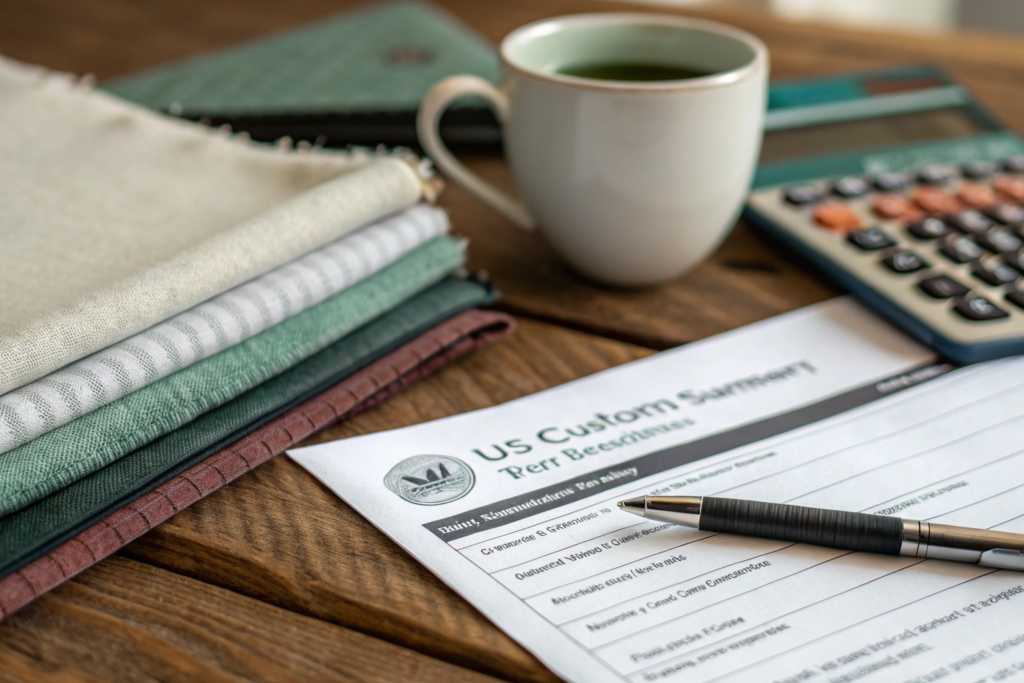
This is where fabric classification makes or breaks you. Unlike a simple widget, a piece of fabric is defined by its fiber content, yarn type, and weave. A 100% polyester satin has a different duty rate than a 100% polyester knit mesh. The devil is literally in the weave.
Here is the formula the US Customs and Border Protection (CBP) uses:
Duty Owed = (Invoice Value of Goods + Freight Cost + Insurance Cost) x HTS Rate
Let’s put real numbers to it.
- Example A: Wool Coating. You import 1,000 kg of 80% Wool / 20% Nylon coating. HTS Chapter 51.
- Example B: Coated Nylon. You import 1,000 kg of PU coated nylon for outdoor gear. HTS Chapter 59.
| Cost Component | Wool Coating (Woven) | Coated Nylon (Technical) |
|---|---|---|
| FOB Value | $15,000 | $12,000 |
| Freight (Prorated) | $1,200 | $1,000 |
| Insurance | $50 | $40 |
| CIF Value (Dutiable Base) | $16,250 | $13,040 |
| HTS Duty Rate | 7.5% (approx for some wools) | 0% – 8% (Note difference!) |
| Duty Bill | $1,218.75 | $0.00 (if classified correctly) |
That’s a $1,200 swing. We had a client in 2023 importing Nylon/Lycra swimwear fabric. Their broker cleared it under a generic synthetic knit code at 14.9%. I caught the construction specs and realized it met the criteria for a specific performance code. We provided the CNAS lab test report from our facility here in Keqiao showing the specific yarn denier, and they got a refund. This is why I always push my clients to understand how HTS classification for coated technical textiles works in US Customs. And if you’re dealing with complex blends, it’s worth visiting an independent forum like The Fashion Incubator for technical sourcing tips and tariff discussion.
What Is Drayage and Why Does It Vary So Much by Port?
(Here’s where I pause to vent.) Drayage is the short truck haul from the port terminal to the warehouse or rail yard. It’s usually less than 50 miles. And the pricing in America makes zero sense to me compared to Ningbo or Shanghai port fees.
Drayage is a function of Chassis Availability and Turn Time. If there is a chassis shortage at the Port of Savannah (which happens every other week, it seems), that $350 dray move suddenly becomes a $600 move plus a $50 "Chassis Split Fee." Or if the trucker sits in line for 3 hours because the terminal is congested, they tack on "Detention" or "Wait Time."
For a fabric importer, you have to account for:
- Pier Pass / TMF: Traffic Mitigation Fee at LA/LB ports. About $40 per container.
- Weight: Fabric is heavy. A 40HQ of denim or coated leather base can weigh over 40,000 lbs. That often triggers an Overweight Surcharge from the drayage carrier because they need a tri-axle chassis to be legal on the road. That’s an extra $150-$250 right there.
- Fuel Surcharge: Fluctuates weekly.
I always recommend my US clients use a dedicated drayage broker or make sure their forwarder has a strong local partner. We ship a lot of heavy linen and cotton twill to the East Coast, and the drayage in NY/NJ is consistently higher than West Coast due to tolls and congestion pricing. It’s a fixed cost per container, so the only way to lower the per-meter impact is to Fill The Container. A container with 55,000 meters of chiffon (light) will have a much lower drayage cost per meter than a container with 10,000 meters of 14oz denim. You can research the current chassis issues and real-time surcharges on freight news sources like why drayage costs fluctuate at major US container ports.
How to Verify True Fabric Quality Before Shipping from China?
You can have the best landed cost spreadsheet in the world. You can nail the freight and dodge the demurrage. But if the 5,000 meters of satin that show up in the warehouse are off-shade by a Delta E of 2.5, or the shrinkage is 8% instead of the 3% you quoted to your cutting room, your "cheap fabric" just became astronomically expensive. You’re now paying for re-cutting, air freighting replacement pieces, or issuing credit memos to angry retailers. I’ve seen this happen. It’s painful.
At Shanghai Fumao, we operate a CNAS-accredited lab (that’s the highest standard in China, equivalent to ISO 17025). This isn’t a backroom with a lightbulb and a pair of scissors. We’re measuring tensile strength on a universal testing machine, we’re checking colorfastness to crocking with a rotating friction meter, and we’re doing 5-wash-cycle shrinkage tests. This data is non-negotiable. But here’s the thing: You, as the buyer, can’t just take a PDF report at face value. You need to understand what the numbers actually mean for your garment construction. And you need to know the difference between the standard the factory uses and the standard your customer expects.
What Is a 4-Point Fabric Inspection and Why Demand It?
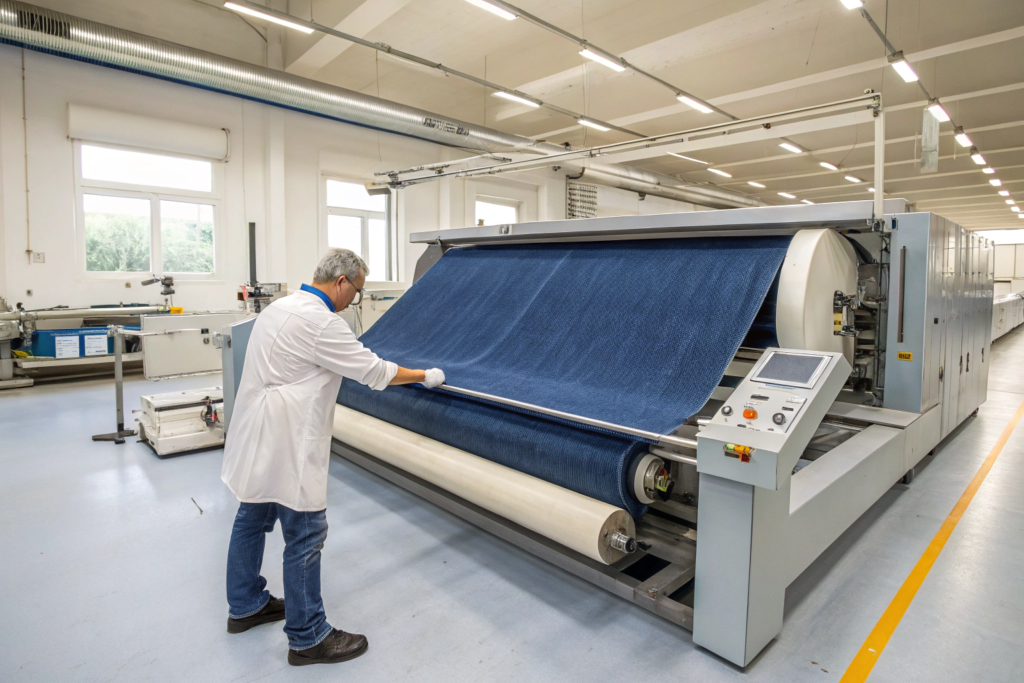
Let’s talk about the 4-Point System. This is the global standard for grading woven and knitted fabrics. It’s based on defect size and frequency per 100 square yards. But here is a dirty little secret: Many traders in the market say "We do 100% inspection" but they actually do "10% Audit Inspection" unless you scream about it. And if you don’t specify the Acceptable Quality Limit (AQL) , the factory’s definition of "pass" might be way looser than yours.
Here is the quick math of the 4-Point System:
| Defect Length | Points Assigned |
|---|---|
| Up to 3 inches | 1 |
| Over 3 – 6 inches | 2 |
| Over 6 – 9 inches | 3 |
| Over 9 inches | 4 |
Formula: (Total Penalty Points x 36) / (Yards Inspected x Usable Width) = Points per 100 Sq Yds.
Most US brands (like the Zara and Lululemon tier we work with) demand a score of 20 points or less per 100 square yards. If it’s higher, they reject the lot. But here’s the nuance: A hole is 4 points. A thick place in the yarn is also 4 points. But a hole makes the garment unsellable immediately. A thick place might be cut around if you’re making small pattern pieces.
In 2024, we shipped a container of Bamboo Silk (BAMSILK) to a boutique owner in Austin. She was paranoid because it was her first private label run. We insisted on a full 100% inspection report with mapped defects. We gave her the coordinates of every single slub or thick-thin variation on the roll. She was able to have her cutter avoid those spots entirely. Waste reduced. Profit increased. That’s the power of data. You should read up on the official ASTM D5430 4-point fabric inspection standard and how to apply it. And for a more practical, industry-specific take on how to set AQL levels, this discussion on AQL sampling standards for fabric and garment buyers is a solid resource.
How Do CNAS Lab Reports Prevent Color Fastness Disputes?
Color is subjective. I could write a book about the arguments I’ve had over "Navy Blue." Is it too green? Is it too red? That’s why we use a spectrophotometer. It doesn’t care about your mood or the lighting in your showroom. It reads the science of the color. It spits out a Delta E (ΔE) value. That’s the mathematical distance between the standard swatch and the production run.
For most commercial textiles, we aim for a ΔE of < 1.0. That’s imperceptible to the human eye. If the dyeing house gives us a roll with a ΔE of 1.5 to 2.0, a trained eye might see it under the lightbox (D65 daylight). That’s a fail in our book.
But here is where the CNAS report saves you money in Landed Cost Calculation:
- Cropping (Wet/Dry Rubbing): We test for color transfer. If you’re making a dark indigo denim jacket with a white polyester lining, and the indigo rubs off on the lining during shipping? You’re looking at a 100% chargeback from the retailer. The CNAS report on Colorfastness to Crocking is your insurance policy. It proves before shipping that the fabric was within the agreed spec.
- Perspiration and Water: If your activewear brand uses our moisture-wicking polyester and the dye bleeds when the customer sweats, you’re in legal trouble. The CNAS report shows the Grey Scale Rating for staining. We only ship if it’s 4.0 or higher.
Just last month, a Russian client disputed a shipment of red velvet for stage curtains. They said the color was "dull." We pulled the CNAS report, which showed a ΔE of 0.8 against the approved lab dip and a perfect lightfastness score of Grade 4. The issue? They were viewing the velvet pile direction upside down in their warehouse. We sent them the report and a quick video on brushing the pile. Dispute resolved. Without that third-party standard testing, it would have been a $50,000 claim. You can find more technical details on this process by looking into how to interpret CNAS textile test reports for lightfastness and crocking.
How to Optimize Payment Terms and Currency Exchange?
We’ve covered the physical costs of moving fabric and the quality costs of getting it right. Now let’s talk about the financial costs—the silent margin eater that most small to mid-sized brands ignore. I’m talking about the spread between the Interbank exchange rate you see on Google and the actual rate your bank gives you when you send a wire to China. I’m talking about the 3% fee PayPal skims off the top if you’re not careful. For a $50,000 invoice, that’s $1,500. That’s the profit on several hundred meters of organic cotton gone. Poof.
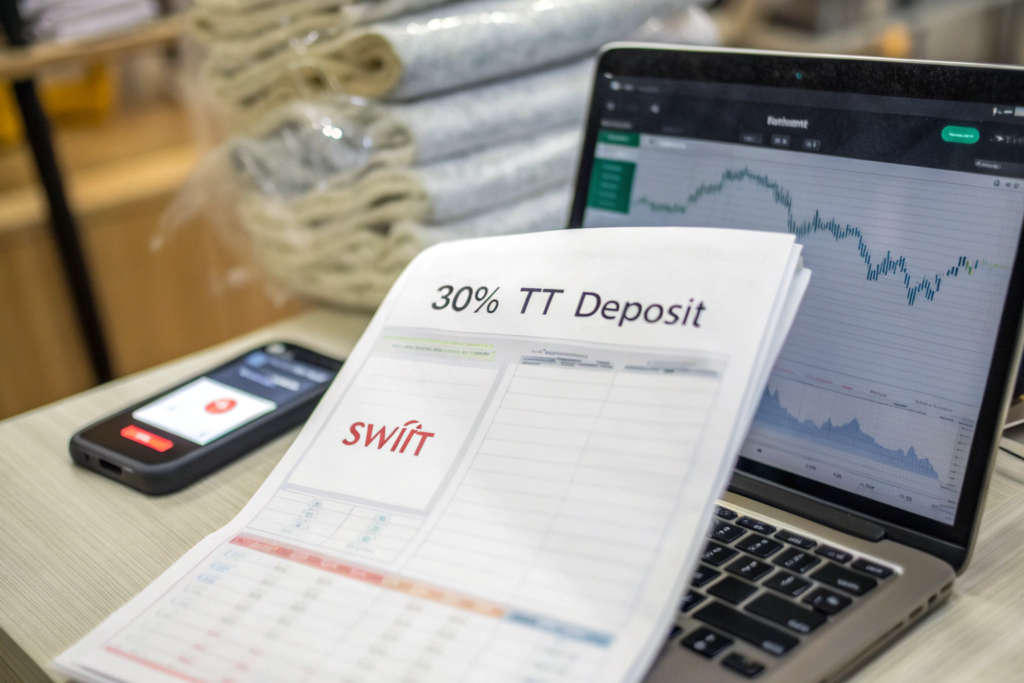
Over my 20 years at Shanghai Fumao, I’ve watched the USD/CNY swing from 6.2 to 7.3. That volatility matters. And how you structure the payment—whether it’s 100% upfront (dangerous for you) or 30/70 against B/L copy (standard for us)—affects your working capital and your leverage if something goes wrong.
What Are the Real Costs of TT, LC, and Credit Card Payments?
Let’s break down the three main ways Ron and his fellow American buyers pay us. Each has a different impact on that True Landed Cost formula.
| Payment Method | Cost to Buyer | Speed | Risk for Buyer |
|---|---|---|---|
| TT (Telegraphic Transfer) | High hidden cost. Bank fee ($25-$50) + Exchange Rate Spread (1-3% ). This is the big one. | 2-4 Business Days | High (Money gone before goods ship unless terms are negotiable). |
| LC at Sight | High fixed cost. Bank opening fees (~0.5% – 1% of invoice) + Discrepancy fees ($50-$100 if docs aren’t perfect). | Slow (Docs take 3-5 days to check). | Low (Bank guarantee, but strict paperwork). |
| Credit Card / PayPal | Highest. 3% – 4.5% transaction fee. | Instant. | Low (Chargeback protection). |
For a bulk order of 10,000 yards of linen, a 3% PayPal fee on a $60,000 invoice is $1,800. That’s enough to pay for the entire ocean freight for that small shipment. I always advise new startup buyers to use PayPal for sample development only. It’s fast, and the fee on $500 is just $15—worth the convenience. But for bulk production? Stick to TT or LC.
We have a long-standing partnership with a US importer of children’s wear fabrics. They use an FX broker (like OFX or Wise Business) instead of their big bank’s wire desk. They save roughly 1.8% on the exchange rate spread compared to a Bank of America wire. On a $200,000 annual spend, that’s $3,600 they keep in their pocket. That’s real money that lowers their overall fabric cost. To get the full picture on why your bank’s rate is different from Google’s, check out this explanation on understanding hidden fees in international wire transfer exchange rates. And if you want to compare payment platforms, this is a useful community discussion on Reddit about business payment methods for importing goods from China.
How to Lock in Favorable USD/CNY Rates for Fabric Orders?
Currency fluctuates. It just does. If you quote a job in January when the RMB is strong (say 6.8 to the dollar), and by the time you pay the balance in March it’s 7.2, that’s a 6% swing in your favor! Conversely, if it goes the other way, you just got a 6% price increase nobody told you about.
Here’s how we help our clients manage this in the context of fabric lead times:
- Hedging with Forward Contracts: You can ask your bank or FX broker to lock in today’s rate for a transfer 60 days from now. There’s a small fee (usually a few basis points), but it removes the uncertainty. This is crucial for Open Account terms where payment is due 30 days after B/L date.
- Timing the Balance Payment: The 70% balance on a 30/70 TT deal is due against copy of shipping documents. That’s usually 30-40 days after production starts. You can watch the market during production. If the dollar is strengthening (USD/CNY going UP), wait until the last possible day to pay. If the dollar is weakening, pay early if your cash flow allows.
- Renminbi Invoicing: We occasionally invoice in RMB directly. This shifts the currency risk entirely to you, but it allows you to use a Chinese currency account if you have one (common for larger corporations). It also avoids the US bank’s spread on USD/CNY conversion.
We had a situation in 2023 with a Russian buyer (paying in USD through a third country) where the dollar was extremely volatile. We agreed to split the invoice into three payments tied to specific milestones (Greige ready, Dyed ready, Shipment ready). This smoothed out the exchange rate exposure for both of us. It required a bit more trust, but it protected his margin. It’s just smart business. For a real-time view of what the currency is doing, I check the live USD/CNY spot rate and forward curve data on XE.
Conclusion
Look, calculating the true landed cost of fabric from China is not a one-and-done spreadsheet. It’s a living, breathing process that ties together factory calendars, ocean tides, customs law, and currency desks. We walked through the rhythm of the Keqiao production cycle—knowing that shipping in June is a different game than shipping in October. We broke down the port fees that hit you after the boat docks, and we dug into the science of why a CNAS report can save you more money than a 10% discount on the meter price. And we looked at the money itself—how the way you wire the funds can either protect or destroy your margin.
The key takeaway is this: The FOB price per yard is just the cover charge. The real party happens in the logistics and compliance details. Whether it’s leveraging the quiet months for better rates or understanding the 4-point inspection system so you don’t get stuck with second-grade goods, knowledge is your biggest competitive advantage.
If you’re tired of the hidden fees and the calendar chaos, and you want a partner who can actually walk you through the math before you sign the PO, that’s what we do here at Shanghai Fumao. We don’t just push fabric; we build supply chains. If you want to discuss your next production run for organic cotton, coated nylon, or that tricky jacquard for next season, you can reach our Business Director, Elaine, directly at elaine@fumaoclothing.com. She can give you a clear, line-by-line estimate that includes all the "gotchas" we talked about today. Let’s make sure your next shipment is a profit center, not a headache.








