Let me tell you the most expensive lie in the textile industry. It’s not "the check is in the mail." It’s "yes, we can make that." Every factory says they can make your fabric. Every trading company says they have the perfect mill. Every Alibaba listing has five stars and a "Verified Supplier" badge. And yet, here you are, reading this article because you’ve been burned. You placed a $15,000 order with a supplier who sent great samples. The bulk fabric arrived and it felt completely different. The color was off. The width was 2 inches narrow. And now your launch is delayed, your customers are angry, and you’re wondering if reliable suppliers even exist anymore. That anxiety—that sinking feeling when you open a container and immediately know something’s wrong—that’s what I want to eliminate for you.
Finding a reliable high-quality fabric supplier in 2026 is absolutely possible. But you have to stop looking in the wrong places and start asking the right questions. The most reliable suppliers don’t always have the flashiest Alibaba stores. They don’t always show up on page one of Google. They’re busy. They’re running factories. They’re servicing long-term clients who don’t write reviews because they want to keep their sources secret. Finding them requires a different approach. It requires understanding how the industry actually works, not how the sourcing platforms want you to think it works. The reliable suppliers are the ones with something to lose—real factory assets, real certifications, real relationships with fiber producers and chemical companies. They’re the ones who will tell you "no" when your design isn’t feasible, instead of saying "yes" and figuring out how to fake it later. At Shanghai Fumao, we’ve spent 20 years building that kind of reputation. Not through marketing, but through solving real production problems for real brands, year after year. The path to a reliable partner isn’t a Google search. It’s a vetting process that starts with understanding where the good mills hide and how to make them want to work with you.
I’m going to walk you through the actual channels where professional buyers find serious suppliers. Not the channels where hobbyists and startups get burned. I’m going to show you the red flags that scream "trading company pretending to be a factory" and the green flags that signal a true manufacturing partner. I’m going to explain the specific documentation you should demand before wiring a deposit, and the site visit checklist that separates a real operation from a showroom with a dirty machine in the back for photos. And I’m going to tell you how to structure your initial communication so that a busy, high-quality mill actually wants to respond to your inquiry. Because the best suppliers are selective. They can afford to be. You need to present yourself as a buyer worth their time. Let’s get into it.
Beyond Alibaba Where Professional Buyers Actually Source
Here’s the uncomfortable truth that Alibaba’s marketing department doesn’t want you to know. The platform has become a marketplace where the primary skill being rewarded is not textile manufacturing. It’s SEO and paid advertising. The factories that dominate the top search results for "high quality cotton fabric supplier" are often not the best factories. They’re the factories that spend the most money on Alibaba’s PPC (pay-per-click) ads and have the most aggressive sales teams responding to inquiries within 5 minutes.
The truly excellent mills—the ones producing fabric for Patagonia, Lululemon, and the better private label brands—are often invisible on Alibaba. Why? Because they don’t need the platform. They’re at capacity from long-term contract business and word-of-mouth referrals. Their sales teams are small and focused on servicing existing accounts. They don’t have a dedicated "Alibaba response team" of fresh graduates firing off templated quotes. When you limit your search to Alibaba, you’re fishing in a pond that’s been heavily stocked with intermediaries, trading companies, and second-tier mills desperate for any order. There are good suppliers on Alibaba—don’t get me wrong. I know some. But finding them requires digging past the first five pages of paid listings and knowing how to filter out the noise.
Professional buyers use a different set of channels. They use trade shows, but not just the big generic ones. They use industry-specific sourcing platforms and, most importantly, they use their network. The textile industry is surprisingly small and interconnected. The best way to find a reliable supplier is through a trusted introduction from someone already in the supply chain—a yarn supplier, a dye chemical representative, a machinery dealer. These people know who pays their bills on time and who produces quality goods.

What Trade Shows Actually Attract Legitimate Mill Owners?
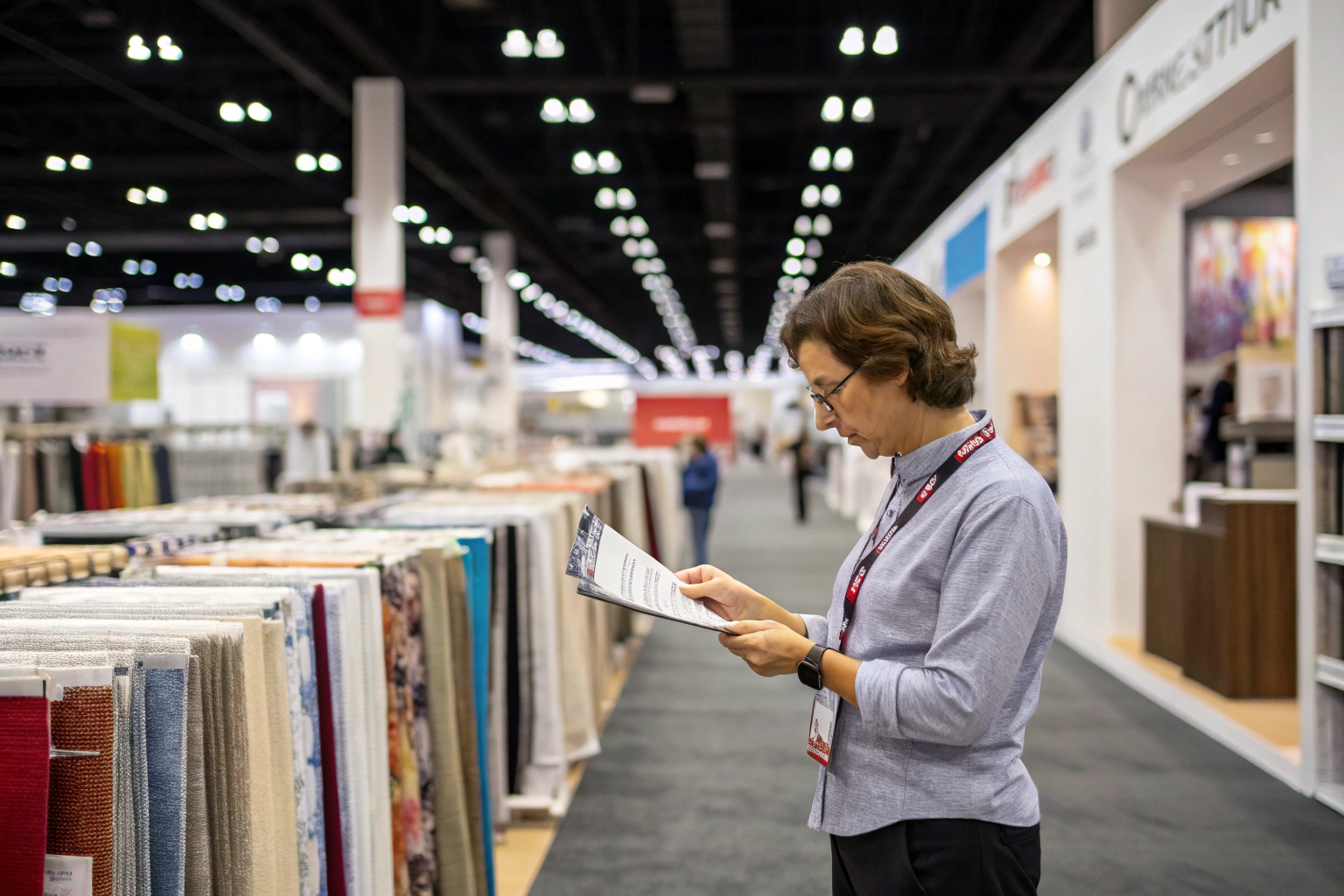
Not all trade shows are created equal. Some are consumer-facing fabric markets where you can buy 5 yards of quilting cotton. Some are regional shows dominated by trading companies with nice booths and no factory behind them. And some are where the actual mill owners and factory directors show up, ready to do serious business.
Here’s the short list of shows where I personally go to meet serious buyers and where my peers in the industry exhibit:
1. Première Vision (Paris and New York)
This is the gold standard. It’s expensive to exhibit here. The booth fees are high. The travel costs are high. Trading companies and low-end mills simply cannot justify the ROI. When you walk the aisles at Première Vision, you’re seeing the top 5% of global textile manufacturers. The mills here have in-house design teams. They’re showing collections they developed, not just copying trends. If you want to find a supplier for high-end fashion fabric, this is where you need to be. The catch? Minimums are real. These mills aren’t doing 100-yard trial orders. But for finding a long-term premium partner, there’s no substitute.
2. Intertextile Shanghai Apparel Fabrics
This is the largest textile trade show in the world. It’s overwhelming. It’s spread across multiple halls in a convention center the size of a small city. The key to using Intertextile effectively is knowing which hall to go to. The international halls have the premium Chinese mills and the overseas exhibitors. The domestic halls are a mixed bag—some hidden gems, some trading companies with glossy catalogs. I’ve been exhibiting here for over a decade. The serious buyers come with a list of specific mills to visit, pre-booked appointments, and a translator if they don’t speak Mandarin. They don’t wander randomly collecting brochures. They come to solve specific sourcing problems.
3. Texworld (New York and Paris)
Texworld is more accessible than Première Vision and has a broader range of exhibitors. You’ll find mills from China, Korea, Taiwan, Turkey, and increasingly Vietnam and India. It’s an excellent place for mid-market brands to find solid, reliable suppliers. The mills here are generally export-oriented and understand Western quality standards and compliance requirements.
4. Functional Fabric Fair (Portland and Munich)
If you’re in performance wear, activewear, or outdoor apparel, this is your show. This is where you find the mills specializing in recycled polyester, waterproof membranes, and technical finishes. The buyers here are technical designers and product developers who speak the language of breathability ratings and hydrostatic head. The exhibitors are deeply knowledgeable about fiber technology.
The common thread among these shows is that exhibiting is a significant investment. A booth at Première Vision can cost $50,000 or more when you factor in travel, samples, and staffing. That investment acts as a filter. It separates the serious manufacturers from the opportunists. If you’re serious about finding a reliable supplier, budget for a trip to one of these shows. The cost of the trip is a fraction of the cost of a failed production order. For more on navigating these events, here’s a guide on how to prepare for and maximize your time at textile trade shows.
How Can Industry-Specific Sourcing Platforms Reduce Risk?
If you can’t make it to a trade show, the next best thing is an industry-specific B2B platform that actually vets its suppliers. Notice I said "industry-specific." General platforms like Alibaba and Global Sources cast a wide net. They have millions of suppliers across every product category imaginable. Their verification process is largely document-based and can be gamed.
Platforms focused specifically on textiles and apparel tend to have better signal-to-noise ratio. Examples include:
1. Material Exchange
This platform is used by major brands to digitize their material sourcing. Suppliers on Material Exchange have to provide detailed technical specifications and often undergo sustainability audits. It’s not a free-for-all marketplace. It’s a curated ecosystem.
2. Common Objective (CO)
CO focuses on sustainable and ethical sourcing. Suppliers are rated on their environmental and social performance. If you’re prioritizing eco-friendly fabrics, this platform connects you with mills that have verifiable certifications like GOTS, GRS, and OEKO-TEX.
3. SwatchOn
This platform is more accessible for smaller brands and startups. It specializes in connecting designers with fabric suppliers, often with lower minimums. While the vetting isn’t as rigorous as Material Exchange, the platform’s focus on fashion fabrics means you’re not wading through listings for industrial conveyor belts.
4. Directories from Industry Associations
Don’t overlook the member directories of organizations like the Korea Textile Trade Association (KTTA), the Taiwan Textile Federation (TTF), or the Japan Textile Federation. These associations vet their members. A mill that’s a member in good standing of its national textile association is almost certainly a legitimate manufacturer.
The advantage of these niche platforms is that they understand how to use textile-specific B2B platforms to find verified fabric mills. They ask suppliers for information that matters to textile buyers: machine types, fiber certifications, production capacity in meters per month, and lead time by fabric category. Alibaba asks for a business license. That’s not enough.
The Factory Audit Checklist No One Shares Publicly
You’ve found a potential supplier. They sent nice samples. Their communication is professional. Now comes the moment of truth: the factory audit. This is where you separate the real manufacturers from the photo opportunities.
Let me tell you about a trick I’ve seen trading companies pull. They have a "factory" that’s really just a showroom. It has a few sample machines, some rolls of fabric on shelves, and a photo wall with pictures of "their" production lines. When buyers visit, they walk them through this showroom, show them the sample machines, and give a great presentation. The buyer leaves impressed. They place an order. The order gets subcontracted to the lowest-bidding actual factory in another province. Quality is a crapshoot.
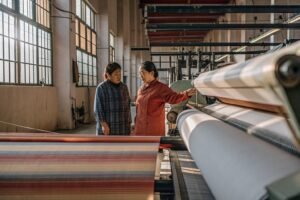
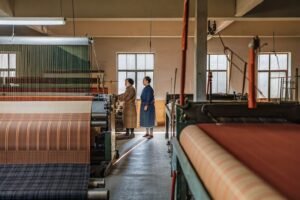
A real factory audit isn’t about checking boxes on a generic ISO form. It’s about verifying the physical capacity to make your specific fabric. It’s about looking at the machines that are actually running, not the ones parked in the corner for show. It’s about talking to the workers on the floor, not just the sales manager in the conference room.
I’m going to give you the audit checklist I wish every buyer would use. It’s not exhaustive, but it focuses on the things that actually predict quality and reliability.

What Questions Expose Trading Companies Pretending to Be Mills?
The goal here is to ask questions that a trading company can’t answer smoothly without fabricating a lie that falls apart under follow-up. Here are my favorite questions:
1. "What brand of knitting machines do you run, what gauge, and how many?"
A real factory manager can answer this instantly. "We have 20 Fukuhara double-knit machines, 28 gauge, and 15 Pailung single-jersey machines, 24 gauge." A trading company will say something vague like "We have many machines" or "We work with partner factories." Follow-up: "Can I see the maintenance logs for machine #7?" A real factory has maintenance logs. A trading company’s eyes will glaze over.
2. "Who is your dyestuff supplier, and what is your monthly consumption of reactive dyes?"
This is a killer question. A real dye house has relationships with specific chemical companies like Huntsman, Archroma, or DyStar. They buy dyes by the ton. They know their monthly consumption numbers. A trading company has no idea. They’ll say "We use high-quality dyes" without naming a supplier.
3. "Can you show me your incoming yarn inspection reports?"
Real mills test incoming yarn. They have a Uster Tester or at least a basic evenness tester. They keep records. Ask to see the records for the yarn used in the samples they sent you. If they can’t produce them, they’re not doing incoming QC. That means they’re trusting their yarn supplier blindly. That’s a recipe for inconsistency.
4. "What is your standard procedure when greige fabric fails inspection before dyeing?"
A real mill has a procedure. They isolate the defective rolls. They have a quarantine area. They either return the fabric to the knitter/weaver or downgrade it for a less demanding application. A trading company doesn’t know because they never see the greige fabric. It goes straight from the knitter to the dyer.
5. "What is the name of your head dyer, and how long has he worked here?"
This seems like small talk. It’s not. A real factory owner knows their key technical staff personally. They can tell you, "Lao Li has been with us for 16 years. He started as an apprentice." A trading company will have no idea who the head dyer is. They might not even know which dye house their "partner" is using this week.
These questions aren’t hostile. They’re professional. A real mill owner will respect you for asking them. They show you understand the business. If a supplier gets defensive or evasive when you ask these questions, that’s your answer. Walk away. For more on this topic, here’s a resource on identifying red flags when sourcing from Chinese textile suppliers.
Which Certifications Actually Correlate with Consistent Quality?
Certifications are not all equal. Some are meaningful indicators of process discipline. Others are paper exercises. Here’s my tiered ranking:
Tier 1: The Gold Standards (High Correlation with Quality)
-
GOTS (Global Organic Textile Standard): Getting and maintaining GOTS certification is a beast. It requires annual on-site audits of every step of production. It verifies organic fiber content, but more importantly for quality, it verifies that the factory has robust systems for separating organic from conventional production, managing wastewater, and documenting every input. A factory that can pass a GOTS audit has its operational act together.
-
OEKO-TEX Standard 100, Appendix 6: This is the strictest level of OEKO-TEX, covering both product safety and environmental management. Factories with this certification are testing for a wide range of harmful substances and are subject to unannounced audits.
-
GRS (Global Recycled Standard): Like GOTS, GRS requires rigorous chain-of-custody documentation. It forces the factory to have systems to track recycled content from input to finished product. That discipline translates to better overall quality management.
Tier 2: Useful but Not Sufficient
-
ISO 9001: It means the factory has documented processes. It does not mean those processes are good or that anyone follows them. I’ve seen ISO 9001 certified factories with atrocious quality. It’s a baseline, not a guarantee.
-
BSCI / SEDEX (Social Compliance): These audits focus on labor conditions and worker safety. They’re important for ethical sourcing, but they don’t directly measure fabric quality. A factory can treat its workers well and still make mediocre fabric.
-
OEKO-TEX Standard 100 (Standard Level): This certifies that the finished product is free from harmful substances. It doesn’t tell you anything about the factory’s production processes or consistency. A trading company can easily get OEKO-TEX for a specific fabric without owning a single machine.
Tier 3: Often Misleading
-
"Member of [Some Association]": Unless the association has rigorous membership requirements, this is just a paid subscription.
-
Alibaba "Verified Supplier": This means Alibaba or a third party has confirmed the business license and physical address. It does not confirm that the address is a functioning factory, or that the factory makes the products listed.
The takeaway: Look for certifications that require on-site process audits and chain-of-custody tracking. GOTS and GRS are the heavy hitters here. If a supplier has these, it’s a strong signal that they operate with a level of discipline that correlates with consistent quality. Here’s more on understanding the difference between product certification and process certification in textiles.
Sample Development The True Test of a Supplier Partnership
Samples are the courtship phase of a supplier relationship. How a supplier handles samples tells you almost everything you need to know about how they’ll handle bulk production. A supplier who is sloppy with samples will be sloppy with your 5,000-yard order. A supplier who is precise, communicative, and proactive during sampling is demonstrating their operational DNA.
The sample process has multiple stages, and each stage tests a different capability. The lab dip tests their color matching and dye formulation skills. The strike-off tests their printing accuracy and registration. The handloom or pre-production sample tests their ability to replicate the approved construction at scale. Pay attention to how long each stage takes, how closely the result matches your target, and—crucially—how the supplier communicates about any discrepancies.
A great supplier will tell you before they send a sample: "We achieved a dE of 1.2 on this navy. It’s slightly warmer than your target under D65 light. We can adjust the formula, but it will add 3 days. Do you want us to proceed, or is this acceptable?" A mediocre supplier will just send the sample and hope you don’t notice the difference.

How Long Should Lab Dips and Strike-Offs Realistically Take?
Let’s set realistic expectations. If a supplier promises custom lab dips in 48 hours, they are either:
A) Not actually doing a custom dye formulation (they’re pulling from a library of existing colors and hoping it’s close enough).
B) Cutting corners on the process (skipping proper scouring or fixation).
C) Lying to get the order.
Realistic timelines for a professional mill:
Lab Dips (Solid Colors):
- First submission: 7-10 business days. This allows time to receive your reference, analyze it spectrophotometrically, formulate a recipe, run a small sample in the lab dyeing machine, check the result, adjust if needed, and ship.
- Revisions: 5-7 business days per round. Each revision requires reformulating and re-running.
Strike-Offs (Prints):
- First submission: 10-14 business days. This includes separating your artwork, engraving screens or cylinders (a significant setup cost and time), mixing print pastes, and running a sample.
- Revisions: 7-10 business days if screens need to be re-engraved.
Handloom / PP Samples:
- 7-14 business days after lab dips and strike-offs are approved. This requires scheduling time on a production machine, not a lab machine.
If you’re working with Shanghai Fumao, we’re transparent about these timelines. In peak season (March-May, August-October), add 3-5 days to these estimates. In slow season (June-July), we can sometimes shave a day or two off. But the laws of chemistry and physics set a floor on how fast these processes can be done correctly. A supplier who promises significantly faster times is almost certainly compromising something. For a deeper dive, here’s a guide on understanding the textile sampling timeline from lab dip to production.
What Does a "Good" Strike-Off Reveal About Print Capabilities?
A strike-off is a small sample of your printed design, usually about 1-2 meters. It’s the printer saying, "This is what we can do." Examining it carefully reveals a lot about their technical capability.
1. Registration (For Multi-Color Designs)
Look closely at the edges where two colors meet. Is there a gap (white space showing through)? Is there overlap (a muddy third color where they bleed together)? A good print has crisp, clean registration. The tolerance should be less than 0.5mm misalignment. Use a loupe or magnifying glass. If the registration is sloppy on the strike-off—when they’re trying their hardest to impress you—it will be a disaster in bulk.
2. Color Saturation and Penetration
Turn the fabric over. Look at the back. A high-quality print should show good color penetration through to the reverse side (unless it’s a specific "surface print" technique like burnout). If the color is only sitting on the surface, it will crock (rub off) easily and fade quickly. The back of the fabric tells the truth about the print paste quality and the curing process.
3. Hand Feel
Does the printed area feel stiff, plasticky, or boardy? A good printer uses high-quality, low-viscosity print pastes and washes the fabric properly after printing to remove excess thickener. The printed area should feel as close to the unprinted base fabric as possible. If it feels like a sticker, the printer is using cheap, heavy inks that will crack and peel.
4. Repeats
Measure the distance between the same point in the design. Is it exactly as specified in your tech pack? If your design has a 64cm repeat, measure three repeats. Are they all exactly 64cm, or does it drift (63.8, 64.1, 64.0)? A drifting repeat means the printer’s machine has inconsistent tension control. That leads to distorted prints in bulk.
5. Edge Definition
Look at the very edges of the printed area. Are they sharp and clean, or fuzzy and bleeding? This is especially important for fine lines and small text. Fuzzy edges indicate the print paste is too thin or the screen mesh is wrong.
At Shanghai Fumao, our strike-off process includes a detailed report with the strike-off. We note the exact inks used, the screen mesh count, the curing temperature, and any deviations from the target. This documentation becomes the "recipe" for bulk production. If a supplier just sends you a piece of fabric with no data, they’re not running a controlled process. They’re hoping for the best. This article on evaluating textile print quality from strike-off samples covers more of the technical details.
Payment Terms and Contracts That Protect Your Order
Money. This is where the relationship gets real. And this is where many buyers, especially newer ones, make themselves vulnerable. The wrong payment terms can leave you with zero leverage if quality goes wrong or delivery is late.
The standard terms in the industry have shifted over the years. Twenty years ago, a 30% deposit and 70% against Bill of Lading was common. Today, with tighter credit and higher raw material costs, many mills require more upfront. But that doesn’t mean you have to accept terms that leave you completely exposed.
The key principle is this: Maintain a leverage point until you have verified the goods. The final payment—or at least a significant portion of it—should not be released until after you (or your agent) have inspected the finished fabric and confirmed it meets specifications. Once the supplier has 100% of your money, your ability to negotiate a remedy for quality issues drops dramatically.

Is 30/70 Payment Still Standard or Has the Market Shifted?
In 2026, the market has shifted. For new relationships, especially with smaller orders, many Chinese mills now ask for 50% deposit, 50% before shipment. Some even ask for 100% upfront for orders under $5,000. This is driven by several factors: rising yarn costs that mills must pay upfront, tighter credit from Chinese banks, and a history of buyers disappearing after production.
Here’s what I see as reasonable for different scenarios:
| Relationship Stage | Typical Terms | What’s Negotiable |
|---|---|---|
| First Order (Under $10k) | 50% deposit / 50% before shipment | Push for 30% deposit / 70% after inspection but before shipment. Offer to pay by wire transfer for faster receipt. |
| First Order (Over $20k) | 30% deposit / 70% against documents | Ask for 30% deposit / 50% after inspection / 20% 30 days after delivery. This is hard to get on first order but worth asking. |
| Established Relationship | 30% deposit / 70% at 30-60 days net | This is the goal. Once you’ve done 3-4 successful orders, you should be on open account terms. |
| Large Strategic Orders | Letter of Credit (L/C) at Sight | L/Cs protect both parties but add bank fees. For orders over $100k, an L/C is standard. |
At Shanghai Fumao, we try to be flexible. We understand that cash flow is tight for everyone. For qualified buyers with a solid purchase history, we offer net 30 or net 60 terms. For new clients, we typically start at 30% deposit and 70% after inspection but before shipment. We encourage buyers to send a third-party inspector (like SGS or ITS) or to do a video inspection with us. We want you to be confident in what you’re paying for.
Red flag: A supplier who refuses to allow any inspection before final payment. "Just trust us, we’ve been doing this 20 years." No. Trust is earned, and inspection is a standard industry practice. A refusal suggests they know the fabric won’t pass.
Green flag: A supplier who proactively offers video inspection or welcomes third-party audits. That shows confidence in their quality.
For more on payment protection, here’s a resource on negotiating payment terms with overseas textile suppliers.
What Clauses Must Be in Your Fabric Purchase Agreement?
A purchase order is not enough. You need a simple but clear purchase agreement that covers the specific risks of textile sourcing. Here are the non-negotiable clauses:
1. Specification Clause
"The fabric shall conform to the following specifications: Fiber Content: 95% Cotton / 5% Spandex (±2% tolerance). Weight: 280 GSM (±5% tolerance). Width: 60 inches cuttable (±1 inch). Color: Match to approved Lab Dip reference #LD-2026-042, dE < 1.0 under D65 lighting. Shrinkage: Maximum 3% length x 3% width per AATCC 135."
This clause is your legal foundation. Without it, "close enough" is legally acceptable.
2. Inspection and Acceptance Clause
"Buyer reserves the right to inspect fabric prior to shipment. Final payment shall be released only upon Buyer’s written acceptance of inspection report. In the event of non-conformance, Seller shall have 14 days to remedy the defects or provide a replacement at Seller’s expense."
This gives you the leverage to reject bad fabric before you pay for it.
3. Force Majeure Clause (With Specific Exclusions)
Standard force majeure covers "acts of God." Make sure it excludes things the supplier can control: labor shortages due to poor planning, machine breakdowns due to lack of maintenance, quality issues requiring rework. These are business risks the supplier should bear.
4. Late Delivery Penalty Clause
"If delivery is delayed more than 14 calendar days beyond the agreed shipment date, Seller shall provide a discount of 5% of the invoice value. If delayed more than 30 days, Buyer may cancel the order and receive a full refund of deposit."
This puts teeth in the delivery promise. Without it, "soon" is the only delivery date you have.
5. Intellectual Property Clause
"All designs, patterns, and specifications provided by Buyer remain the sole property of Buyer. Seller shall not reproduce, sell, or display Buyer’s designs to any third party."
This protects your custom prints and proprietary fabric developments from showing up in a competitor’s line next season.
6. Governing Law and Dispute Resolution
Specify which country’s law governs and where disputes will be resolved. "Governed by the laws of Hong Kong SAR, with arbitration in Hong Kong under HKIAC rules" is a common neutral compromise for US-China contracts.
Having these clauses in writing, even in a simple one-page agreement, changes the dynamic. It signals that you’re a professional buyer who understands the risks. It gives you legal standing if things go wrong. And honestly, it scares away the bad suppliers who know they can’t meet these standards. The good suppliers? They’ll sign it without blinking, because this is how they already operate. For more detail, here’s a guide on how to write a fabric purchase agreement that protects your apparel brand.
Conclusion
Finding a reliable high-quality fabric supplier in 2026 is not about luck. It’s not about clicking the first sponsored link on Alibaba. It’s about treating sourcing as a professional discipline with a structured process.
It starts with looking in the right places. Get off the generalist platforms and go where the real mills exhibit—Première Vision, Intertextile, Functional Fabric Fair. Use industry-specific platforms like Material Exchange and Common Objective that actually vet their suppliers. Leverage your network for introductions.
It continues with rigorous vetting. Ask the questions that expose trading companies. Look for the certifications that require on-site process audits, not just paperwork. Do the factory audit, and don’t just look at the showroom. Look at the maintenance logs, the quarantine area, the dye kitchen. Talk to the head dyer, not just the sales manager.
It deepens during sample development. Pay attention to how they handle lab dips and strike-offs. Look at the back of the print. Measure the repeat. A supplier who is precise and communicative during sampling is demonstrating how they’ll handle your bulk order.
And it’s sealed with a contract that protects you. Get the specifications in writing. Reserve the right to inspect before final payment. Include penalties for late delivery. These aren’t aggressive demands. They’re standard professional practice.
At Shanghai Fumao, we’ve built our business by being the supplier that passes all these tests. We have the CNAS-certified lab. We have the GOTS and GRS certifications that require real audits. We have the in-house dye masters and finishing technicians who’ve been doing this for decades. And we have the contract terms that give our clients confidence.
The reliable suppliers are out there. But they’re not going to find you. You have to find them, and you have to prove to them that you’re a buyer worth working with. That means coming to the table with clear specifications, realistic timelines, and professional communication.
If you’re ready to stop searching and start building a real supply chain partnership, let’s have a conversation. Bring your tech packs. Bring your quality standards. Bring your calendar. We’ll show you how we work and let you decide if we’re the right fit.
For inquiries about specific fabric developments or to schedule a video tour of our Keqiao facilities, contact our Business Director, Elaine. She can arrange sample shipments and walk you through our complete quality assurance documentation.
Contact Elaine: elaine@fumaoclothing.com
The right supplier changes everything. Let’s find out if we’re yours.