About three years ago, a wholesale apparel brand from Los Angeles walked into our Keqiao showroom and spread 27 fabric swatches across the table. Twenty-seven. For a 12-piece capsule. I looked at the pile, then at their designer, and asked a question I already knew the answer to: "How many of these fabrics actually made it into your sold collection last season?" She paused, flipped through her notes, and said, "Twelve. But we sampled 18, and we spent $4,300 on sampling fabrics we never sold." The problem was visible right there on the table. They had beautiful fabrics—a Japanese-inspired cotton-linen stripe, a soft brushed peached twill, a crinkled viscose georgette, a heavy wool coating—but they didn’t relate to each other. The palette wasn’t a collection. It was a shopping spree. And wholesale buyers, the ones who write purchase orders at trade shows, can smell a disconnected collection from across the aisle.
A cohesive capsule collection fabric palette is built by first defining your collection’s emotional and functional anchor—a single base cloth that represents 40-50% of your total fabric consumption—then layering in texture variations, pattern accents, and one deliberate statement fabric, all unified by a shared fiber story, complementary weight transitions, and a consistent finishing language. A capsule is not a random assortment of interesting fabrics. It is a tightly edited system where every cloth relates to every other cloth, either by contrast or by echo. When a retail buyer looks at your line sheet, they should see a story, not a catalog. When they touch your fabrics, the weights and hands should transition smoothly from piece to piece. When they ask about minimums, you should be able to answer without flipping through 12 different supplier spec sheets.
At Shanghai Fumao, we’ve helped develop fabric palettes for dozens of wholesale brands launching capsules into the U.S., European, and Australian markets. I’ve seen what sells, what sits, and what costs a brand money it doesn’t have. This article is my practical guide to building a fabric palette that a wholesale buyer will trust—and that your production budget can actually support.
What Is the "Anchor Fabric" Strategy for Wholesale Capsule Collections?
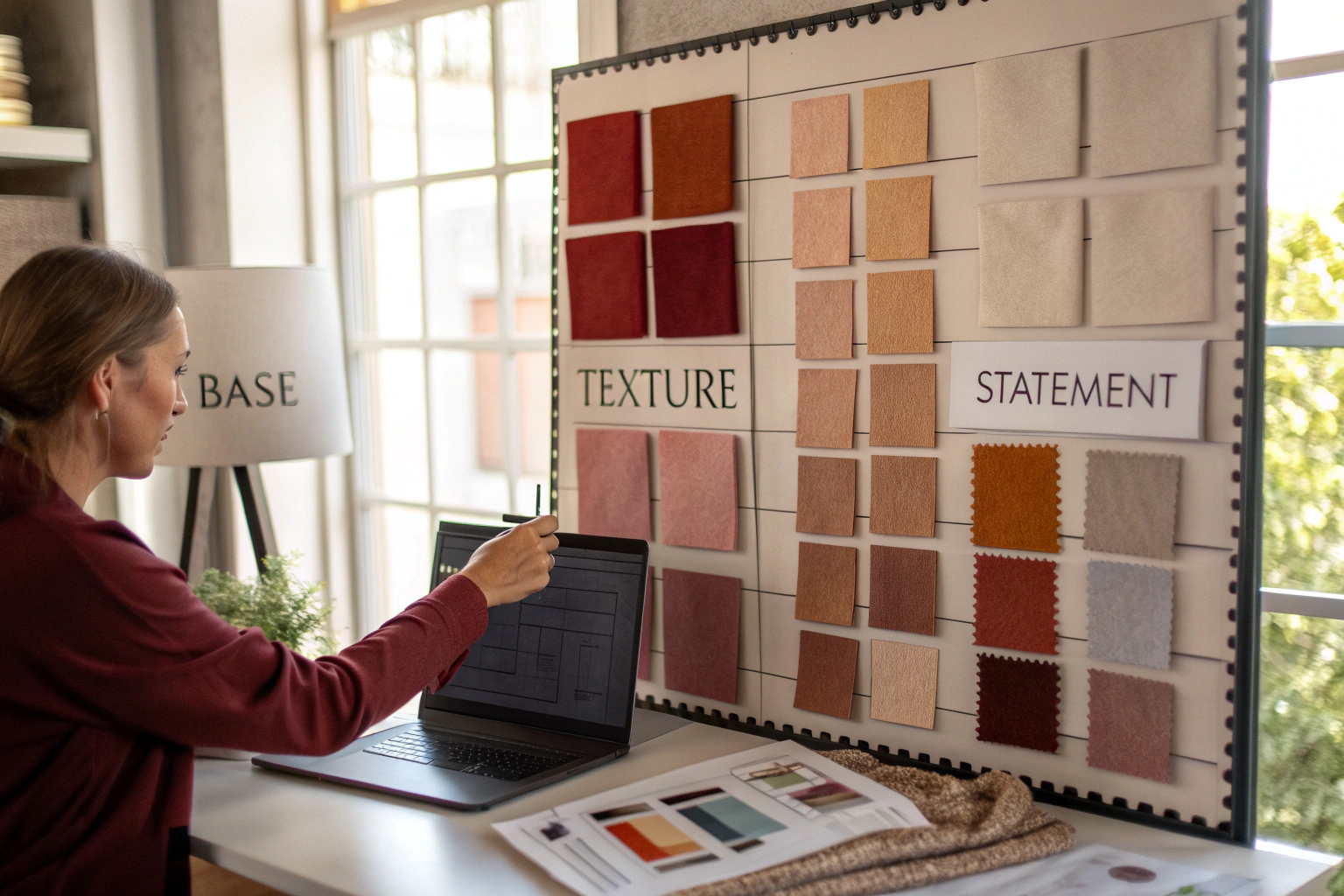
The anchor fabric is the one cloth that appears in at least three to four pieces of your capsule and consumes nearly half of your total fabric yardage. It is usually a solid, a neutral color, and a mid-weight construction that can carry across silhouettes. For a summer capsule, the anchor might be a 120 GSM cotton-linen slub in ecru. For a fall capsule, it might be a 220 GSM brushed Tencel twill in charcoal. The anchor fabric does three heavy lifting jobs. First, it creates visual repetition across the collection, which signals cohesion to the wholesale buyer. Second, it allows you to hit fabric minimums without over-ordering obscure qualities. Third, it simplifies your cutting room because the same fabric runs across multiple styles, reducing marker waste and changeover time.
I learned the power of the anchor fabric from watching a Australian boutique brand build their wholesale business from nothing in 2022. They launched with an eight-piece capsule. Their anchor was a midweight organic cotton jersey in a warm sand color. That single fabric appeared in a t-shirt dress, a wide-leg pant, a boxy crewneck, and a lined hoodie. Four of eight styles. The remaining four pieces used three other fabrics—a rib for the trims, a lightweight voile for a blouse, and a textured jacquard for a statement jacket. The collection looked like a family. Buyers at their first trade show commented on how "pulled together" the line felt. What they didn’t see was that the anchor fabric strategy also reduced the brand’s sampling costs by 30% because they weren’t developing five different base cloths. For more on how to structure a fabric plan around volume drivers, this guide on fabric sourcing strategies for small-batch capsule collections breaks down the anchor fabric approach with real order volume examples.

How Do You Choose an Anchor Fabric That Works Across Multiple Silhouettes?
The anchor fabric needs to be a chameleon. It has to drape well enough for a dress but hold structure well enough for a jacket. It has to feel substantial but not heavy. In technical terms, you’re looking for a fabric with a drape coefficient between 40% and 60%, a weight that’s seasonally appropriate but not extreme, and a surface that’s interesting enough to stand alone but neutral enough not to clash with your accent fabrics. For wovens, a twill or a plain weave with a slight texture—like a slub or a crepe—works better than a flat poplin because it photographs with depth. For knits, a midweight single jersey or a lightweight French terry gives you body without bulk.
The fiber choice matters here for a reason most buyers overlook: wholesale buyers ask about care instructions. If your anchor fabric is a delicate silk that requires dry cleaning, you’ve just limited your capsule to the high-maintenance customer. If it’s a cotton-linen blend that machine washes and tumble dries, you’ve opened the door to a much broader retail audience. I recommend natural or natural-blend anchors for almost all mid-market capsules. A 70% cotton, 30% linen blend gives you the breathability and texture of linen with the wrinkle resistance and washability of cotton. A Tencel-cotton blend gives you drape and sheen with durability. At Shanghai Fumao, we’ve developed a specific anchor fabric for wholesale brands—a 55% linen, 45% organic cotton twill at 160 GSM—that we stock in five neutral colorways precisely because it works as an anchor across dresses, trousers, jackets, and structured tops. Our clients who use this fabric as their anchor report an average of 3.8 styles per collection built on this single base. For a deeper look at how to evaluate drape and hand for multi-style use, this textile selection resource on fabric drape testing for capsule collections walks through the objective and subjective methods of assessing whether a fabric will work across silhouettes.
Why Should Your Anchor Fabric Dictate Your Trim and Notions Budget?
Here’s a practical truth that most design guides skip. Your anchor fabric’s weight, fiber content, and color set the technical parameters for every piece of trim in your collection. If your anchor is a 220 GSM brushed twill in oatmeal, your zippers need to be a specific weight—a #5 metal or a #5 vislon, not a #3 lightweight coil that will look undersized. Your buttons need to be a specific thickness—probably 2.5-3mm, not 1.5mm, or they’ll look cheap against the substantial fabric. Your interlining needs to match the anchor’s fusing temperature and shrinkage rate. If you choose all these trims to work with your anchor fabric, they’ll automatically work with your lighter accent fabrics. But if you choose trims for a lightweight accent fabric, they’ll look wrong on the anchor pieces—which represent half your collection.
I watched a brand make this mistake in 2023. They built their capsule around a heavy wool coating anchor but sourced lightweight, delicate mother-of-pearl buttons for the entire collection because the buttons looked beautiful on their silk blouse accent piece. When the buttons went on the wool coat, they looked like dollhouse hardware. The brand had to re-source all the coat buttons, pay a rush fee, and delay their trade show samples by two weeks. The cost was about $1,200 in rush charges and one very stressed production manager. The fix was simple: spec the trims for the anchor fabric first, then carry those trims through to the lighter pieces, adjusting only if absolutely necessary. The consistency will make your collection look more expensive, and your trims minimum order quantities will be easier to hit because you’re buying one zipper type, not three. For a practical framework on aligning trims with fabric weights, this garment components guide on matching zipper and button weights to fabric thickness provides specification charts that remove the guesswork.
How Many Fabrics Should a 12-Piece Capsule Actually Include?
I’ll give you the direct answer first, and then I’ll explain the reasoning. For a 12-piece wholesale capsule, the optimal number of fabrics is five. Not four. Not seven. Five. Here’s how they break down. One anchor fabric covering four to five core styles. One textured or surface-interest variation of the anchor for two to three pieces that need visual differentiation. One lightweight or drapey contrast fabric for blouses, linings, or fluid silhouettes. One patterned or printed fabric for one to two statement pieces. And one trim or rib fabric for neckbands, cuffs, and finishing details. That’s five fabrics driving twelve garments. The ratio is roughly 2.4 styles per fabric, which is efficient for minimum order quantities and creates enough repetition that the collection reads as cohesive.
Every fabric you add beyond five increases complexity exponentially, not linearly. A sixth fabric doesn’t just add one more supplier to manage. It adds another set of lab dips, another set of shrinkage tests, another set of minimum order negotiations, another set of cutting markers, and another chance for a quality issue to derail your delivery schedule. I’ve seen 12-piece capsules built on eight fabrics. The brand spends more time managing fabric logistics than designing garments. Their sampling costs are 60% higher than necessary. And the wholesale buyer, looking at the line sheet, sees a jumble of unrelated textiles instead of a clear point of view. The discipline of limiting to five fabrics forces you to make deliberate choices. It’s a creative constraint, not a compromise.

What Is the Ideal Ratio of Solids, Textures, and Prints in a Wholesale Palette?
The ratio that I’ve seen work consistently across multiple seasons and multiple markets is 60% solids, 30% textures, and 10% prints. In a five-fabric palette, that translates to three solids—which includes your anchor, your lightweight contrast, and your trim, two textures—your anchor variation and potentially a second surface-interest fabric, and zero to one print. Yes, I’m saying a 12-piece capsule can have zero prints and sell perfectly well to wholesale buyers. I’ve seen it happen. A capsule built entirely on solids and textures reads as elevated, considered, and expensive. A capsule built primarily on prints reads as fast fashion, even if the construction quality is high.
The reason solids and textures dominate successful wholesale capsules is that retail buyers are risk-averse. A solid navy blazer in a textured crepe will sell in multiple stores across multiple regions. A bold floral print blazer will sell in some stores, sit in others, and end up on a markdown rack. Wholesale buyers know this, and they buy accordingly. They’ll commit to deeper quantities on solid and textured pieces and take shallower positions on prints. If your capsule is 40% prints, you’re asking wholesale buyers to take risks they’re not incentivized to take. One of our most commercially successful wholesale clients—a Scandinavian brand that sells into 200+ doors across Europe—builds every capsule on a 70-20-10 ratio. Three solids, one texture, one seasonal print. Their wholesale sell-through consistently exceeds 85%. Their buyers know the collection will perform, and that predictability drives reorders. For more data on how fabric composition affects wholesale sell-through, this fashion buying guide on solids versus prints in commercial wholesale collections provides historical performance benchmarks across different retail segments.
How Do You Know When You’ve Included Too Many "Statement" Fabrics?
You know you have too many statement fabrics when you can’t remember which fabric goes on which style without looking at your tech pack. A statement fabric, by definition, is a fabric that draws attention to itself. It has a bold print, a dramatic texture, an unusual color, or a distinctive hand. One statement fabric in a capsule makes the collection memorable. Two statements can work if they’re carefully contrasted—for example, a chunky bouclé jacket and a fluid satin printed pant. Three statements, and the collection starts shouting. Four, and it’s unintelligible.
The test I give our brand clients is simple. Lay out all your fabric swatches on a table. Close your eyes for ten seconds, open them, and note which fabric your eye goes to first. That’s your statement fabric. Now remove it and repeat the test. If a second fabric immediately grabs your attention with the same intensity, you have two statements—which is the absolute maximum for a 12-piece capsule. If a third fabric also screams for attention, you need to cut one. The statement fabrics should take turns, not compete. The anchor fabric should be the quiet, confident backbone that makes the statements look intentional rather than chaotic. I worked with a Los Angeles brand in 2024 that brought me eight fabrics for an eight-piece capsule. Four of them were statements—a metallic jacquard, a bold animal print, a neon-bright ribbed knit, and an embroidered tulle. The collection looked like four different brands had shared a runway. We cut it to five fabrics: one anchor, one texture, one lightweight solid, one print (the jacquard), and the rib. The remaining three statement fabrics were saved for future capsules. The edited collection sold into 40 wholesale accounts. The original, unfiltered version—which they showed to a few buyers informally—generated confused feedback and no orders. For a framework on editing fabric palettes, this design process guide on editing a capsule collection fabric selection offers practical exercises for identifying what belongs and what should wait for another season.
How Do You Use Weight Transitions to Create Perceived Value in a Wholesale Line?
Wholesale buyers don’t just look at a collection. They walk through it. At a trade show or showroom appointment, they move from rack to rack, touching fabrics as they go. What they’re subconsciously registering is weight transition—the way the fabrics move from light to heavy, sheer to opaque, fluid to structured as they progress through the collection. A well-designed weight transition makes the capsule feel like a journey. A poorly designed one—where a heavy wool coating sits next to a featherweight chiffon with no intermediate fabrics between them—feels jarring and unresolved.
The principle is simple but powerful. Your capsule should have a weight range, not a single weight. For a summer capsule, that range might be 80 GSM at the lightest (a voile or a batiste) to 220 GSM at the heaviest (a twill or a lightweight denim). For a fall capsule, it might be 120 GSM to 380 GSM. The majority of your pieces—the anchor-driven styles—should sit in the middle of that range. One or two pieces should be noticeably lighter, creating an airy, feminine counterpoint. One piece should be noticeably heavier, creating a structured, substantial anchor for layering. This creates what I call a "weight rhythm" that makes the collection feel considered and luxurious. The buyer might not consciously notice the weight transitions, but they’ll notice if they’re missing.

Why Should Your Lightest and Heaviest Fabrics Share a Common Color Story?
The lightest fabric in your capsule—let’s say an 80 GSM cotton voile for a sheer blouse—and the heaviest fabric—a 280 GSM linen canvas for an oversized blazer—will look completely different if they’re in different color families, even if the colors "match" on a Pantone card. A light fabric in a pastel blue looks pale and airy. A heavy fabric in the exact same pastel blue looks chalky and washed-out because the fabric’s mass absorbs more light. To make the weight transition feel intentional, your lightest and heaviest fabrics should either share an exact color or sit in closely adjacent tonal values.
The most foolproof approach is to run the same dye formula on both the light and heavy fabrics, accepting that the visual result will be slightly different but the undertone will be identical. A brand from Amsterdam did this beautifully with their spring 2025 capsule. They used a warm terracotta dye on a featherweight silk-cotton voile for a blouse and a heavyweight cotton twill for a trench coat. The voile read as a soft, translucent blush. The twill read as a rich, saturated rust. The colors were technically the same dye lot, but the fabric weight made them look different enough to create visual interest while the shared undertone kept them in the same family. Buyers commented on how the collection "glowed" from piece to piece. The technical reality is that the same dye on different fabric weights will always produce a slightly different visual color because of how light interacts with the surface. Lean into that. Don’t fight it by trying to force an exact match. The variation is what makes the transition feel organic. For a practical guide on managing dye consistency across fabric weights, this textile dyeing resource on achieving tonal consistency across different fabric weights and weaves explains how to spec lab dips when your capsule includes multiple weights of the same fiber.
How Can You Use Interlining and Construction to "Weight-Adjust" a Fabric Across Silhouettes?
Sometimes the perfect fabric for your capsule isn’t available in multiple weights. Maybe your anchor is a 160 GSM linen-cotton twill, and you want to use it for both a flowing wide-leg pant and a structured blazer. The fabric is ideal for the pant—soft drape, breathable—but too soft for the blazer, which needs shoulder structure. You don’t need a different fabric. You need interlining.
A fusible interlining can add 40-80 GSM of effective weight to a fabric, completely changing its structural behavior without changing its face appearance. For the blazer, a medium-weight woven fusible in the body and a heavier fusible in the collar and lapel will give you the structure you need while keeping the face fabric consistent with the rest of the capsule. For a dress that needs a bit more body in the skirt, a lightweight knit fusible in the hem area will add swing and prevent clinging without stiffening the entire garment. The key is choosing interlining weights that step up incrementally. I spec interlining the same way I spec fabric—in GSM. A 40 GSM fusible is a whisper. An 80 GSM is a suggestion. A 120 GSM is a statement. For most midweight woven anchors, a 50-70 GSM fusible adds enough structure for a collar or a cuff without making the garment feel like armor.
At Shanghai Fumao, we stock interlining in five weight grades and can match any of our anchor fabrics with the appropriate fusible for each silhouette. A Canadian brand we work with uses a single 180 GSM Tencel twill for an entire six-piece capsule—dress, pant, blazer, skirt, top, and short—by varying the interlining weight and the lining fabric. The dress gets no interlining and a lightweight cupro lining for fluidity. The blazer gets a 70 GSM woven fusible and a structured shoulder pad. The fabric face is identical across every piece. The wholesale buyer sees a cohesive collection. The production team sees one fabric to order, one minimum to hit, one quality standard to maintain. The efficiency is profound. For a technical resource on matching interlining to shell fabric, this garment construction guide on fusible interlining selection for woven and knit shell fabrics provides weight and fusing condition recommendations across fabric types.
How Do You Test a Capsule Palette Before Committing to Bulk Production?
The time to discover that your fabrics don’t work together is not when your production fabric arrives in a 40-foot container. It’s during the sampling phase, before you’ve committed to bulk quantities. Yet I’m constantly surprised by how many brands skip palette testing. They approve swatches individually, order bulk fabric, cut production, and then discover that the lightweight voile they loved on its own looks cheap next to the substantial twill they also loved on its own. The fabrics never met each other until they were on the cutting table.
The testing process I recommend has three stages. Stage one: the table test. Lay all your selected swatches on a large, neutral-colored table in natural daylight. Arrange them in different groupings. Move them around. See which fabrics feel like they belong together and which ones feel like interlopers. If a fabric consistently looks out of place no matter where you put it, it doesn’t belong in the capsule. Stage two: the drape test. Hang the fabrics on a dress form or a simple hanger, side by side, and observe how they fall. A fabric that drapes in soft, fluid folds next to a fabric that sticks out stiffly creates visual tension. That tension might be intentional—a fluid pant next to a structured jacket—or it might be discordant. The only way to know is to see them hanging together. Stage three: the photo test. Photograph the fabrics together under the lighting conditions they’ll be seen in—natural light for e-commerce, warm showroom light for trade shows, and flash for social media content. Some fabrics that look harmonious to the eye look completely disconnected on camera. This is especially true for textures that read differently under different light angles. If the fabrics don’t photograph well together, your wholesale line sheet won’t look cohesive, and that’s often the first—and only—impression a buyer gets.

What Is a "Capsule Strike-Off Session" and Why Should You Do One?
A capsule strike-off session is a pre-production review where the fabric supplier produces small quantities—typically 5 to 10 meters each—of every fabric in your capsule palette, in your actual approved colors, and ships them to you as a single package. You receive the complete palette, not individual swatches. You can cut small samples, drape them together, photograph them together, and make a final palette decision with the actual fabrics in your hand, not the lab dips you approved months ago.
This step adds about two to three weeks to your development timeline and costs between $300 and $800 depending on the number of fabrics and the complexity of the colors. It is the best money you will spend in your entire product development budget. I’ve seen brands catch palette problems in the strike-off session that would have cost them $15,000 to $30,000 if discovered after bulk production. A New York brand ran a strike-off session with us in late 2024 for a seven-fabric capsule. When the strike-offs arrived, they realized the "neutral beige" they had specified for their anchor fabric was reading pink under warm light, while their lightweight contrast fabric in "cream" was reading yellow. Together, the beige and cream looked like two different color families, not two shades in the same story. They adjusted the anchor’s dye formula—a three-day correction—and the revised strike-offs harmonized perfectly. If they had skipped this step and gone straight to bulk, they would have had 3,000 meters of beige fabric that didn’t work with their collection. At Shanghai Fumao, we offer a capsule strike-off service specifically for wholesale brands launching new collections. We produce 8-meter lengths of each fabric in the palette, label them with the style numbers they’re intended for, and ship them as a single package. The cost is $450 for up to six fabrics. For a step-by-step walkthrough of how to run this session internally, this product development guide on pre-production fabric approval processes includes a checklist for palette evaluation that you can use with your own team.
How Can You Use Wholesale Buyer Feedback to Refine Your Fabric Palette?
Your wholesale buyers are not just customers. They are market sensors. They spend their days talking to retail consumers, watching sell-through data, and comparing your collection to your competitors’. Before you lock your bulk fabric orders, if you have trusted wholesale relationships, show a few buyers your capsule palette and ask for honest feedback. Don’t ask "Do you like it?" That question generates polite answers and no useful data. Ask specific questions. "Which of these three fabric qualities feels most premium to you?" "If you could only stock four of these five fabrics in your store, which one would you cut?" "Does this palette feel consistent with our brand from your last two seasons, or does it feel like a departure?"
A European wholesale brand I work with does this systematically. They invite three of their top retail buyers to a 30-minute video call during the development phase. They show the fabrics on camera, describe the capsule concept, and ask the buyers to rank the fabrics in order of "most likely to drive a reorder." The feedback has directly influenced their palette decisions multiple times. In one season, the buyers unanimously ranked a textured jacquard lowest, even though the design team loved it. The brand cut it from the capsule, replaced it with a simpler texture, and the resulting collection had their highest sell-through in three years. The jacquard was beautiful, but it didn’t fit the commercial reality of the retail floor. The buyers knew something the design team couldn’t see from inside the studio. If you don’t have established buyer relationships yet, you can run a smaller version of this with a trusted sales rep or showroom agent. The point is to get external eyes on your palette before you’re financially committed. For a framework on structuring this feedback process, this wholesale strategy guide on using buyer feedback in product development provides interview templates and question sets that generate actionable data, not just opinions.
Conclusion
Building a cohesive fabric palette for a wholesale capsule collection is not about finding the most beautiful fabrics. It’s about finding the right fabrics that relate to each other in a way that tells a clear, commercial, reproducible story. Start with your anchor—one versatile, seasonally appropriate base cloth that will carry nearly half your styles. Limit your total palette to five fabrics: anchor, texture variation, lightweight contrast, one print or statement, and trim. Build in deliberate weight transitions so the collection feels like a journey, not a random assortment. Test your palette as a complete set before committing to bulk, using a strike-off session and honest feedback from wholesale partners. And remember that wholesale buyers are risk-averse. They reward cohesion, quality, and predictability. A tightly edited palette of five fabrics that clearly belong together will outsell a sprawling palette of ten beautiful fabrics that don’t.
At Shanghai Fumao, we don’t just sell fabric. We help wholesale brands build palettes that sell through. Our capsule palette development service includes anchor fabric recommendations based on your brand aesthetic, a five-fabric palette proposal, individual strike-offs, and a complete palette strike-off package for your review. We also stock over 200 neutral base fabrics specifically selected to work as capsule anchors, which means you’re not starting from zero every season. If you’re developing a wholesale capsule and want a fabric partner who thinks like a brand builder, reach out to Elaine, our Business Director, at elaine@fumaoclothing.com. She’ll send you a palette development worksheet and schedule a call to discuss your collection concept. The fabrics you choose this season determine what you’ll sell next season. Let’s make sure they work together.