
Here is a scenario that plays out in design studios every single week. A designer spends months perfecting the fit of a jersey t-shirt. The sample is perfect. It hangs straight. The side seams are plumb vertical. Then bulk production arrives. The whole garment is skewed. The side seam has rotated from under the armpit to almost the center of the chest. The designer is panicking. The factory is blaming the fabric. The fabric mill is blaming the sewing. And you, the buyer, are stuck in the middle holding a container of 20,000 twisted t-shirts that look like they were cut by a drunk tailor.
I have been in this exact meeting more times than I care to count. The culprit is almost never the cutting table or the sewing machine operator. The culprit is a fundamental property of the yarn that most people outside of a spinning mill never think about: Twist Direction. Specifically, whether the yarn is S-twist or Z-twist.
At Shanghai Fumao, we trace this problem back to the spinning frame before we even weave the first inch of fabric. Understanding twist direction is not just academic textile science. It is the difference between a premium garment that drapes correctly and a discount rack disaster. You need to know how this hidden force inside the yarn can ruin your knitwear and what we do in the mill to neutralize it.
This is a problem that gets worse when production timelines are tight. When you are rushing to meet that March-to-May peak shipping window, the last thing you need is a twist issue causing a 1-2 week delay for re-cutting. Planning ahead—just like we advise clients to finish pre-production 6 weeks before Chinese New Year—gives us the time to set the twist correctly.
What Is the Difference Between S Twist and Z Twist Yarn?
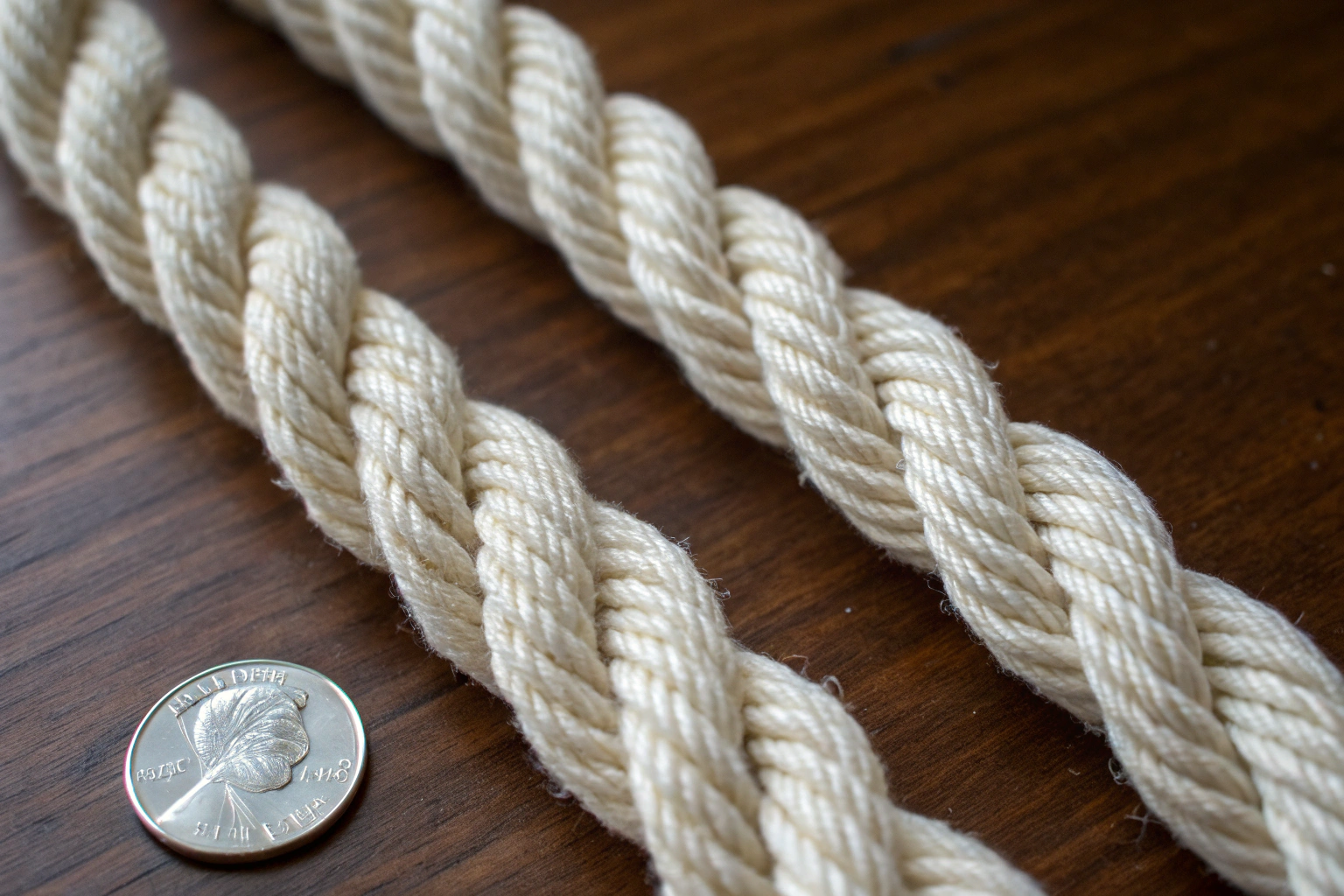
Before we get into the garment defects, we have to talk about the alphabet. S and Z. It’s simpler than you think. Take a piece of yarn and hold it vertically in front of your face. Look at the spiral of the fibers. If the spiral goes in the same direction as the center stroke of the letter S—that is, from top left down to bottom right—you have S-twist yarn. If the spiral matches the center stroke of the letter Z—from top right down to bottom left—you have Z-twist yarn.
That is the visual check. But the real story is about torque. When you spin fibers together to make a yarn, you are putting energy into that bundle of fibers. Think of it like winding up a rubber band on a toy airplane. That yarn is alive. It wants to untwist. It wants to return to its relaxed state. That stored energy is called torque or twist liveliness.
In most of the world’s textile production, we use Z-twist for single yarns. Why? It’s simply the default direction of most spinning machinery invented during the Industrial Revolution. The spindles on a ring frame rotate clockwise. That produces Z-twist. S-twist is typically used for specific purposes: for the weft yarn in some woven fabrics to balance the fabric, or more commonly, for crepe yarns that need that high-torque energy to create the pebbly texture you see in crepe de chine and georgette. We produce thousands of tons of high-torque S-twist crepe yarns in our weaving factory every year for exactly that purpose.

Why Do Most Mills Default to Z Twist for Single Yarns?
This is a question I get from textile students and curious designers. The answer is part history, part physics, and part economics. The ring spinning frame, which still dominates the quality end of the spinning industry, was designed with a spindle that rotates clockwise. This naturally imparts a Z-twist to the yarn as it is wound onto the bobbin.
But there is a practical reason we stick with it. The majority of sewing threads and the majority of knitting machines are set up to handle Z-twist yarn without adding more twist or taking twist out. When you feed a Z-twist yarn into a knitting machine, the action of the needles and the yarn guides tends to add a tiny bit of twist if you are using the standard S-direction feed. Wait, that sounds backwards, right? It’s confusing. Let me clarify.
In a typical circular knitting machine, the yarn is fed in a counter-clockwise direction around the machine (looking from top down). This path geometry actually increases the twist in a Z-twist yarn slightly, which can help with stitch formation. If you fed an S-twist yarn into that same path, the machine would actually remove twist, making the yarn weaker and more prone to breakage.
I remember a nightmare project from June 2024 with a European designer who insisted on using a special S-twist merino wool for a jersey knit. It was beautiful yarn. But it kept breaking on the knitting machines. We had to slow the machine speed down by 40% and change the tension settings dramatically. The production cost doubled. If you are trying to understand how to choose the correct yarn twist direction for circular knitting, the rule of thumb is: Z-twist for singles, S-twist for plied yarns when needed for balance. Don’t fight the machine physics. It’s expensive.
How Do I Visually Identify S Twist vs Z Twist in Fabric?
You can’t always see it in the finished fabric, especially if it’s a tight weave or a heavy finish. But in a yarn-dyed fabric or a loose plain weave, you can spot the difference with a simple pick glass (a linen tester).
Look at the individual yarns in the fabric. Find one that sits on the surface where you can see the spiral of the fibers. Remember the vertical alphabet trick. Hold the fabric so the yarn is vertical. If the fibers slope like the middle of the Z, it’s Z-twist. If they slope like the S, it’s S-twist.
Here is the catch: Plied yarns complicate the visual. A plied yarn is made of two or more single yarns twisted together. Typically, we take two Z-twist singles and ply them together with S-twist. This creates a balanced, stable yarn with almost zero torque. That’s what we use for high-quality woven shirting and trousers. When you look at a plied yarn, you see the ply twist (the big spiral of the combined strands), not the single twist. The ply twist direction is usually the opposite of the single twist direction.
If you are inspecting a fabric and see a strong spiral in the yarn, ask yourself: "Is this a single yarn or a plied yarn?" A single yarn with a strong Z-twist in a woven fabric is asking for trouble. It will create twist liveliness in woven fabric leading to skewing during washing. We avoid using high-twist singles in our standard woven shirting unless the client specifically wants that crepe effect.
Why Do Knitted Fabrics Skew or Spirality After Washing?
This is the moment every knitwear buyer dreads. The fabric looks flat and stable on the inspection table. It passes the lightbox check. It cuts beautifully. Then it hits water. The first time that t-shirt goes through a home laundry cycle, the whole garment torques. The side seam migrates. We call this spirality in knits or skewing in wovens.
This is not a sewing defect. You can cut the garment perfectly straight on the grain line. The problem is that the loops in the knitted structure themselves are asymmetrical because the yarn feeding them is unbalanced. Single jersey knit fabric is inherently unstable. The face side has "V" shaped loops. The back side has semi-circular arcs. When a yarn with high twist liveliness is used, that energy is locked into the loop structure. When you wash it, you lubricate the fibers. The yarns relax. That torque energy is released, and the entire fabric structure rotates to relieve the stress.
At Shanghai Fumao, we run a specific test for this called the AATCC 179 Skew Change Test. We mark a perfect square on the fabric. We wash it three times according to the care label. Then we measure how much that square has turned into a parallelogram. A rotation of more than 5% is a fail in our book.

Does Yarn Twist Direction Cause Spirality in Single Jersey Knits?
Yes. And it is a predictable, mathematical relationship. In a single jersey fabric knitted from 100% singles yarn, the direction of the spirality is always opposite to the direction of the yarn twist. Let me say that again because it’s the single most useful piece of information in this whole article.
- Z-twist yarn (fibers spiral like Z) will produce fabric that skews to the LEFT (counter-clockwise).
- S-twist yarn (fibers spiral like S) will produce fabric that skews to the RIGHT (clockwise).
Why? Physics. The yarn wants to untwist. As the fibers in a Z-twist yarn relax, they rotate in an S direction (counter-clockwise). This rotation pulls the knitted loops along with it, causing the wales (the vertical columns of stitches) to lean to the left.
I had a client from the US in August 2025. Confident guy. Used to leading the conversation. He was convinced his factory in Honduras was cutting his fabric off-grain. He sent me pictures. The side seam was rotated to the left. I asked him one question: "Is the yarn a 100% cotton combed ring-spun single?" He said yes. I said, "It’s Z-twist. The fabric is skewing left. That’s textbook." We switched him to a plied yarn for the next order. The skewing disappeared. It cost $0.30 more per yard, but his return rate for twisted garments dropped to zero. If you’re looking for how to prevent knit fabric spirality with yarn selection, the answer is simple: Use plied yarn or alternate S and Z twist feeds.
How Does Stitch Density Impact the Severity of Garment Twist?
Stitch density is your first line of defense if you can’t change the yarn. A tighter fabric locks the yarns in place physically. It’s like a crowded subway car. Nobody can move. A loose, open fabric gives the yarns room to rotate.
Here is a data point from our knitting development in March 2026 (right in the middle of peak season). We were developing a lightweight viscose jersey for a European fast fashion account. The initial sample had a stitch length of 3.2 mm. The spirality after 3 washes was 8% . That’s a fail. The garment looked terrible. We adjusted the stitch length down to 2.8 mm. That’s a tighter knit. It used about 8% more yarn, so the fabric weight increased slightly. But the spirality dropped to 3.5% . That is within commercial tolerance.
You have to be careful though. Tightening the stitch density changes the handfeel. The fabric gets firmer and less drapey. It’s a trade-off. I tell my clients: "You can have soft and drapey, or you can have straight side seams. Pick one." Unless you use a plied yarn. Then you can have both.
Here is a quick reference table based on our internal QC logs for single jersey knits (Z-twist yarn):
| Stitch Length (mm) | Fabric Character | Avg. Spirality After 3 Washes | My Recommendation |
|---|---|---|---|
| 3.5 – 4.0 | Very loose, open, drapey | 10% – 15% | Unacceptable. Do not ship. |
| 3.0 – 3.4 | Standard drapey jersey | 6% – 9% | Borderline. Requires skewed cutting to compensate. |
| 2.6 – 2.9 | Firm, stable, less drape | 2% – 5% | Acceptable for most standard apparel. |
| < 2.6 | Dense, almost pique feel | < 2% | Excellent stability. Good for tight-fitting garments. |
What Is Yarn Balancing and How Does It Prevent Skewing?
So we know the problem. Single yarns have torque. That torque twists garments. How do we fix it? We neutralize the torque. The process is called yarn balancing, and it is the single most important quality control step in spinning that most buyers never ask about.
Think of a single yarn as a hand tightening a screw clockwise. It has right-hand torque. To balance it, you need an equal and opposite left-hand torque. You achieve this by plying. You take two (or more) single Z-twist yarns and twist them together in the S direction. The clockwise torque of the singles is cancelled out by the counter-clockwise torque of the ply twist. The result is a balanced yarn. If you hold a length of balanced plied yarn in the air, it hangs straight. It doesn’t kink up on itself. That is the test we do. We call it the "hang loop test." If it twists into a pigtail, it’s unbalanced. It will skew your fabric.
At Shanghai Fumao, our weaving factory consumes tons of plied yarn for our shirting and bottom-weight fabrics. We specify the Twist Multiple (TM) for both the single and the ply. Getting that ratio right is what separates a premium, stable fabric from a cheap, twisting mess.

Why Do Plied Yarns Create More Stable Woven Fabrics?
Stability comes from equilibrium. A plied yarn is a structure in equilibrium. The individual singles want to untwist in one direction. The ply twist wants to untwist in the opposite direction. They lock each other in place. It’s a stalemate. A beautiful, fabric-saving stalemate.
Let me give you a specific, technical example from a project in November 2025. A client was making high-end linen trousers. Linen is notoriously "lively." It has high torque because the fibers are stiff and don’t compact easily. We used a 2/40s Ne Linen Yarn. That means two single 40s count yarns plied together.
- Singles Twist: 24 TPI (Turns Per Inch) Z-direction.
- Ply Twist: 18 TPI S-direction.
That combination of 24 Z and 18 S created a yarn that was slightly "S-leaning" in overall character, but stable enough to weave. The resulting fabric had a skew change of less than 1.5% after washing. That’s flat. That’s perfect.
If we had used a single 20s yarn instead of the 2/40s plied, we would have had to use a much lower twist to prevent skewing. But low twist means weak yarn. Weak yarn means weak seams. It’s a cascade of failures. Plied yarn breaks the cycle. You get strength and stability. If you are evaluating how to source balanced plied yarn for high-end shirting fabrics, ask for the "Twist Multiple" spec sheet. A balanced plied yarn will typically have a single twist factor (TM) of 3.8-4.2 and a ply twist factor of 3.4-3.8. If the numbers are too far apart, the yarn is unbalanced.
How Does Twist Setting via Steam Stabilize High Twist Crepe Yarn?
This is a specialized area that we deal with a lot because of our crepe fabric production. Sometimes you want the torque. You want that pebbly, crinkled texture of a crepe de chine. But you can’t have the fabric twisting into a rope on the cutting table. You need the energy to be dormant, not active. You need it to release only when the fabric gets wet.
The process to achieve this is called twist setting or yarn stabilization. We do this for our high-torque S-twist crepe yarns. After the yarn is spun with a very high twist level (sometimes up to 3000 TPM), it is wound onto perforated cones or bobbins. These are loaded into a large pressure vessel called an autoclave.
We inject saturated steam at a precise temperature, usually around 85°C to 95°C for polyester blends and lower for viscose. The heat and moisture relax the polymer chains inside the fibers. The yarn is held in its twisted configuration while it "learns" this new shape. When it comes out of the autoclave, the yarn is still highly twisted, but it’s not "jumpy." It’s calm. It lays flat. But when the fabric is finished and washed, the heat of the water re-activates the memory, and the yarn shrinks up, creating that beautiful crepe texture.
I recall a tricky situation in January 2026 just before Chinese New Year. We were running a heavy crepe back satin for a US bridal company. The yarn came from the spinner and it was so lively it was almost impossible to weave. It was snarling in the loom. We had to run it through a second autoclave cycle at 88°C for 45 minutes. That settled the yarn down. We wove it successfully and shipped before the holiday shutdown. ( we turned that re-steaming around in 24 hours). If you are dealing with how to stabilize high twist yarn for crepe fabric weaving, the autoclave is non-negotiable. Don’t let your mill skip it to save time. You’ll pay for it in loom stops and fabric defects.
Can Pattern Cutting Compensate for Fabric Twist Defects?
Let me be very clear about this upfront: Pattern cutting compensation is a Band-Aid on a bullet wound. It is a last resort. The correct way to fix twist is in the yarn and the knitting. But I live in the real world. In the real world, you might have 20,000 yards of fabric sitting in a warehouse that has a mild skew problem. You can’t throw it away. You have to salvage it. That’s where skilled pattern making comes in.
This is a technique we advise our garment factory partners on. It is called skewed cutting or off-grain cutting. You deliberately rotate the pattern piece on the cutting table so that after the garment is washed and the fabric twists, the seams end up vertical. It requires math and trial and error. It is not for beginners.
The process works like this: You identify the spirality angle. You wash a sample square of the fabric. You measure the angle of skew. Let’s say the fabric skews 5 degrees to the left (counter-clockwise). You then take your pattern pieces and rotate them 5 degrees to the right (clockwise) on the cutting table. When the finished garment is washed, the fabric tries to skew left. But because you cut it skewed right, the rotation brings it back to center. The seams end up straight.

How Do You Adjust a Pattern for Fabric With 5% Skew?
This is advanced-level pattern making. You cannot just rotate the whole marker. You have to rotate pieces relative to their grain line. And you have to be consistent. If you rotate the front bodice 5 degrees right, you must rotate the back bodice 5 degrees right. If you don’t, the side seams won’t match.
Here is a step-by-step workflow we developed for a client in October 2025 who was stuck with a container of skewed rayon challis:
- Lab Test: We washed and dried 10 samples. Average skew was 5.2 degrees left.
- Marker Adjustment: The factory’s CAD operator rotated the entire marker file by 5.5 degrees right. We added 0.3 degrees as a safety margin.
- Cutting: The fabric was laid up on the table with the grain line straight. The cutter followed the rotated marker. This meant the pattern edges were not parallel to the selvedge.
- Sewing: The operator sewed the seams as normal, aligning the notches.
- Result: After washing, the side seams were within 0.5 cm of vertical. Acceptable for a fast-fashion garment.
But here is the hidden cost. When you cut off-grain, you change the drape of the garment. The fabric bias is no longer at 45 degrees to the seam. It might be at 39 degrees. This can make the garment hang slightly asymmetrically on the body. It also wastes fabric. A rotated marker is wider than a straight marker. Fabric utilization drops by 3% to 5% . For a large order, that’s a lot of money in the trash. If you’re researching how to correct fabric spirality with pattern making techniques, know that it’s a compromise. It works for cheap, high-volume basics. It does not work for tailored jackets or fitted dresses. The bias distortion will ruin the fit.
Is Compensating for Twist Different for Wovens vs Knits?
Yes. The mechanics are different, and the pattern solutions are different.
Knits (Spirality): The entire fabric structure rotates. The wales (ribs) tilt. Pattern compensation works as described above—rotating the whole piece. The effect is global across the garment. You see it in t-shirts and polo shirts.
Wovens (Skewing): The filling (weft) yarn bows or skews. In a woven, the warp yarns stay relatively straight because they were under high tension on the loom. The weft yarns are the ones that shift. When a woven fabric skews, it becomes a parallelogram. The straight grain line is no longer perpendicular to the cross grain.
For a woven garment, you don’t rotate the pattern. You realign the grain line on the pattern piece with the actual warp direction. You ignore the cut edge of the fabric. You lay the pattern piece on the table and use a T-square to ensure the pattern’s marked grain line is parallel to the warp yarns. This means the pattern piece might look crooked relative to the edge of the fabric, but it is straight relative to the yarn.
I’ve seen factories mess this up badly. They try to compensate for woven skew by just twisting the fabric on the table to make the edge straight. That does nothing. You have to follow the yarn. If you want to understand the difference between knit spirality and woven skew compensation, remember this: Knits: rotate the pattern. Wovens: align the grain line to the warp yarn, ignore the edge.
Conclusion
We started with a simple question about S and Z. But as you can see, that little letter on the yarn spec sheet controls the fate of your entire garment. Twist direction is stored energy. If you don’t manage that energy from the spinning frame through the knitting machine and onto the cutting table, it will release in your customer’s washing machine. And when it does, your brand’s reputation twists right along with it.
The real solution is not a last-minute pattern hack. It’s sourcing fabric from a partner who understands yarn engineering. Whether it’s using balanced plied yarns for stability, autoclaving high-twist crepe yarns to set the torque, or adjusting stitch density to lock the structure in place, the work has to happen at the mill level. That is where we live. At Shanghai Fumao, we don’t just sell you a roll of fabric. We deliver a predictable performance outcome. We know that when your production peaks hit in March or August, you can’t afford to lose a week figuring out why your t-shirts are twisting.
Don’t let yarn twist become your problem. Let it be our responsibility. If you are developing a new knit program or struggling with skewing in your current woven line, reach out to us. We can walk you through the yarn specs and make sure the twist is set right before the first meter is woven. Contact our Business Director, Elaine. She can set up a technical consultation and get you samples of balanced, stable fabrics that sew straight and stay straight. You can email her directly at elaine@fumaoclothing.com. Let’s get your garments hanging straight.








